Kelim rugs have a long and storied history across the Middle East and Central Asia, serving as both functional floor coverings and expressions of cultural identity. The tradition of weaving these flat-weave rugs is deeply rooted in nomadic life, where the ability to create durable, portable textiles was essential. Afghanistan remains one of the most significant regions for this craft, with weavers utilising techniques passed down through generations.
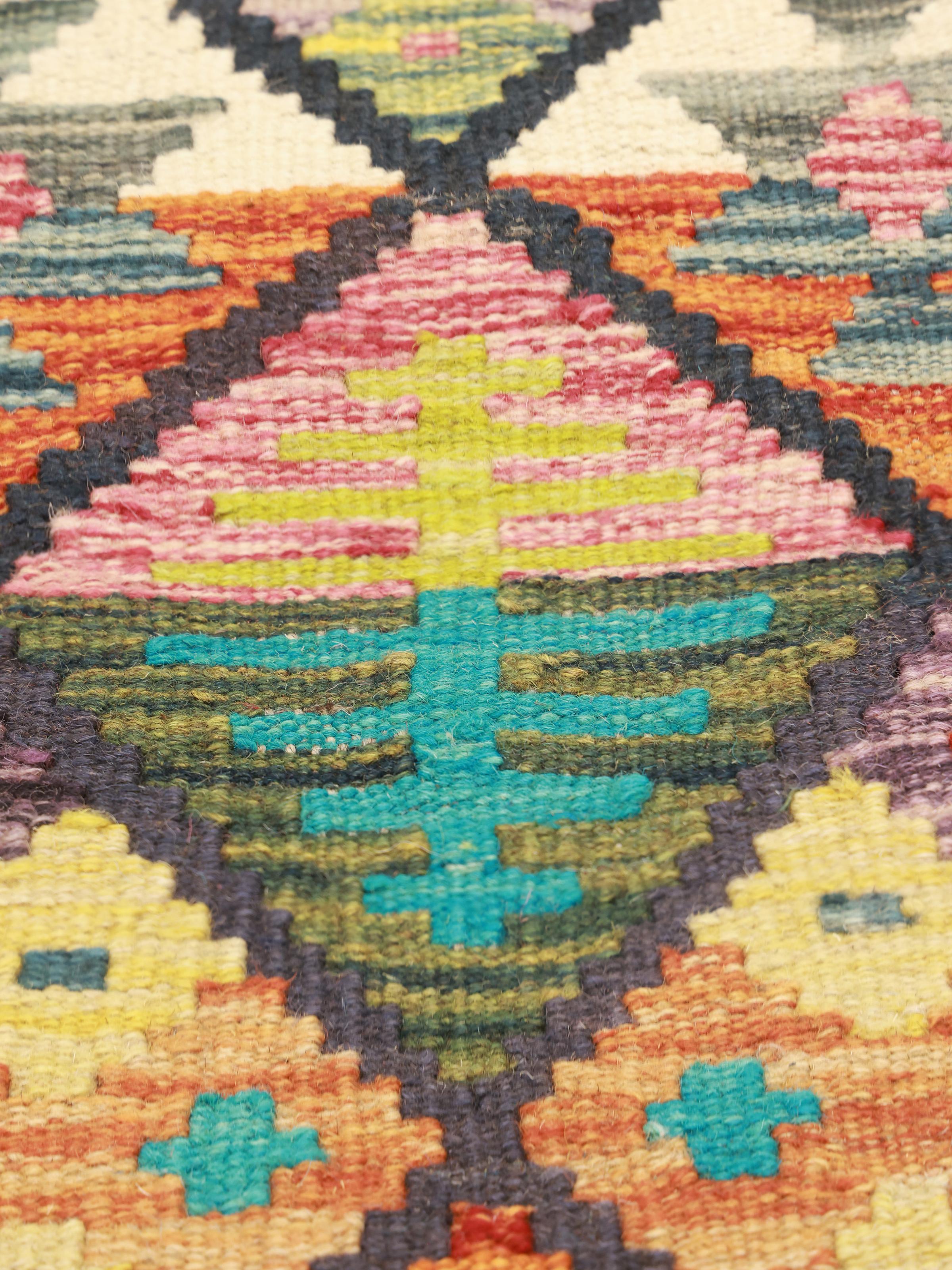
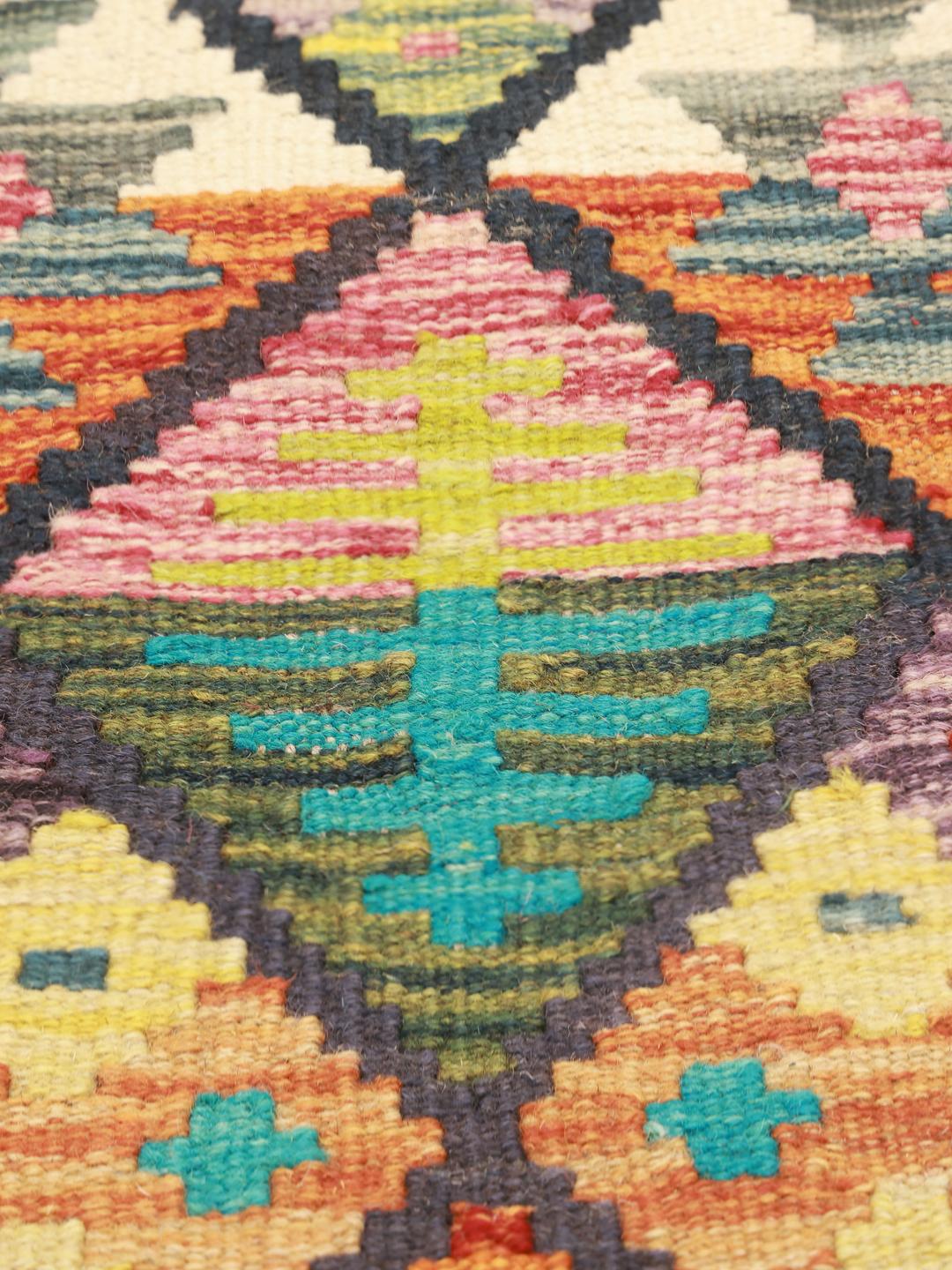
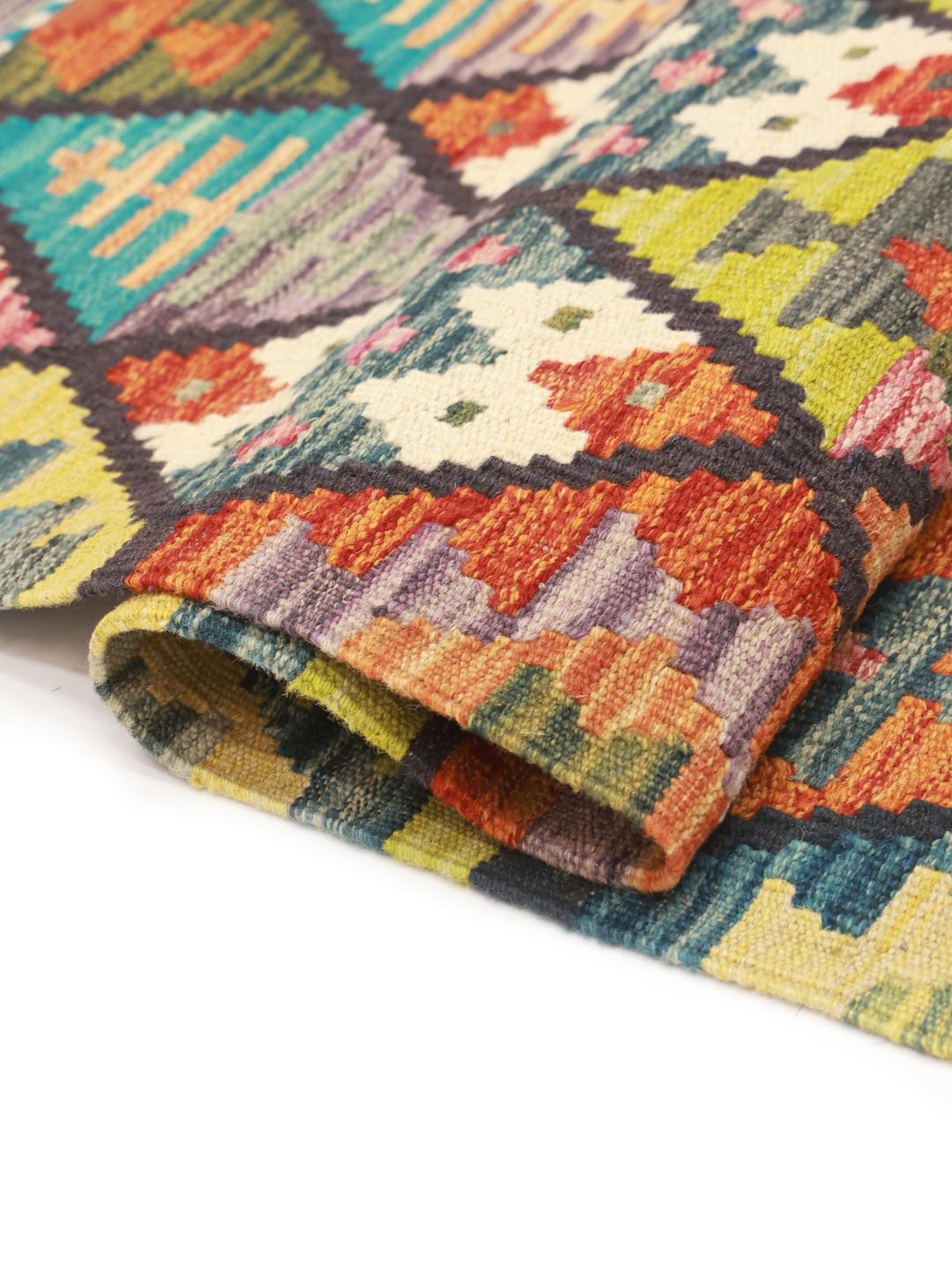
The term 'Kelim' refers to a specific type of tapestry-woven, pileless rug. Because they lack a traditional knotted pile, they are lightweight and versatile, yet surprisingly robust. The weaving process involves interlacing the warp and weft threads to create the design, which is why the patterns appear identical on both sides of the rug. This technical precision is a hallmark of the craft, requiring the weaver to maintain consistent tension throughout the entire process.
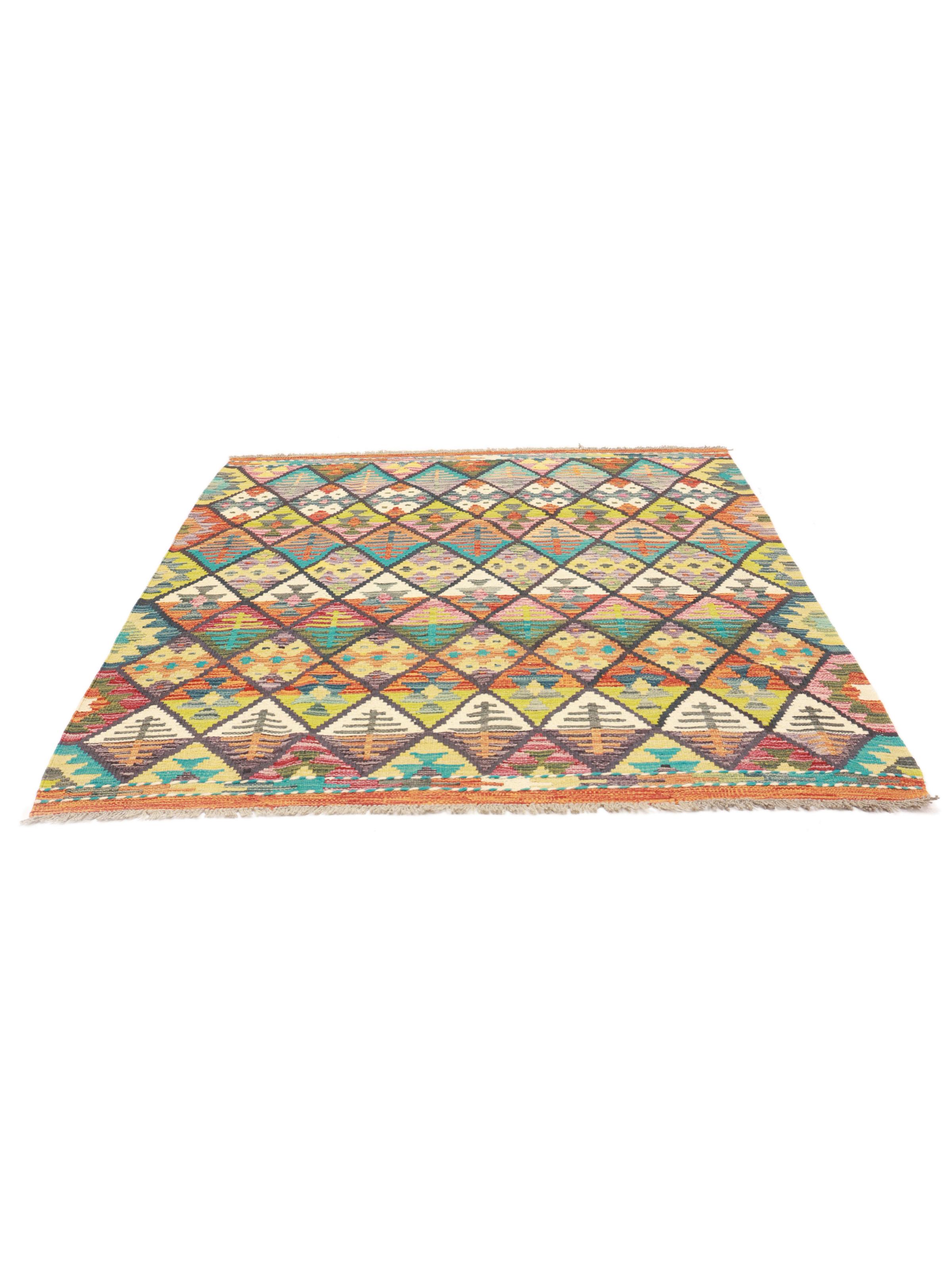
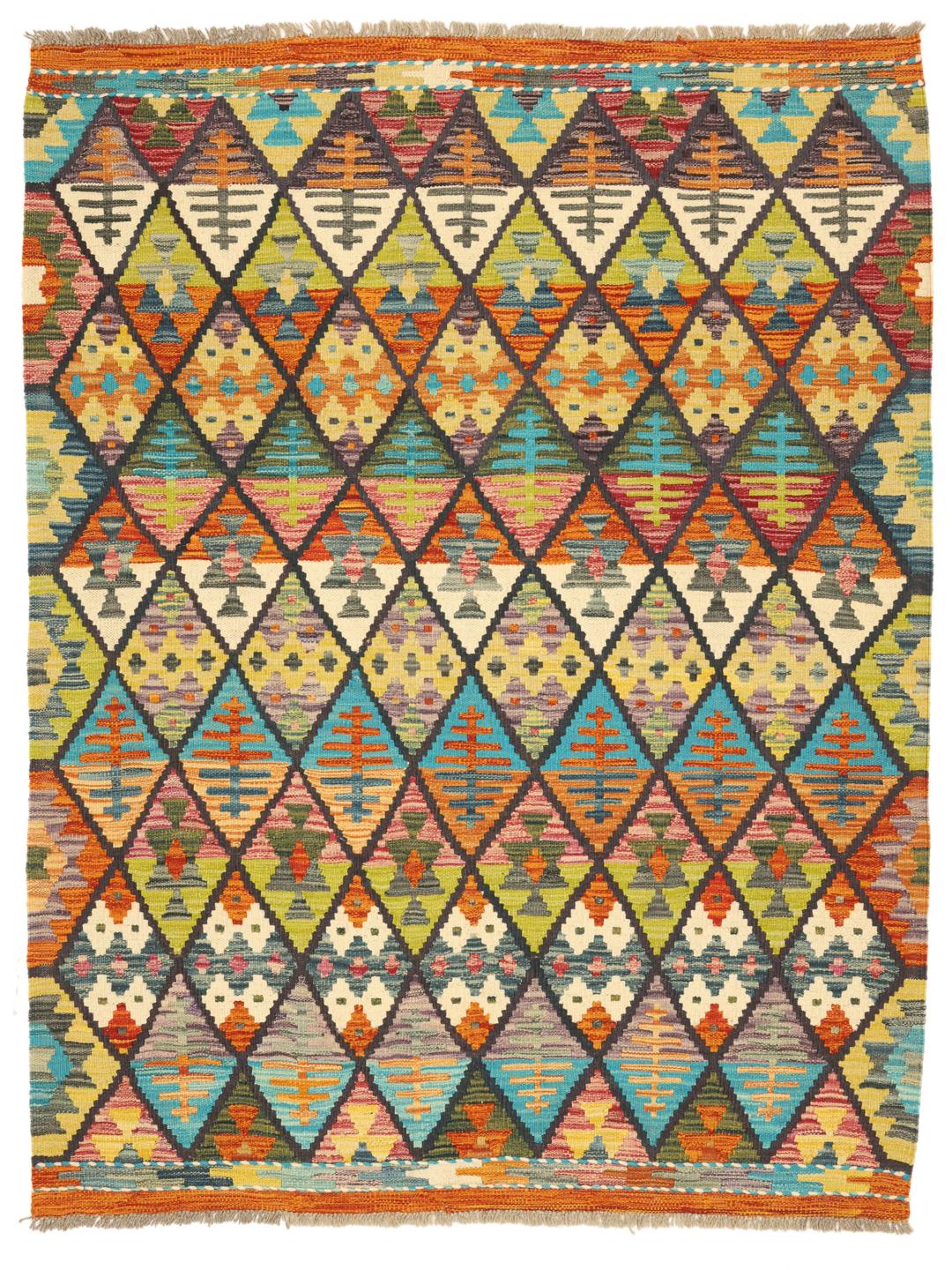
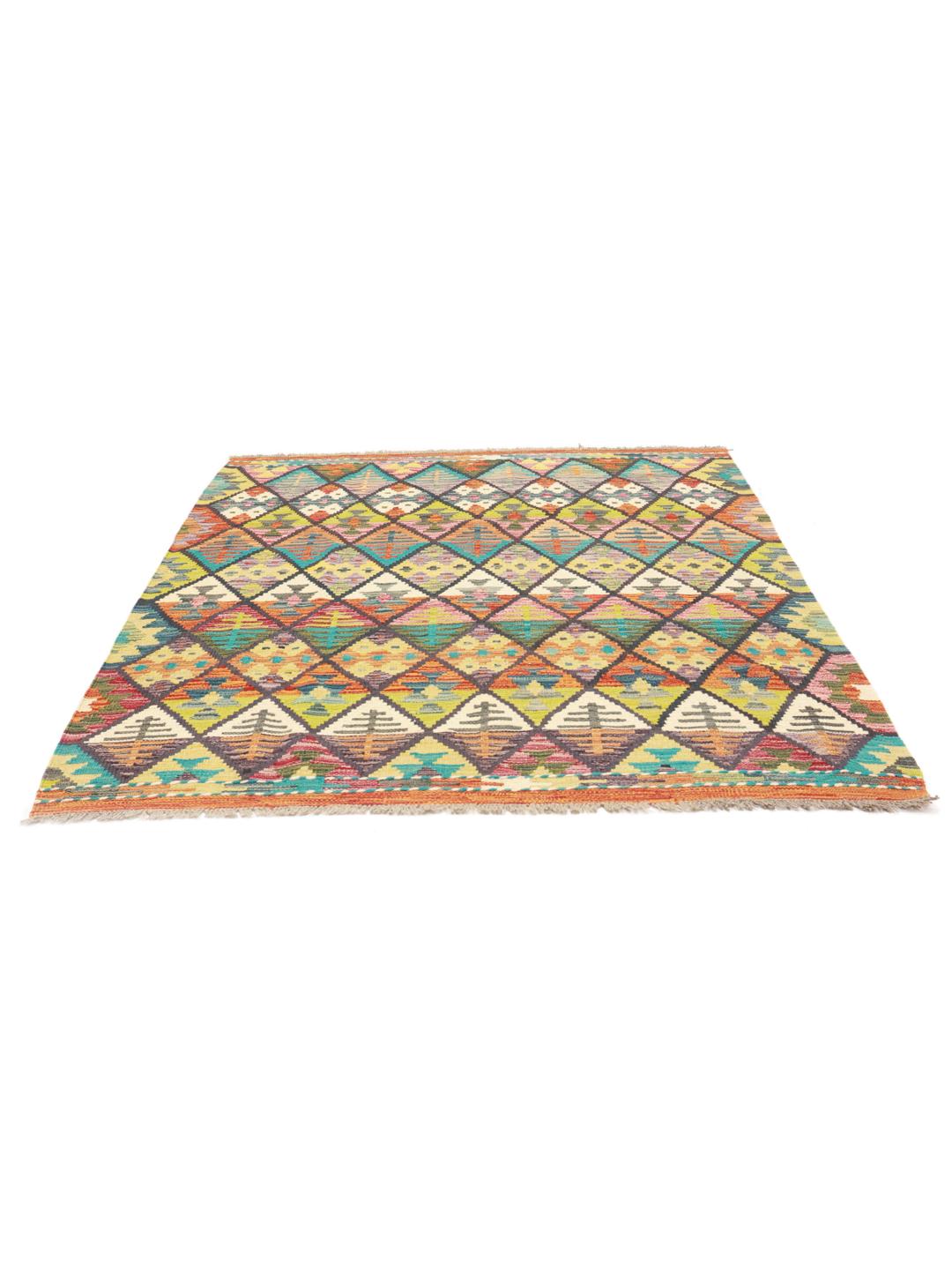
Visually, these rugs are celebrated for their geometric language. The diamond motifs seen here are classic elements of the style, often representing protective symbols or tribal affiliations. The use of bold, contrasting colours is traditional, intended to stand out against the landscape and bring life to the interiors of tents and homes alike. Each design is a reflection of the weaver's environment and the specific aesthetic traditions of their community.
Owning an Afghan Kelim is an opportunity to connect with a rich, enduring heritage. These pieces are highly valued by collectors not just for their visual impact, but for the human skill and cultural history they embody. By bringing one into your home, you are preserving a craft tradition that has provided comfort and beauty to families for centuries.