Kelim rugs from Afghanistan are rooted in a long-standing tradition of nomadic and village weaving. These textiles have been an integral part of Afghan culture for centuries, serving both functional purposes in tents and homes and as expressions of artistic identity. The tradition of flat-weaving, or kelim, is distinct from pile rugs, as it relies on the interlacing of warp and weft threads to create a pattern that is visible from both sides.
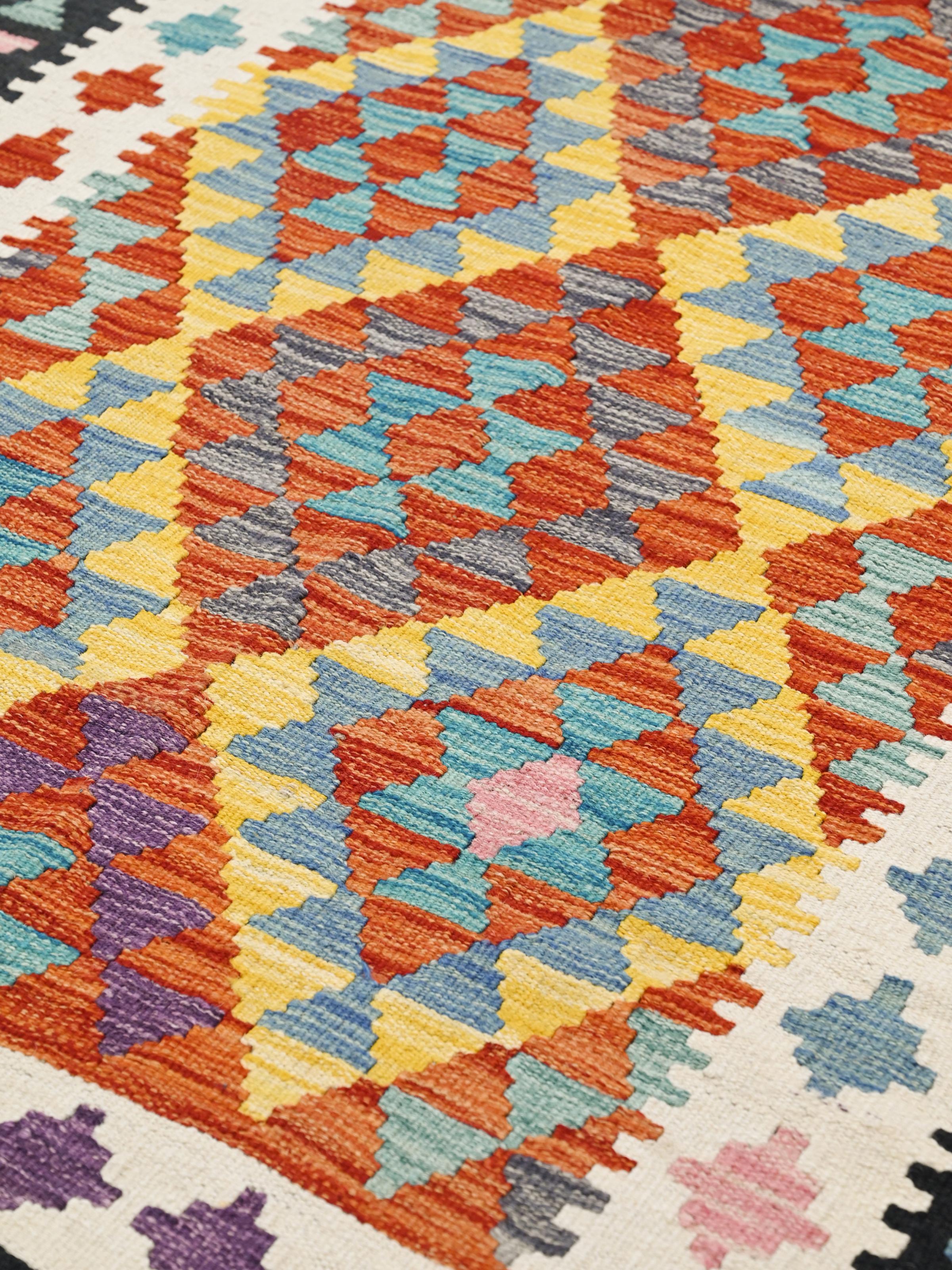
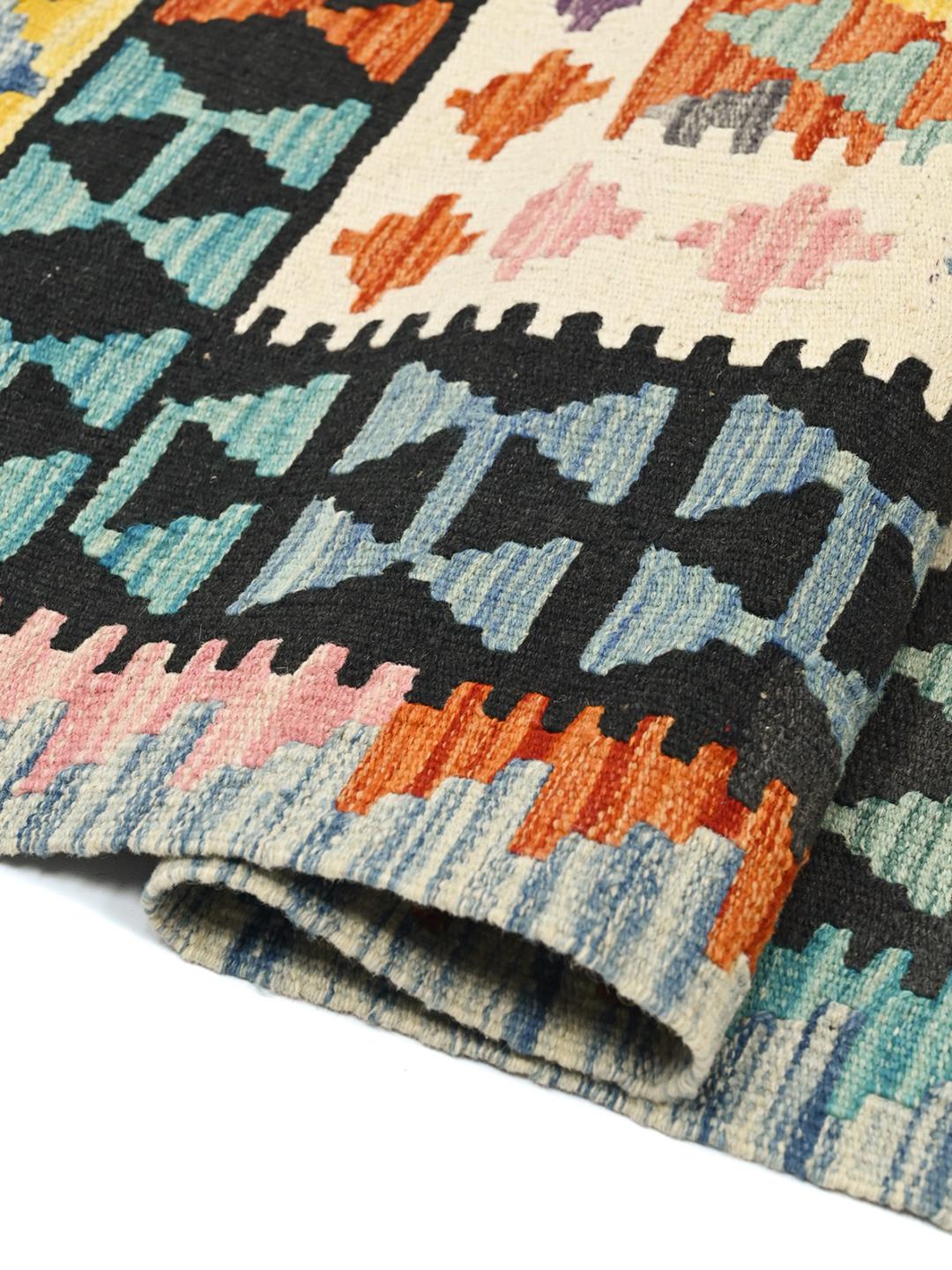
The terminology of these rugs often refers to the specific regional styles and techniques passed down through families. A Kelim is characterised by its lack of a knotted pile, which gives it a lighter weight and a unique, durable texture. This style of construction is highly valued for its versatility, as it allows for intricate, sharp-edged geometric designs that would be much more difficult to achieve with a traditional knotted pile.
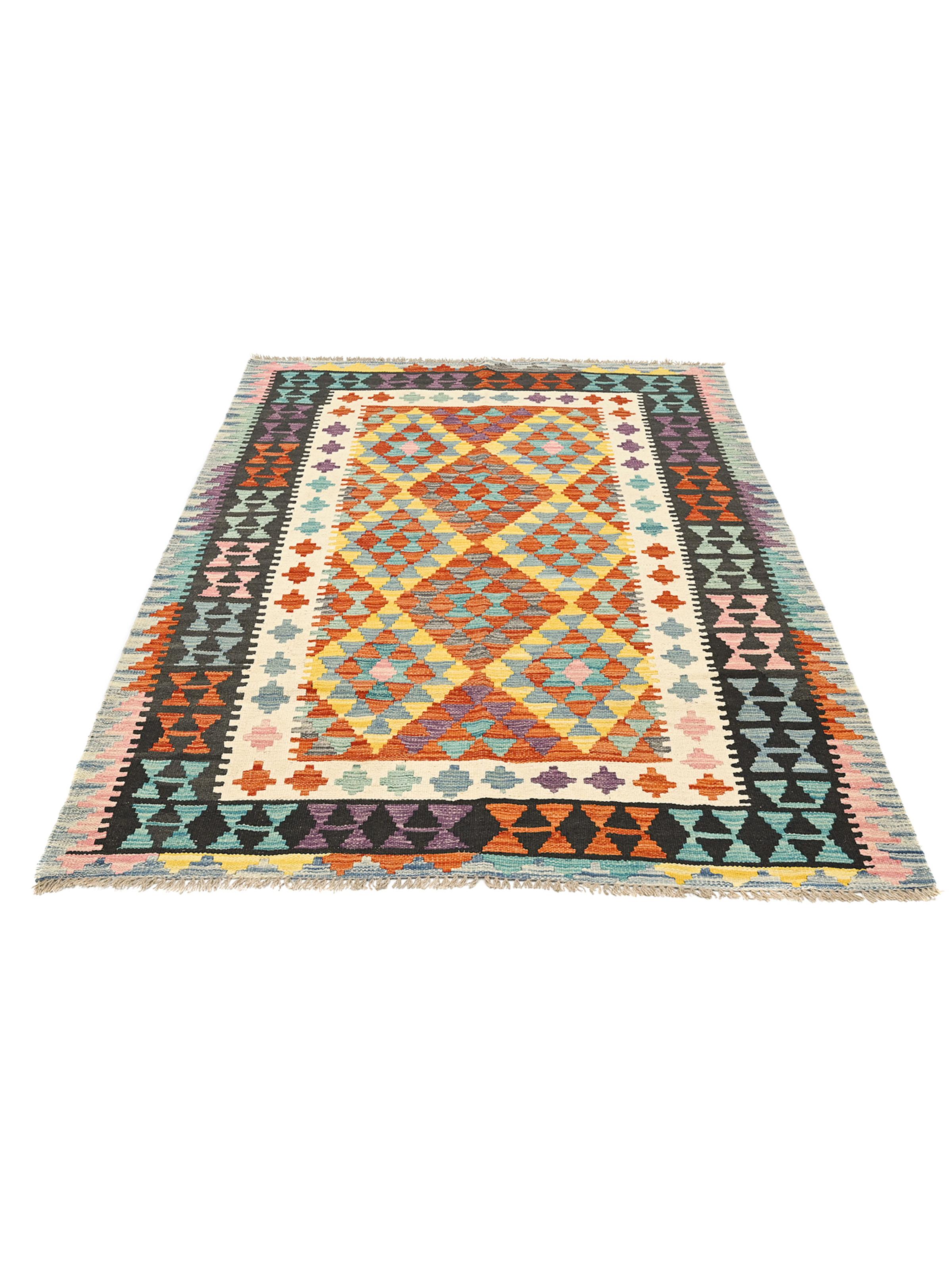
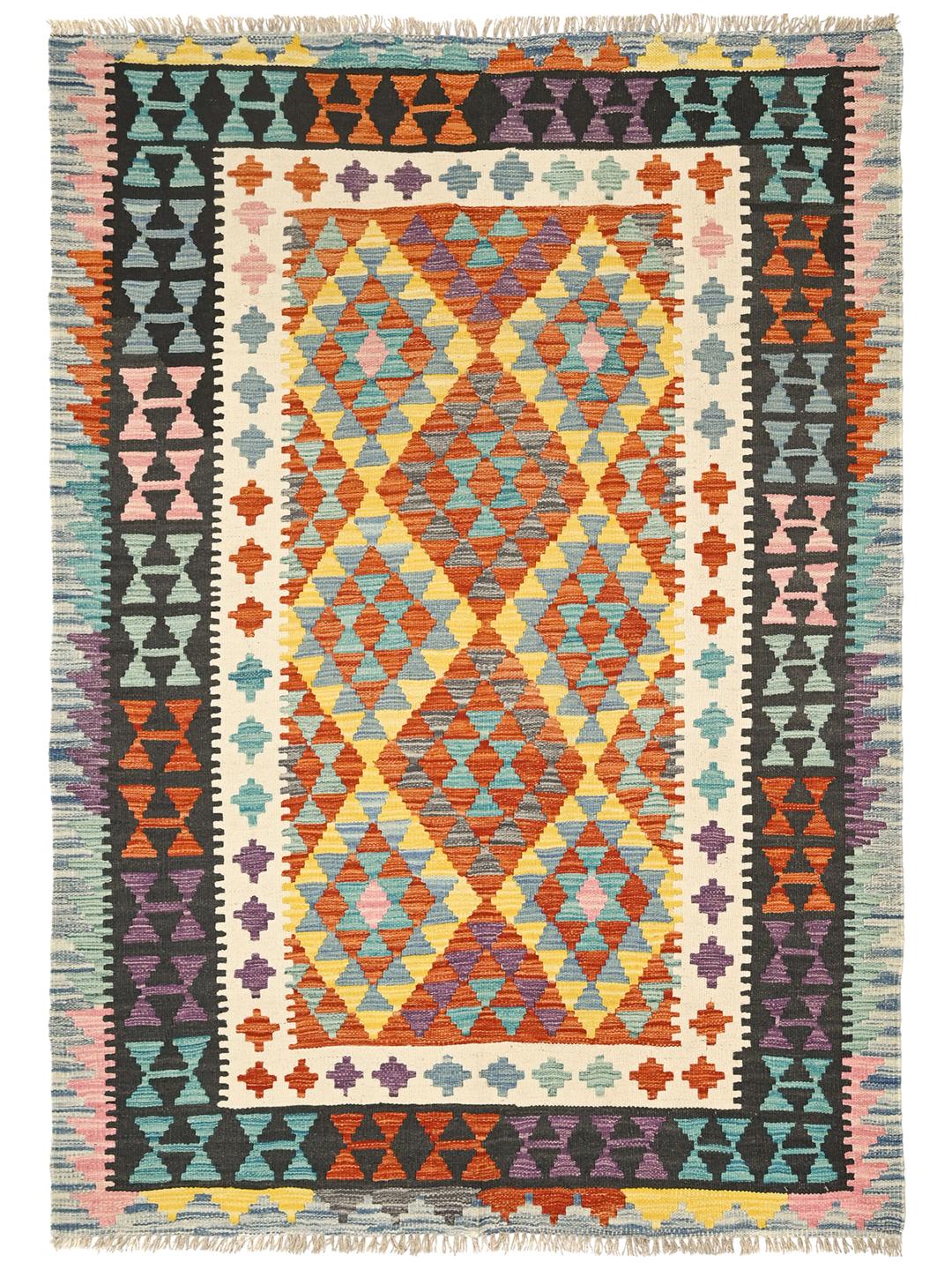
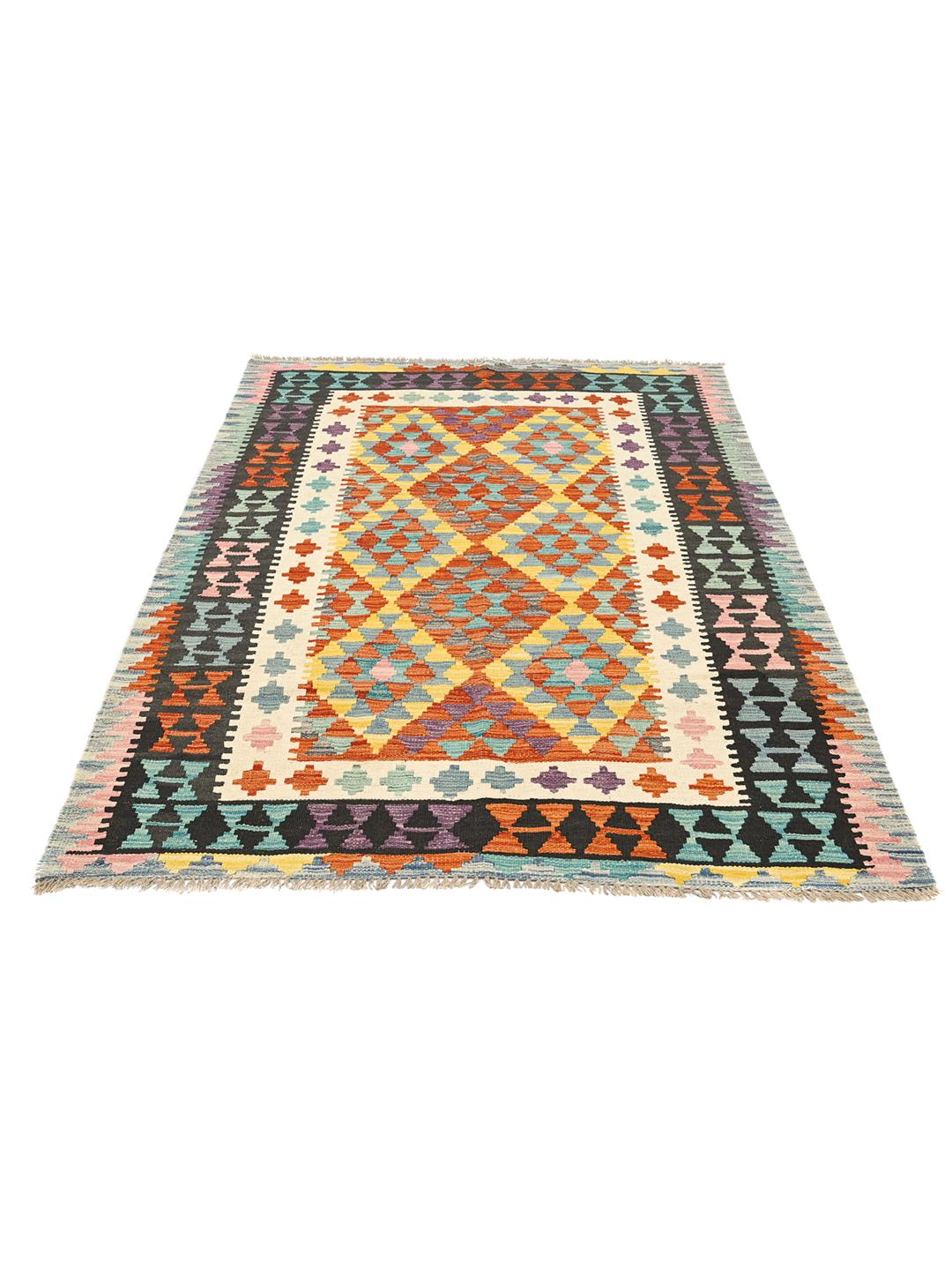
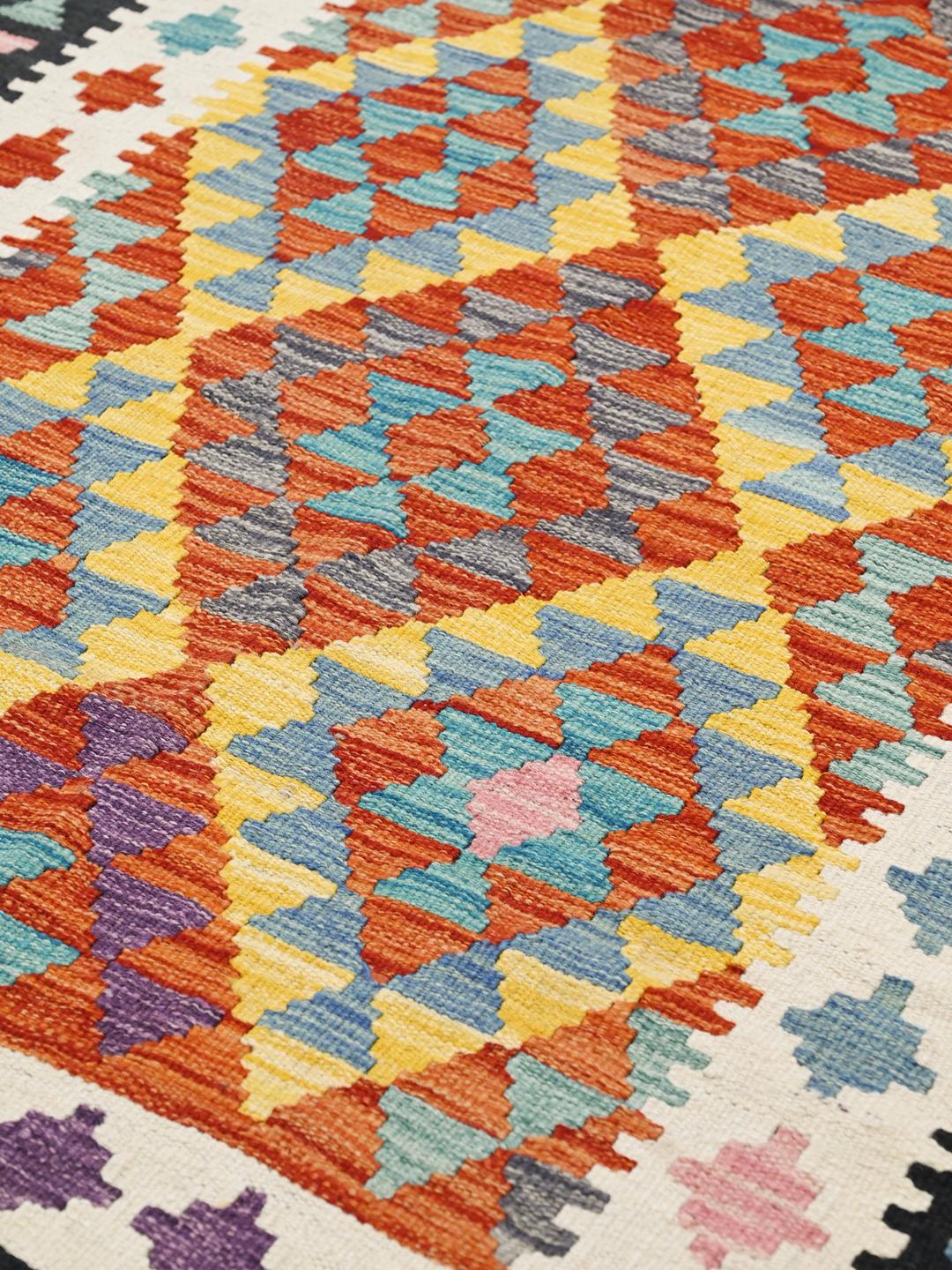
Signature design elements in Afghan Kelims often include bold, repeating geometric motifs such as diamonds, triangles, and stylised floral or tribal symbols. The use of vibrant, contrasting colours is a hallmark of this tradition, often derived from natural dyes that age beautifully over time. This particular rug showcases these traditions through its dynamic pattern, which uses colour to create a sense of movement and depth within the geometric framework.
These rugs are highly sought after by collectors and enthusiasts who appreciate the skill required to produce such precise patterns without the use of mechanical aids. Owning an authentic Afghan Kelim is an opportunity to connect with a rich cultural history and to support the survival of traditional craft skills. It is a testament to the enduring appeal of handmade items that offer both lasting quality and a distinct visual narrative.