Kelim rugs have a long and storied history across the Middle East, with Afghan traditions being among the most celebrated. These flat-woven textiles were originally created by nomadic tribes as functional, durable floor coverings and transportable bags. Over centuries, these designs have evolved, yet they remain deeply connected to the landscapes and cultural identities of the regions where they are made.
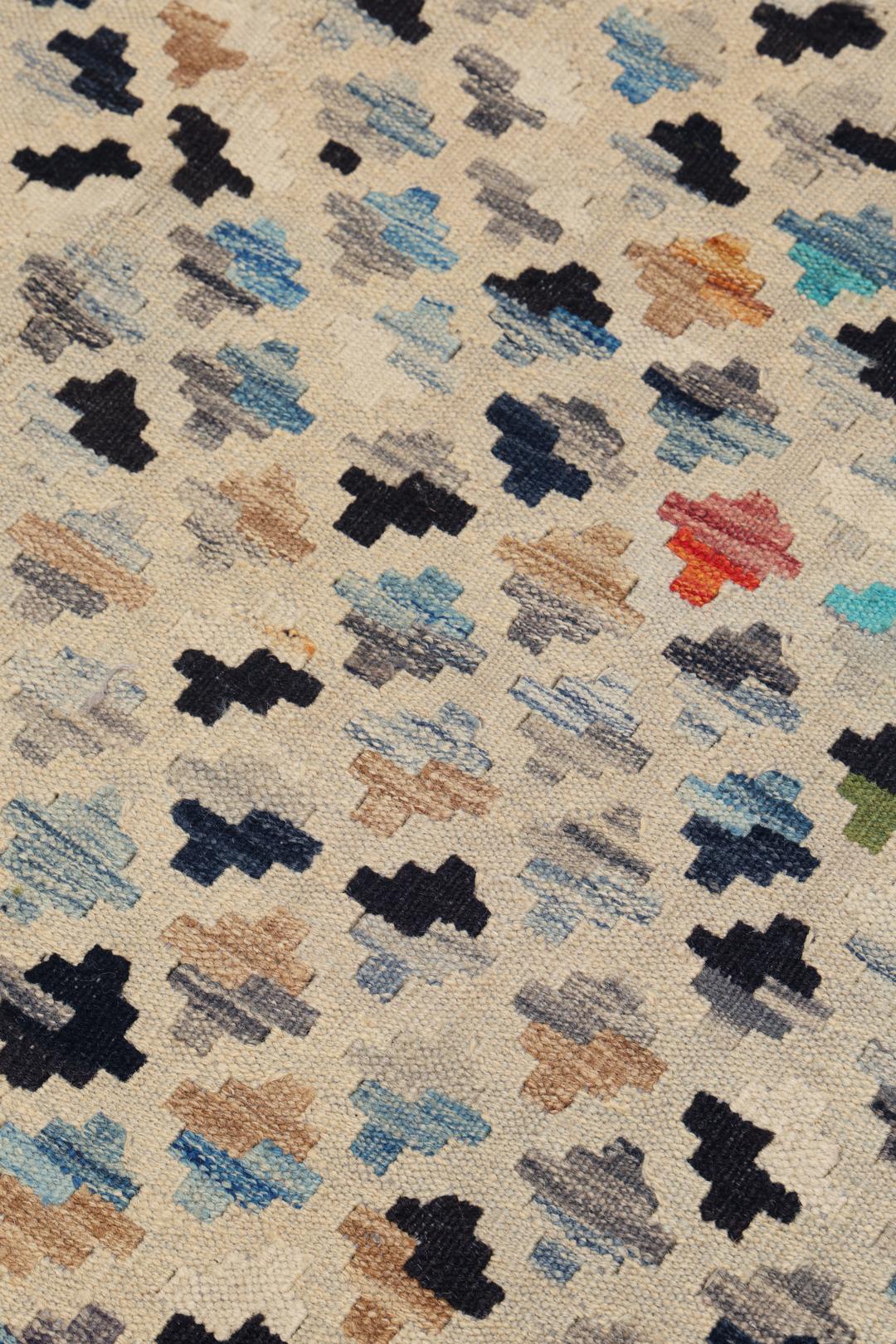
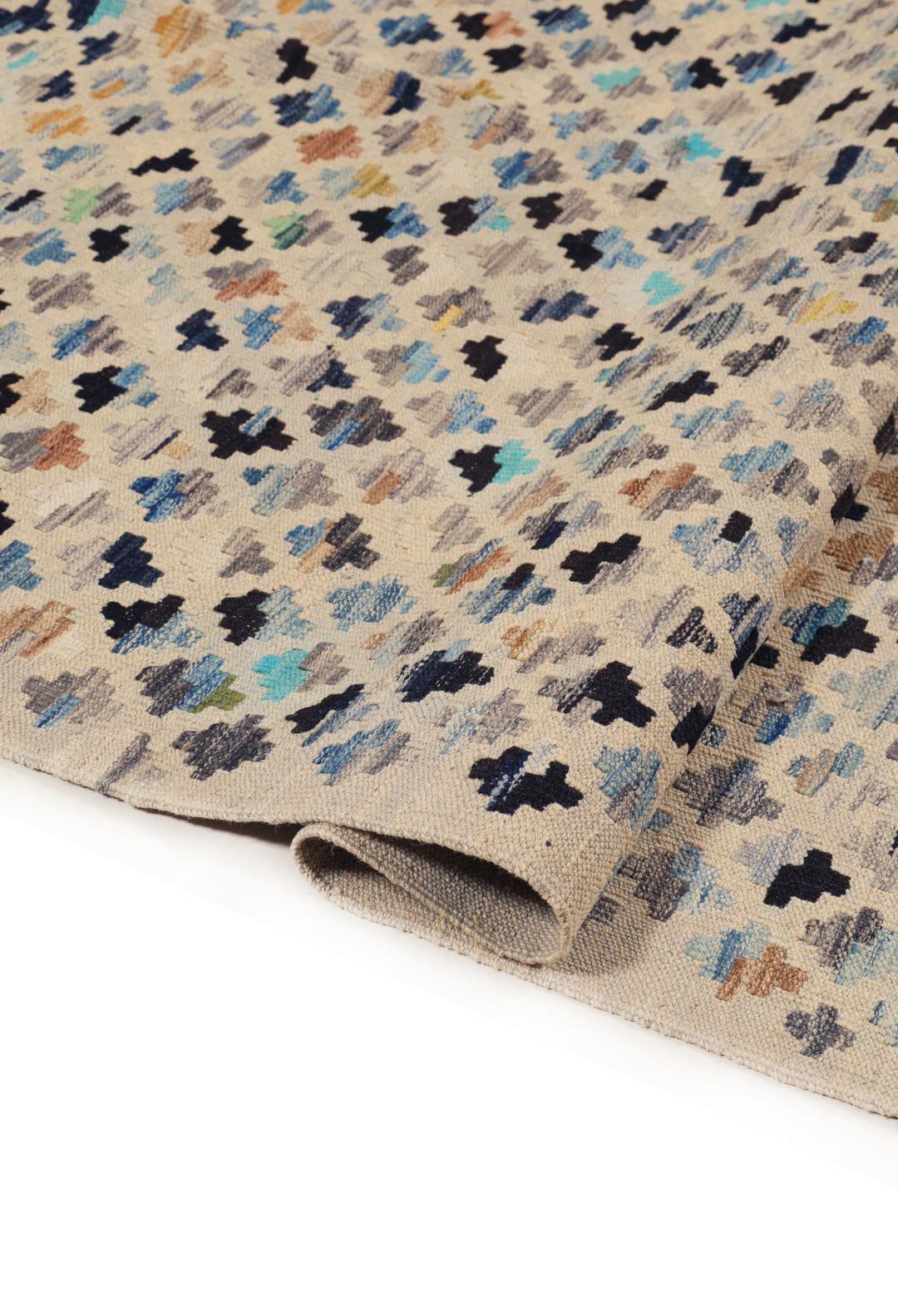
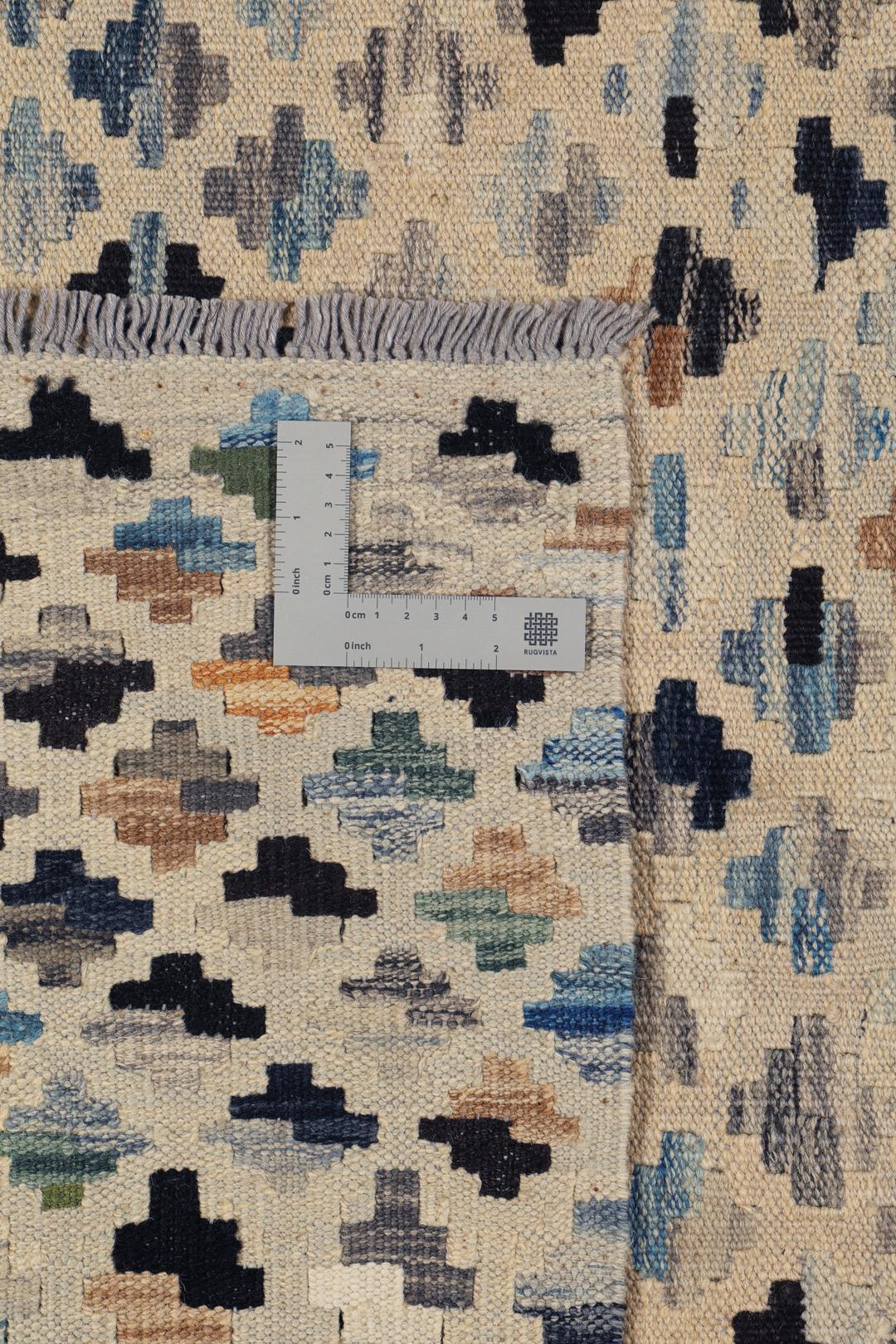
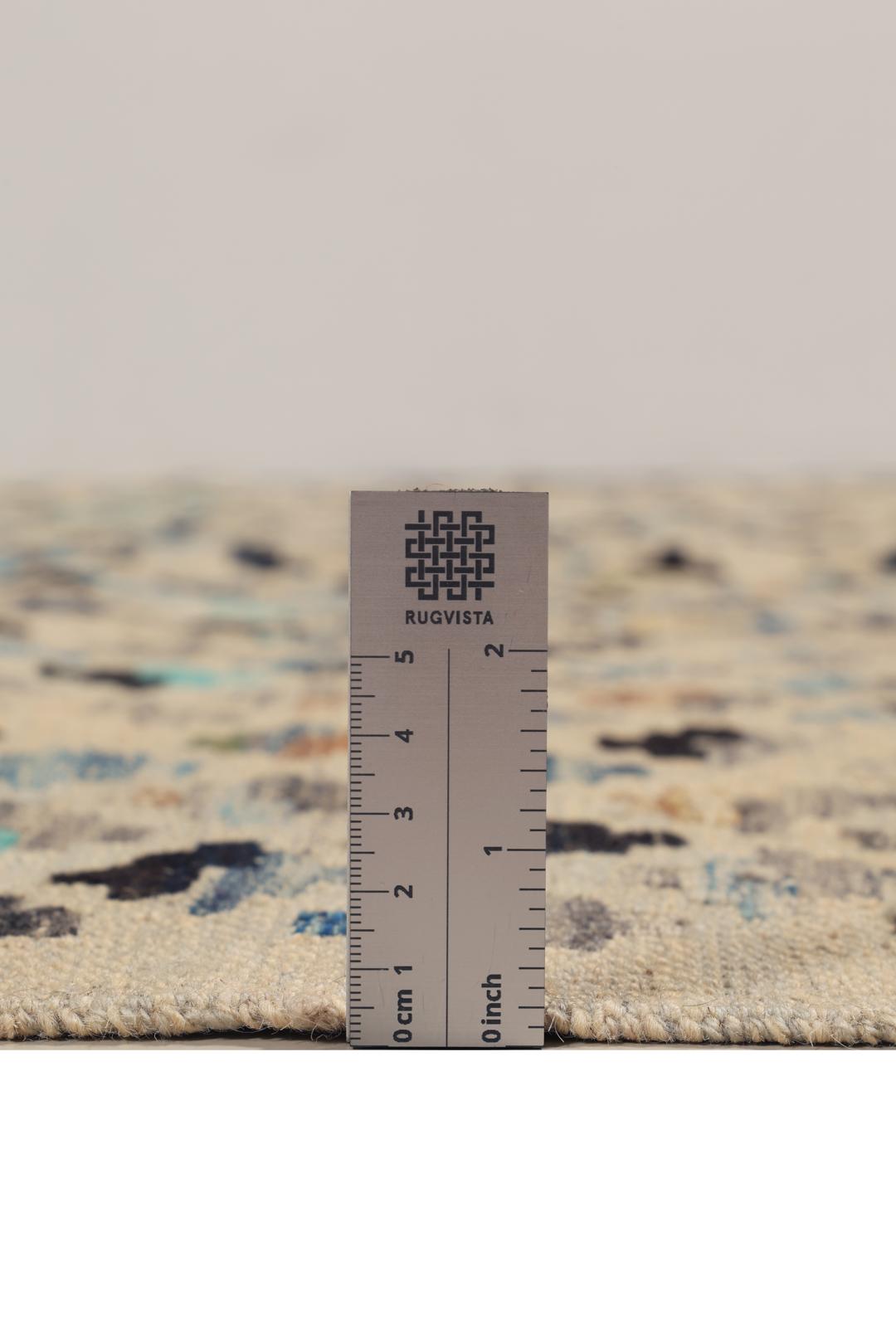
The term 'Kelim' refers specifically to the flat-weaving technique where the weft threads are passed through the warp threads to create the pattern, resulting in a rug without a pile. This construction method produces a lightweight and reversible textile that is prized for its ability to maintain its shape and vibrant colours for many years, provided it is cared for properly.
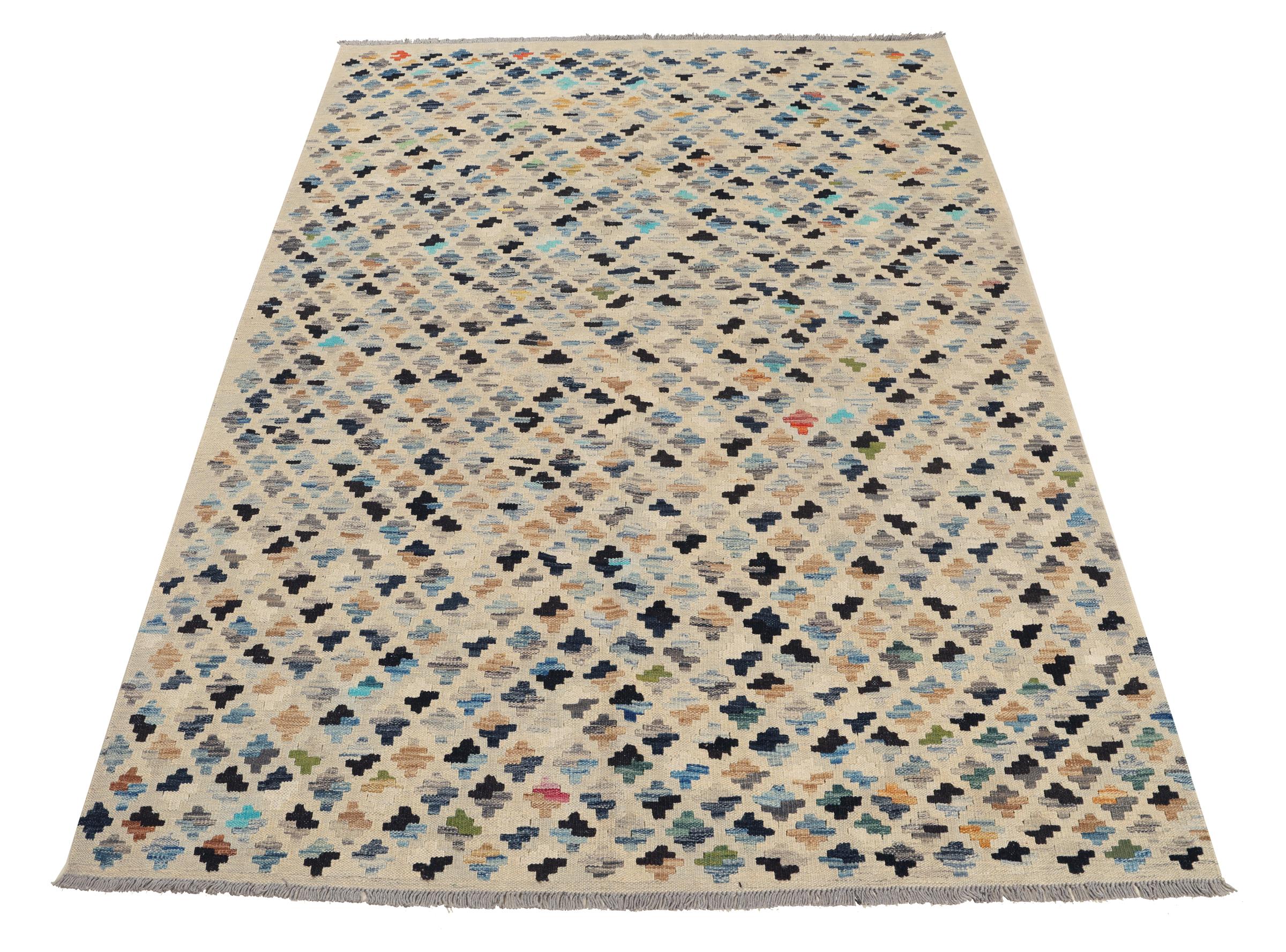
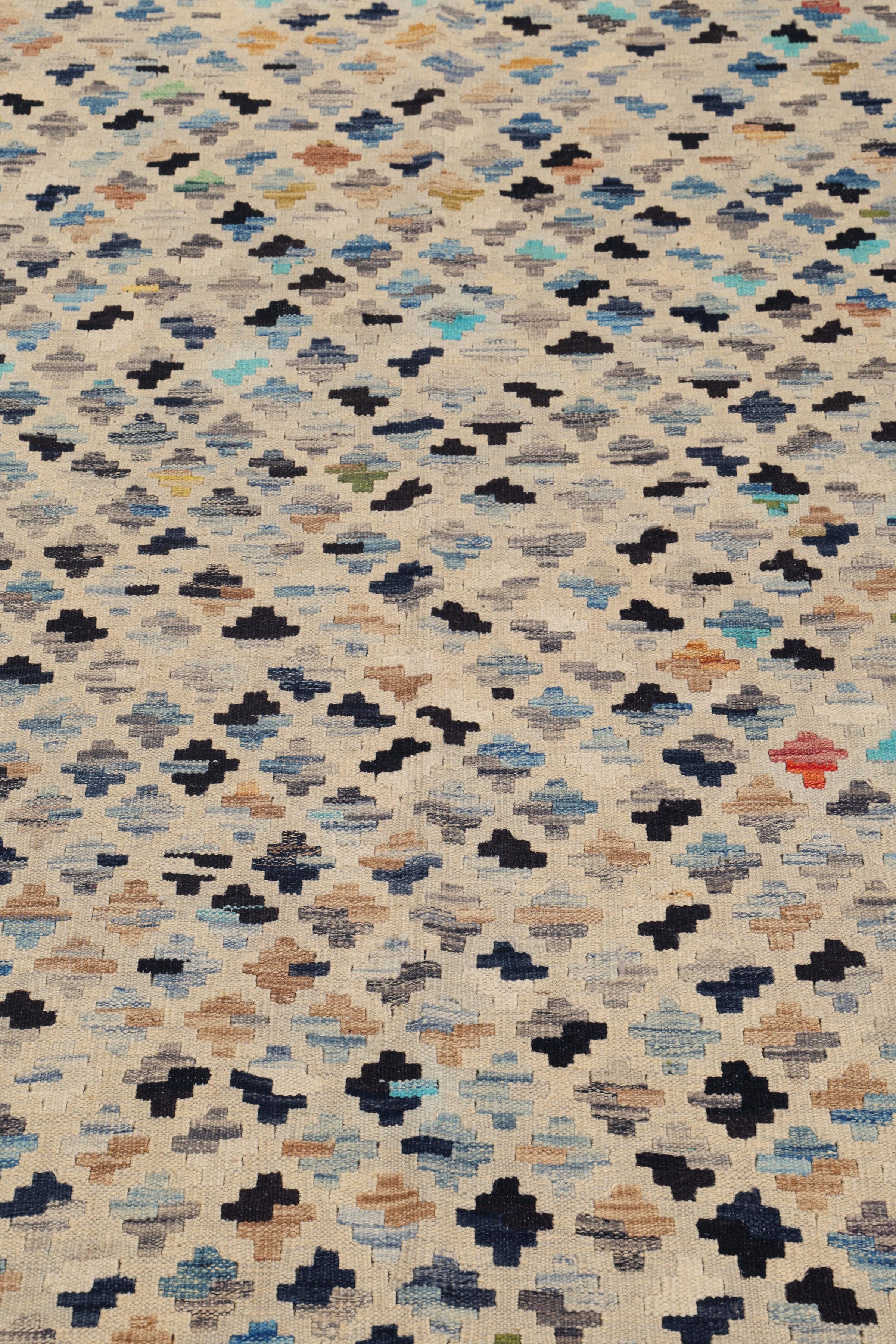
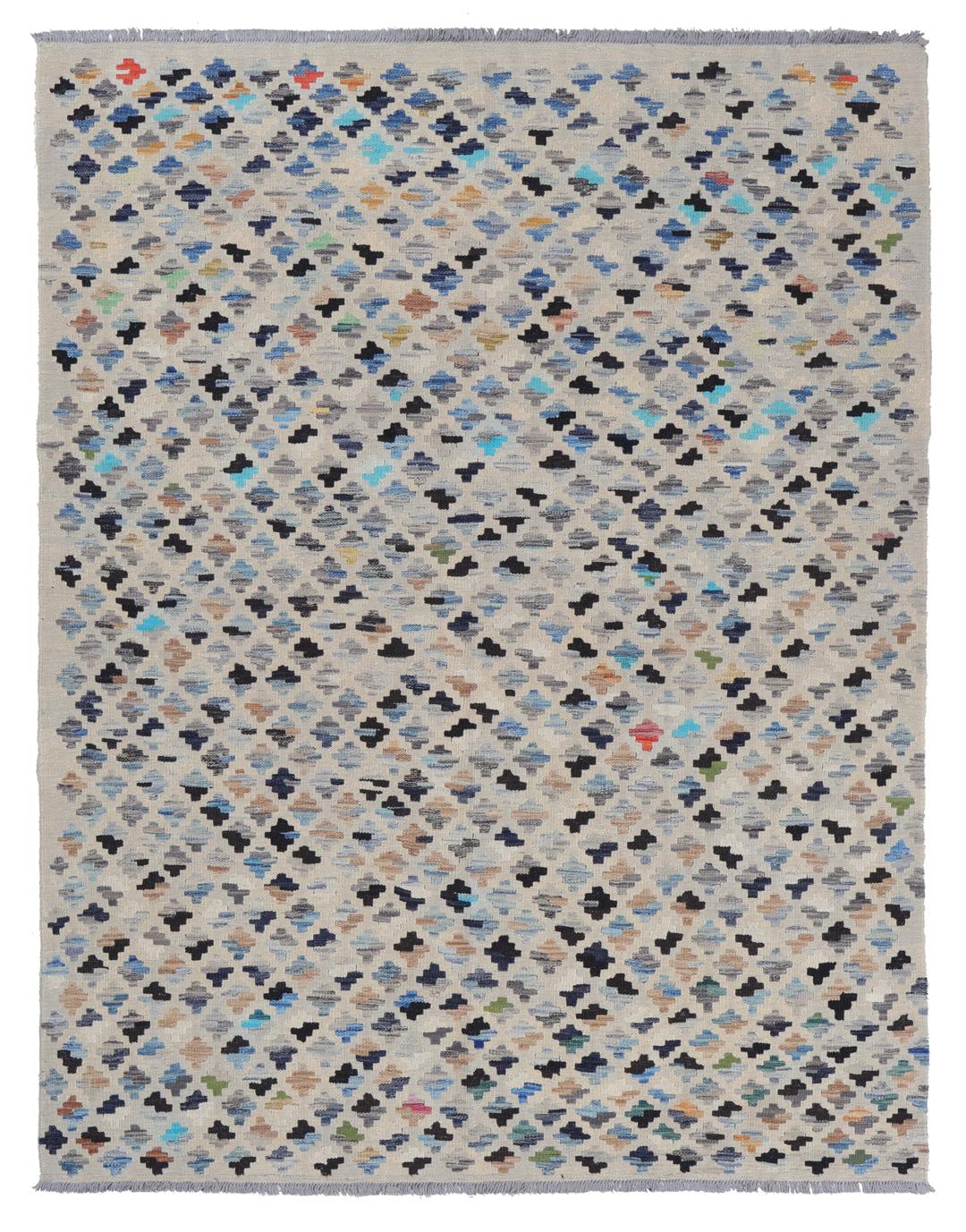
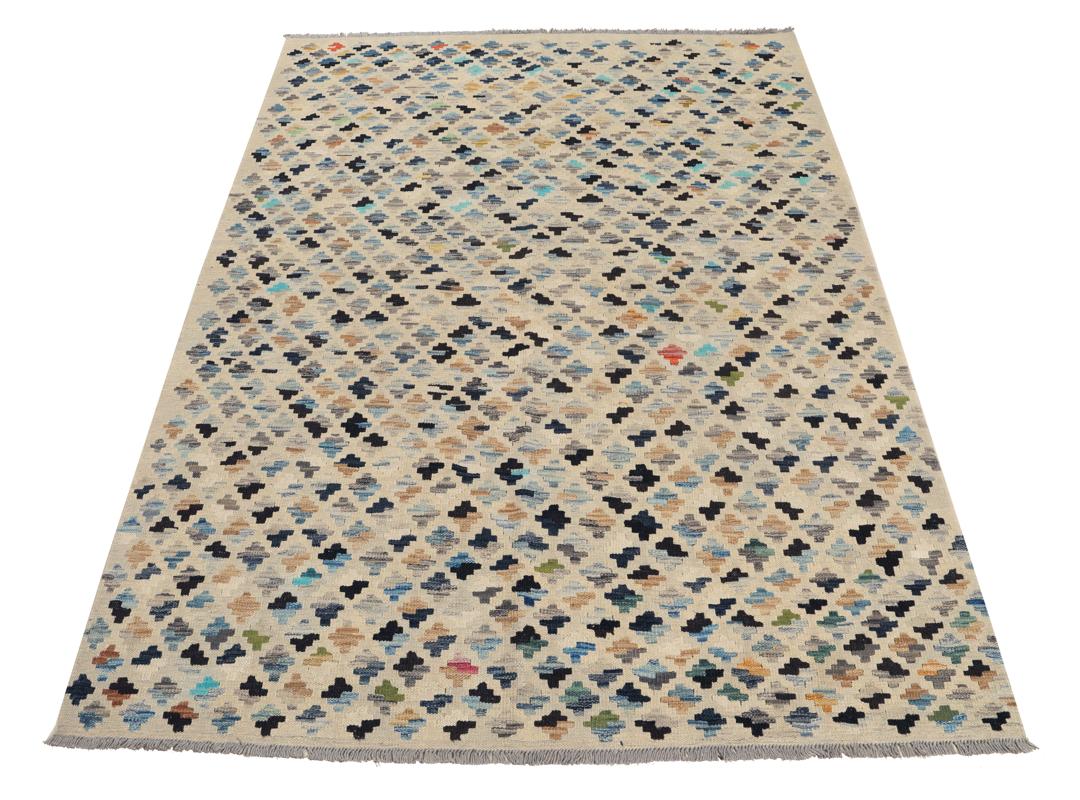
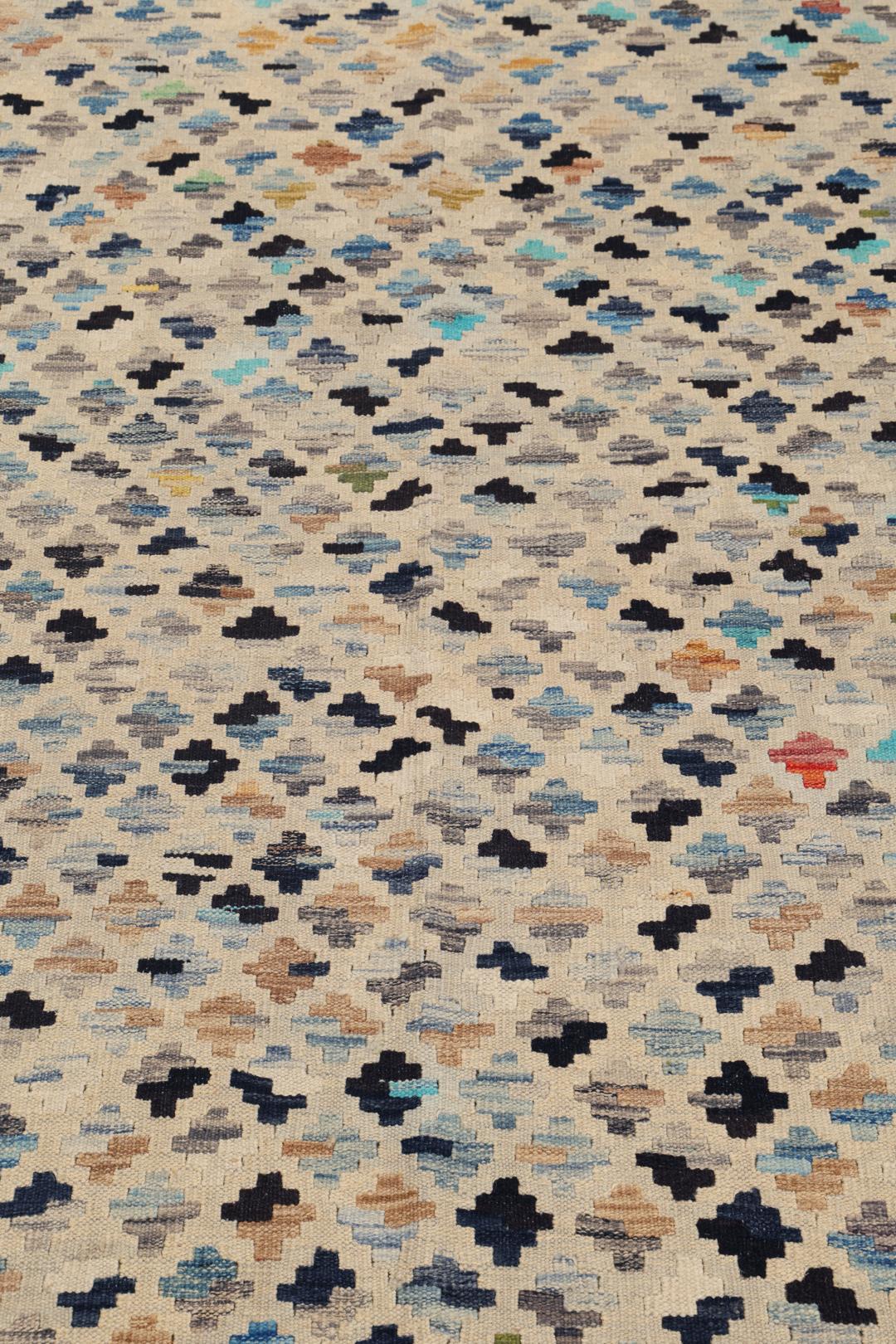
Signature elements of Afghan Kelims often include geometric motifs that carry symbolic meaning, often representing protection, prosperity, or natural elements. The design on this particular piece uses a scattered, rhythmic arrangement of shapes that feel both modern and ancient, showcasing the artistic freedom often found in these traditional, non-formalised patterns.
Collecting Afghan Kelims is an appreciation of both history and human skill. Because they are hand-woven without the use of patterns on paper, each rug is an expression of the weaver's personal style and cultural heritage. Owning a piece like this means preserving a craft tradition that values the individual artisan's touch over mass-produced uniformity.