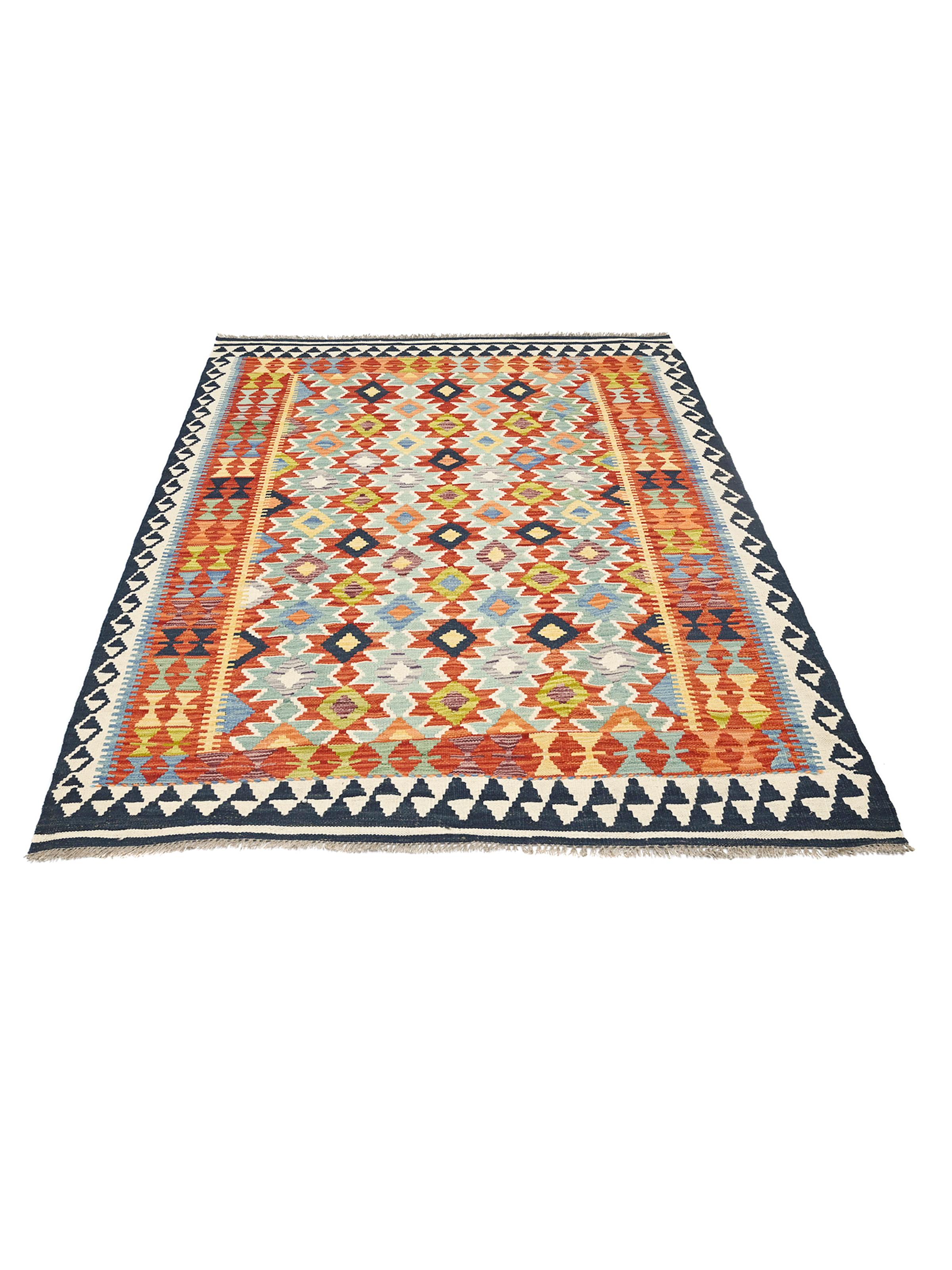
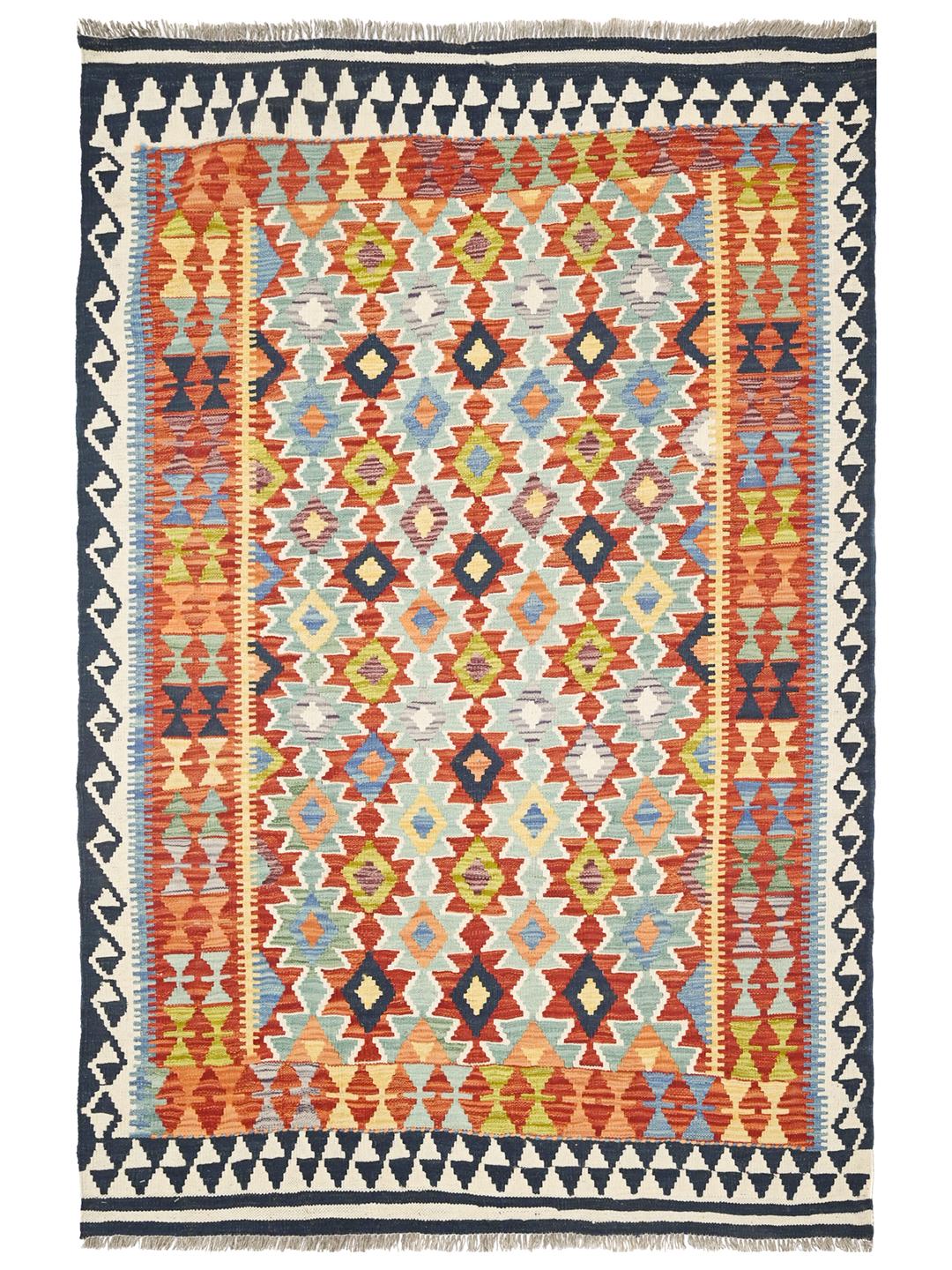
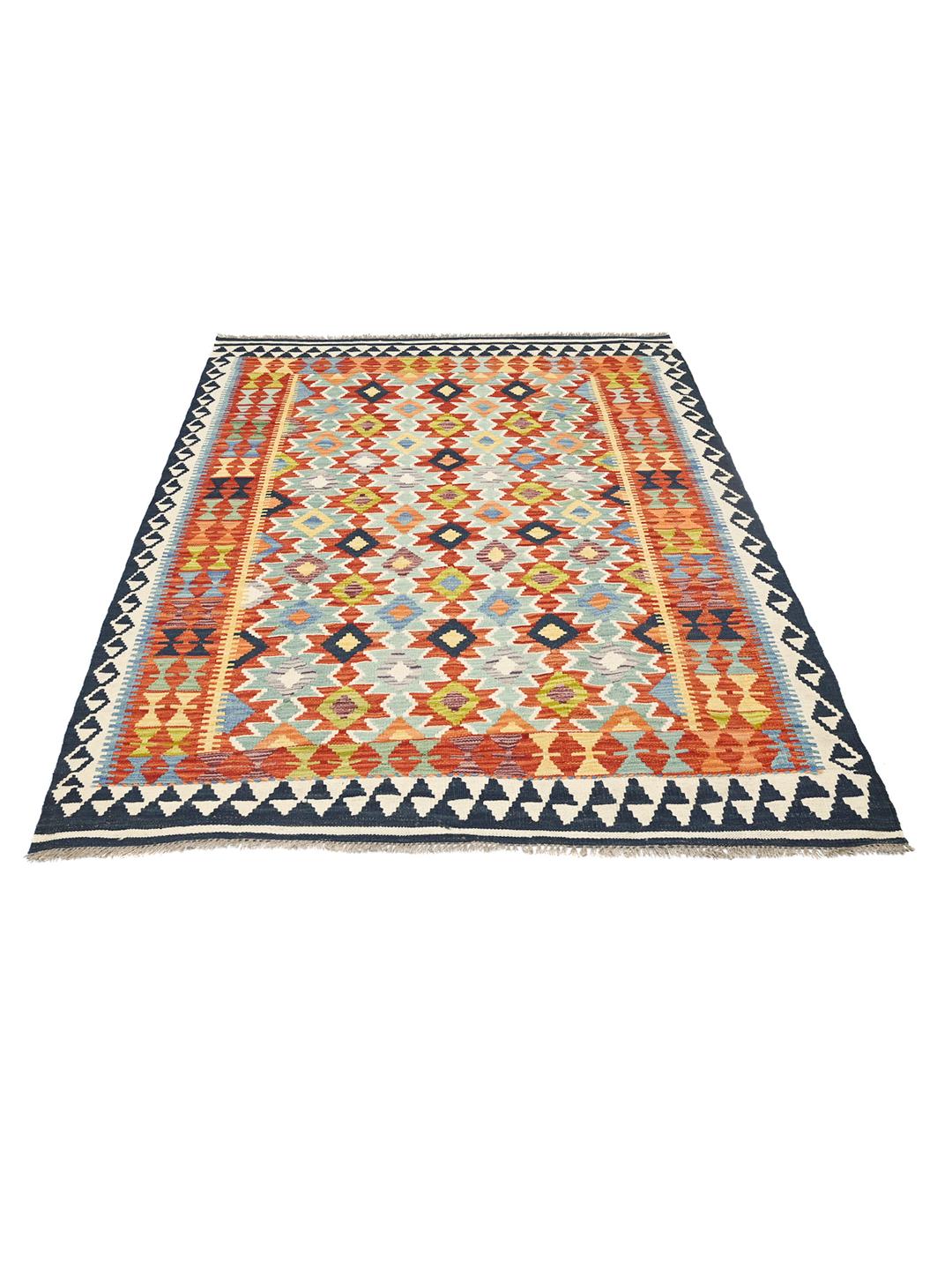
The tradition of Afghan Kelim weaving is deeply rooted in the nomadic and semi-nomadic cultures of Central Asia and Afghanistan. Historically, these flatwoven textiles were created not just as floor coverings, but as essential household items, including saddlebags, grain sacks, and protective tent hangings. The designs evolved as weavers traveled, absorbing influences from neighboring regions and sharing patterns along ancient trade routes.
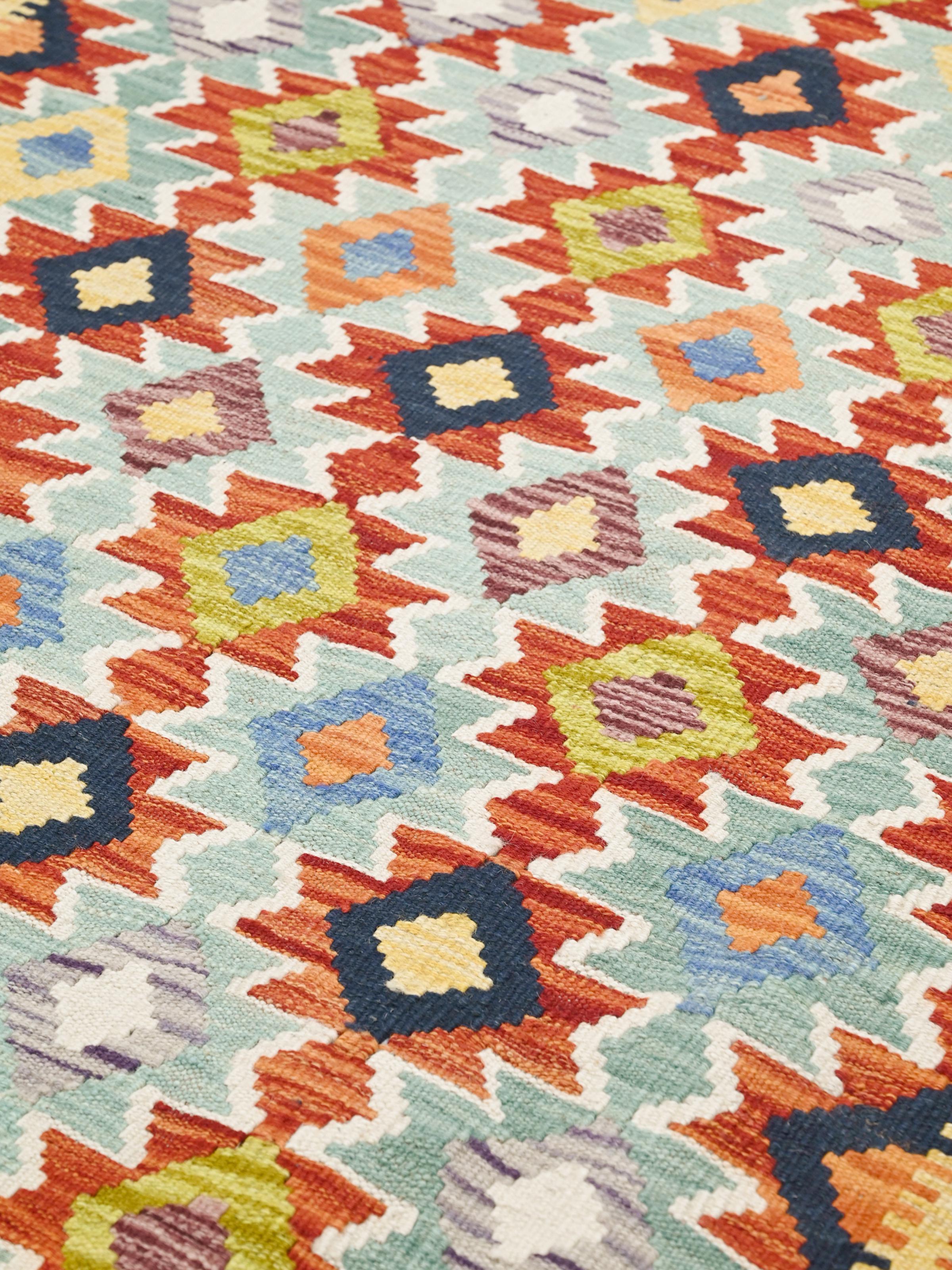
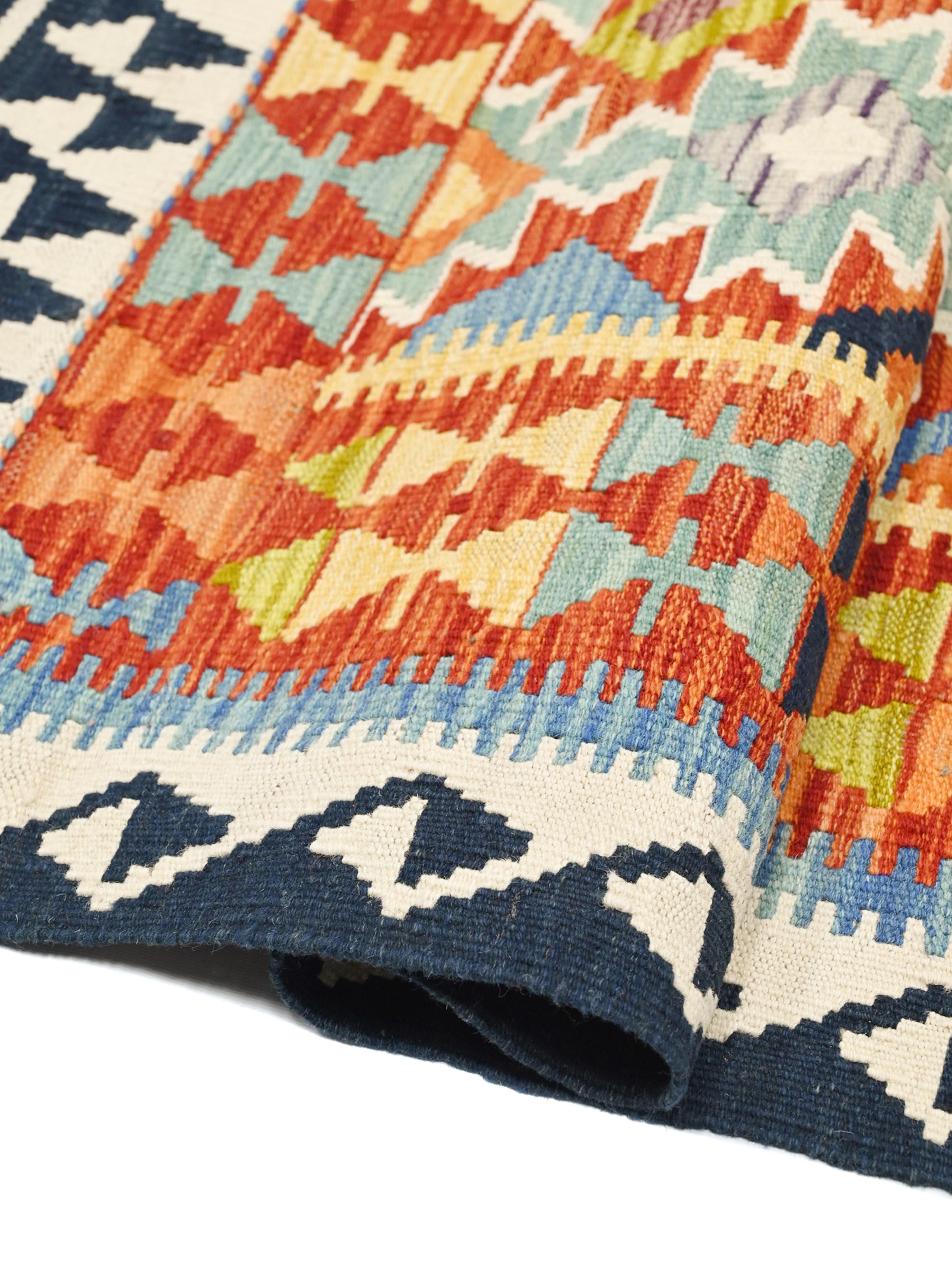
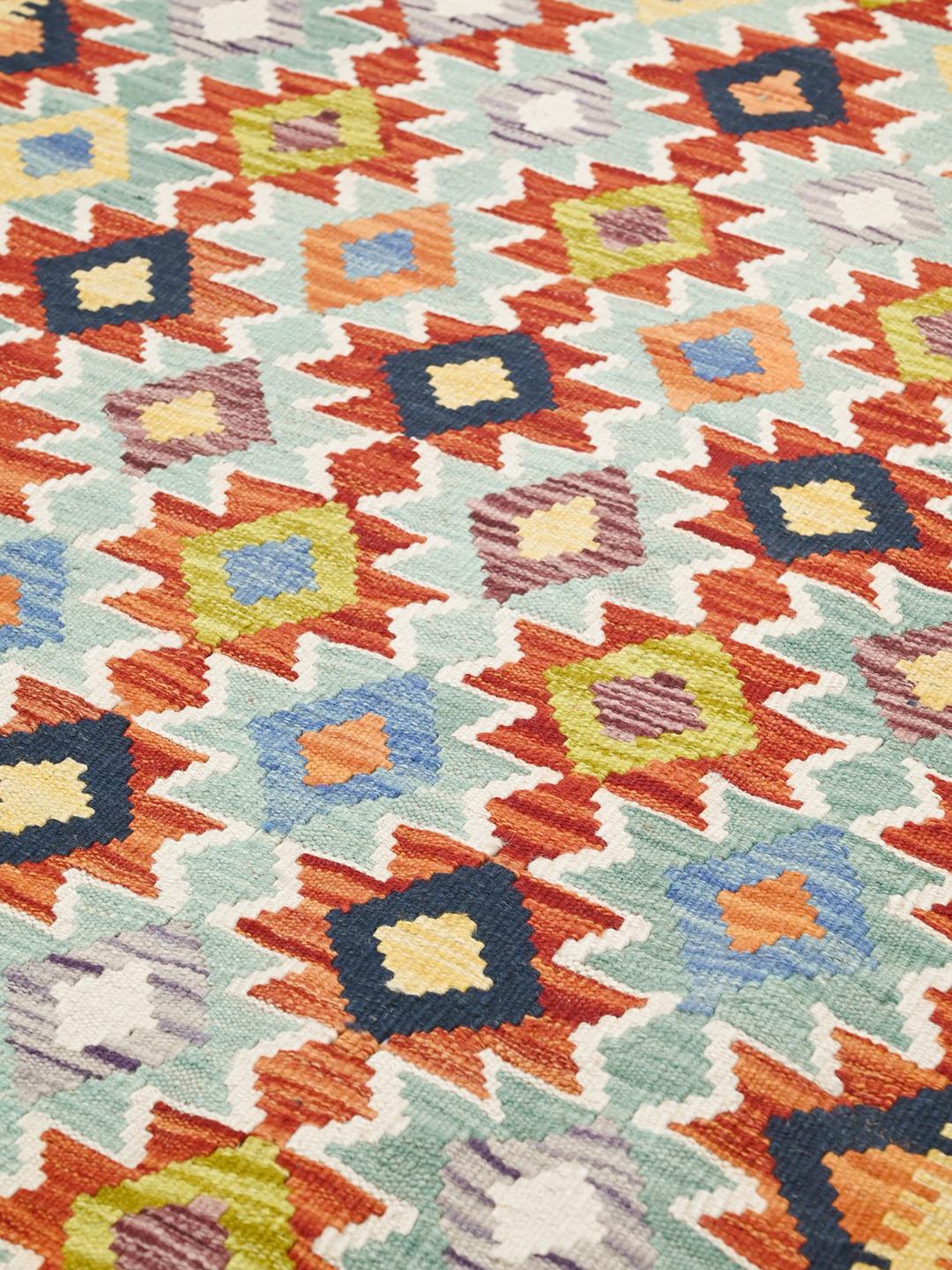
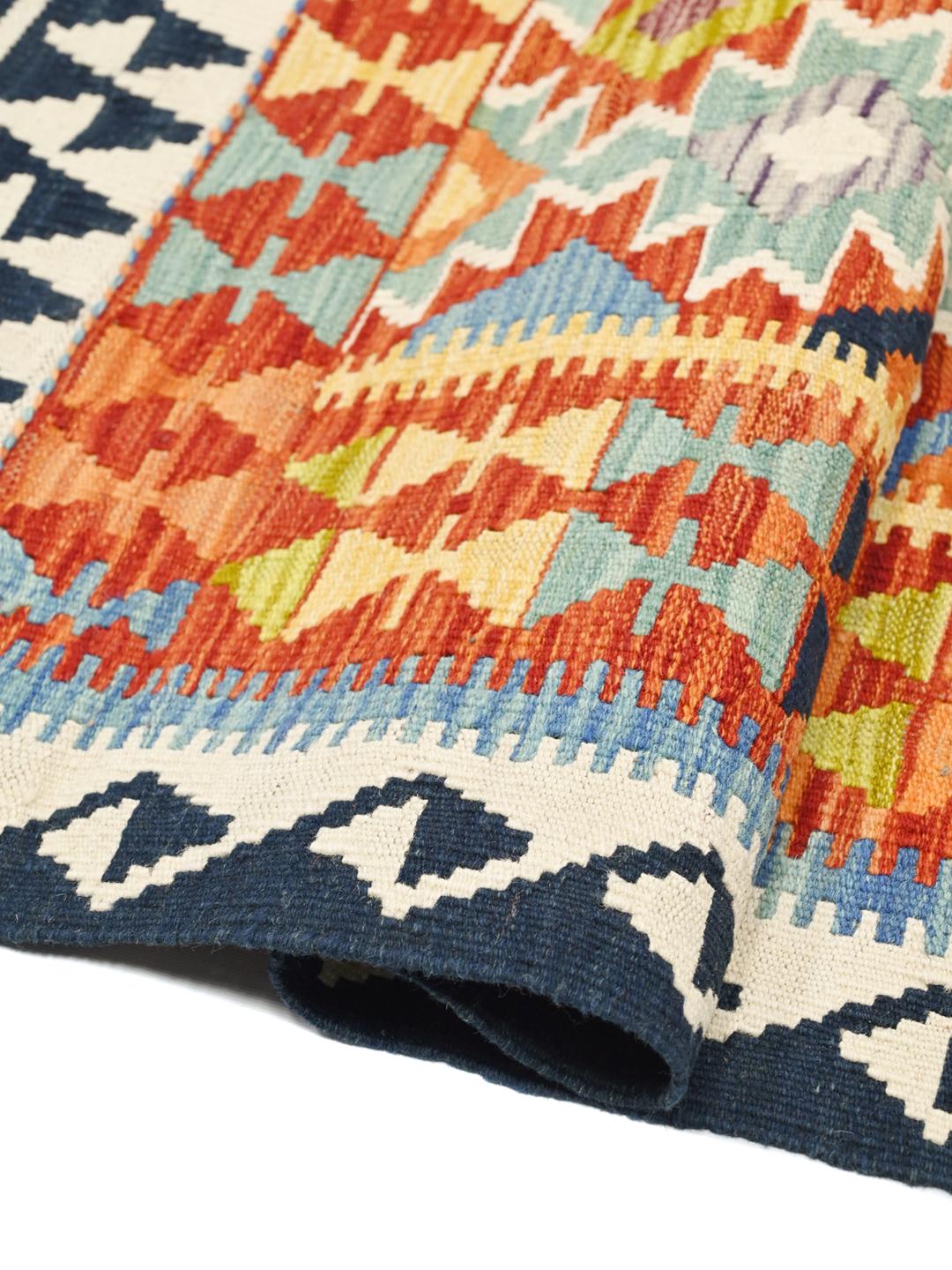
The term Kelim refers specifically to a flat, pileless rug woven using a slit-weave technique, where gaps are left between color blocks to create sharp, clean geometric boundaries. The designation Old Style refers to a conscious design movement that revives traditional tribal patterns and uses wool dyed to mimic the soft, slightly weathered tones of antique nomadic weavings, giving the rug an instant sense of history and depth.
The visual language of this rug is defined by its repeating stepped diamond motifs, traditional protective symbols, and intricate geometric borders. These patterns are characteristic of the weaving groups of northern and western Afghanistan, where geometric symmetry is used to tell stories of family, nature, and daily life. The rich palette of reds, blues, and warm earth tones is typical of the region, designed to bring warmth and color to nomadic dwellings.
Today, Afghan Kelims are highly valued by collectors and interior enthusiasts alike for their graphic modern appeal and historical depth. Because flatweaves are lighter and more versatile than piled rugs, they fit seamlessly into modern homes, offering an authentic piece of textile heritage that carries the artistic signature of the individual weaver.