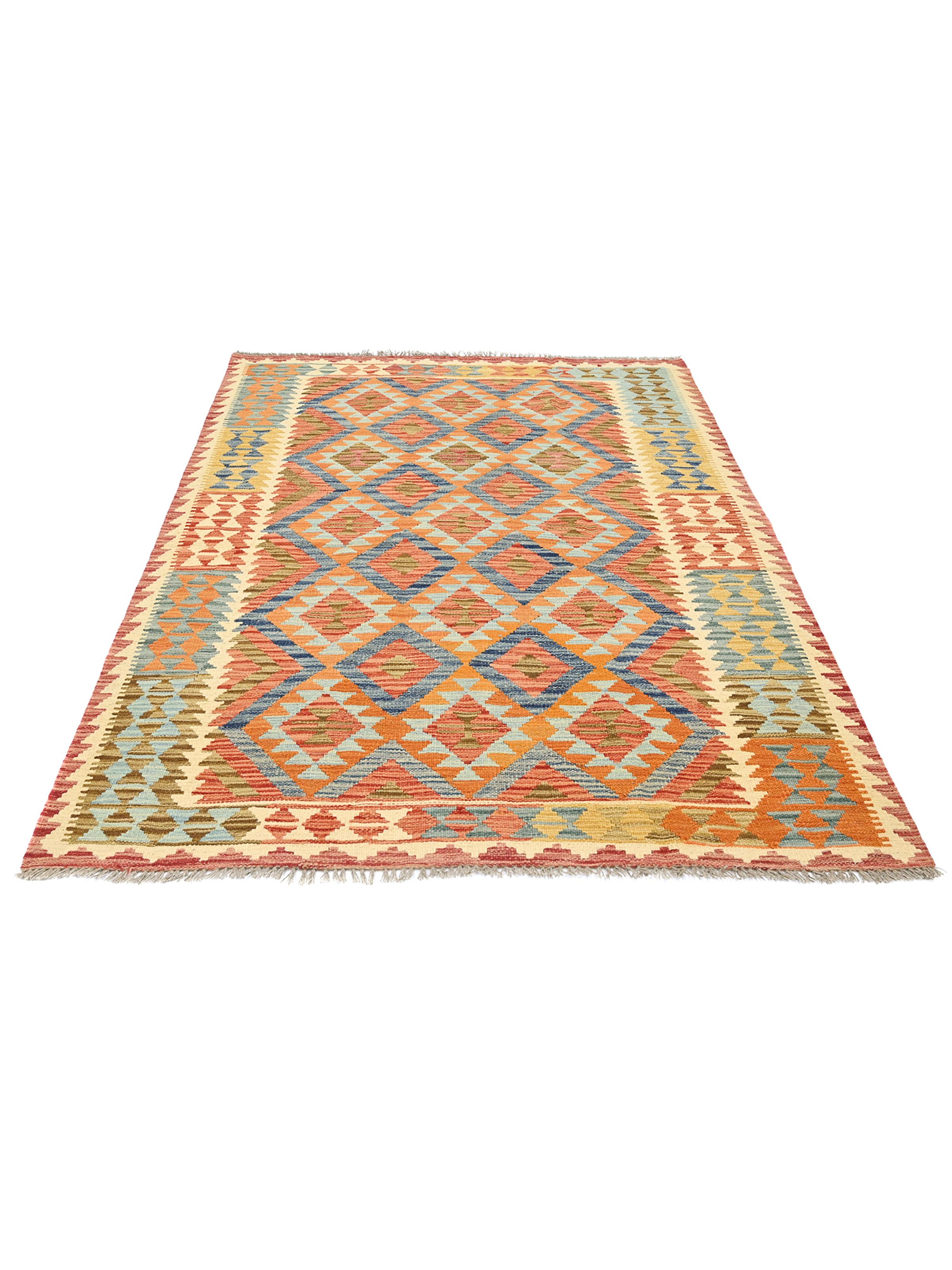
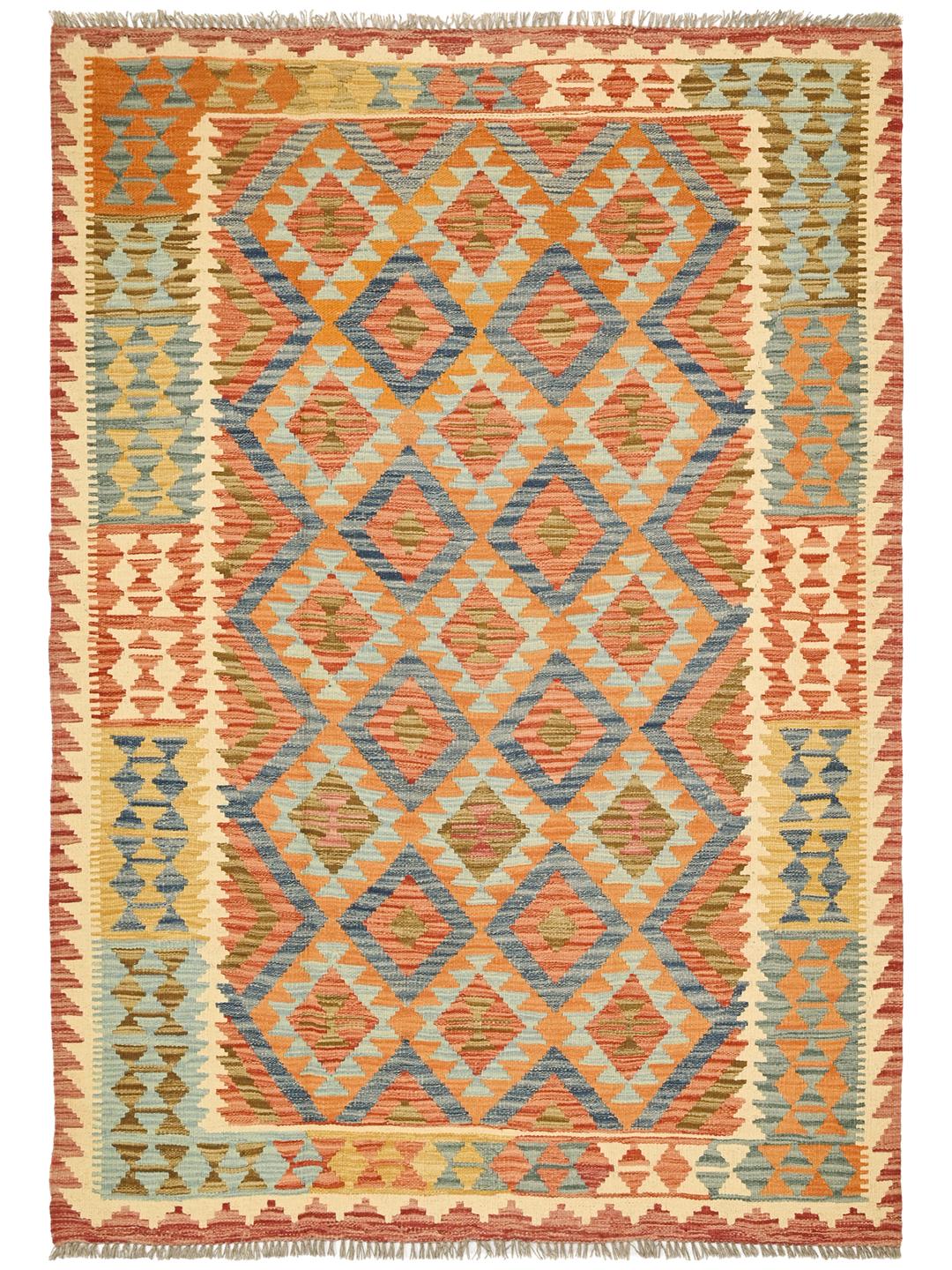
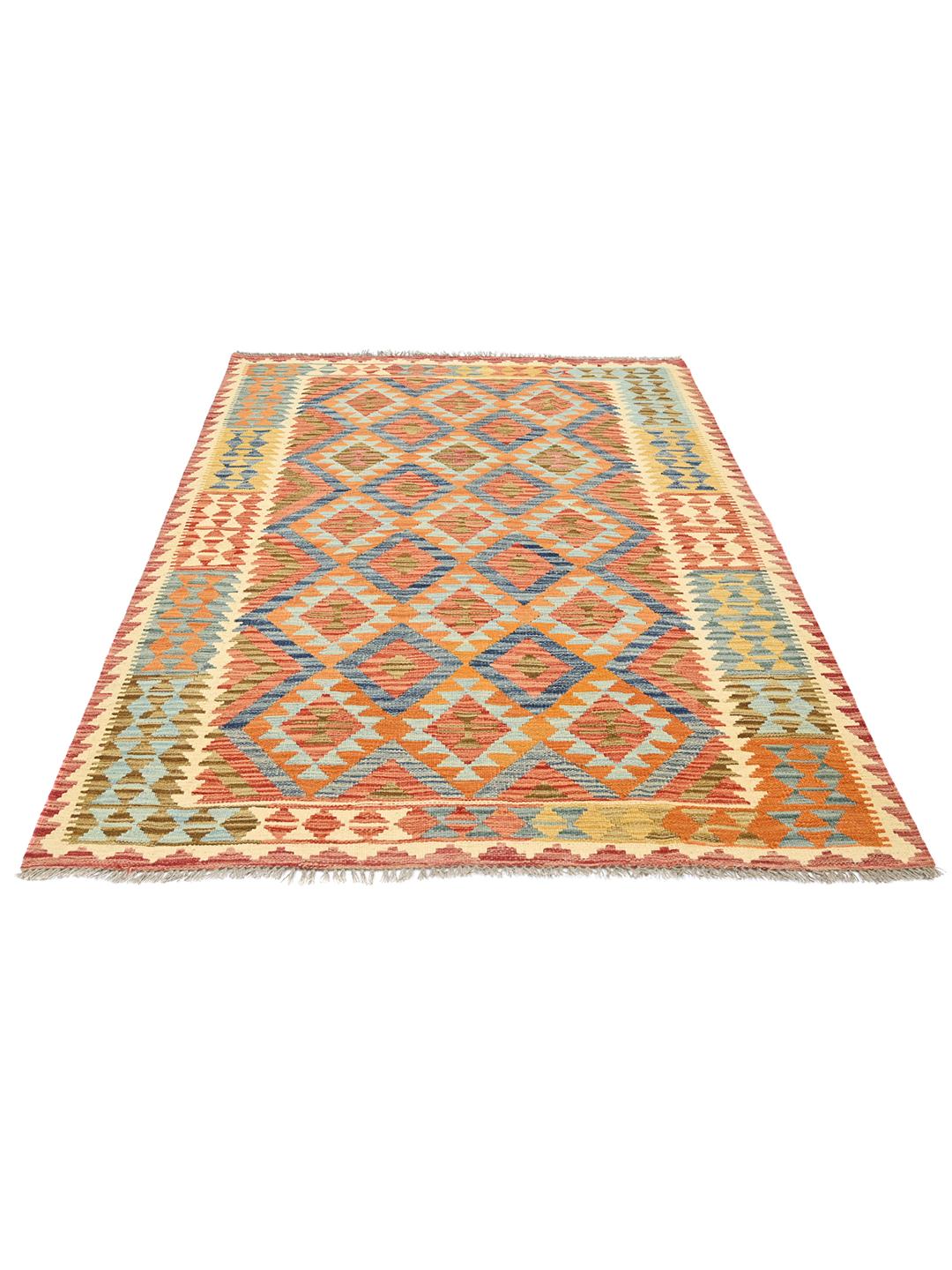
The Kelim is a storied tradition that spans across the Middle East and Central Asia. These rugs are deeply rooted in the nomadic lifestyle, where they were originally created as functional, portable textiles for tents, serving as floor coverings, blankets, and storage bags. Today, the Afghan Kelim remains one of the most respected forms of textile art, celebrated for its durability and its ability to bridge the gap between ancient necessity and modern interior design.
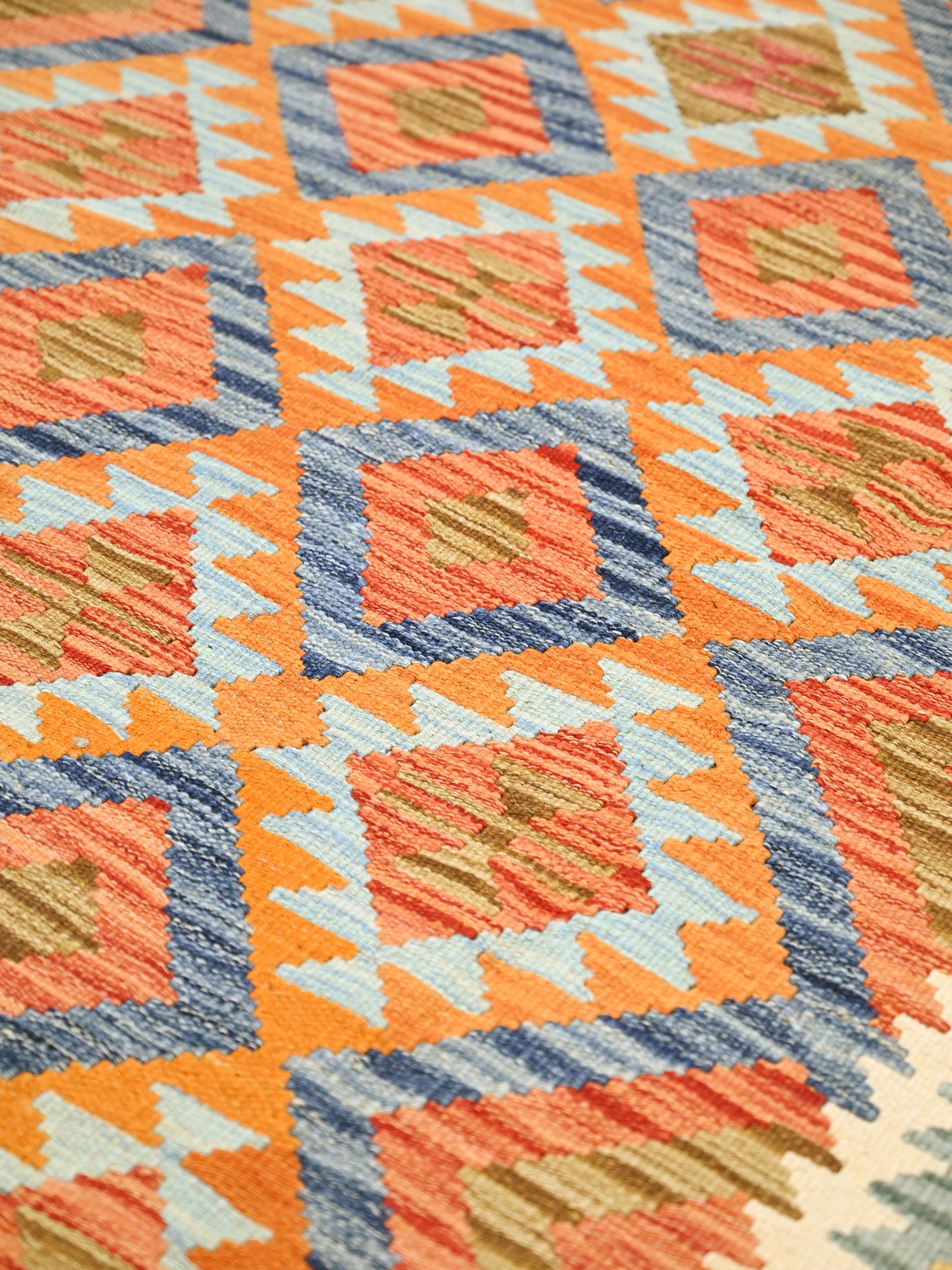
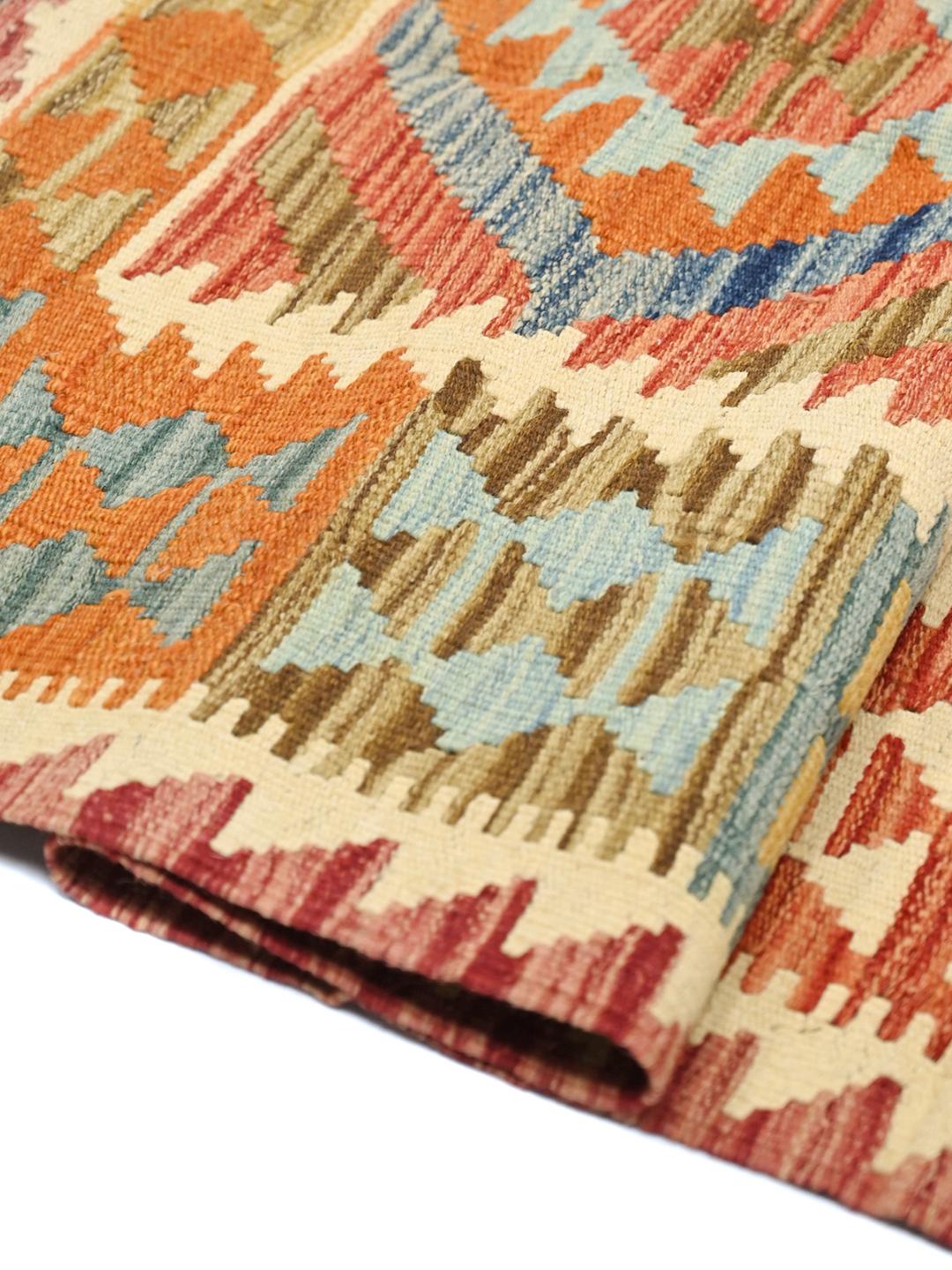
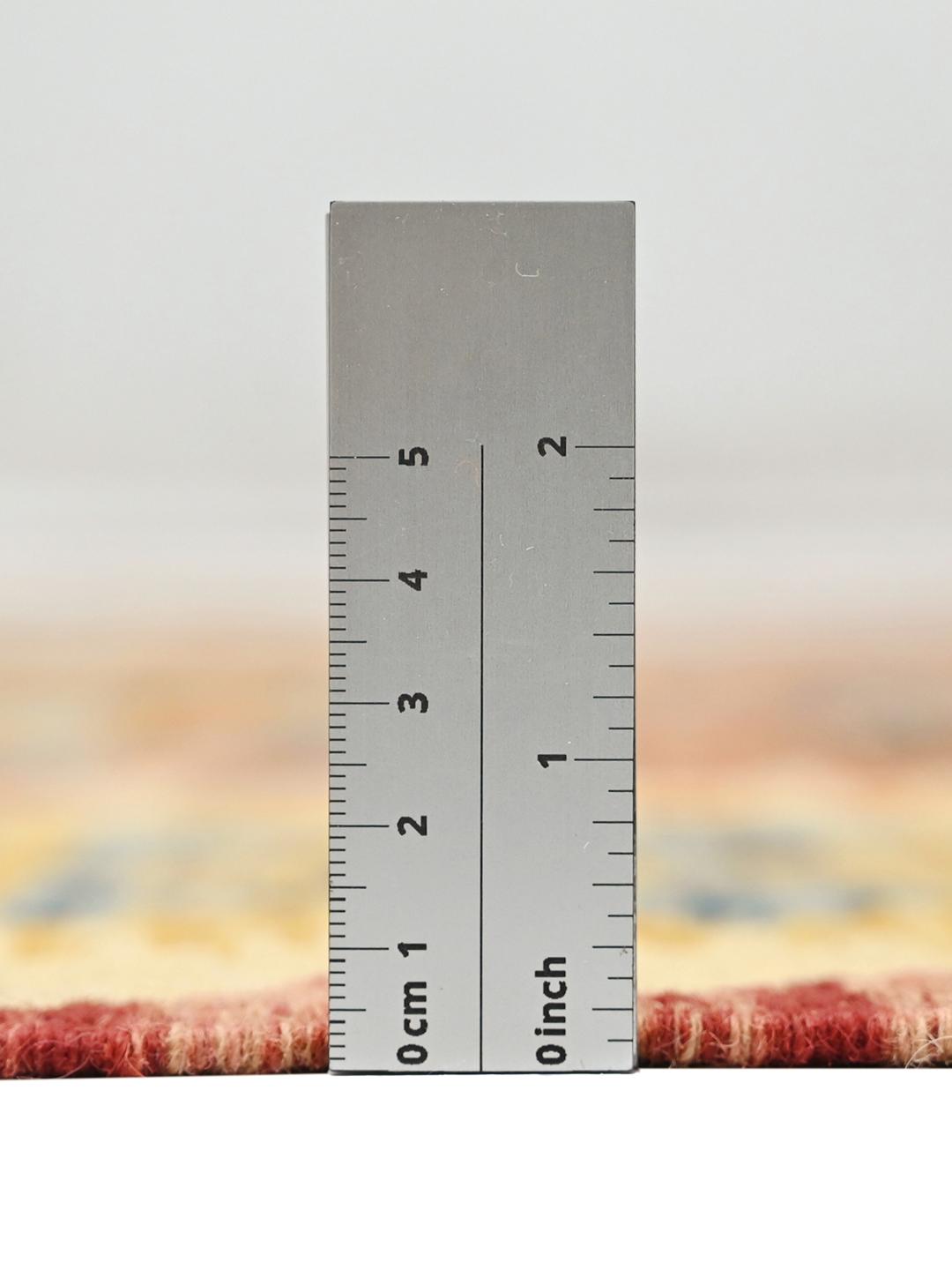
The term 'Kelim' refers specifically to the flat-weaving technique used to create these rugs. By avoiding a pile, the artisan relies entirely on the interplay between the warp and weft threads to build the design. This creates a reversible, lightweight textile that is exceptionally versatile. The precision required to maintain straight lines and sharp colour transitions during the weaving process is a hallmark of a high-quality Kelim, demanding a level of skill that only experienced weavers possess.
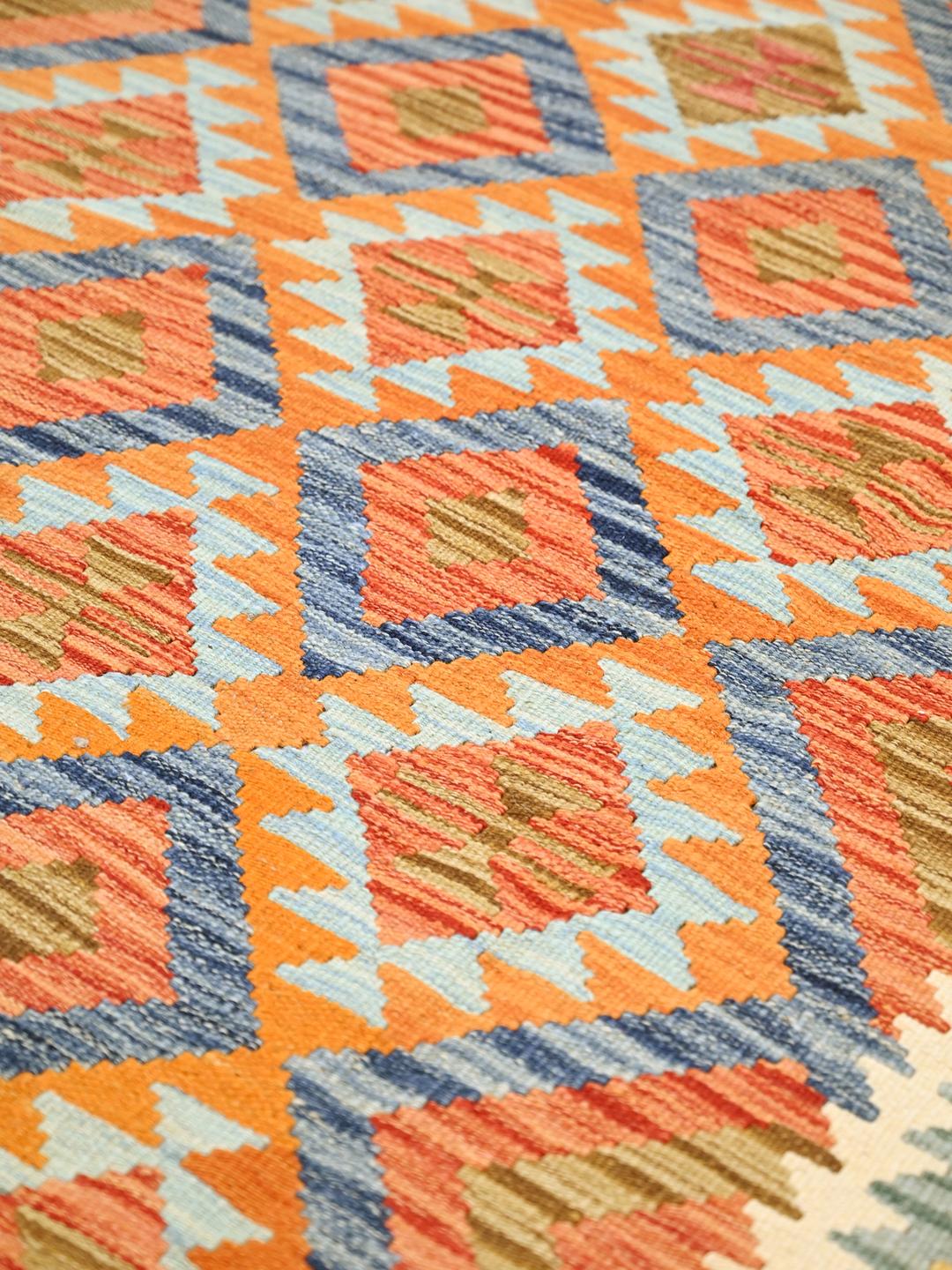
Visually, these rugs are defined by their geometric language. You will typically see repeating diamond shapes, triangles, and intricate borders, often rendered in bold, earthy tones. This specific rug showcases a vibrant colour palette that is characteristic of the Afghan tradition, where natural dyes were historically used to create deep, lasting hues. The motifs often carry symbolic meanings, representing protection, fertility, or the natural landscape of the region.
Collecting a Kelim is an investment in cultural heritage. Because they are not mass-produced, each rug serves as a document of the weaver's personal expression and the regional style of their home village. Owning one is a way to celebrate a history that values slow, careful work over speed. These rugs are cherished by collectors and homeowners alike for their ability to add soul and colour to a space while standing as a testament to the enduring power of human creativity.