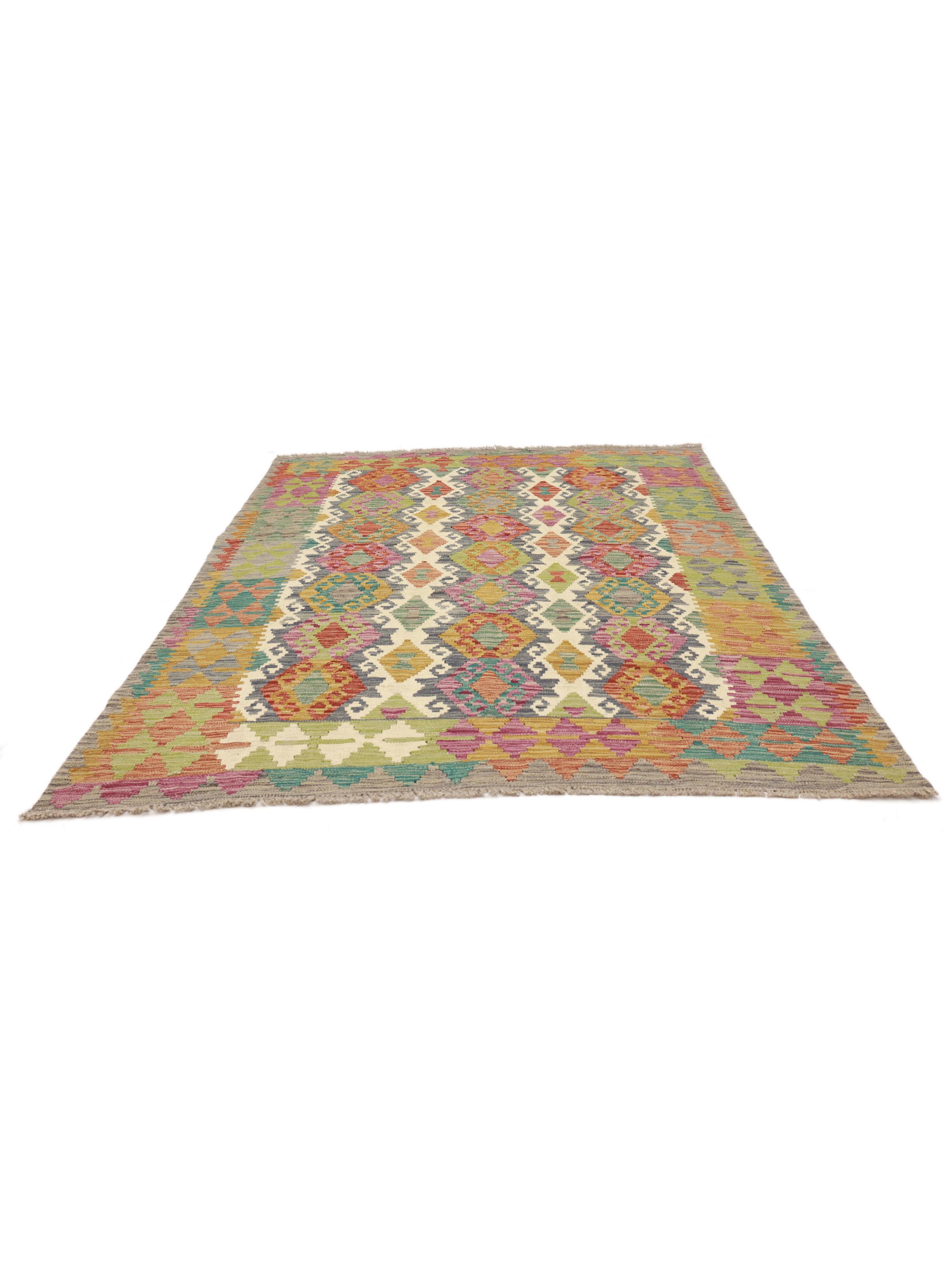
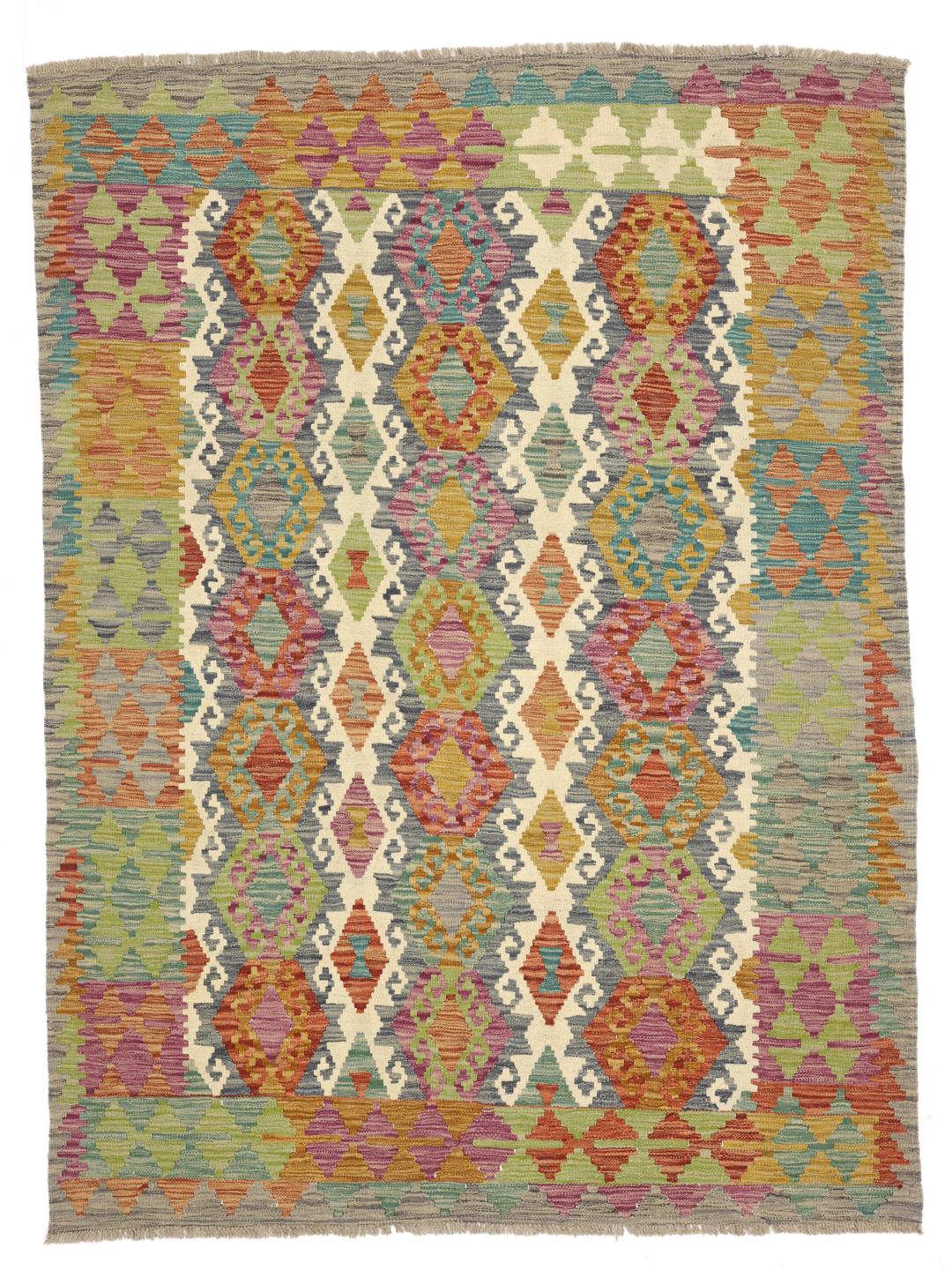
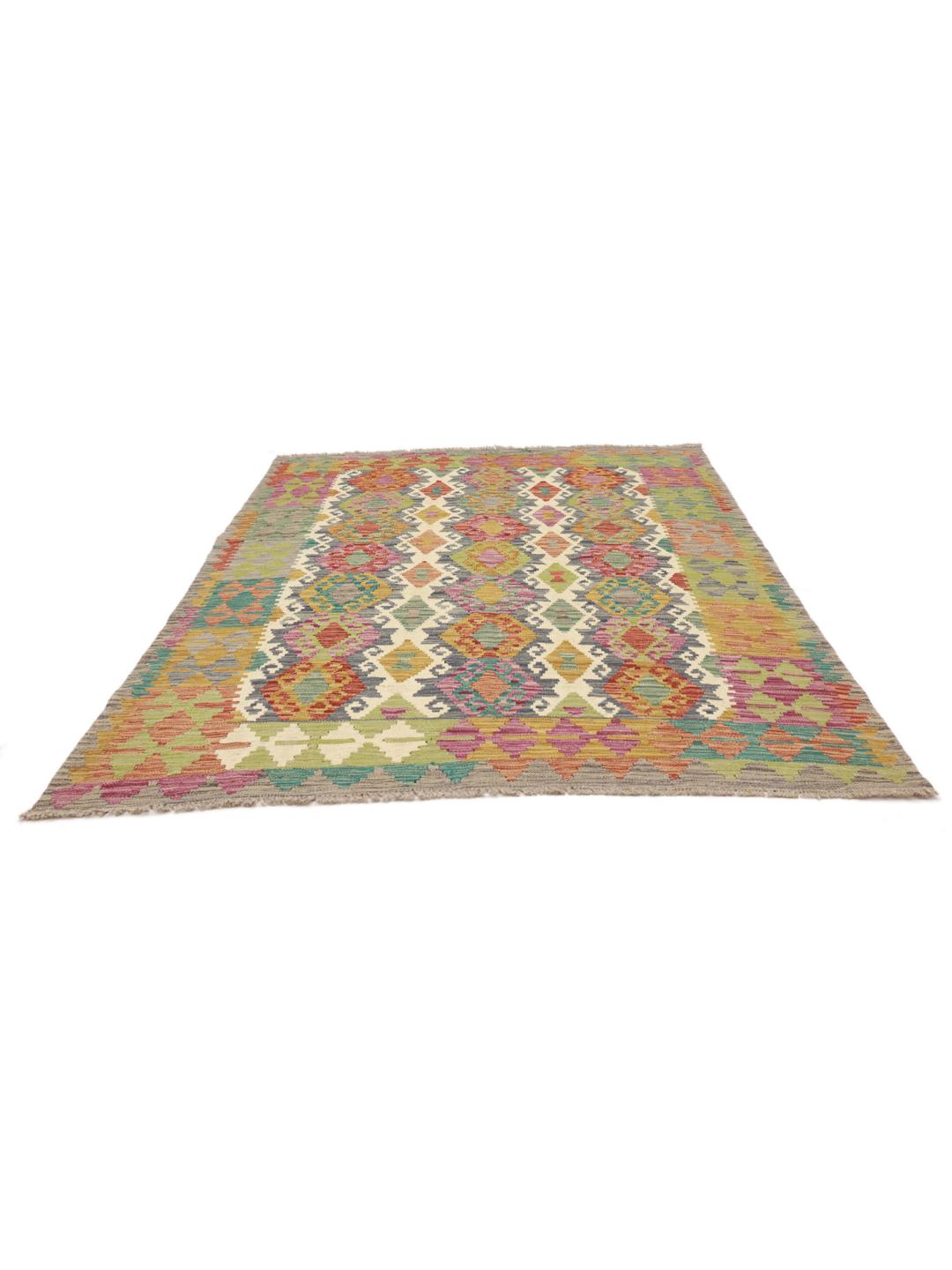
The Kelim rugs of Afghanistan are deeply rooted in the nomadic and semi-nomadic traditions of the region. These flat-woven textiles have historically served as versatile floor coverings, wall hangings, and functional storage bags for tribal groups navigating the rugged landscapes of Central Asia.
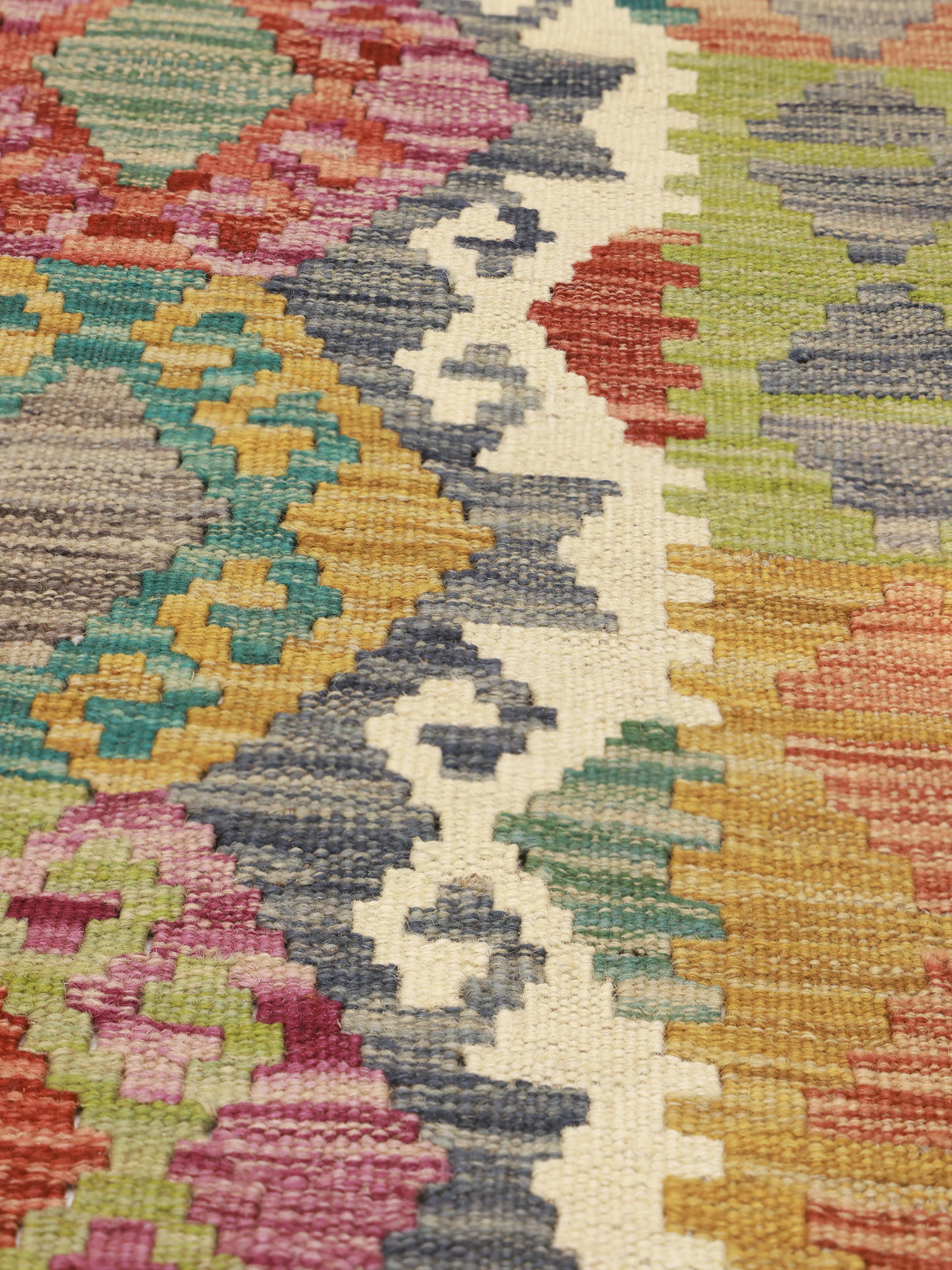
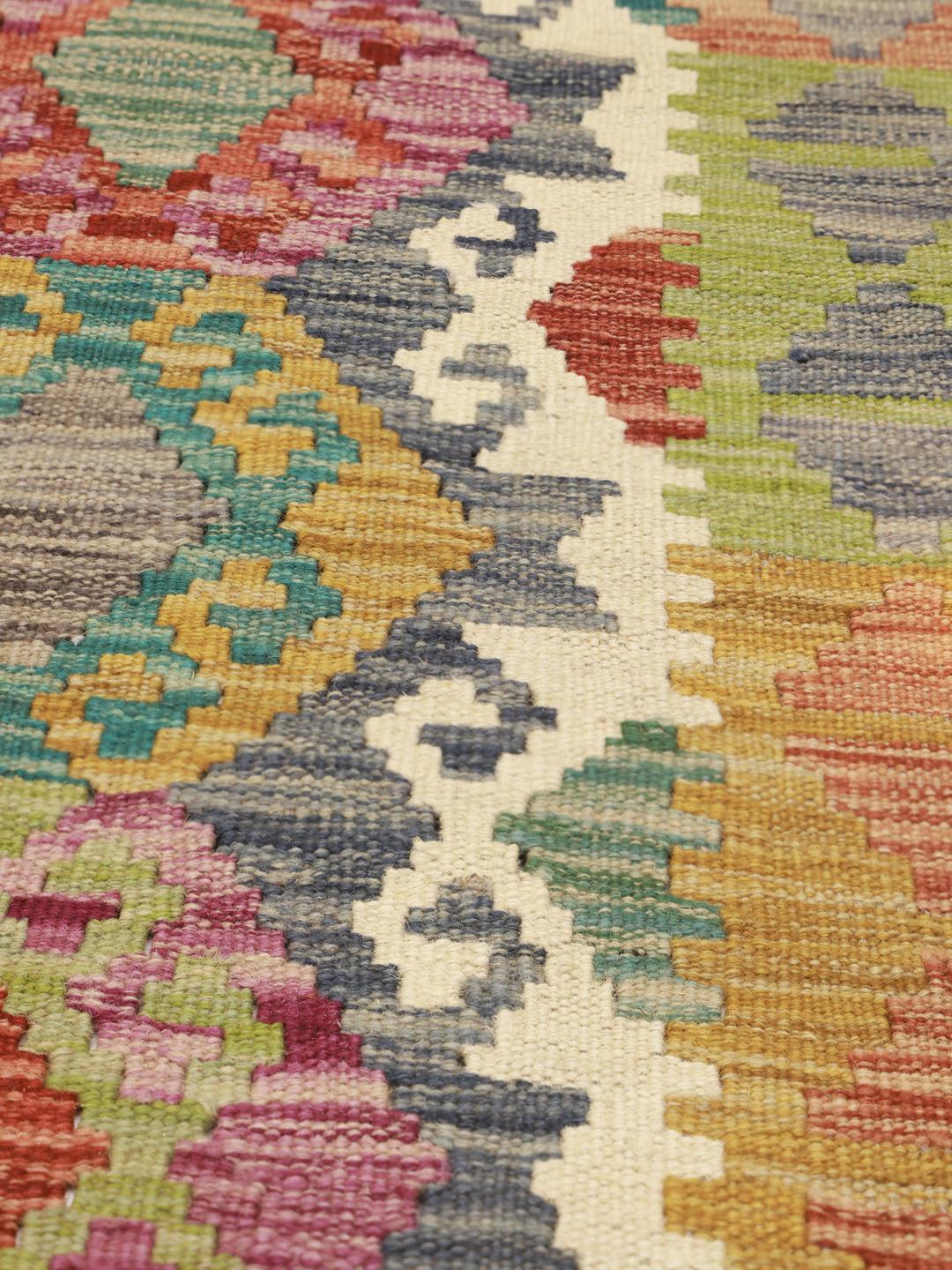
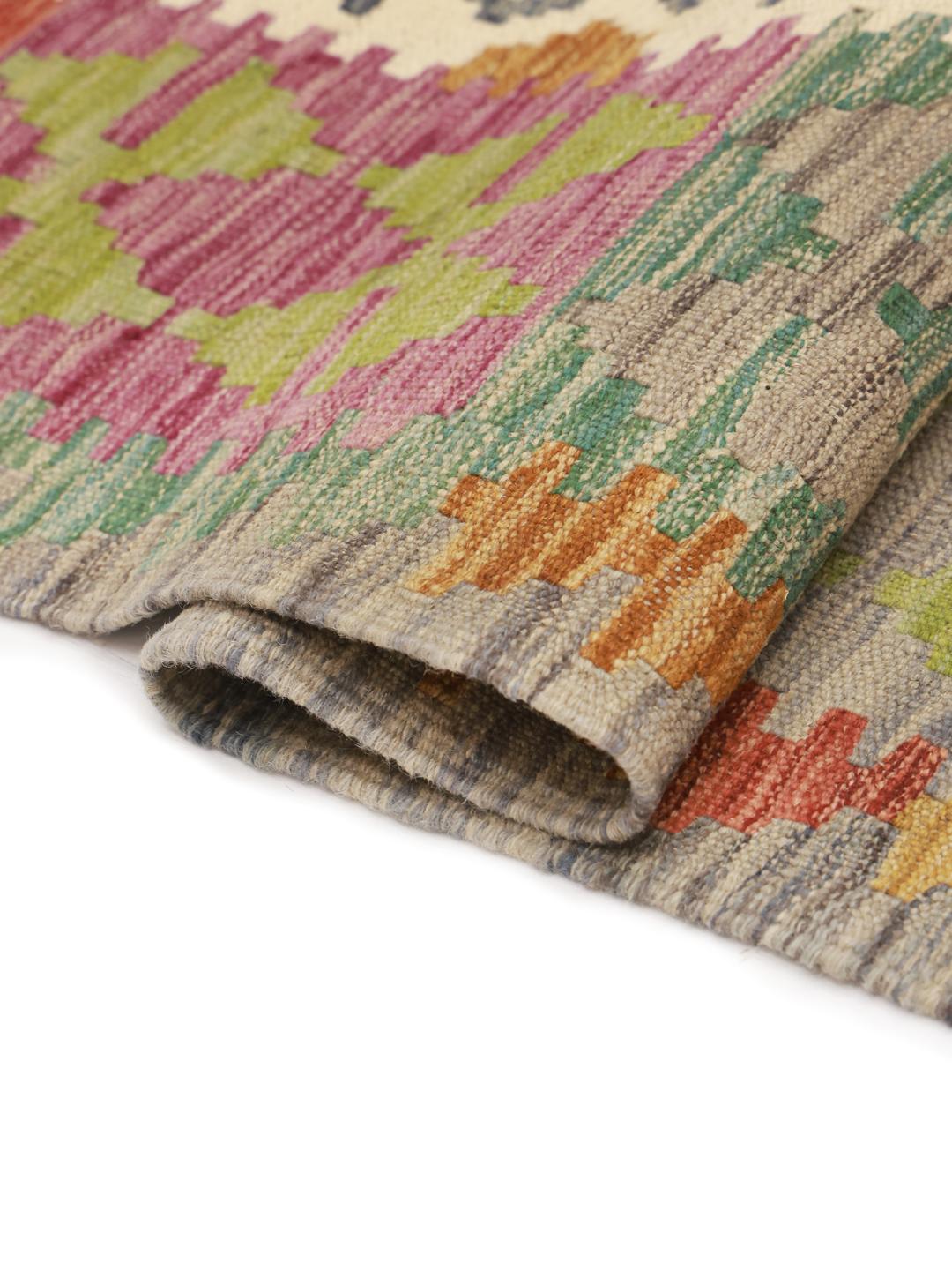
The term Kelim refers specifically to the tapestry-weave technique where the weft threads are passed through the warp to create a smooth, pileless surface. This method is essential for achieving the clean, sharp lines of the geometric patterns that define the style, as the weaver must constantly change colours to build the intricate motifs.
Signature design elements often include bold, repeating geometric shapes such as diamonds and zig-zags, rendered in a spectrum of earthy and vibrant tones. These patterns are not merely decorative but often carry symbolic meanings, representing protection, fertility, or the specific identity of the weaving family.
Collectors value these rugs for their raw authenticity and the direct connection they provide to ancient craft practices. Owning an Afghan Kelim means participating in a living history, where each rug serves as a testament to the skill, patience, and cultural continuity of the artisans who keep these traditions alive today.