The Kelim tradition is deeply rooted in the nomadic history of the Middle East and Central Asia. These flatweave rugs were historically essential for nomadic tribes, serving as versatile floor coverings, wall hangings, and storage bags. The techniques have been passed down through generations, with Afghan weavers refining these methods to create the bold, geometric aesthetic known today.
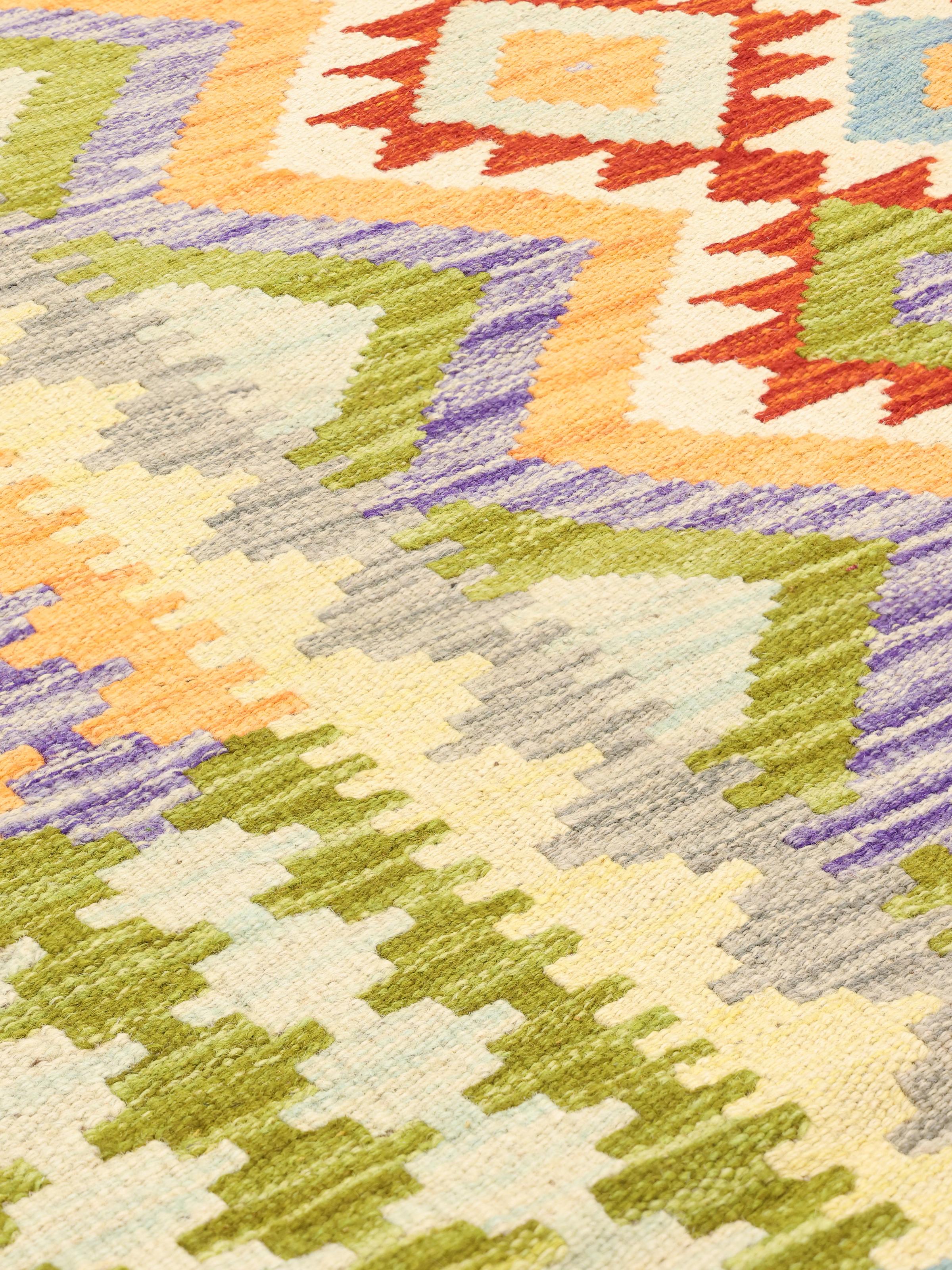
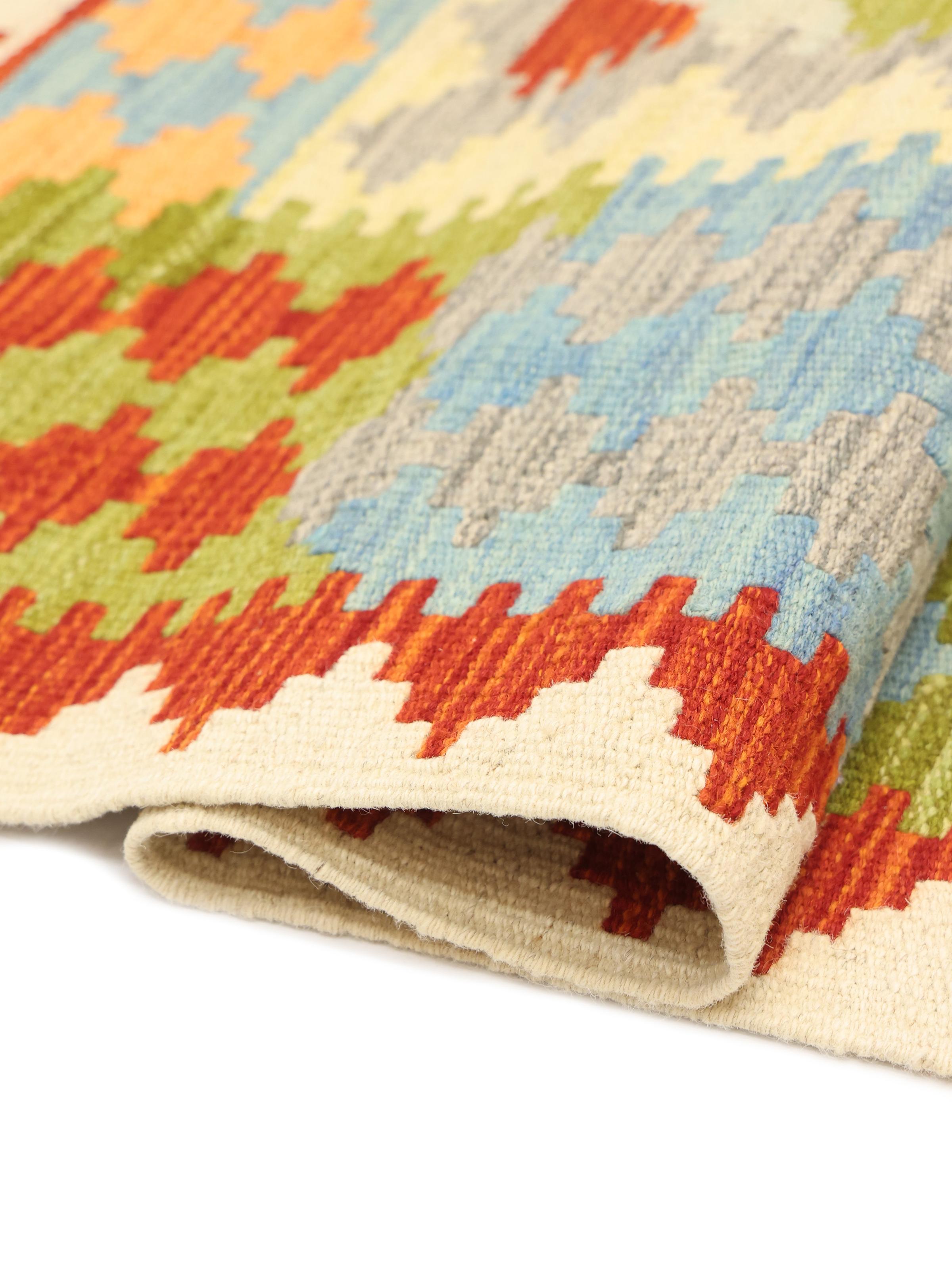
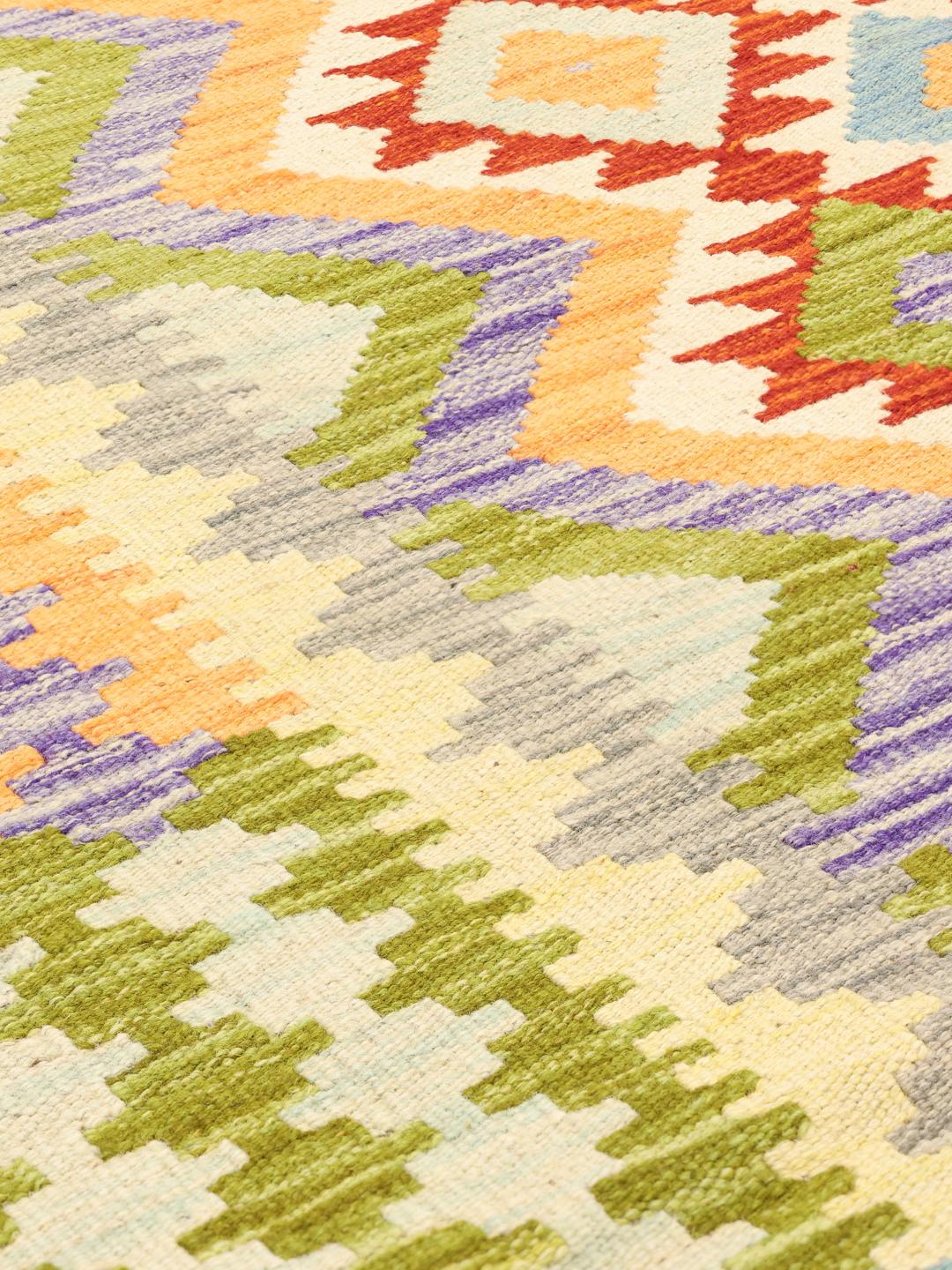
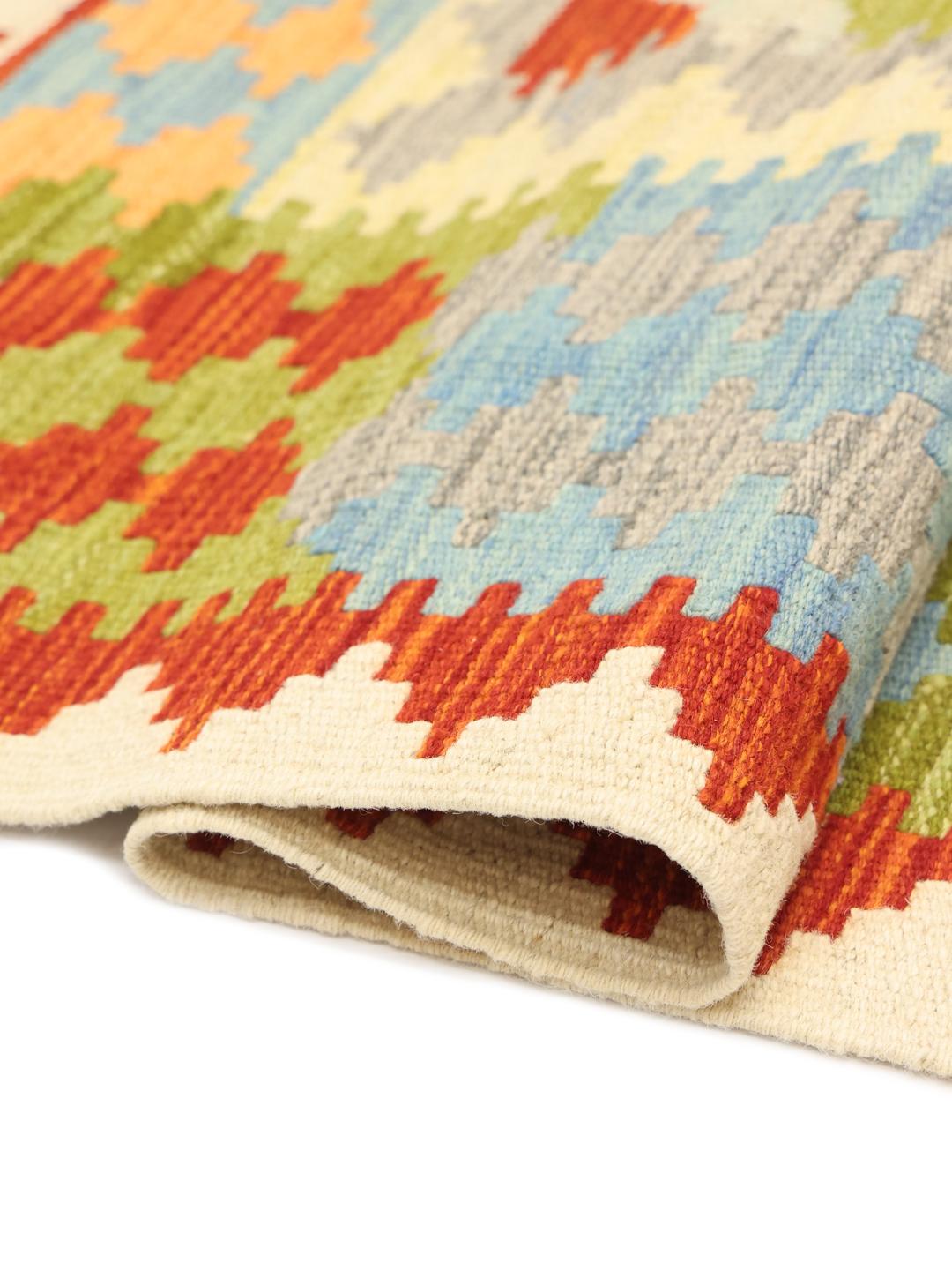
A Kelim is defined by its lack of a pile, achieved through a slit-weave technique where the weft threads are looped around the warp threads. This results in a durable, reversible textile that is prized for its versatility. The quality of a Kelim is determined by the tightness of this weave, which prevents fraying and ensures the geometric motifs remain crisp and well-defined over time.
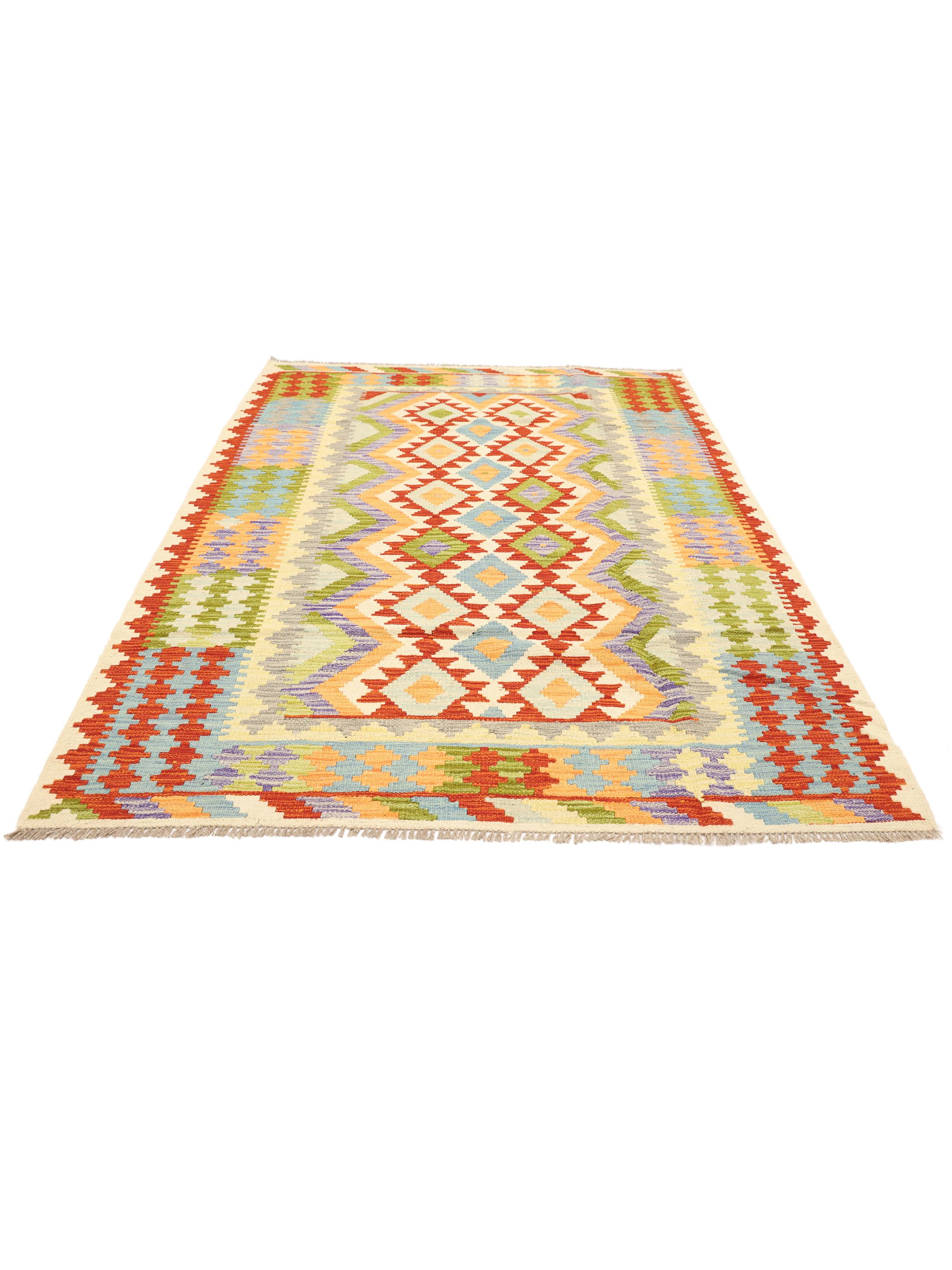
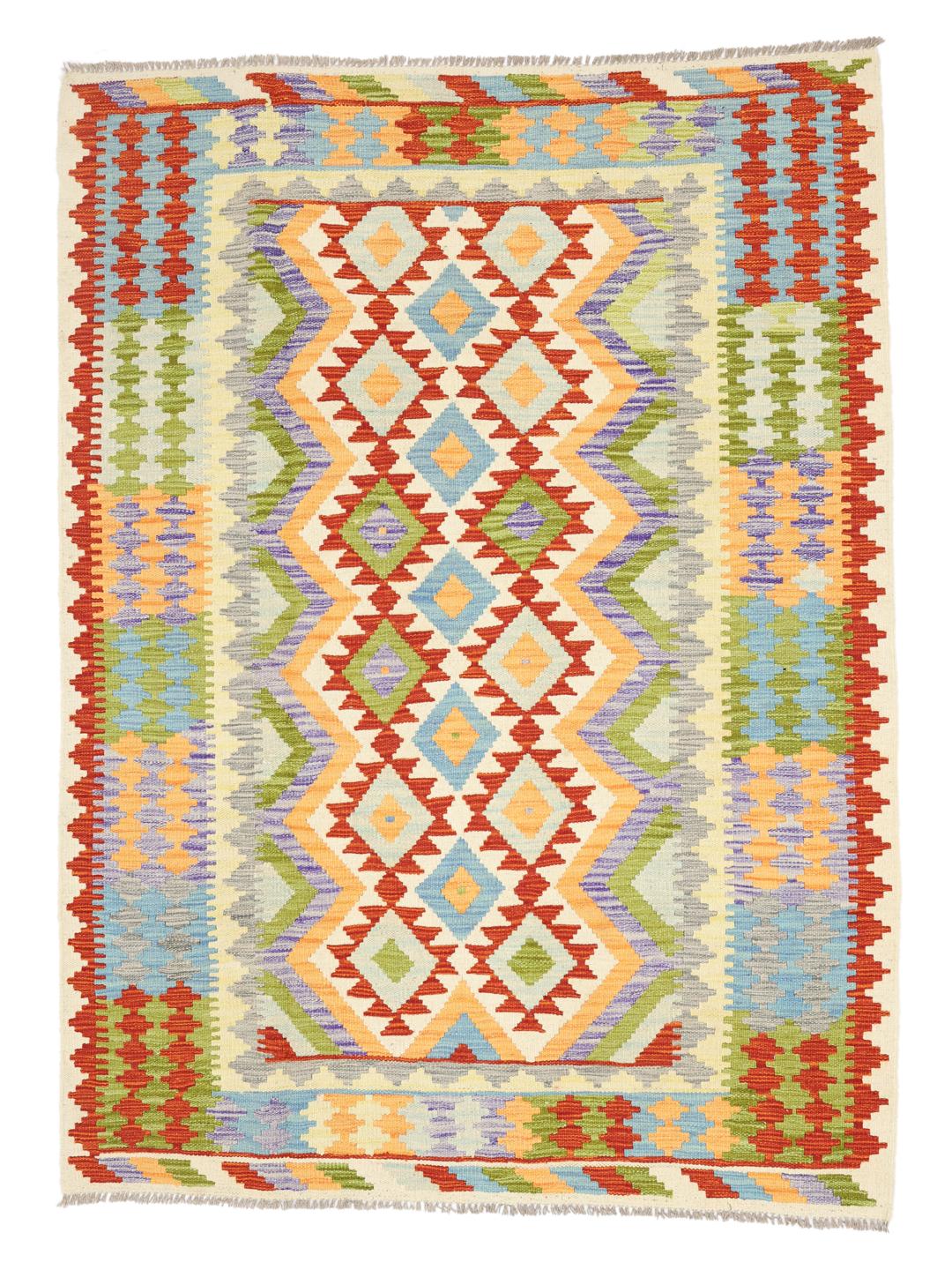
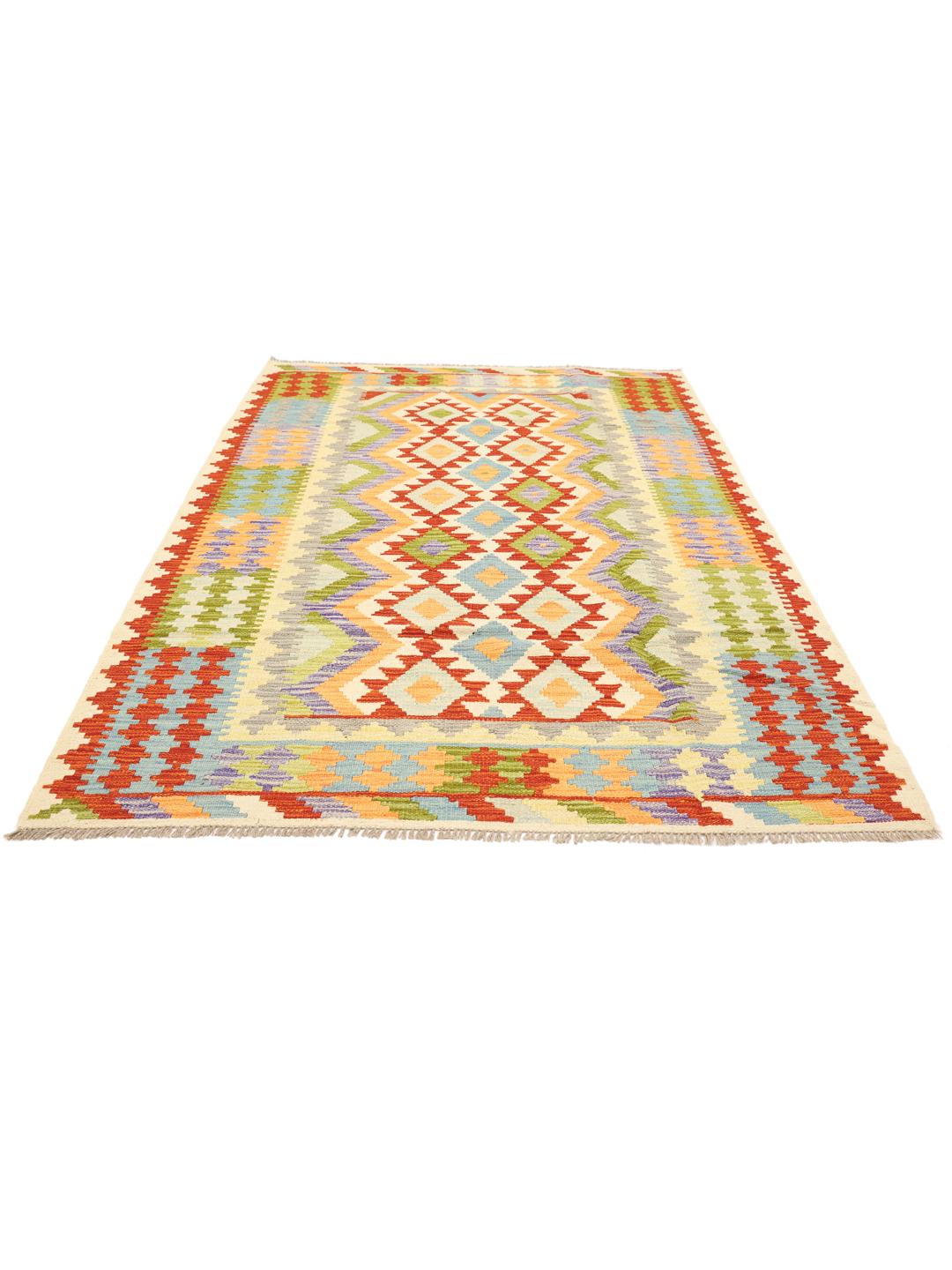
The signature design elements of Afghan Kelims often feature sharp, angular diamonds and repeated geometric motifs that reflect the cultural landscape of the region. This particular piece utilises a vibrant palette, which is a hallmark of the style, intended to bring light and life into the dwelling. The borders are typically kept consistent with the field, creating a sense of frame and enclosure common in traditional nomadic art.
Owning a Kelim is a way to preserve a piece of living history. These rugs are not just decor, but vessels of cultural identity, with each colour and pattern often holding traditional significance. By bringing this piece into your home, you are supporting a legacy of craftsmanship that has survived for centuries, securing a piece of art that gains more charm and character with every passing year.