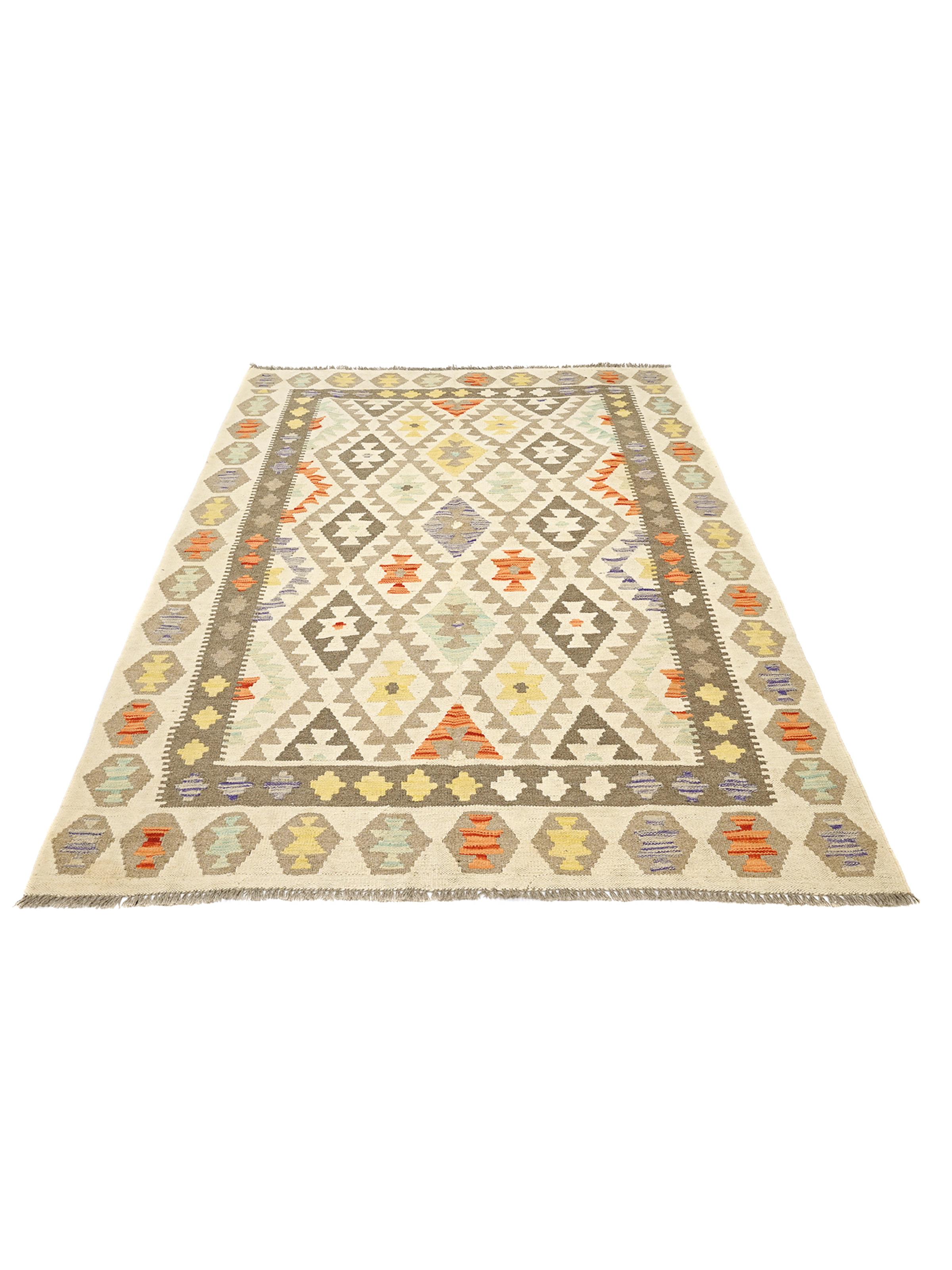
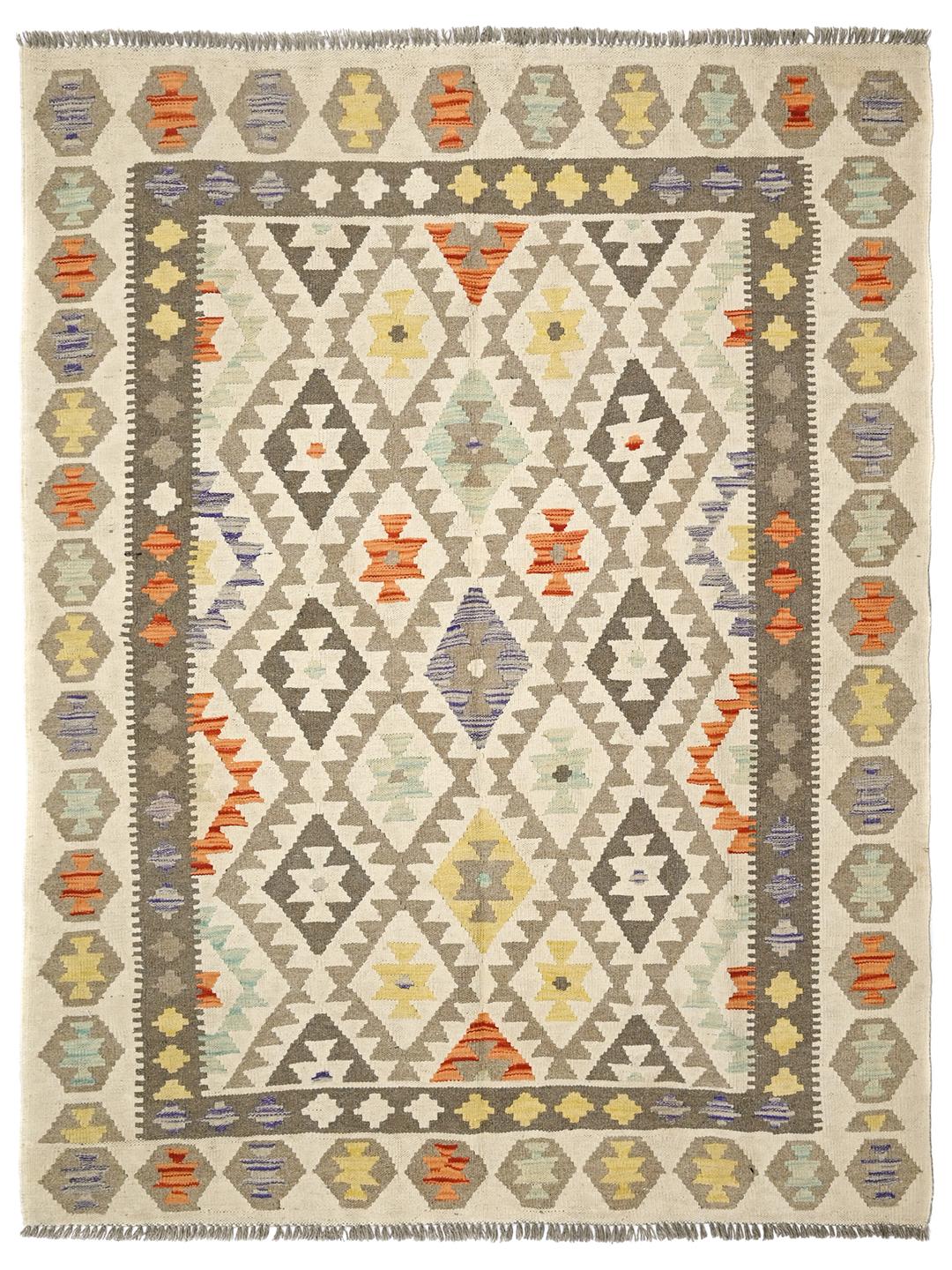
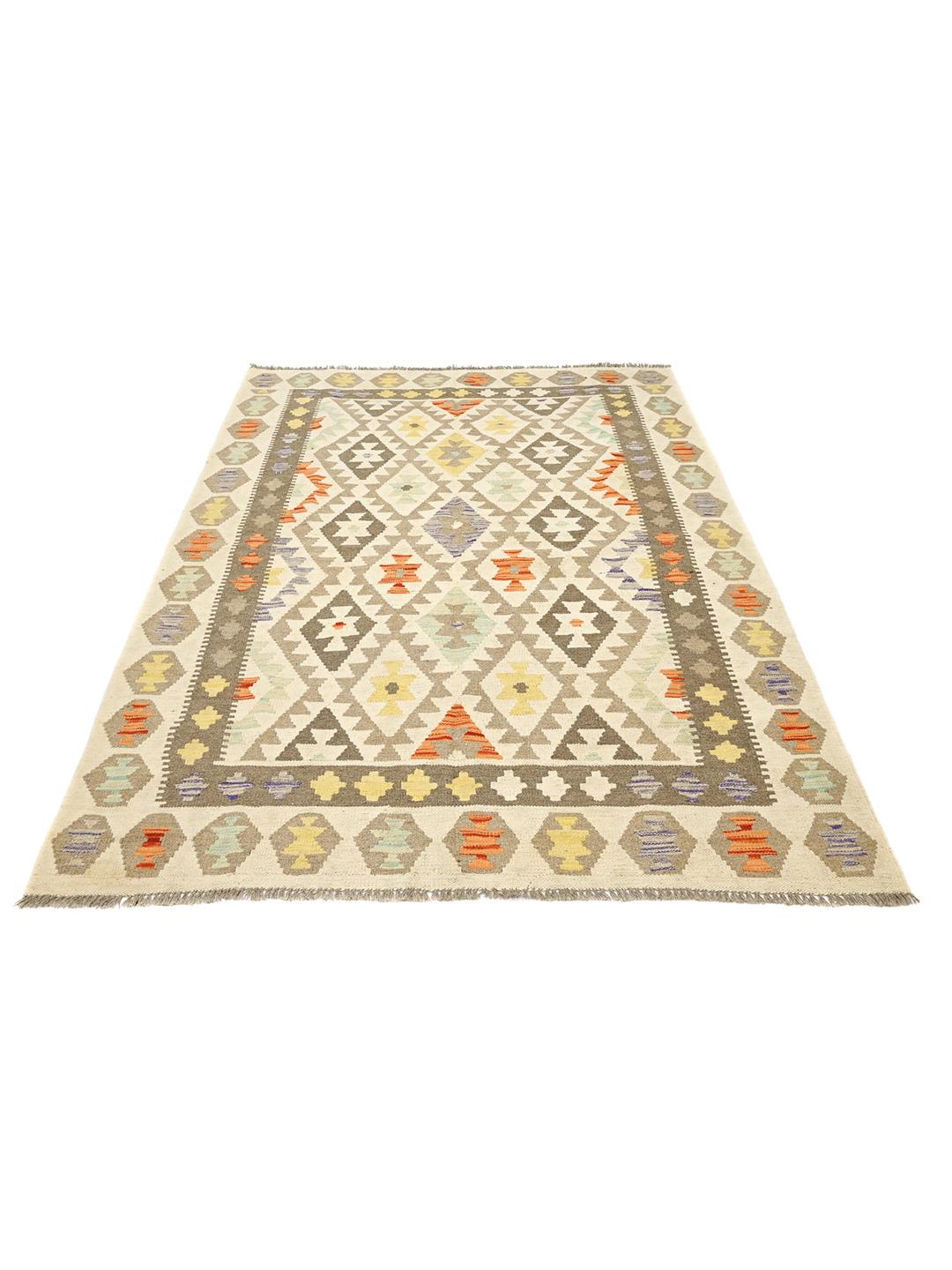
The Kelim tradition in Afghanistan is deeply rooted in the nomadic history of the region. These flat-woven rugs have been produced for centuries by tribal groups who moved across the rugged landscapes of Central Asia, creating textiles that were both portable and durable enough to serve as floor coverings, blankets, and storage bags.
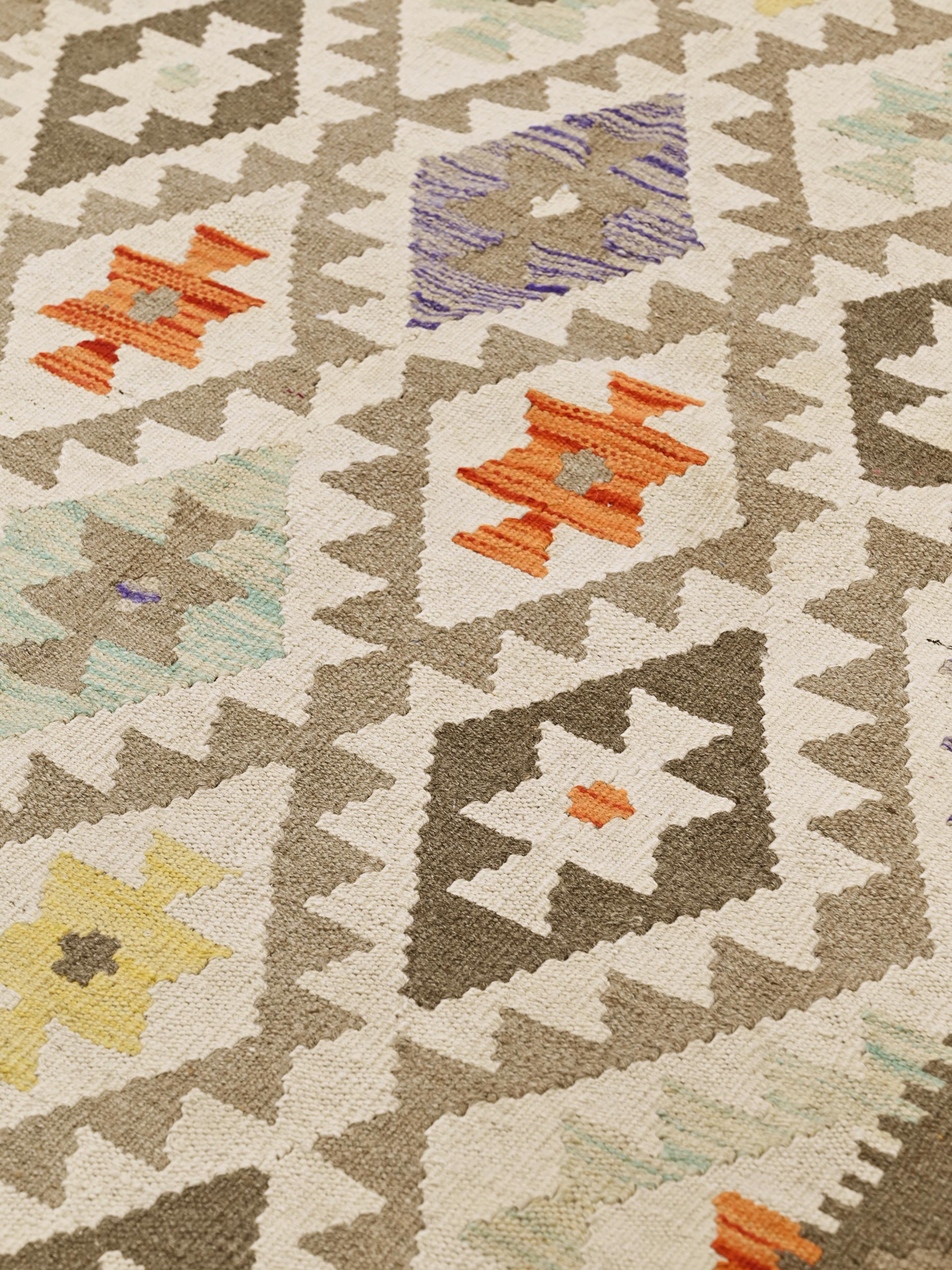
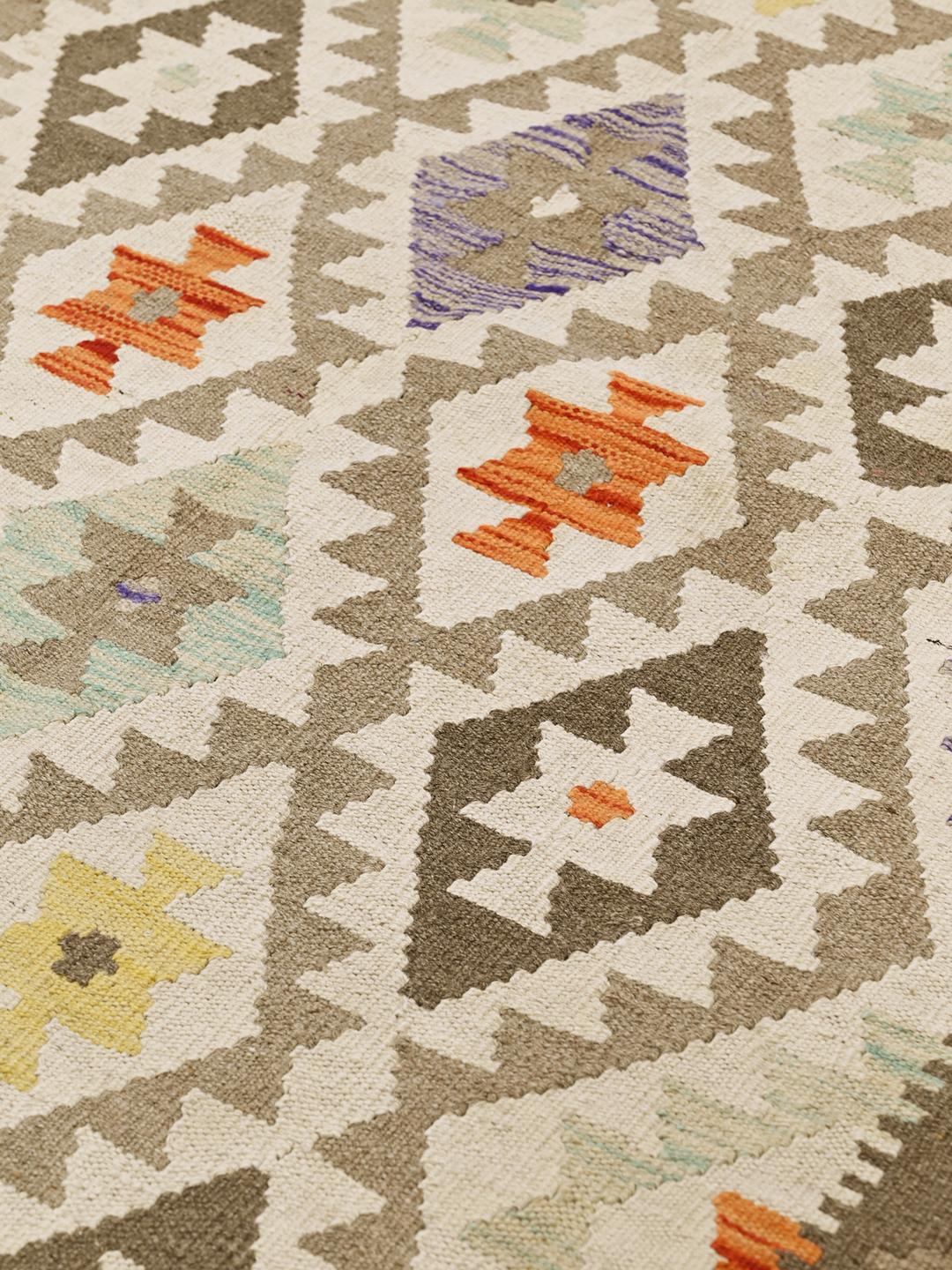
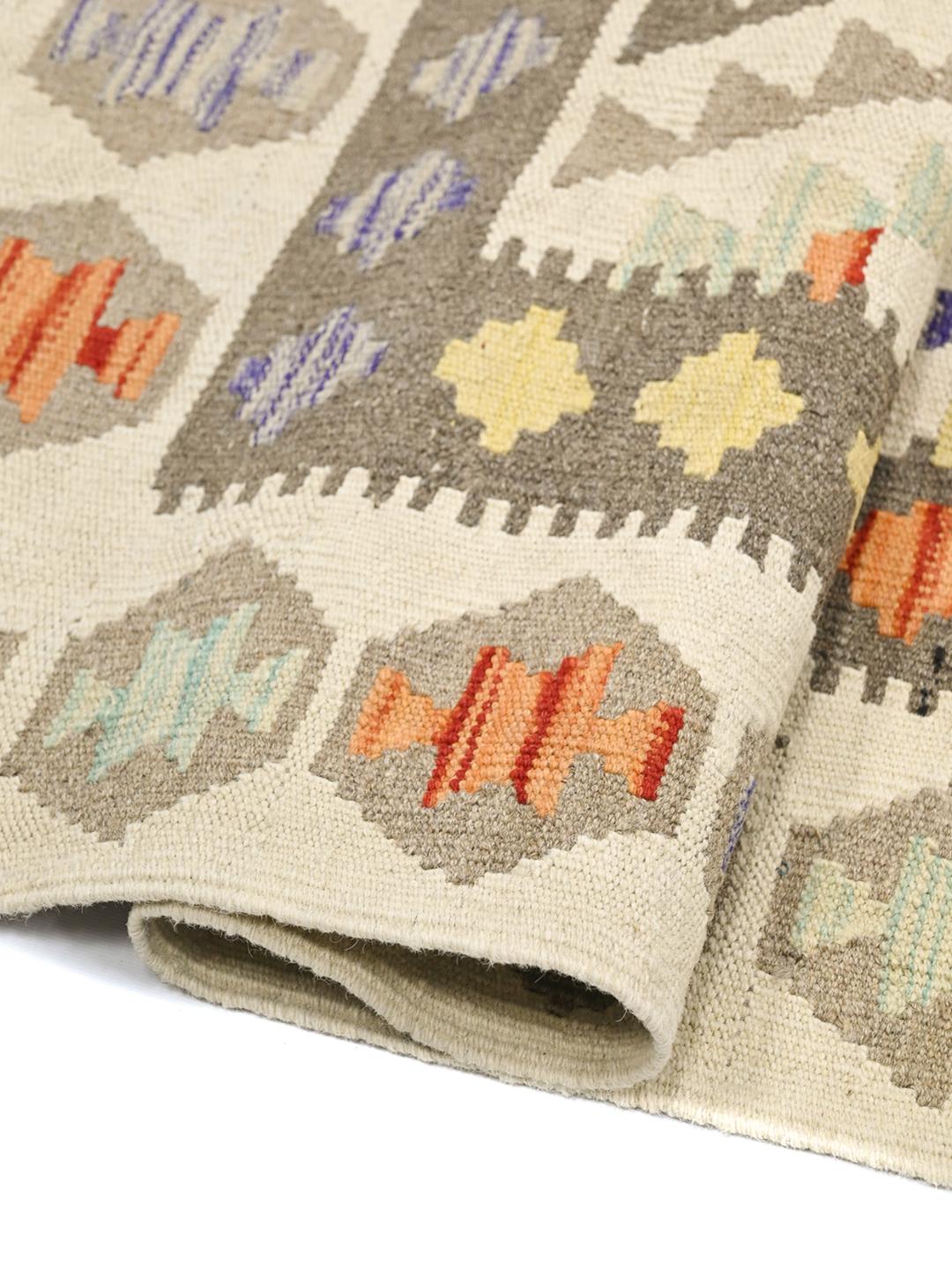
The term 'Kelim' refers to the specific tapestry-weave technique where the weft threads are passed through the warp threads to create a smooth surface without a pile. This method is highly valued for its crisp, geometric clarity, as the lack of pile allows for intricate, sharp-edged designs that remain clear and defined over many years of use.
Signature design elements of these rugs often include bold geometric shapes, particularly the diamond and medallion motifs seen here. These symbols are not merely decorative but often hold traditional meanings related to protection and tribal identity. The use of natural, earthy tones accented by vibrant secondary colours is a hallmark of the Afghan style, reflecting the natural dyes historically available in the region.
Collecting a piece from this tradition is an investment in cultural heritage. Each rug tells a story of the artisan who crafted it, preserving techniques that have remained largely unchanged for generations. By bringing one into your home, you are not just acquiring a rug, but a piece of living history that celebrates the skill and artistic spirit of Afghan weavers.