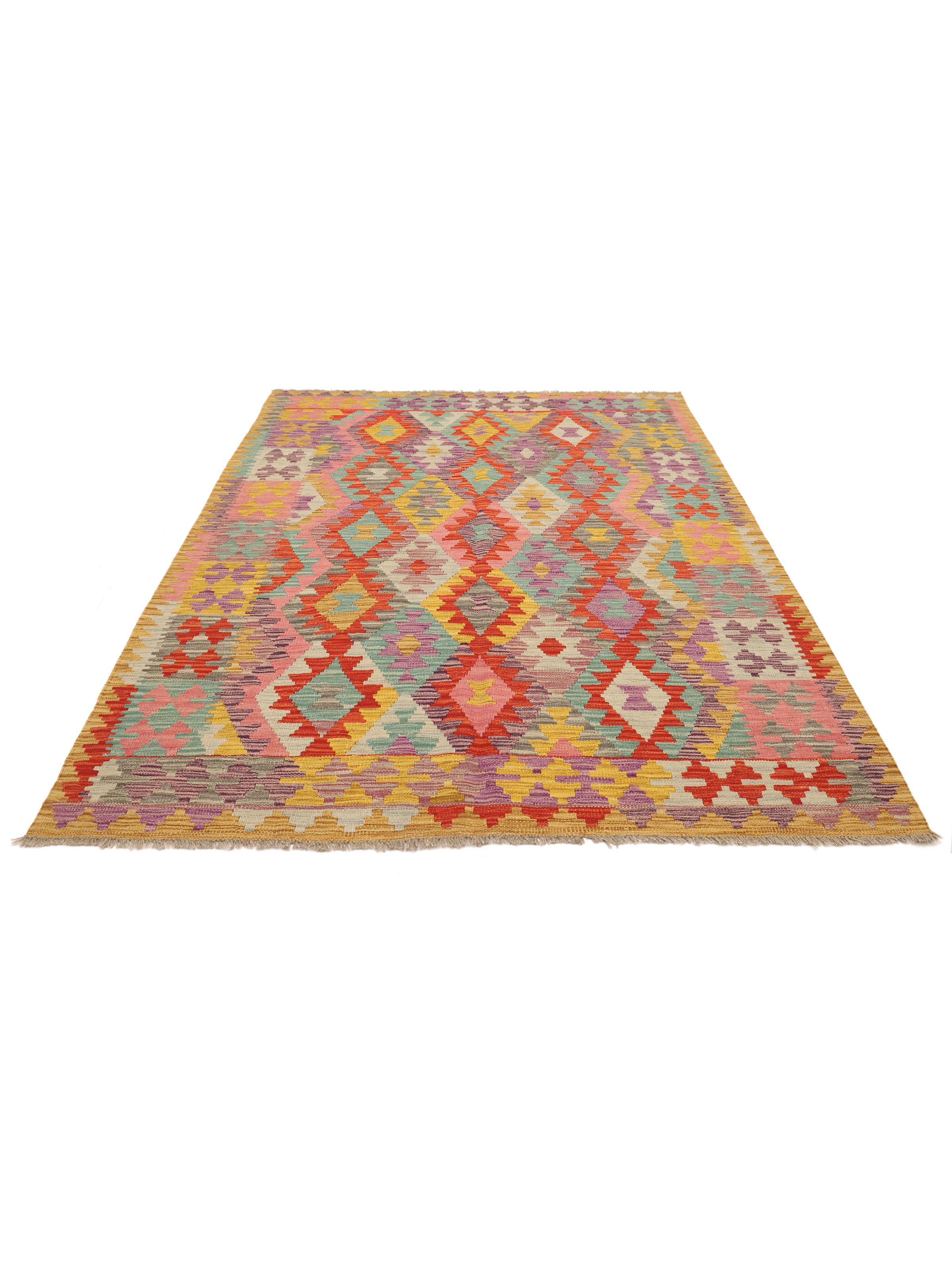
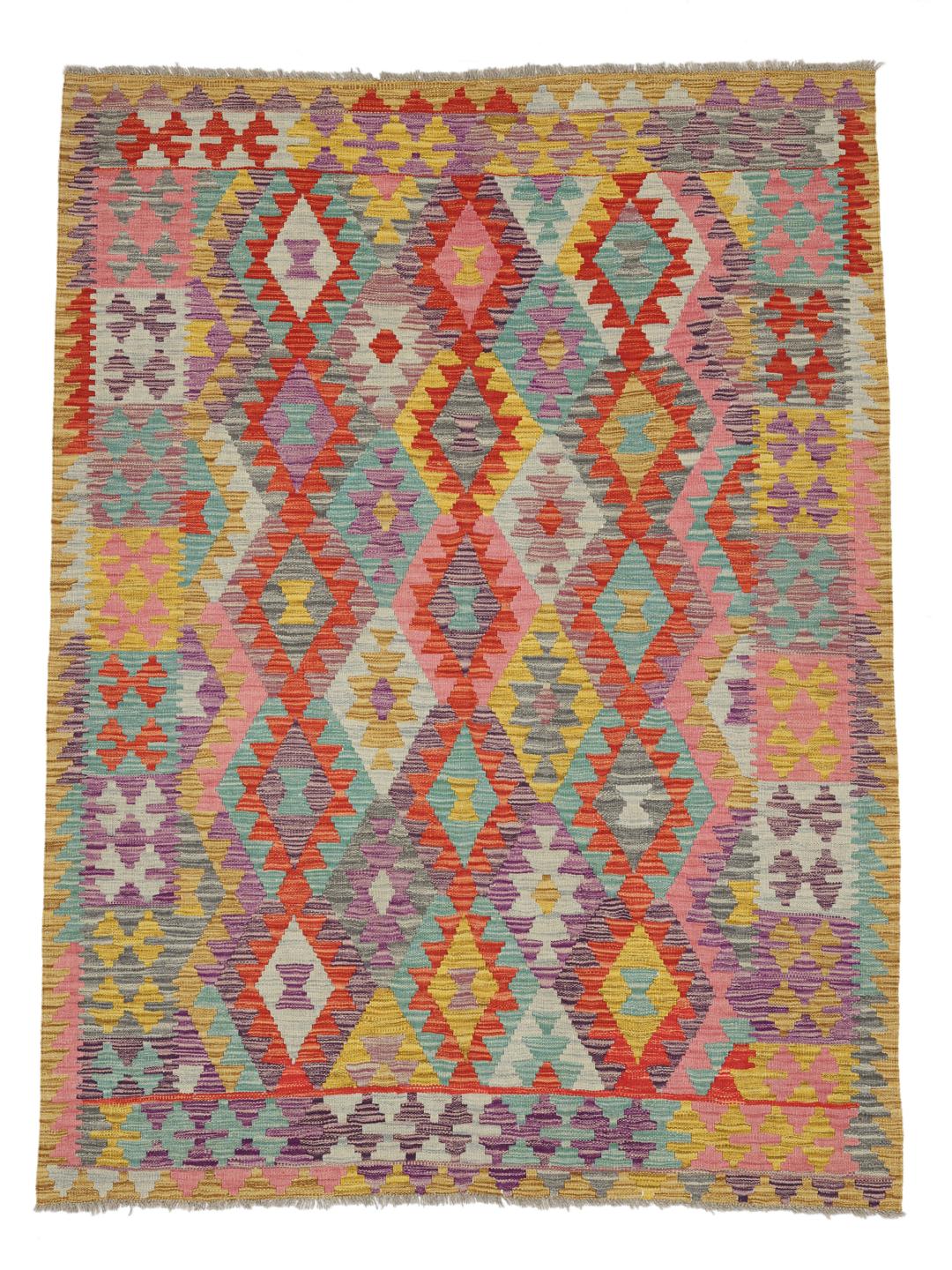
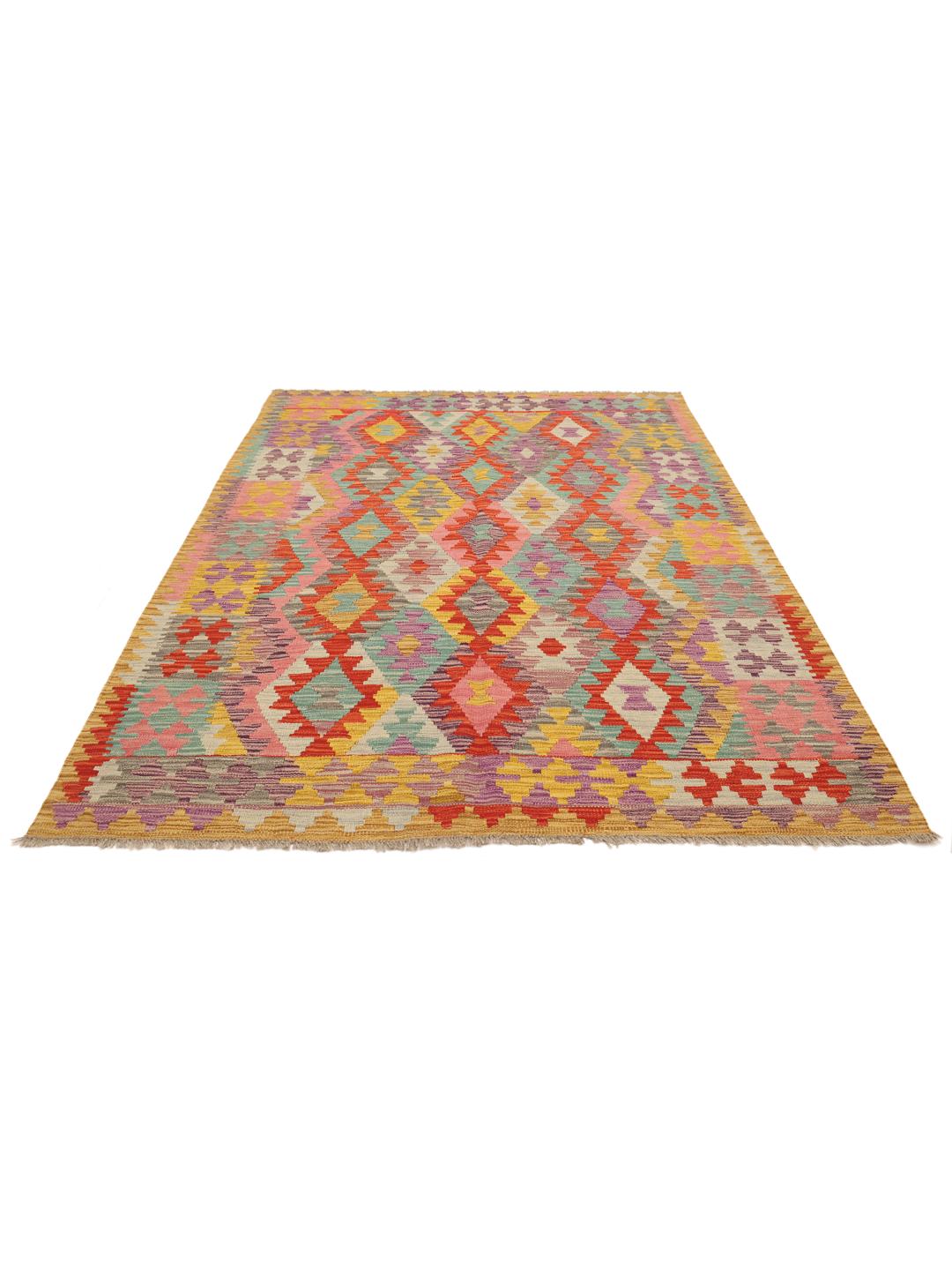
Kelim rugs from Afghanistan are deeply rooted in the nomadic traditions of the region, where weaving has served as a vital cultural expression for centuries. These rugs were historically created by tribal groups for practical use in tents, serving as floor coverings, blankets, and storage bags, reflecting a history of utility and artistic ingenuity.
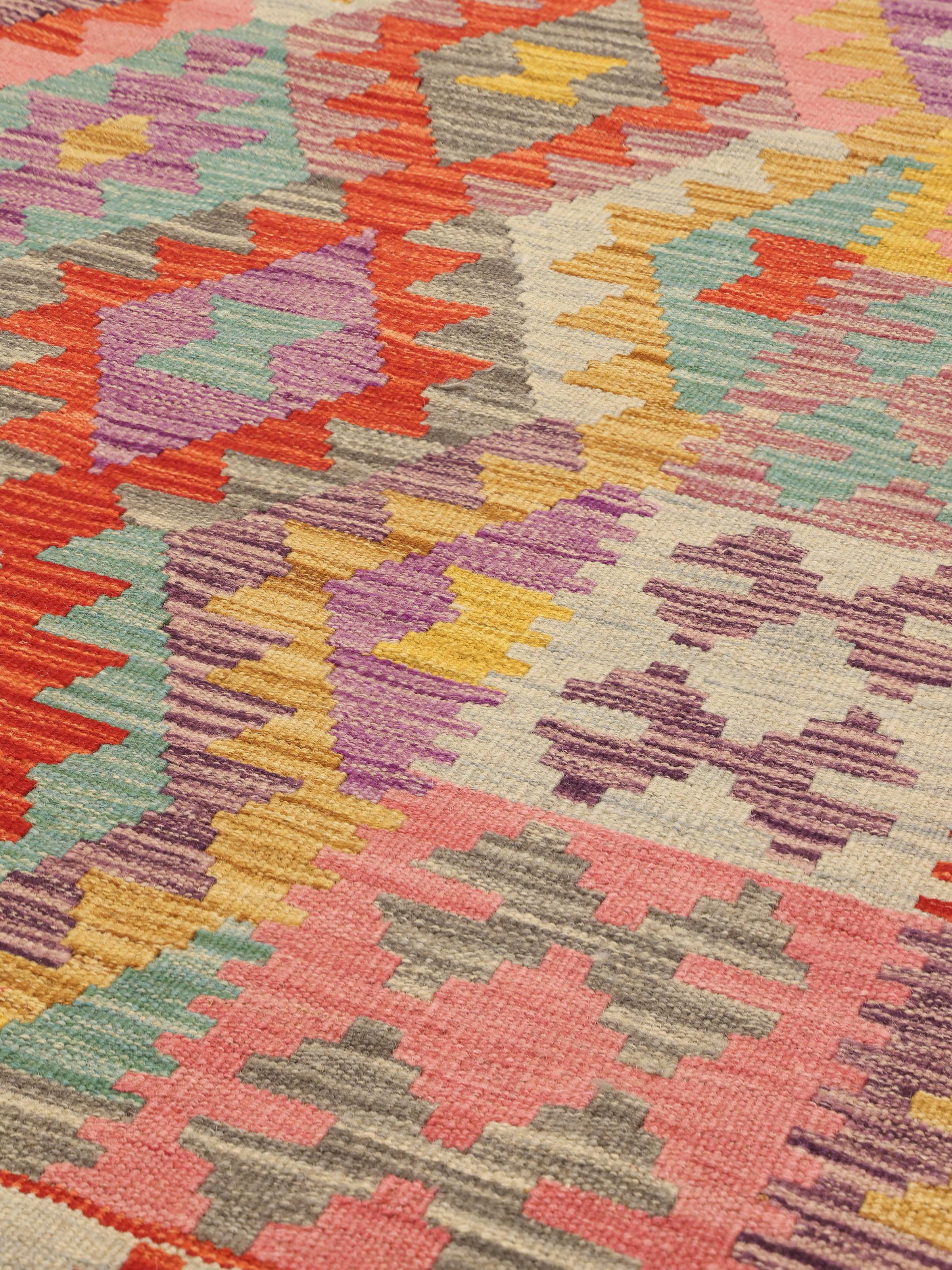
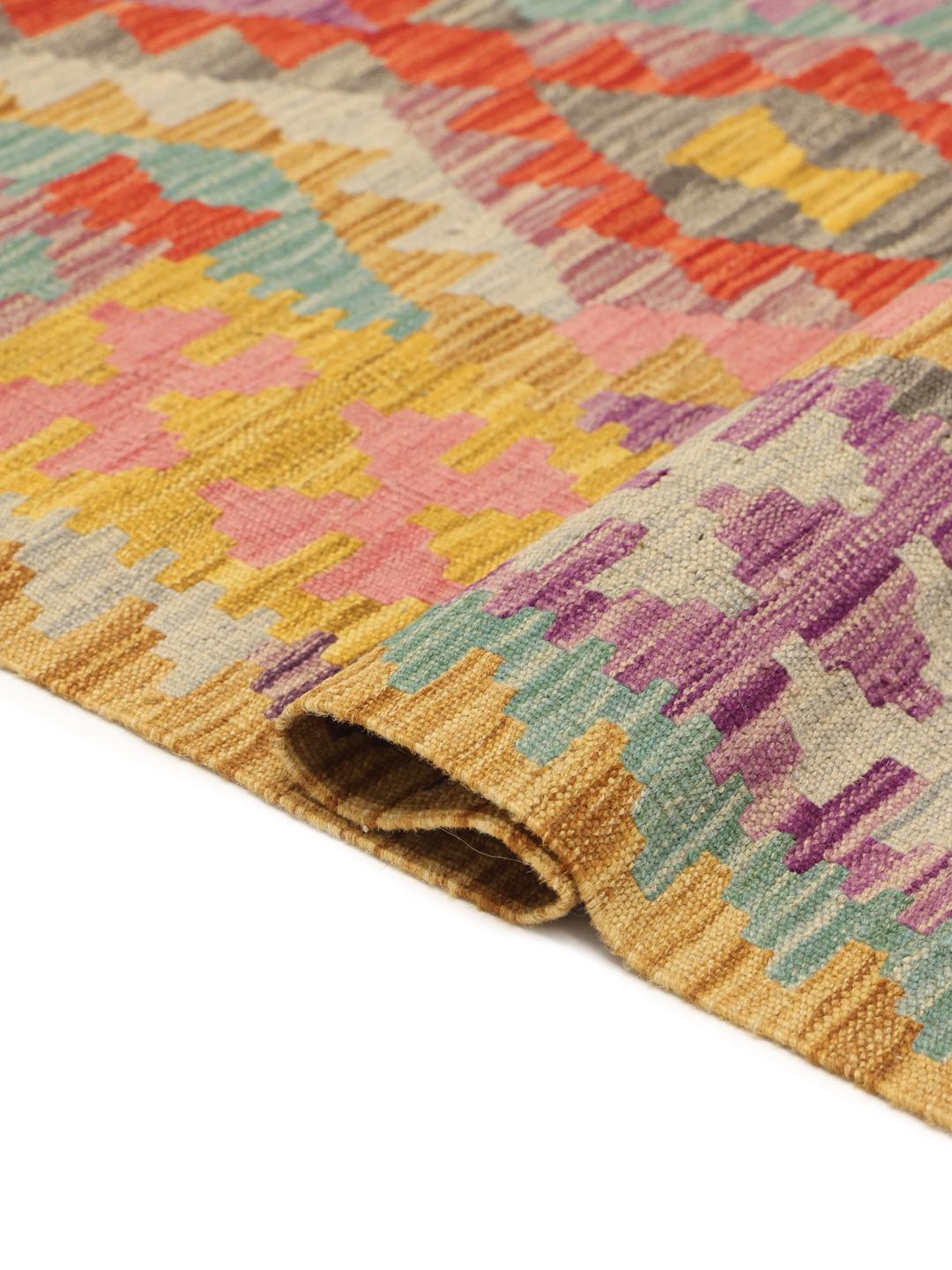
The term Kelim refers to a tapestry-weave construction, a technique where the design is created by interweaving the coloured weft threads through the warp. This method is distinct from knotted rugs, resulting in a reversible, flat, and durable fabric that has been perfected over generations to be both portable and beautiful.
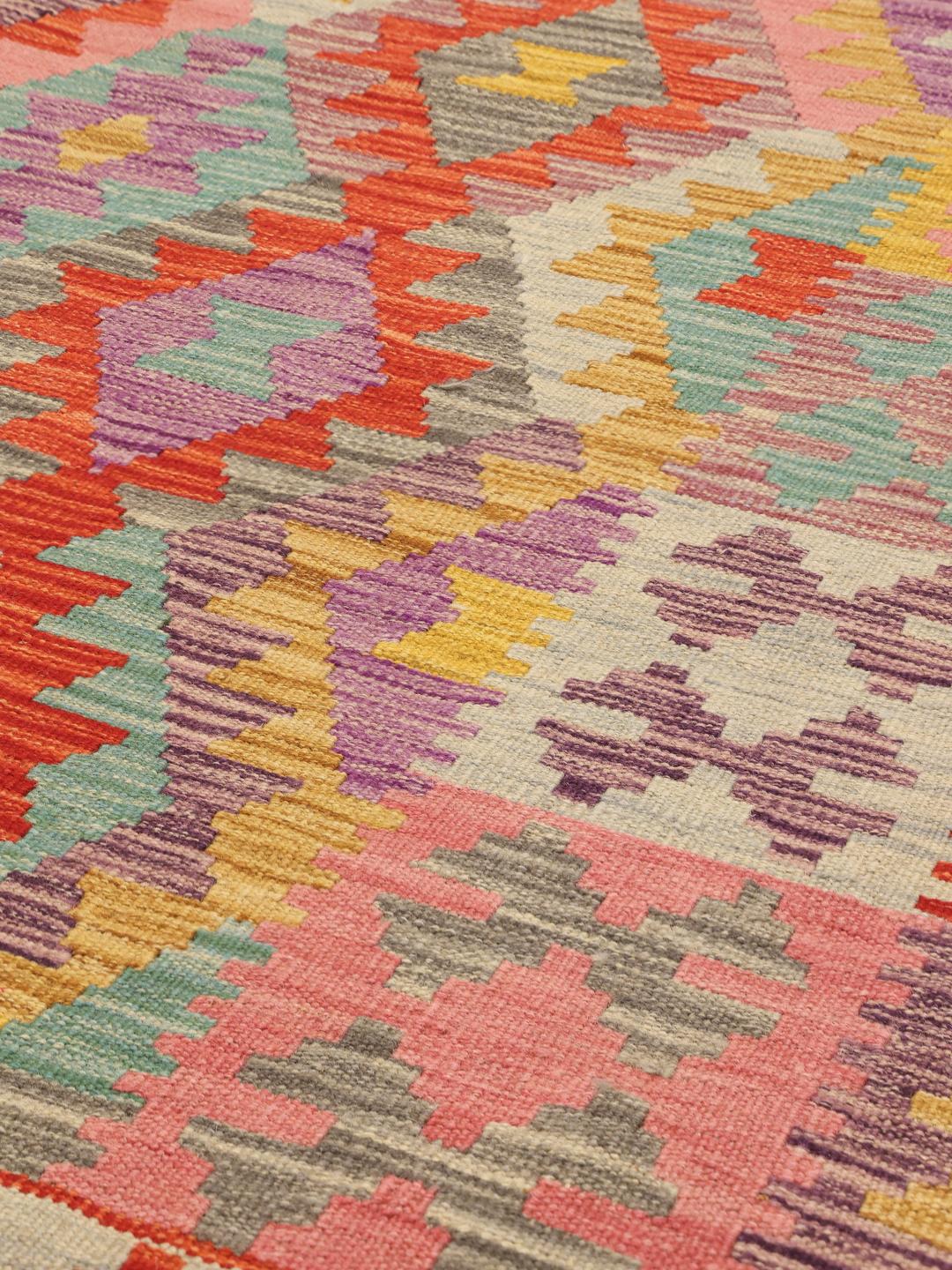
Visually, these rugs are defined by their bold geometric language. Diamond motifs, serrated edges, and stepped triangles are common, often arranged in rhythmic, repeating patterns that symbolise protection or local tribal identity. The use of vibrant, saturated colours is a hallmark of the Afghan style, often achieved through traditional dyeing methods that give each piece a warm, authentic character.
Owning an Afghan Kelim is an invitation to connect with a long-standing heritage of craftsmanship. These rugs are highly valued by collectors not only for their striking aesthetics but for the human story embedded in every thread. They represent a bridge between ancient nomadic life and modern home design, offering a timeless quality that transcends changing trends.