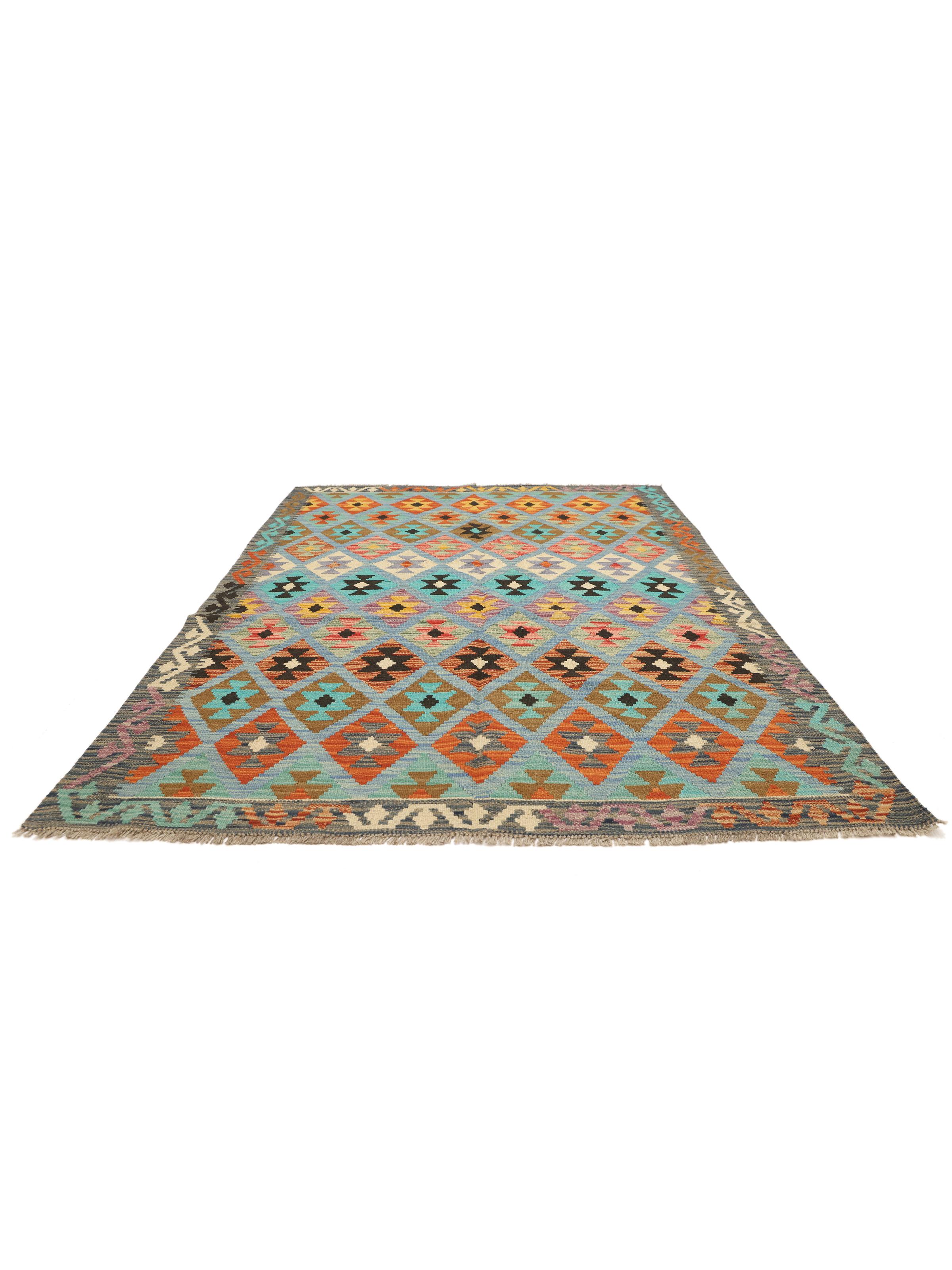
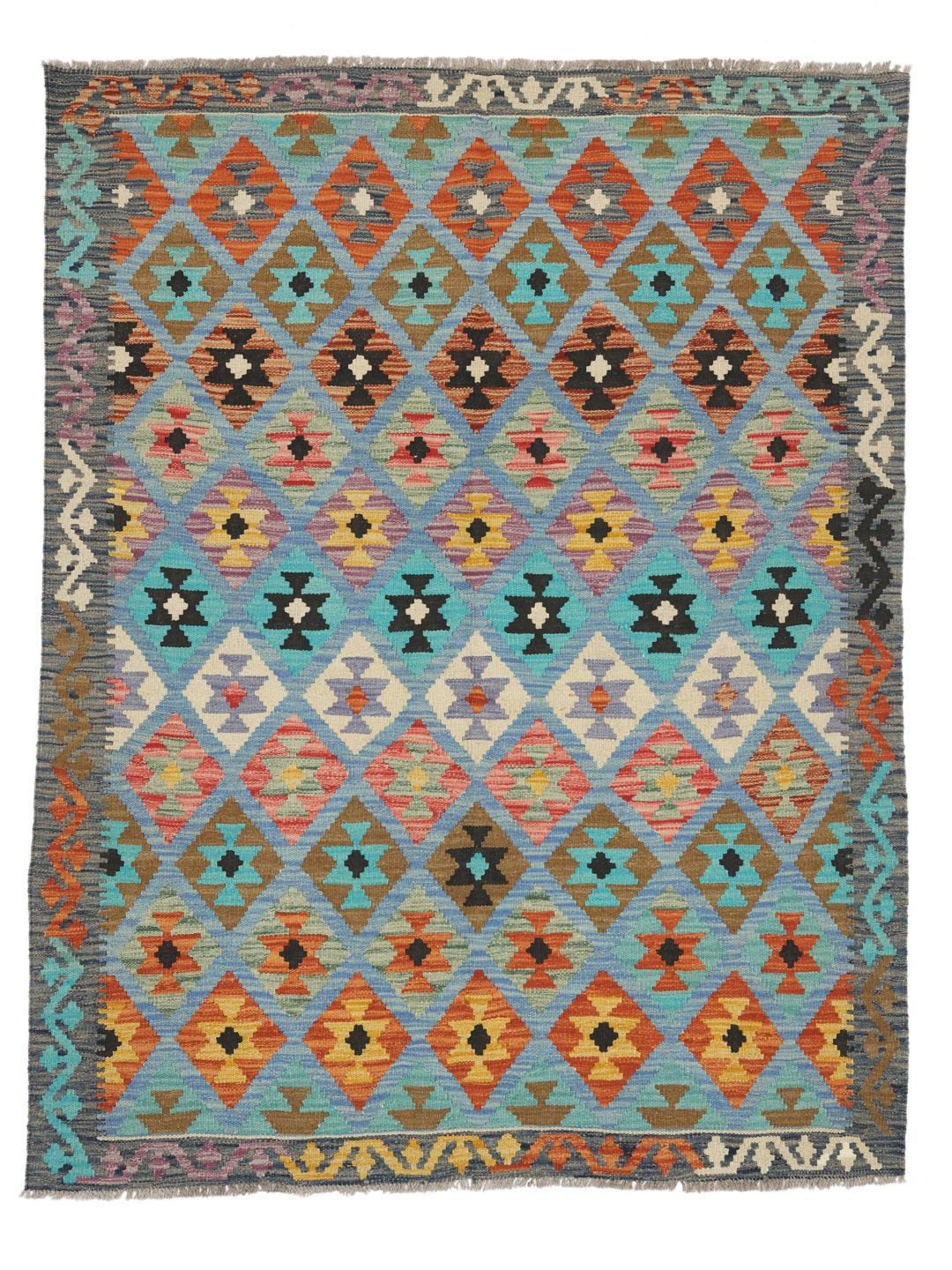
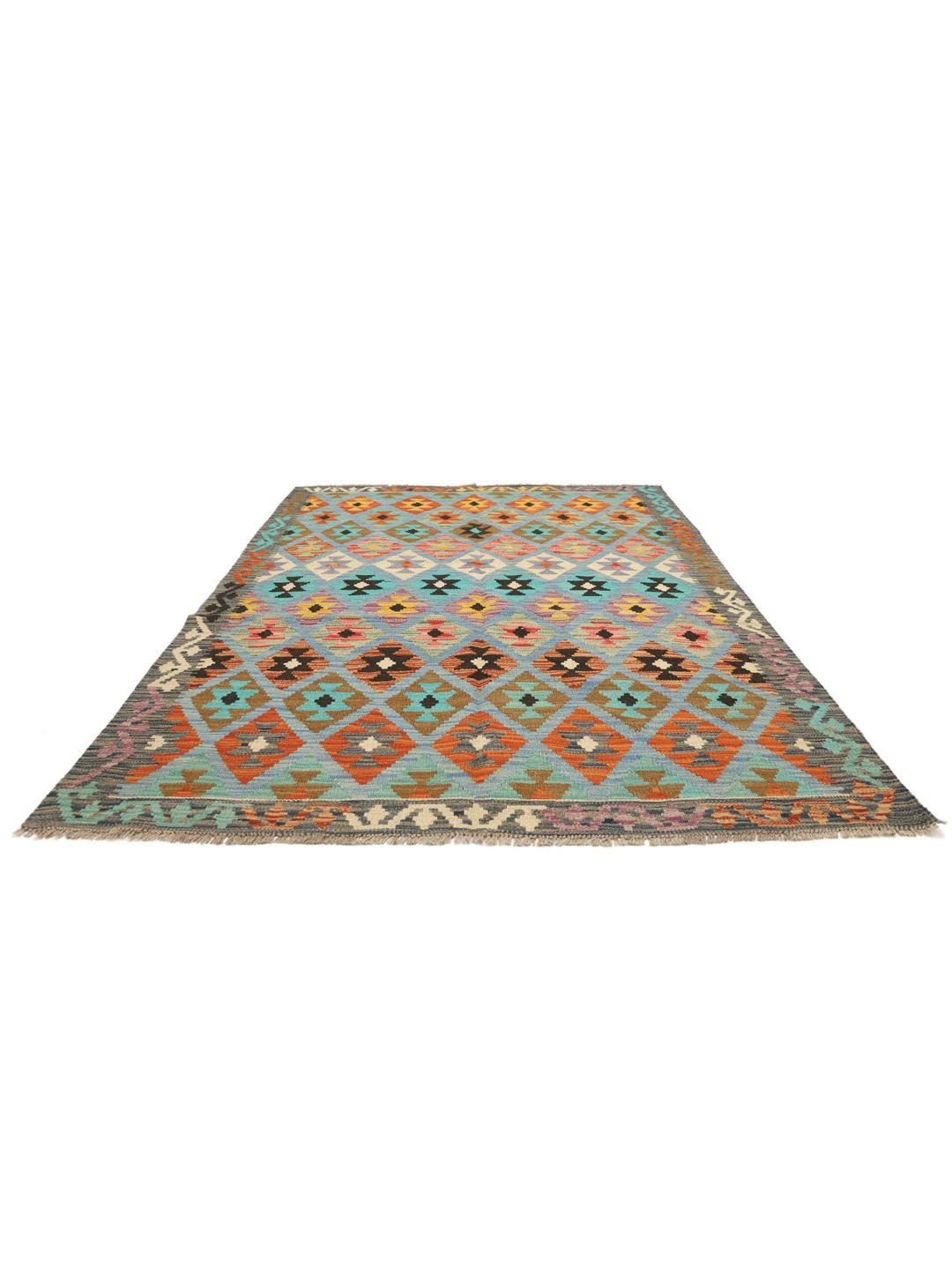
Kelim rugs have long been a cornerstone of nomadic life across the Middle East and Central Asia. Originally designed as functional, portable floor coverings and blankets, these flat-woven textiles were essential for families living in shifting environments. Today, Afghan Kelims are celebrated for preserving these ancient techniques, representing a connection to a rich cultural heritage that values both utility and creative expression.
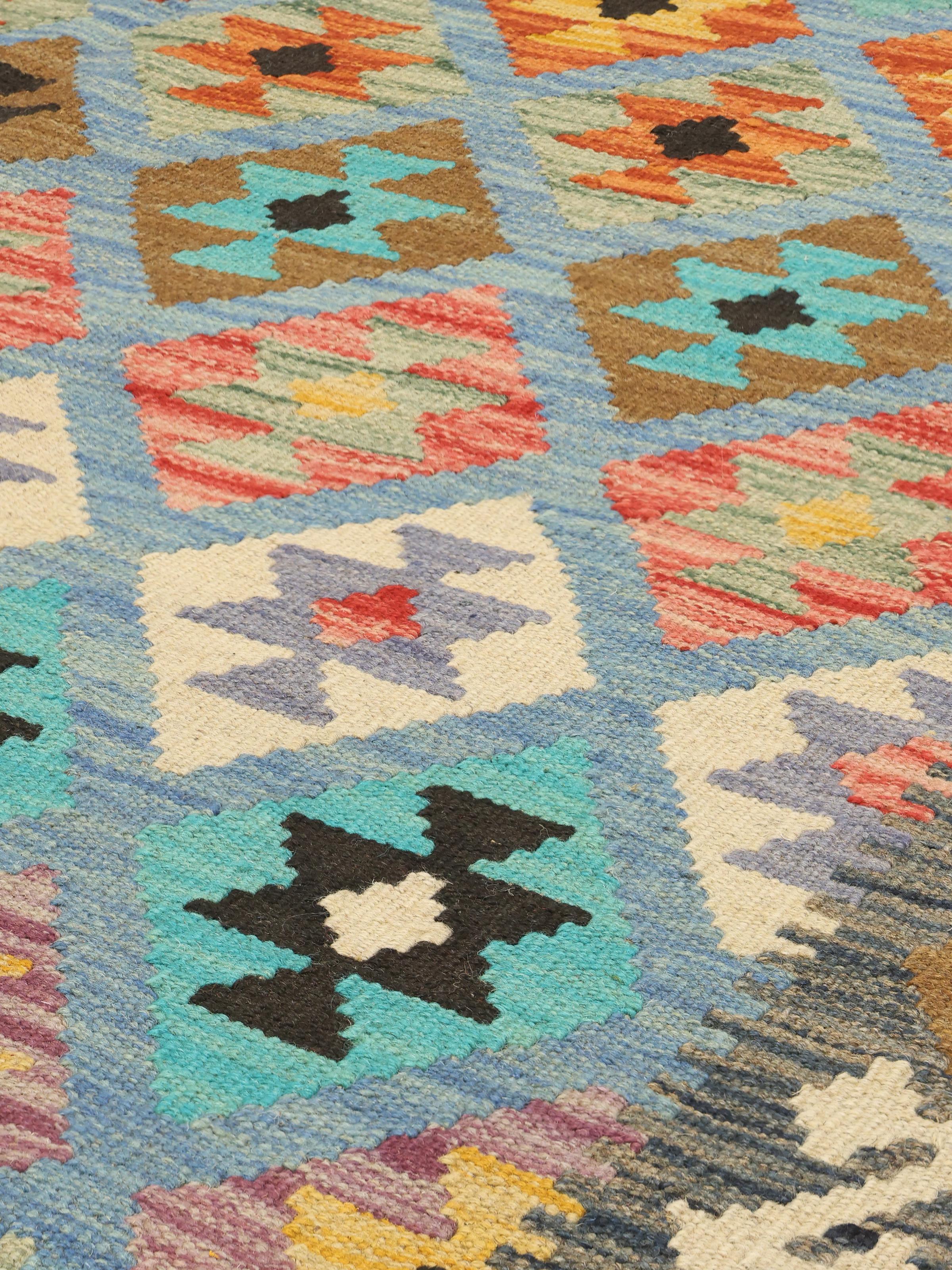
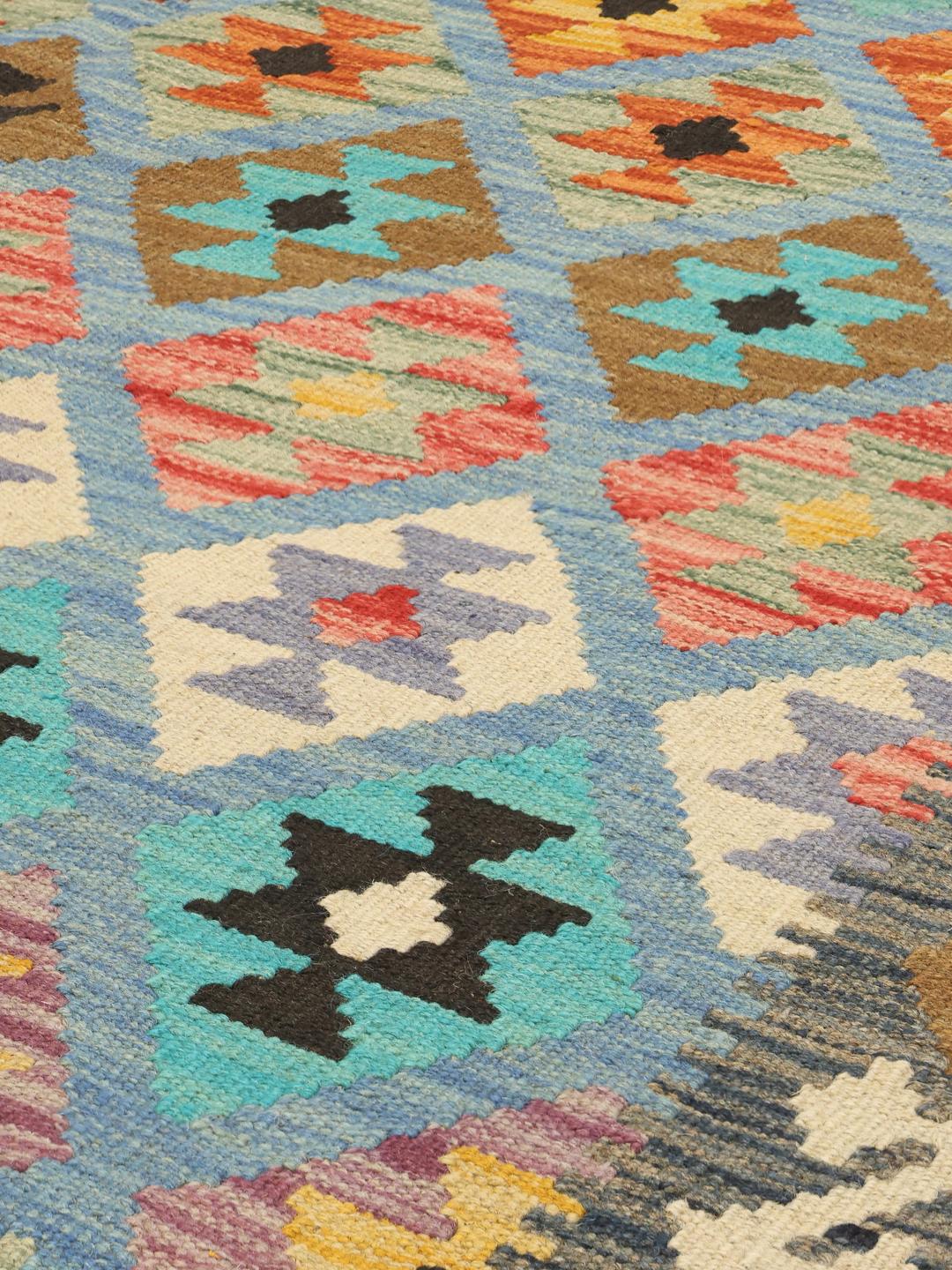
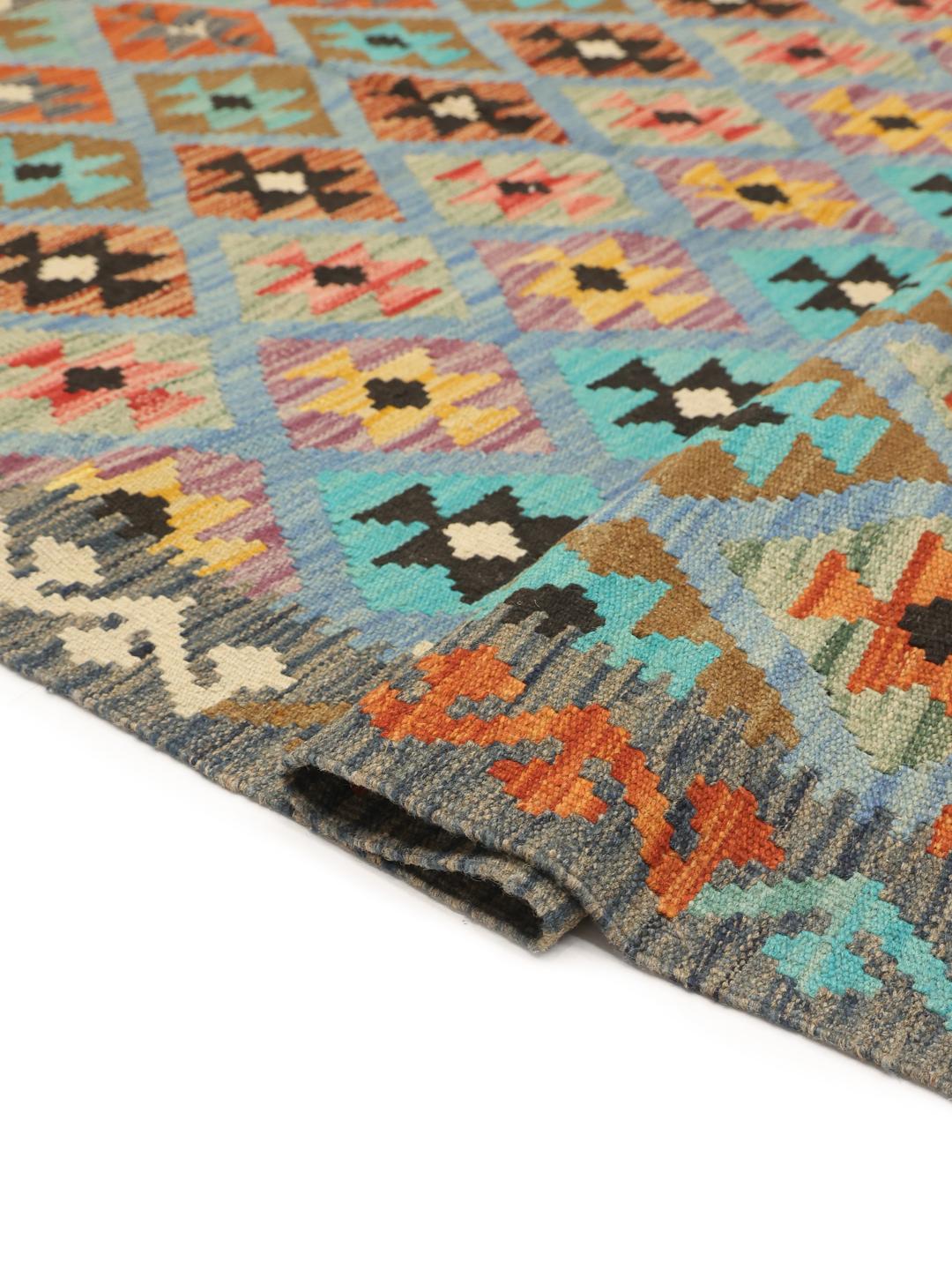
The term 'Kelim' refers specifically to the flat-weaving technique where there is no knotted pile. Instead, the weft threads are pulled tightly over the warp threads to create the design. This method results in a durable, reversible rug that is lightweight yet incredibly strong. The quality of a Kelim is often judged by the tightness of this weave, which determines the clarity of the patterns and the longevity of the finished piece.
Signature design elements in Afghan Kelims often include bold, geometric motifs like the diamond shapes seen here. These patterns are not merely decorative but are deeply rooted in tribal traditions, often representing protection, fertility, or the natural world. The use of vibrant, contrasting colours is a hallmark of this style, intended to bring brightness and life into the home, reflecting the weaver's environment and personal narrative.
Collecting a Kelim is an investment in cultural history and human skill. Because these rugs are produced in small, often family-based workshops, they carry the unique signature of the weaver's hand. Owning one means holding a piece of a living tradition, ensuring that these centuries-old methods of textile art continue to thrive in modern homes around the world.