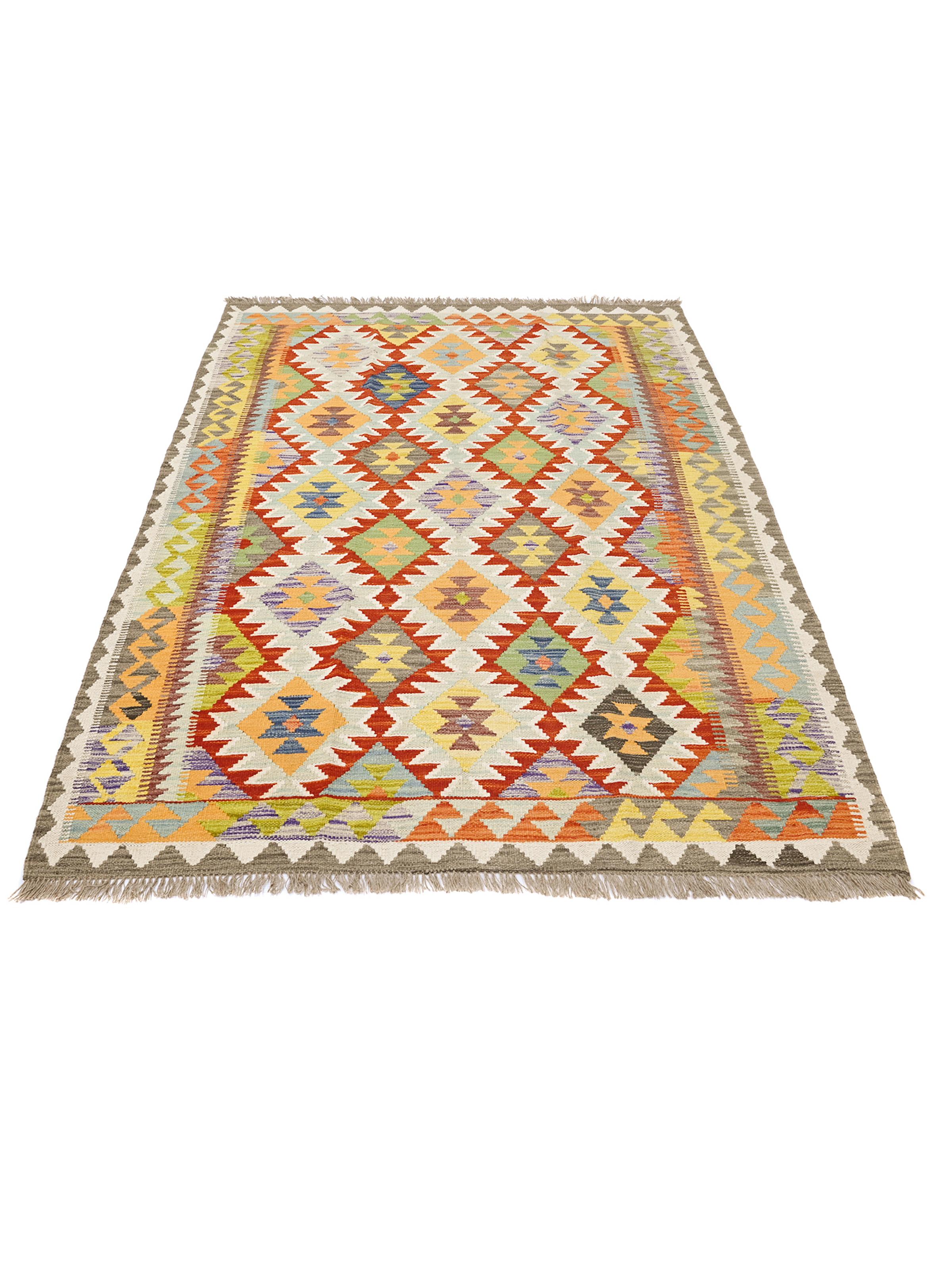
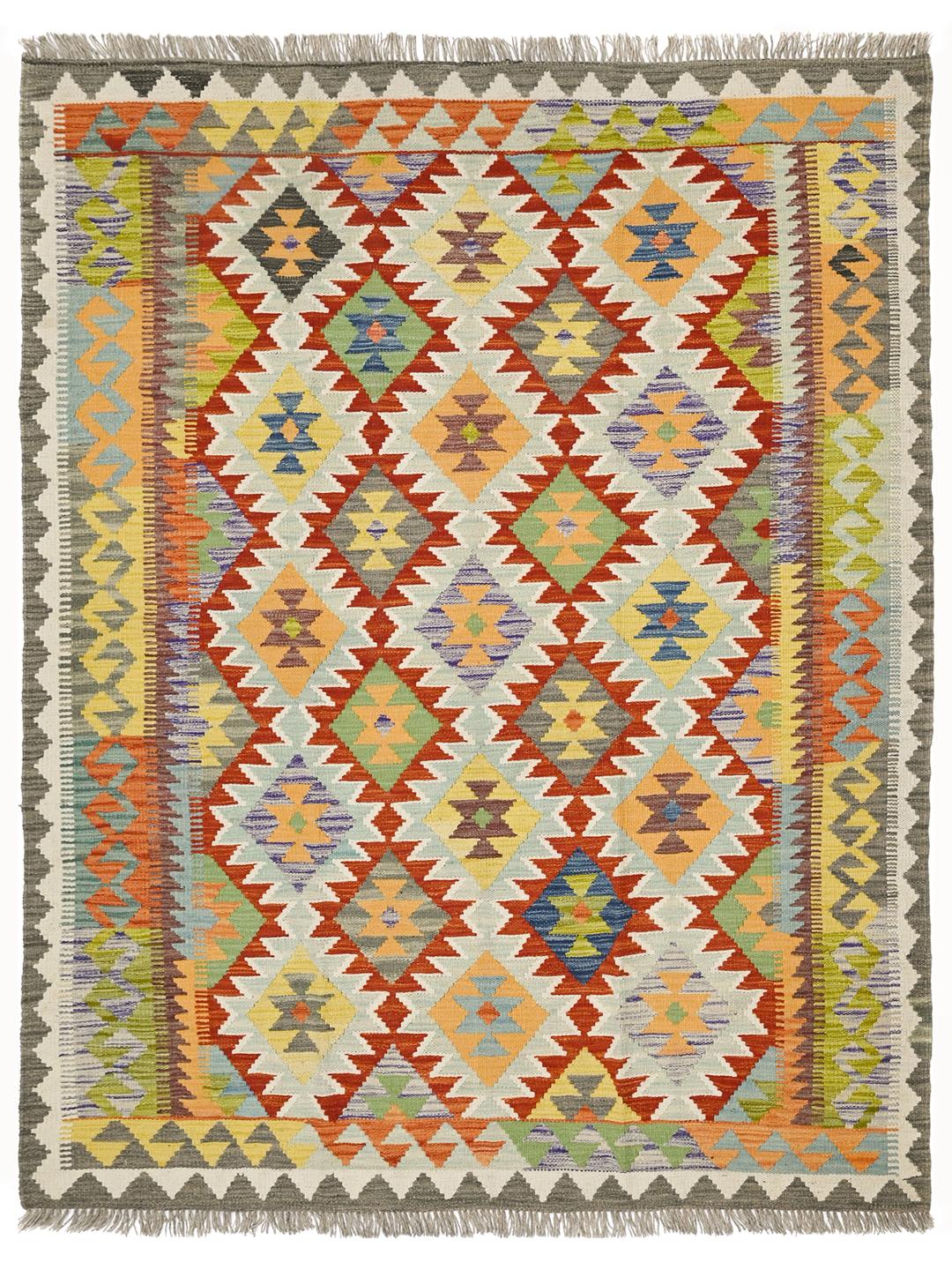
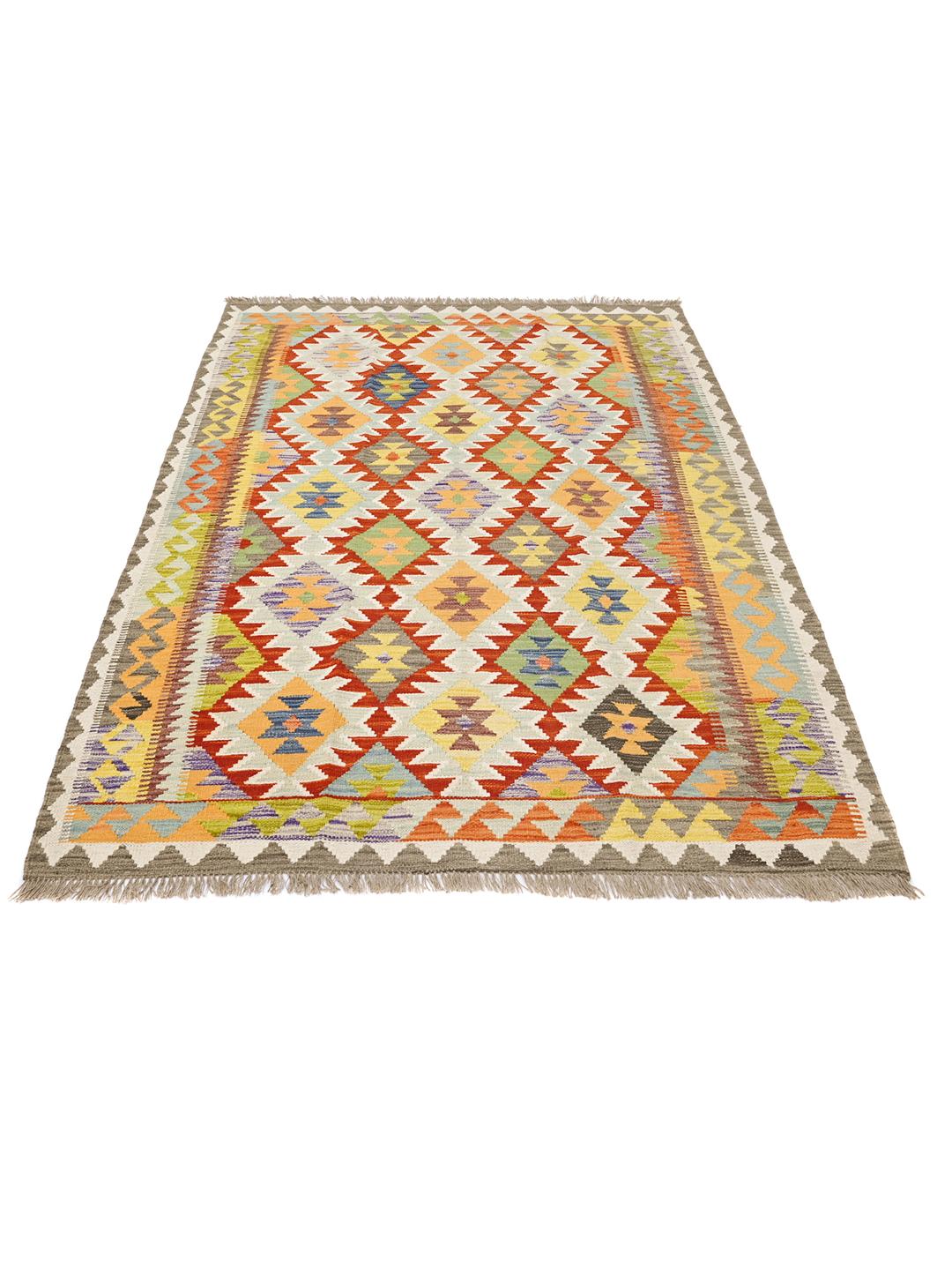
The tradition of weaving kelims in Afghanistan is deeply rooted in the nomadic and semi-nomadic cultures of the region. These rugs have historically served as essential, multi-functional textiles for families, used as floor coverings, wall hangings, and storage bags, reflecting a lifestyle that values both beauty and utility.
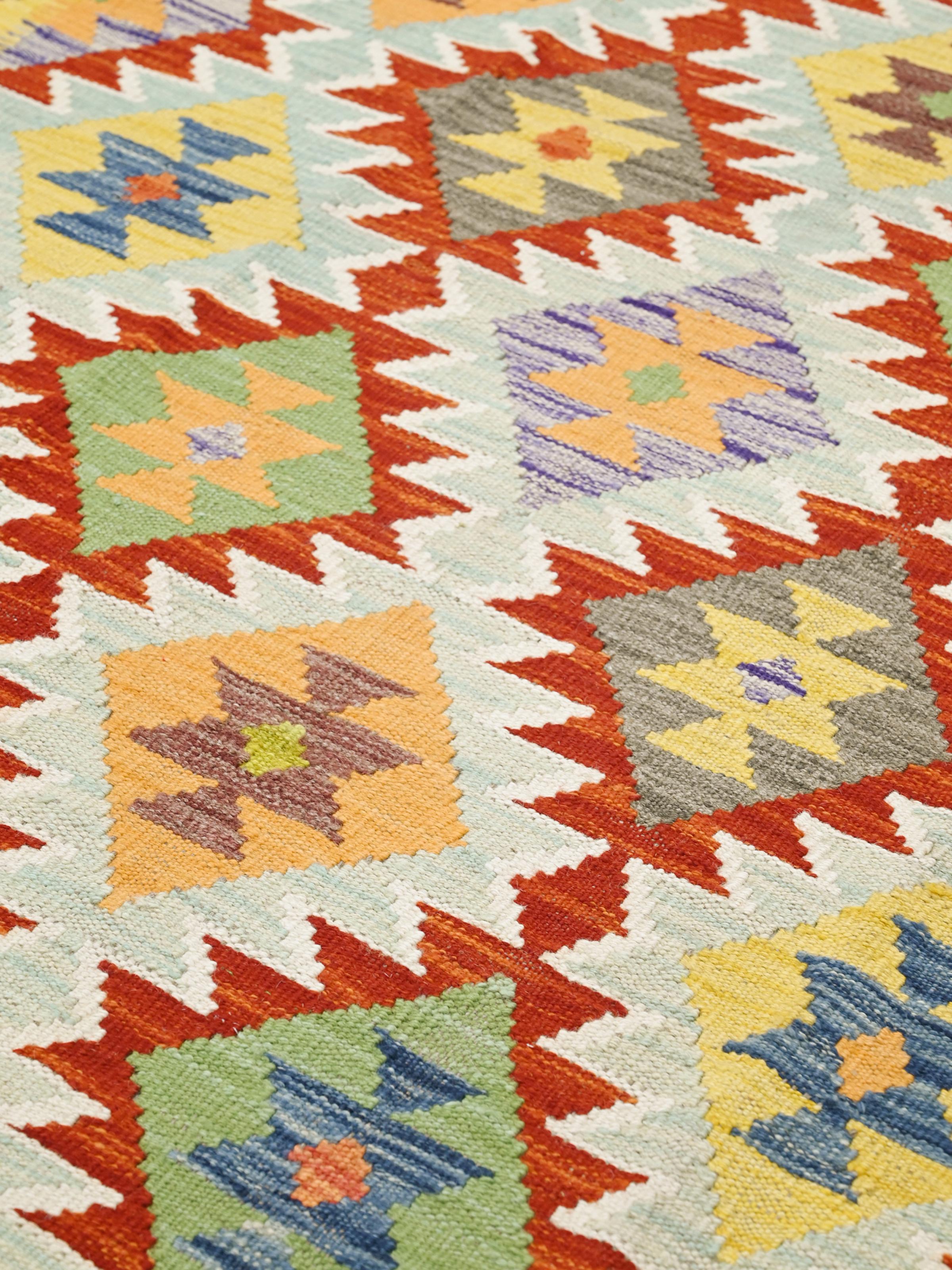
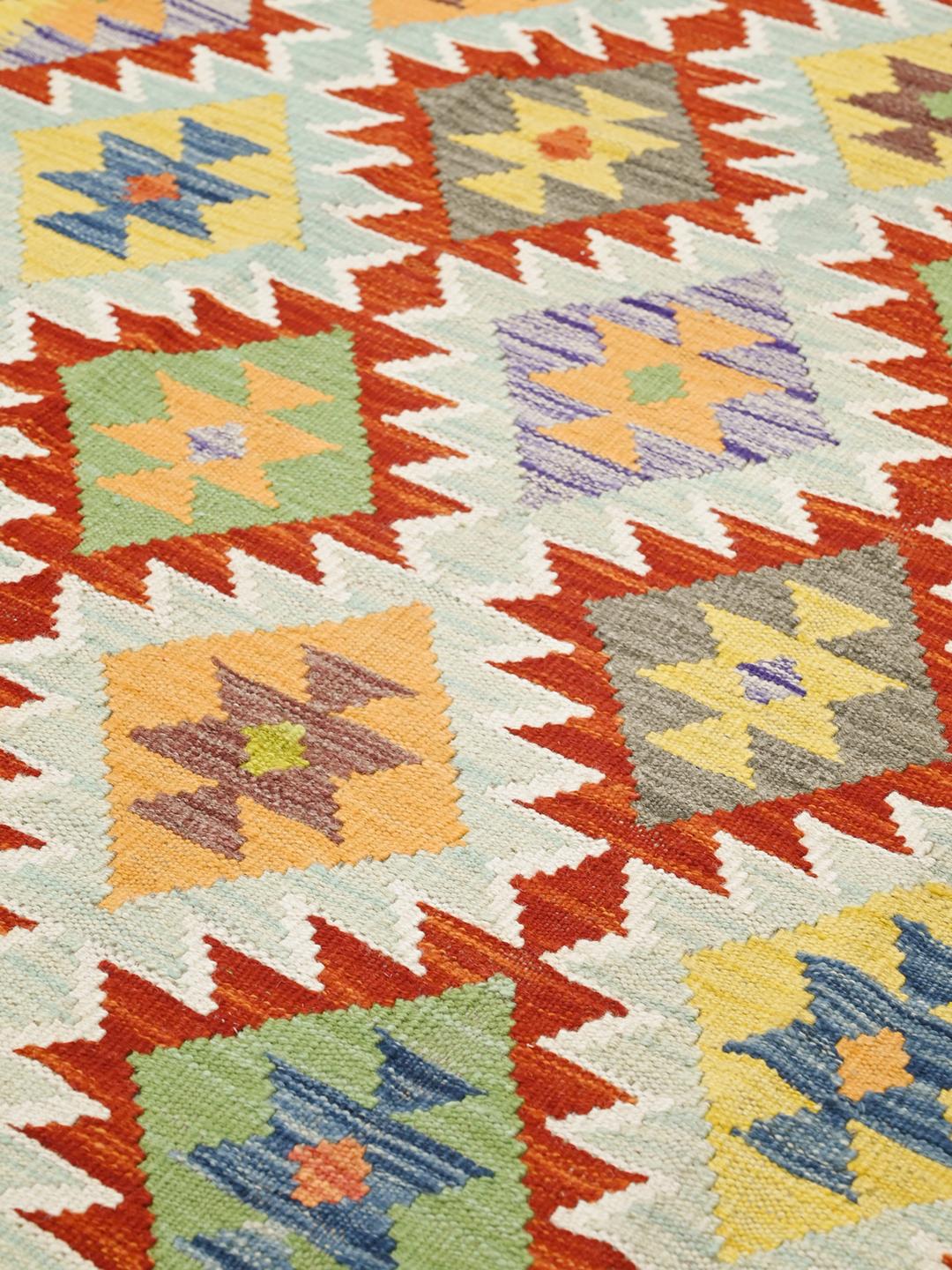
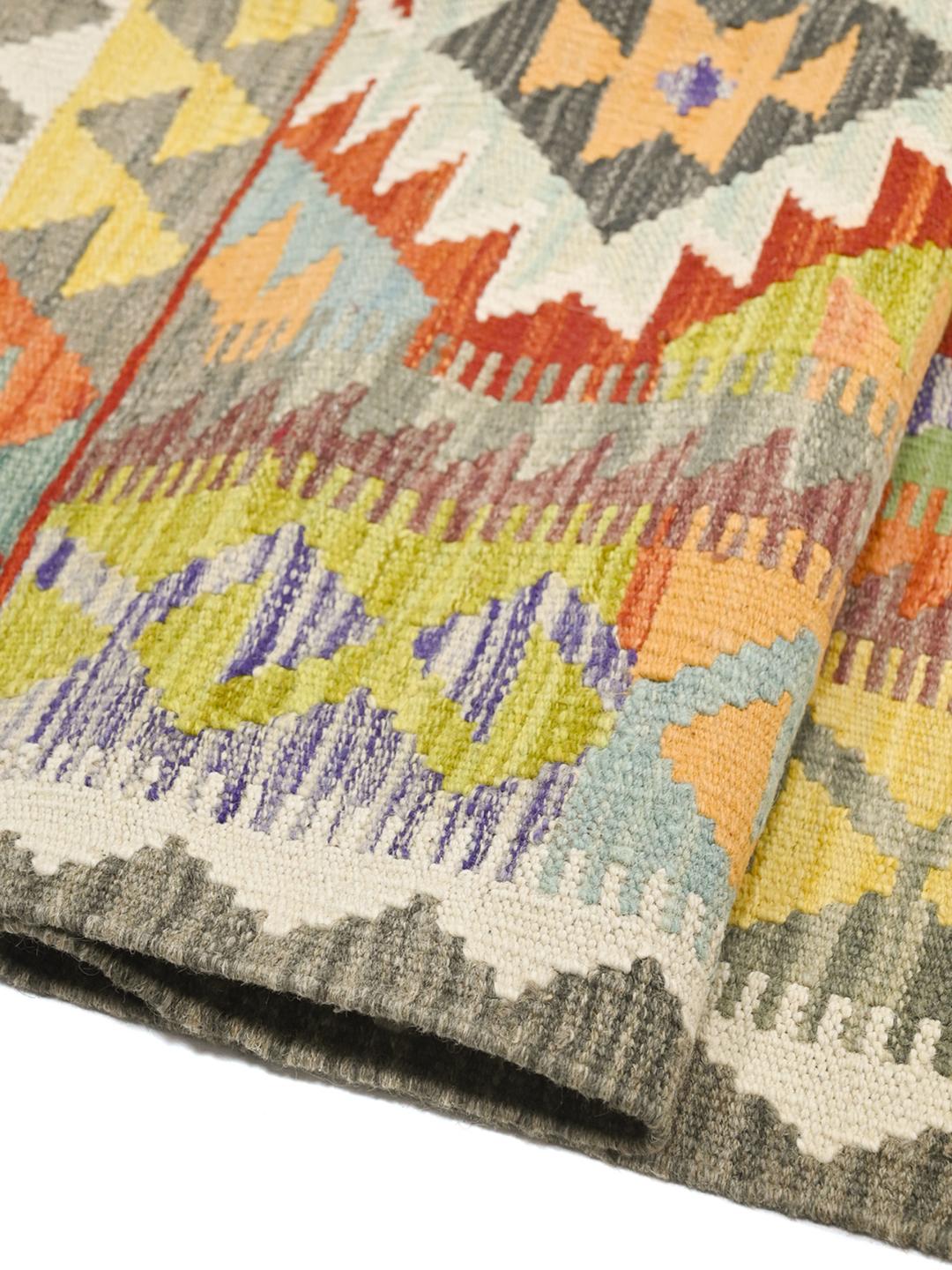
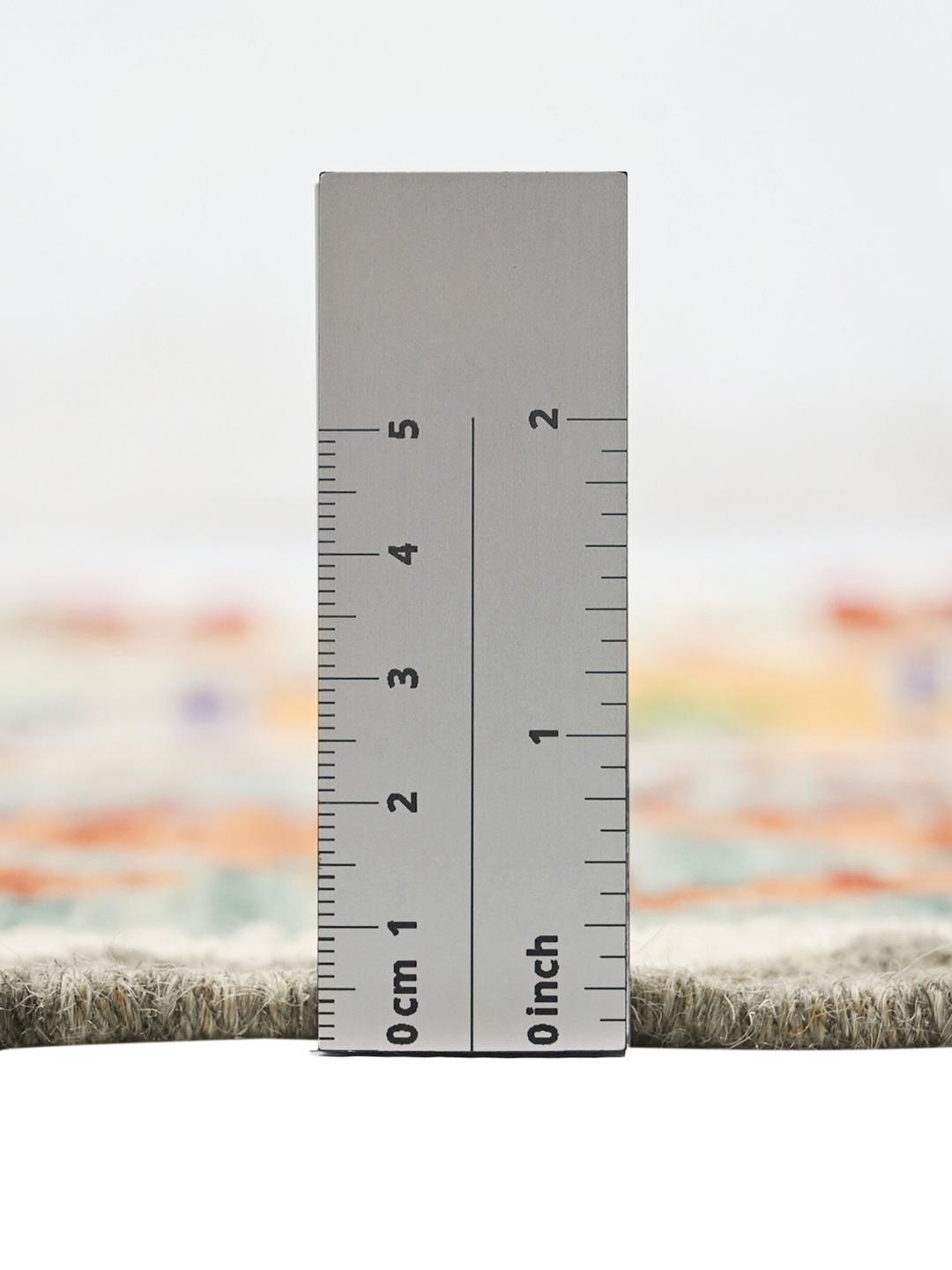
The term 'kelim' refers to a flat-weave technique where the weft threads are passed through the warp threads to create a smooth, pileless surface. This method is distinct from knotted rugs, resulting in a thinner, lighter textile that highlights the clarity of the design and the purity of the Wool used in its construction.
Visually, these pieces are defined by their bold geometric motifs, such as diamonds, triangles, and stylised floral shapes, often arranged in rhythmic, repeating patterns. The use of vibrant, natural-inspired colours is a hallmark of the style, creating a lively contrast that brings energy and movement to the field of the rug.
Owning an Afghan kelim is an invitation to connect with a long-standing cultural heritage. These rugs are highly valued by collectors and enthusiasts for their authentic, non-mass-produced nature, serving as a testament to the enduring skill of the artisans who continue to practice these ancient weaving traditions.