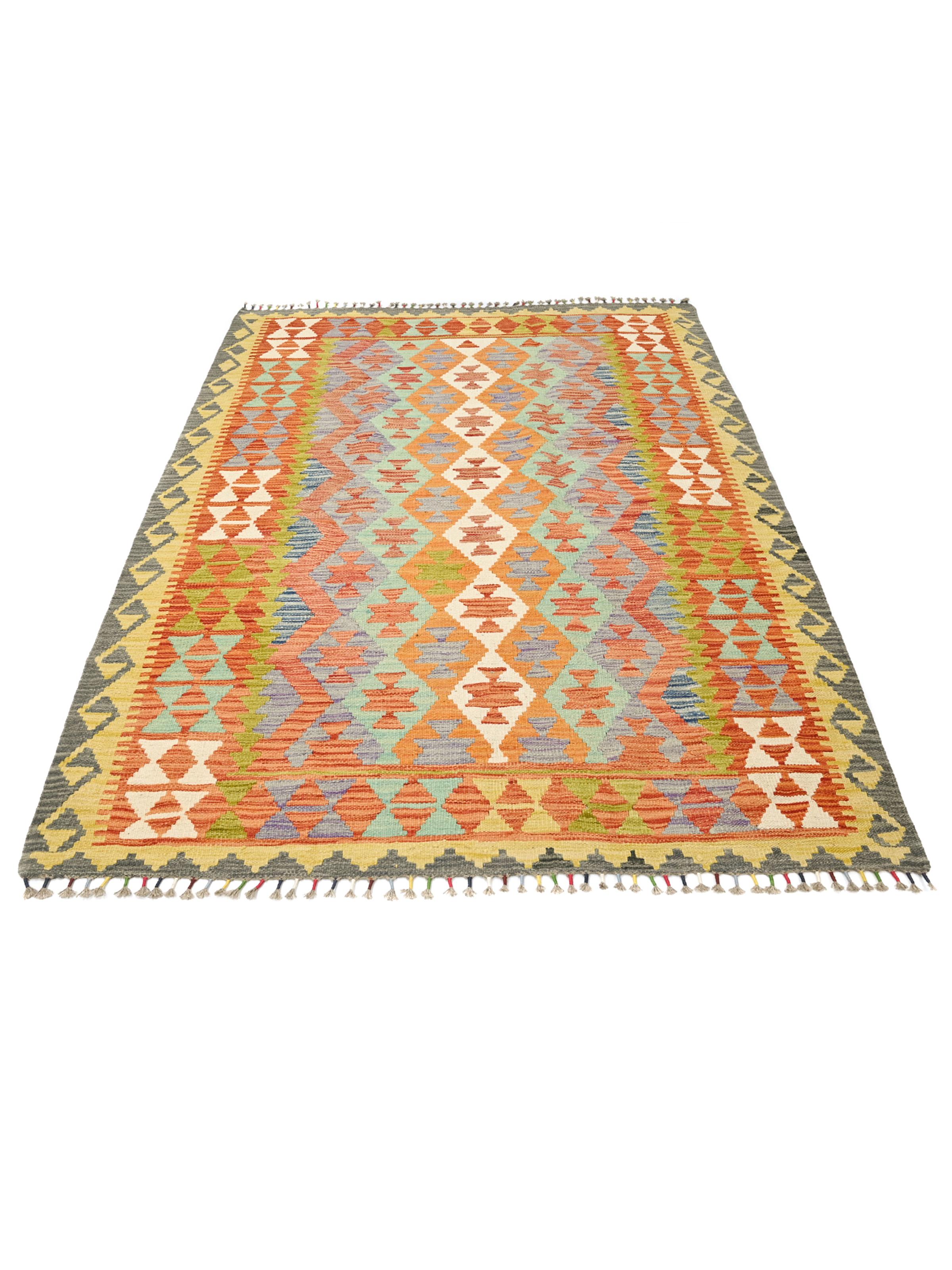
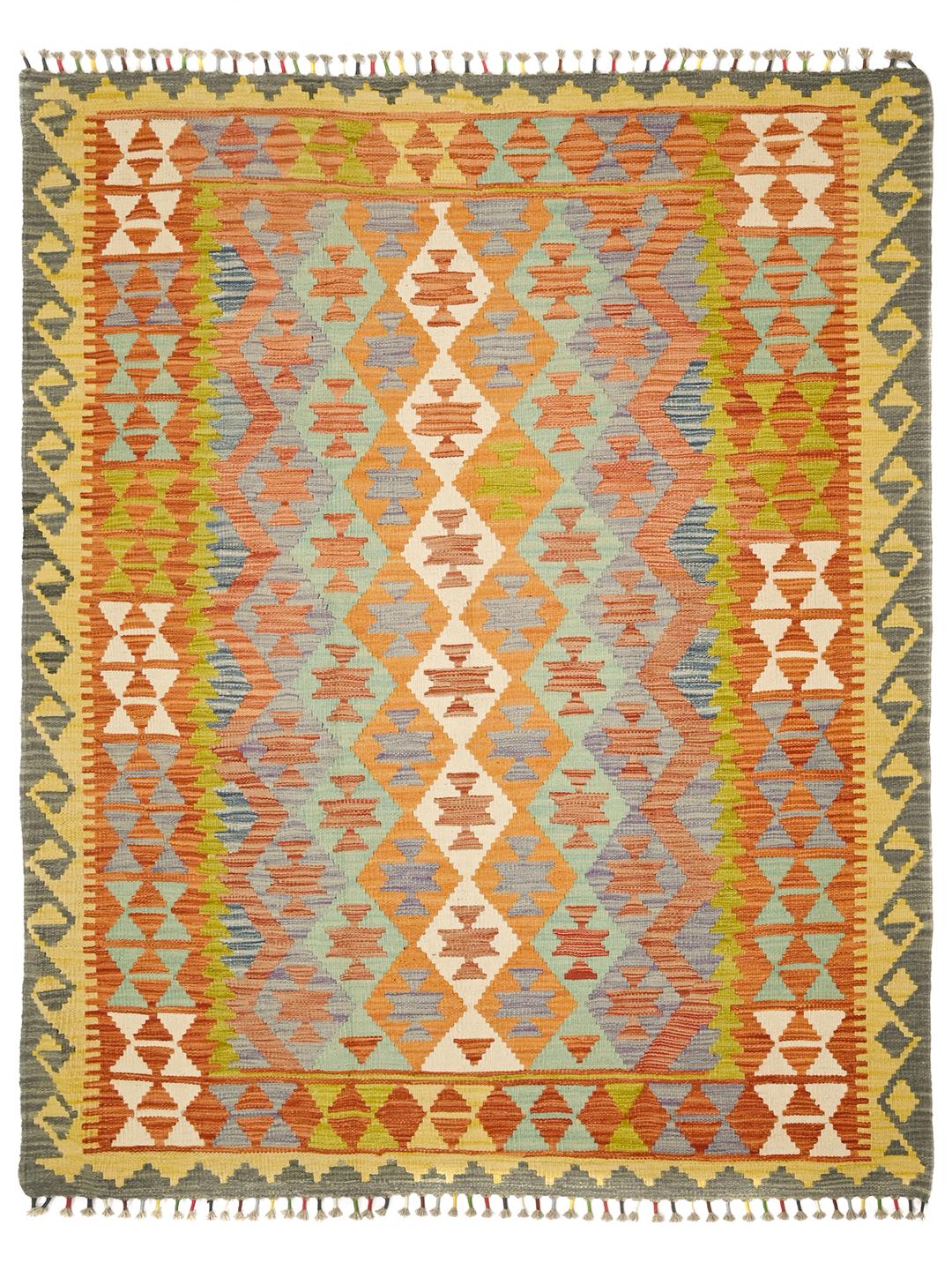
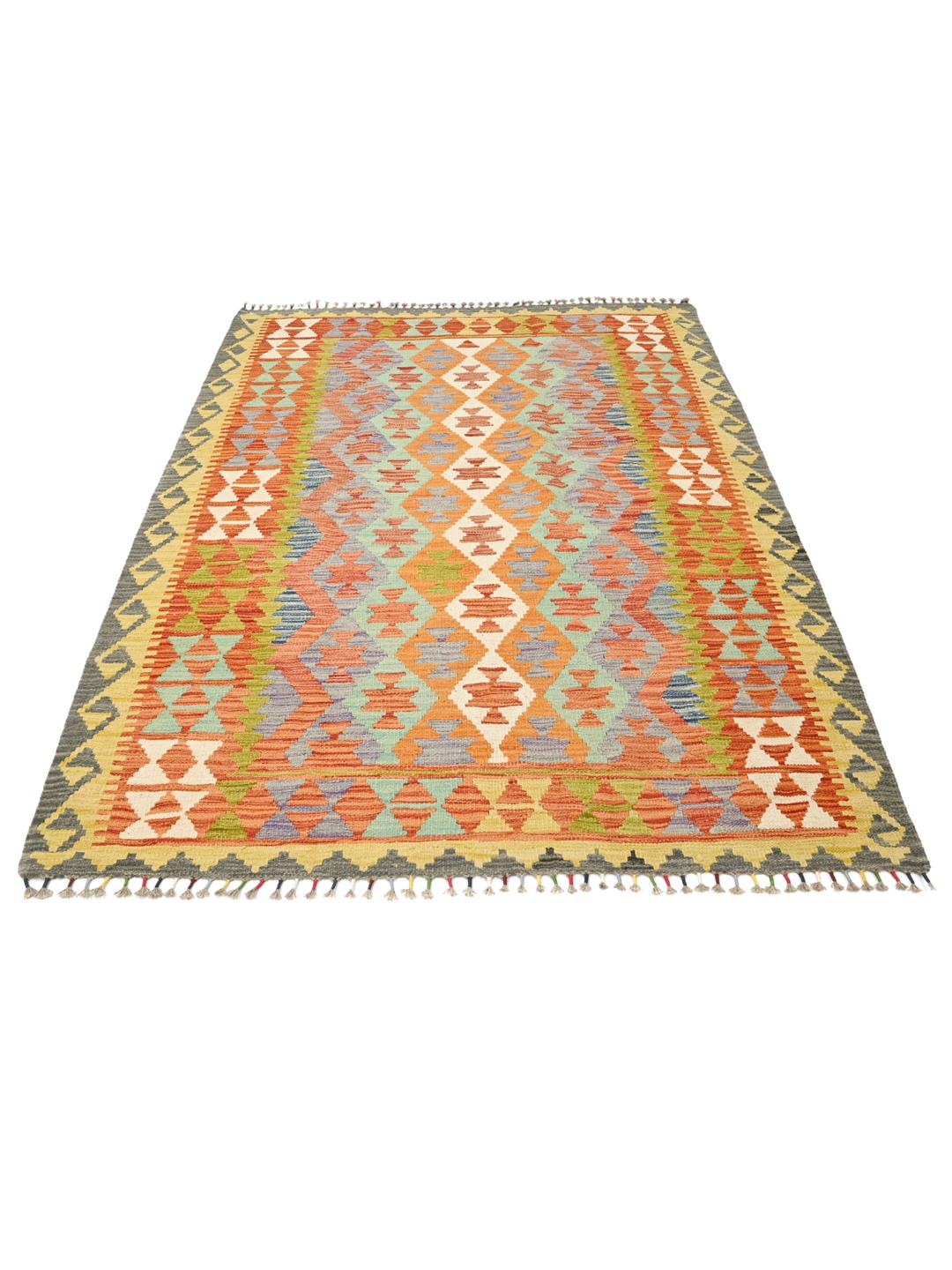
The tradition of weaving Kelim rugs in Afghanistan is deeply rooted in the nomadic history of the region. These flat-woven textiles were originally created by tribal communities for practical use, serving as floor coverings, blankets, and storage bags during their migrations across the rugged landscapes of Central Asia.
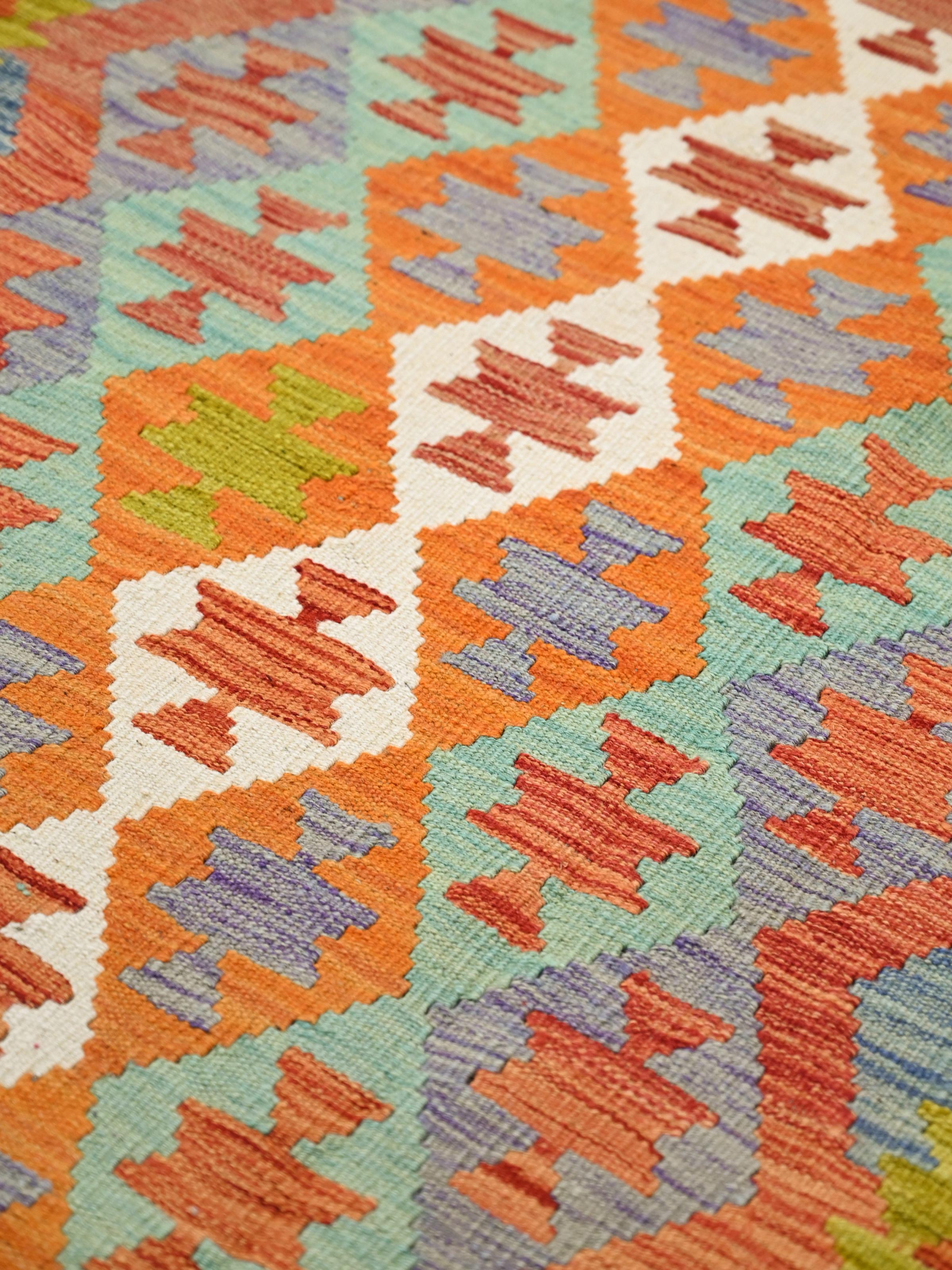
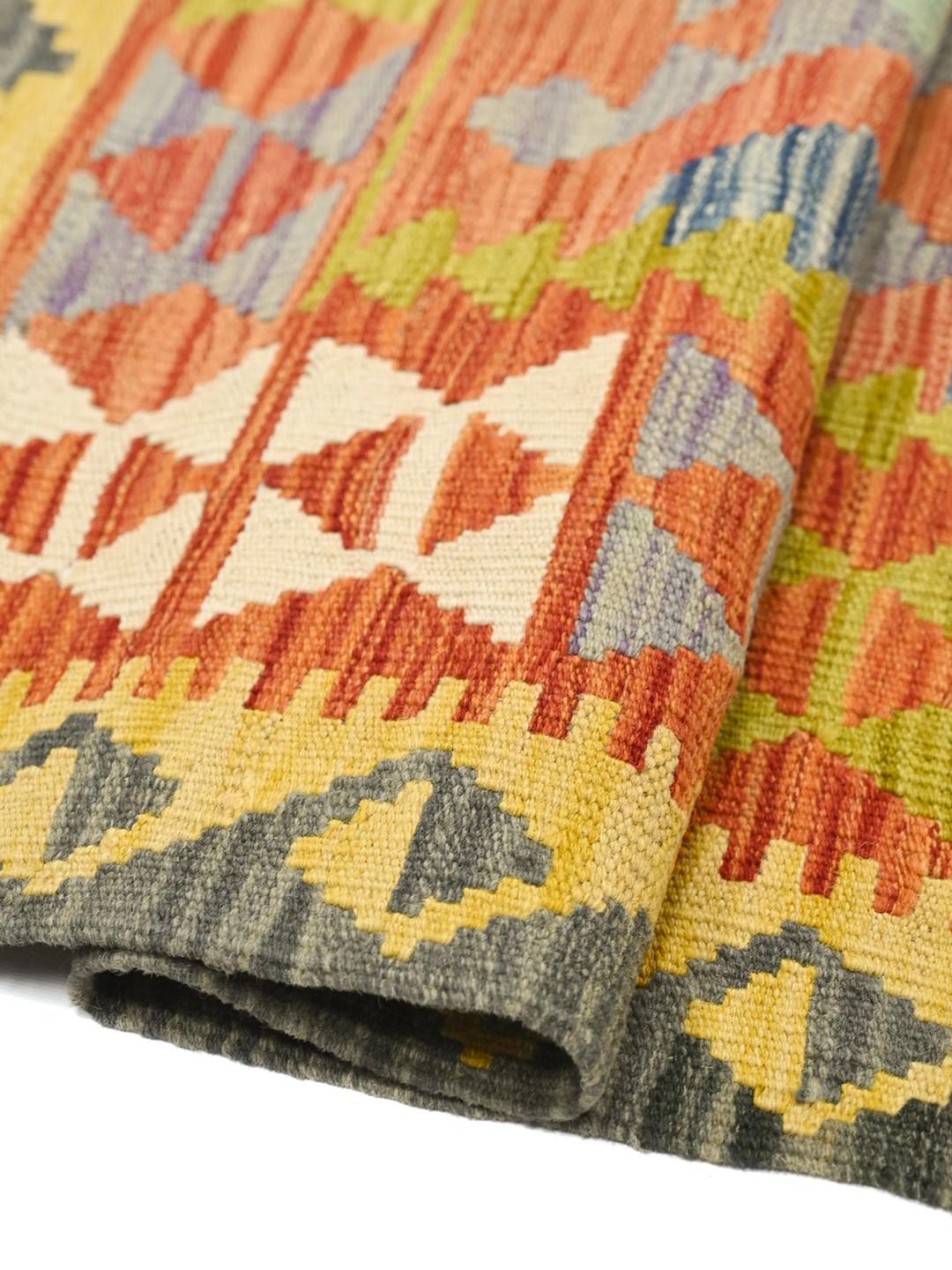
The term 'Kelim' refers to the specific flat-weaving technique used, which differs from pile rugs because it does not involve knotting individual strands of wool onto a foundation. Instead, the coloured weft threads are woven through the warp to create the pattern, resulting in a thin, lightweight, and reversible fabric that is highly prized for its durability and clean lines.
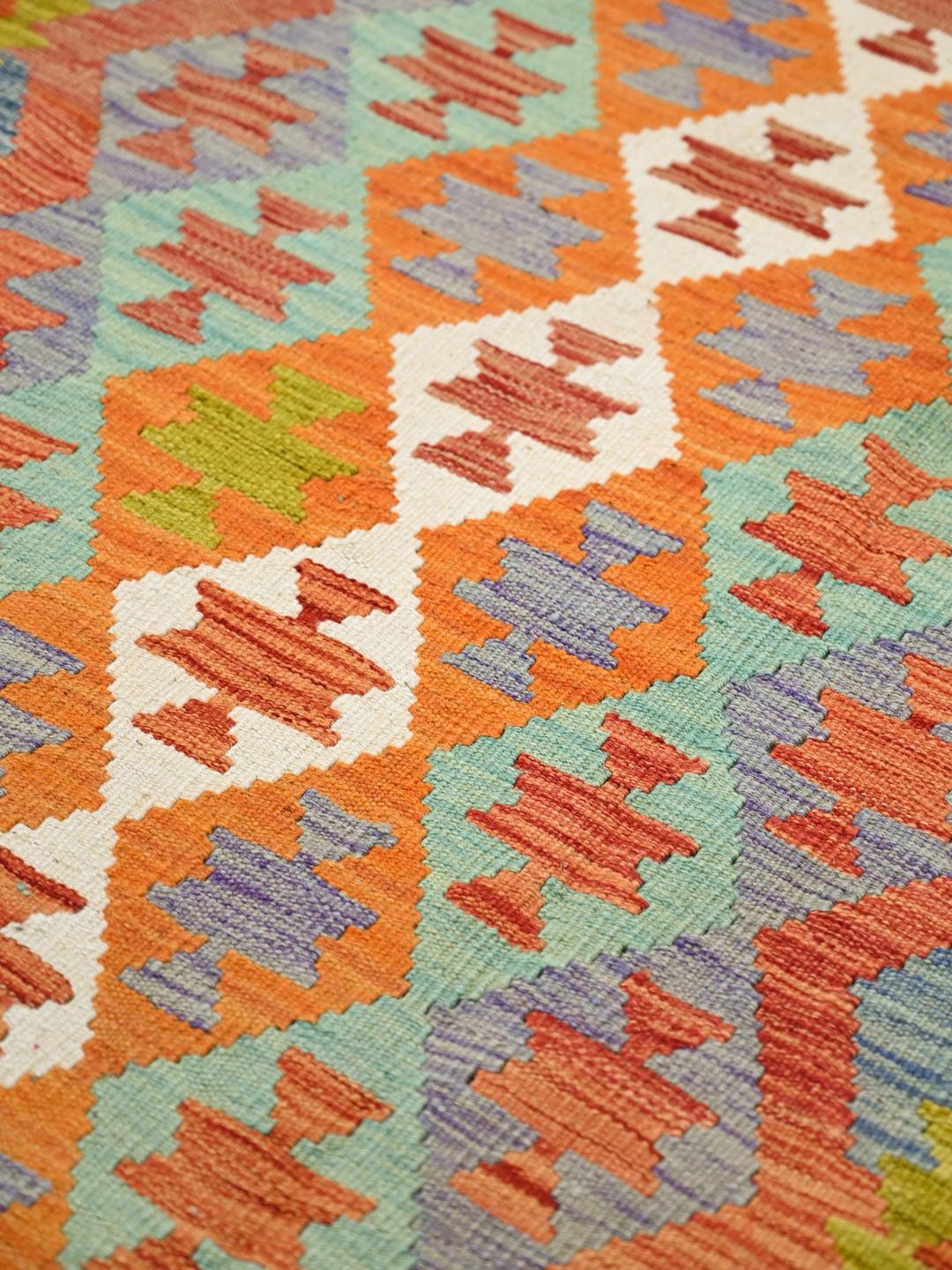
Visually, these rugs are defined by their bold geometric motifs. The patterns often incorporate diamonds, triangles, and intricate borders, all rendered in a rich palette of earthy and vibrant tones. These designs are not merely decorative but often carry symbolic meaning, reflecting the cultural heritage and the natural surroundings of the weavers.
Today, these rugs are sought after by collectors and interior enthusiasts alike for their historical significance and the immense skill required to produce them. Owning an Afghan Kelim means connecting with a long-standing tradition of craftsmanship that has survived for centuries, providing a bridge between ancient nomadic artistry and modern home living.