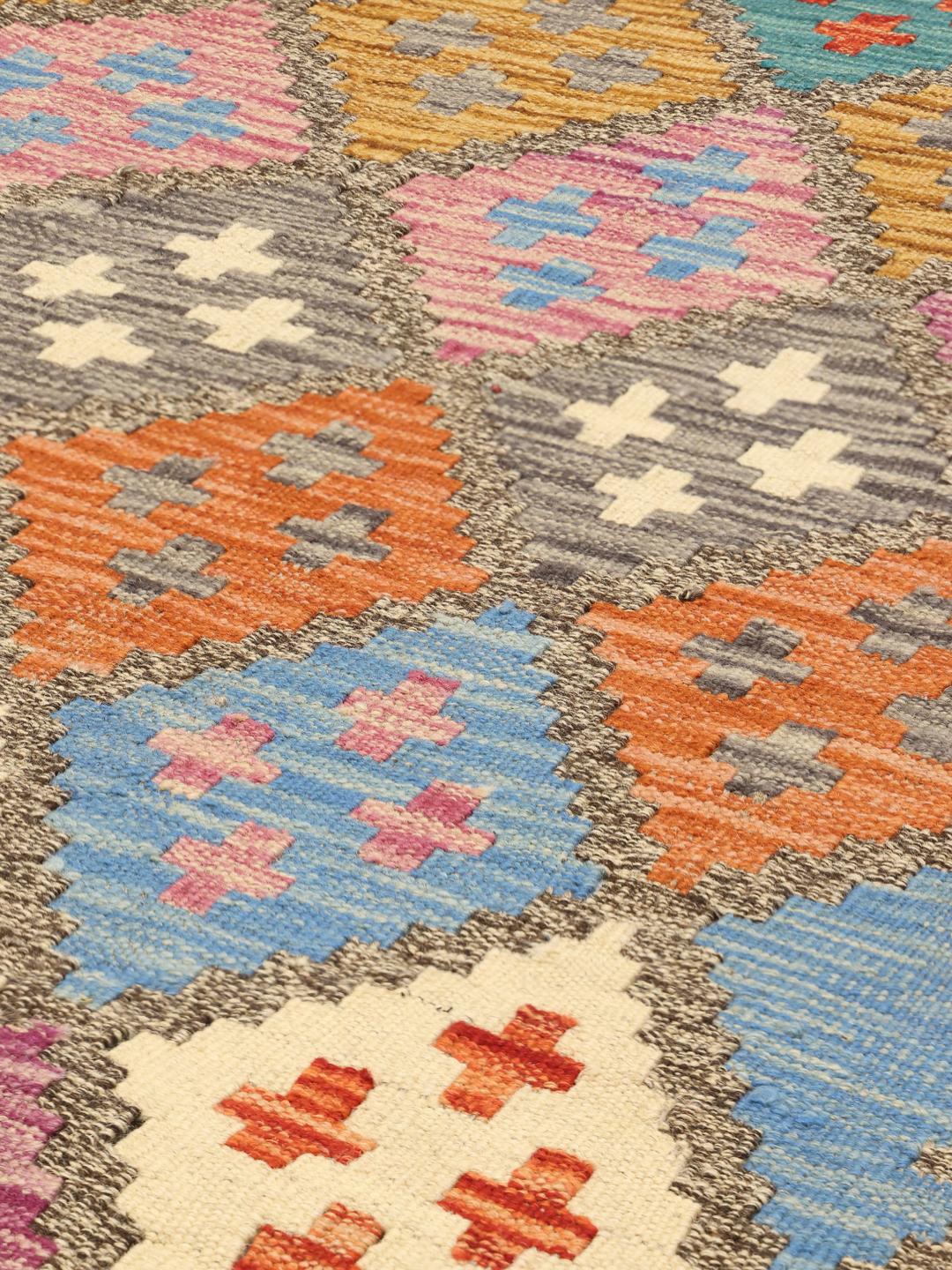
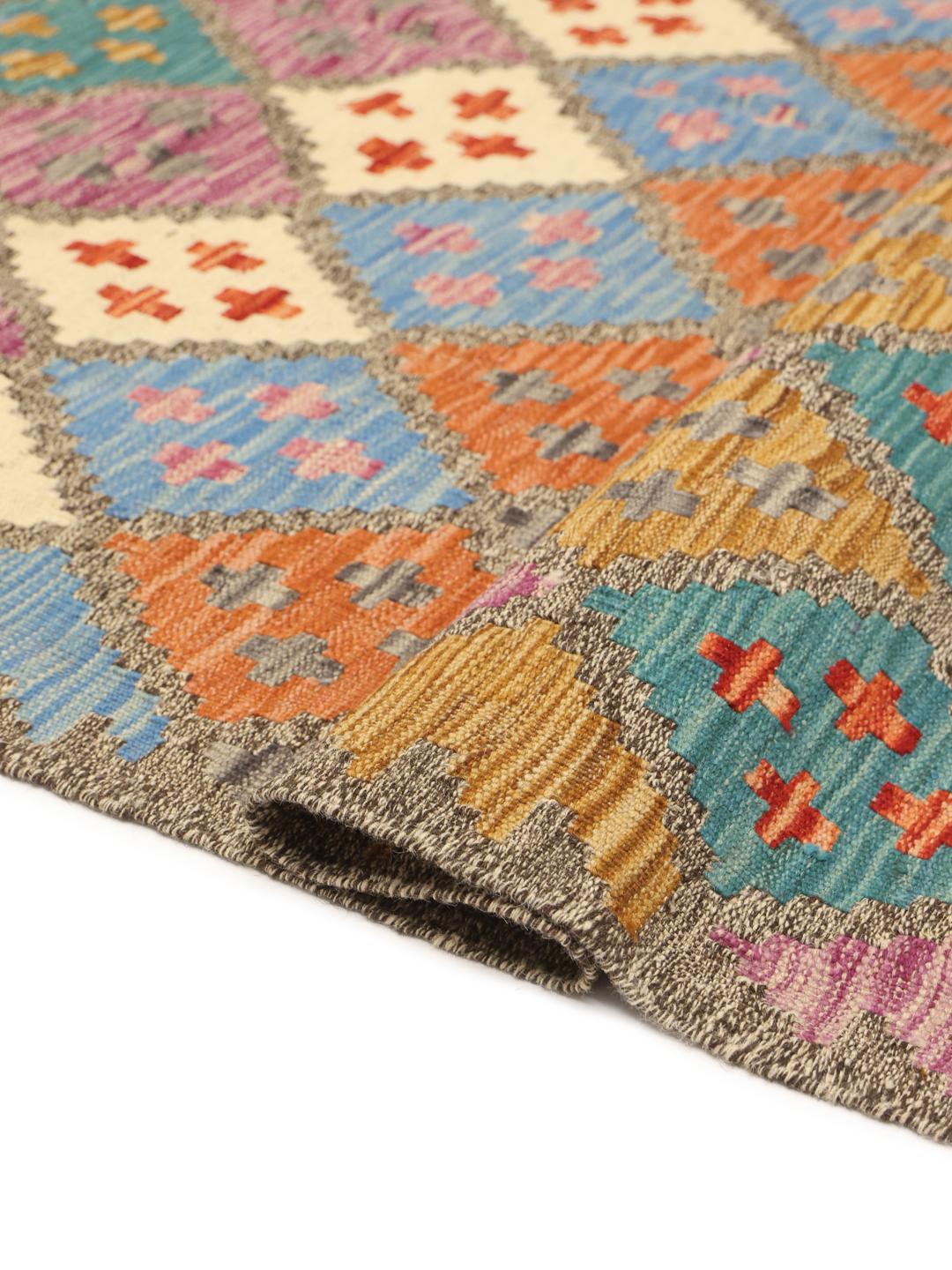
Kelim rugs originate from a rich history of nomadic and village weaving traditions across the Middle East and Central Asia. Specifically, the Afghan Kelim is celebrated for its sturdy, flat-weave construction, which was historically designed to be versatile enough to serve as floor coverings, wall hangings, or even saddlebags during transit.
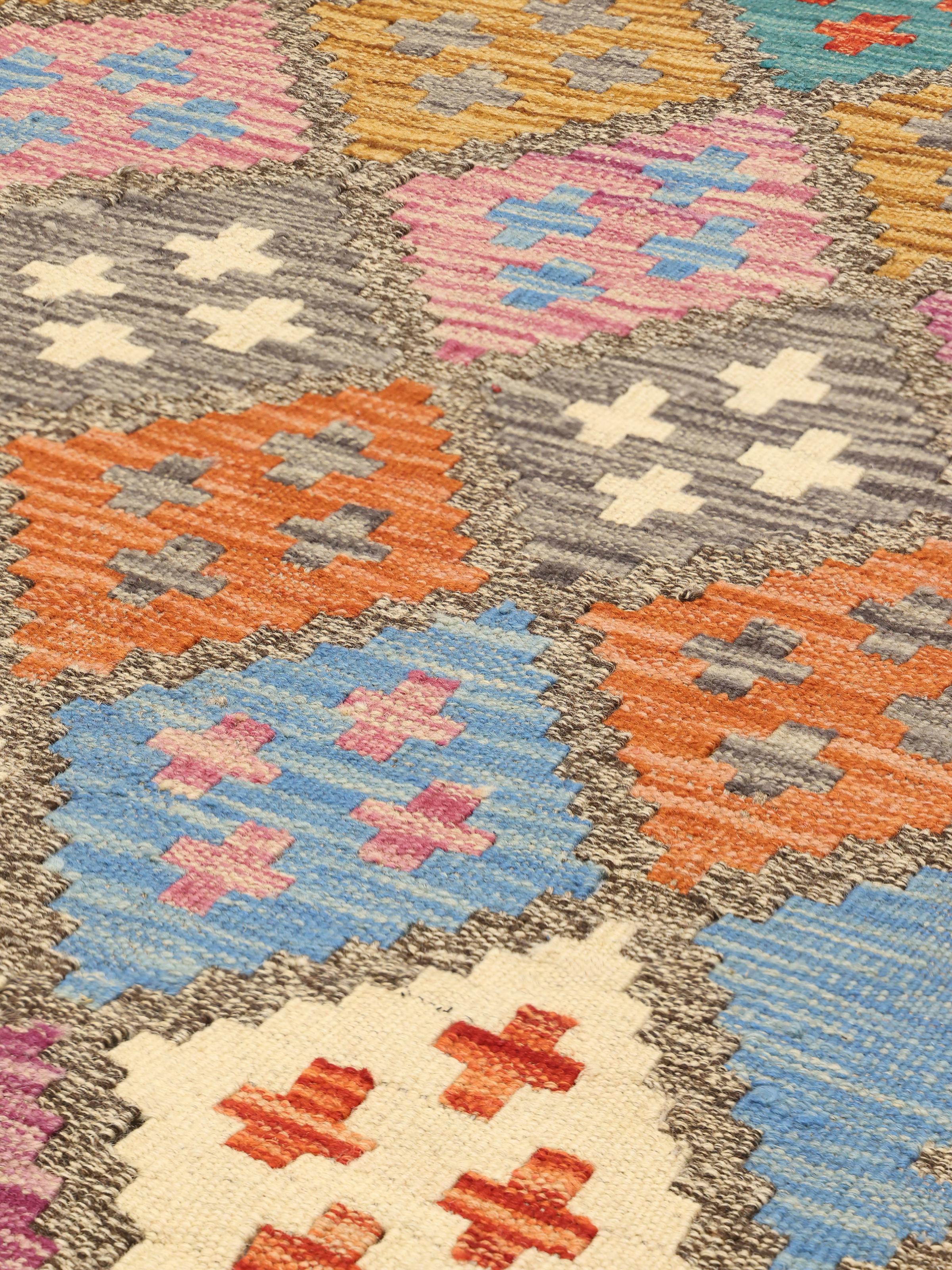
The term 'Kelim' refers to the specific flat-weaving technique where the weft threads are pulled tightly over the warp threads to create a smooth, pileless surface. This method is highly valued for its durability and the clarity it brings to geometric patterns, as the absence of pile allows the design to remain sharp and crisp over decades of use.
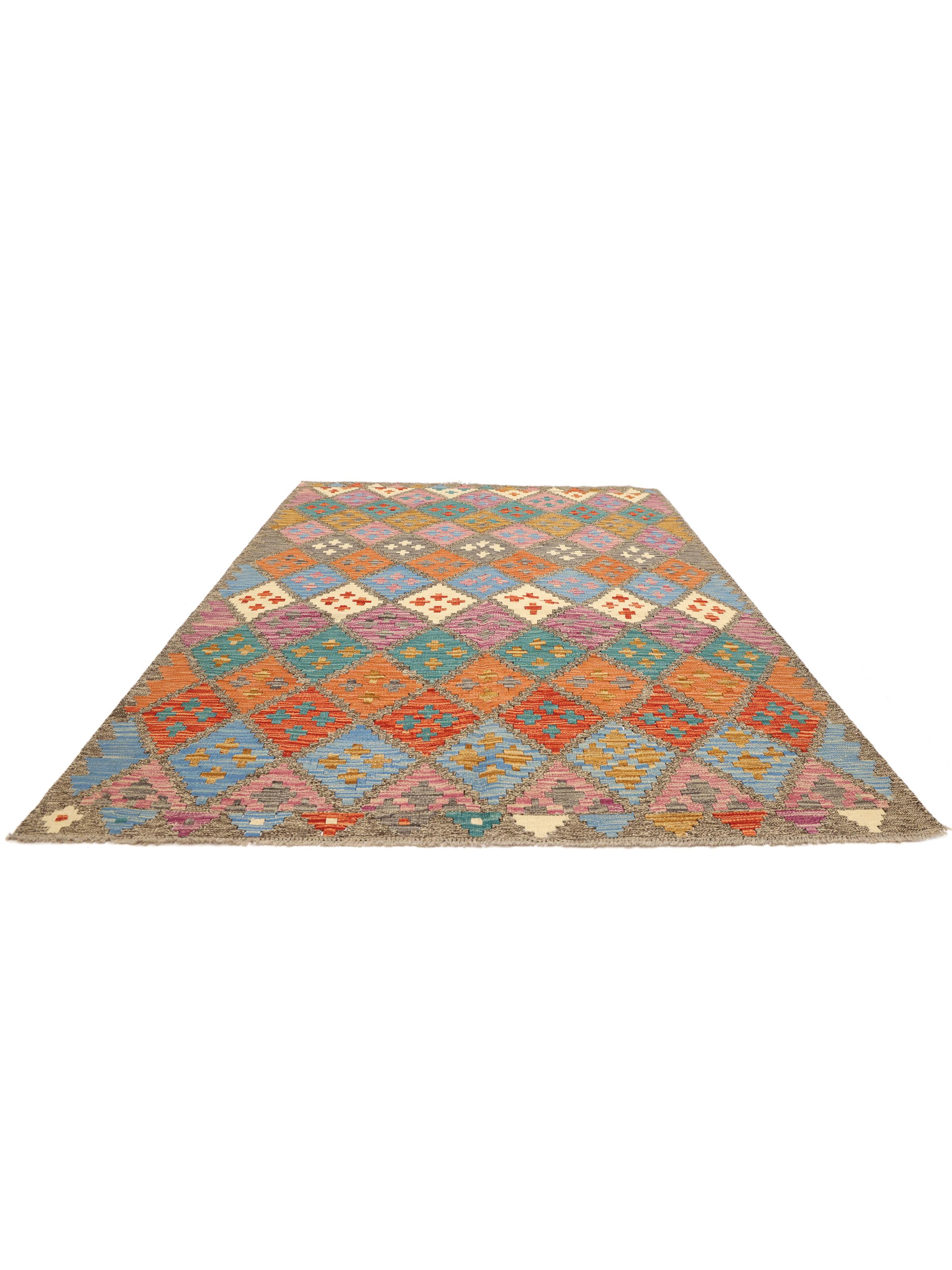
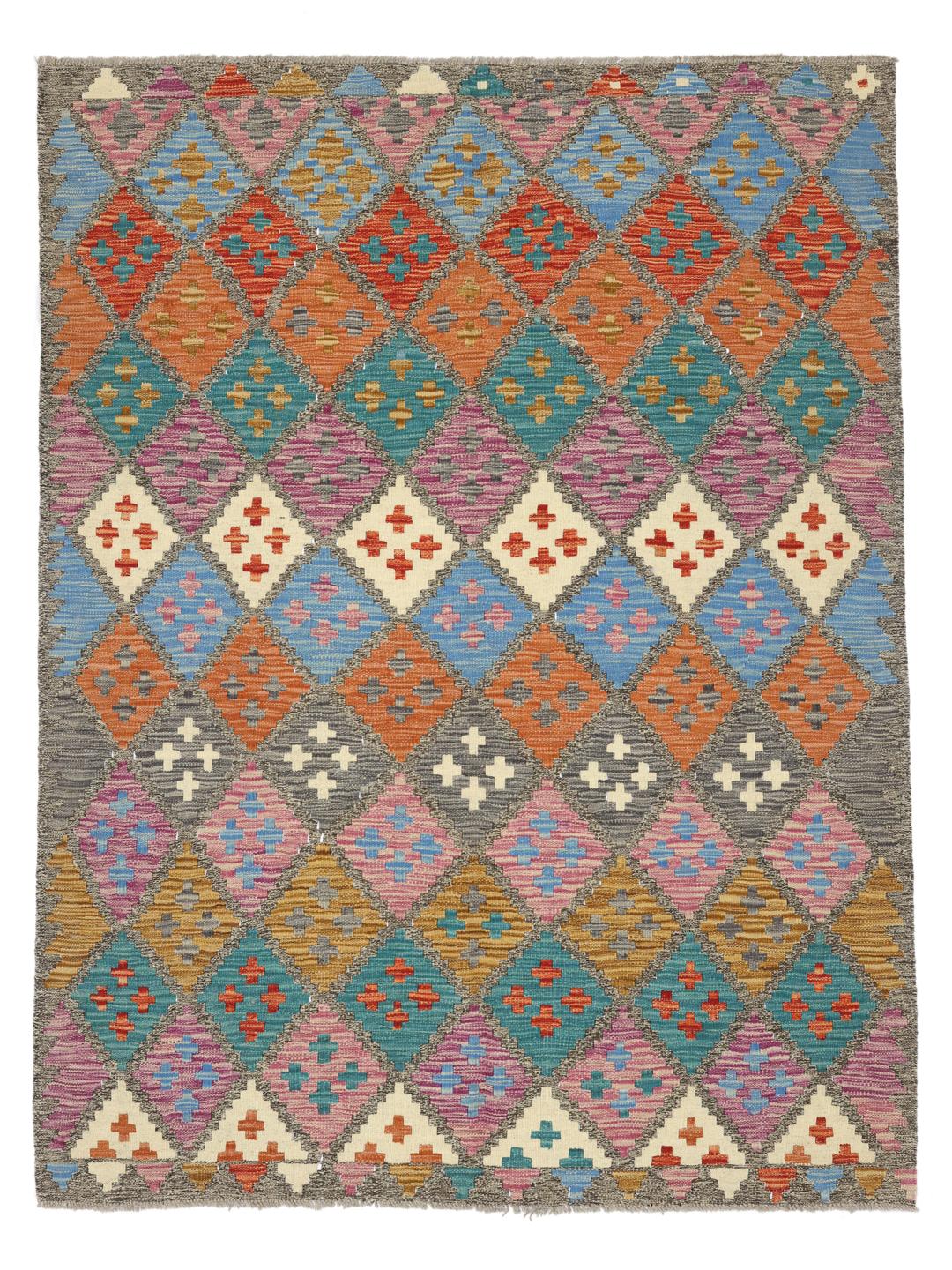
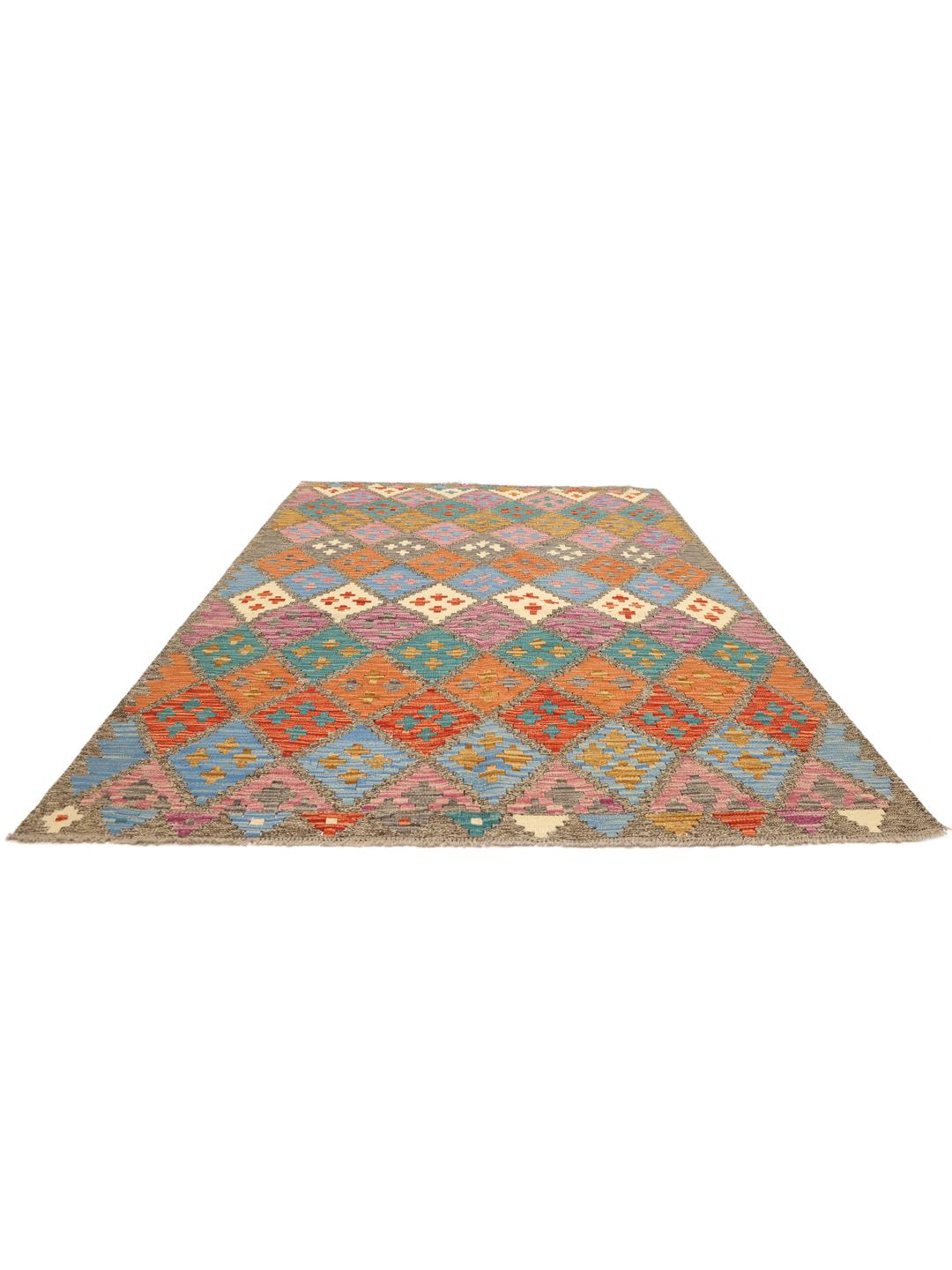
Signature design elements in these rugs often include geometric shapes, particularly diamonds and triangles, which are arranged in rhythmic, repeating patterns. The use of bold, saturated colours is a hallmark of the Afghan style, often achieved through natural dyes that soften beautifully over time, giving each piece a unique, lived-in aesthetic.
Owning an Afghan Kelim is an opportunity to connect with a storied craft heritage. These rugs are collected not only for their visual beauty but for the skill and cultural narrative they represent. Each piece serves as a physical record of the weaver's artistic choices, making them cherished items that bring depth and historical context to the modern home.