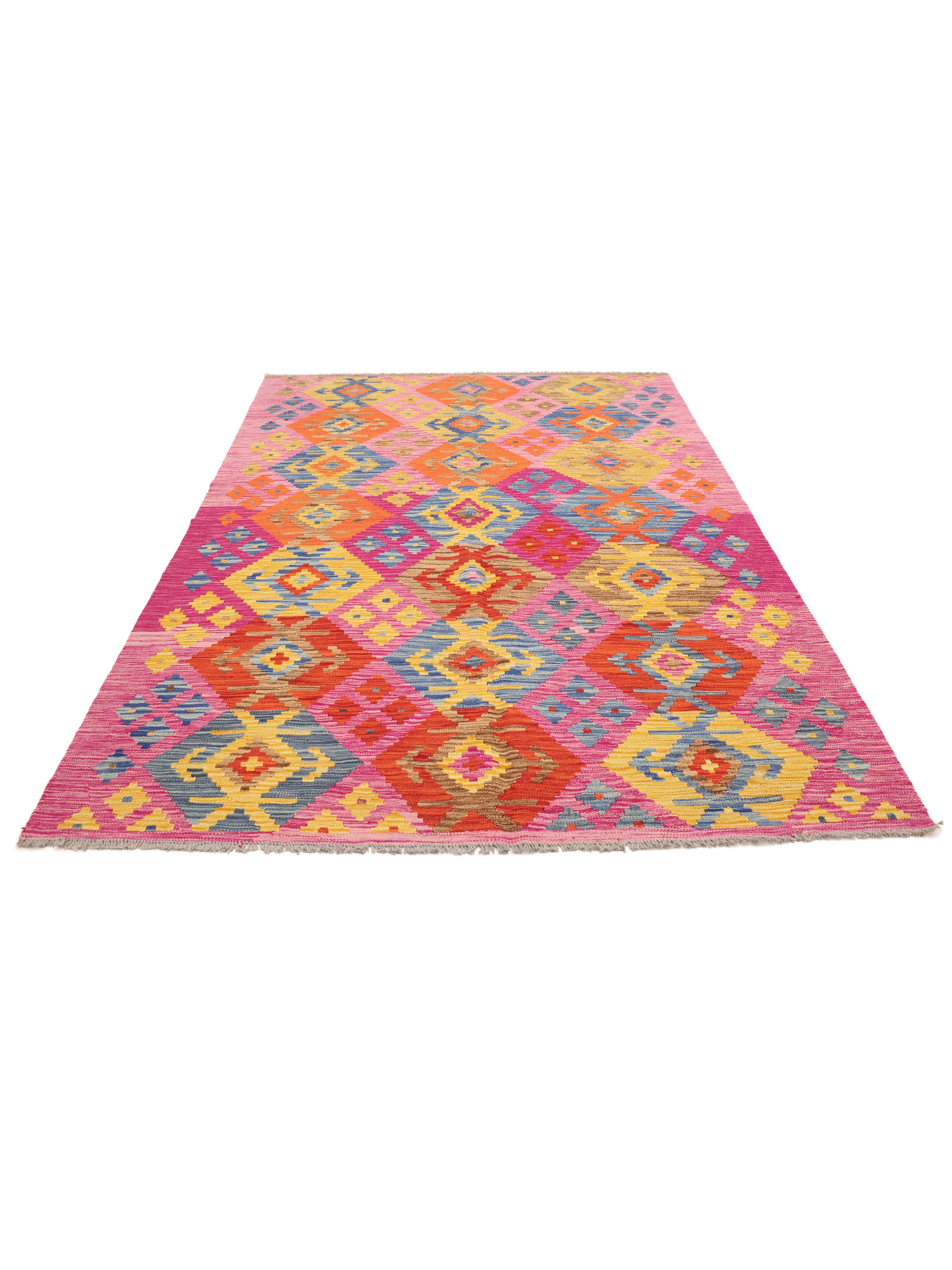
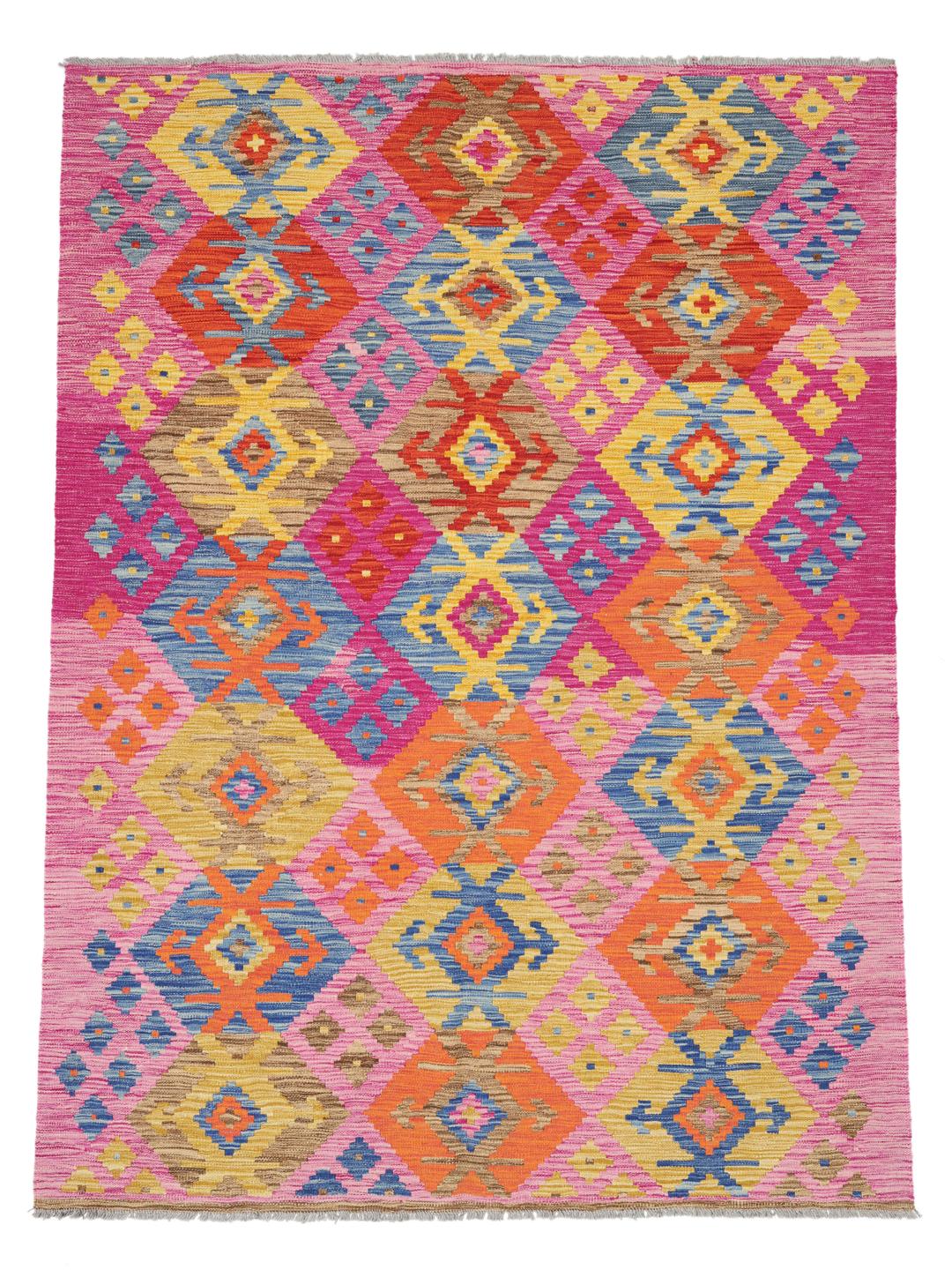
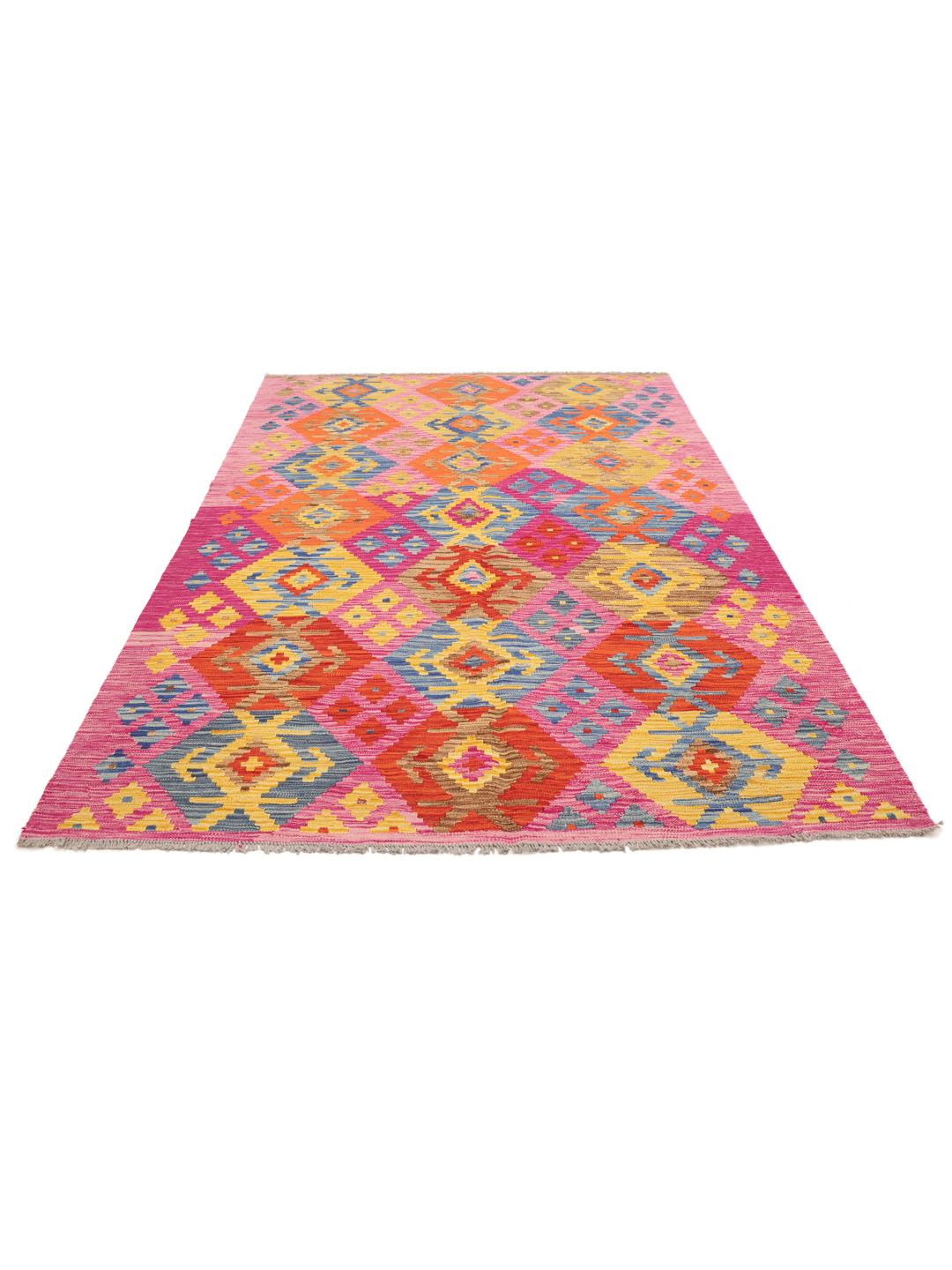
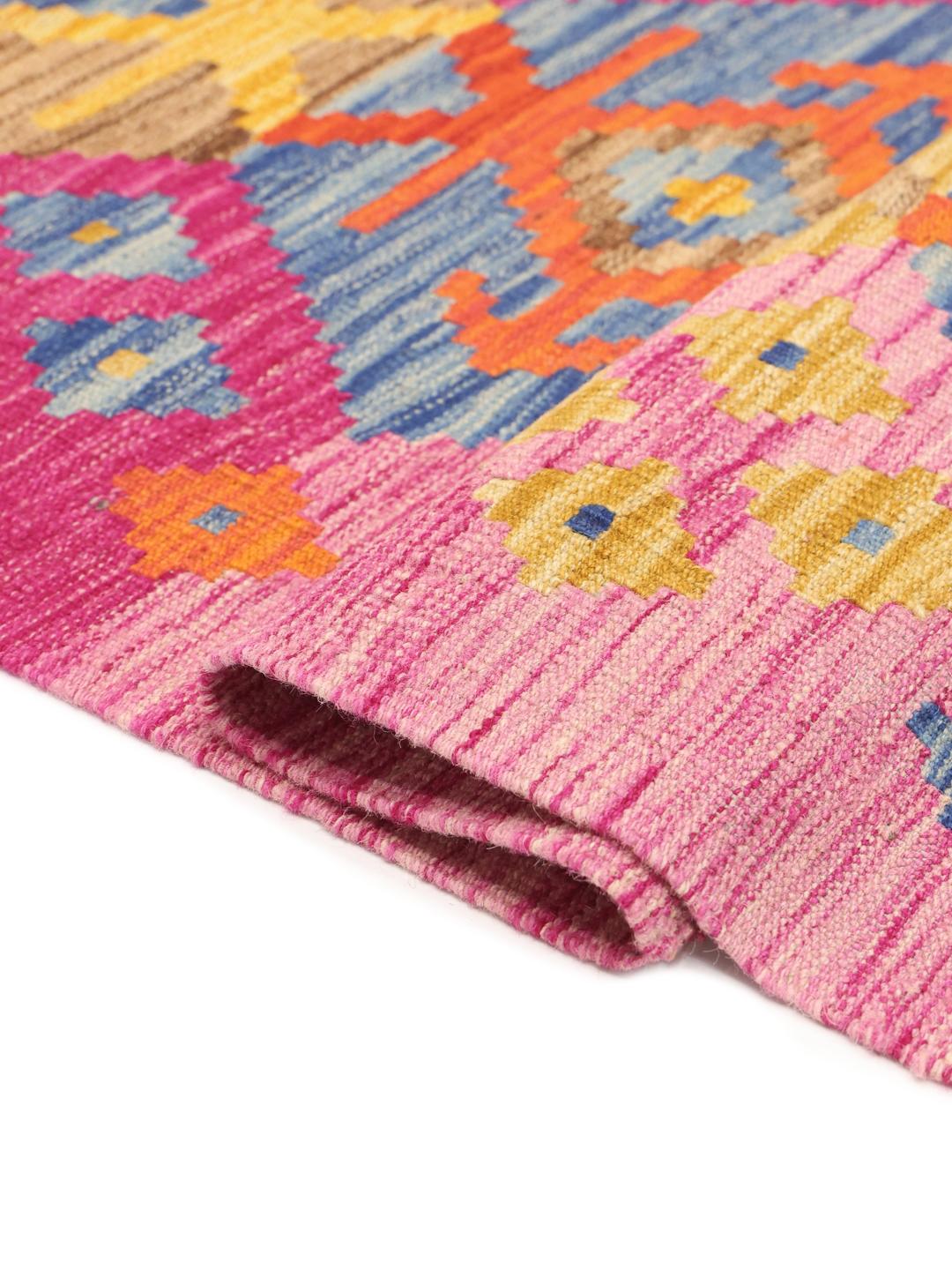
The Kelim Afghan Old Style rug tradition is deeply rooted in the nomadic and semi-nomadic cultures of Afghanistan. These flat-woven textiles have historically served as versatile, essential household items for tribes across the region, functioning as floor coverings, wall hangings, and storage bags. The evolution of these rugs reflects a long history of cultural exchange along the ancient trade routes that crossed the Middle East, blending local aesthetics with broader regional influences.
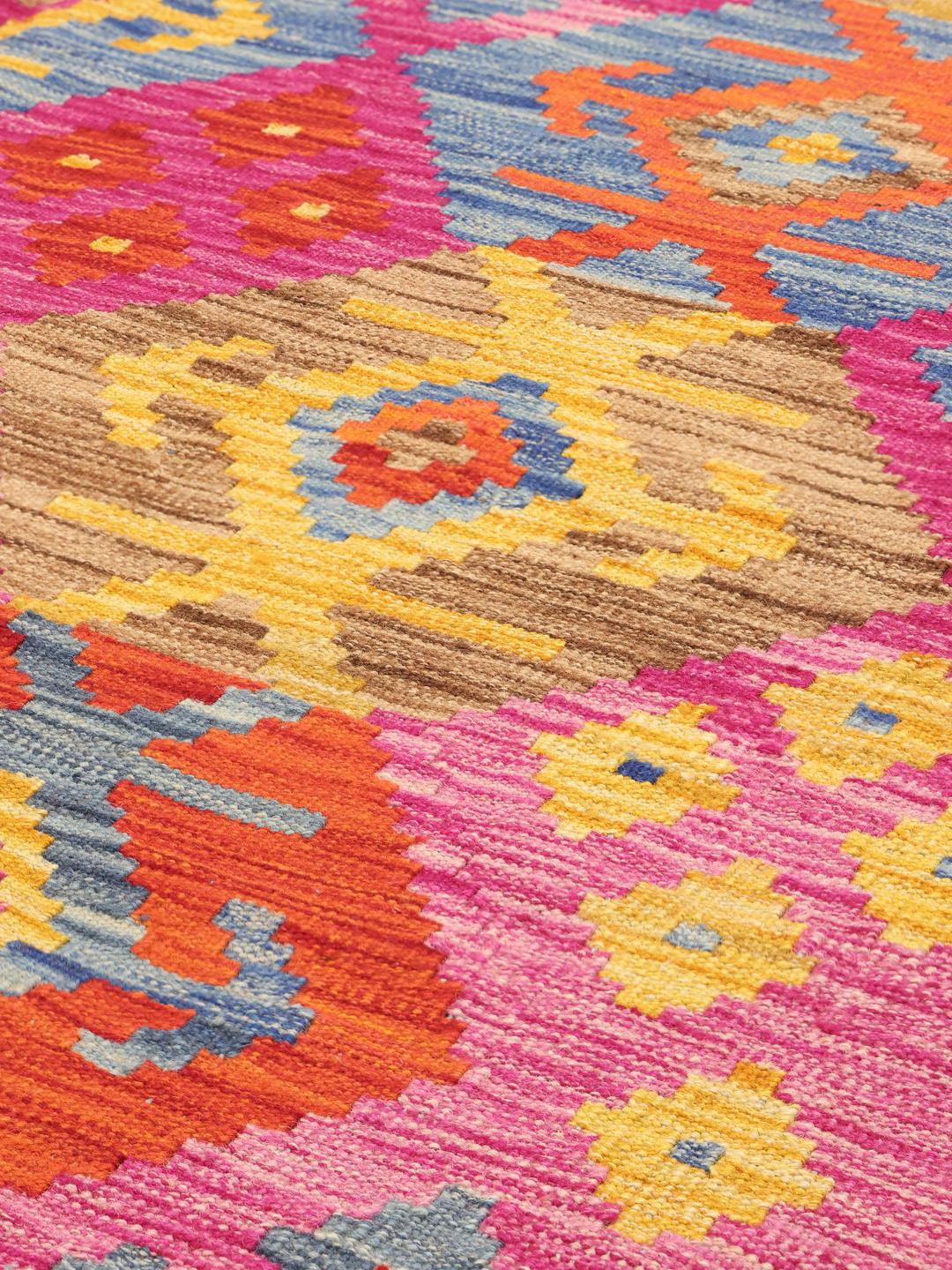
The term 'Kelim' refers specifically to the flat-weaving technique used to create these rugs, which involves interlacing the warp and weft threads to create a durable, pile-less surface. This method is distinct from knotted rugs, resulting in a thinner, lighter textile that is highly valued for its portability and decorative versatility. The mastery of this technique is a hallmark of skilled artisans who have preserved these ancient methods through generations of practice.
Visually, these rugs are defined by their bold geometric language and rich, saturated colour traditions. You will often see complex diamond motifs, stepped triangles, and intricate borders that carry deep symbolic meaning within Afghan culture. The use of vibrant, contrasting colours is a signature of this style, intended to bring light and energy into the traditional dwellings where these rugs were historically kept.
Today, these rugs are cherished by collectors and design enthusiasts for their cultural weight and the undeniable skill required to produce them. Owning a Kelim Afghan Old Style rug is more than just a decor choice; it is an act of preserving a historic craft. The enduring appeal of these rugs lies in their ability to combine a primitive, honest aesthetic with a level of artistry that remains relevant and sought after in modern interiors worldwide.