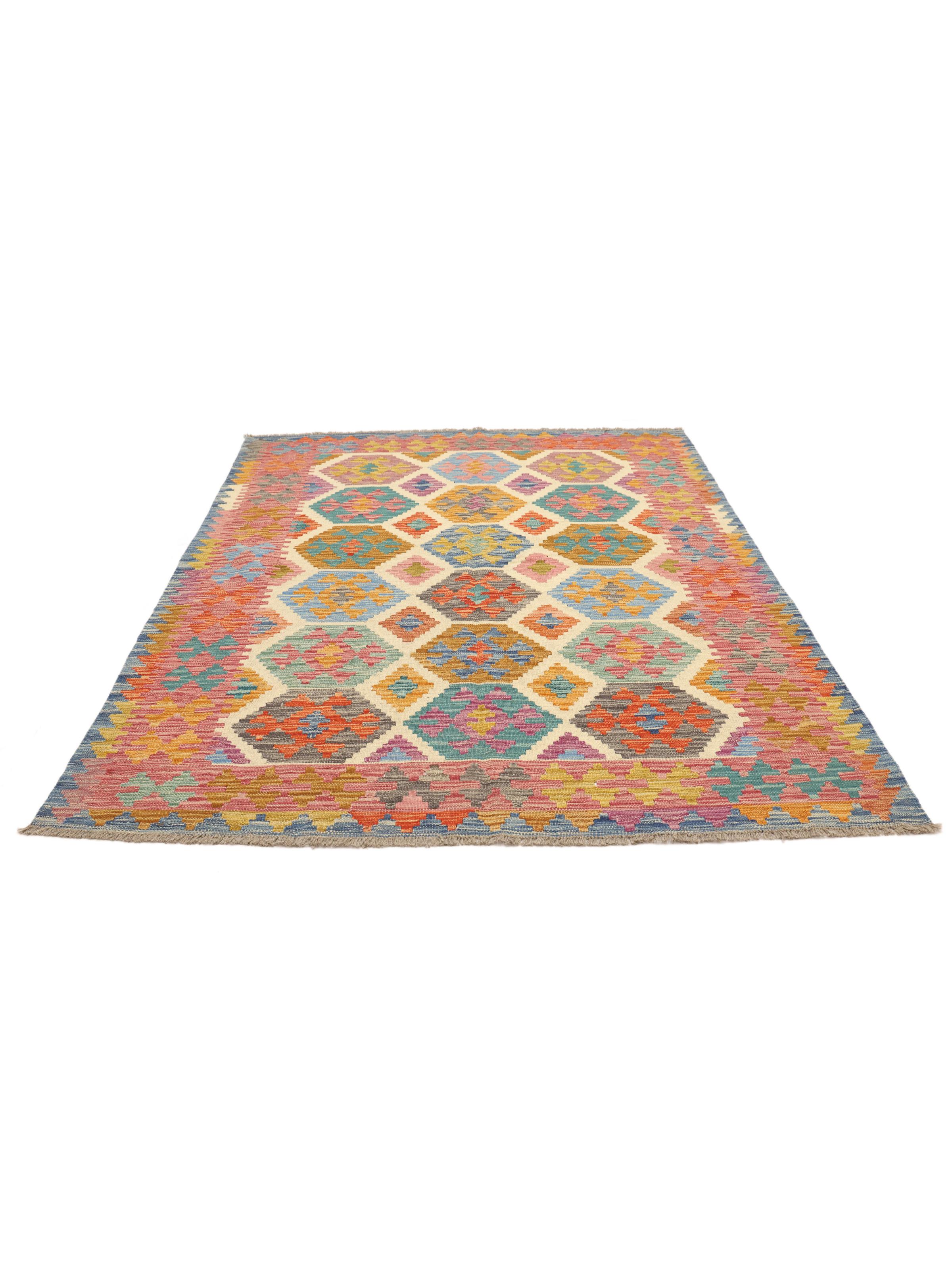
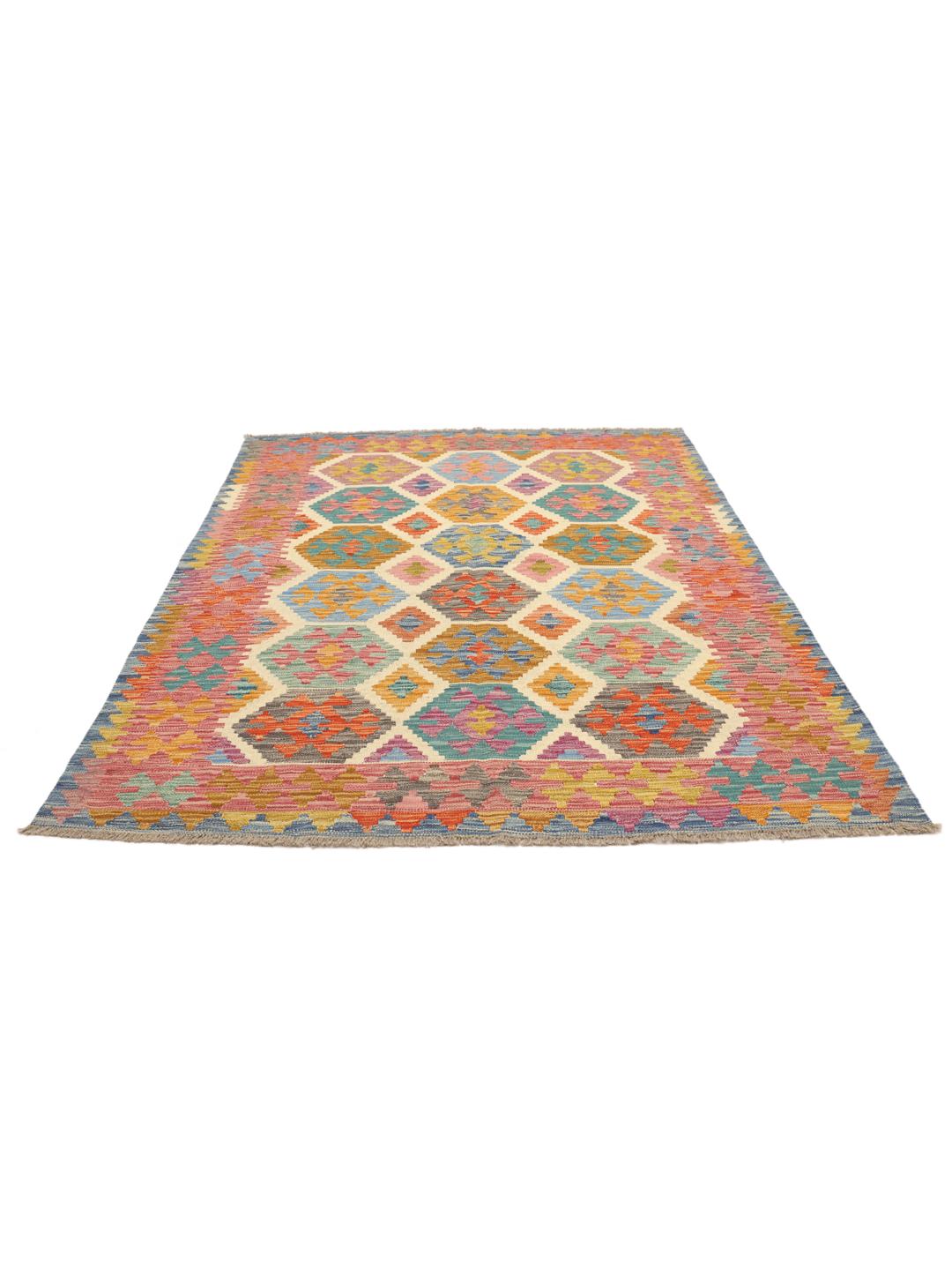
The Kelim tradition in Afghanistan is a testament to the enduring ingenuity of nomadic and village cultures across the Middle East. These rugs are not merely floor coverings but are functional textiles that have served as blankets, wall hangings, and saddlebags for generations, evolving from strictly utilitarian objects into highly sought-after decorative pieces known for their portability and vibrant design language.
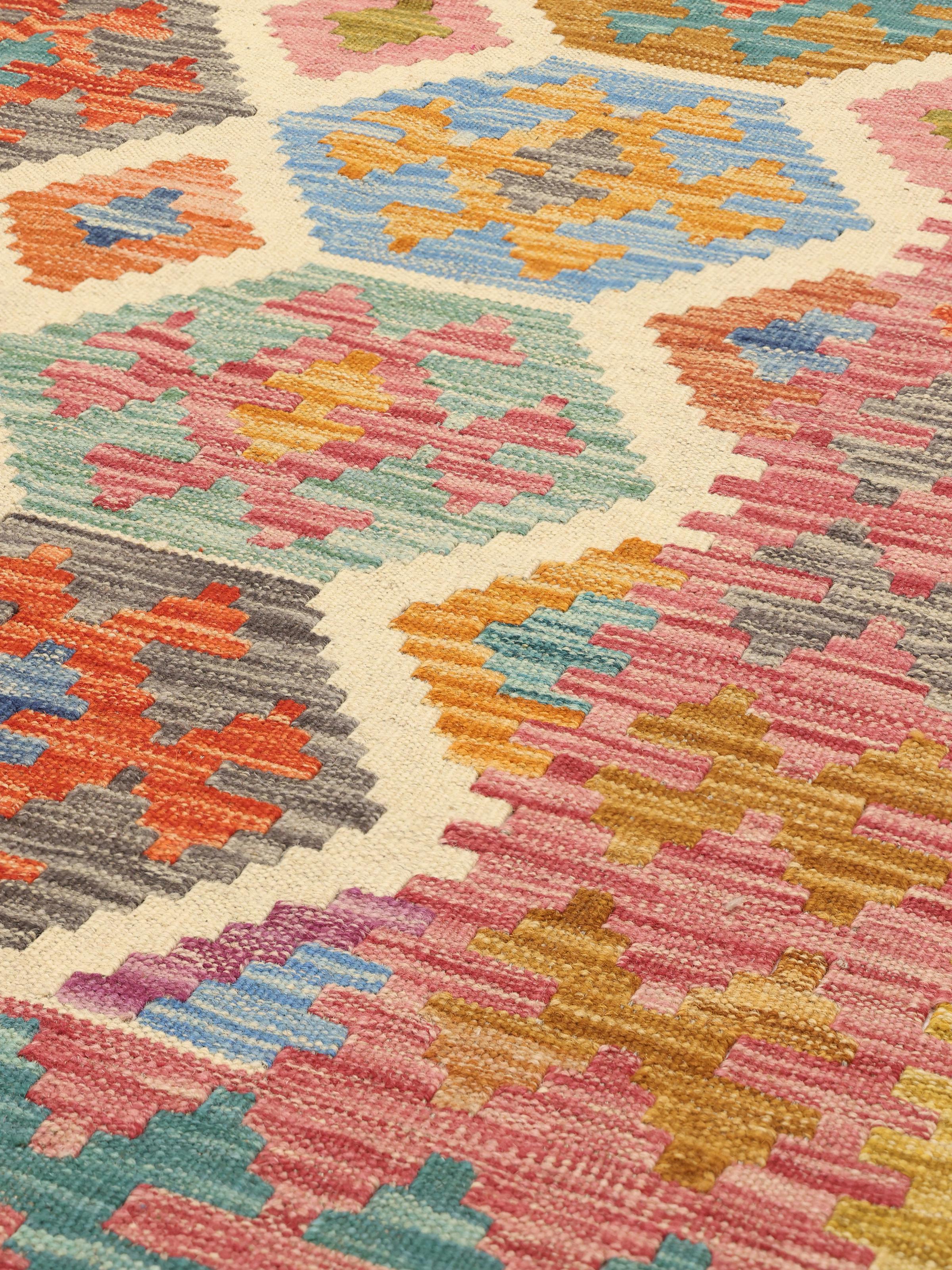
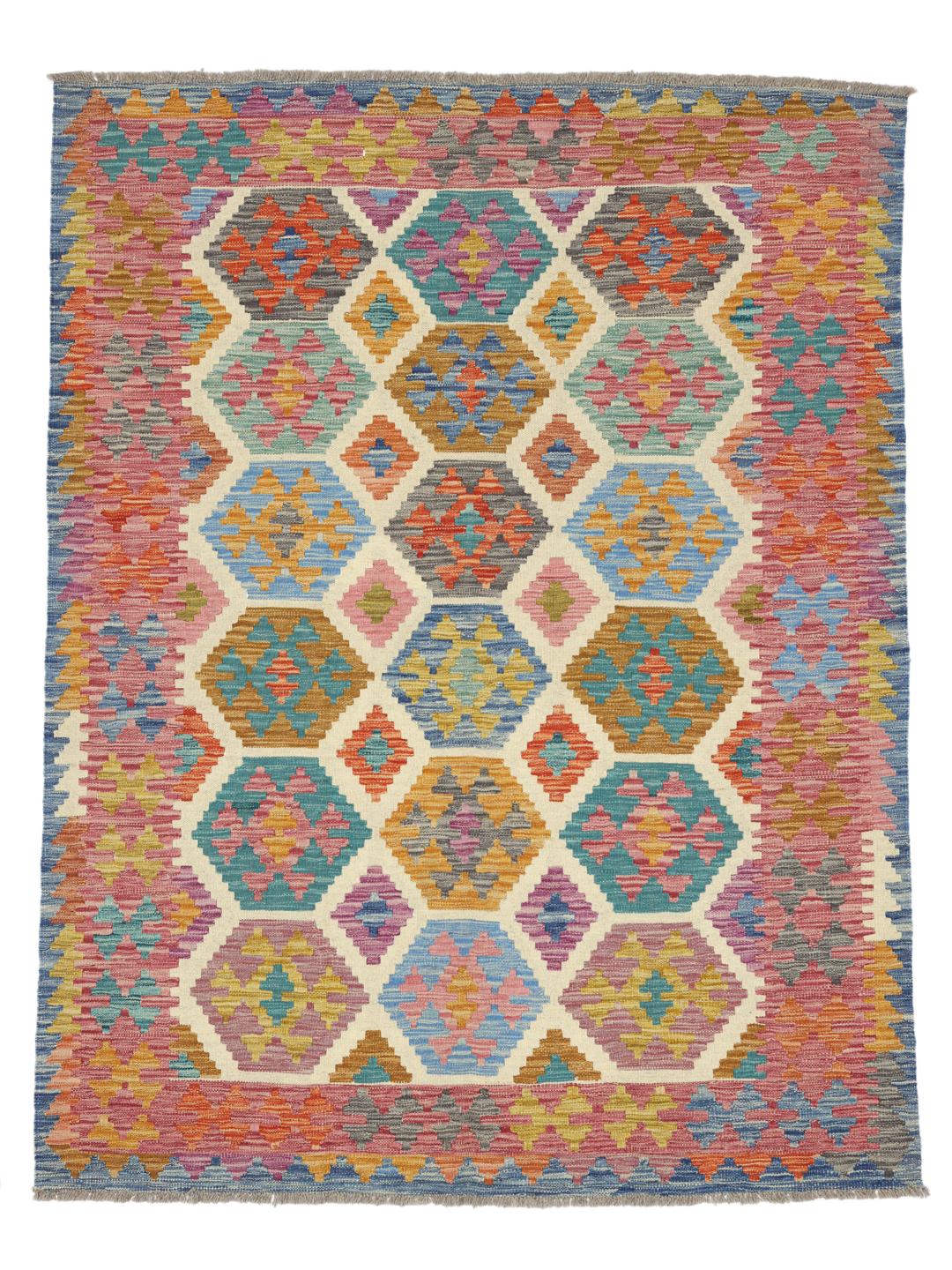
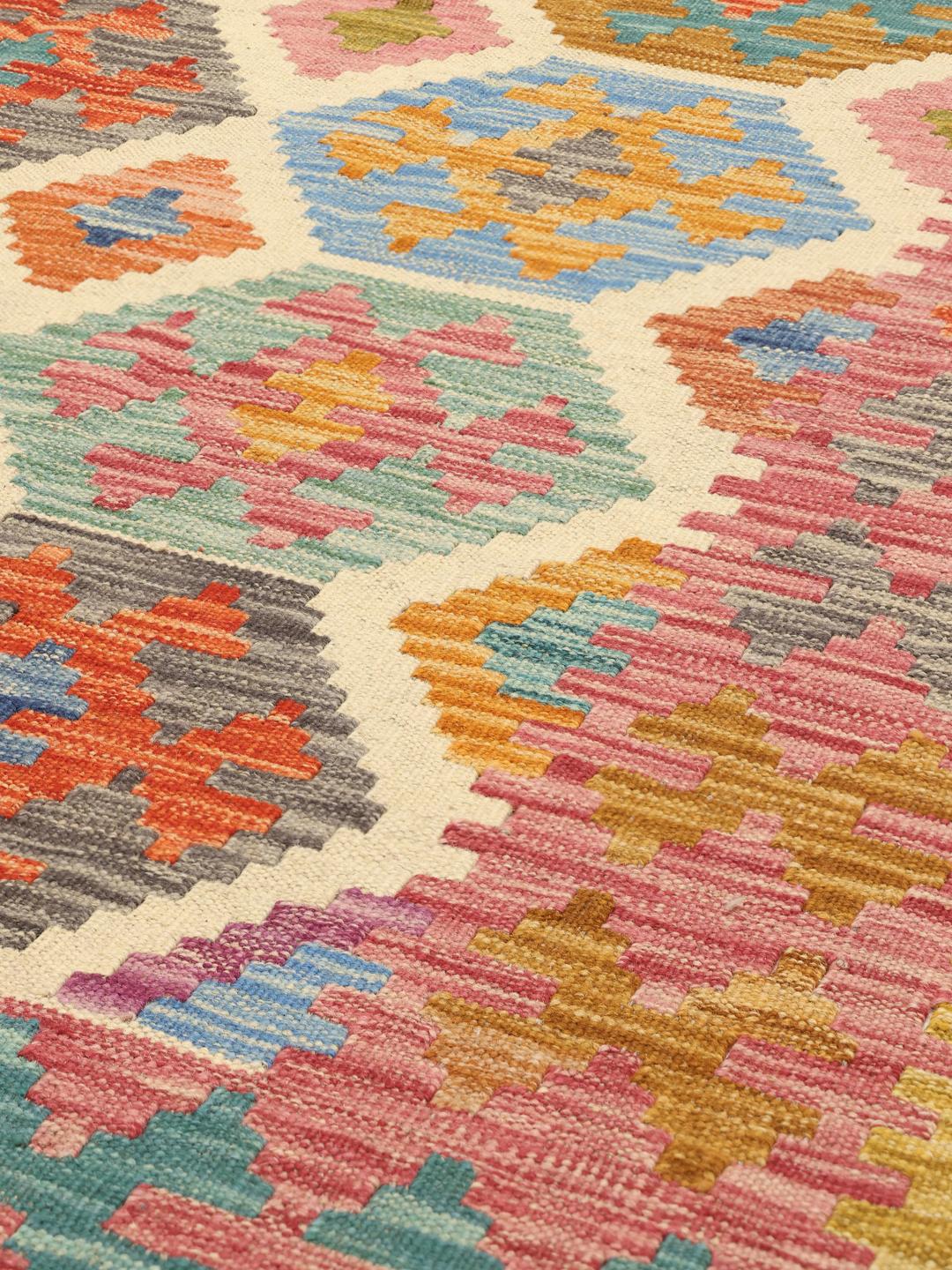
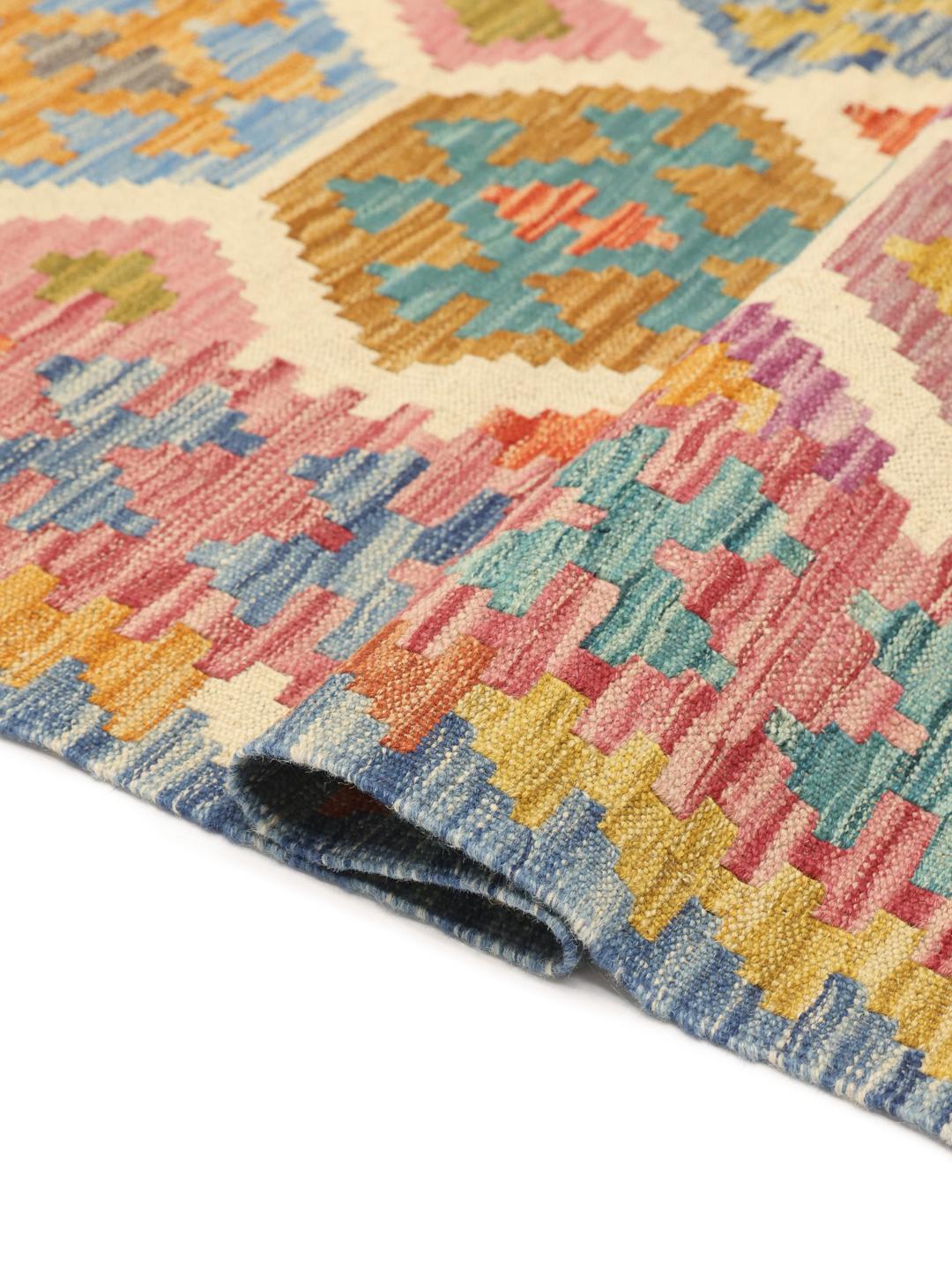
Kelim production is defined by a flat-weave technique, meaning the rug is created without a pile. By interweaving the coloured weft strands directly through the warp, artisans create a reversible, lightweight textile that is incredibly strong and easy to clean. This construction method is what gives the Kelim its signature crisp, graphic appearance, allowing for sharp geometric lines that are difficult to achieve in knotted-pile rugs.
The visual identity of this tradition is heavily influenced by tribal motifs, with the hexagon being a recurring and significant shape. These patterns often hold symbolic meanings related to protection, fertility, and the natural environment, arranged in repetitive sequences that create a harmonious, balanced field. The use of bold, saturated colours is a hallmark of the Afghan style, reflecting the natural dyes historically available and the aesthetic preferences of the weaving communities.
Today, these rugs are cherished by collectors for their cultural weight and the undeniable skill required to produce them. Owning a Kelim is a way to preserve a connection to a long-standing craft tradition that values human artistry over industrial speed. Each piece serves as a bridge between the past and the present, offering a timeless aesthetic that brings depth and heritage to any contemporary interior.