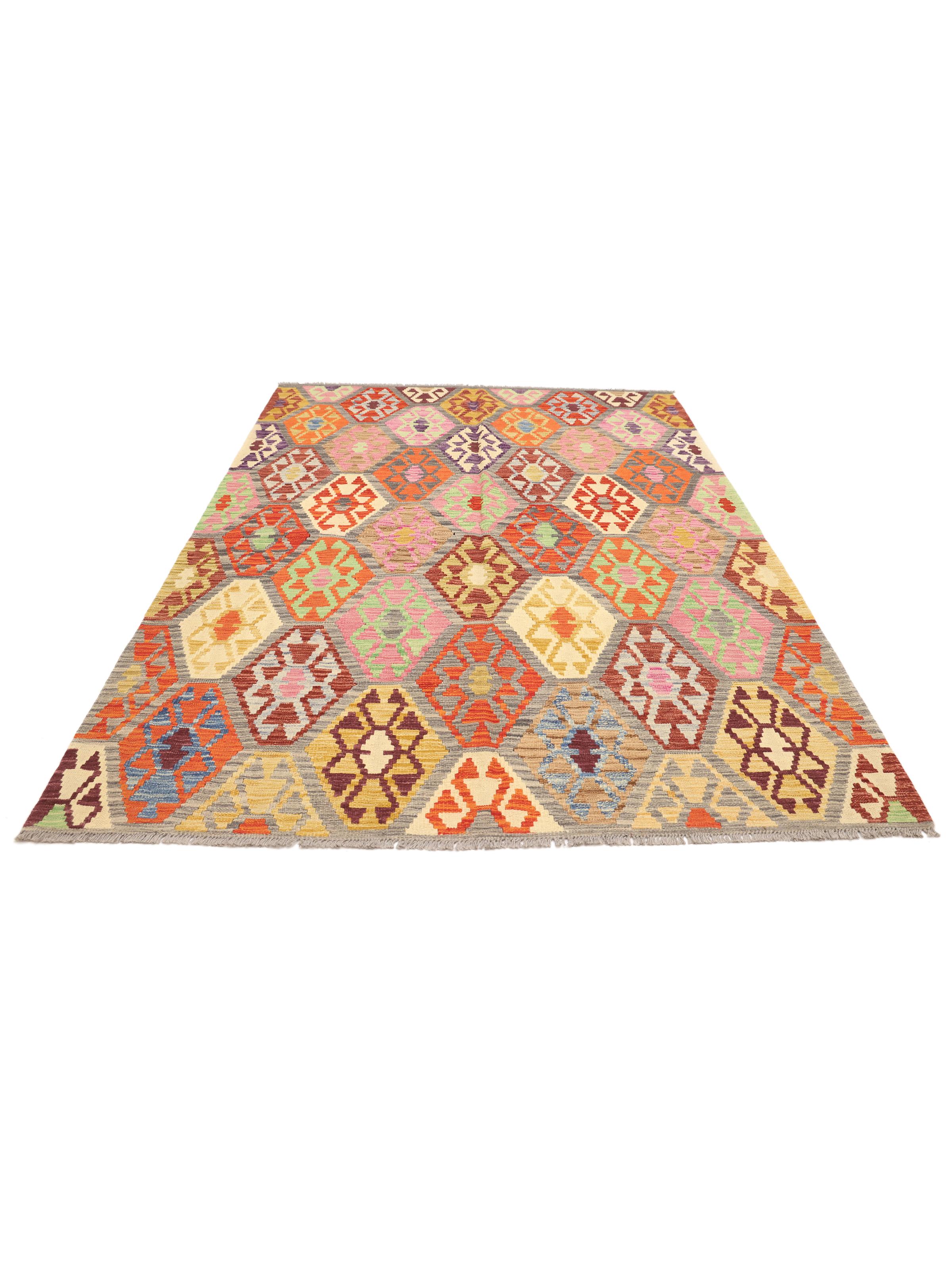
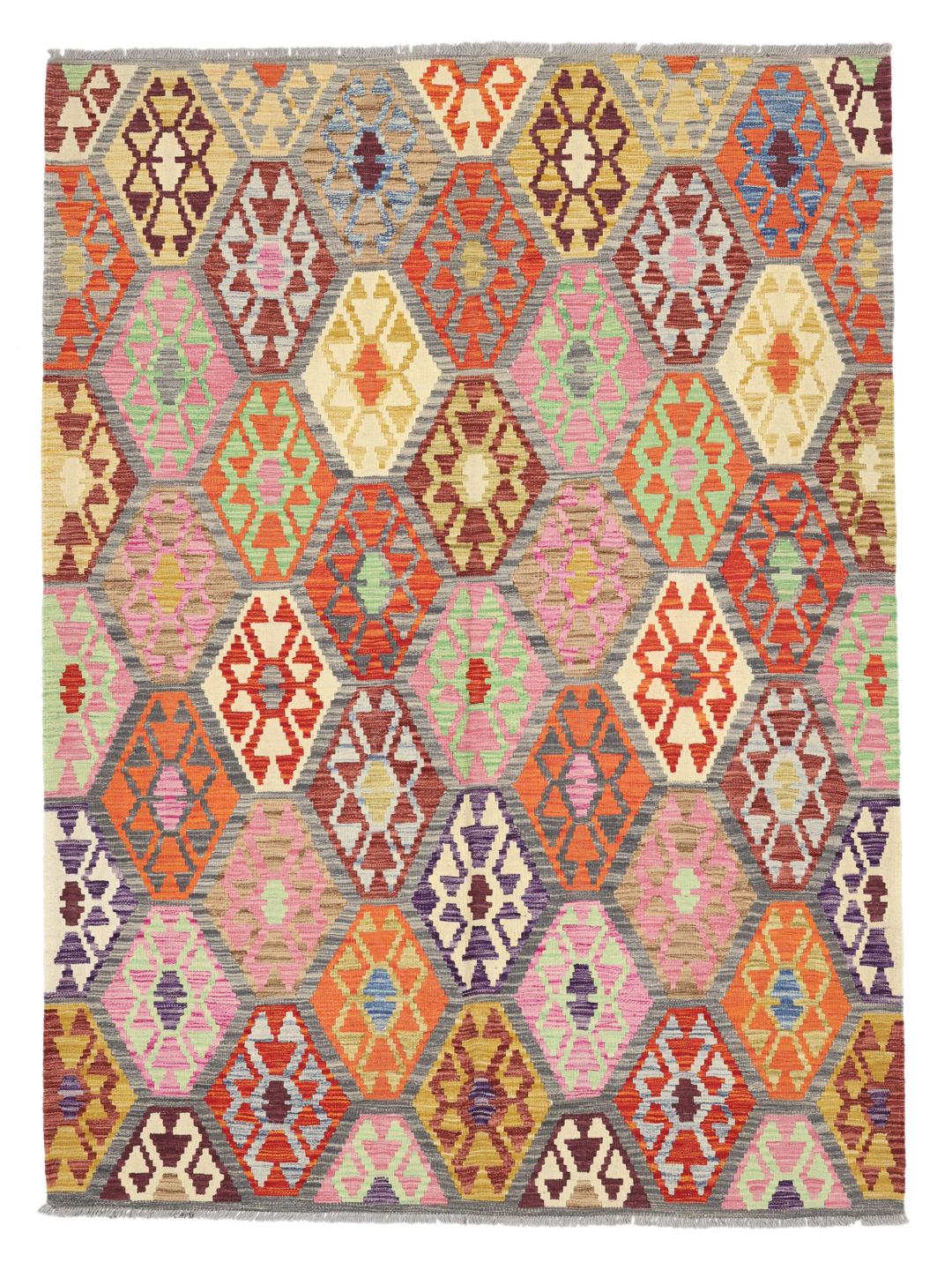
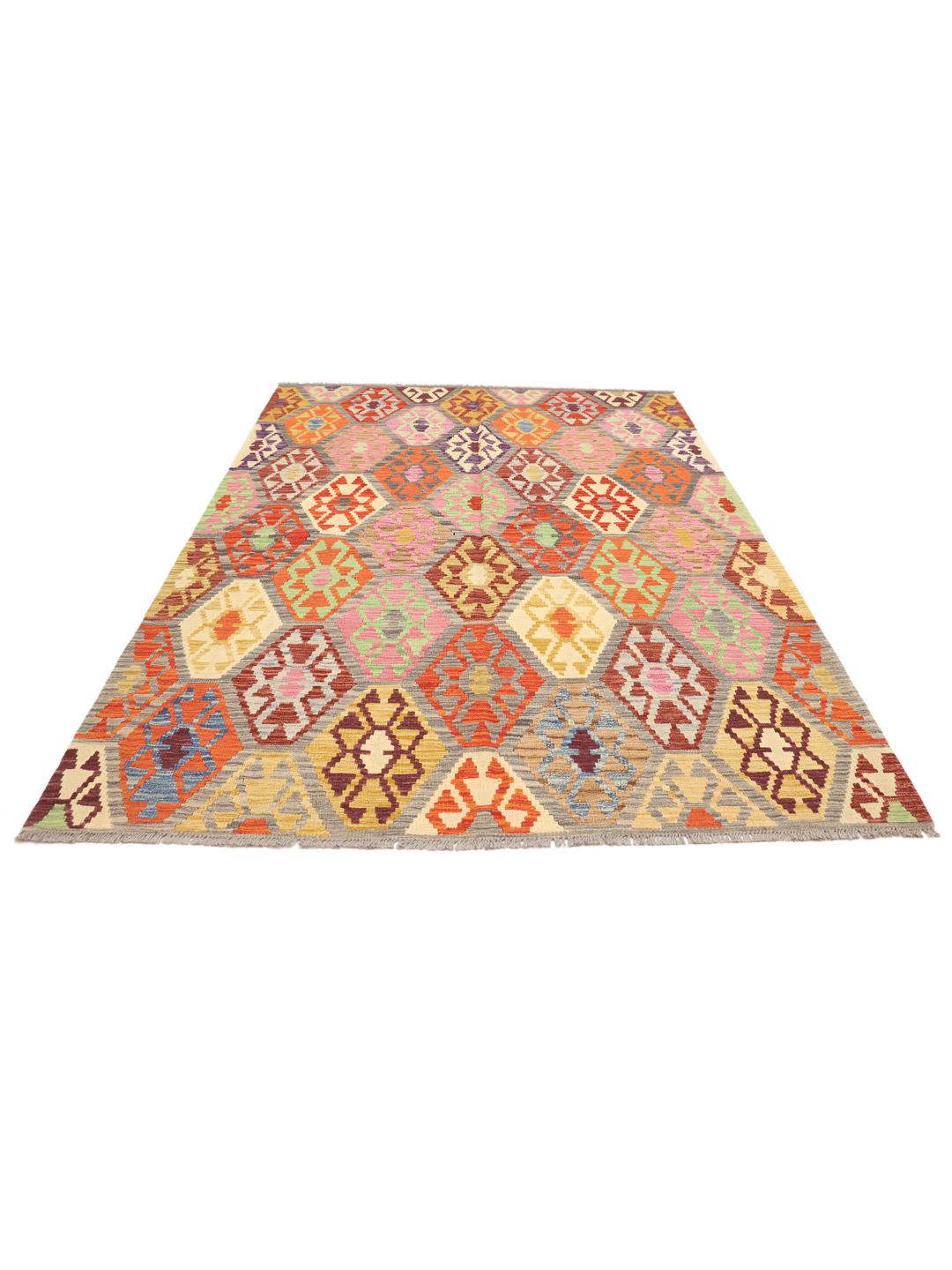
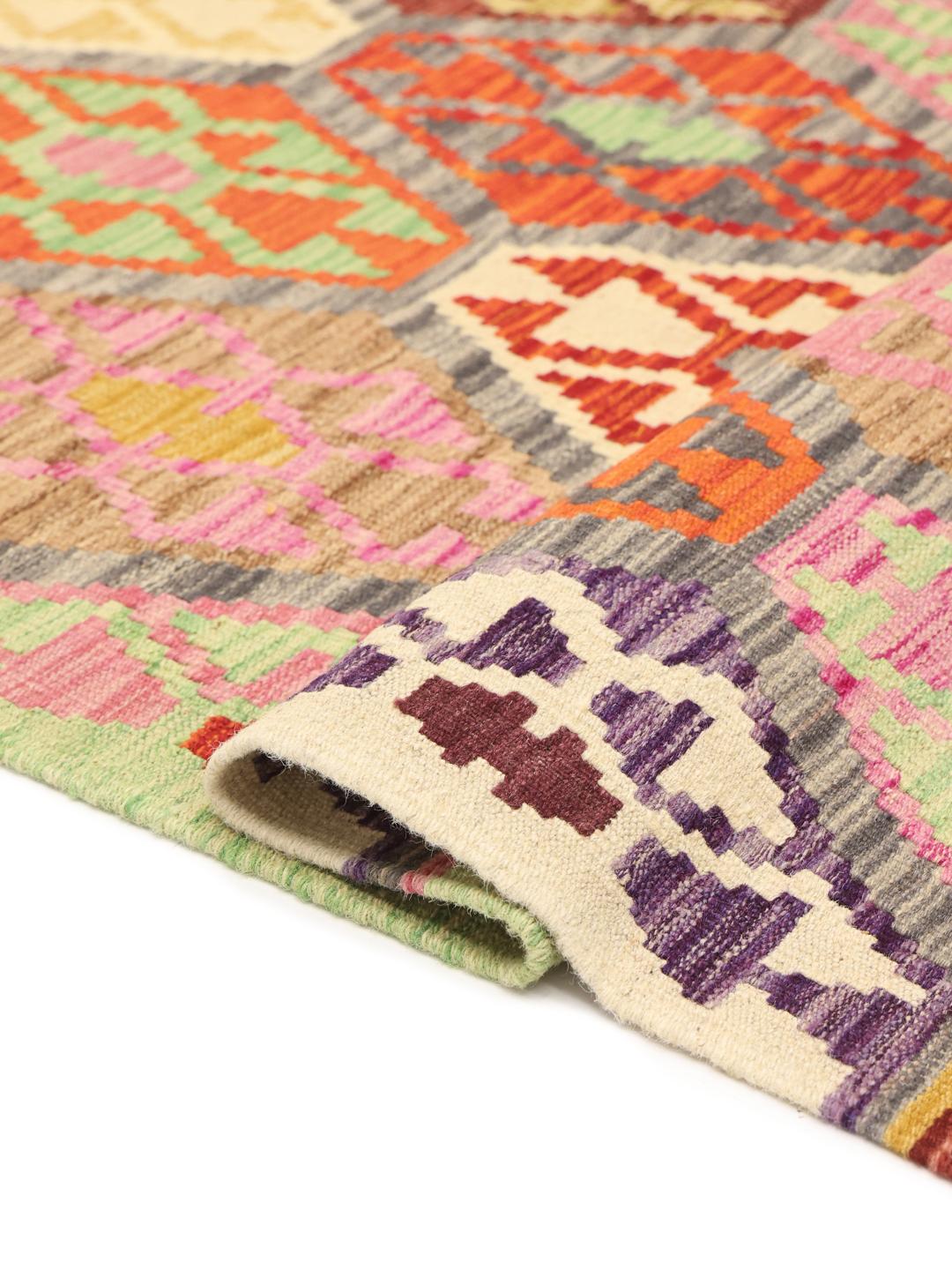
The tradition of Kelim weaving in Afghanistan is deeply rooted in the nomadic and semi-nomadic cultures of the region. These flat-woven rugs have been a staple of Middle Eastern households for centuries, historically serving as versatile floor coverings, wall hangings, and even storage bags for travelling families. The evolution of these designs reflects the diverse cultural influences of the region, blending ancient tribal motifs with the specific aesthetic preferences of the local weavers.
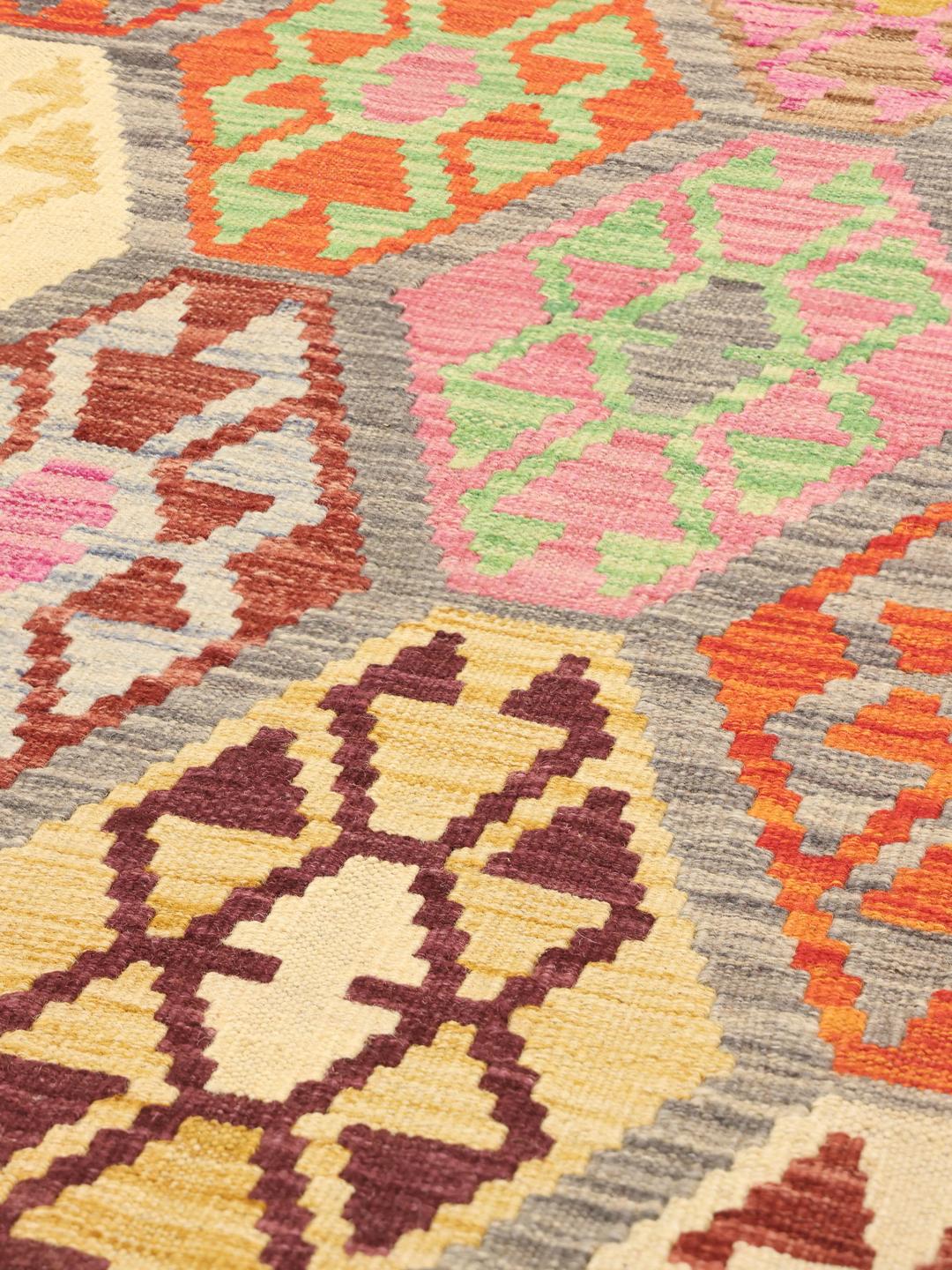
The term 'Kelim' refers to the flat-weaving technique where the weft threads are pulled tightly across the warp to create a smooth, pile-less surface. This method is highly prized for its ability to produce sharp, graphic patterns and a lightweight, reversible finished product. Because the design is created through the interweaving of coloured threads rather than knotting pile, it requires a high degree of precision to ensure the geometric shapes remain clean and symmetrical.
Signature design elements of this tradition often centre on geometric abstraction, with diamonds, triangles, and stepped motifs dominating the field. These patterns are not merely decorative but often carry symbolic meanings related to protection, fertility, and family heritage. The use of vibrant, contrasting colours is a hallmark of the Old Style, designed to stand out against the earthy interiors of traditional homes and provide a sense of joy and vitality.
Collecting rugs from this tradition is a way to honour the legacy of skilled artisans whose techniques have been passed down through generations. These pieces are valued not only for their visual impact but for the cultural weight they carry as functional art. Owning a Kelim is an opportunity to connect with a storied past, adding a layer of depth and historical context to your home that simply cannot be found in modern, synthetic alternatives.