The Afghan Kelim is rooted in the rich textile traditions of the nomadic tribes of Central Asia. These flat-woven rugs have been a central part of domestic life for centuries, used as floor coverings, wall hangings, and even as durable storage bags for travelling families. The evolution of these rugs reflects the movement of people across the region, blending diverse cultural motifs into a cohesive and recognisable style.
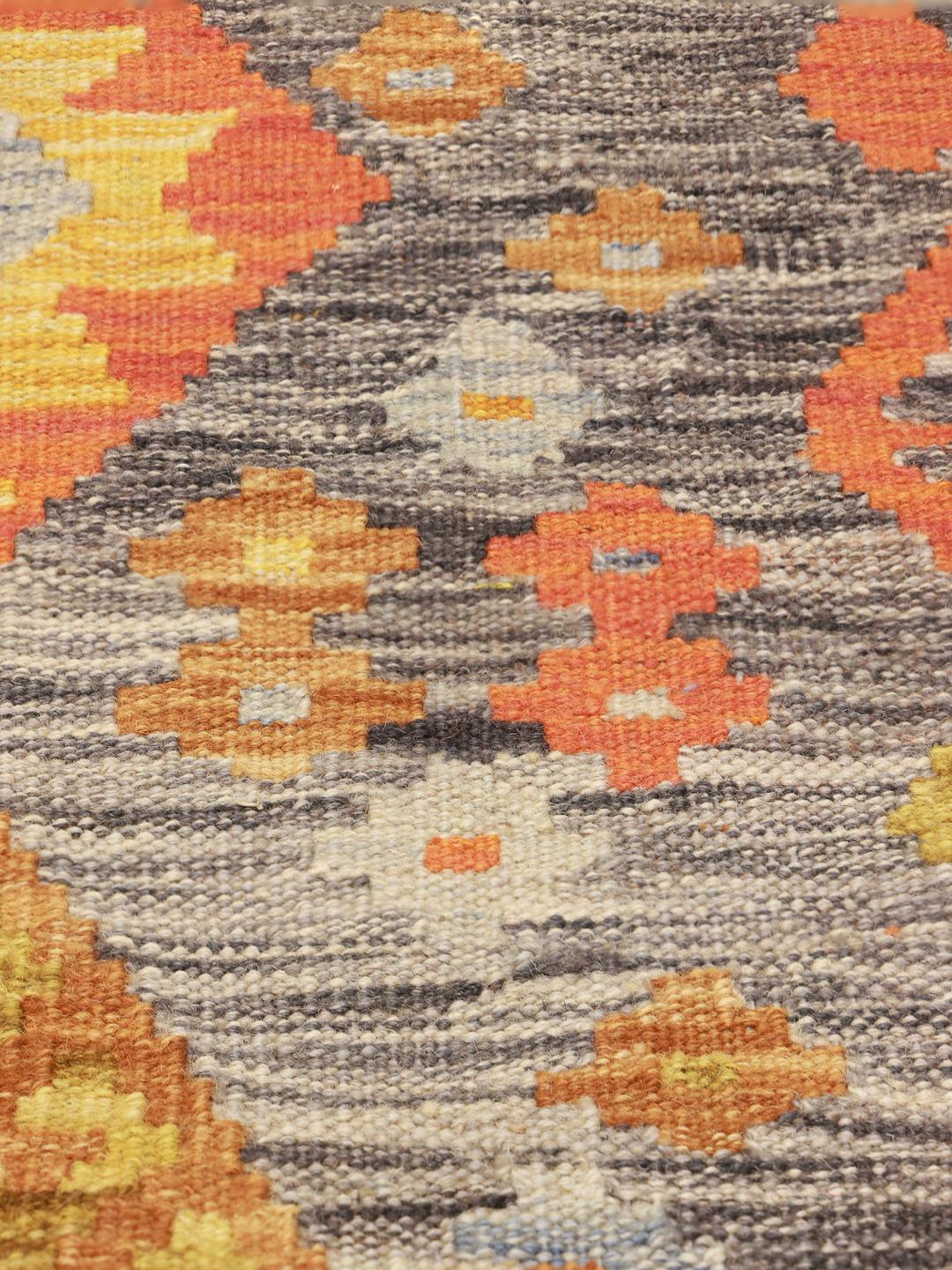
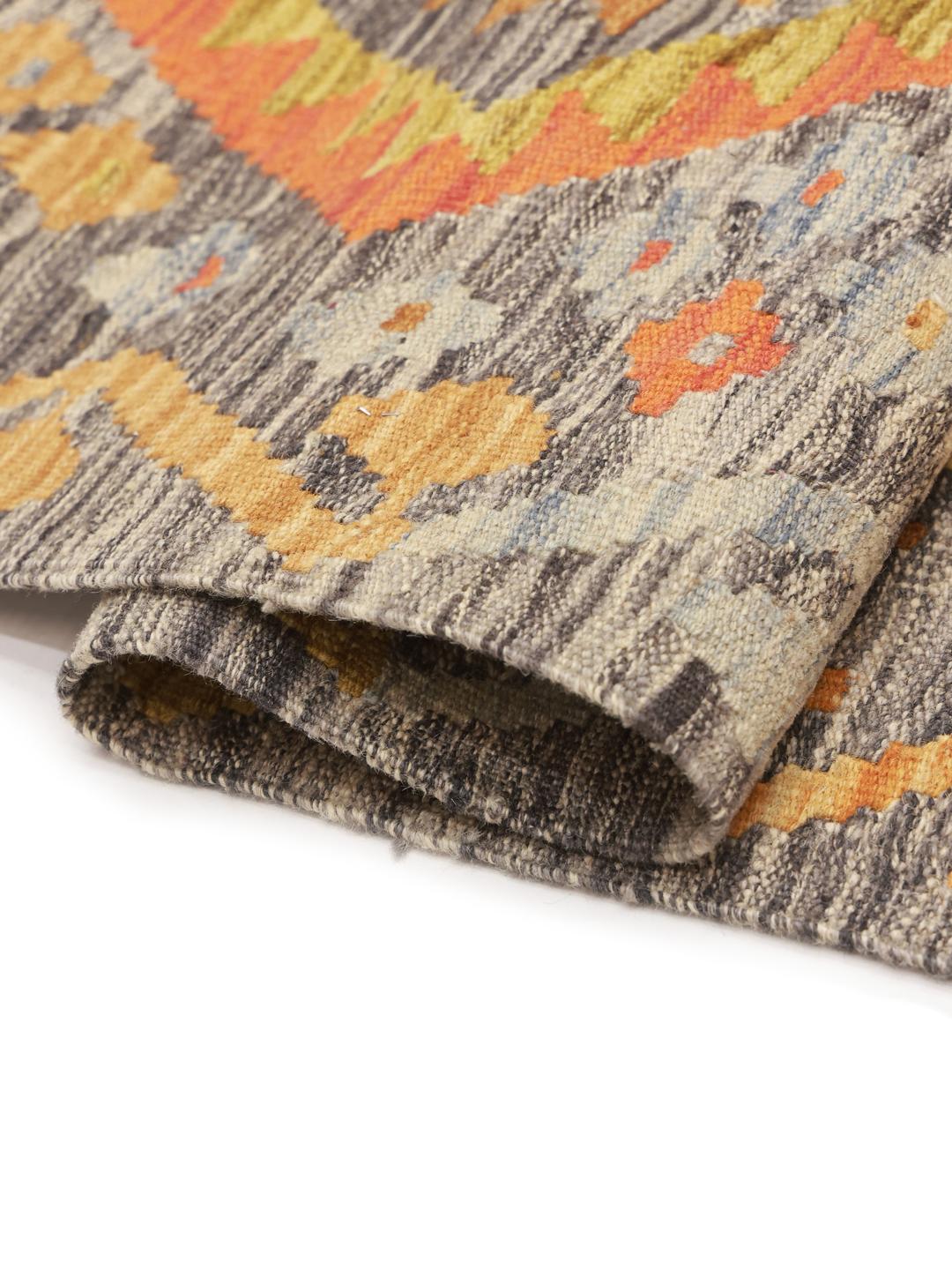
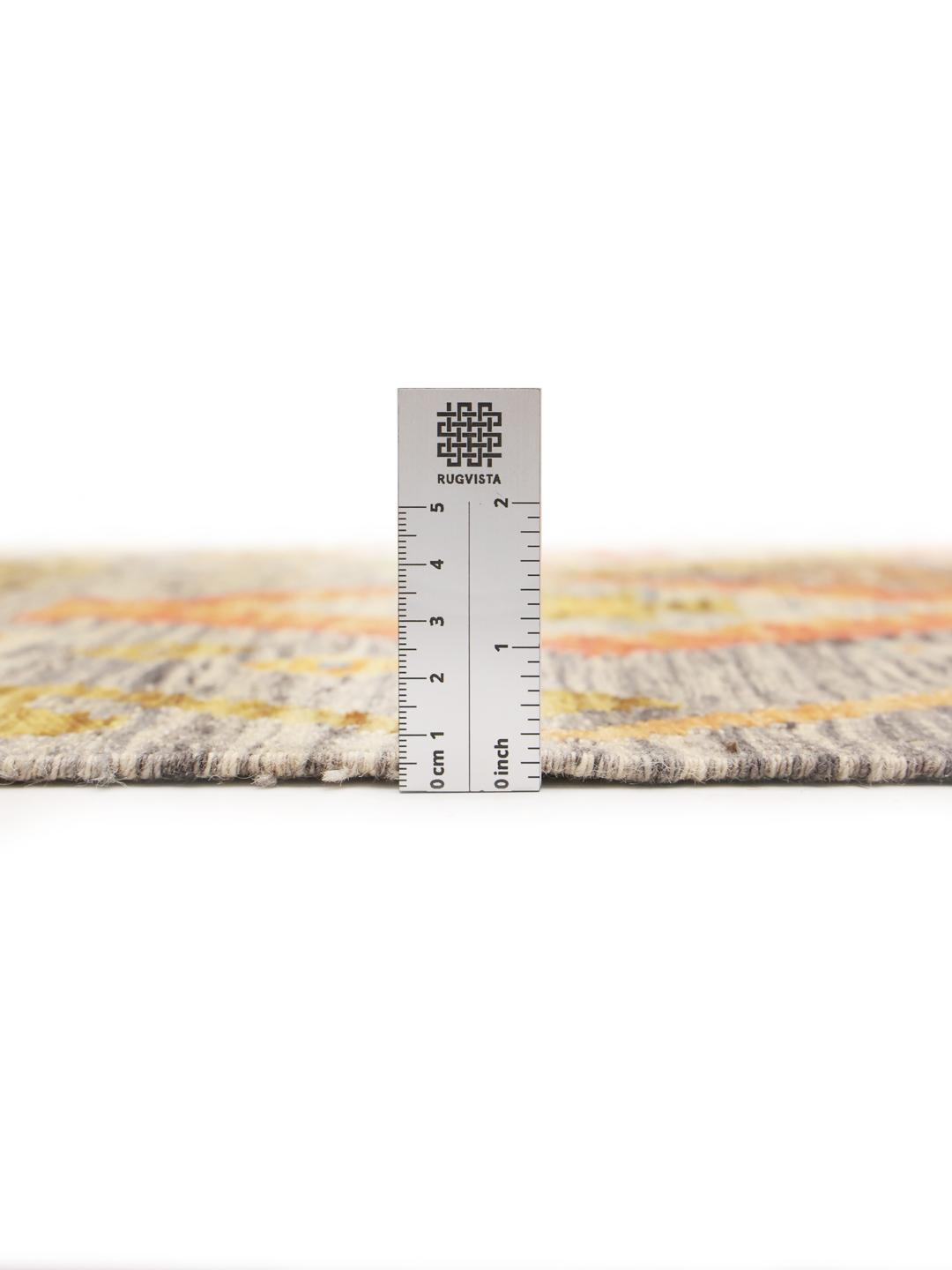
The term 'Kelim' refers specifically to the tapestry-weave technique where the weft threads are passed over and under the warp threads to create the pattern. This method does not involve a pile, which results in a lightweight and reversible rug. This construction is highly valued for its ability to produce crisp, geometric designs that remain stable and flat, making it a functional choice for versatile home use.
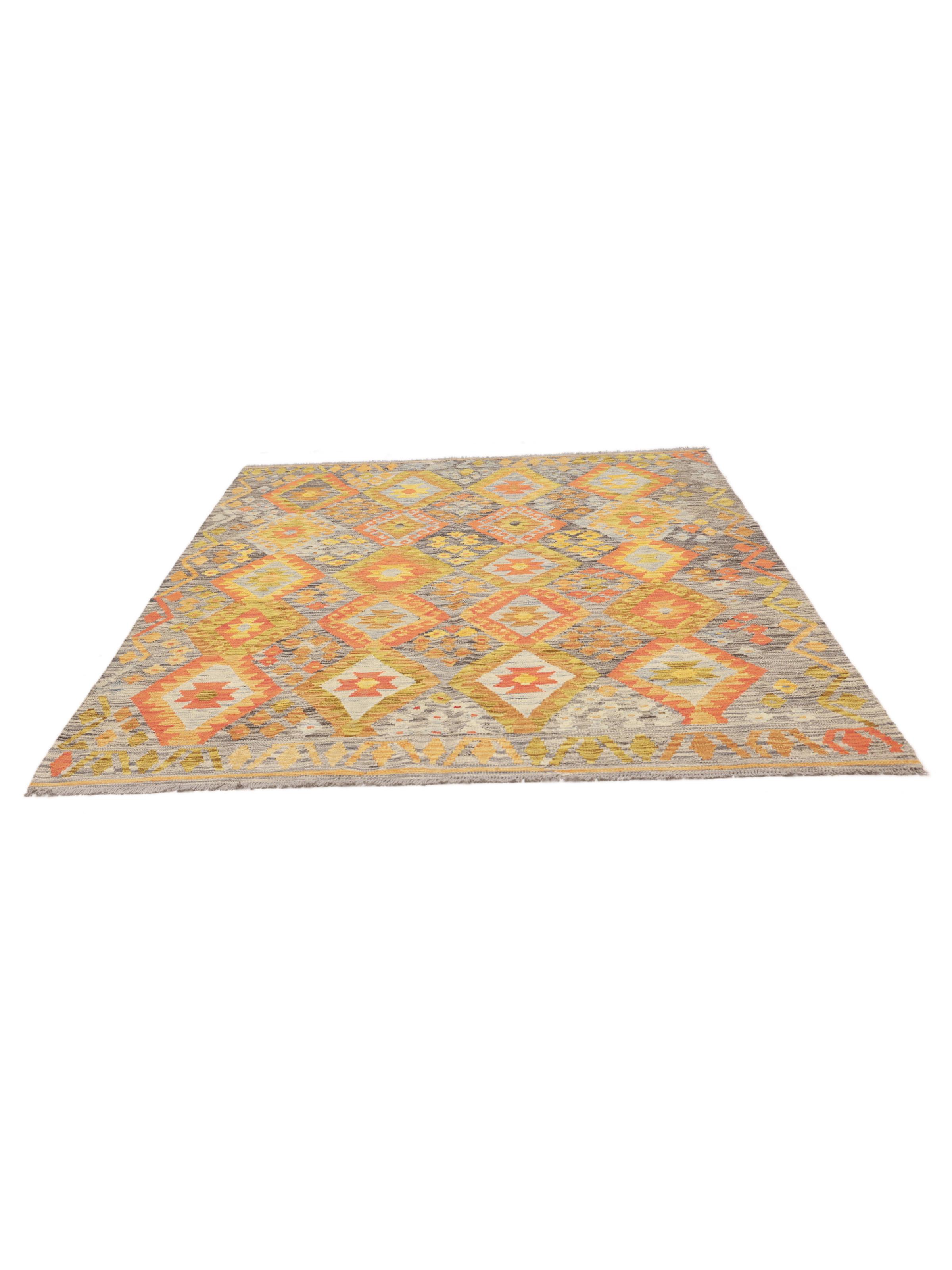
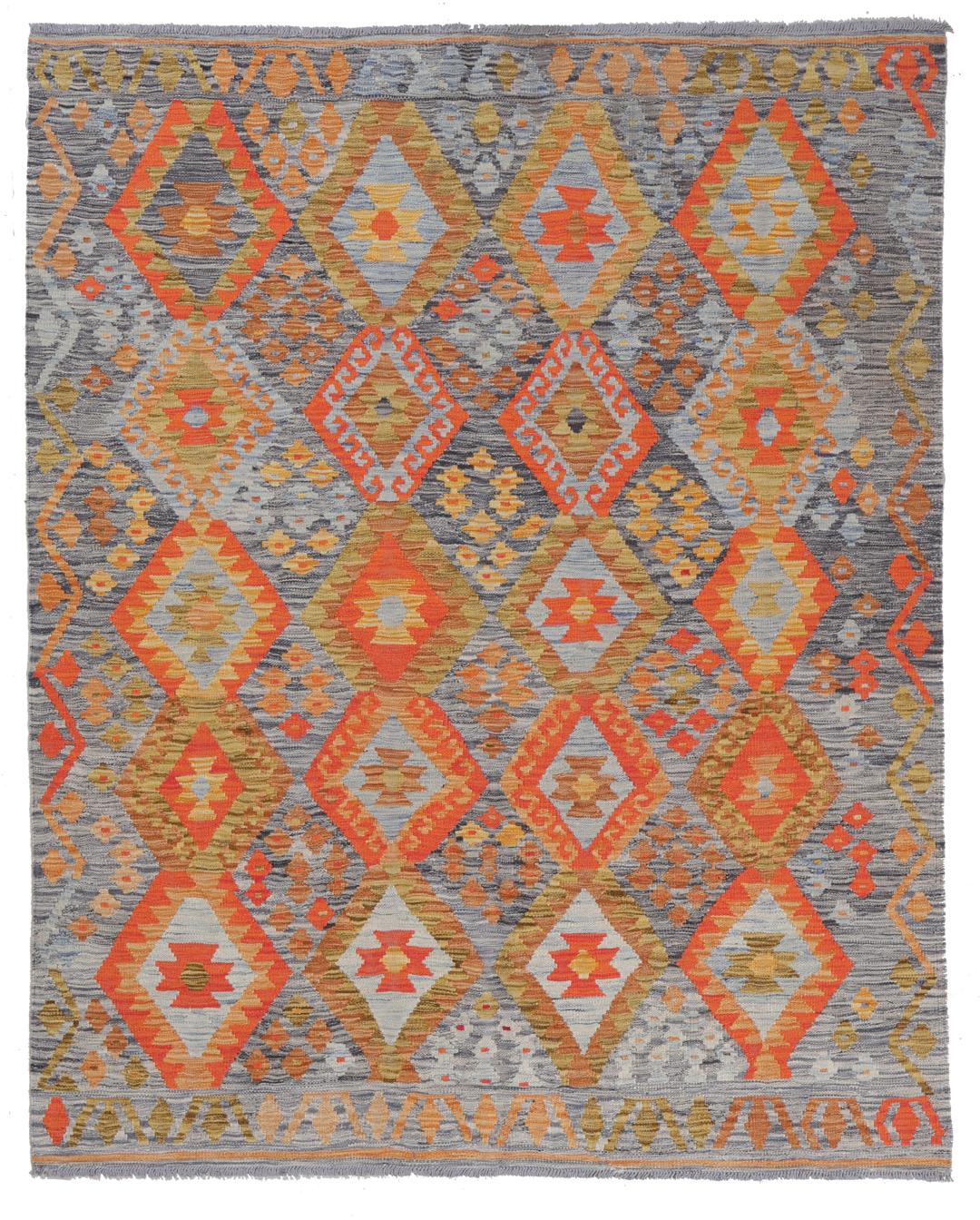
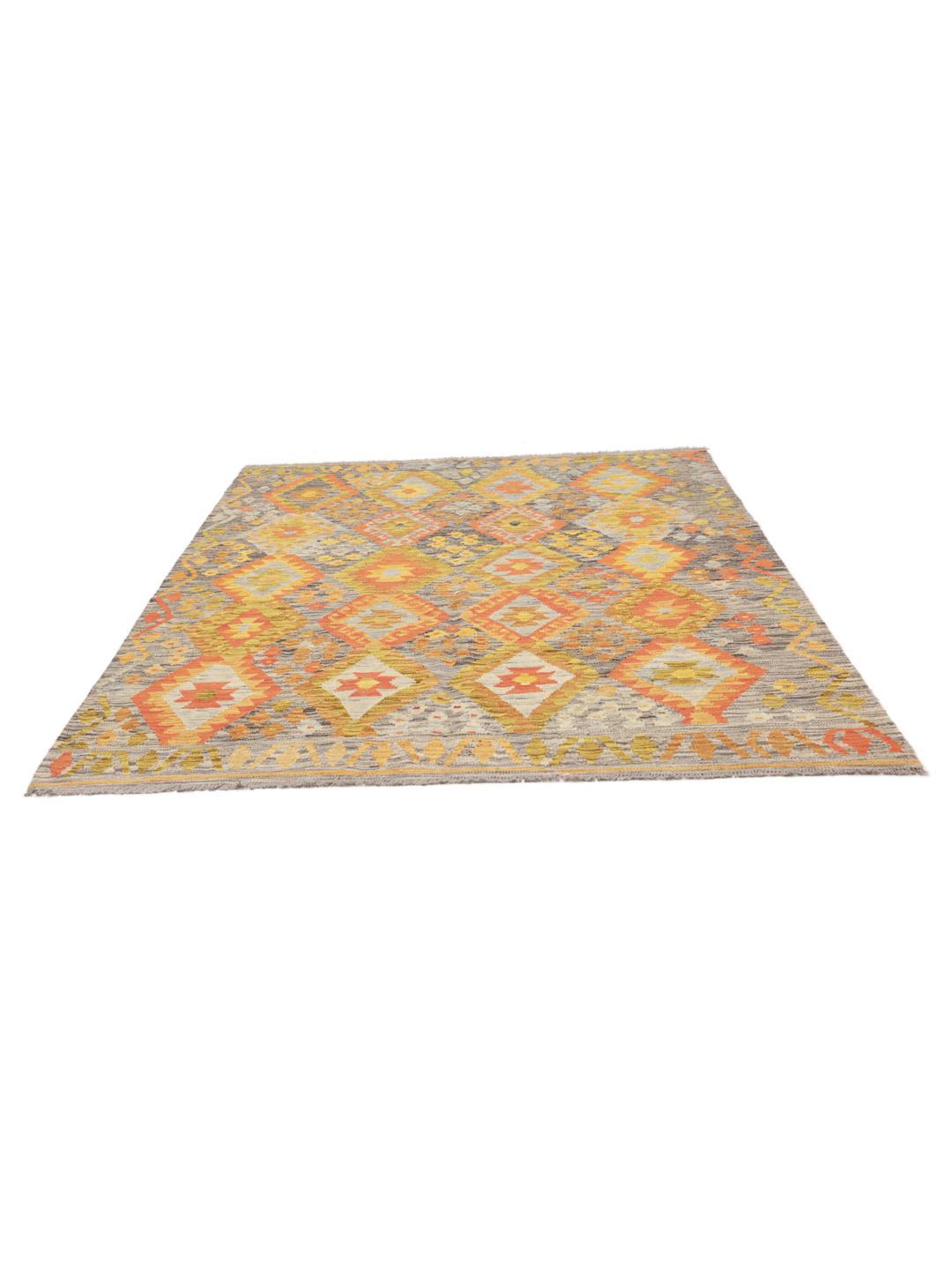
Signature design elements of these rugs include bold, repeating geometric shapes, particularly diamonds and triangles, which often carry symbolic meanings related to protection and prosperity. The earthy tones are traditionally derived from natural dyes, giving them a warm and organic appearance. The specific arrangement of these motifs, combined with the vibrant orange highlights seen here, creates a striking visual rhythm that is characteristic of the Afghan tradition.
Collecting Afghan Kelims is an investment in cultural heritage. Because they are often produced in smaller, community-based settings, each rug acts as a historical record of the weaver's personal expression and local customs. Owning such a piece is an opportunity to preserve these ancient craft practices while enjoying a durable and aesthetically significant addition to a contemporary home.