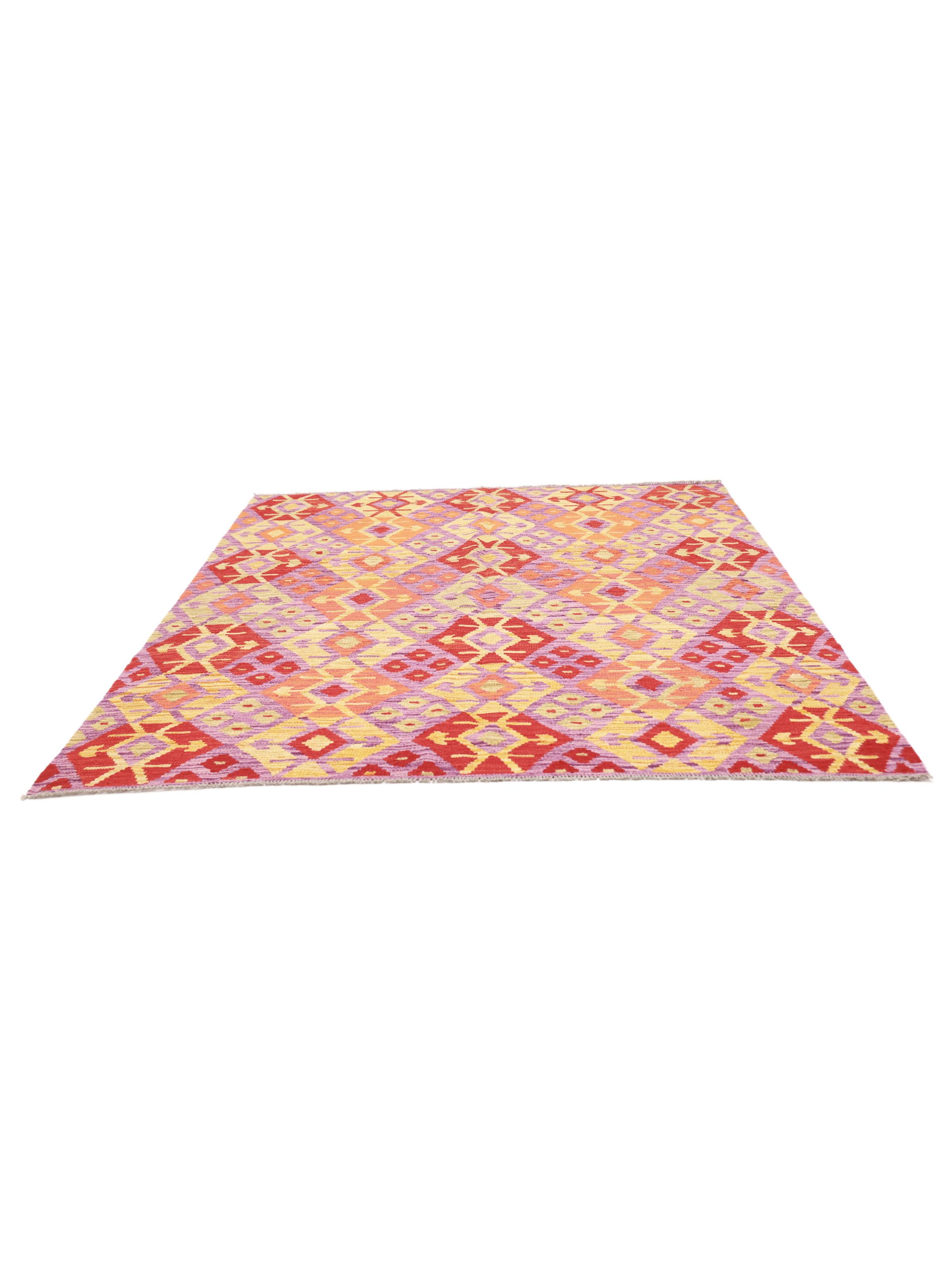
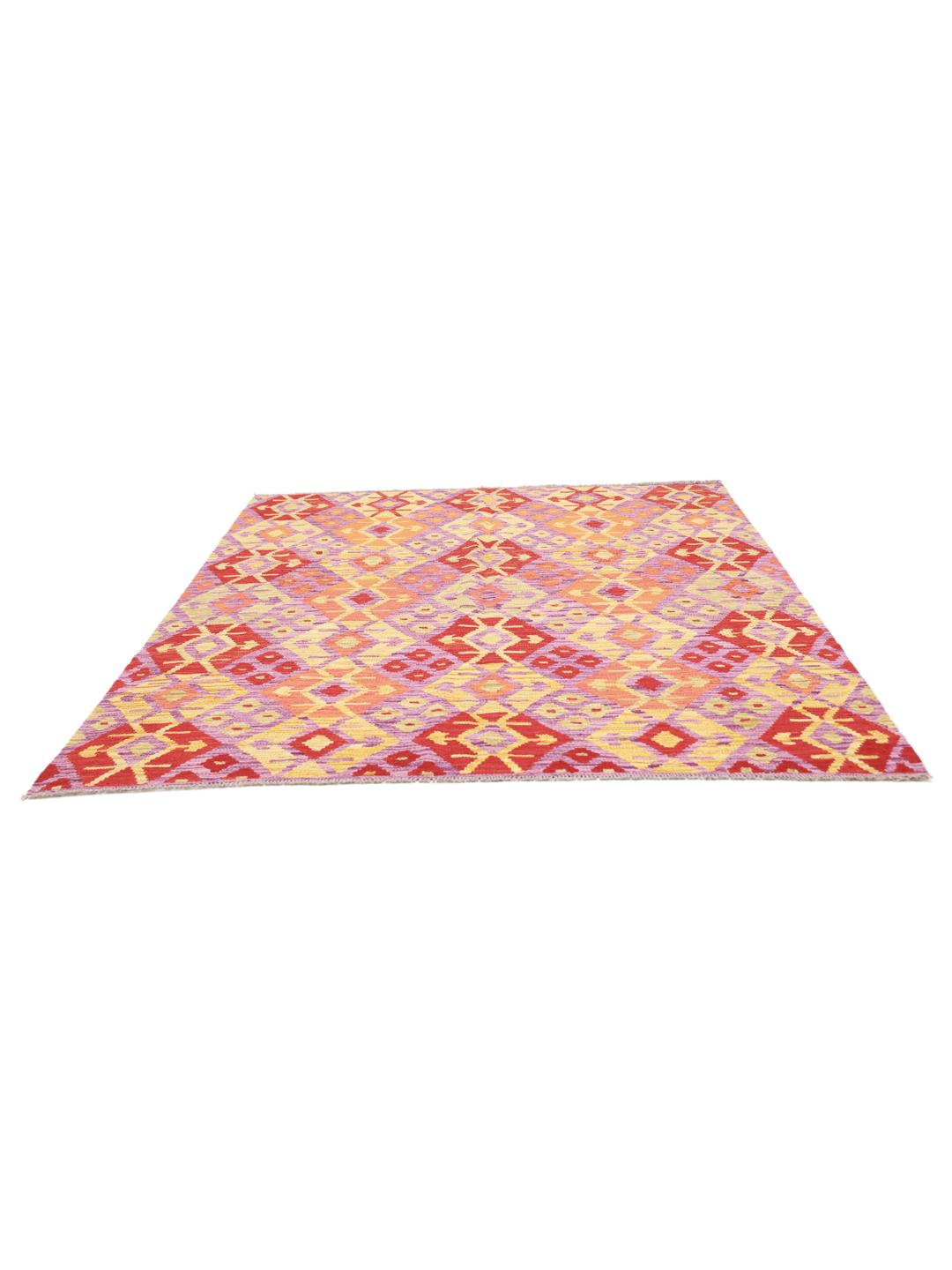
The Kelim tradition in Afghanistan is deeply rooted in the nomadic history of the region. For centuries, these flat-woven rugs have been essential to the lives of tribal families, serving as floor coverings, tent dividers, and storage sacks. The techniques have been passed down through generations, with each region developing its own distinct approach to weaving and colour selection, often utilising local wool for its durability and natural lustre.
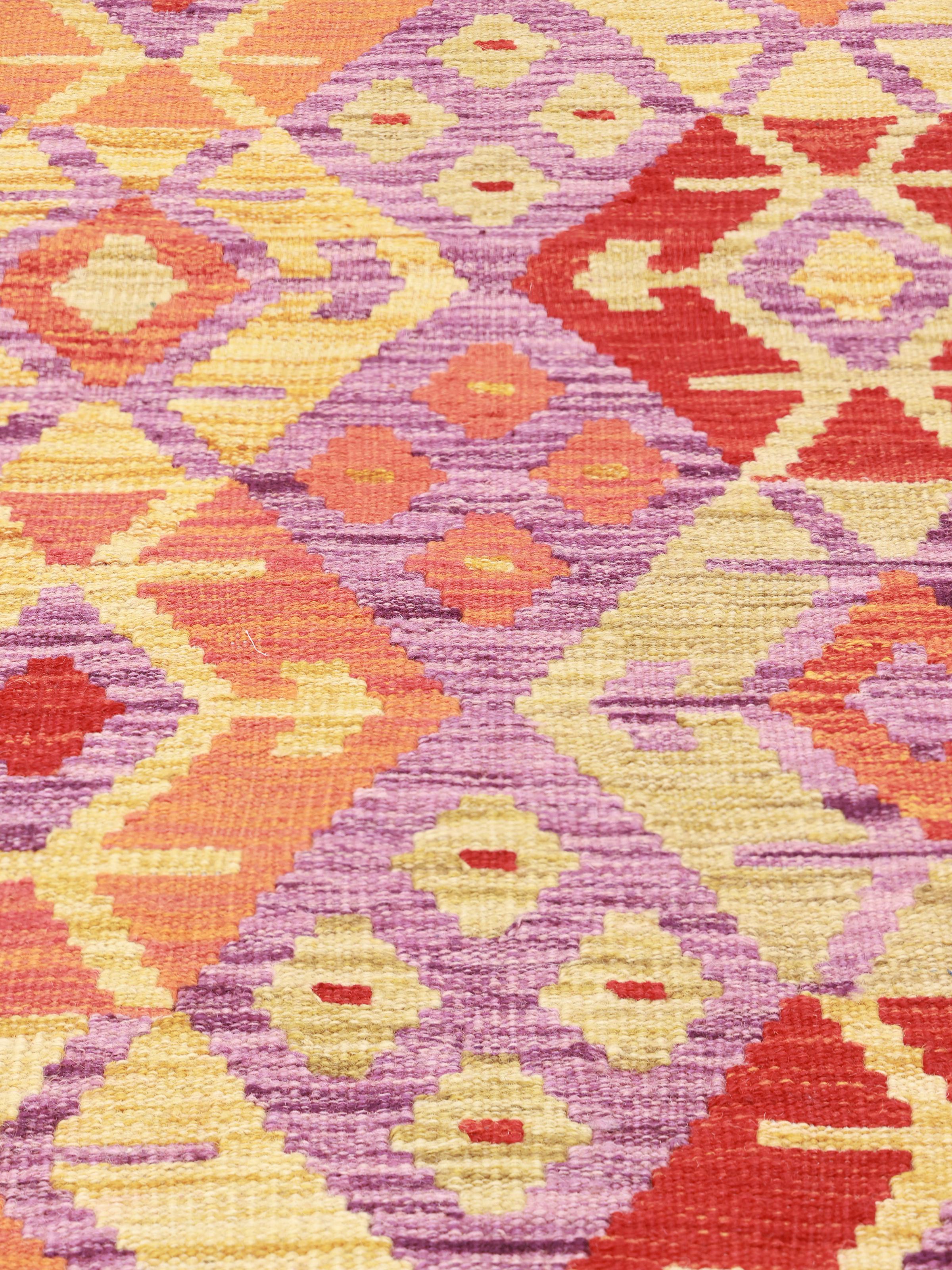
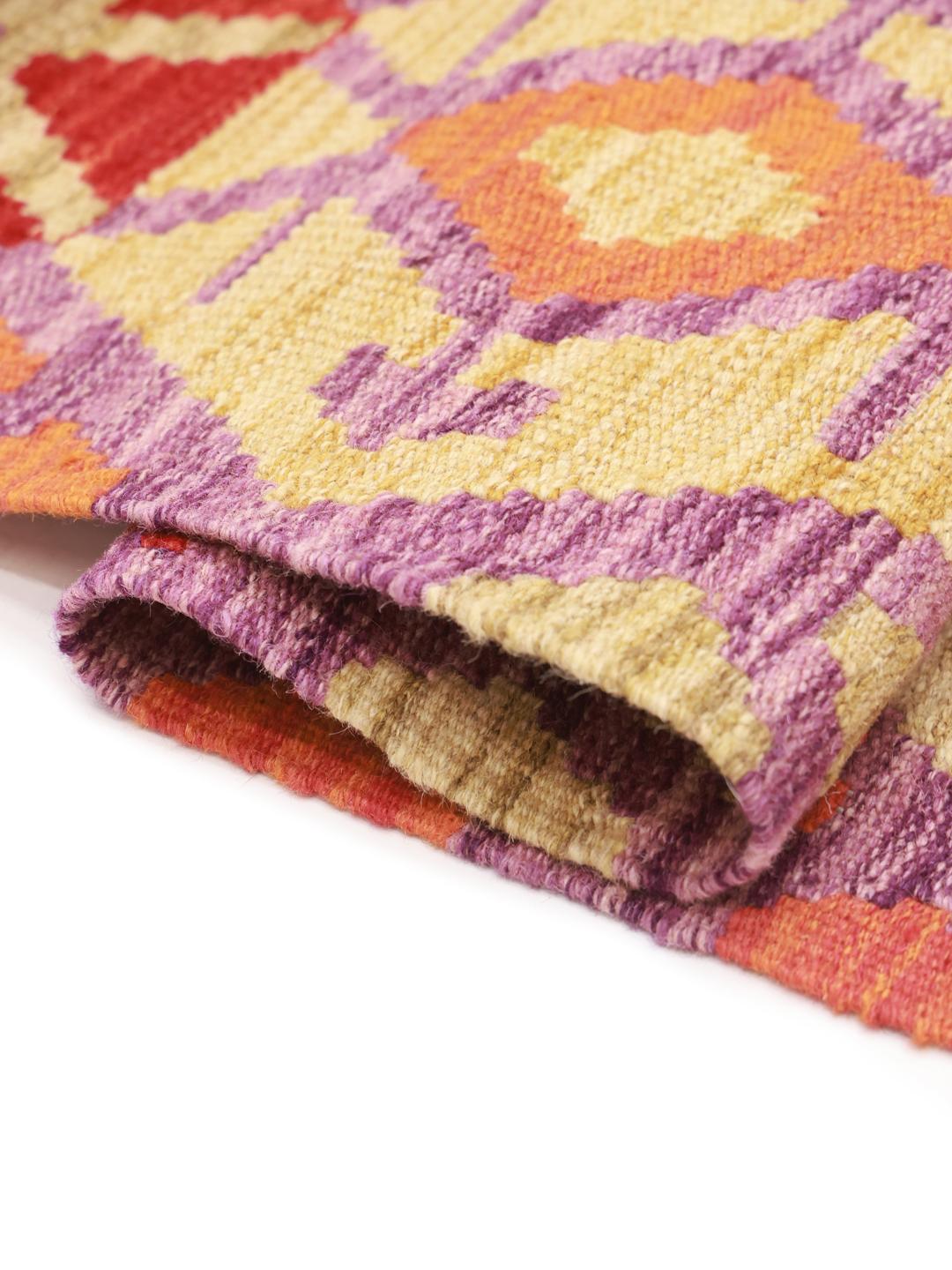
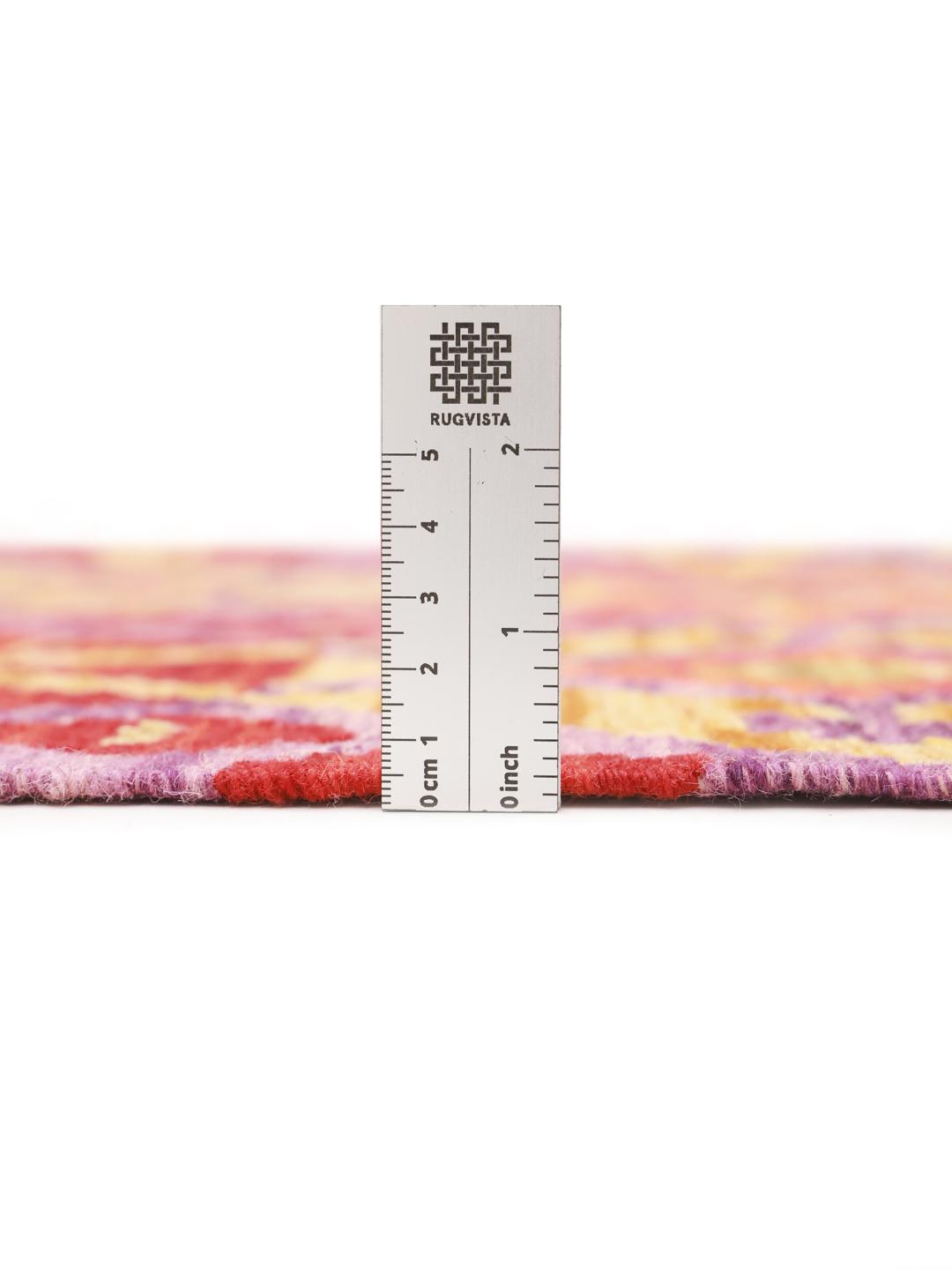
The term 'Kelim' refers to the specific flat-weaving technique where the warp and weft are interlaced tightly to create a smooth, pileless surface. This construction is what gives these rugs their characteristic thinness and strength. Because there is no pile to wear down, a well-made Kelim is incredibly resilient, often outlasting thicker, tufted rugs. The clarity of the pattern is a direct result of this weaving method, which allows for crisp, defined lines that are iconic to the style.
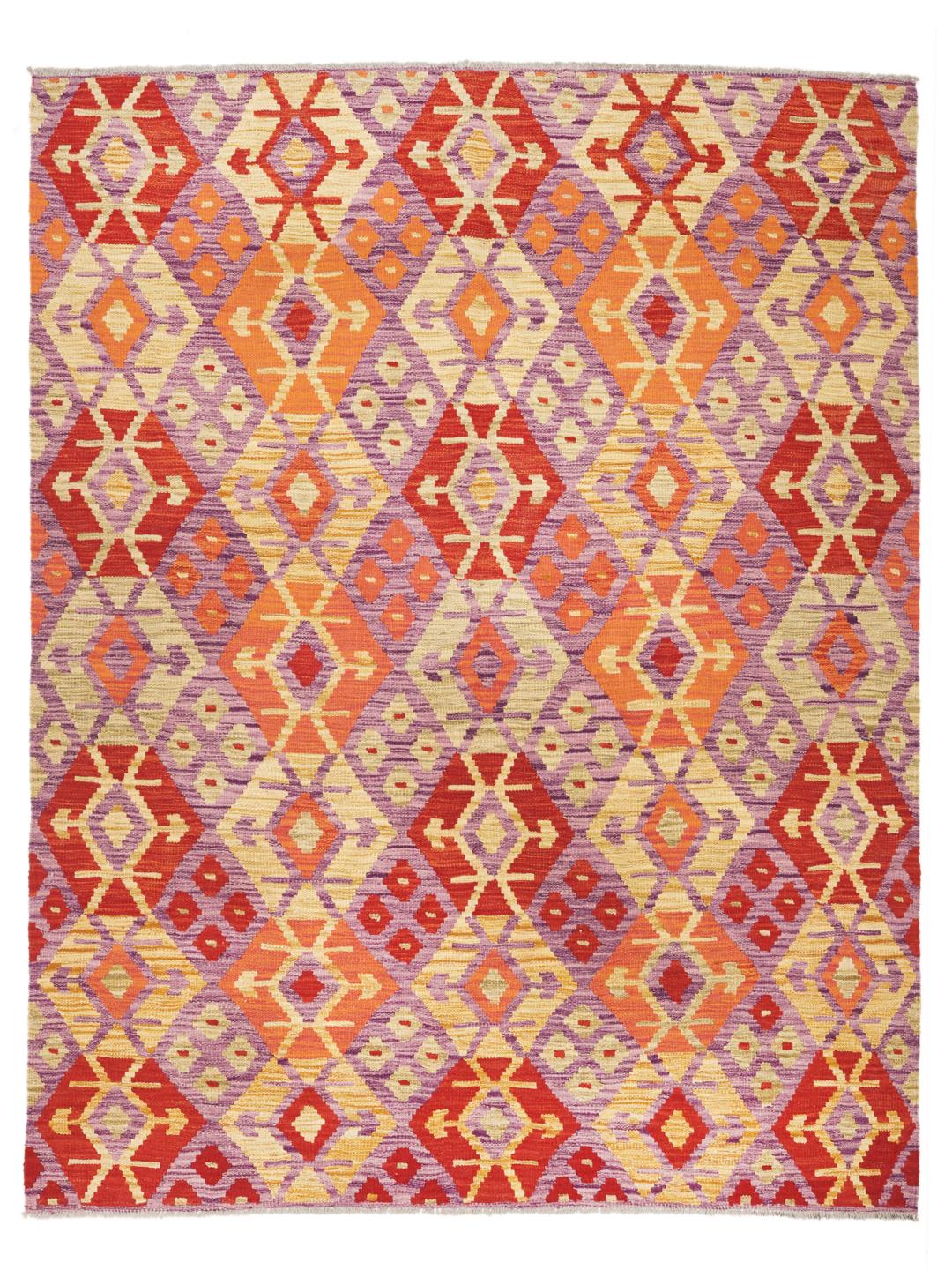
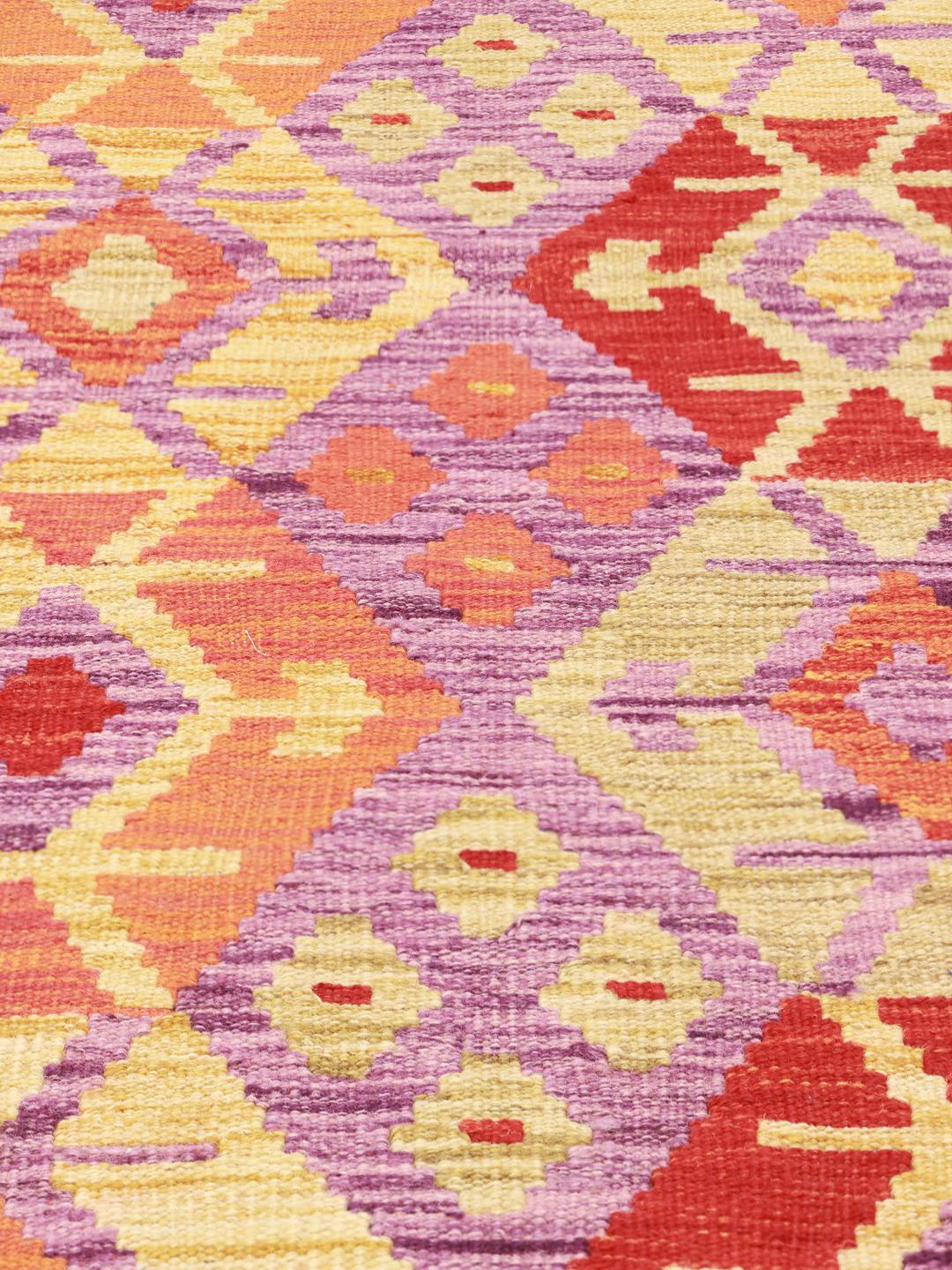
Signature design elements in Afghan Kelims often revolve around geometric abstraction, with diamonds, triangles, and stylised floral motifs being very common. The use of repeating patterns is not just an aesthetic choice but also a functional one, allowing the weaver to maintain rhythm and consistency. This particular rug showcases a vibrant colour palette that is reflective of the natural dyes historically used in the region, bringing a bold, artistic flair to the traditional geometric layout.
Collectors value these pieces because they represent a living tradition rather than a manufactured product. Owning an Afghan Kelim is an invitation to appreciate the cultural heritage and the dedication of the artisans who create them. Each rug is a document of its time and place, holding a level of cultural weight and authenticity that makes it a meaningful addition to any home, connecting the modern interior to a rich, historical past.