The Kelim tradition in Afghanistan is deeply rooted in the nomadic history of the region. These flat-woven rugs were historically crafted by tribal groups for practical use in tents, serving as floor coverings, blankets, or saddlebags. Over centuries, these functional objects evolved into the decorative pieces we recognise today, reflecting the diverse cultural influences of Central Asia.
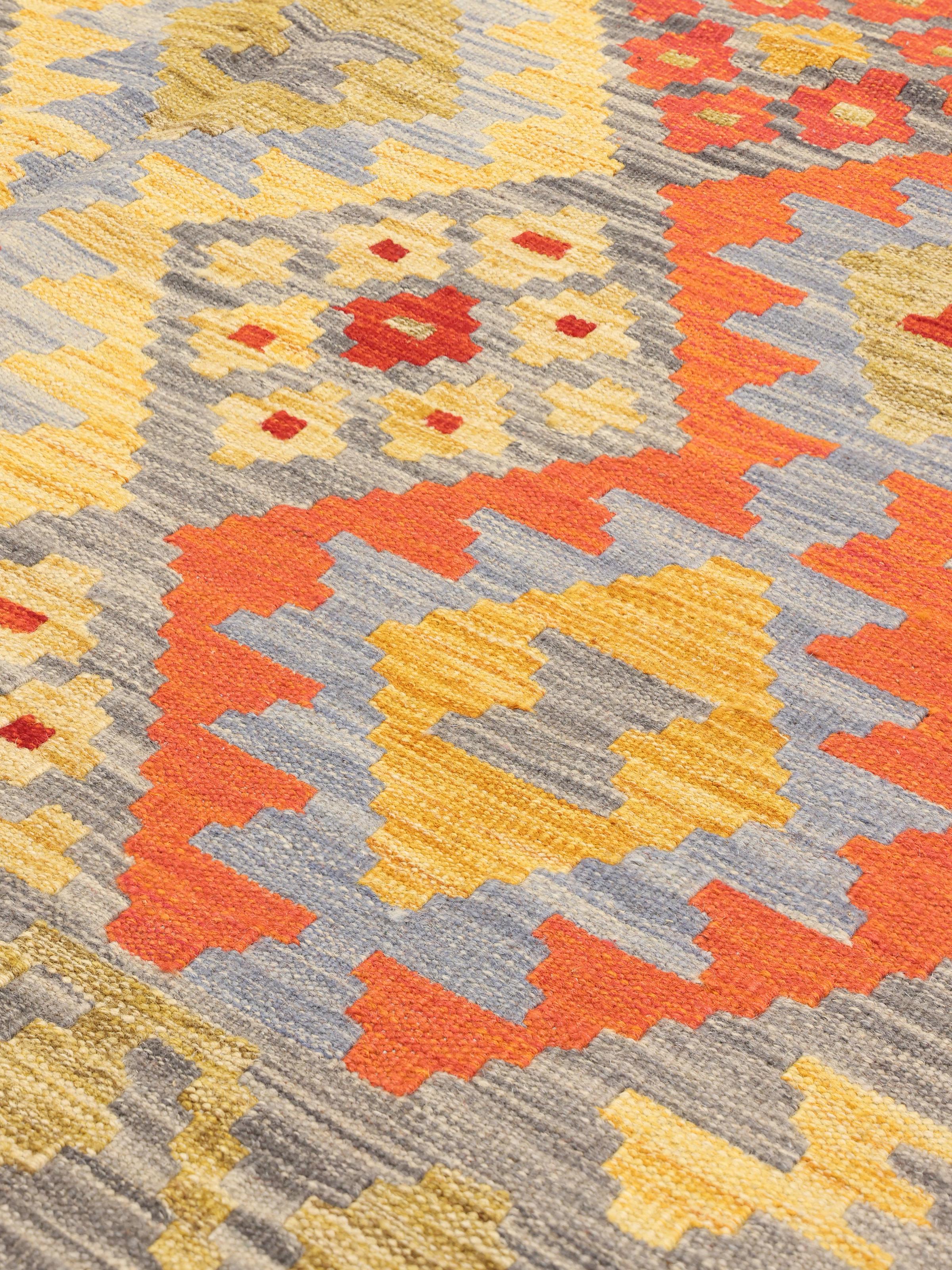
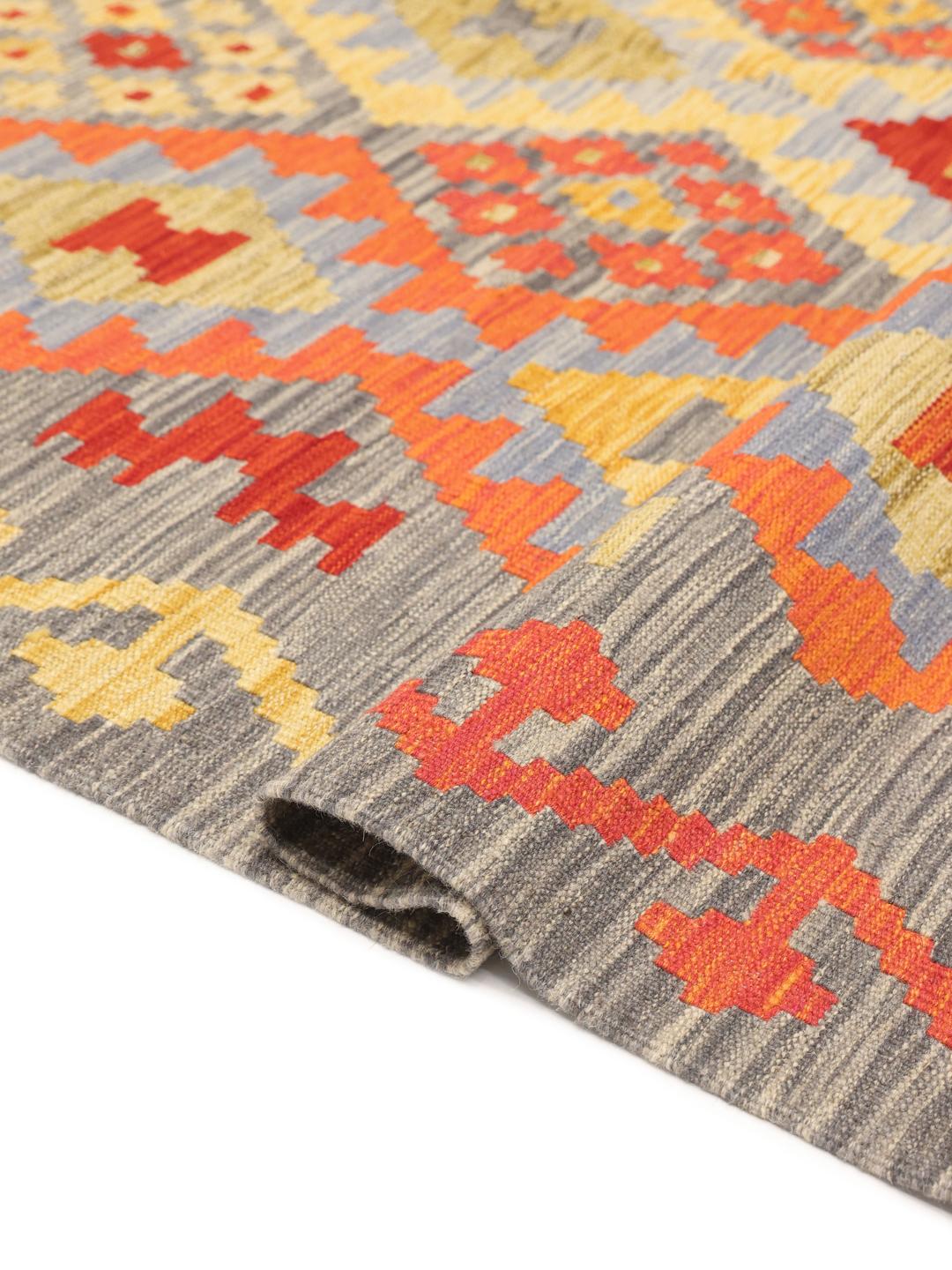
The term 'Kelim' refers to the specific flat-weaving technique used, where the weft threads are passed through the warp threads to form the pattern. This construction results in a reversible rug with a smooth finish, known for its portability and resilience. Because there is no pile to wear down, these rugs are celebrated for their longevity, often remaining in excellent condition for decades.
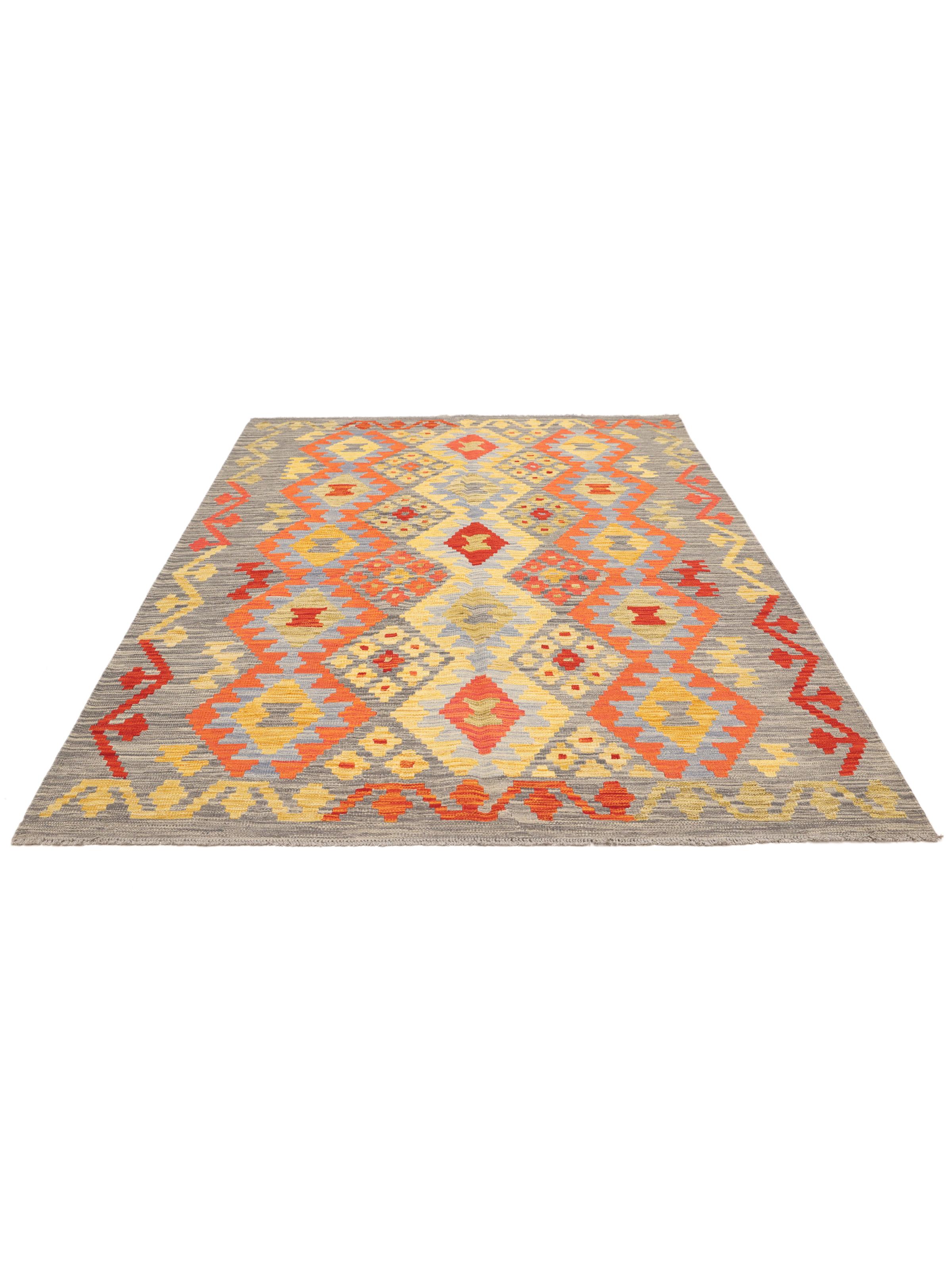
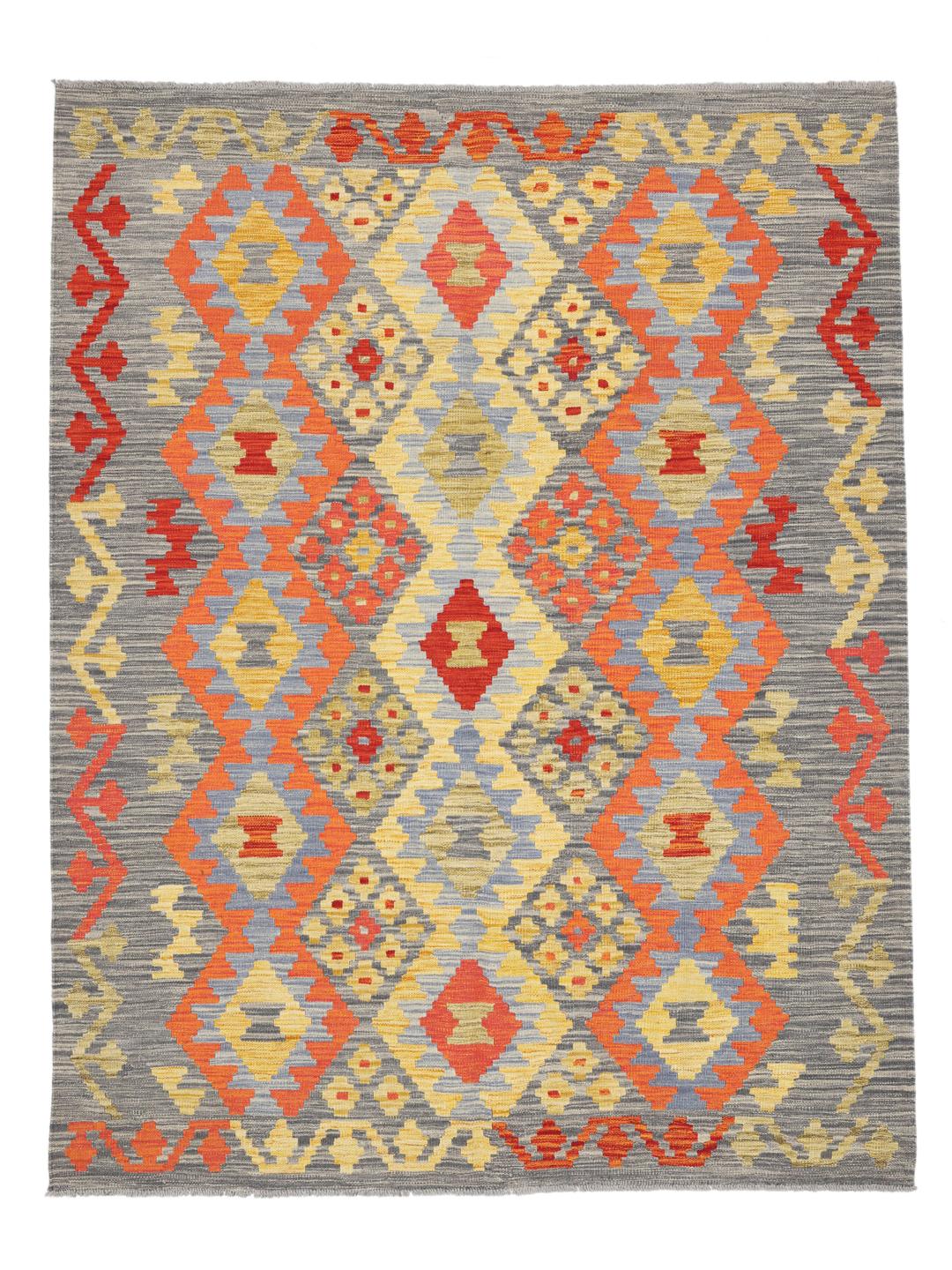
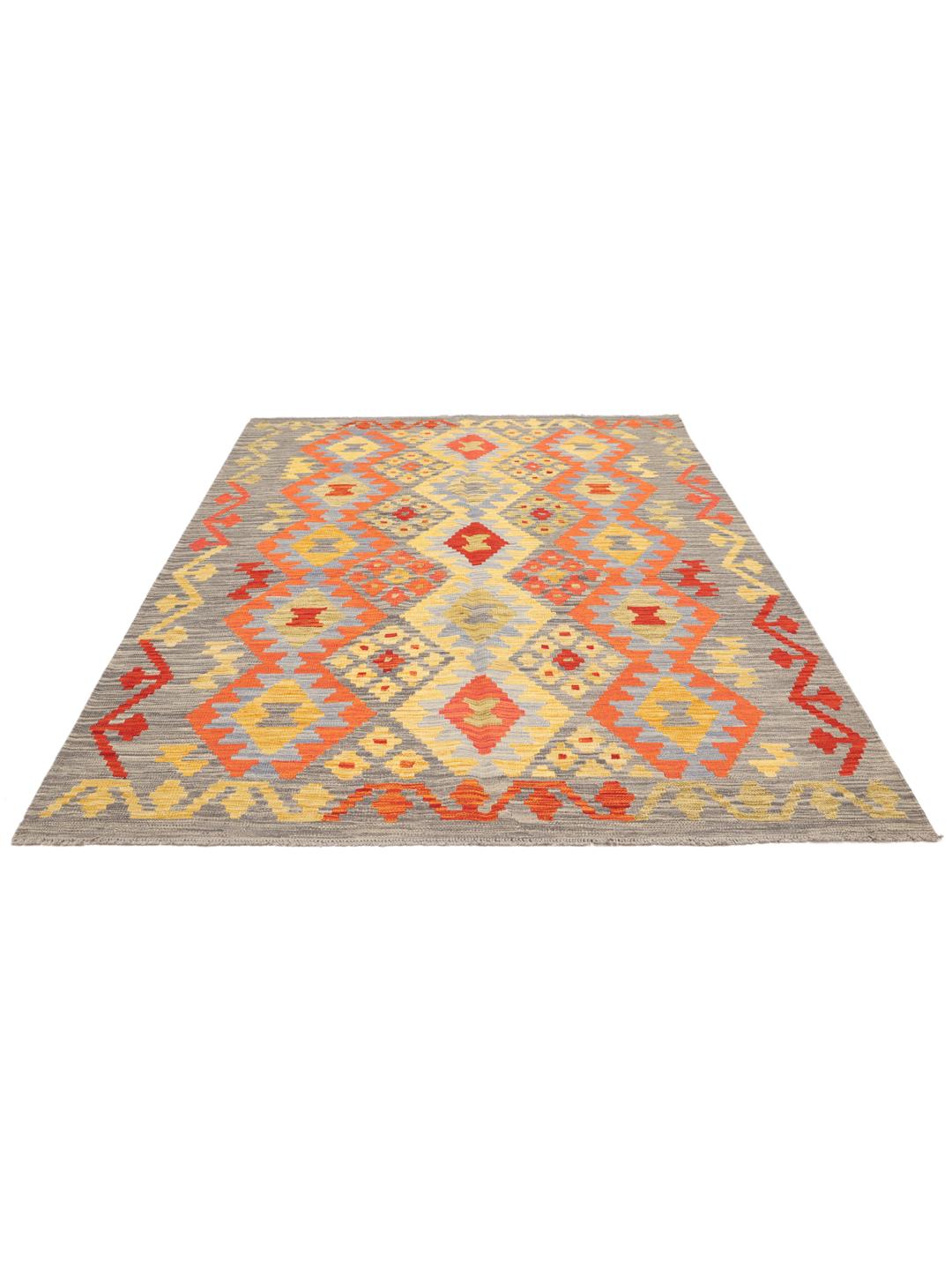
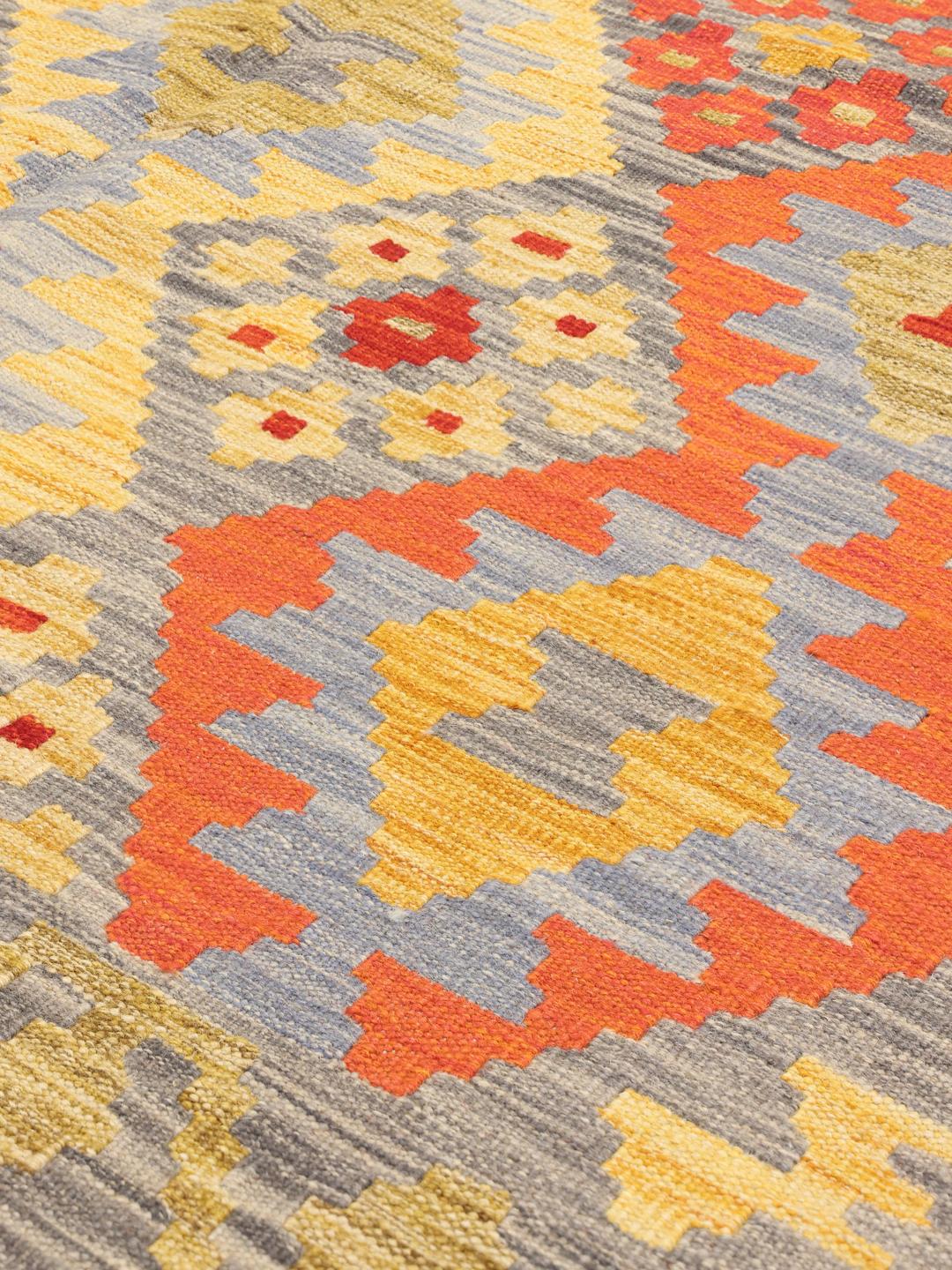
Visually, these rugs are defined by their sharp, geometric language. Common motifs include diamonds, triangles, and stepped medallions, which are often arranged in repeating sequences. The colour palettes are traditionally derived from natural dyes, favouring earthy tones that reflect the landscape of the Afghan highlands. This particular piece showcases the classic, bold geometry that makes the region's weaving so visually distinct.
Collecting an Afghan Kelim is an investment in cultural heritage. These pieces represent a bridge between ancient tribal techniques and contemporary interior design, holding value not just for their beauty, but for the skill and history woven into every thread. By choosing a Kelim, you are preserving a craft tradition that has been passed down through generations, ensuring it continues to thrive in modern homes.