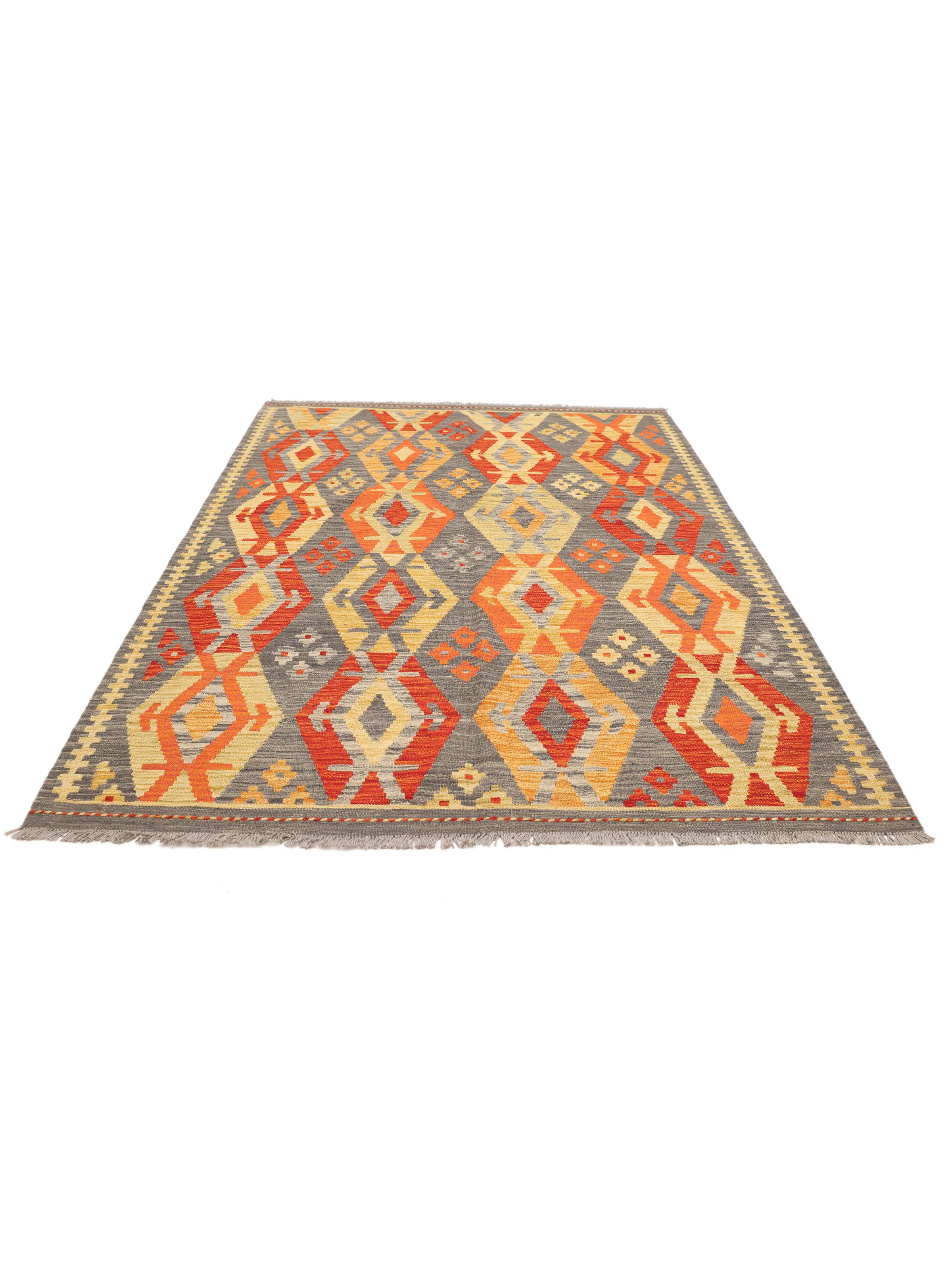
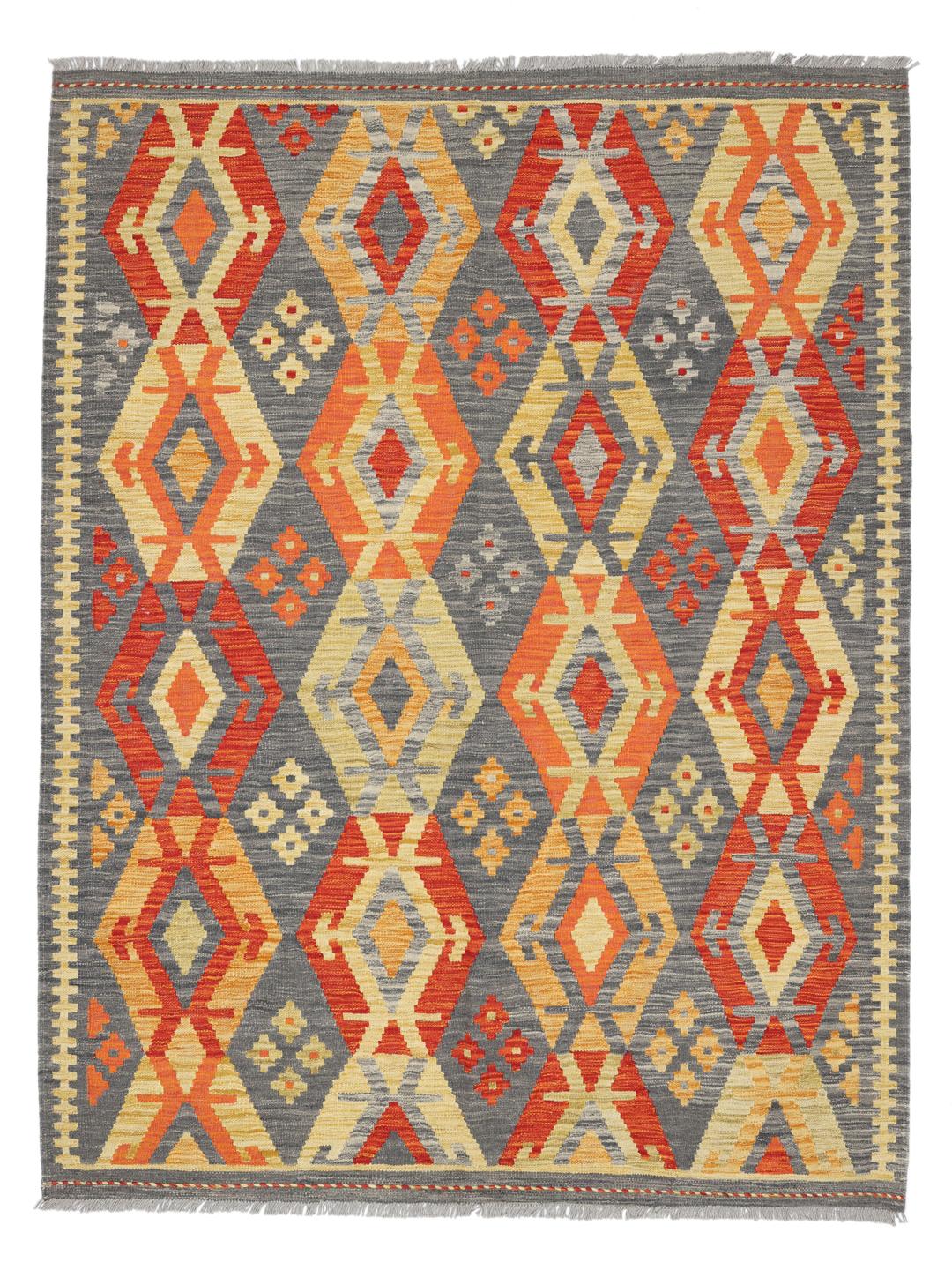
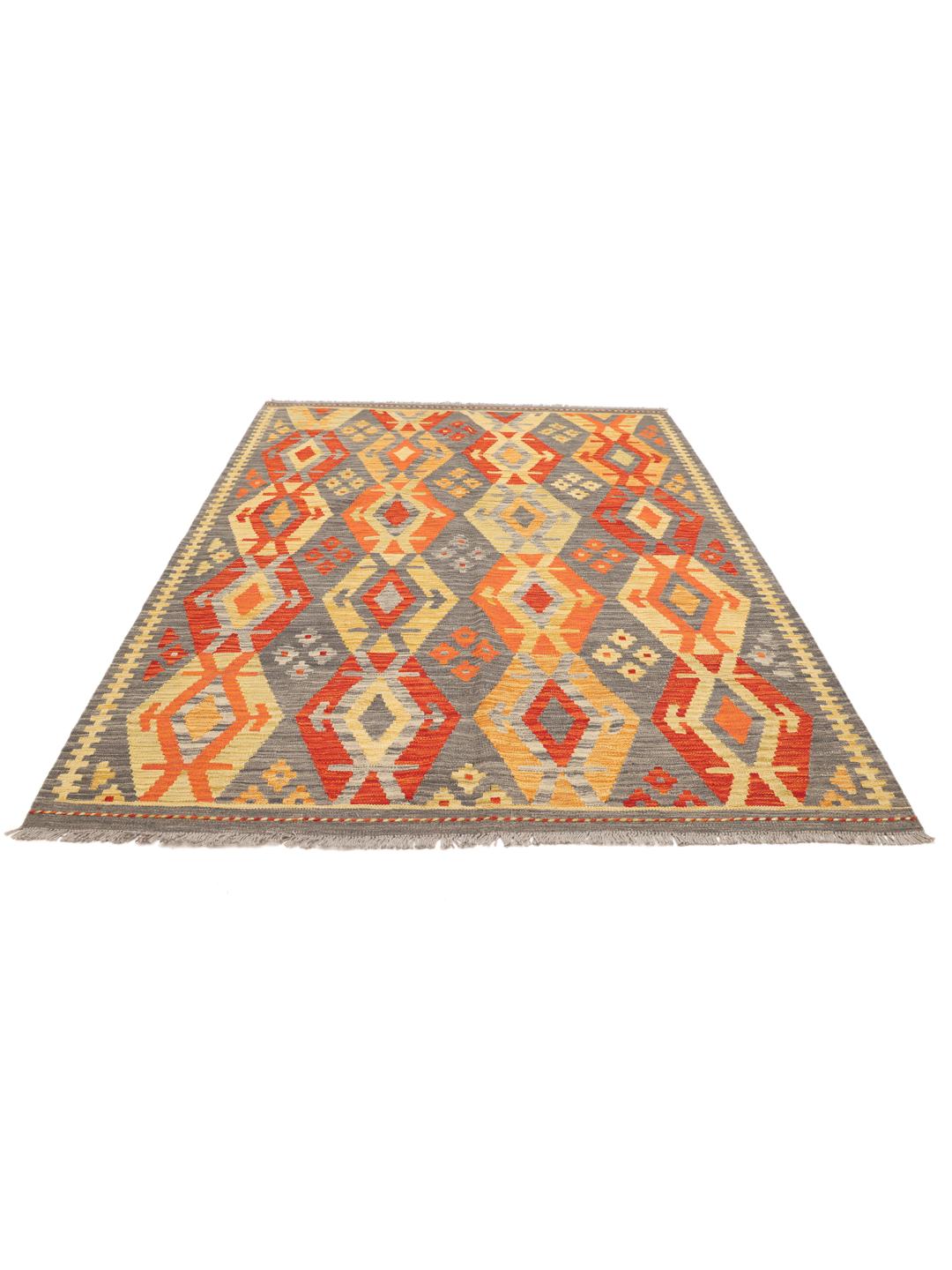
Kelim rugs have long been a central element of life across the Middle East and Central Asia, serving as both practical floor coverings and meaningful expressions of tribal identity. The Afghan tradition, in particular, is renowned for its robust construction and the use of locally sourced Wool, which is valued for its strength and ability to hold deep, rich colours.
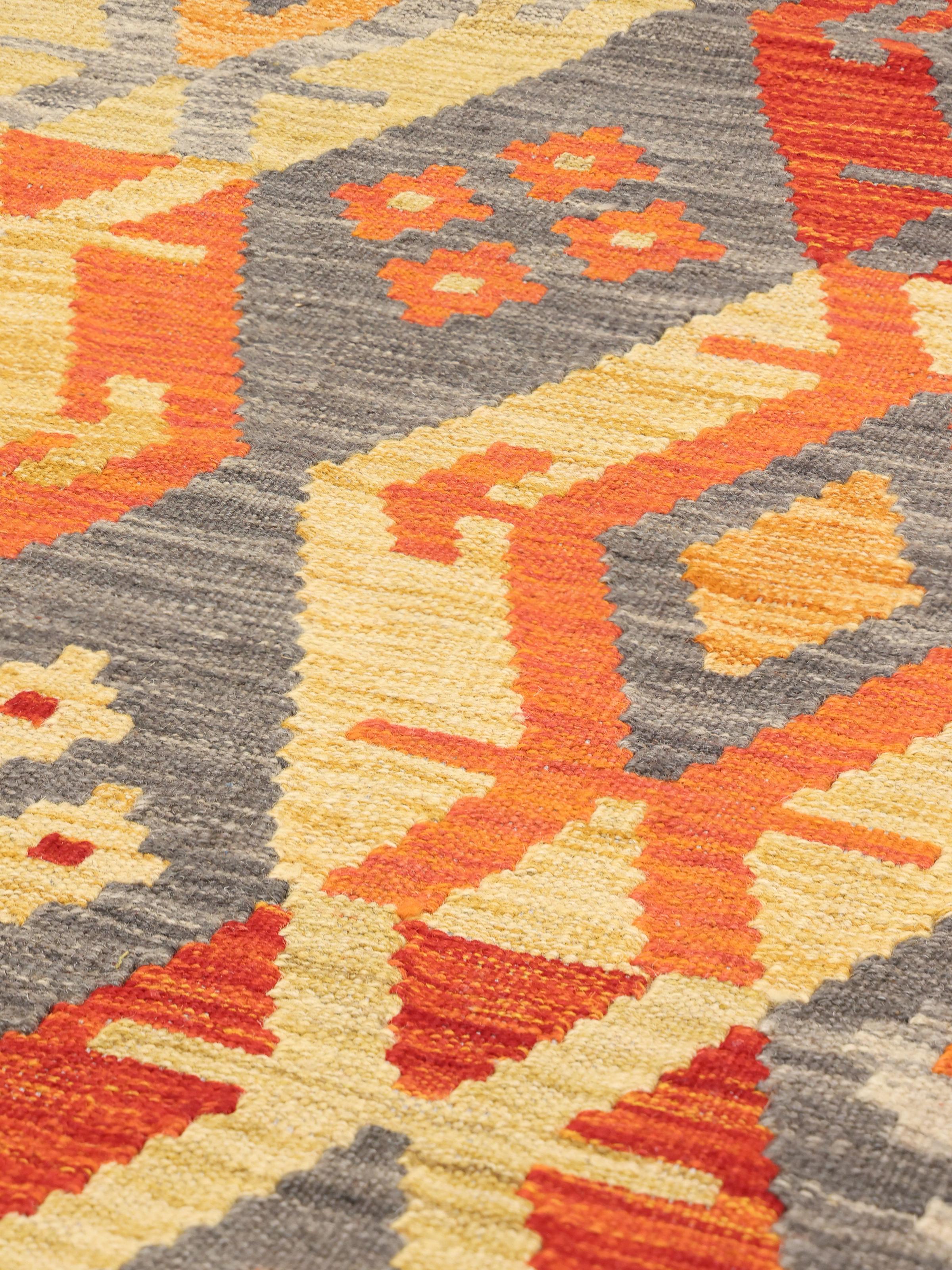
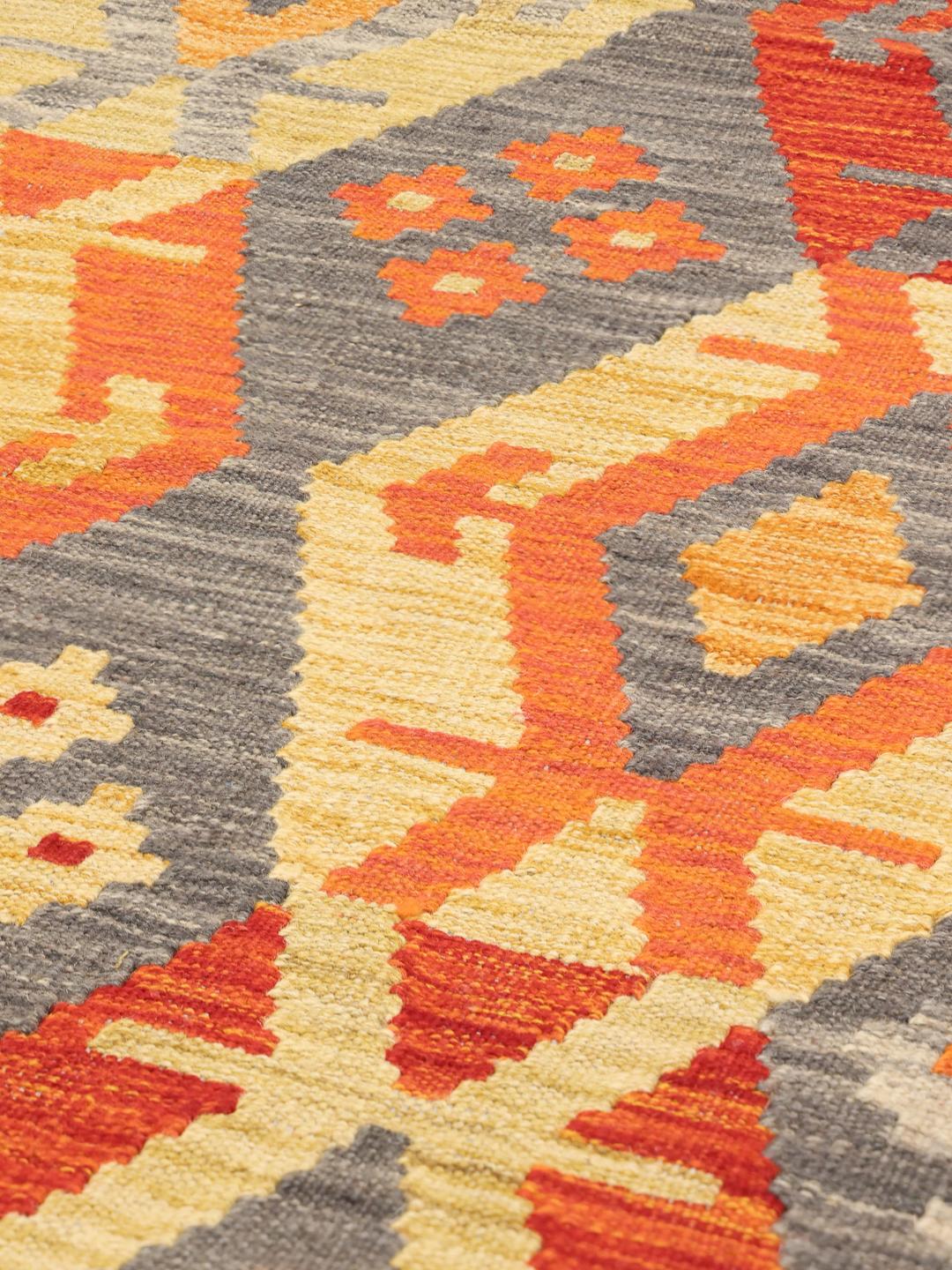
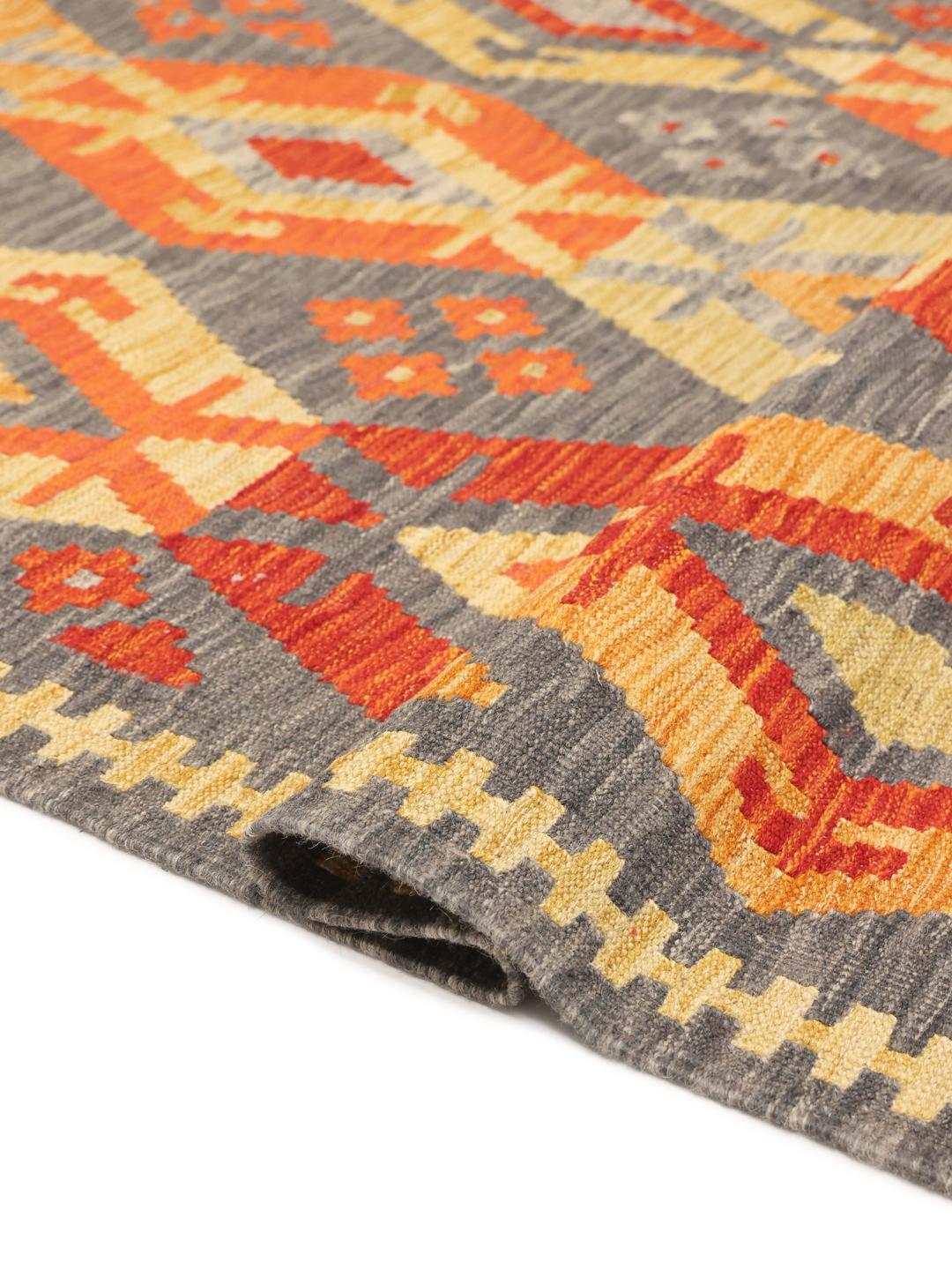
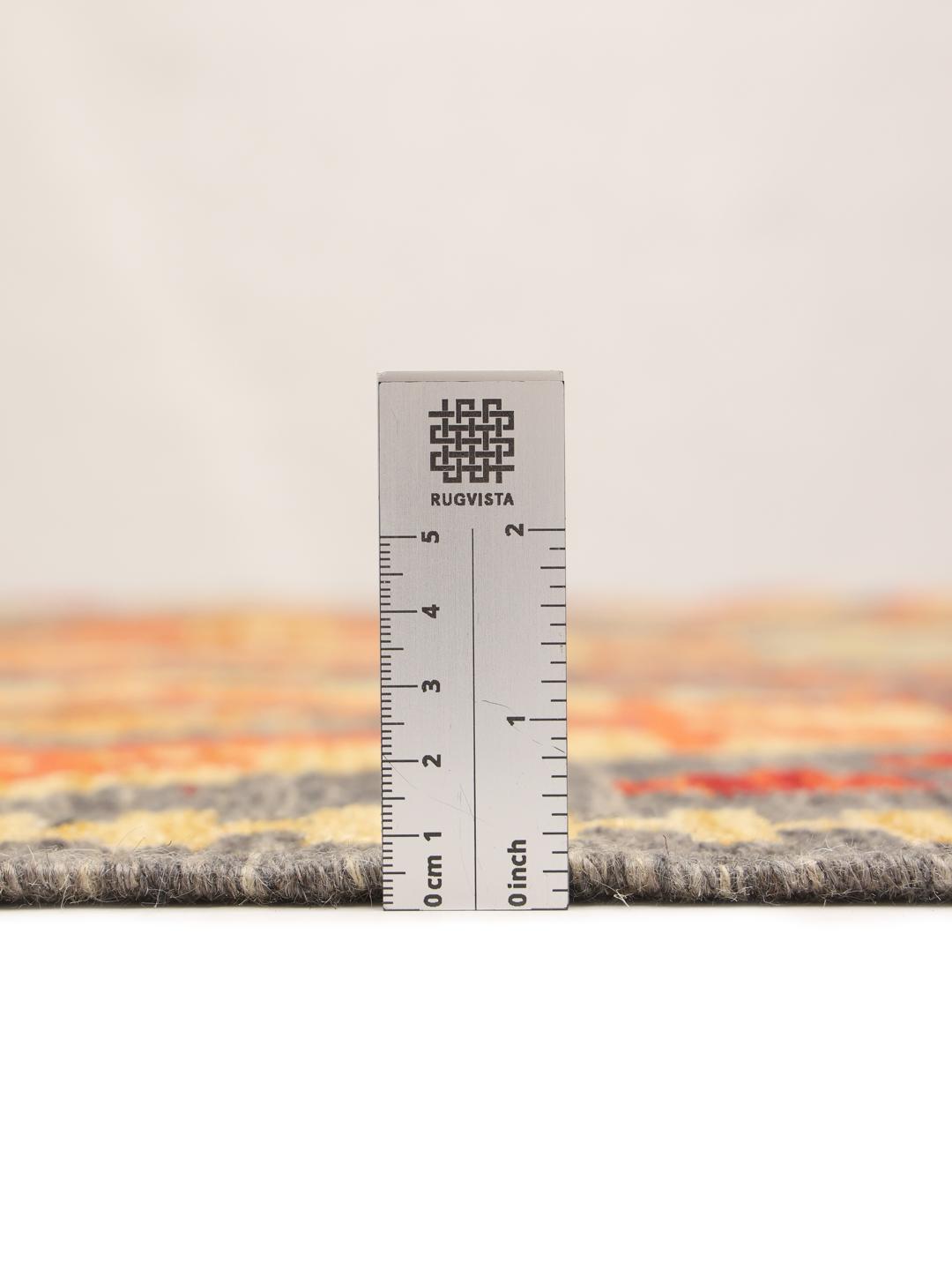
The term 'Kelim' refers to a flatweave technique, meaning there is no pile. This method creates a lighter, reversible textile that is incredibly versatile. By interweaving the warp and weft threads, artisans are able to produce sharp, distinct geometric patterns that define the aesthetic of these rugs, emphasising clean lines and bold symmetry.
Signature motifs such as the diamonds and smaller geometric shapes seen here are deeply rooted in regional design languages. These patterns are often symbolic, passed down through families as a form of cultural shorthand. The use of a grey field with warm orange and yellow accents is a hallmark of this style, providing a sophisticated contrast that feels both traditional and fresh in modern interiors.
Collecting these rugs is an investment in cultural heritage and skilled artistry. Each piece represents a connection to the nomadic and settled weaving communities of Afghanistan, offering a glimpse into a way of life where utility and beauty are perfectly balanced. Owning a Kelim is more than a purchase; it is a way to preserve a craft tradition that continues to thrive through the hands of dedicated makers.