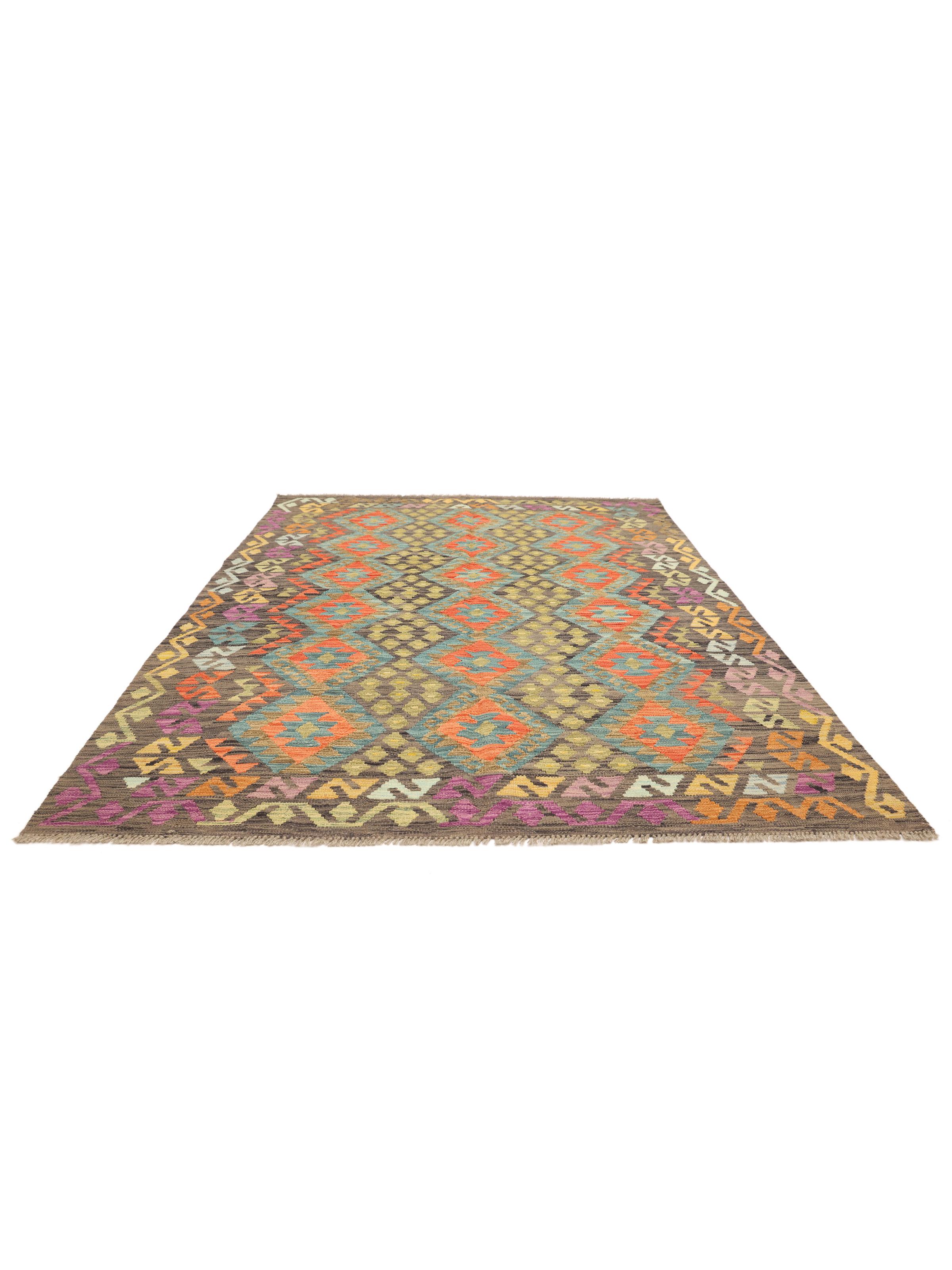
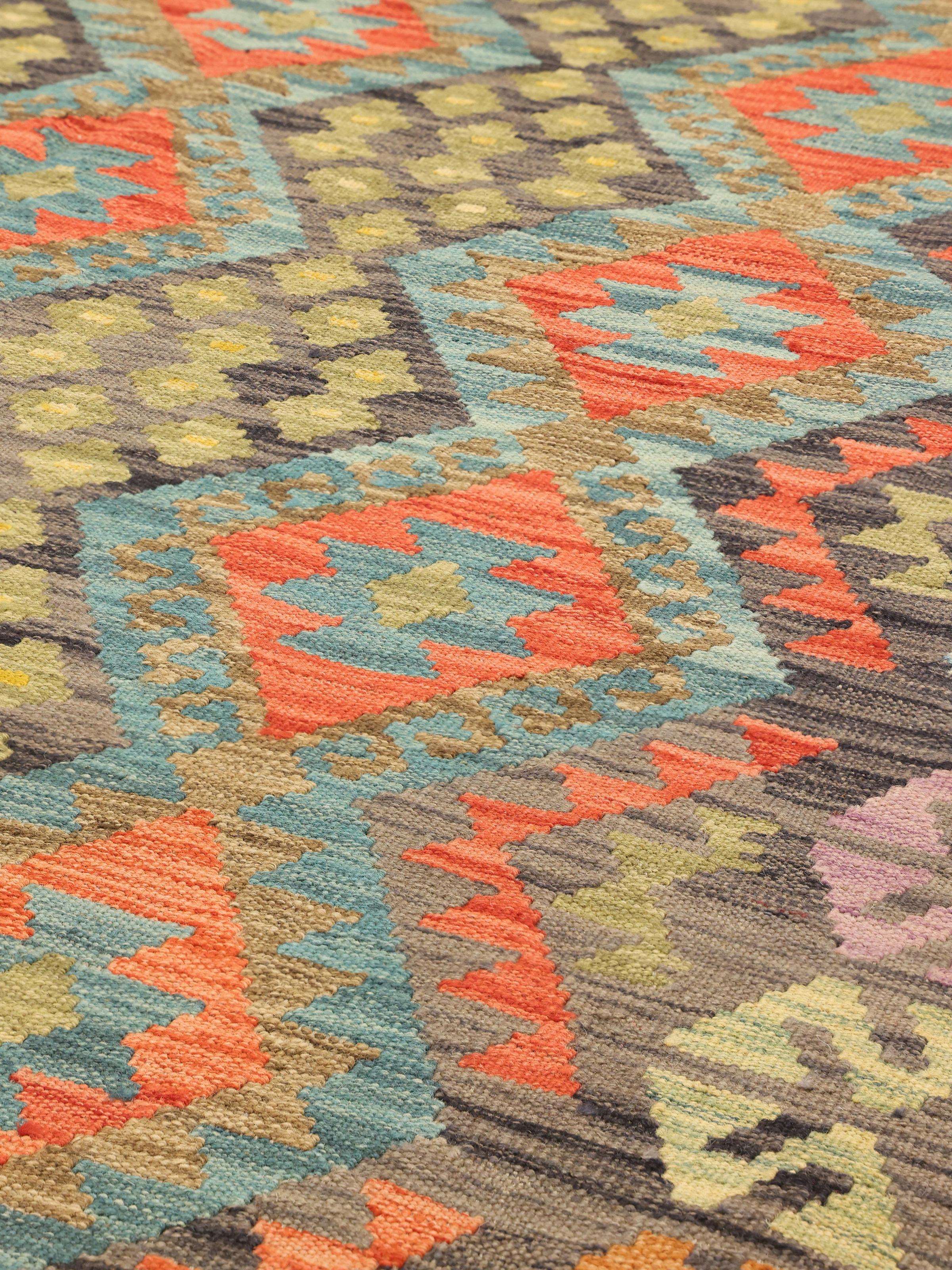
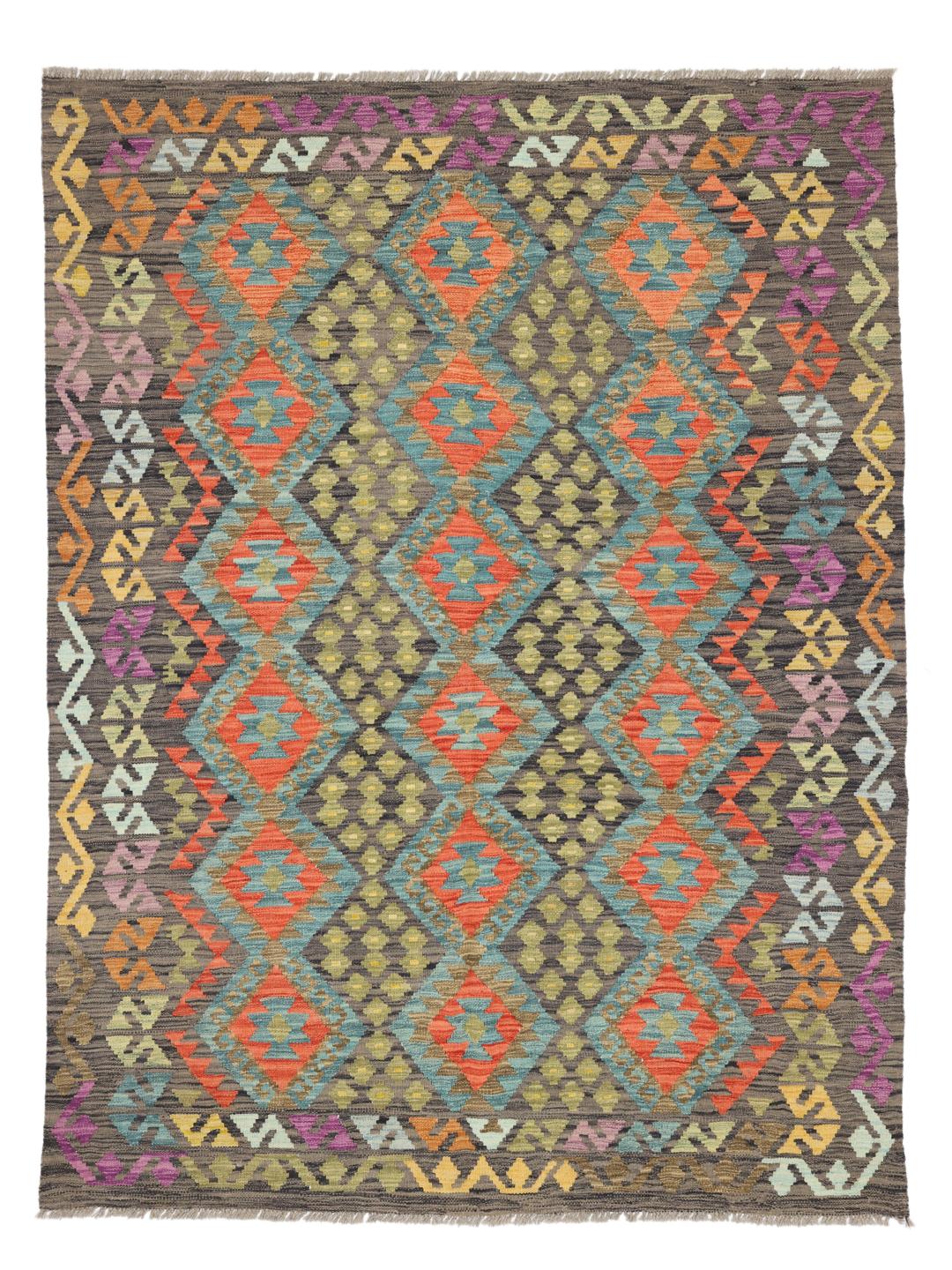
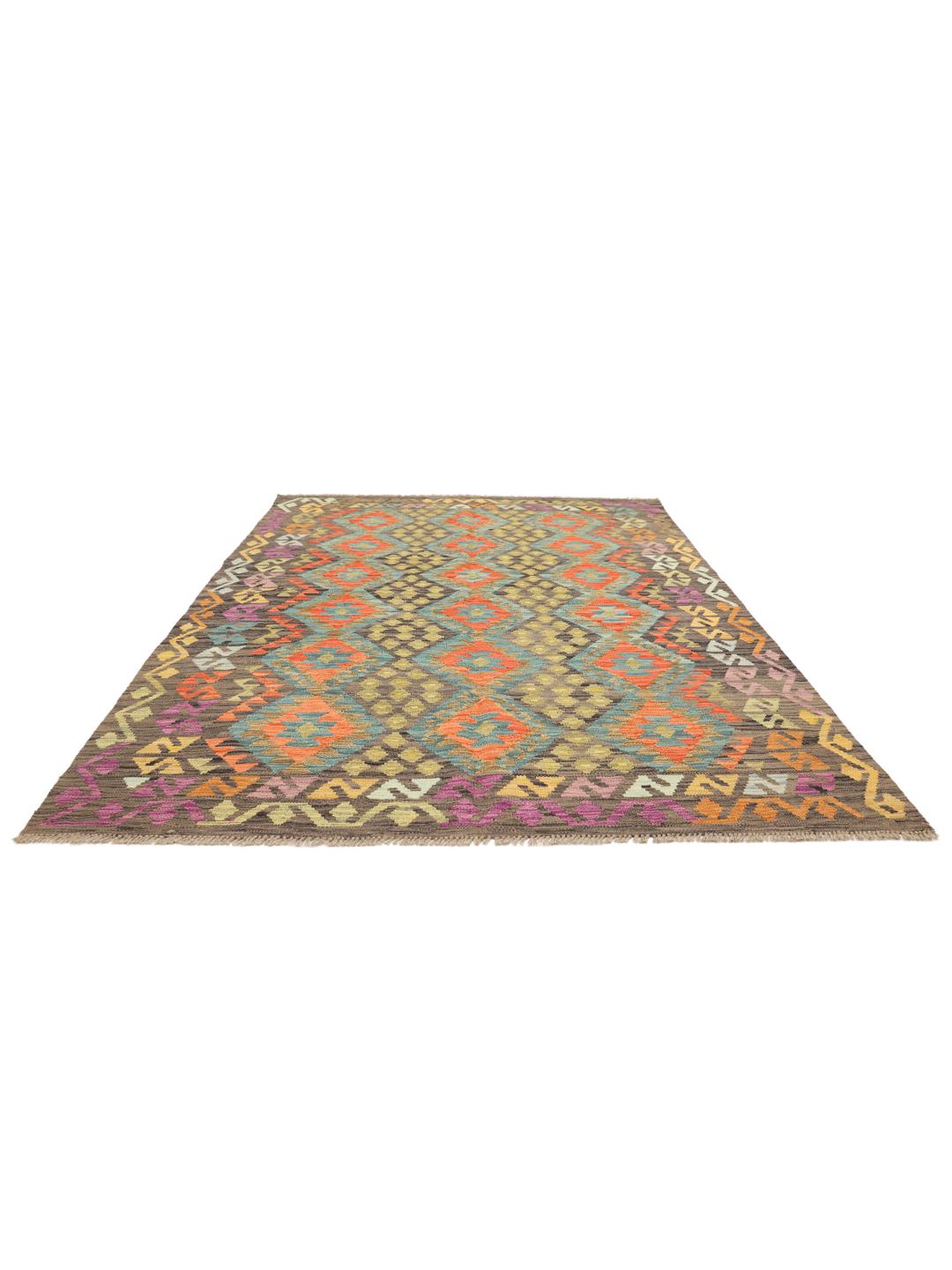
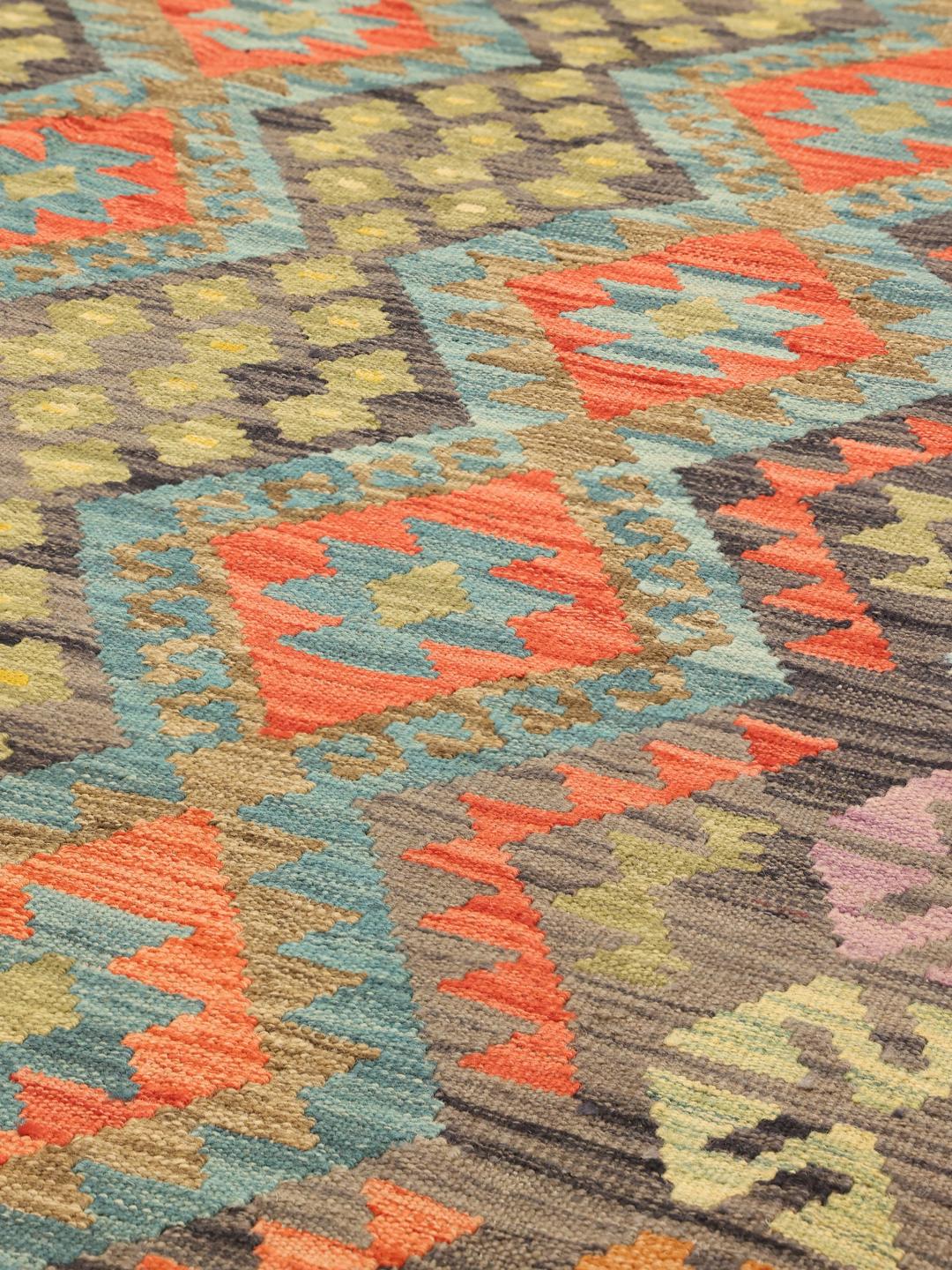
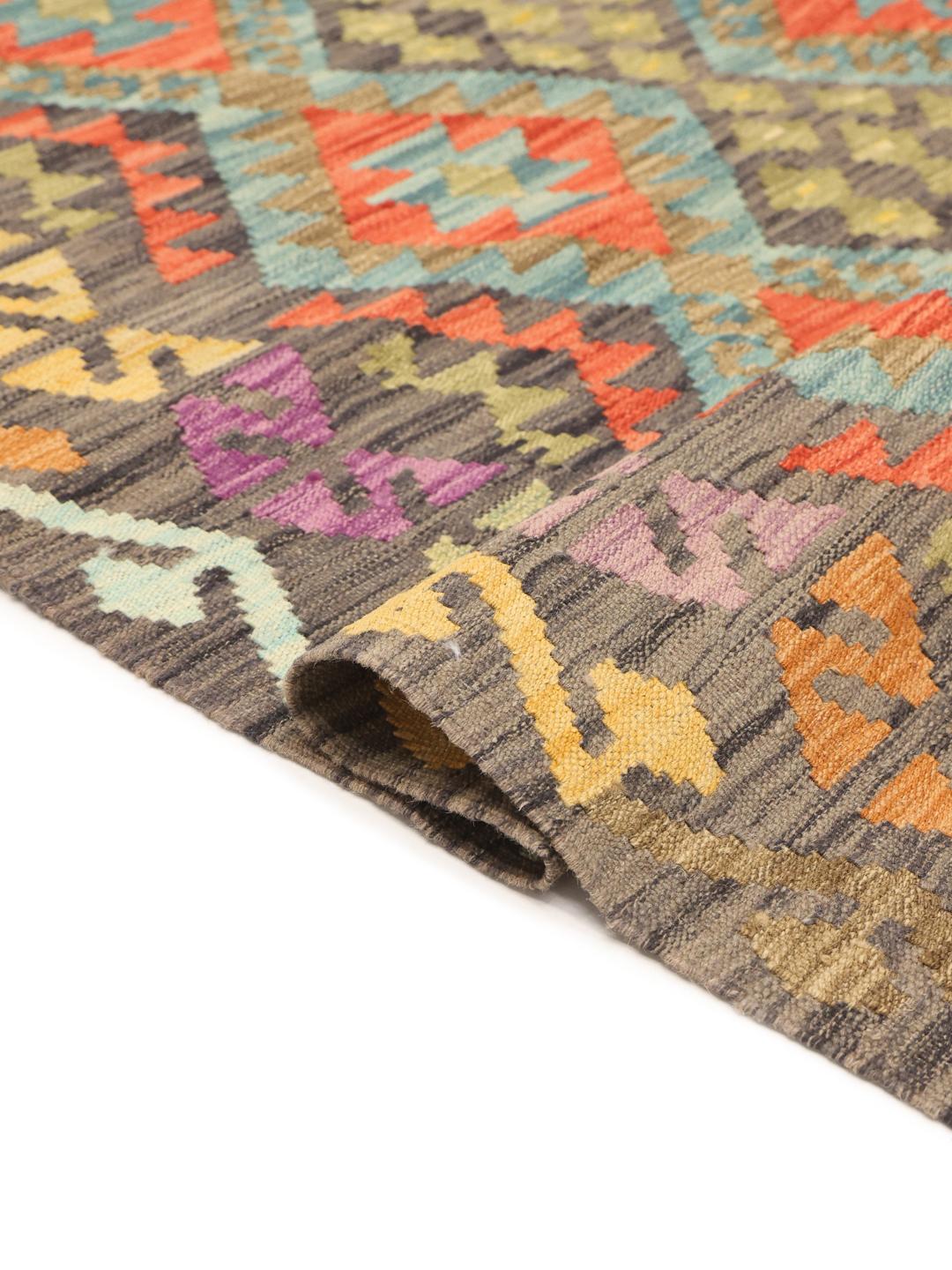
The kelim tradition is deeply rooted in the history of Afghanistan, where flat-woven rugs have served as functional and decorative staples for centuries. These rugs are traditionally associated with nomadic and village life, designed to be portable, durable, and reflective of the specific tribal identities and landscapes of the region.
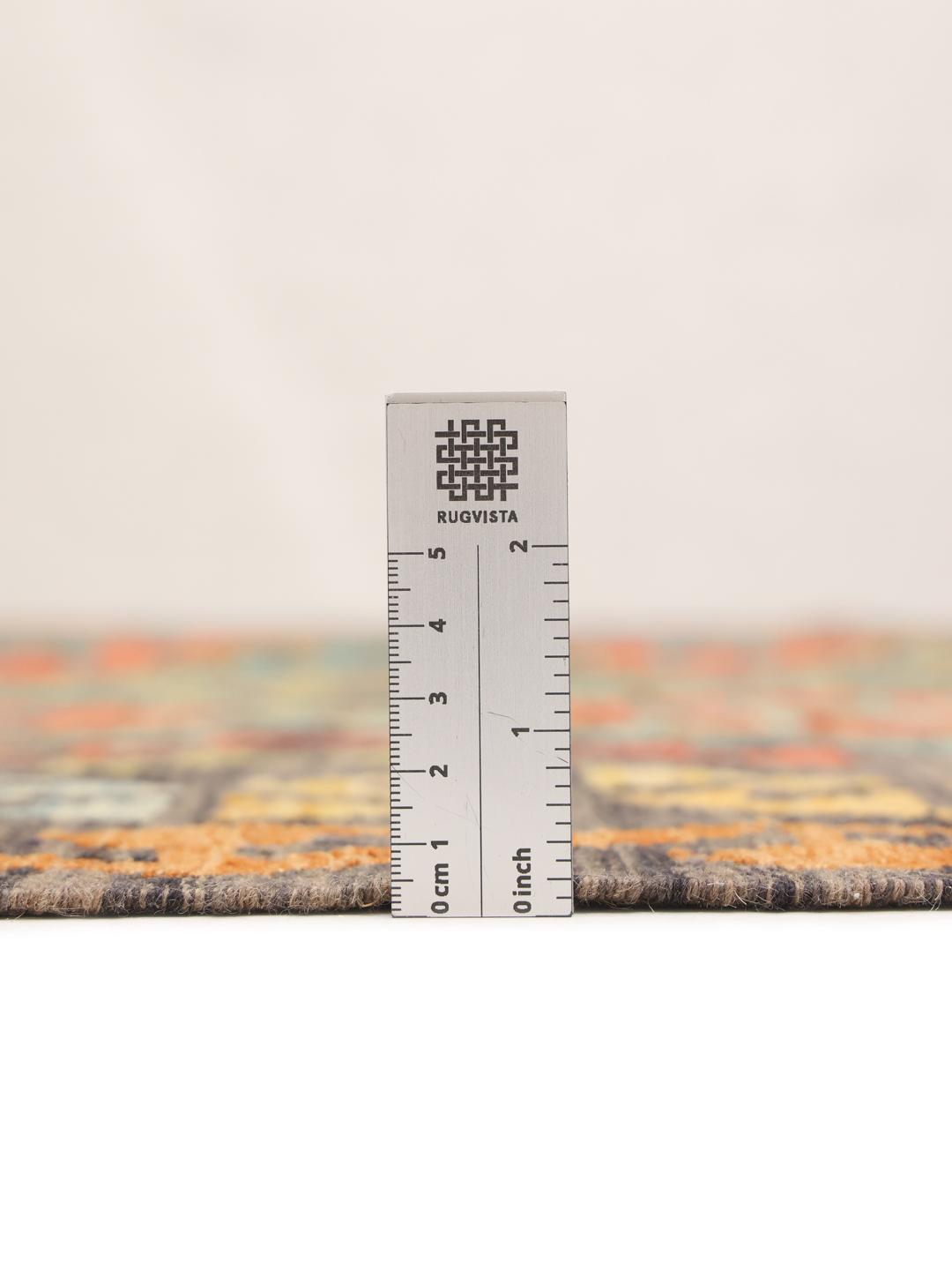
Technically, a kelim is defined by its lack of a pile. Unlike knotted rugs, the design is created by interweaving the coloured weft threads through the warp threads. This technique results in a flat, lightweight, and often reversible textile that requires immense concentration to maintain pattern alignment throughout the entire weaving process.
The signature design language of these rugs often features bold geometric shapes, such as diamonds, triangles, and zig-zags, which are frequently arranged in repeating, rhythmic patterns. The use of vibrant, natural-inspired dyes against a darker, earth-toned background is a hallmark of the Afghan style, highlighting a sophisticated approach to colour harmony.
These rugs are highly valued by collectors for their authenticity and the link they provide to ancestral craft practices. To own a traditional Afghan kelim is to possess a piece of living history, representing a bridge between the ancient Silk Road trading routes and the modern home, where the skill of the weaver remains the most important element of the rug's value.