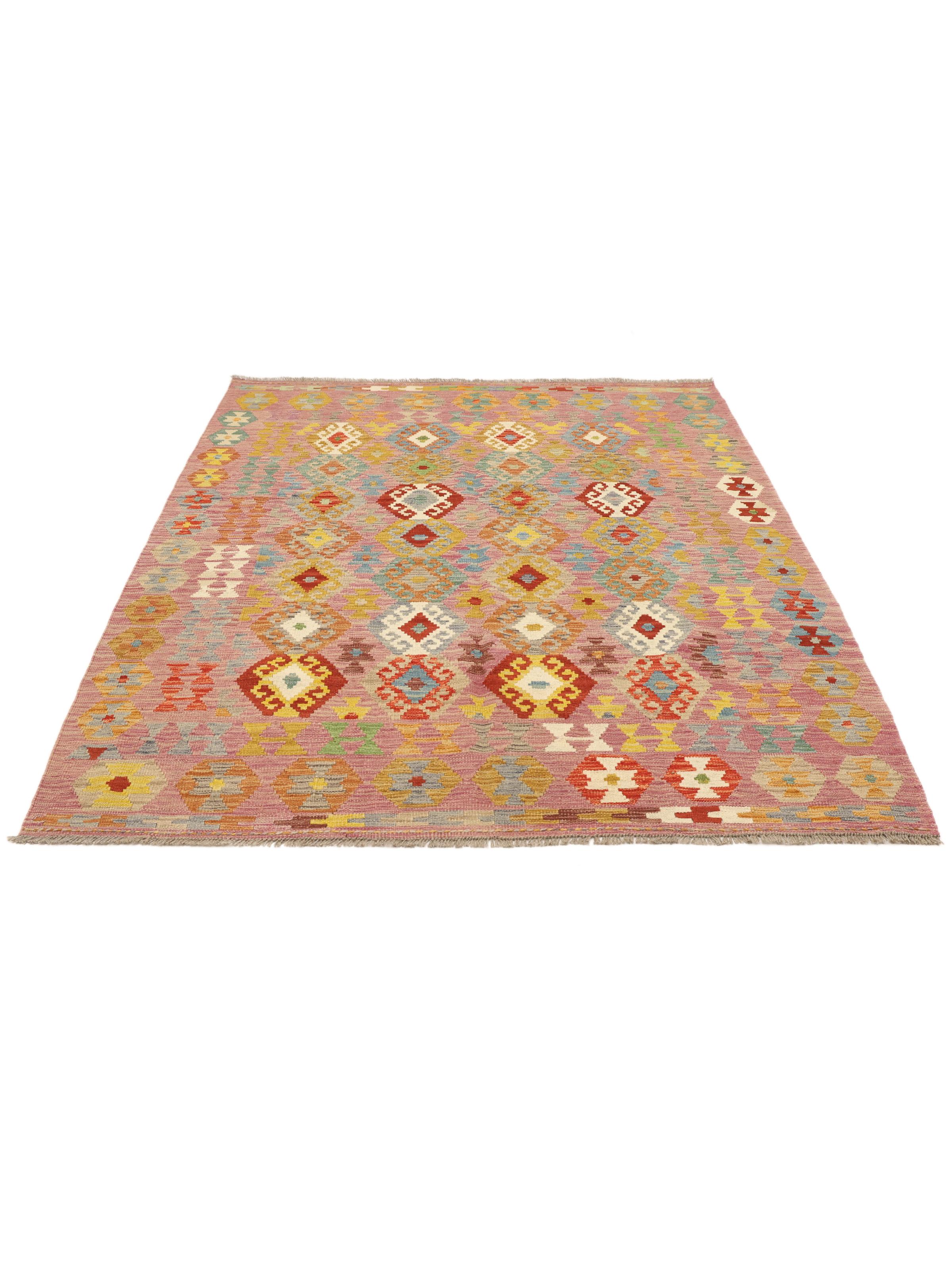
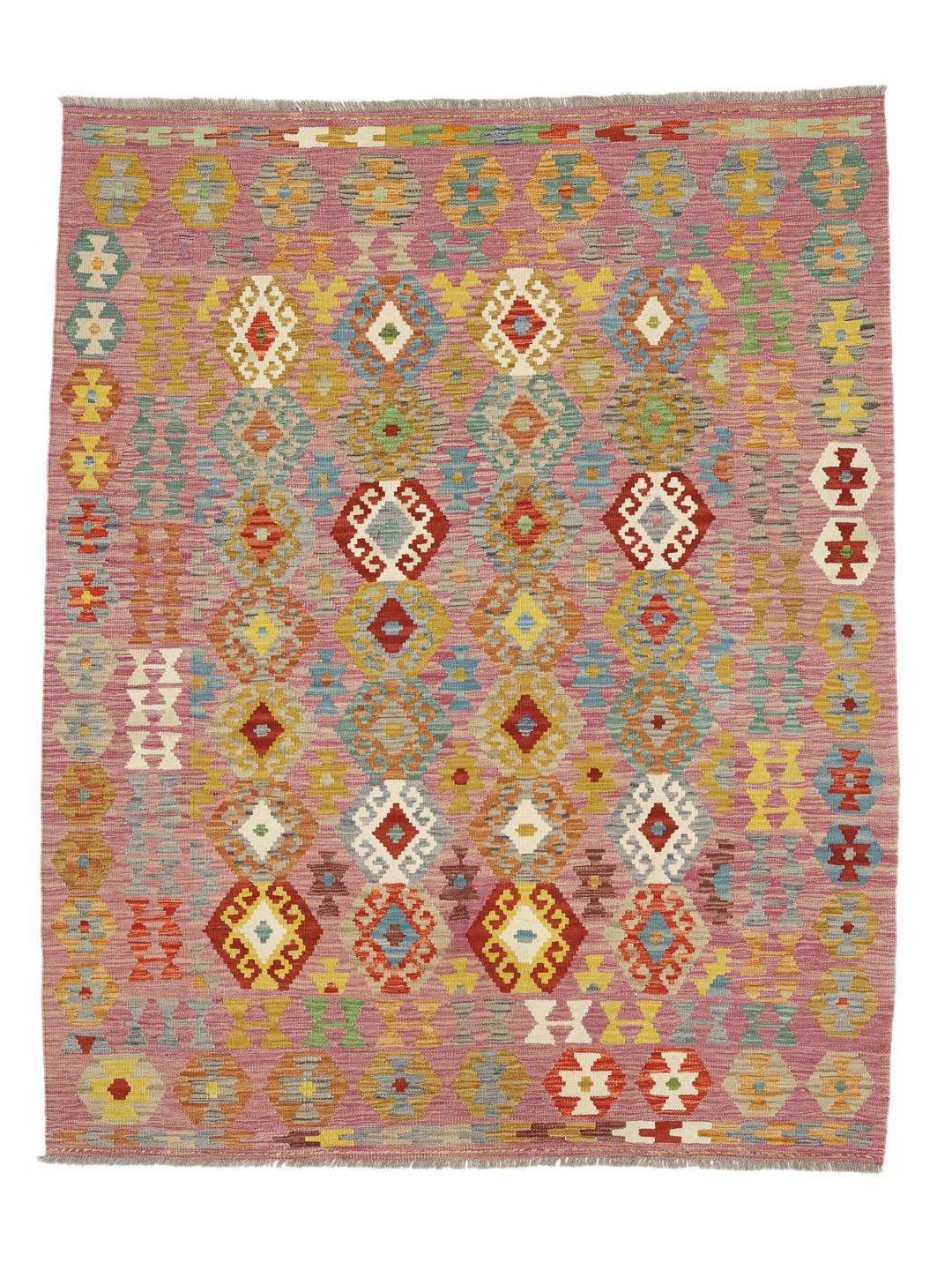
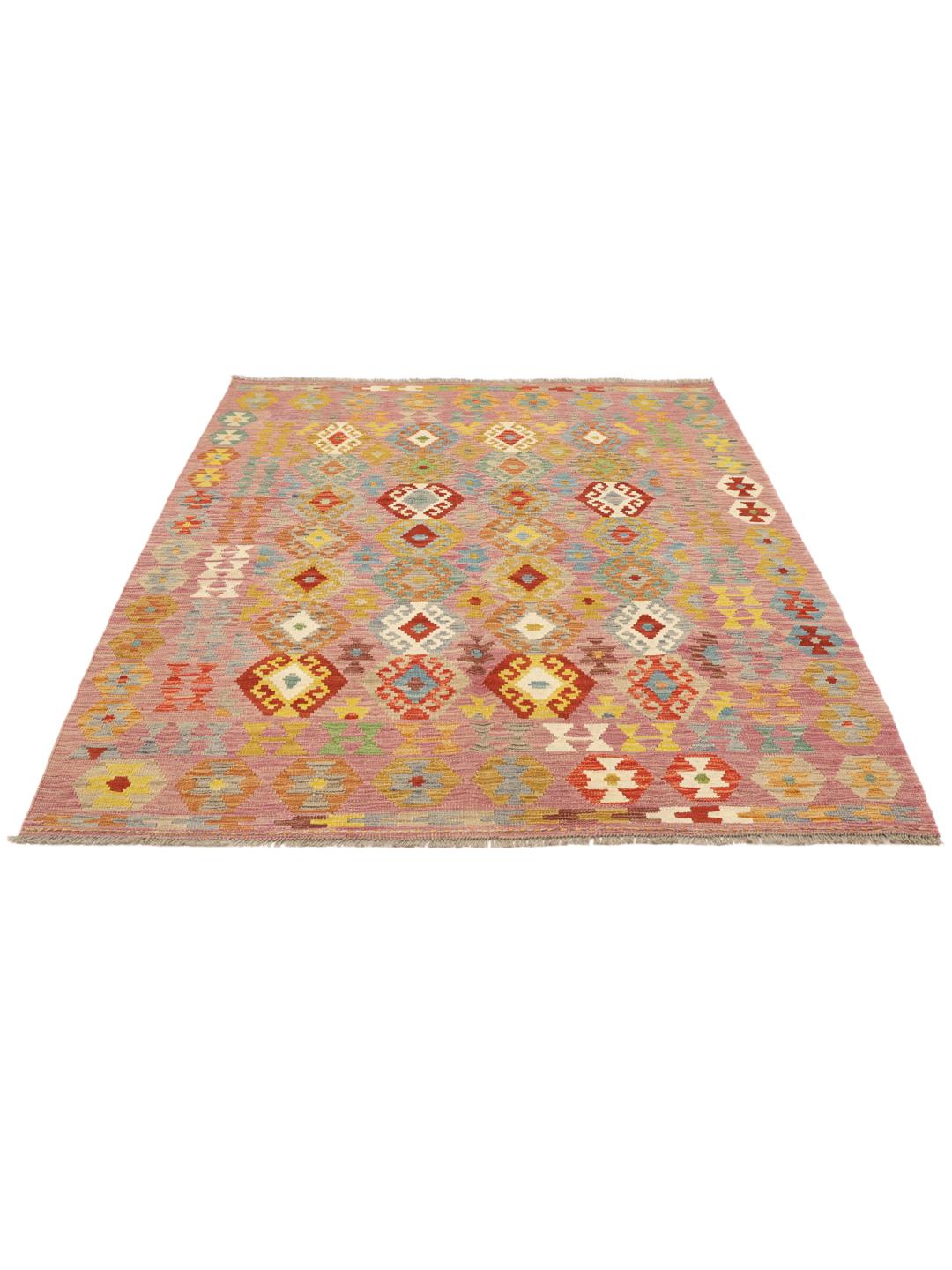
Kelim rugs have long been a cornerstone of nomadic life across the Middle East and Central Asia. Originally created by tribal groups for practical use as floor coverings, tent dividers, or storage sacks, these flat-woven textiles were designed to be both portable and highly durable, reflecting the migratory lifestyle of the weavers.
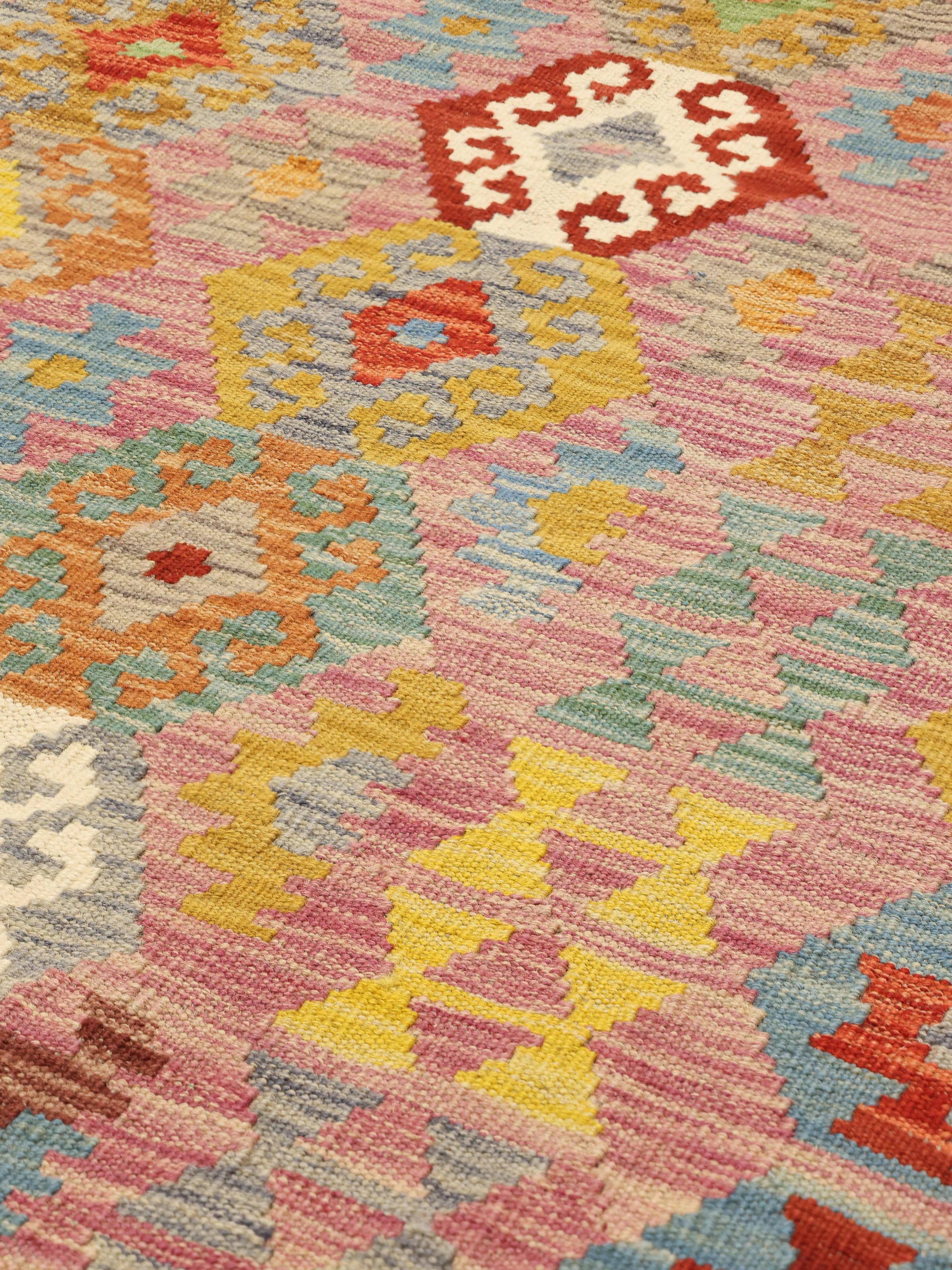
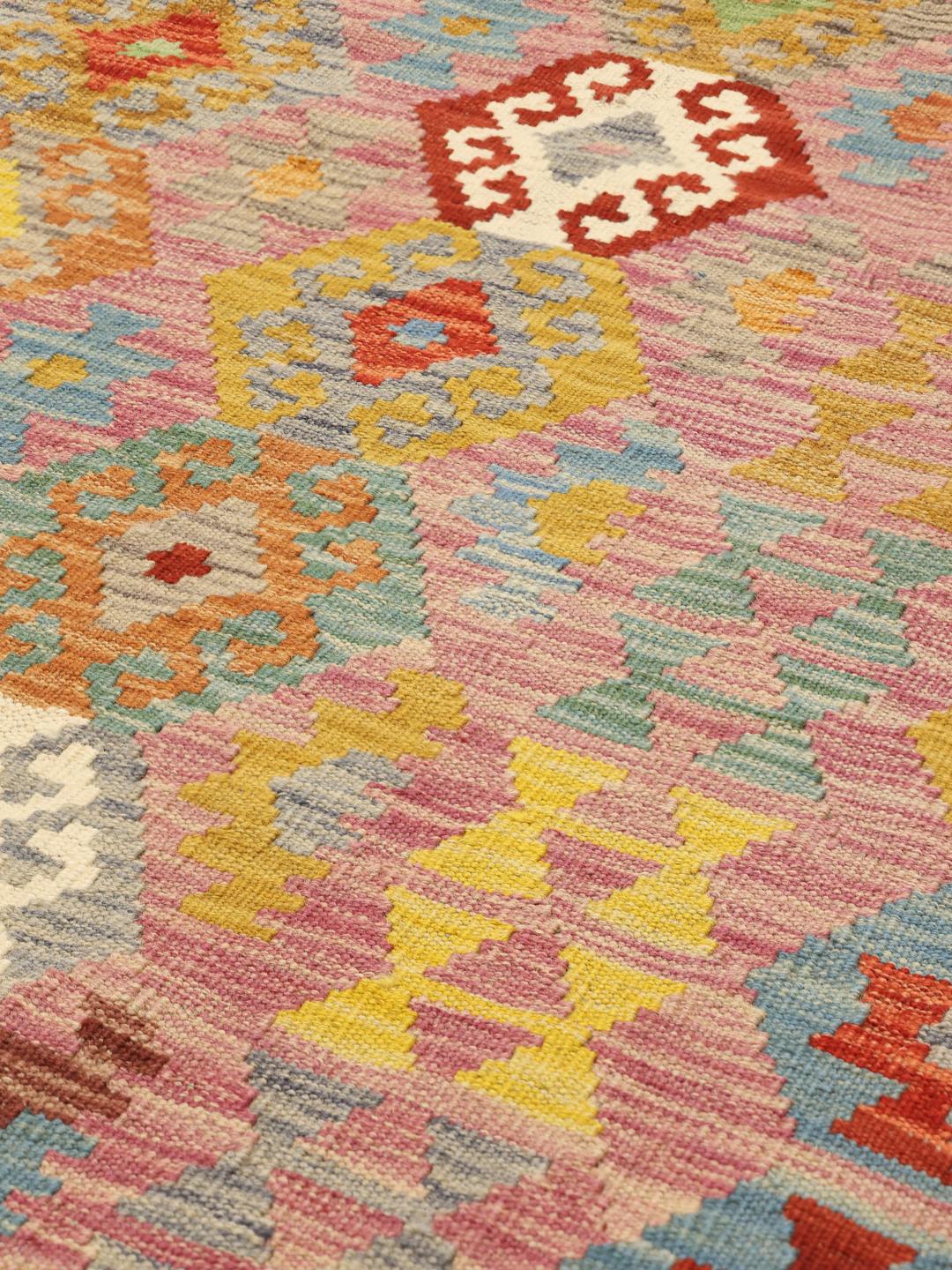
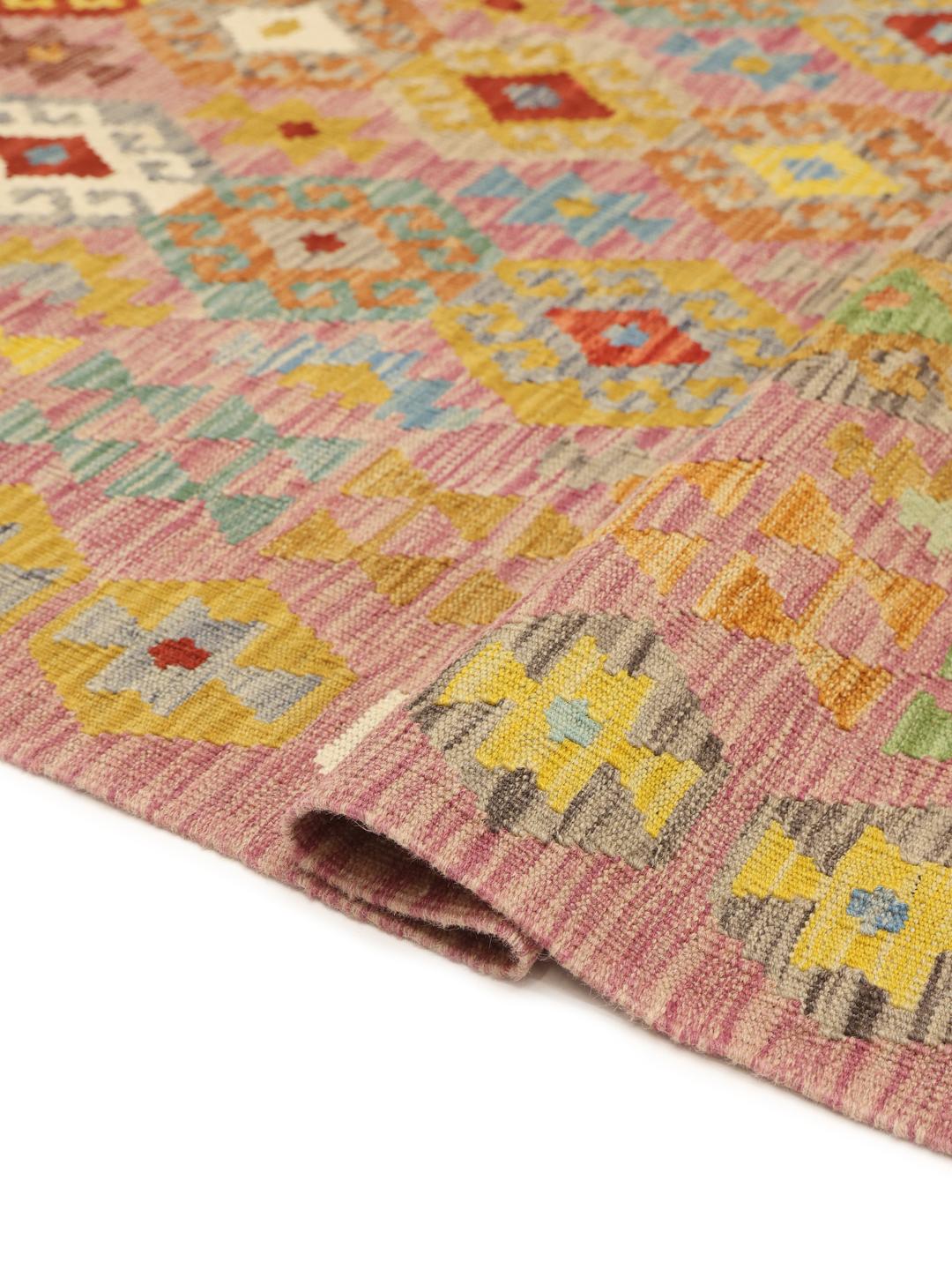
The term 'Kelim' refers specifically to the tapestry-weave technique, where the weft threads are passed back and forth over the warp threads to create the pattern. Because there is no knotted pile, the resulting fabric is light, reversible, and incredibly strong, allowing for the intricate geometric designs that have become synonymous with the style.
The visual language of Afghan Kelims is deeply rooted in tribal identity, with motifs often representing symbols of protection, fertility, or the natural environment. The vibrant colours are traditionally derived from natural dyes, which develop a soft, mellow patina over time, enhancing the character of the rug as it ages.
Today, these rugs are highly valued by collectors for their cultural significance and the raw, unrefined beauty of their craftsmanship. By choosing a Kelim, you are supporting a tradition that has been passed down through generations, keeping alive a form of art that values human touch and heritage above mass production.