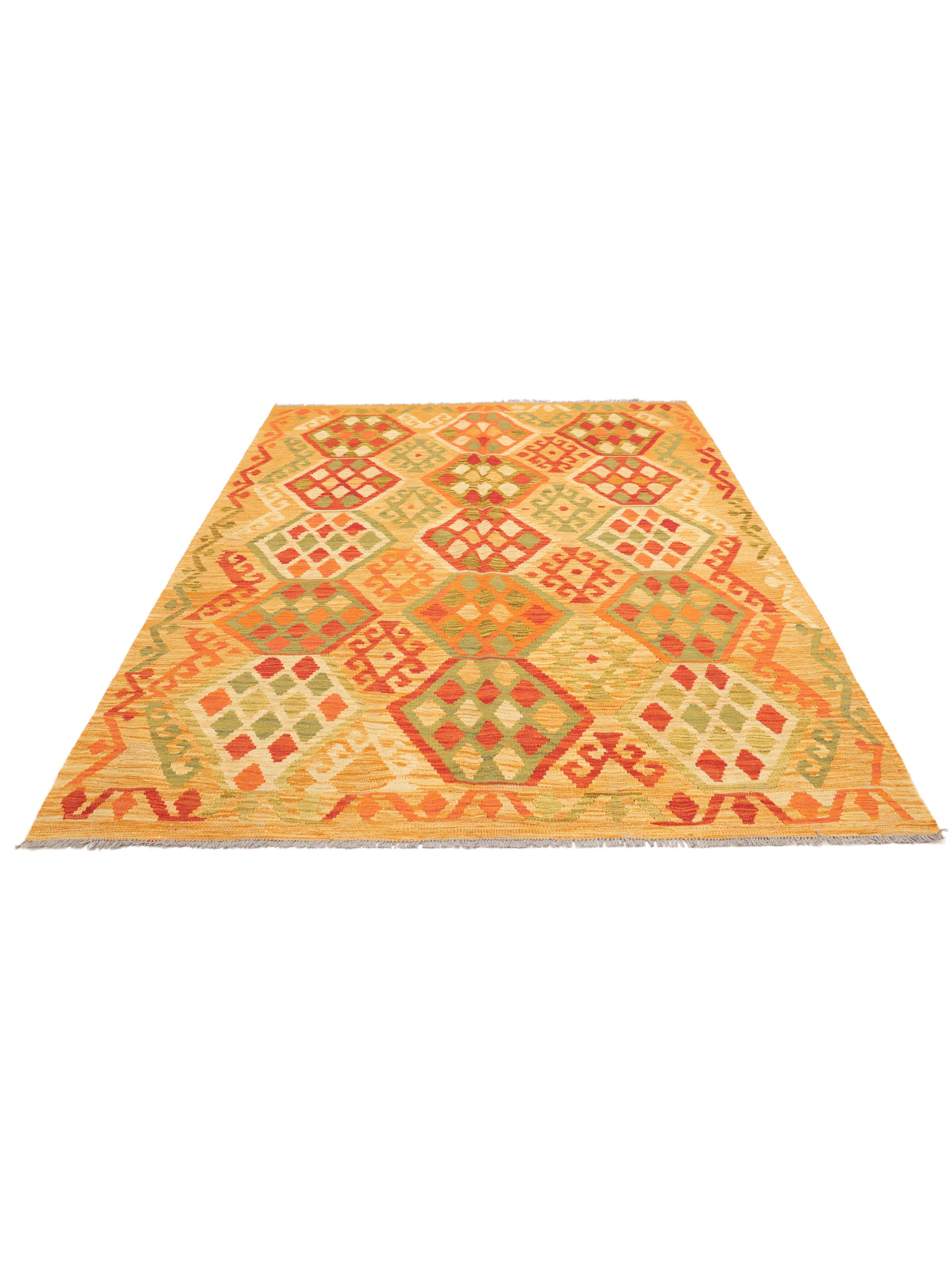
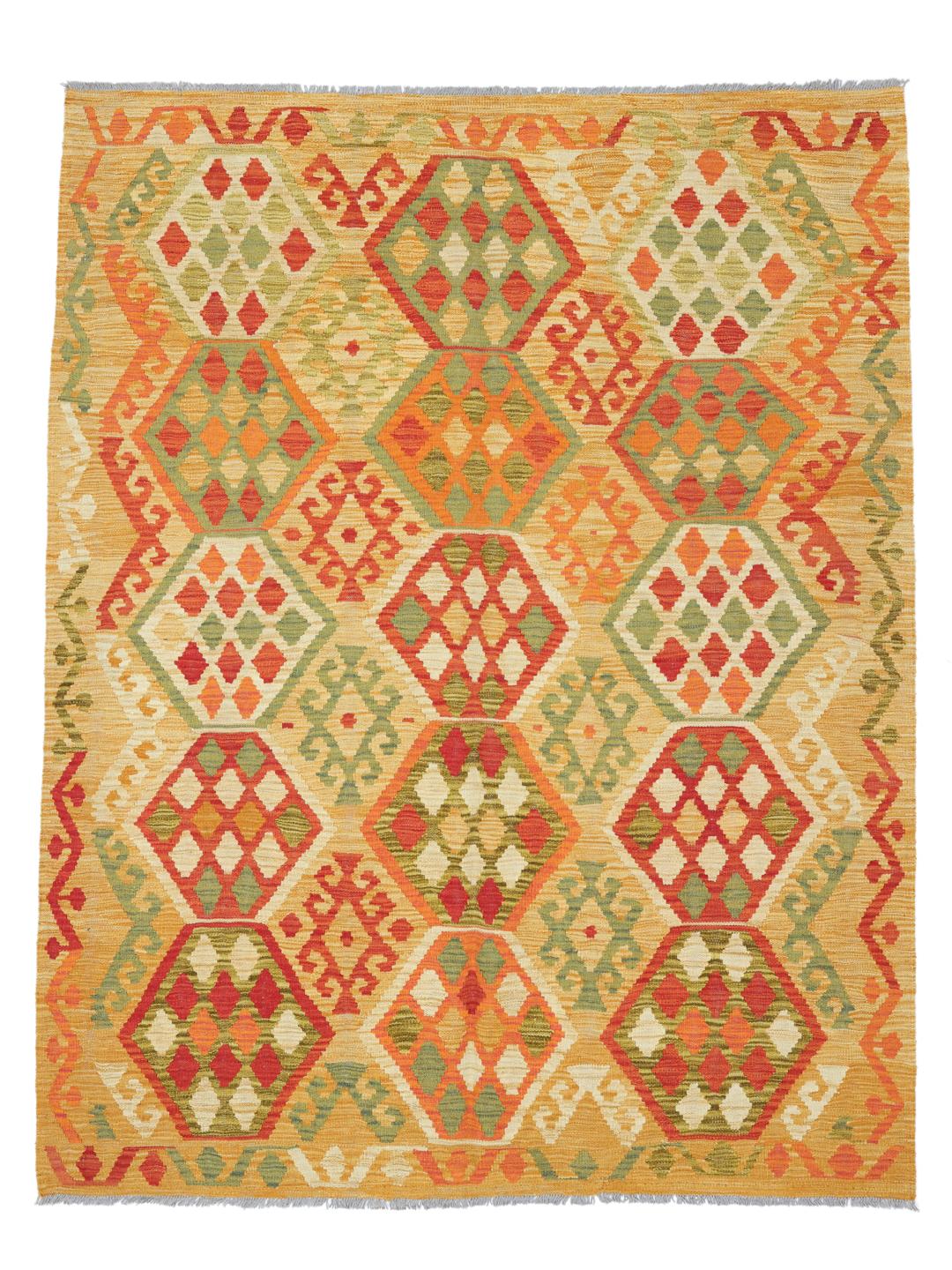
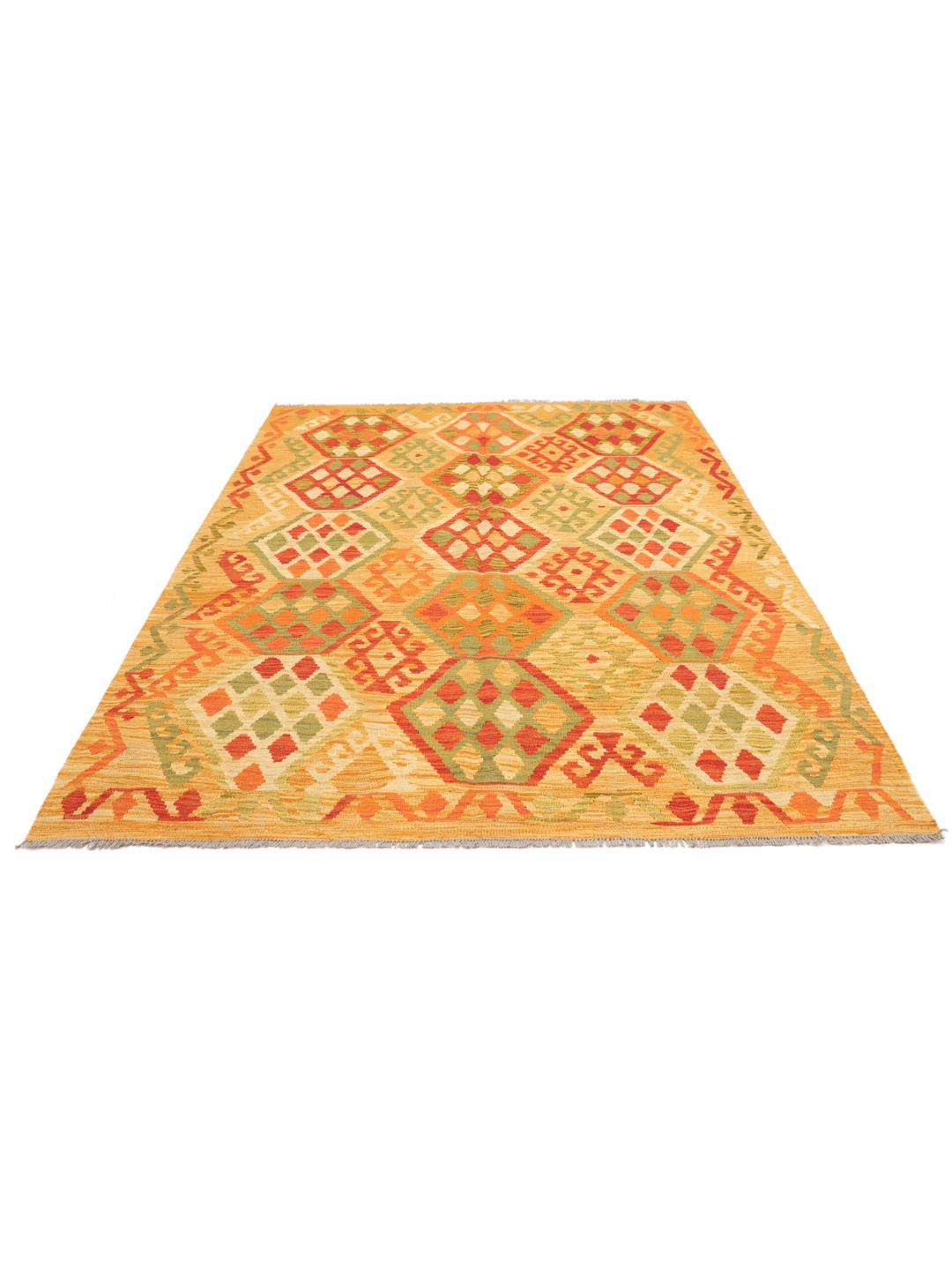
The Kelim tradition in Afghanistan is deeply rooted in the nomadic history of the Middle East. These rugs are traditionally created by tribal weavers who translate their environment and cultural identity into complex geometric languages, using techniques that have remained largely unchanged for centuries.
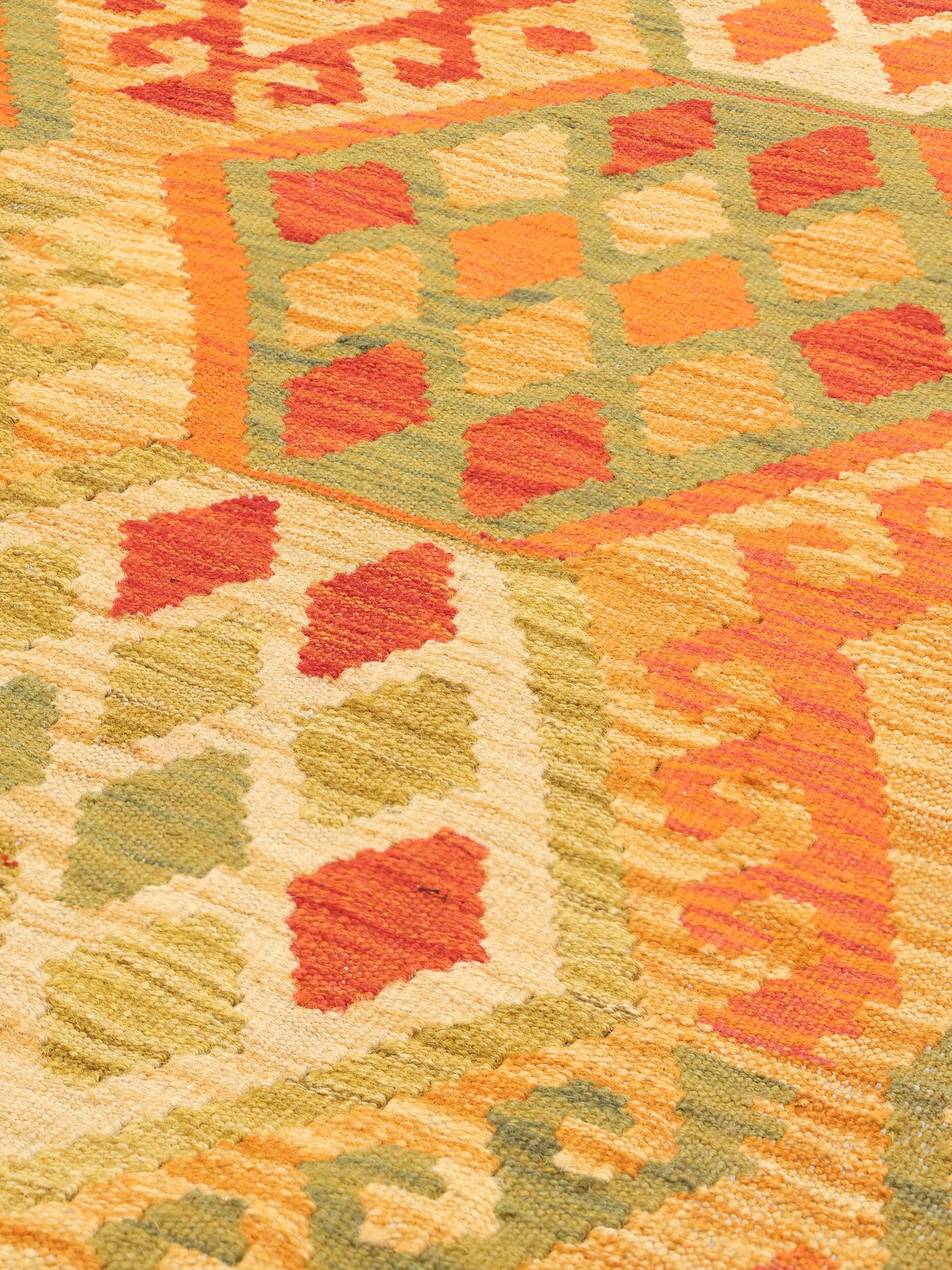
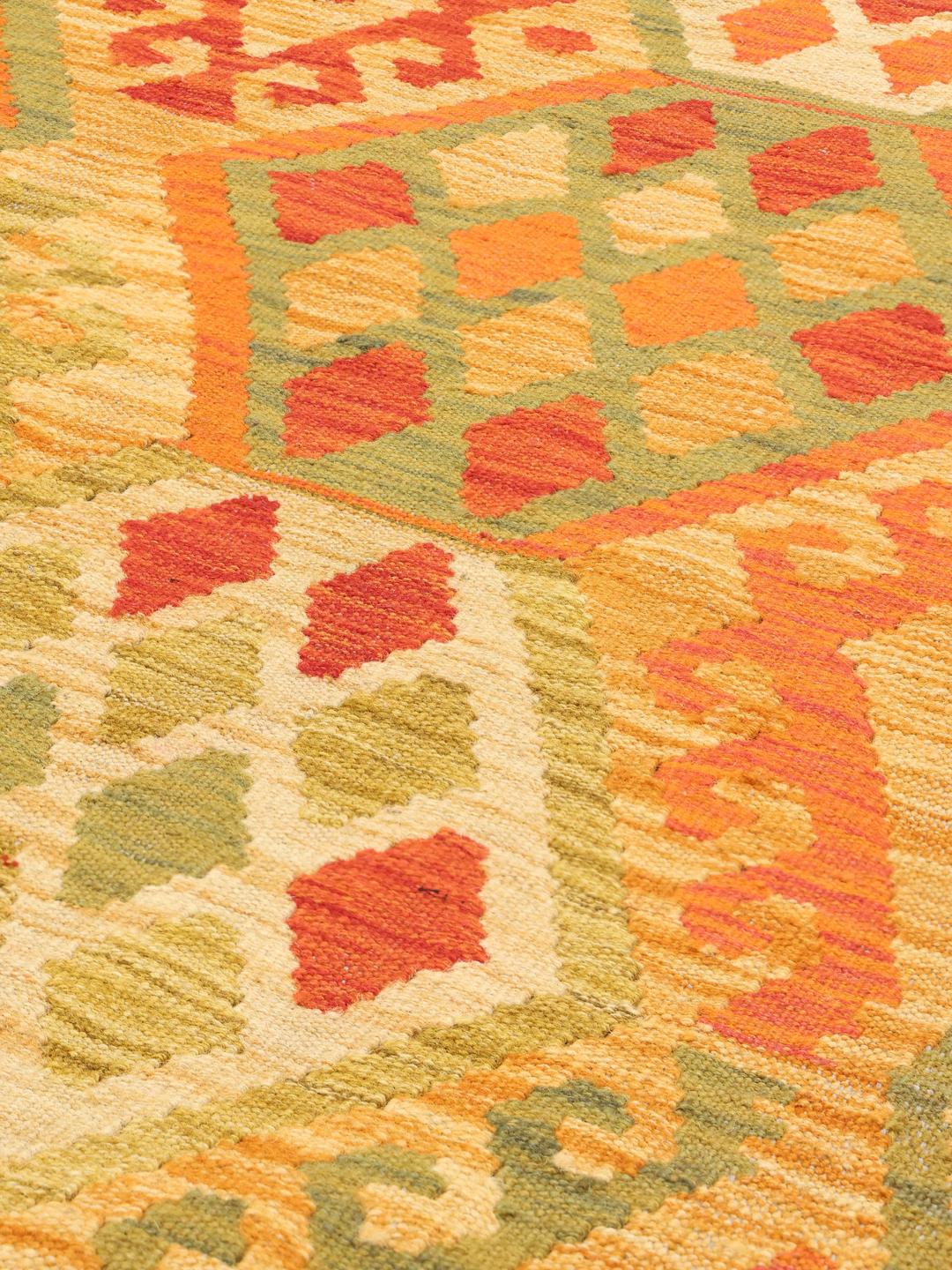
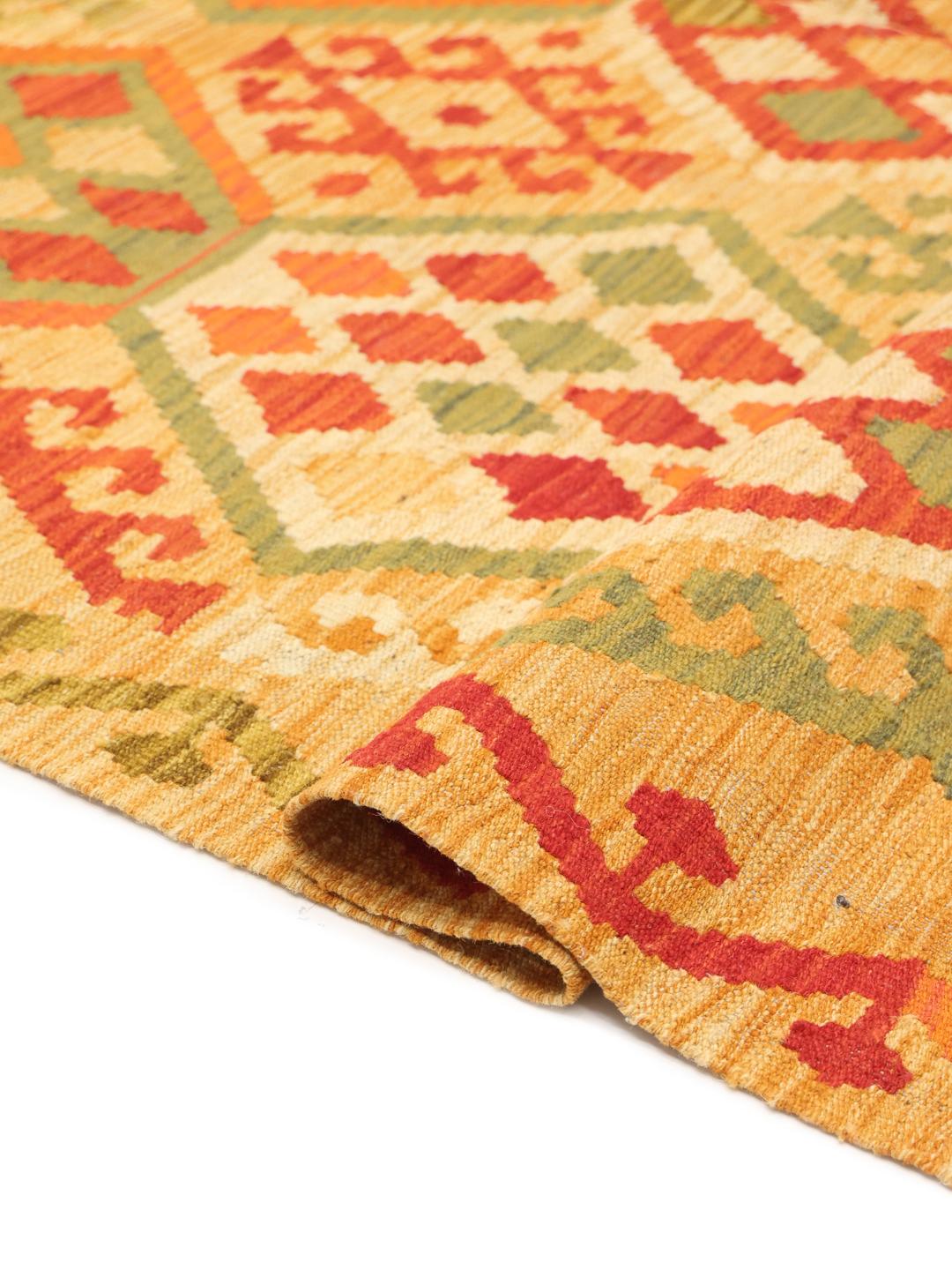
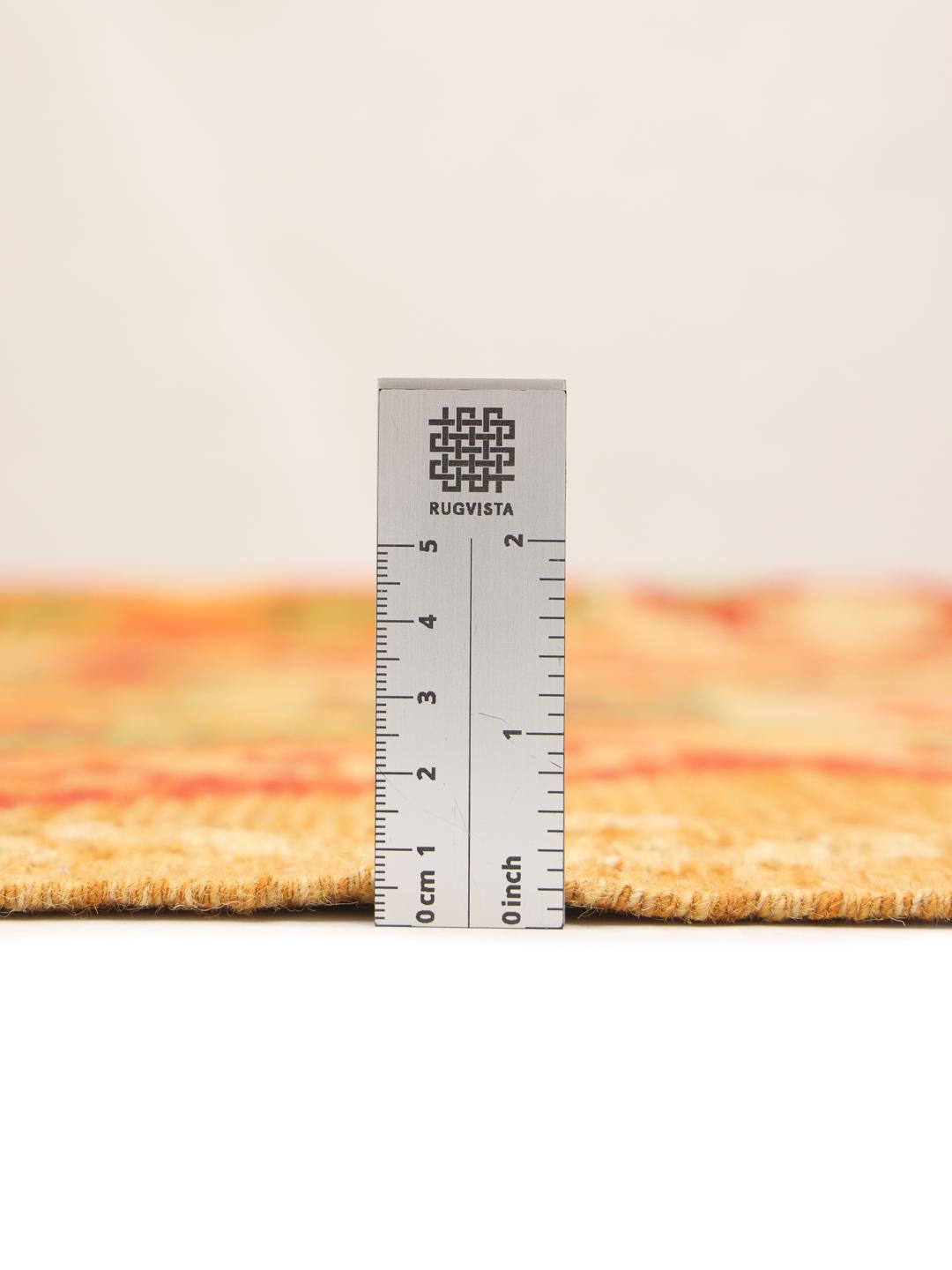
The term 'Kelim' refers to a flat-woven textile, meaning it lacks a pile. This construction method relies on the tight interlacing of the warp and weft, which creates a lightweight yet incredibly durable fabric. This traditional approach is highly valued for its ability to produce crisp, clear patterns that define the aesthetic of these rugs.
Visual language in these pieces is dominated by symbolic geometric motifs, often featuring bold diamonds, hexagons, and intricate borders. These designs are not merely decorative but often carry meanings related to protection, fertility, and tribal heritage. The vibrant colour palette is typically achieved through traditional dyeing techniques, lending the rug an organic and earthy appearance.
Collecting Afghan Kelims is an act of preserving a rich cultural legacy. Each rug acts as a historical document, capturing the skill and vision of the weaver at the moment of creation. By bringing one into your home, you are not just acquiring a decorative item, but a piece of history that connects your living space to a long-standing tradition of artisanal mastery.