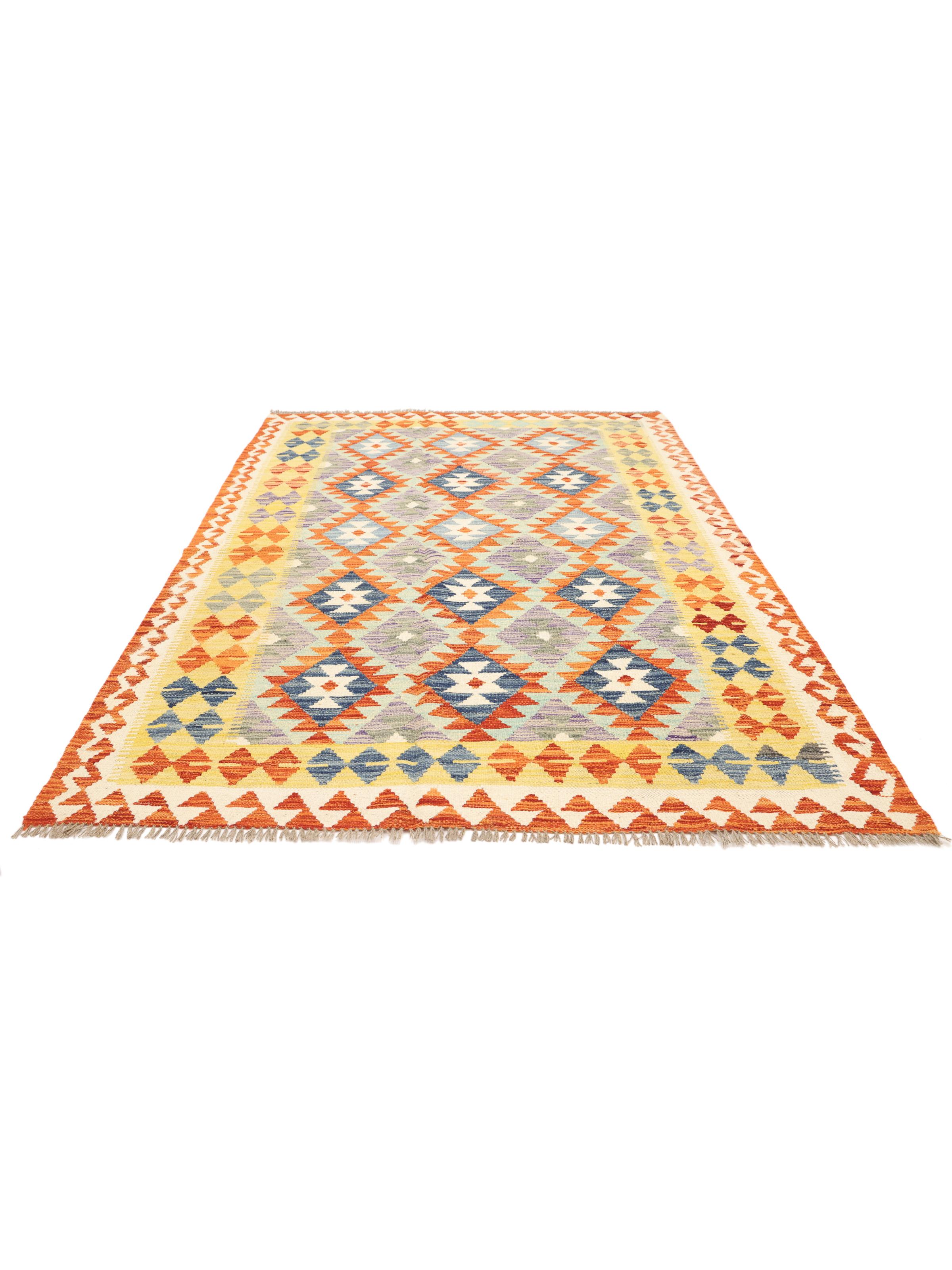
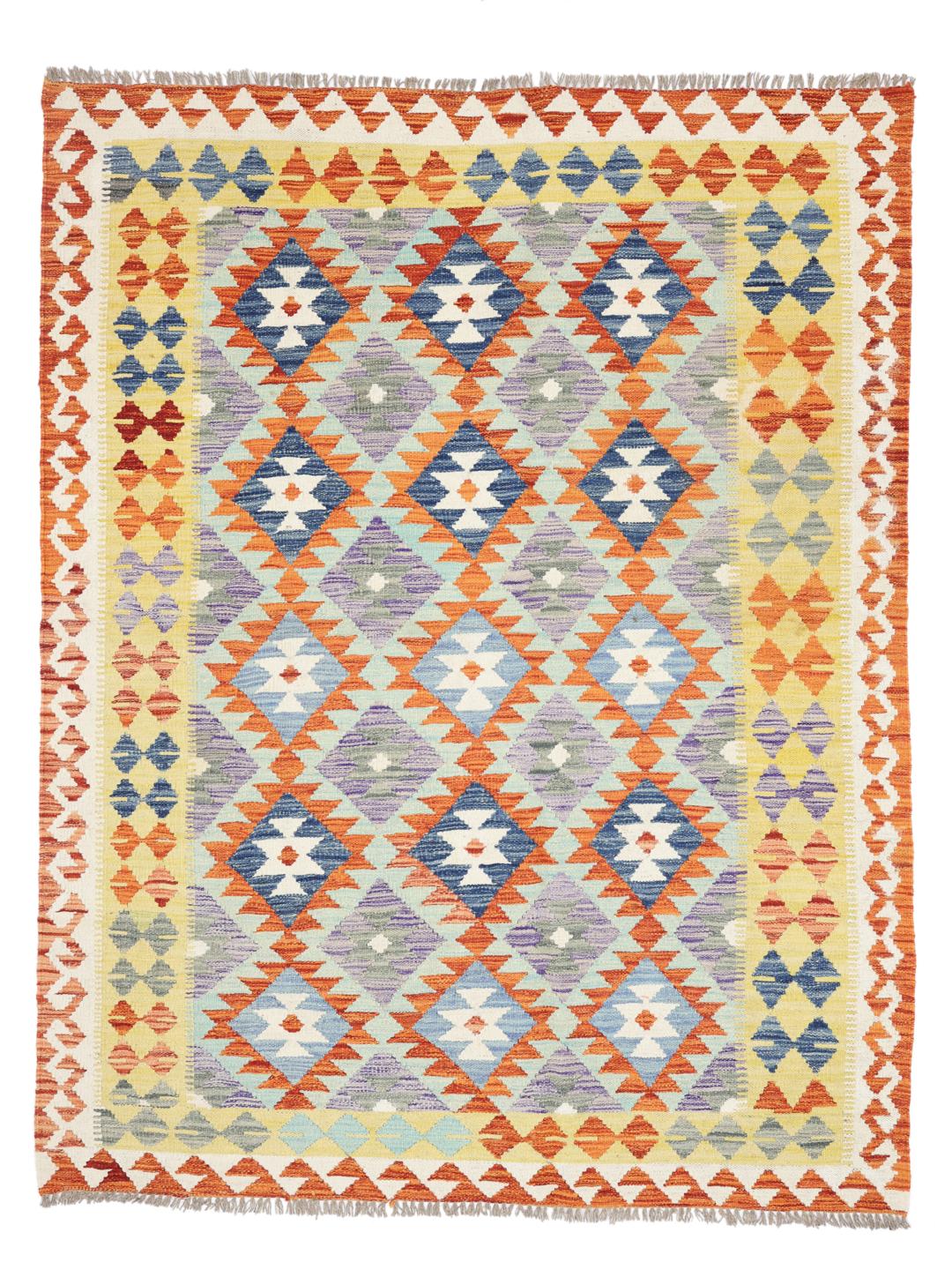
The Kelim tradition is one of the oldest and most respected forms of textile art in the Middle East and Central Asia. These rugs are traditionally created by nomadic and semi-nomadic tribes, serving as both practical floor coverings and meaningful expressions of tribal identity. Afghan Kelims, in particular, are celebrated for their bold, earthy colours and geometric motifs that have been passed down through generations of skilled weavers.
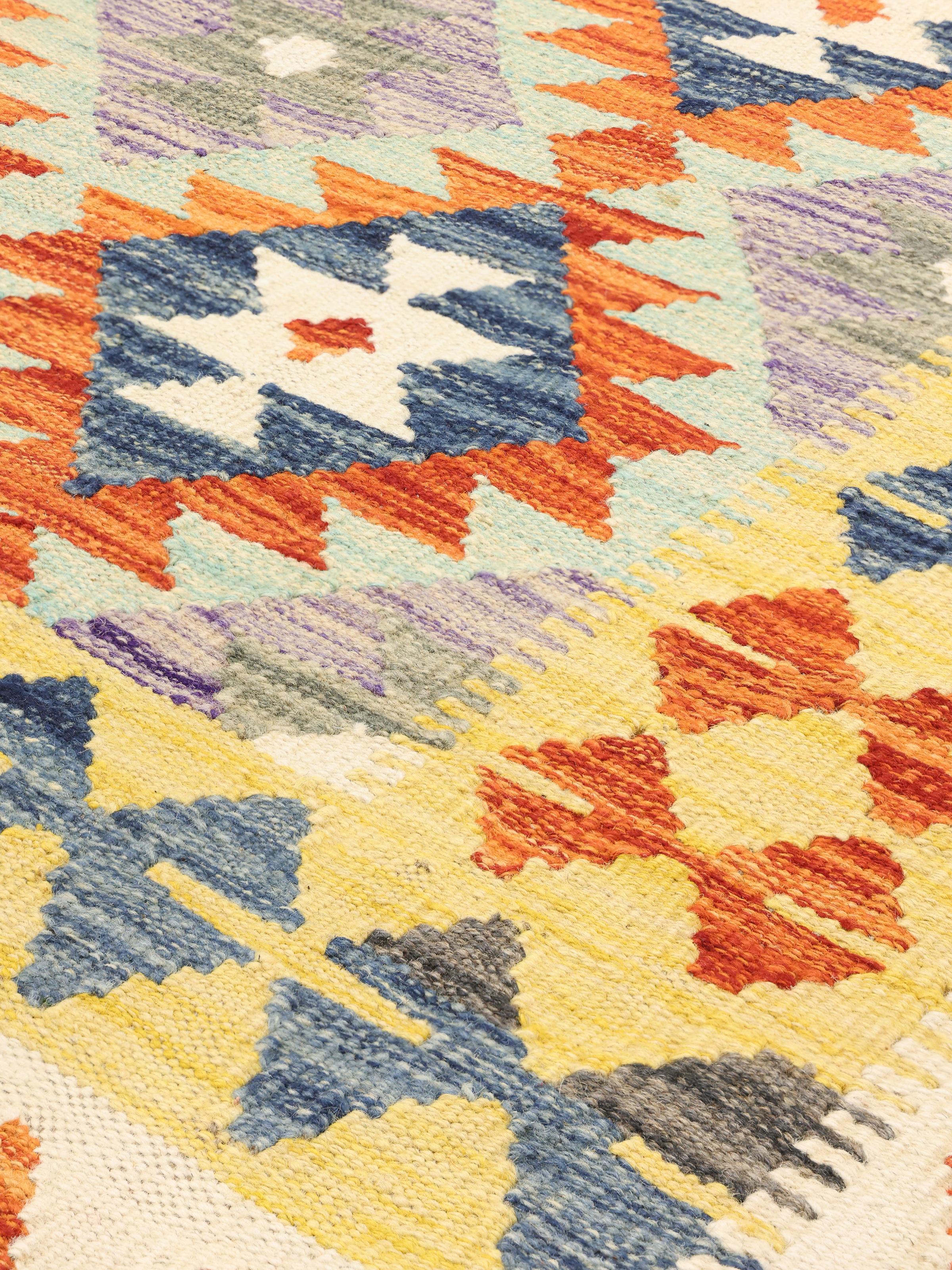
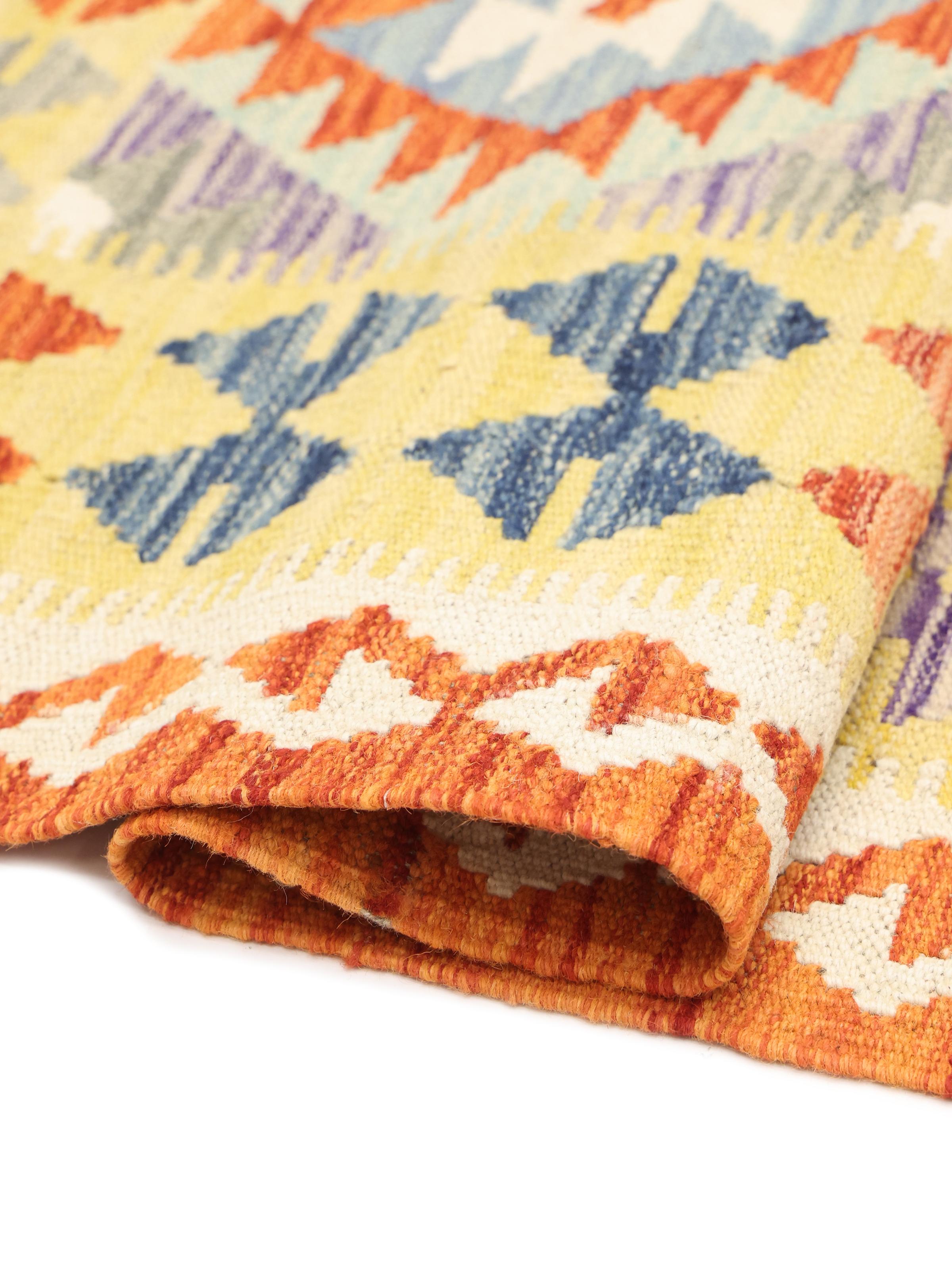
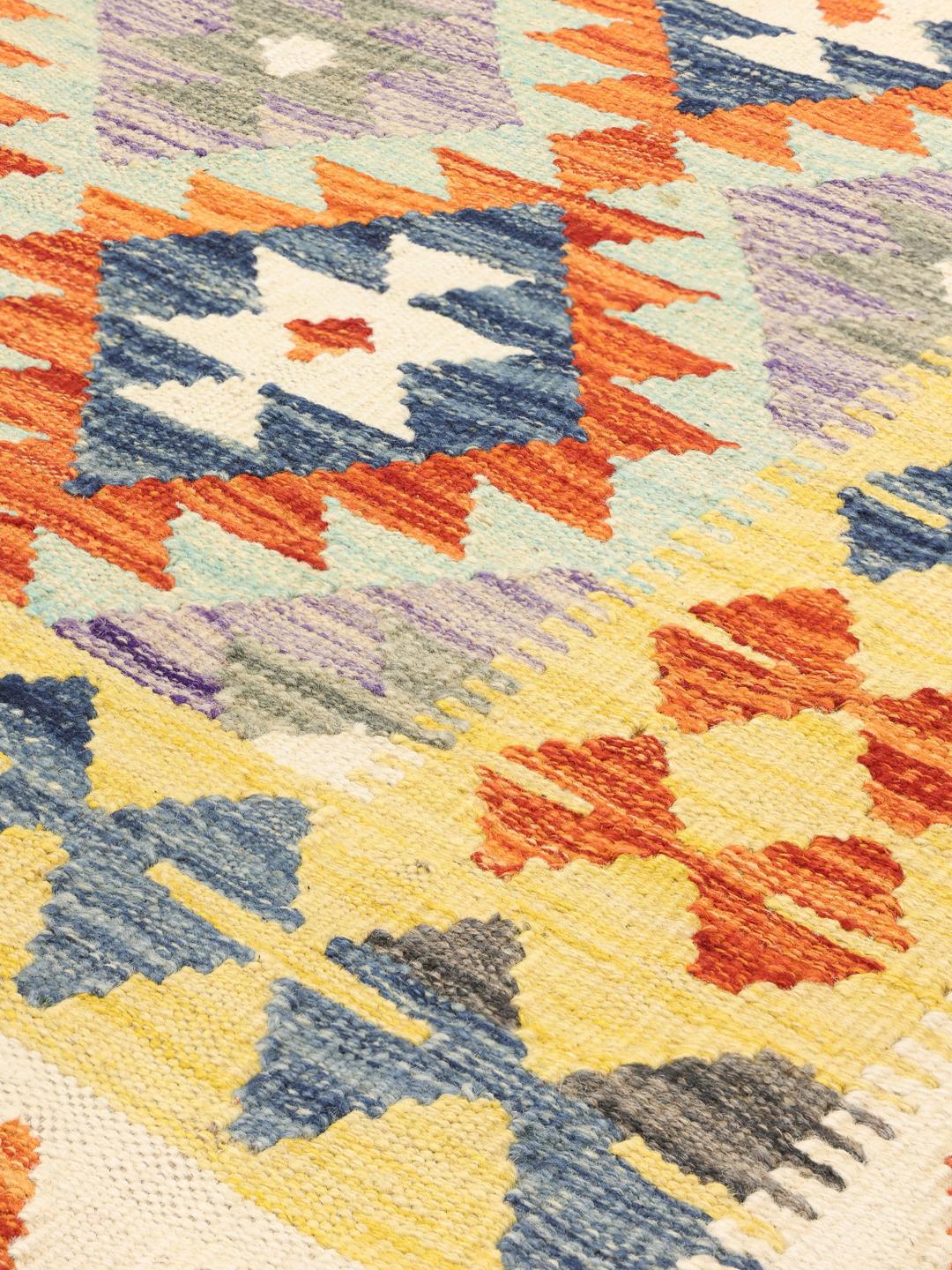
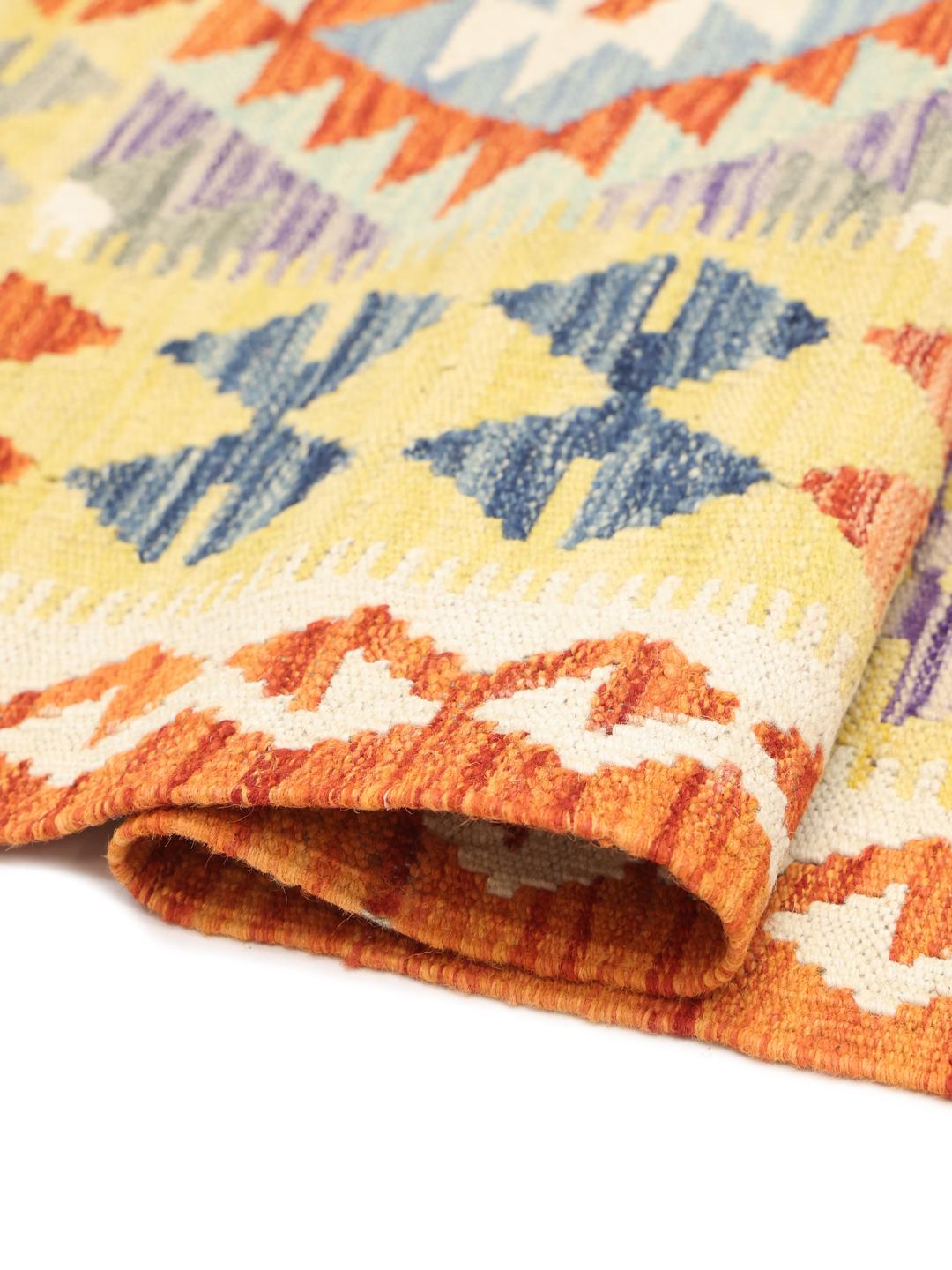
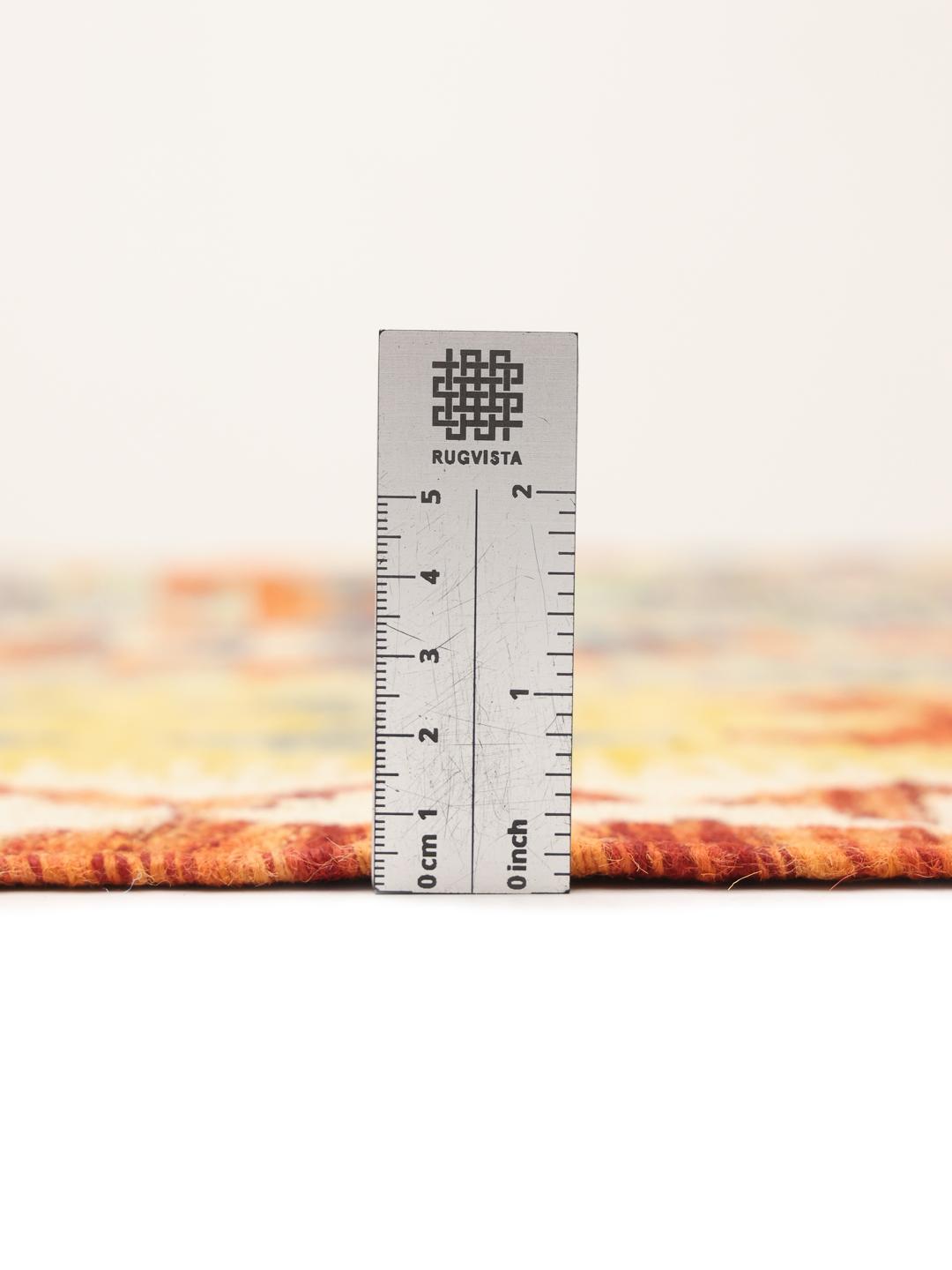
The term Kelim refers to a specific flat-weaving technique where there is no pile. Instead of knotting individual strands of wool onto a foundation, the weaver interlocks the threads to create the design. This method results in a light, portable, and remarkably strong fabric that was historically essential for nomadic life, where items needed to be durable yet easy to pack and transport.
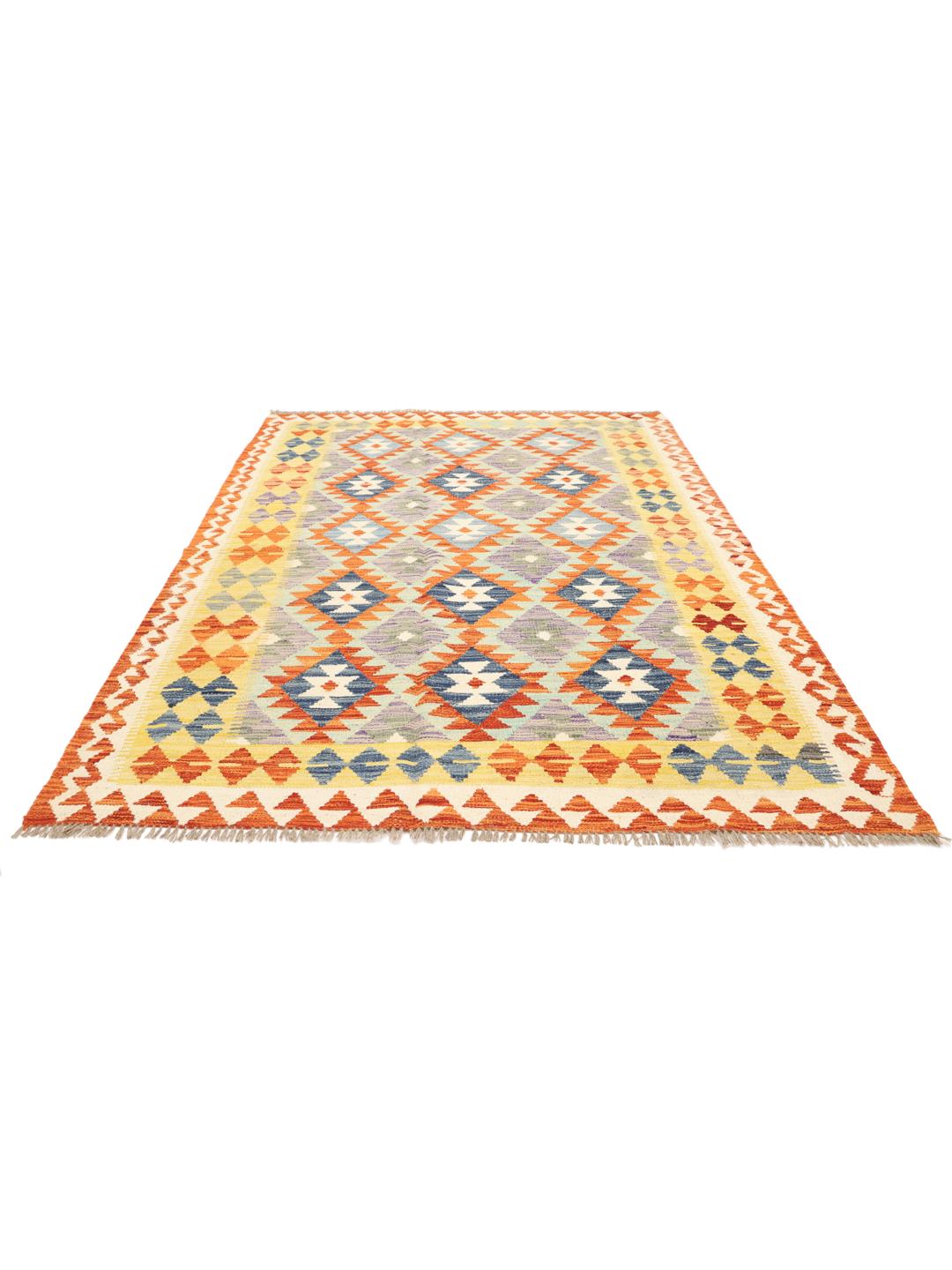
Visually, these rugs are defined by their sharp, angular motifs, such as the diamond shapes seen here, and their striking use of negative space. The borders are often kept formal, acting as a frame for the more expressive and energetic field. The use of vibrant, natural-looking dyes is a hallmark of the Afghan style, often incorporating deep oranges, blues, and yellows that reflect the colours of the landscape and the natural pigments historically available to the weavers.
Collecting a Kelim is more than just a purchase, it is an investment in a living tradition. These rugs are valued for their authenticity and the deep cultural narrative woven into every thread. By owning one, you are participating in a long-standing heritage of craftsmanship, ensuring that these ancient skills continue to be appreciated and preserved in modern homes around the world.