Kelim weaving has deep roots in the nomadic and village traditions of Afghanistan and Central Asia. Historically, these flatwoven textiles served practical purposes in daily life, used as floor coverings, blankets, and storage bags, designed to withstand the demands of a mobile lifestyle.
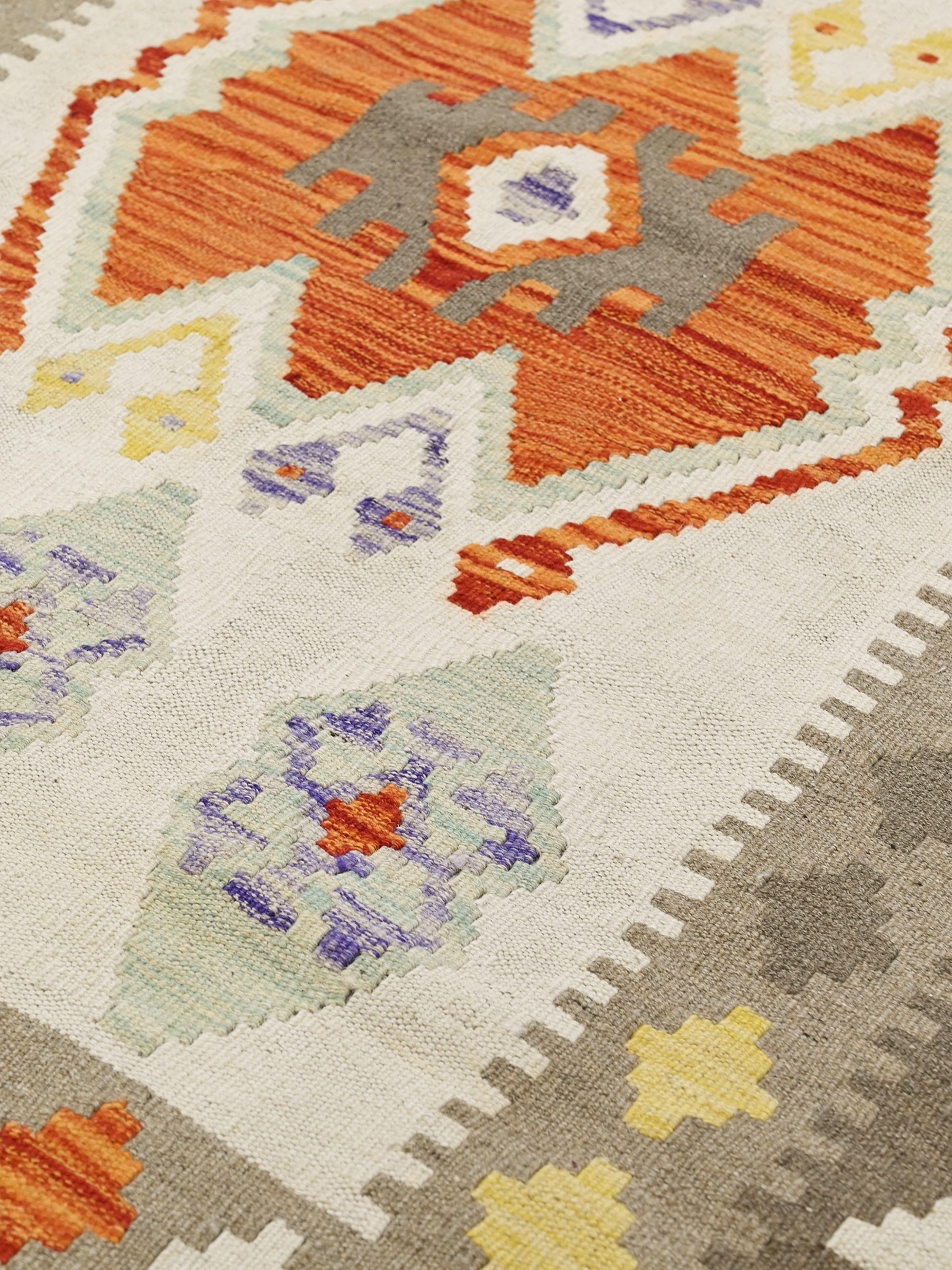
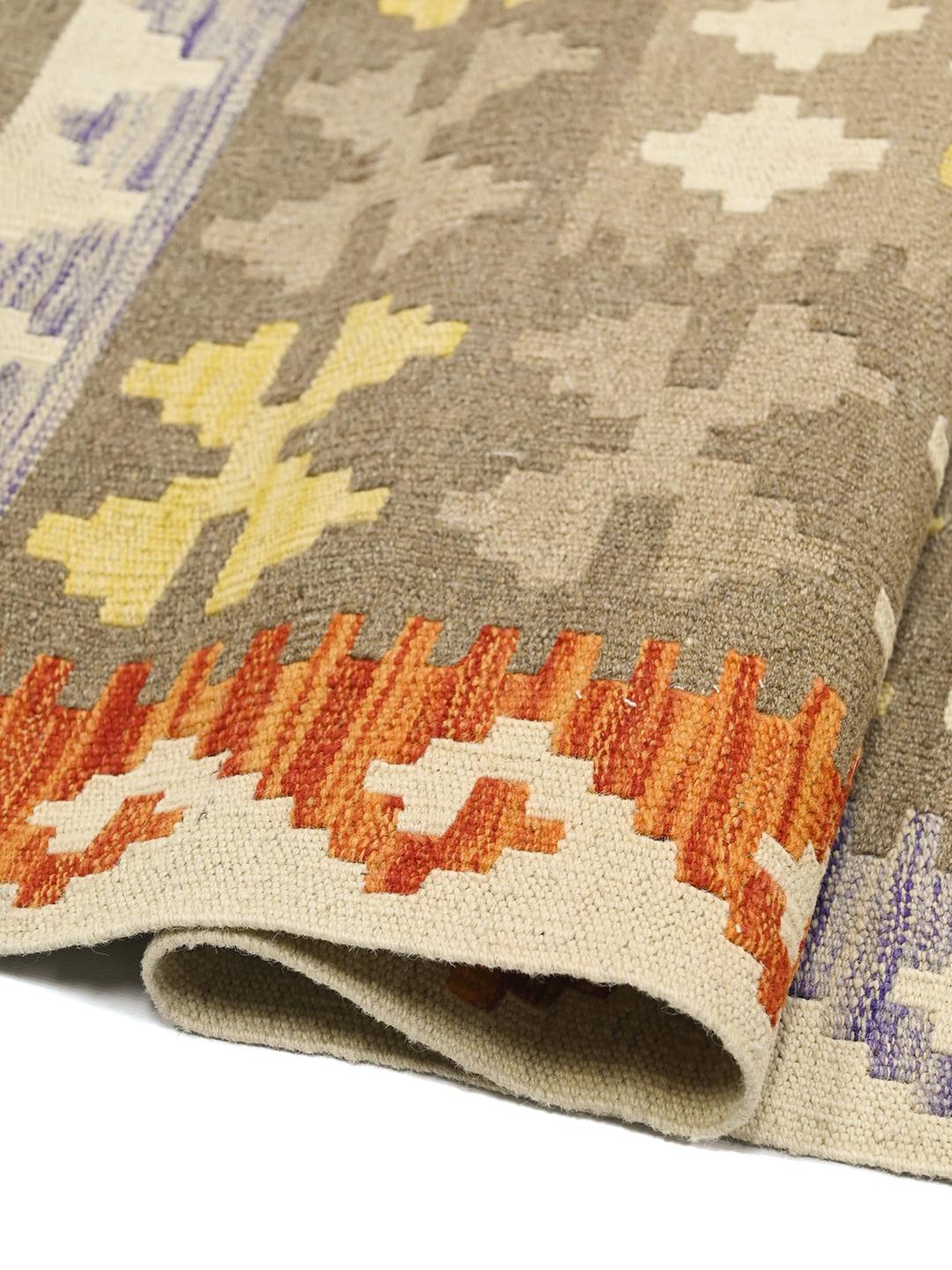
The term Kelim refers to a flat, pileless rug created using a plain weave technique. This method produces a lightweight yet exceptionally strong textile, where the pattern is formed by tightly weaving the horizontal weft threads over and under the vertical warp threads, leaving no loose loops.
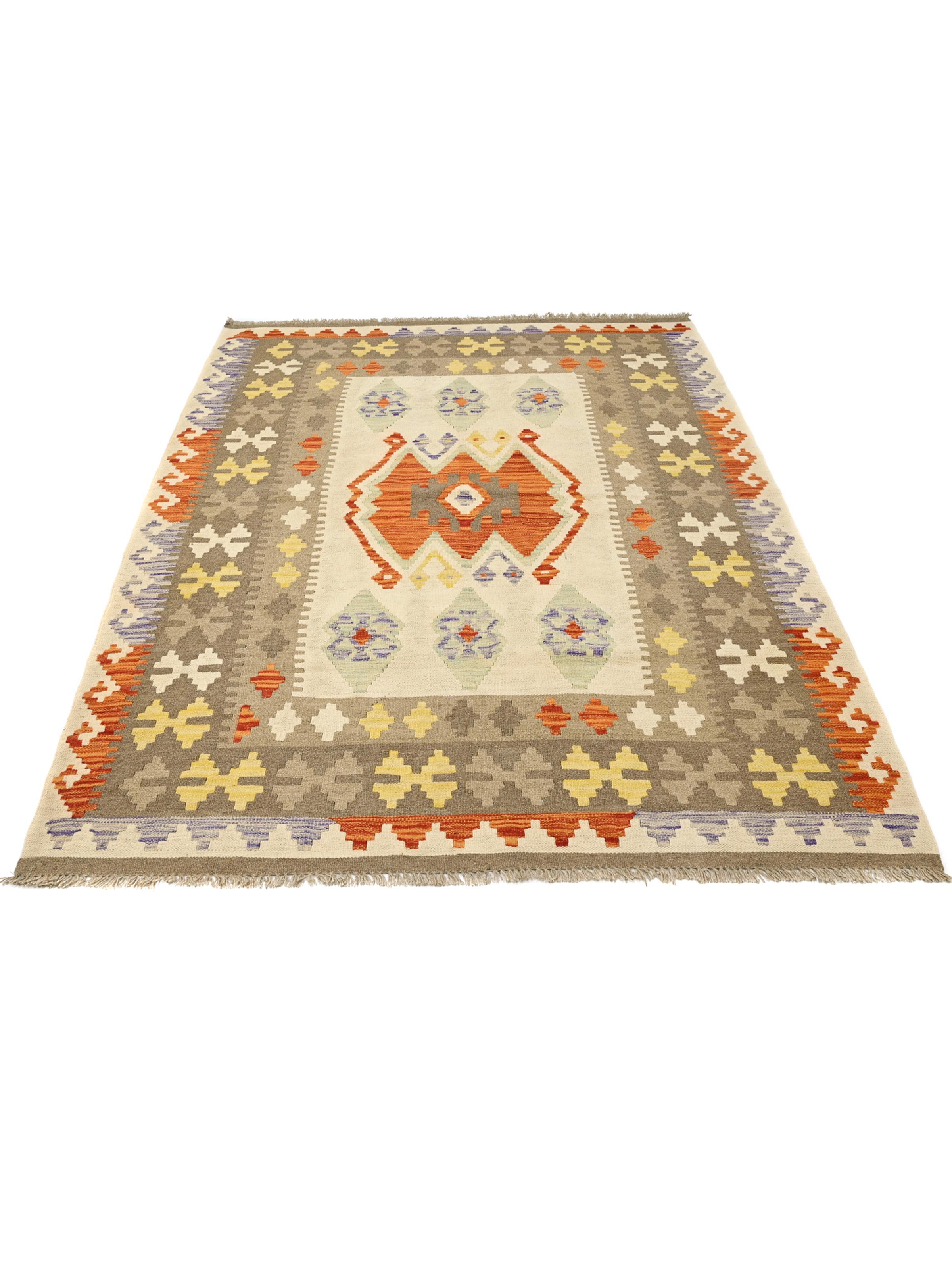
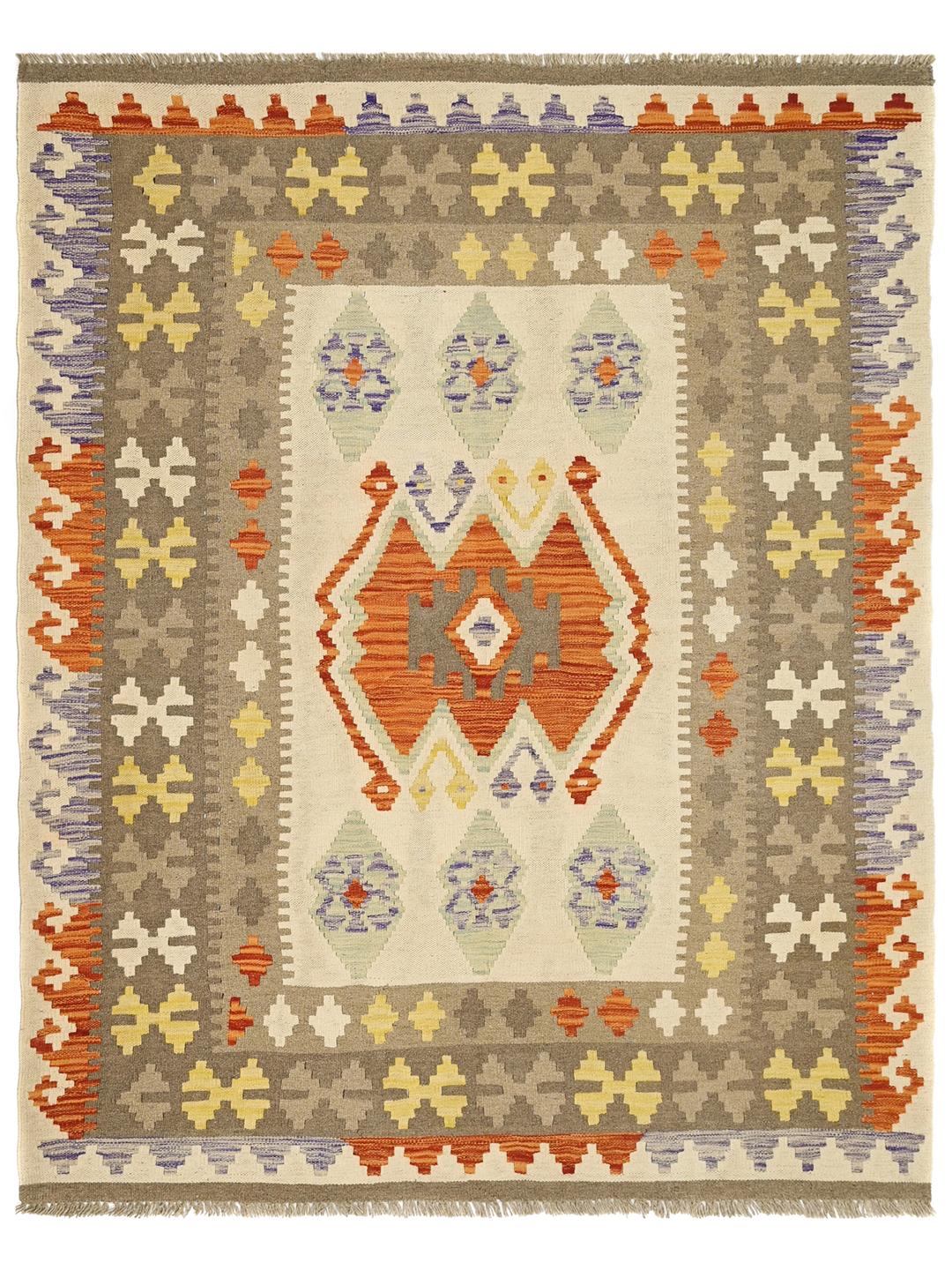
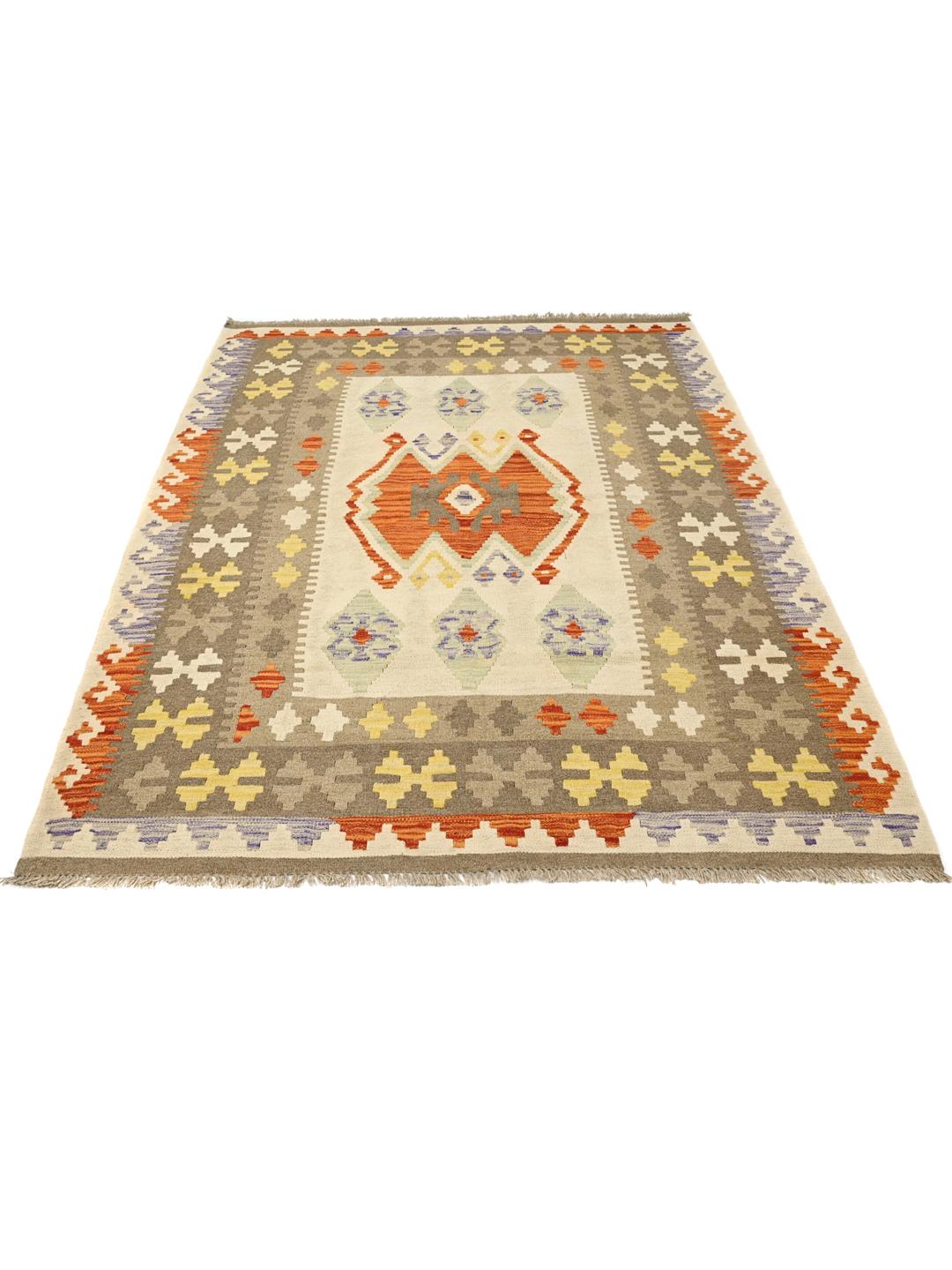
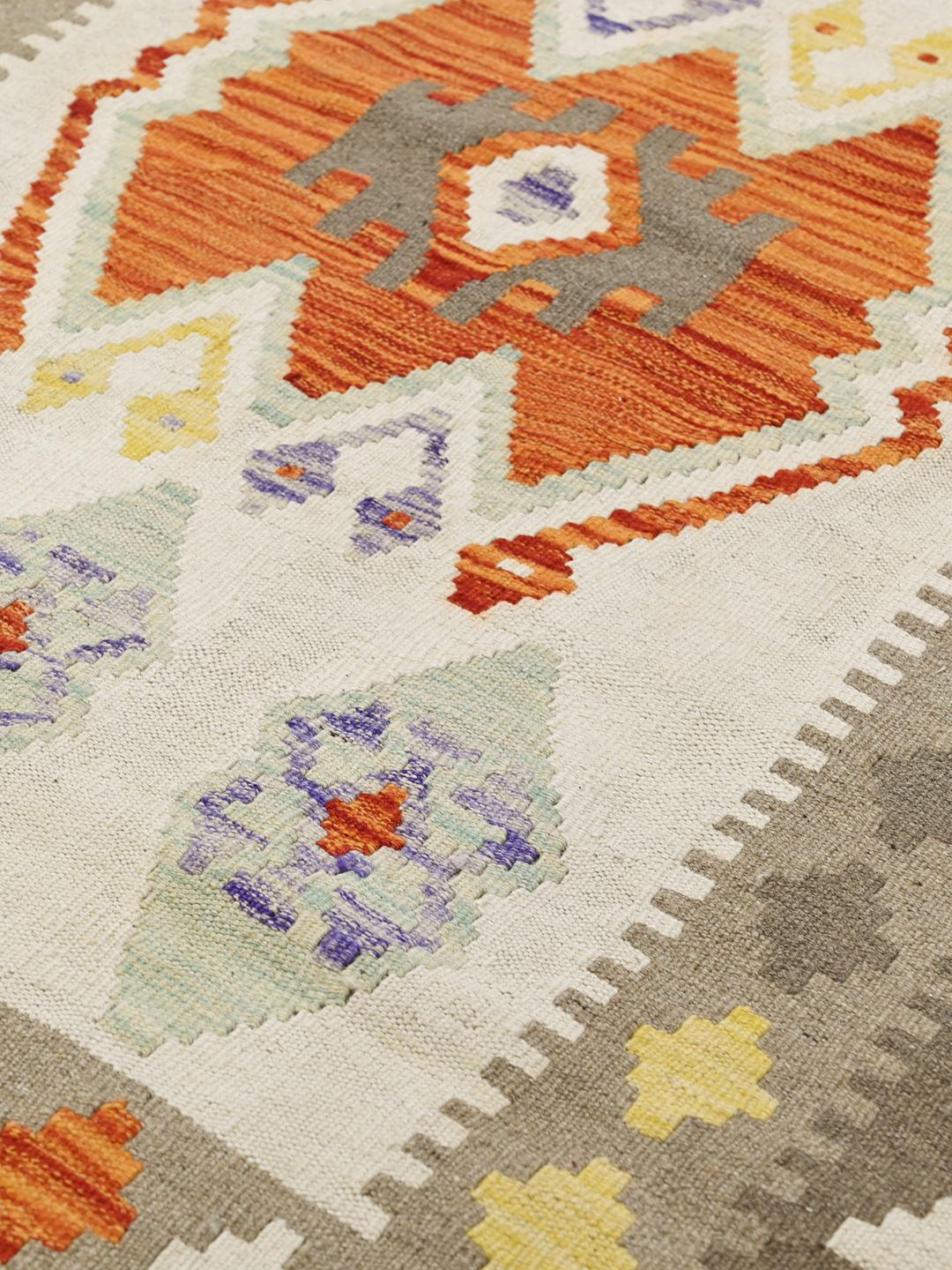
The visual language of this Afghan Kelim features a central cream field framed by decorative borders in grey, orange, and purple. Traditional tribal motifs, including the prominent central diamond medallion and smaller lozenge shapes, carry symbolic meanings of protection and family heritage, rendered in a rich multicolor palette.
Today, Afghan Kelims are highly valued by collectors and design enthusiasts for their graphic appeal and cultural significance. Acquiring a handwoven Kelim is more than a decorative choice, it is an appreciation of a living craft tradition that connects modern interiors with ancient nomadic artistry.