The Kelim tradition in Afghanistan is deeply rooted in the nomadic and semi-nomadic lifestyles of the region. Historically, these flat-woven rugs served essential functions for families on the move, acting as floor coverings, blankets, and storage bags. The knowledge of weaving these textiles was passed down through generations, with each family developing specific motifs that reflected their local environment and cultural identity.
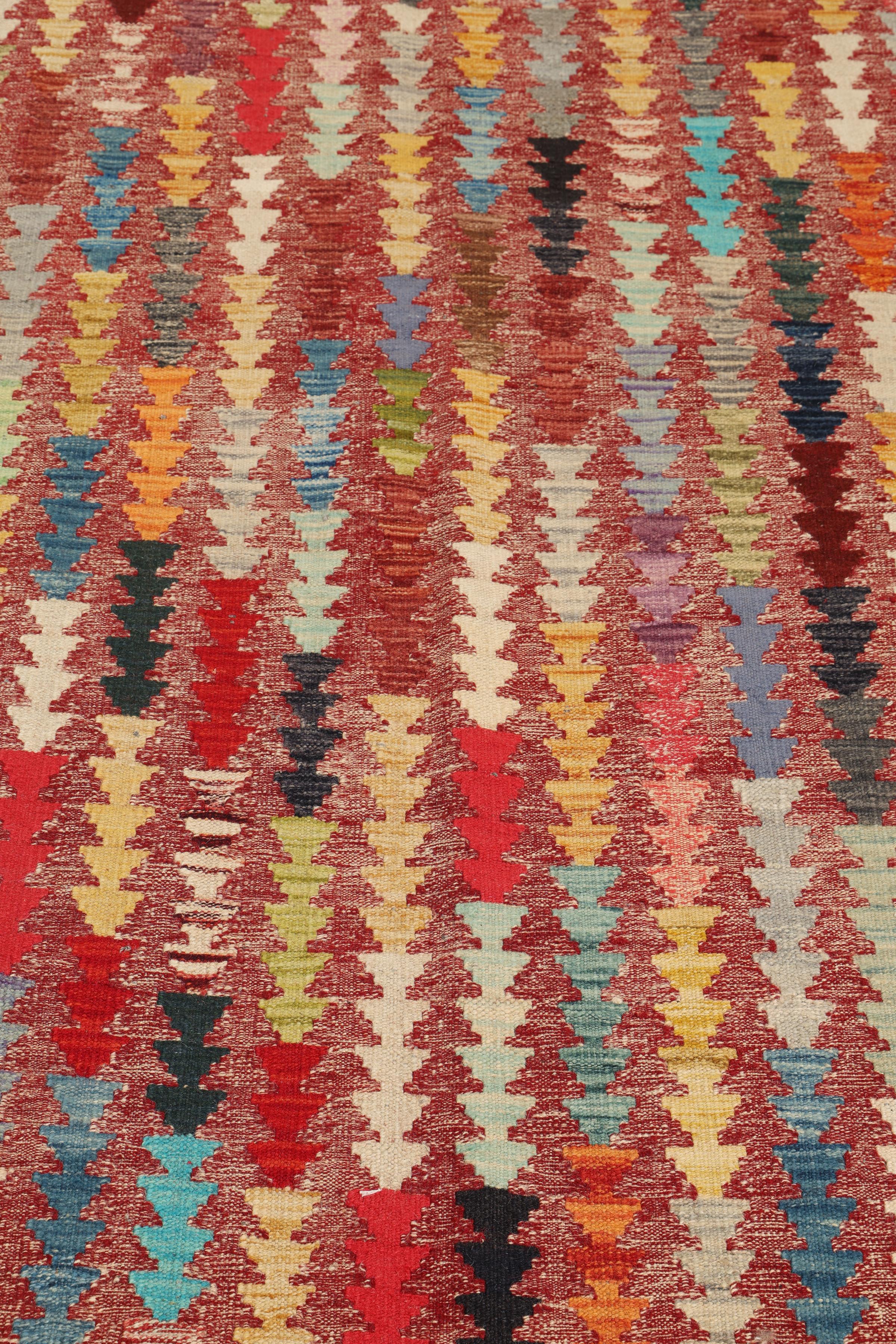
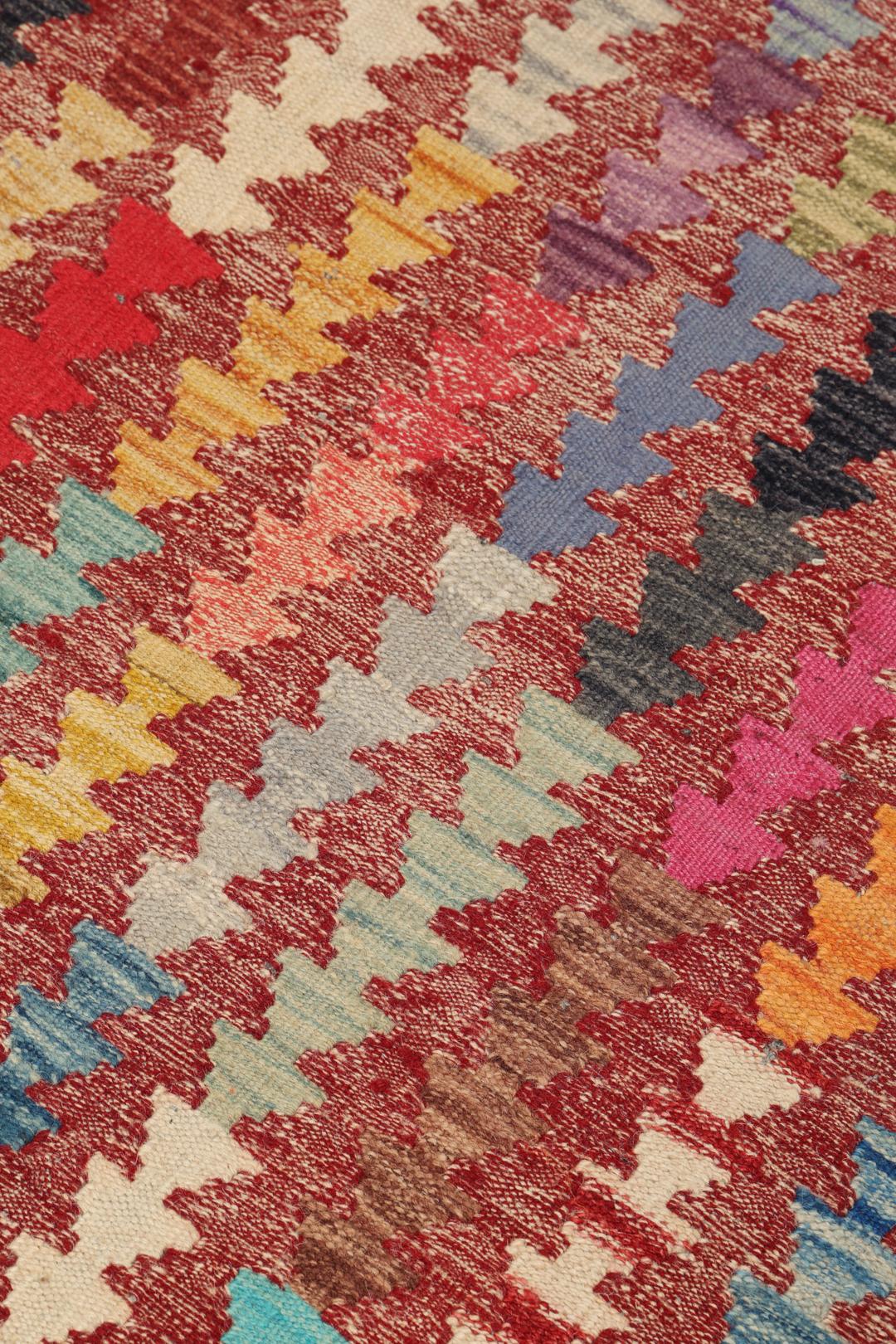
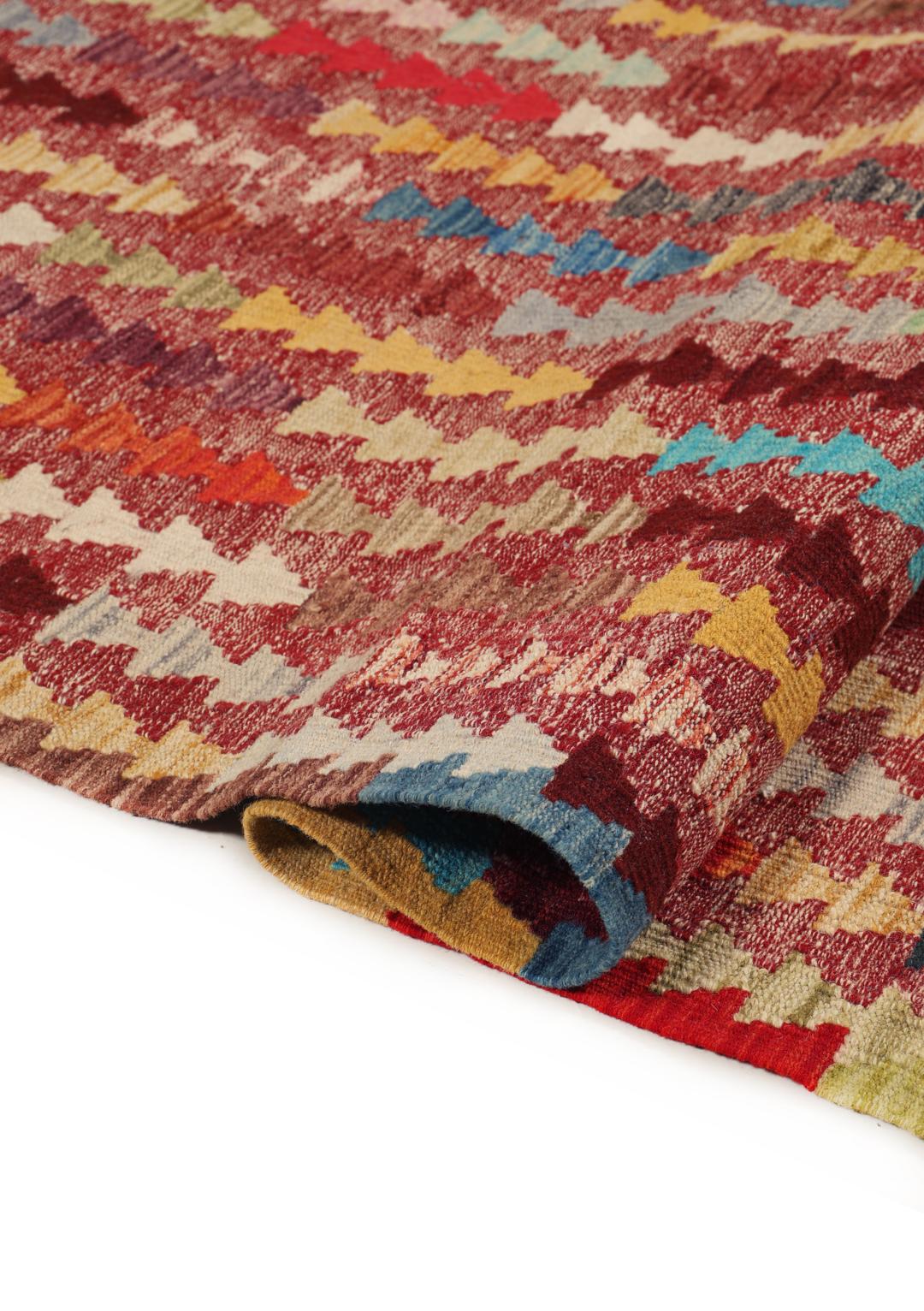
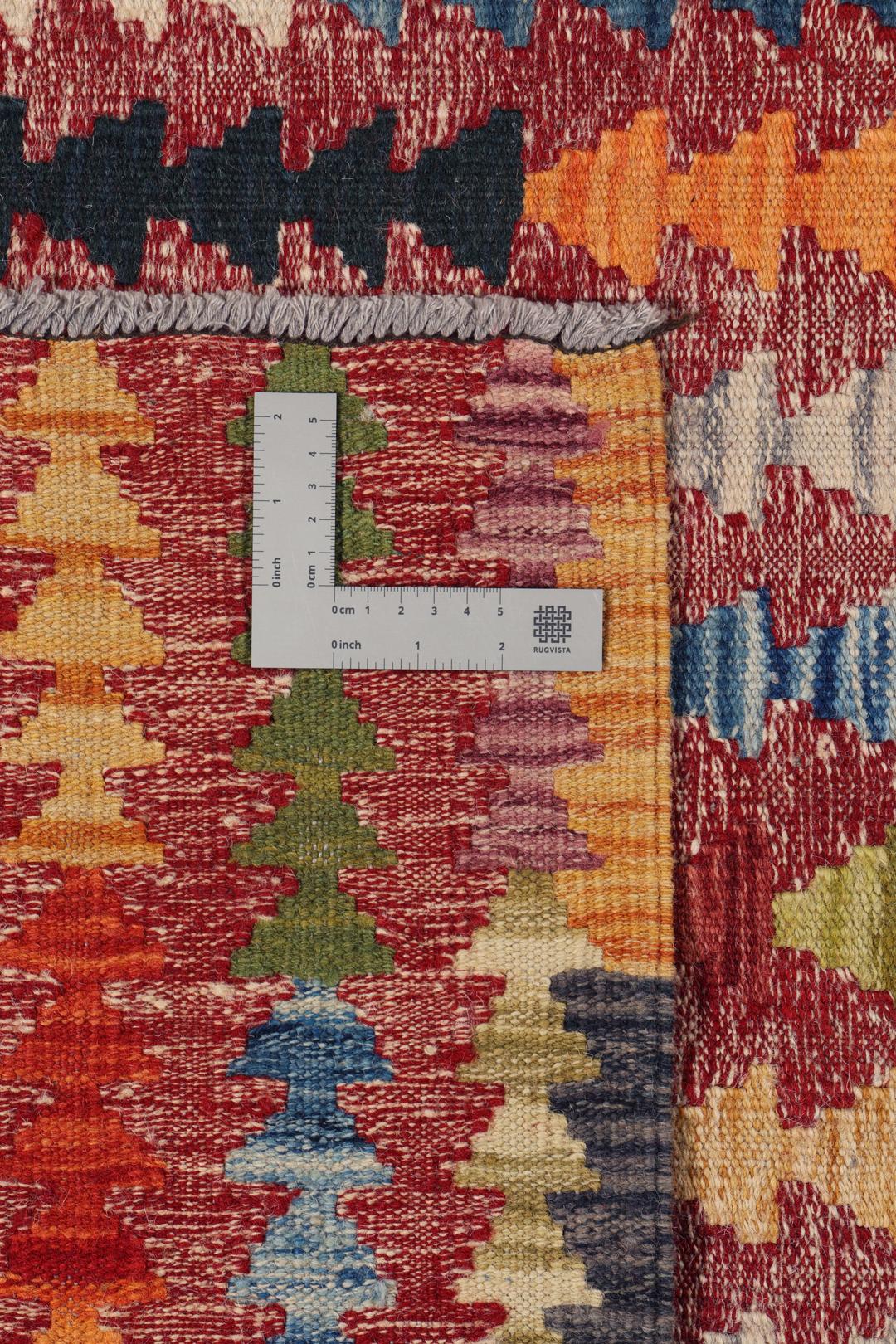
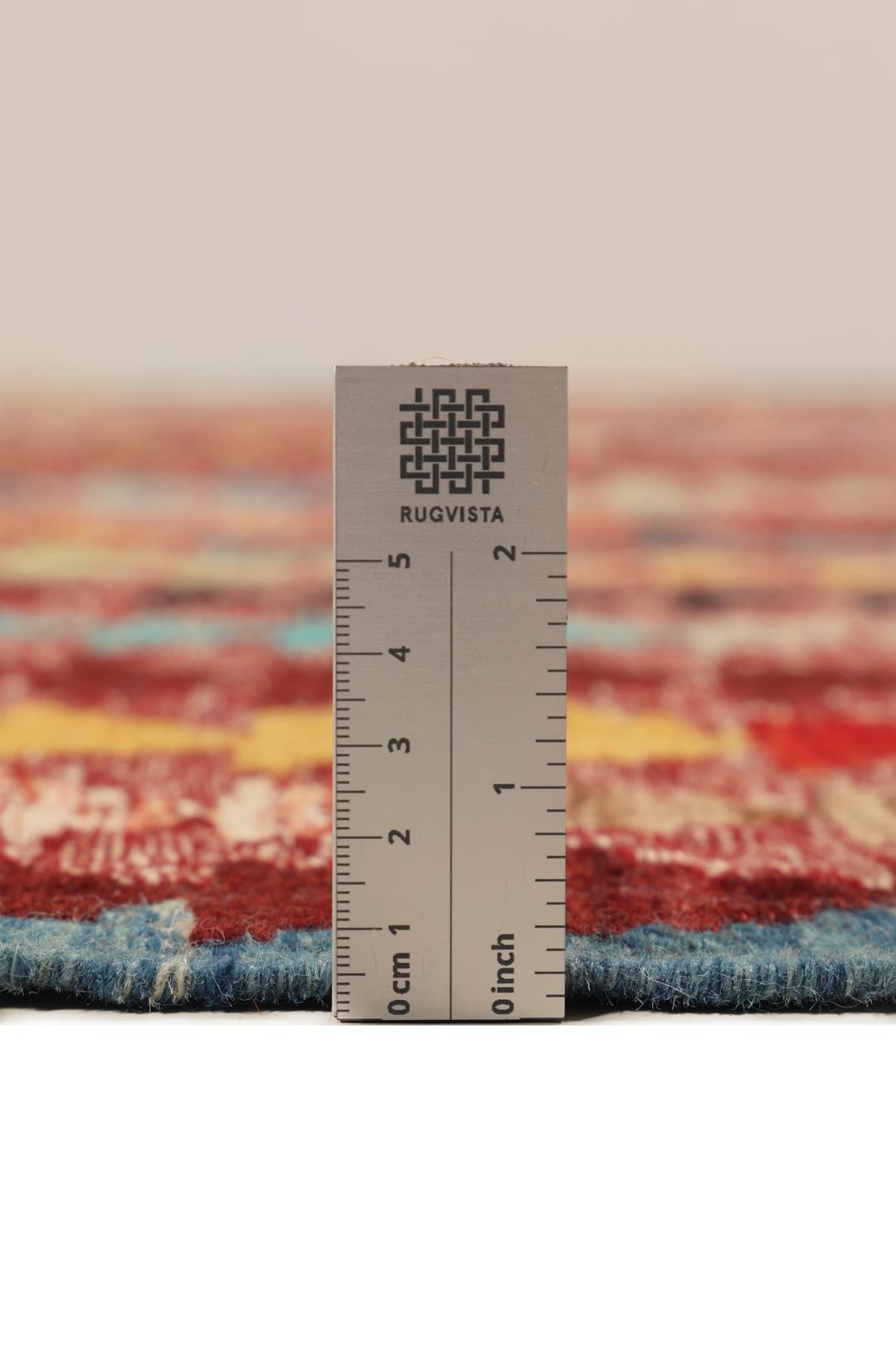
A Kelim is defined by its flat-weave construction, meaning it is created without a knotted pile. This technique produces a lightweight yet incredibly strong fabric that is reversible and easy to maintain. The term itself refers to this specific style of weaving, which allows for sharp, crisp geometric designs that are integrated directly into the foundation, rather than sitting on top of it.
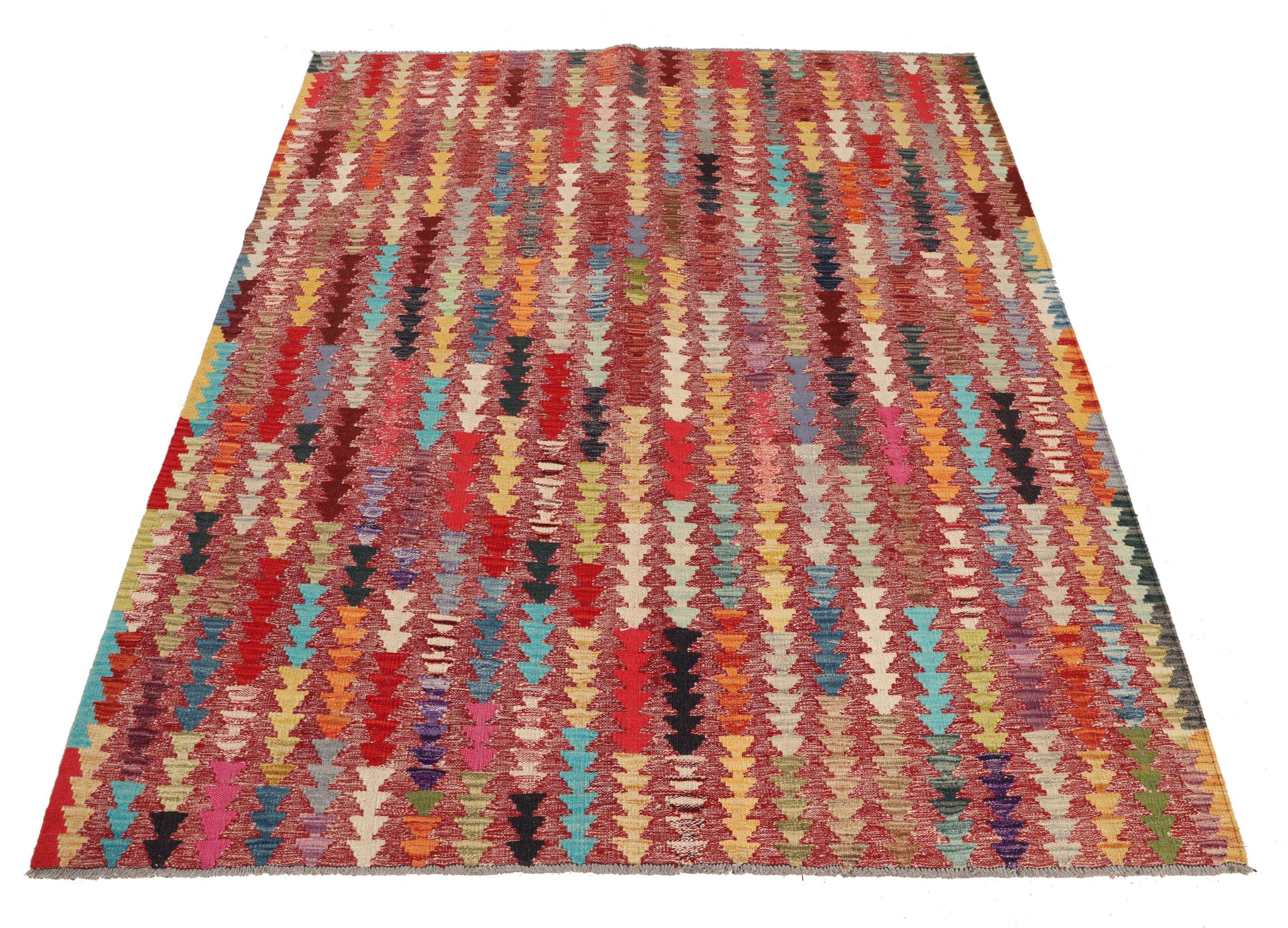
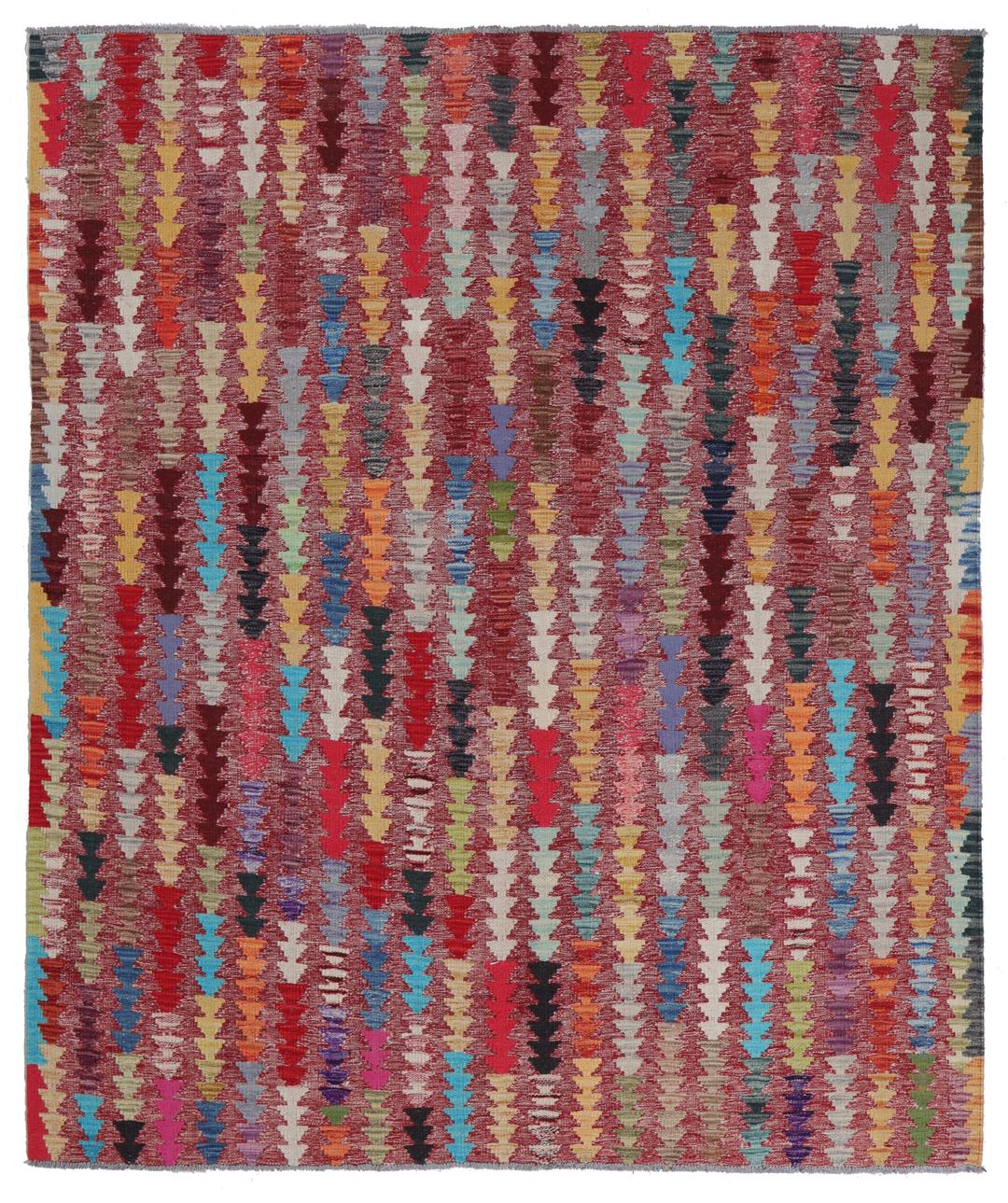
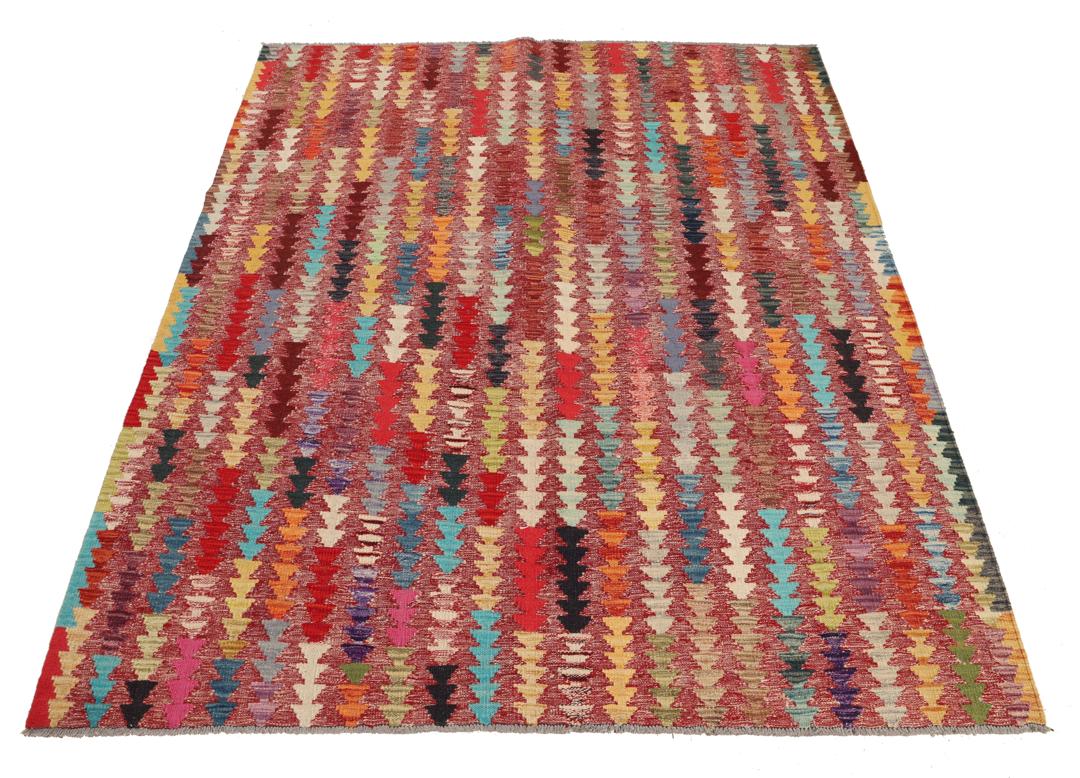
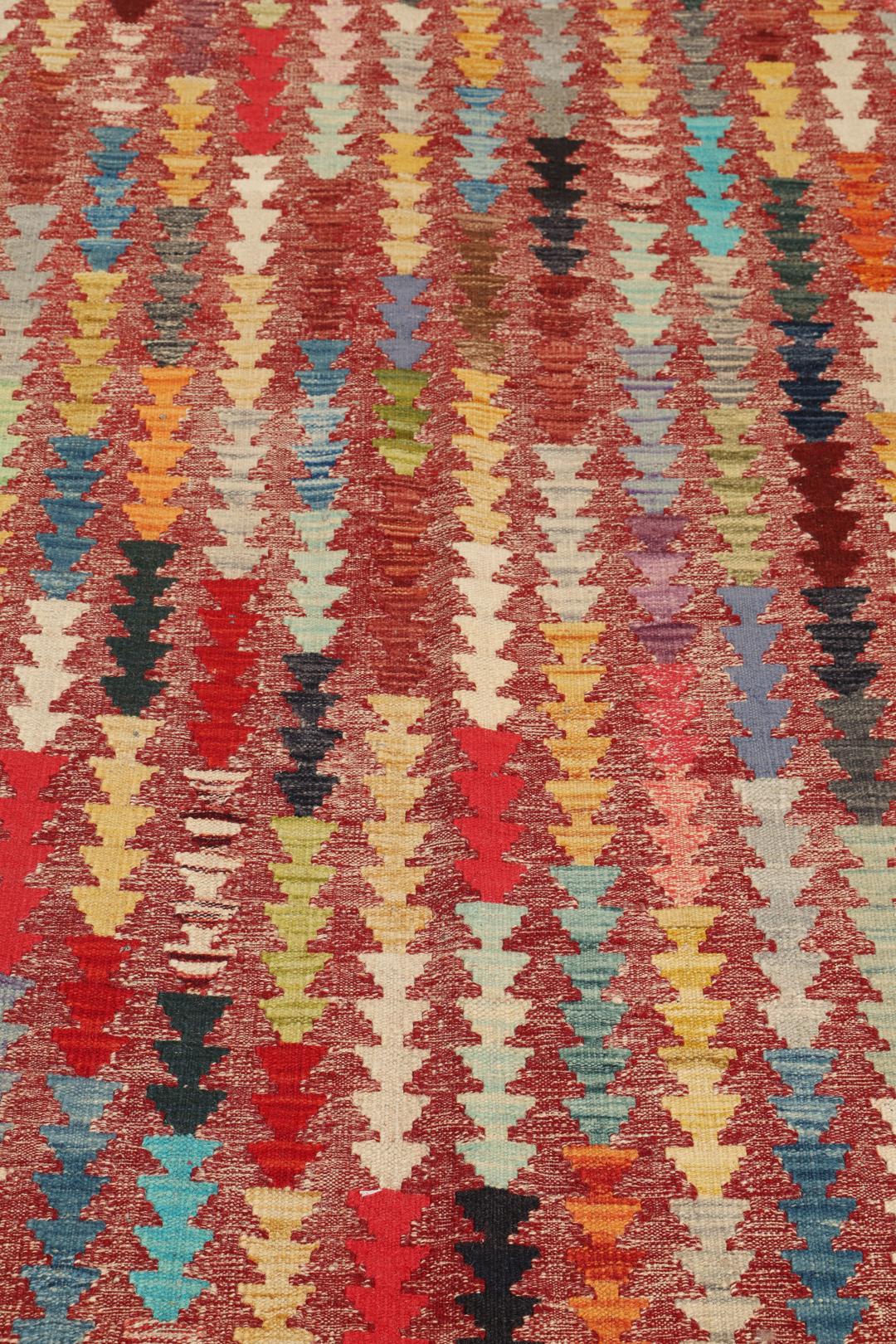
Signature design elements of the Afghan style often include a blend of earthy tones and bold, saturated colours, organised into rhythmic, repeating patterns. This particular rug features a striking geometric arrangement, showcasing how weavers use colour to create movement and energy across the surface. These patterns are often inspired by tribal symbols, protection motifs, and the natural landscape of the Afghan highlands.
Collecting a vintage or old-style Afghan Kelim is an investment in human skill and cultural heritage. These rugs are valued not just for their aesthetic beauty, but for the history embedded in every thread. Owning one means participating in a centuries-old tradition of craft, ensuring that these beautiful, practical works of art continue to be appreciated in contemporary homes.