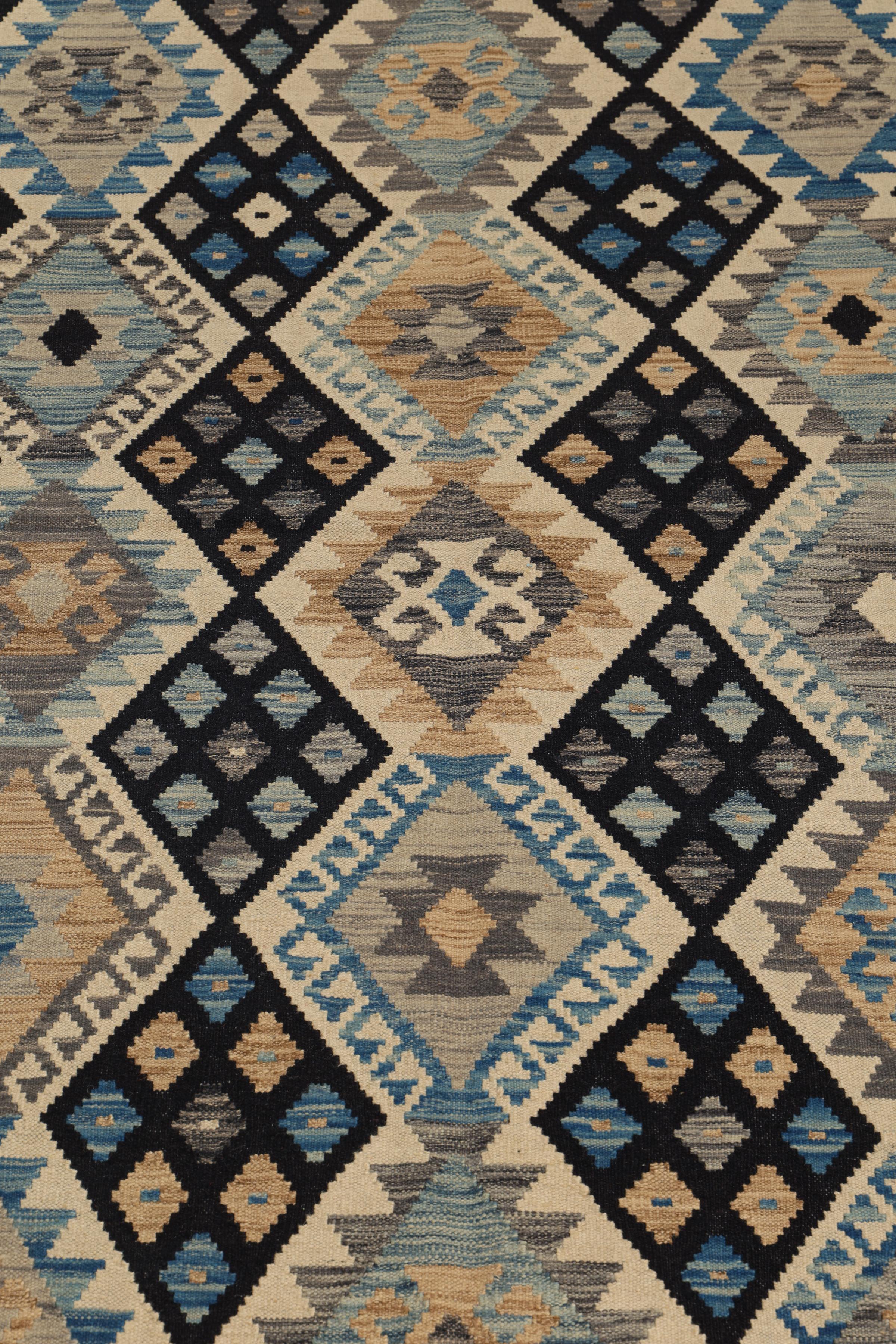
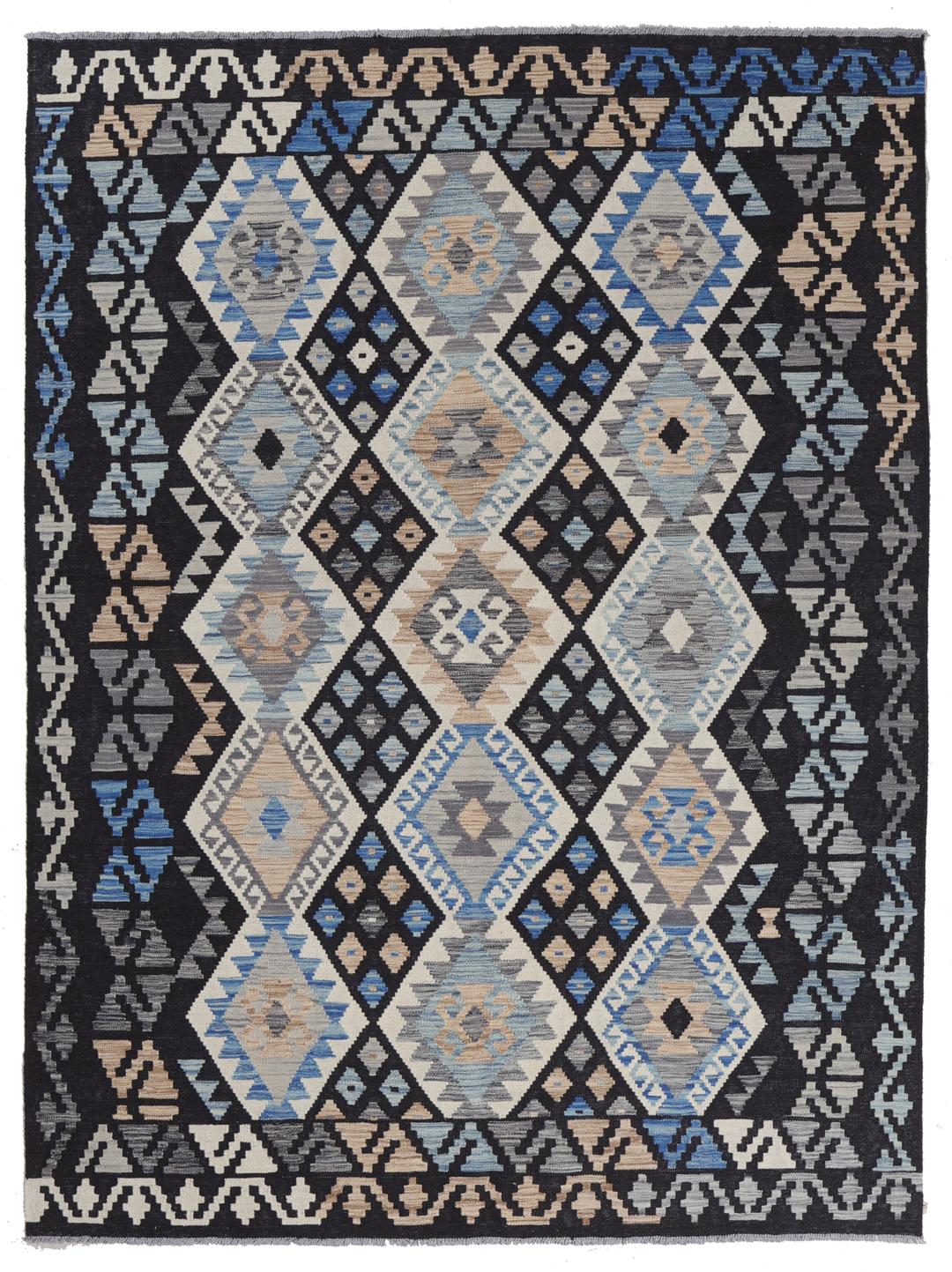
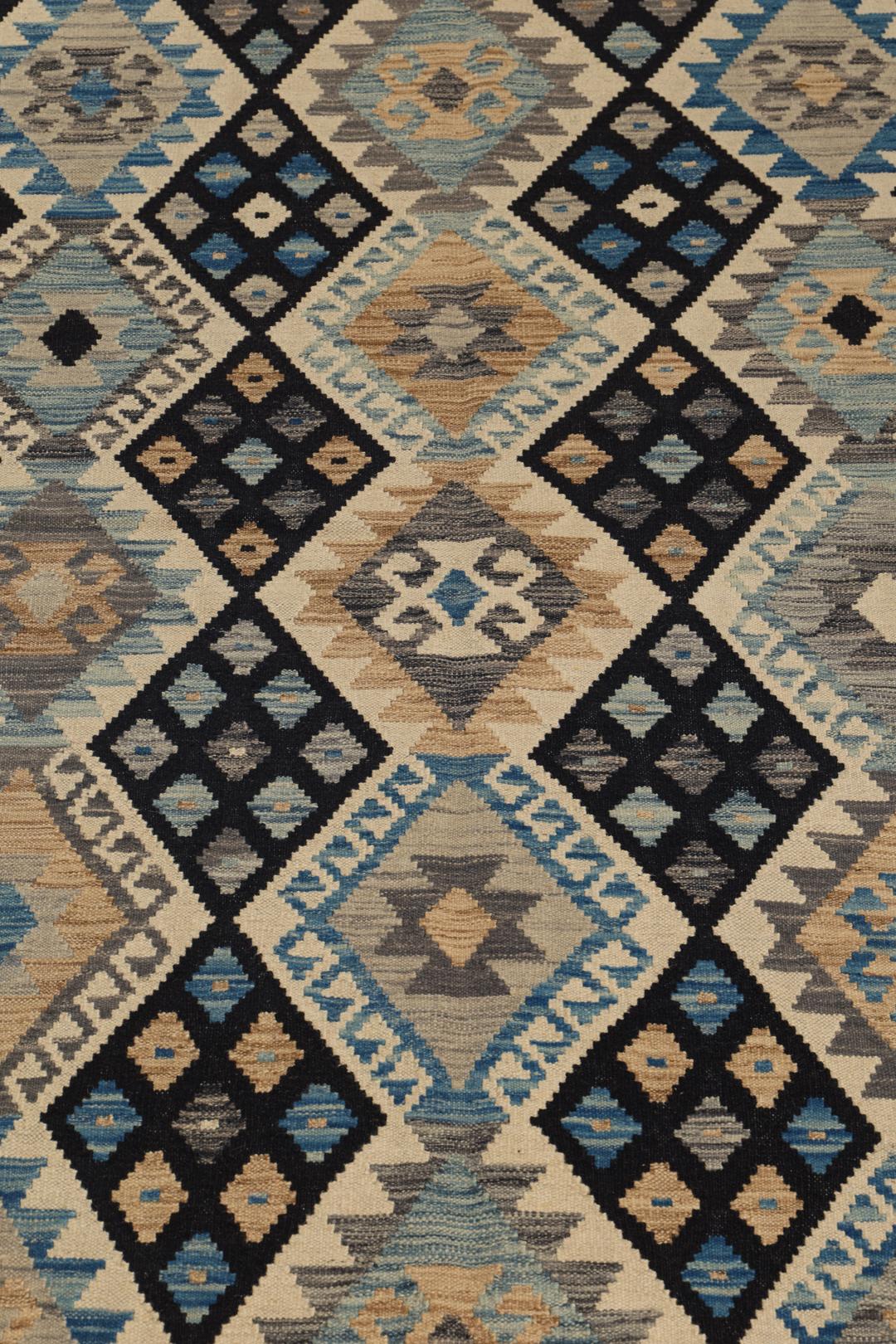
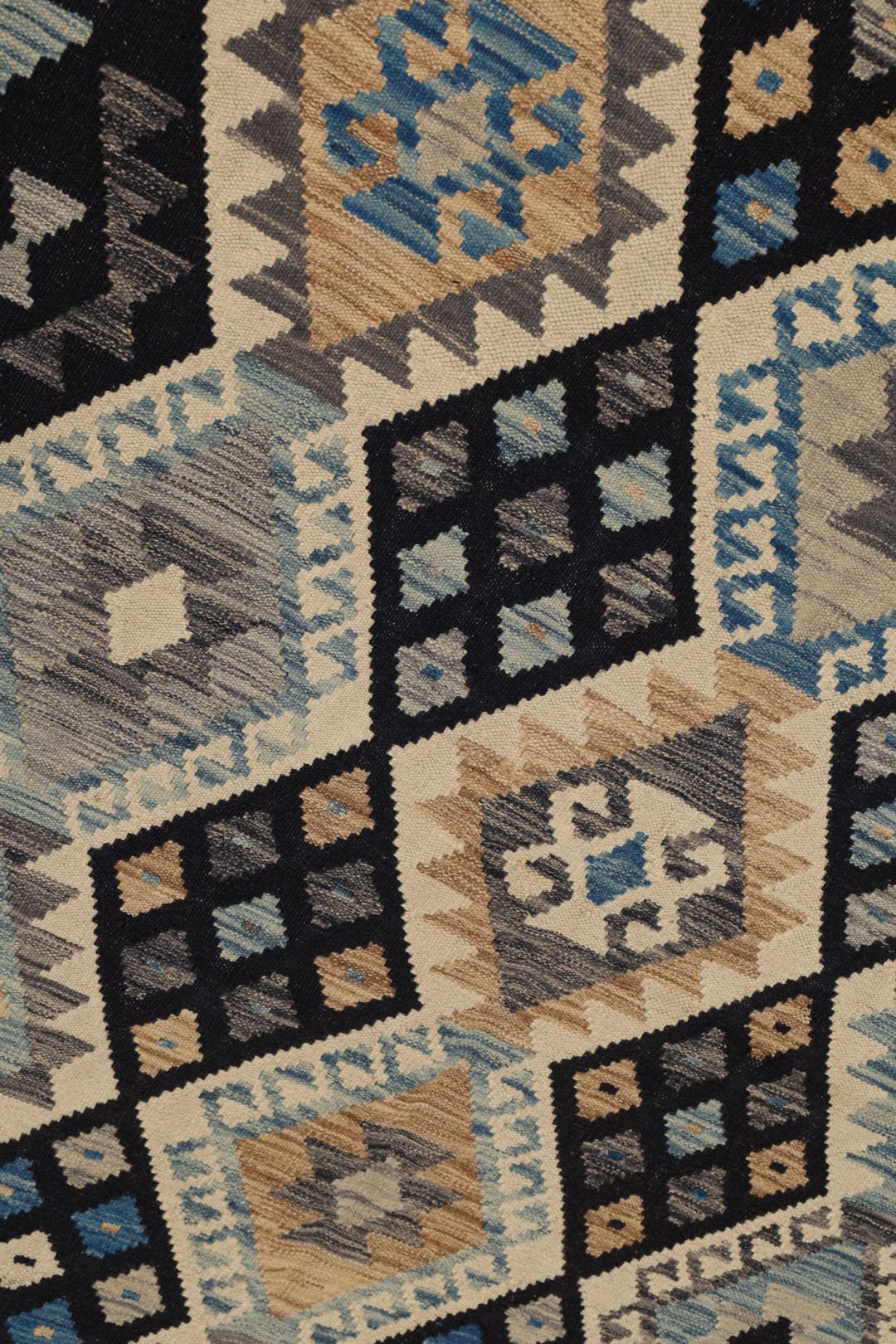
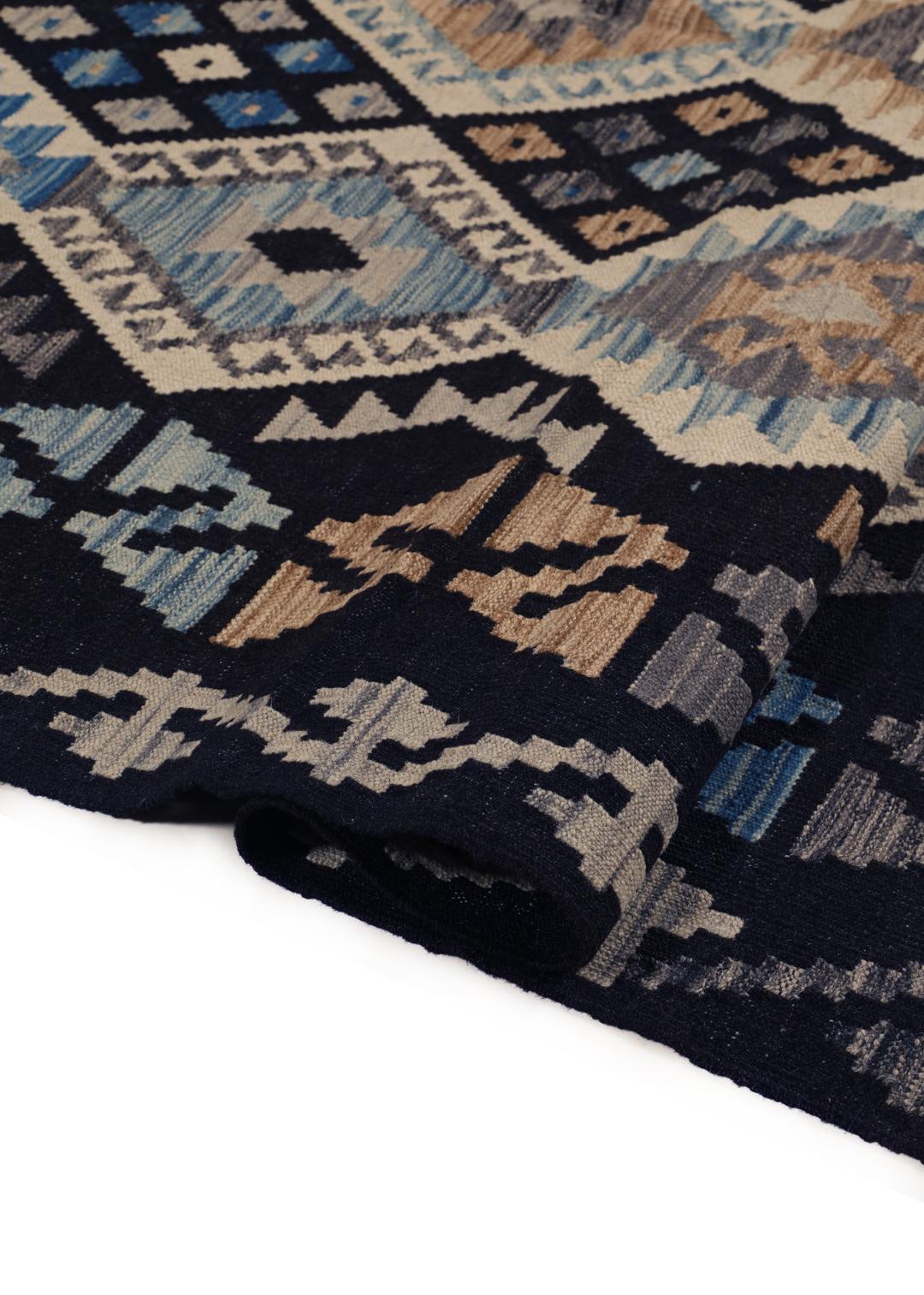
The Kelim rugs of Afghanistan are celebrated for their connection to the nomadic traditions of the Middle East. Historically, these flat-woven textiles were crafted by tribal artisans for practical use as floor coverings, wall hangings, and bags, serving as essential components of a mobile lifestyle that required durable yet lightweight items.
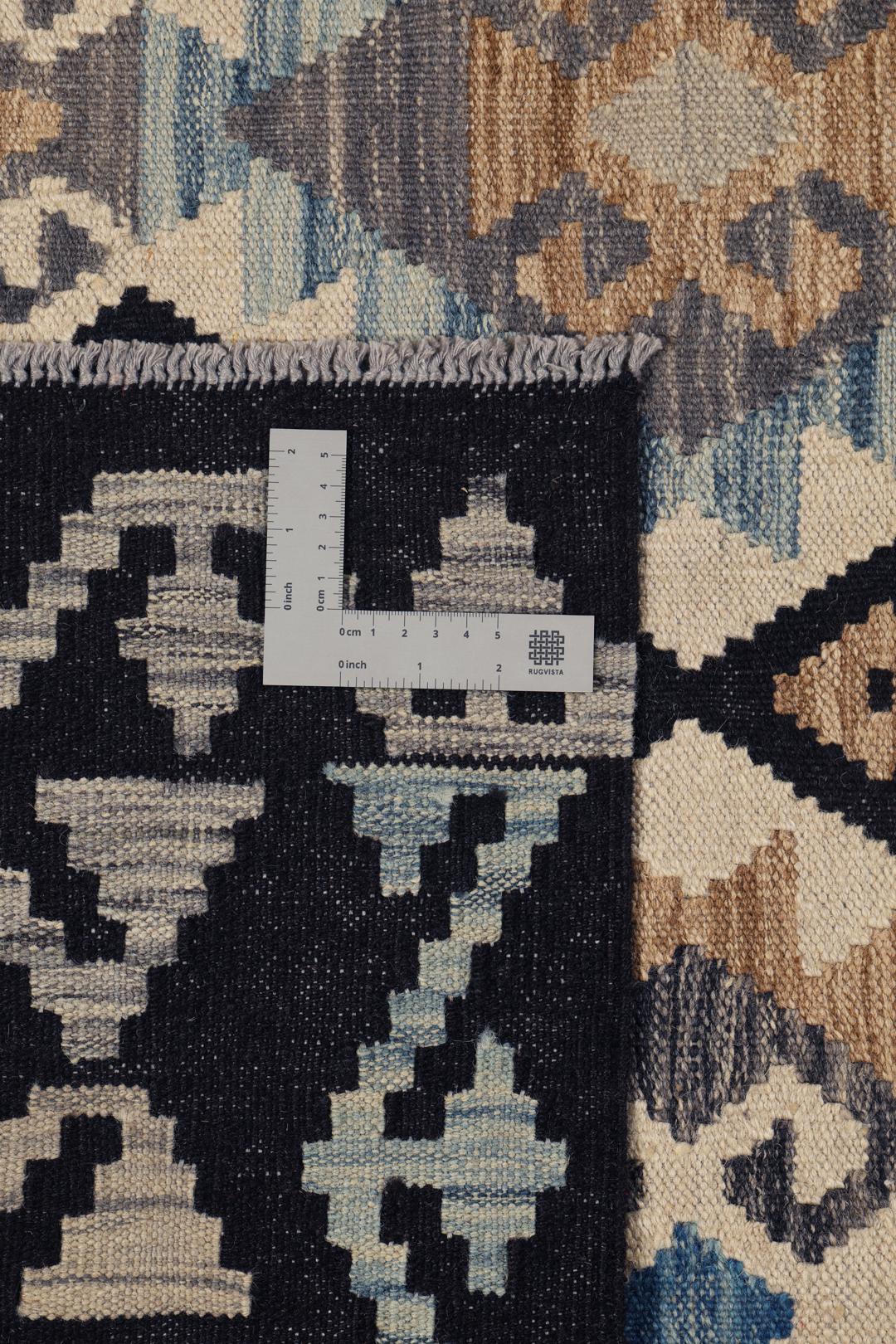
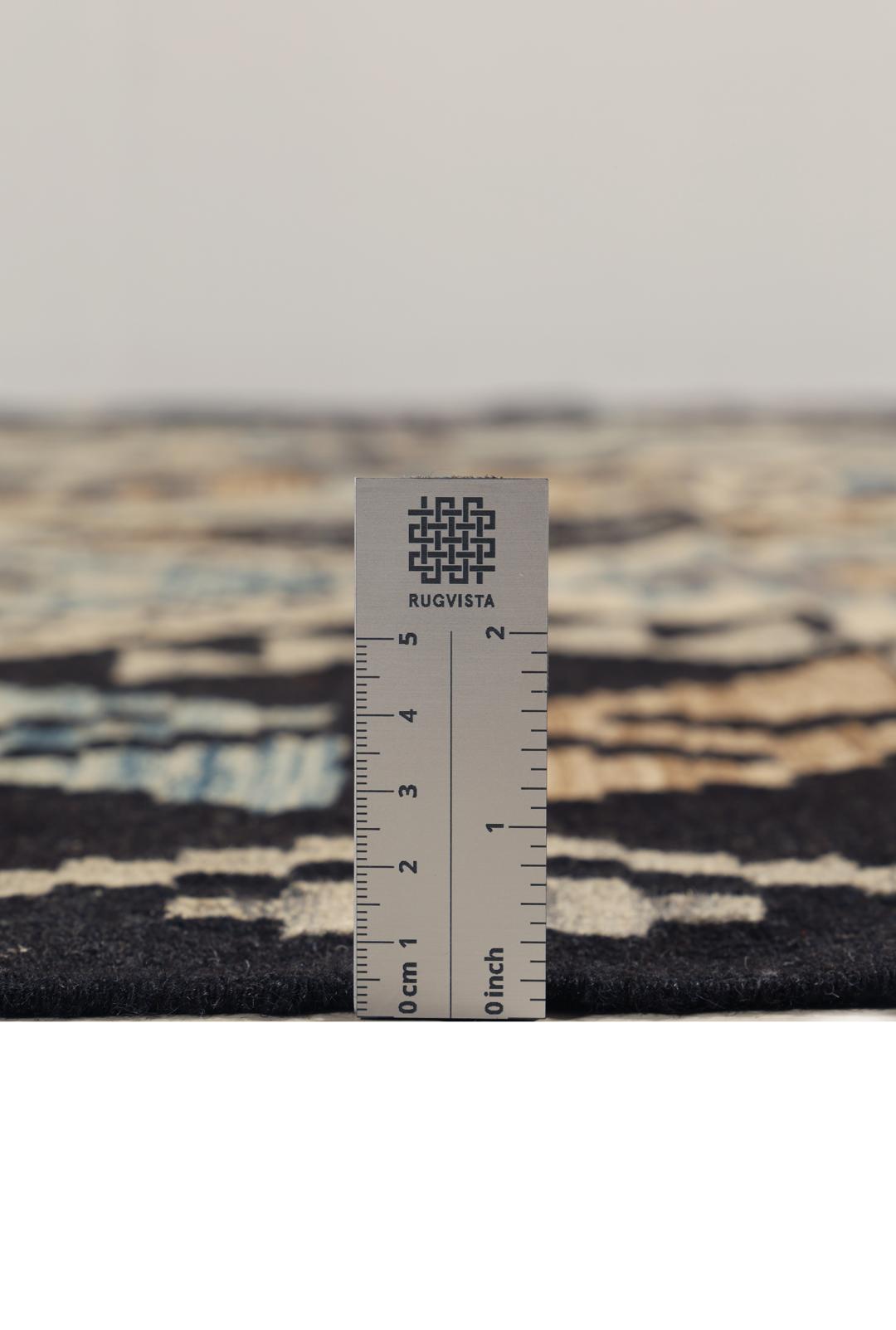
The term Kelim refers to a specific weaving technique where the weft threads are passed through the warp threads to create a smooth, pileless surface. This method results in a reversible rug that is incredibly strong, as the absence of knots means there is no pile to wear down over time, making these rugs exceptionally long-lasting.
Visually, these rugs are defined by their bold geometric language. Traditional Afghan designs often feature sharp, angular motifs, such as diamonds and triangles, which are deeply symbolic of the weaver's environment and cultural heritage. The use of natural dyes and earthy tones is a hallmark of this tradition, reflecting the landscape from which these designs emerged.
Collecting an Afghan Kelim is more than just a purchase, it is an investment in a storied cultural legacy. Each rug represents a dialogue between the weaver and their heritage, preserving techniques passed down through generations. Owning such a piece connects your home to a global history of craft and human ingenuity.