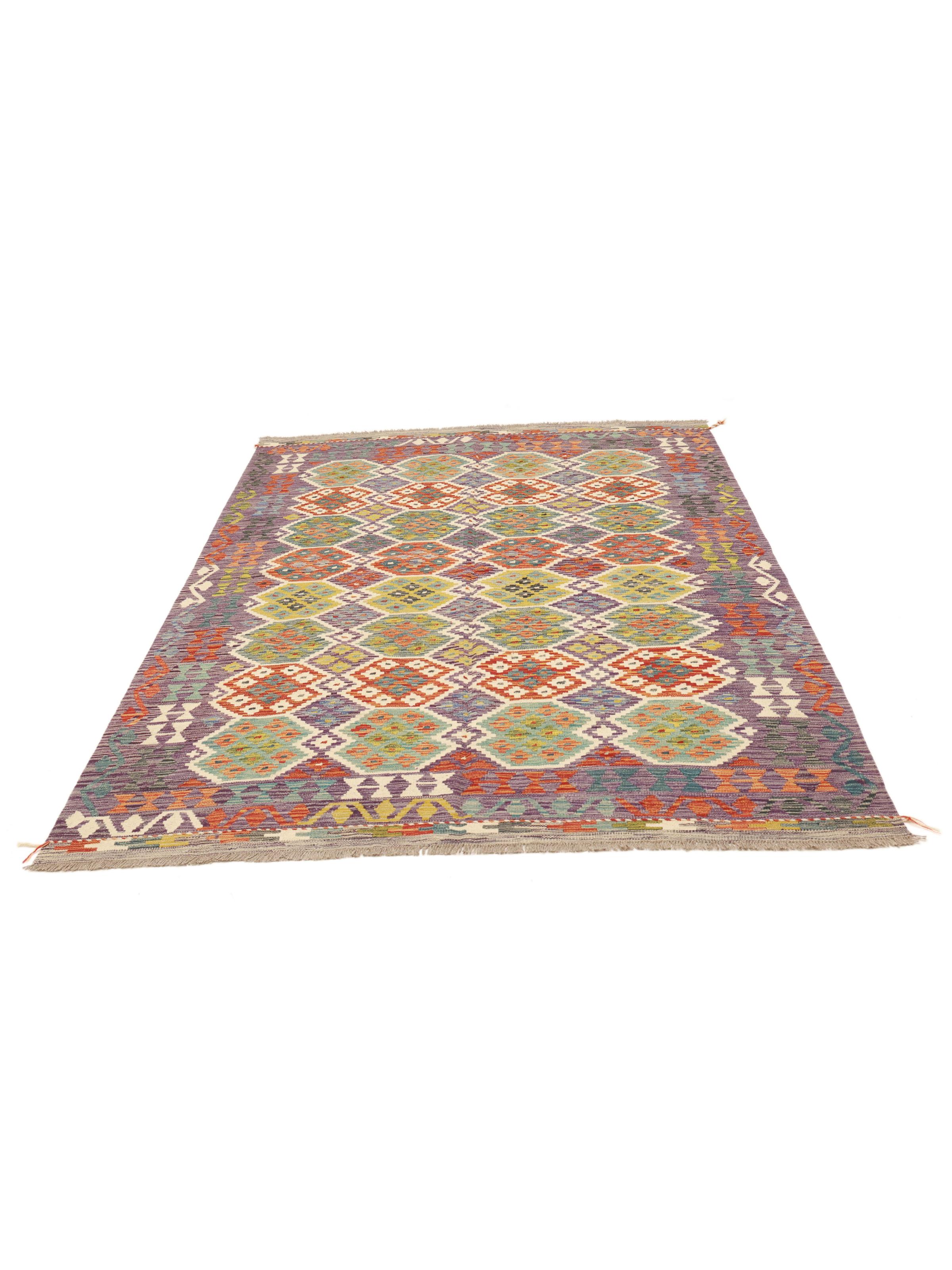
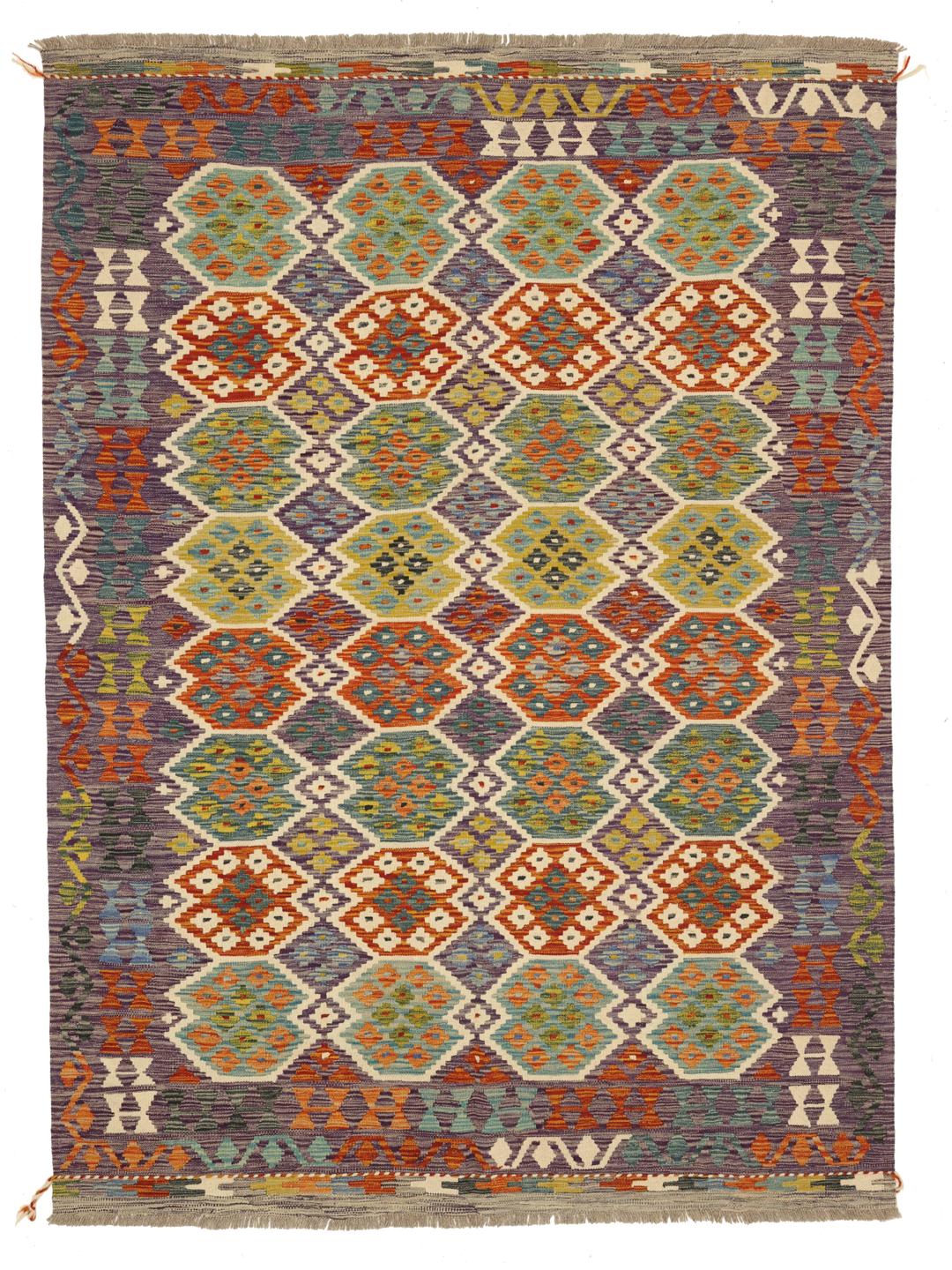
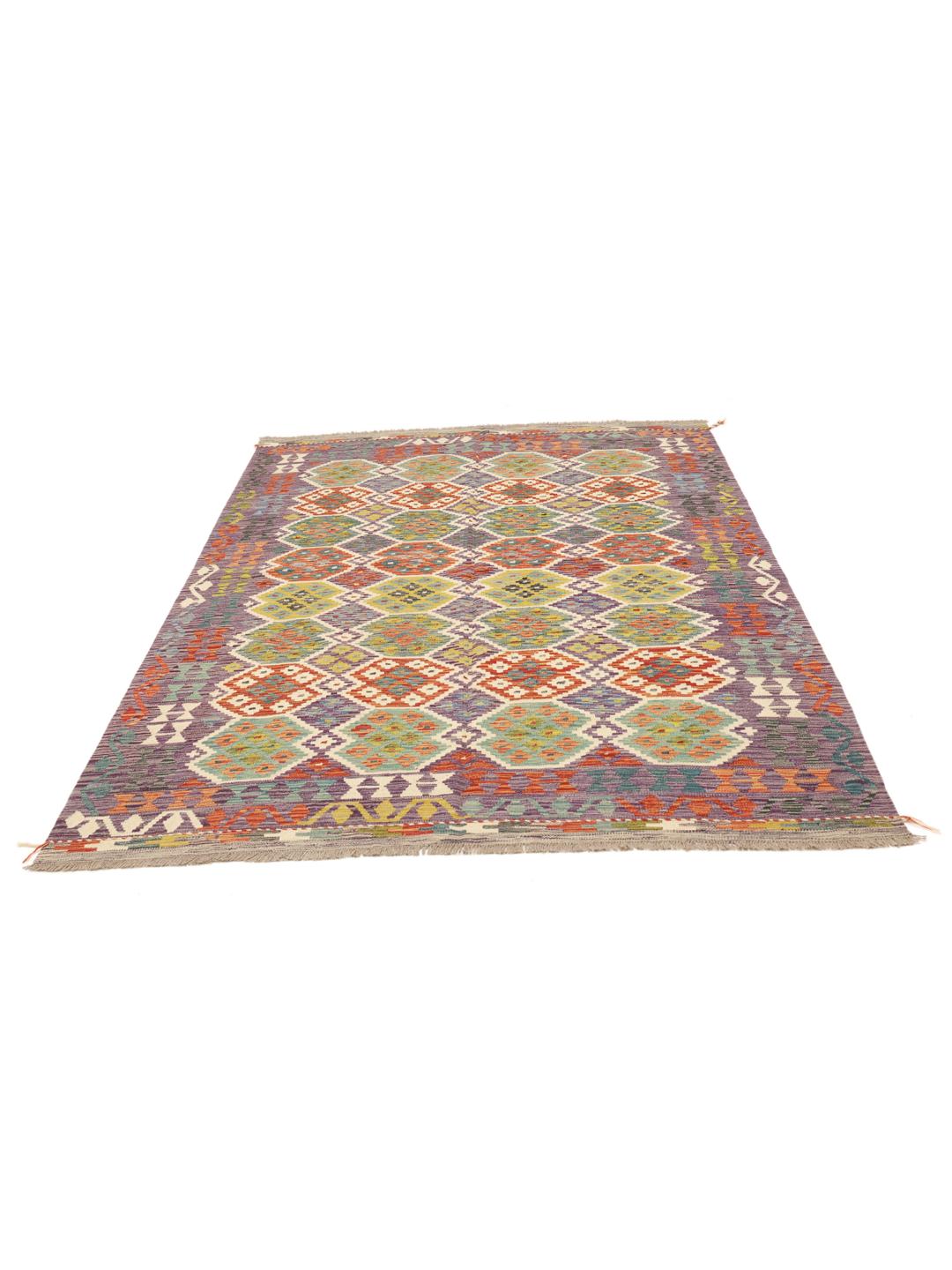
The Kelim tradition in Afghanistan is deeply rooted in the nomadic and semi-nomadic cultures of Central Asia. These rugs have been produced for centuries, serving as versatile household items that were used as floor coverings, blankets, and storage bags, reflecting the practical needs of life on the move.
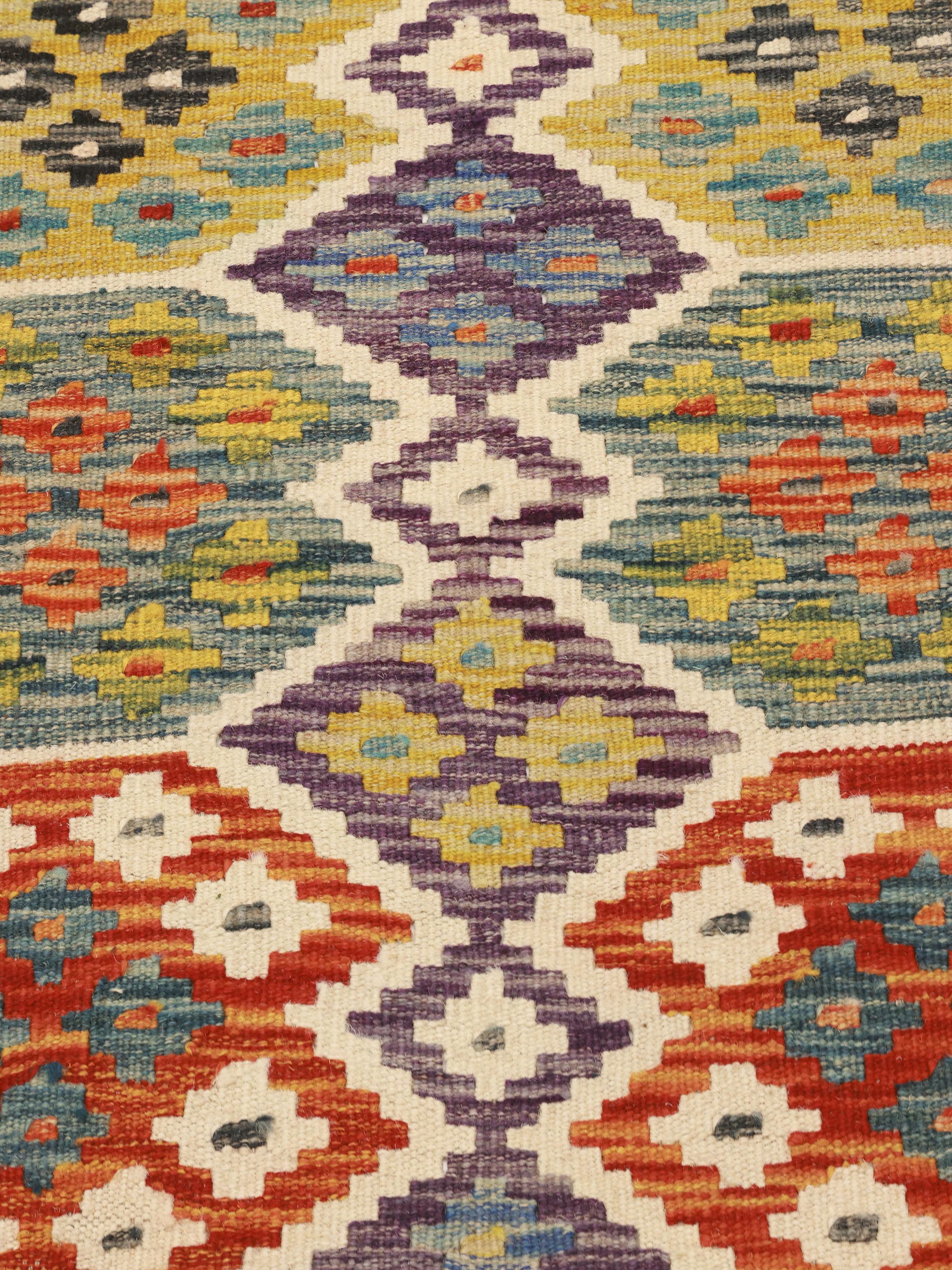
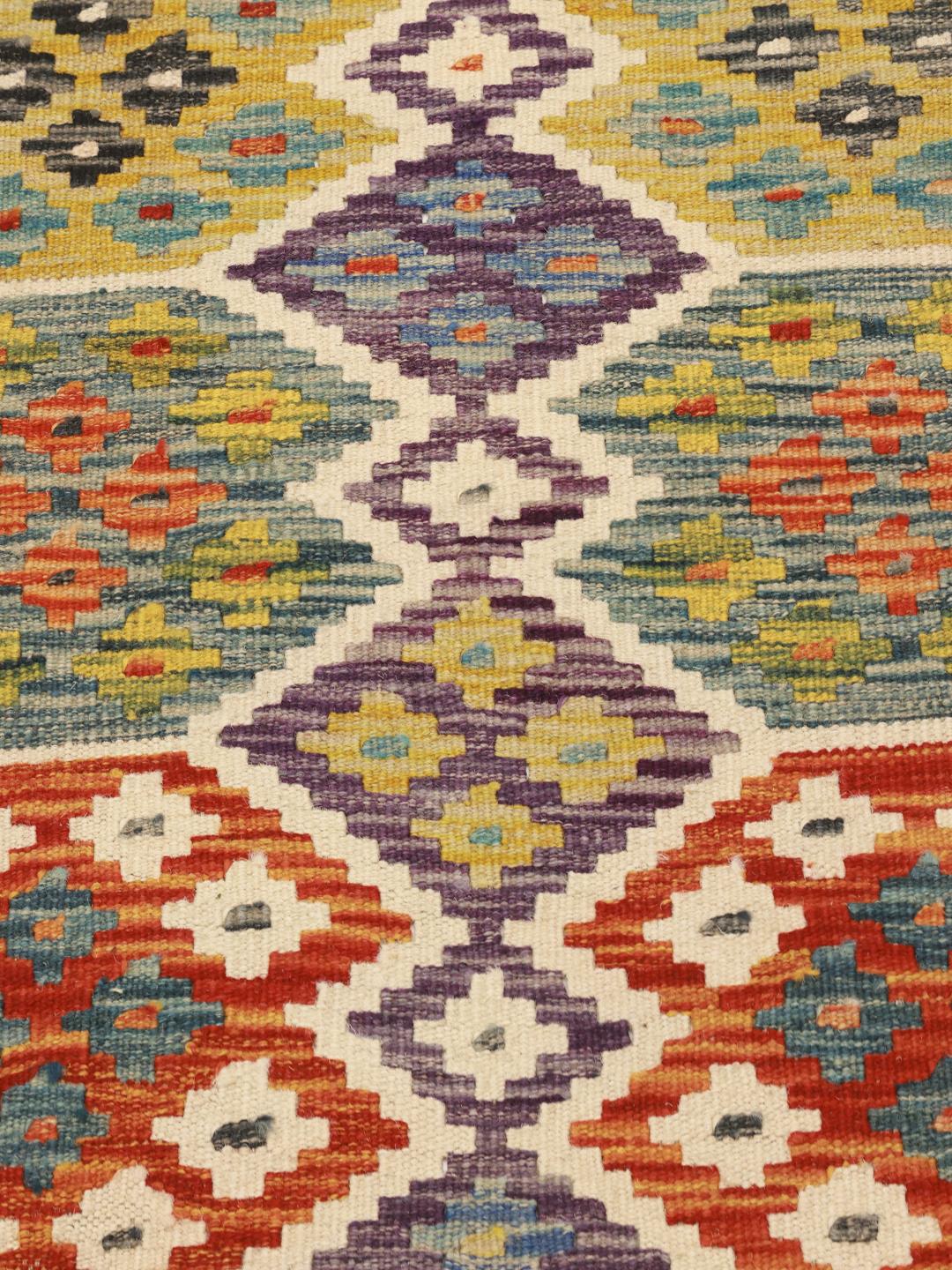
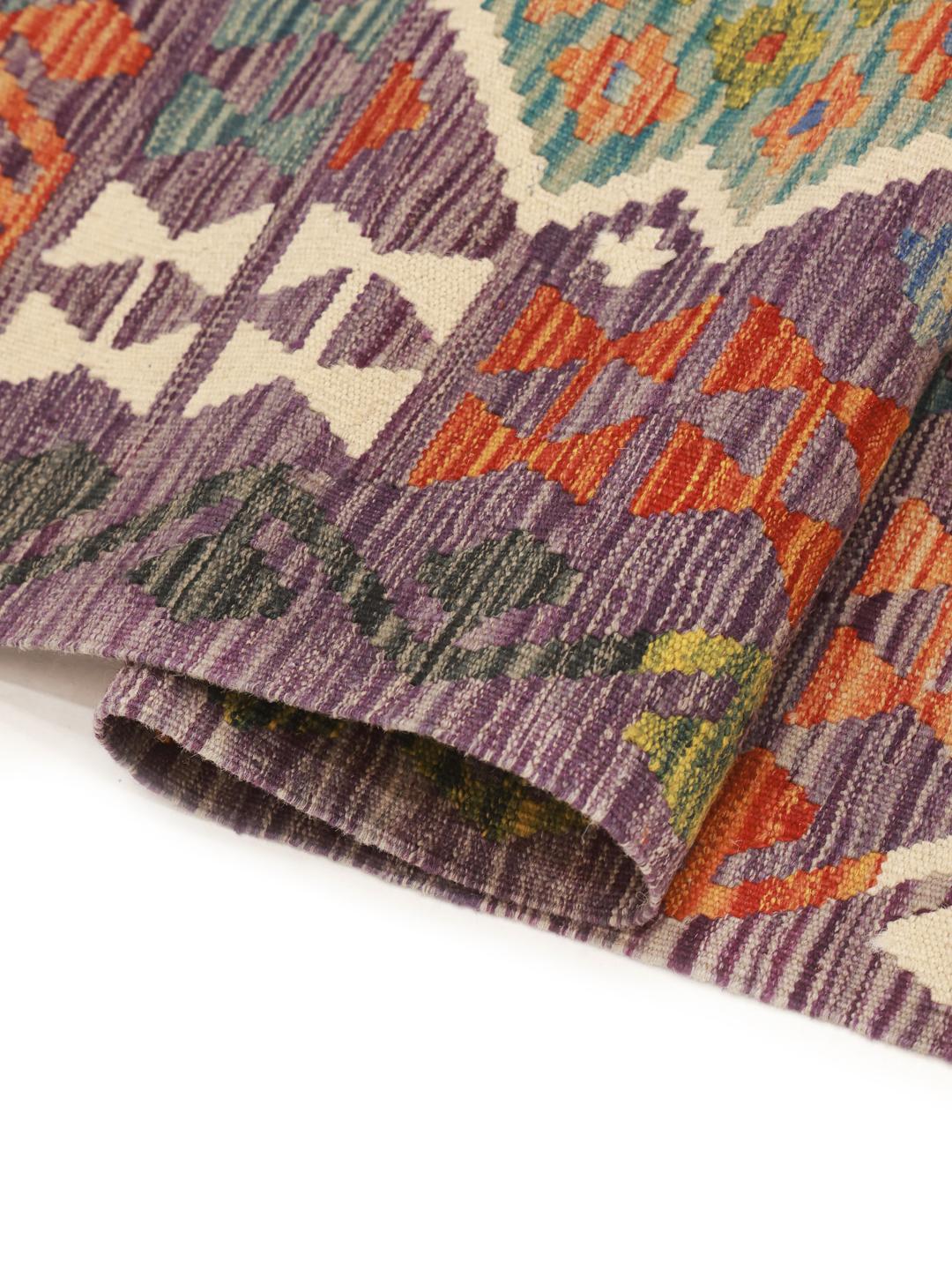
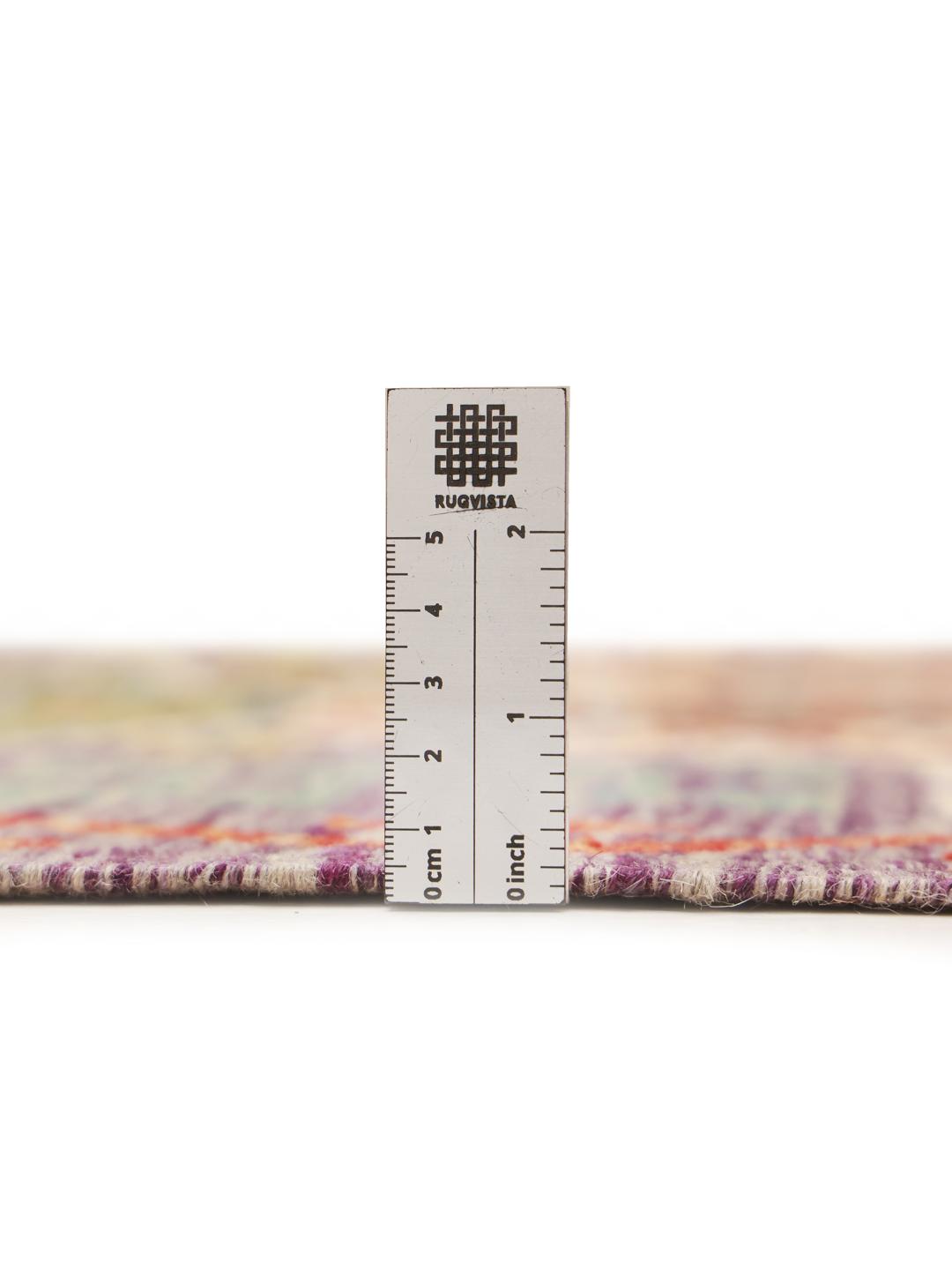
The term 'Kelim' refers to a flat-weaving technique where the weft threads are passed through the warp threads to create the pattern, resulting in a rug without a pile. This method is highly prized for its clarity of design and the ability to create sharp, angular motifs that define the aesthetic of these pieces.
Signature design elements of Afghan Kelims often include bold, repeating geometric shapes such as diamonds and hexagons. These patterns are typically arranged in deliberate, rhythmic sequences, often featuring a decorative border that frames the central field. The use of vibrant, earthy tones is a hallmark of this tradition, reflecting the natural dyes historically available in the region.
Collecting an old-style Afghan Kelim is an investment in cultural heritage. These rugs are highly valued for their authenticity and the skill required to maintain the traditional patterns passed down through generations. By owning one, you are preserving a craft tradition that represents the identity and artistic expression of Afghan weavers.