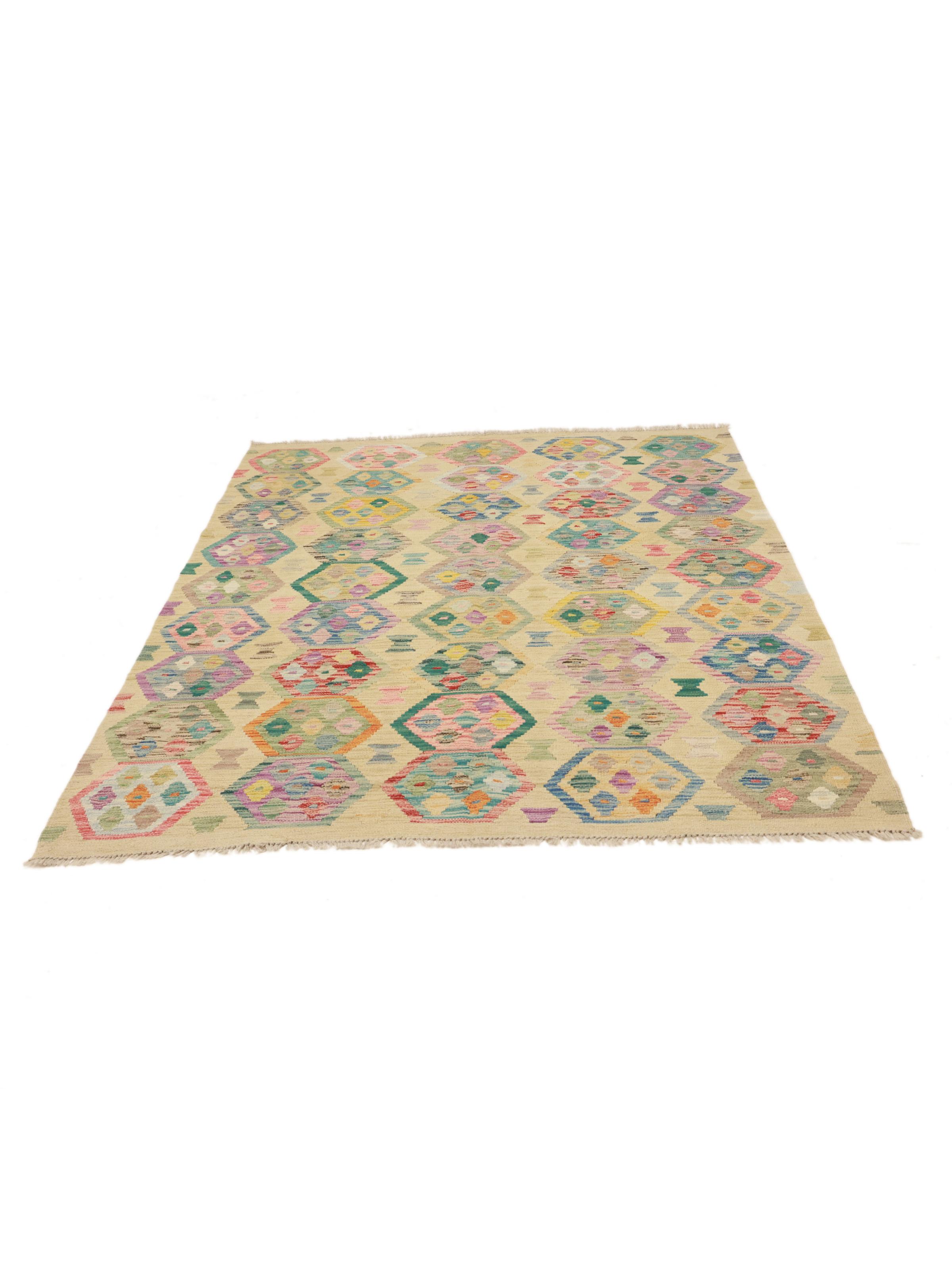
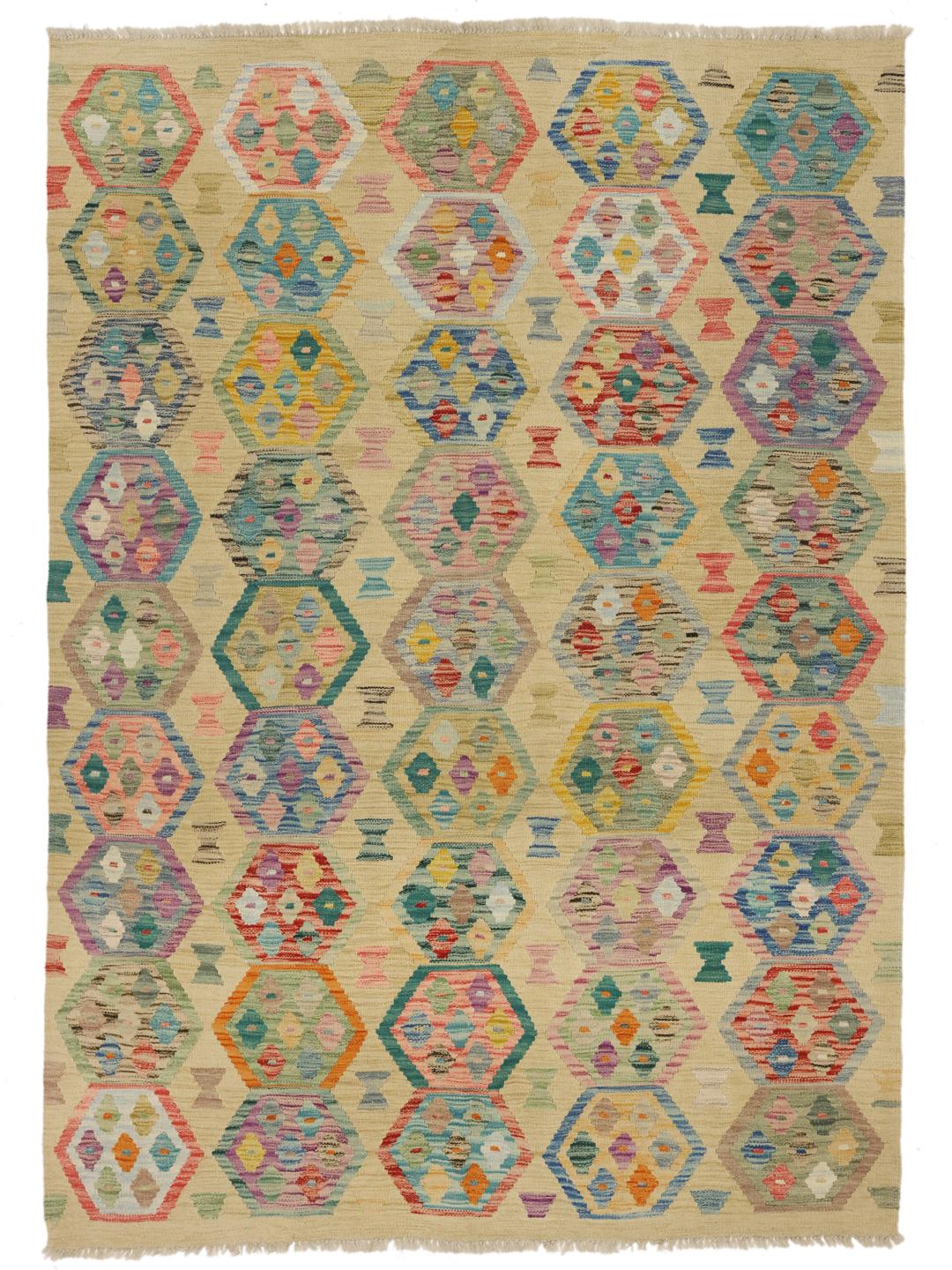
Kelim rugs have a storied history rooted in the nomadic cultures of the Middle East and Central Asia. The tradition of flat-weaving, or kelim, evolved as a practical solution for mobile populations who required lightweight, durable, and easily transportable floor coverings that could also serve as wall hangings or storage sacks during migration.
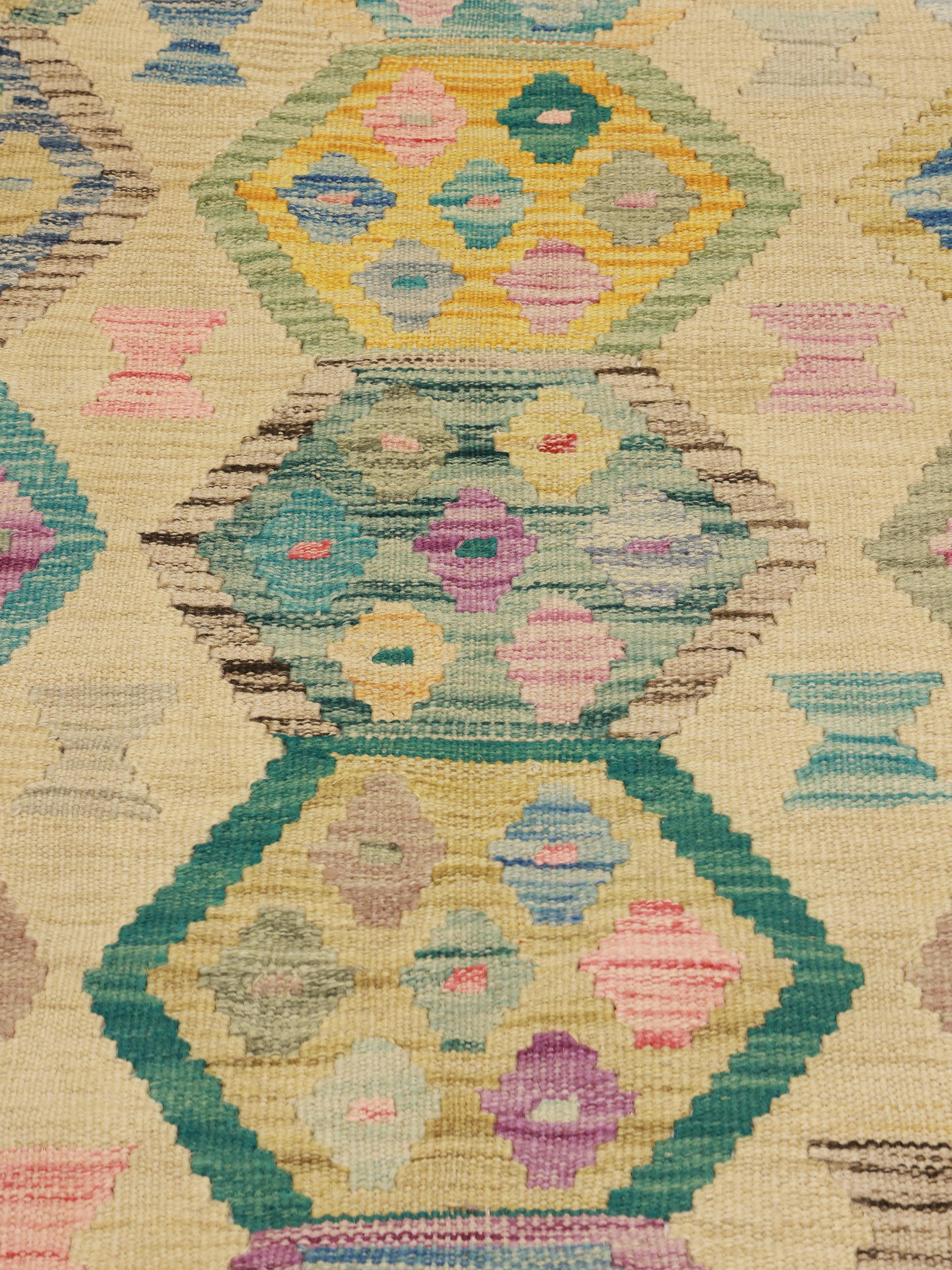
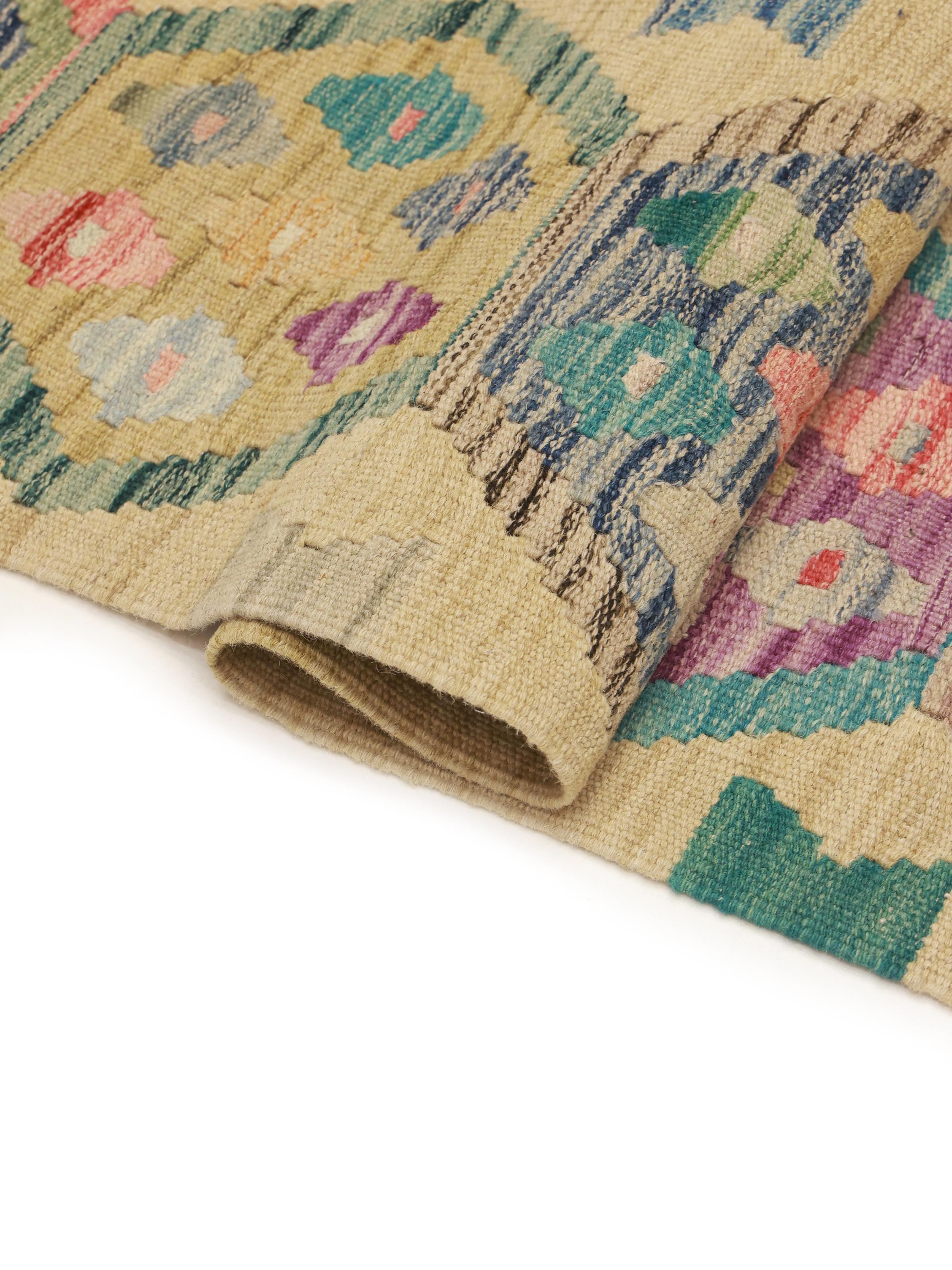
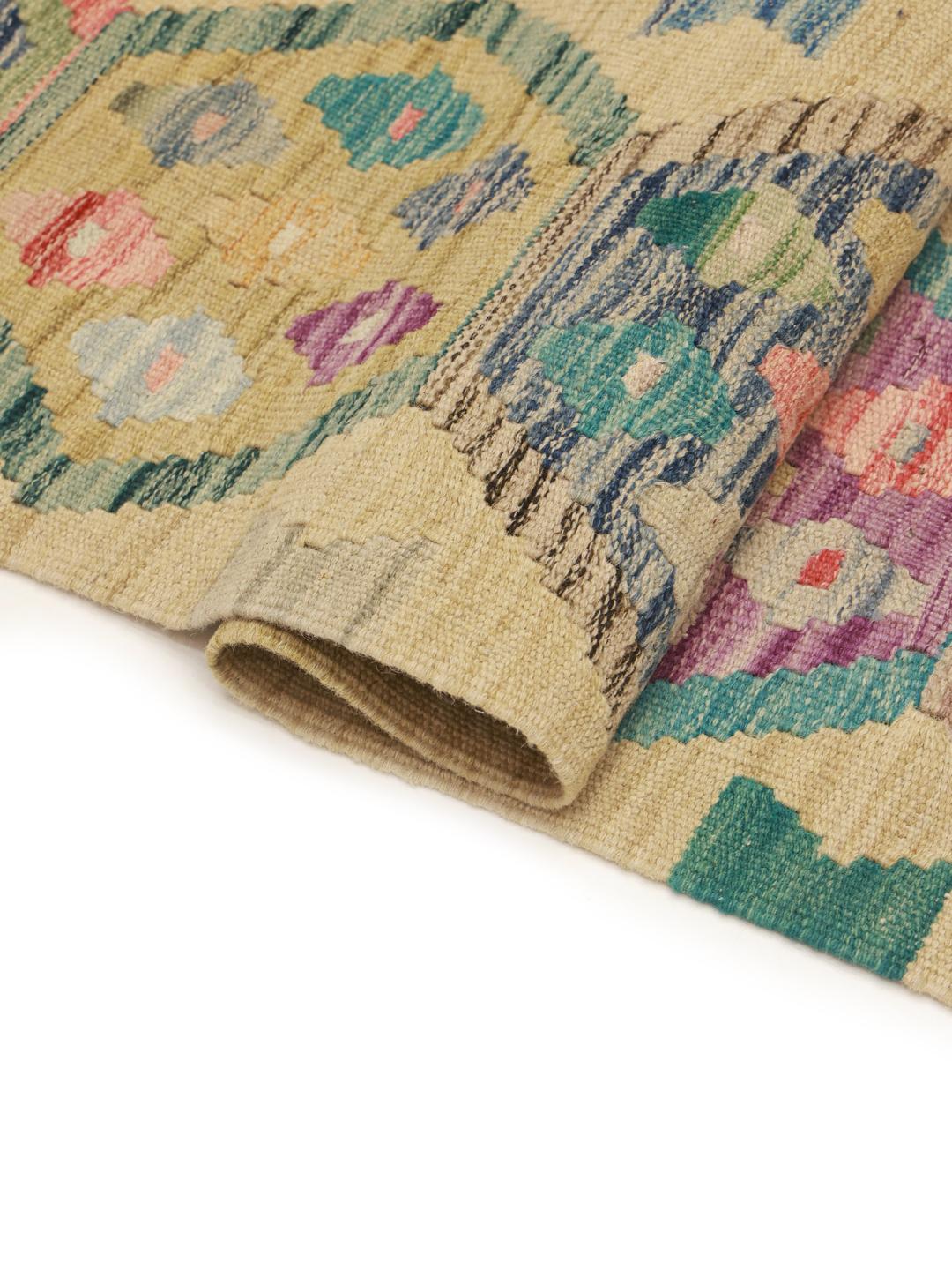
The term Kelim refers to this specific non-pile weaving technique, where the weft threads are passed over and under the warp threads to create the pattern. This method produces a reversible rug that is incredibly resilient, as there are no pile tufts to wear down over time. The strength of this construction is a hallmark of the craft, prized for its longevity and ability to withstand the rigours of daily life.
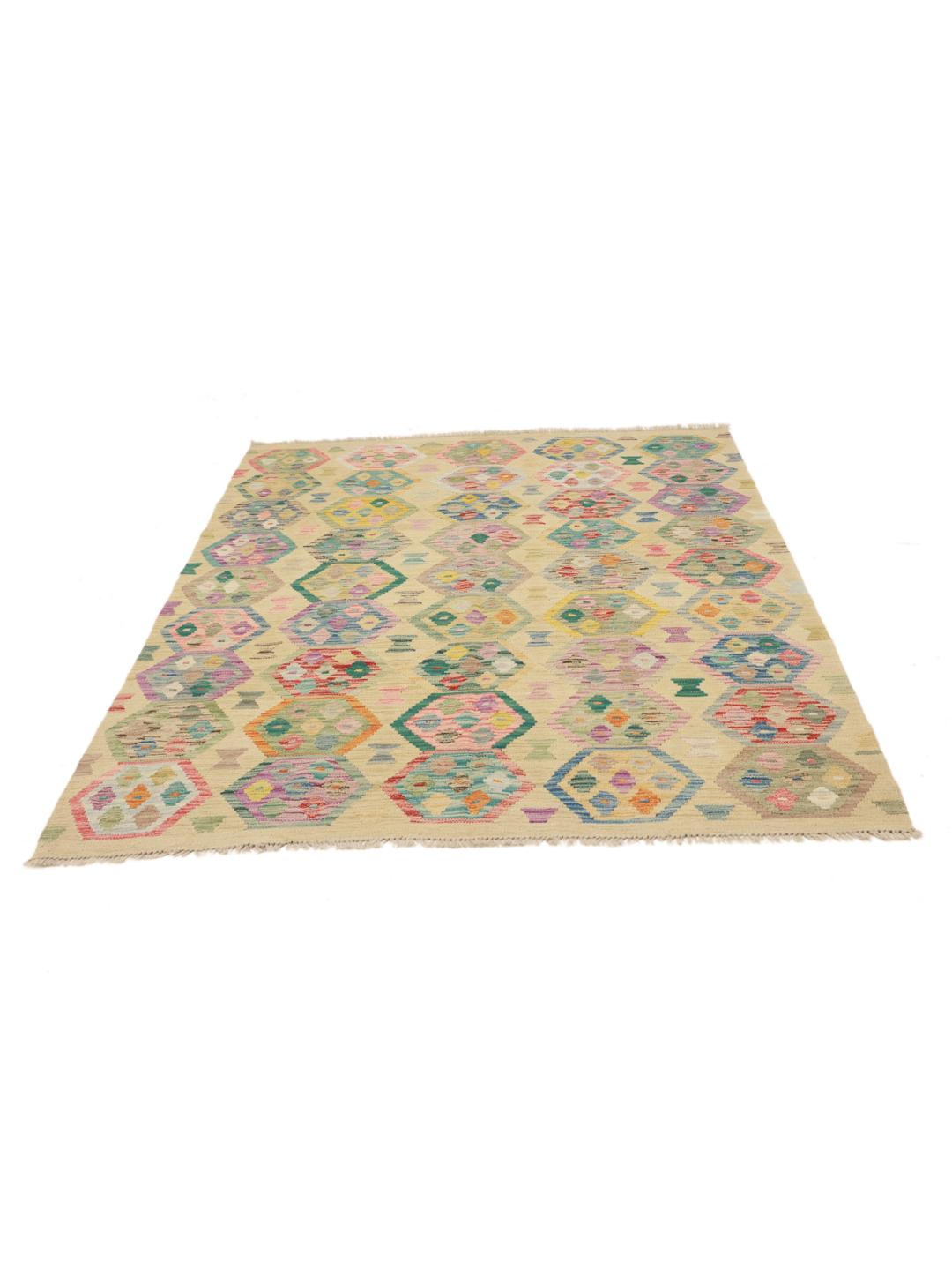
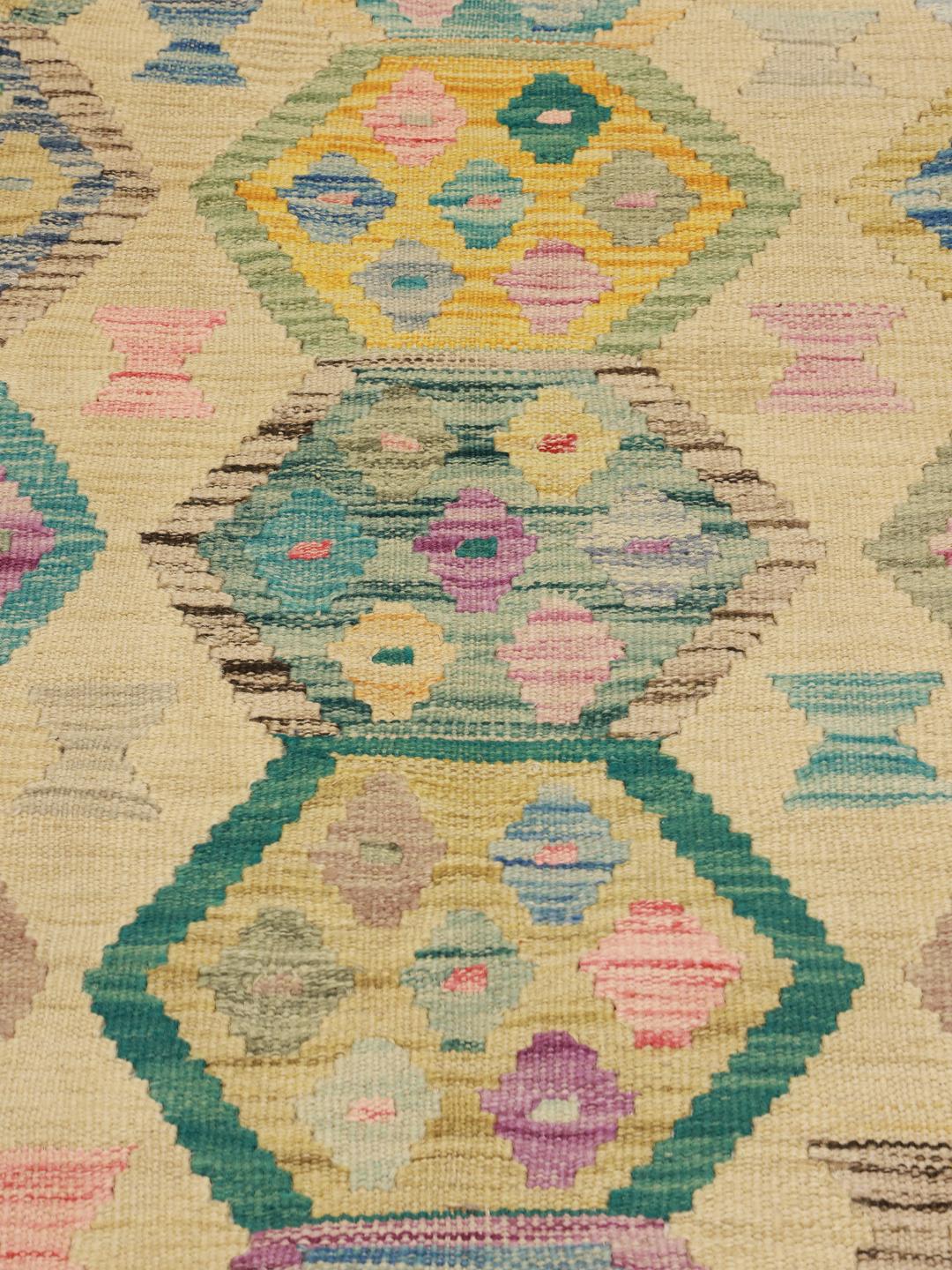
The visual language of this tradition is dominated by bold, geometric forms and a vibrant use of colour. Motifs like the hexagon, diamond, and various tribal symbols are often used to signify protection or regional identity. In this particular piece, the repeating hexagonal structure is a classic example of how traditional patterns are used to create a sense of harmony and order within a decorative space.
Collecting a hand-woven Kelim is an investment in cultural heritage. These rugs represent centuries of accumulated knowledge passed down through generations of weavers. By choosing a piece like this, you are preserving a craft tradition that values human skill and artistic expression over industrial efficiency, ensuring that the story behind the rug continues to be told in your home.