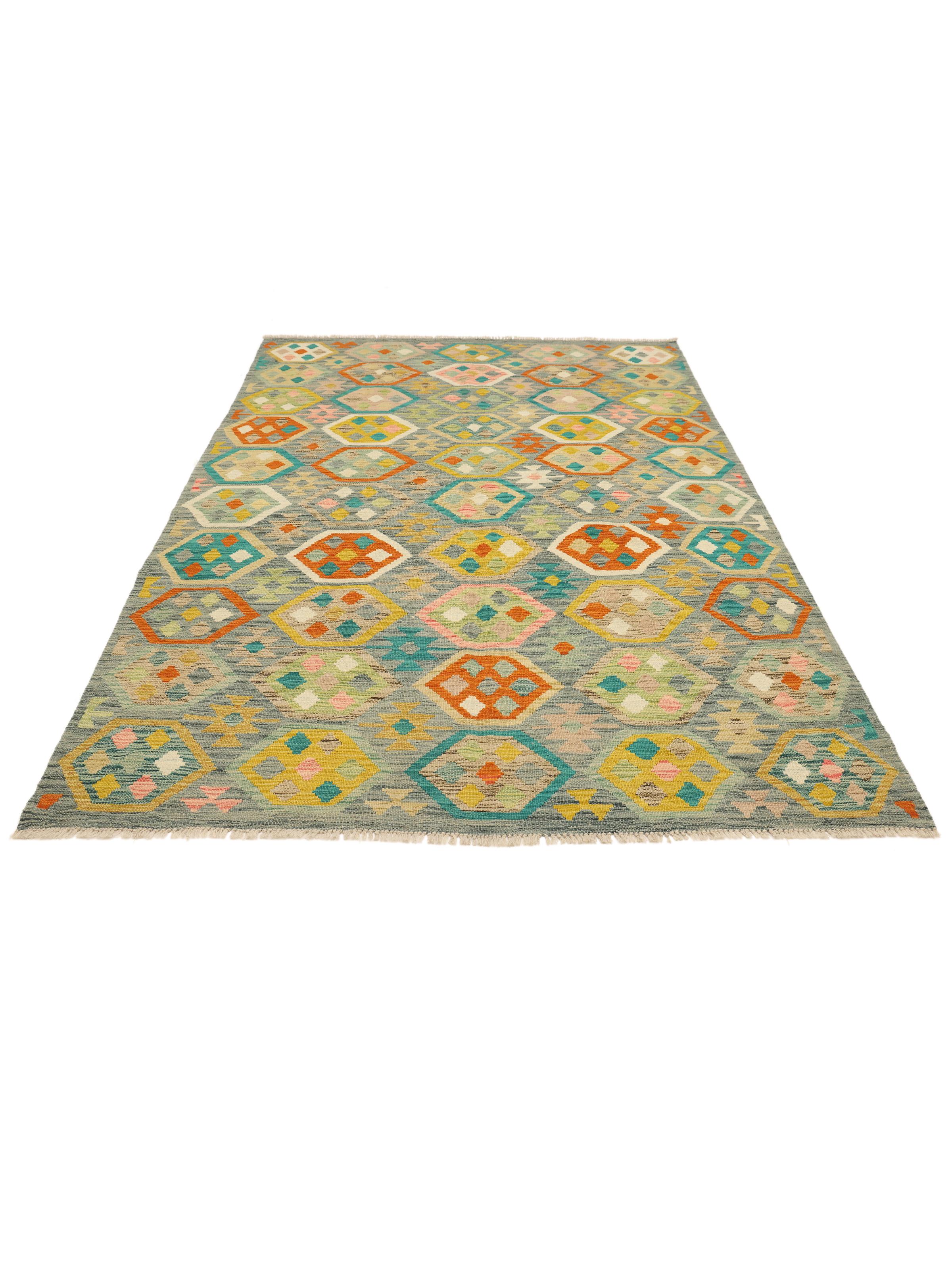
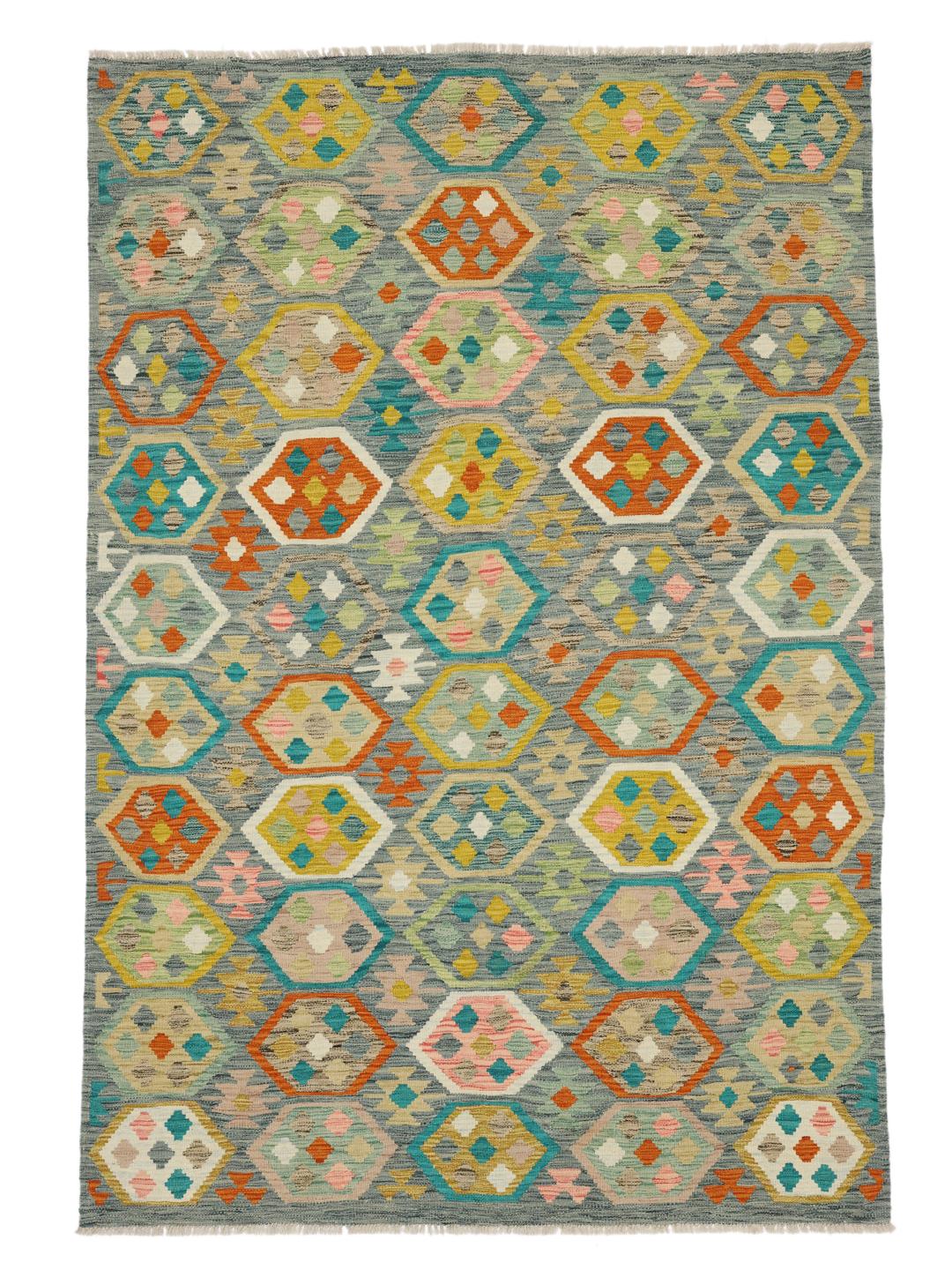
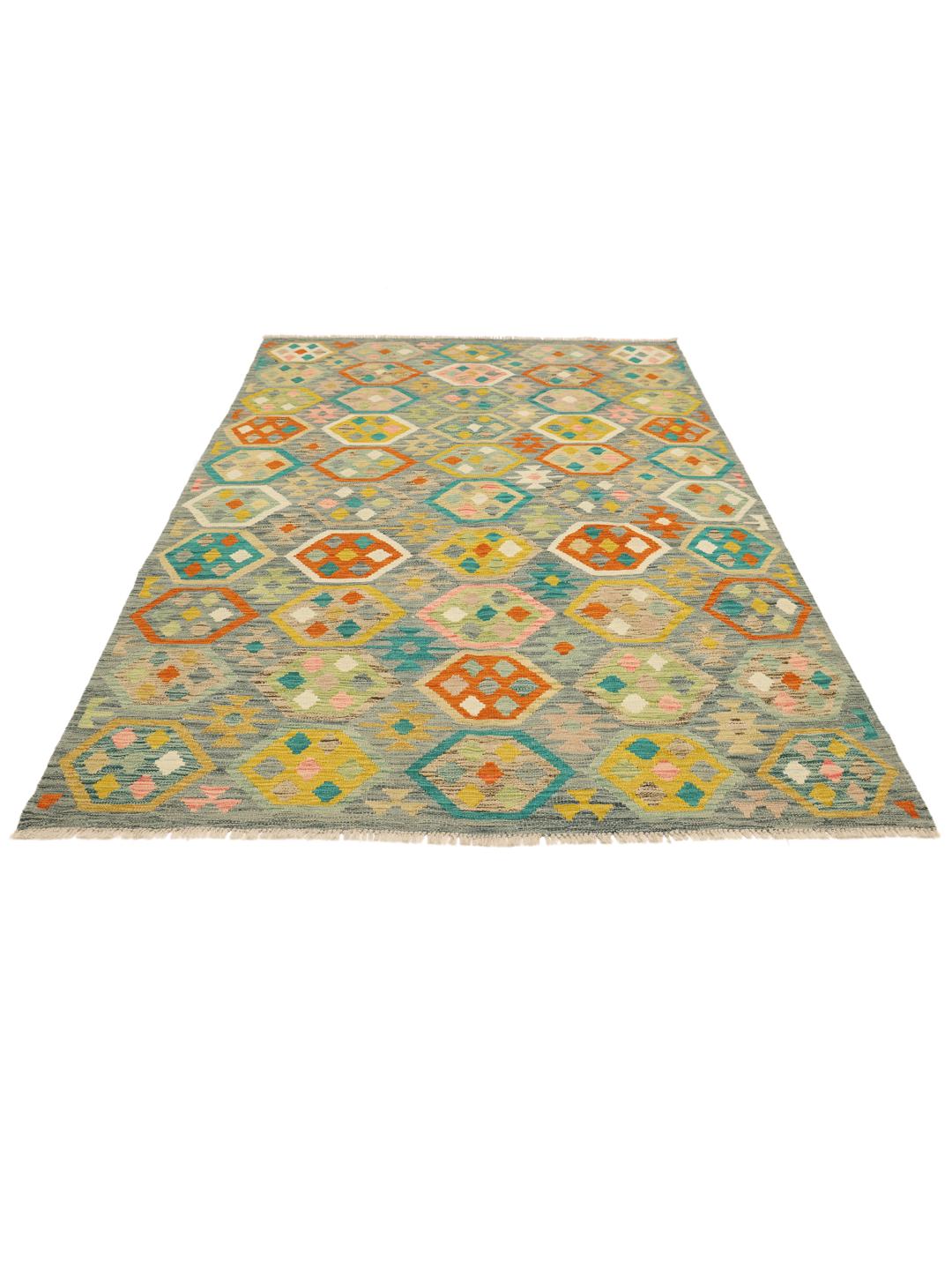
The Kelim tradition is deeply rooted in the nomadic history of the Middle East, particularly within Afghanistan. These rugs were historically created by tribal groups for practical use, serving as floor coverings, wall hangings, and storage bags. The evolution of these designs reflects the migration patterns of various ethnic groups, each contributing unique motifs and colour palettes to the regional aesthetic.
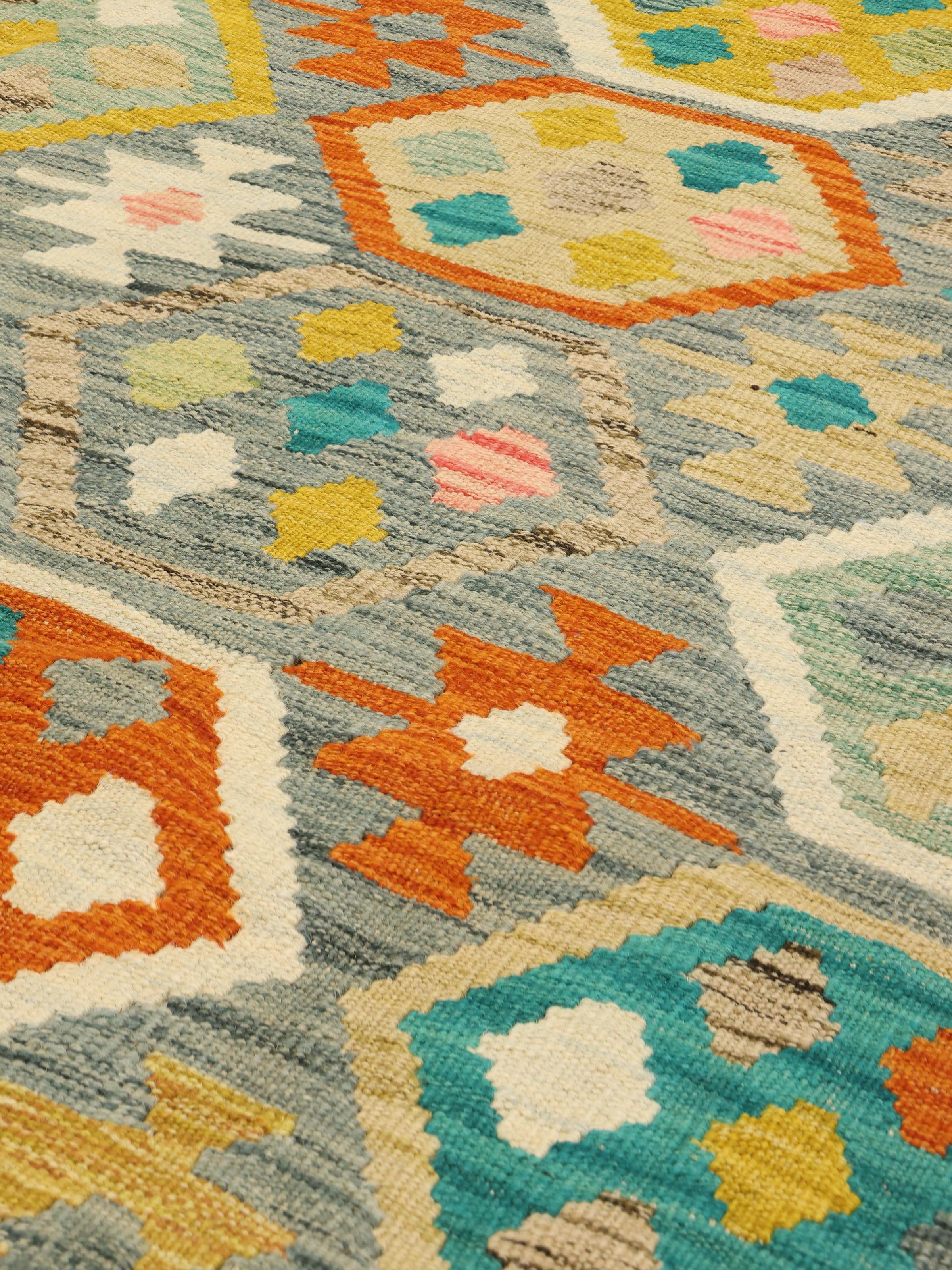
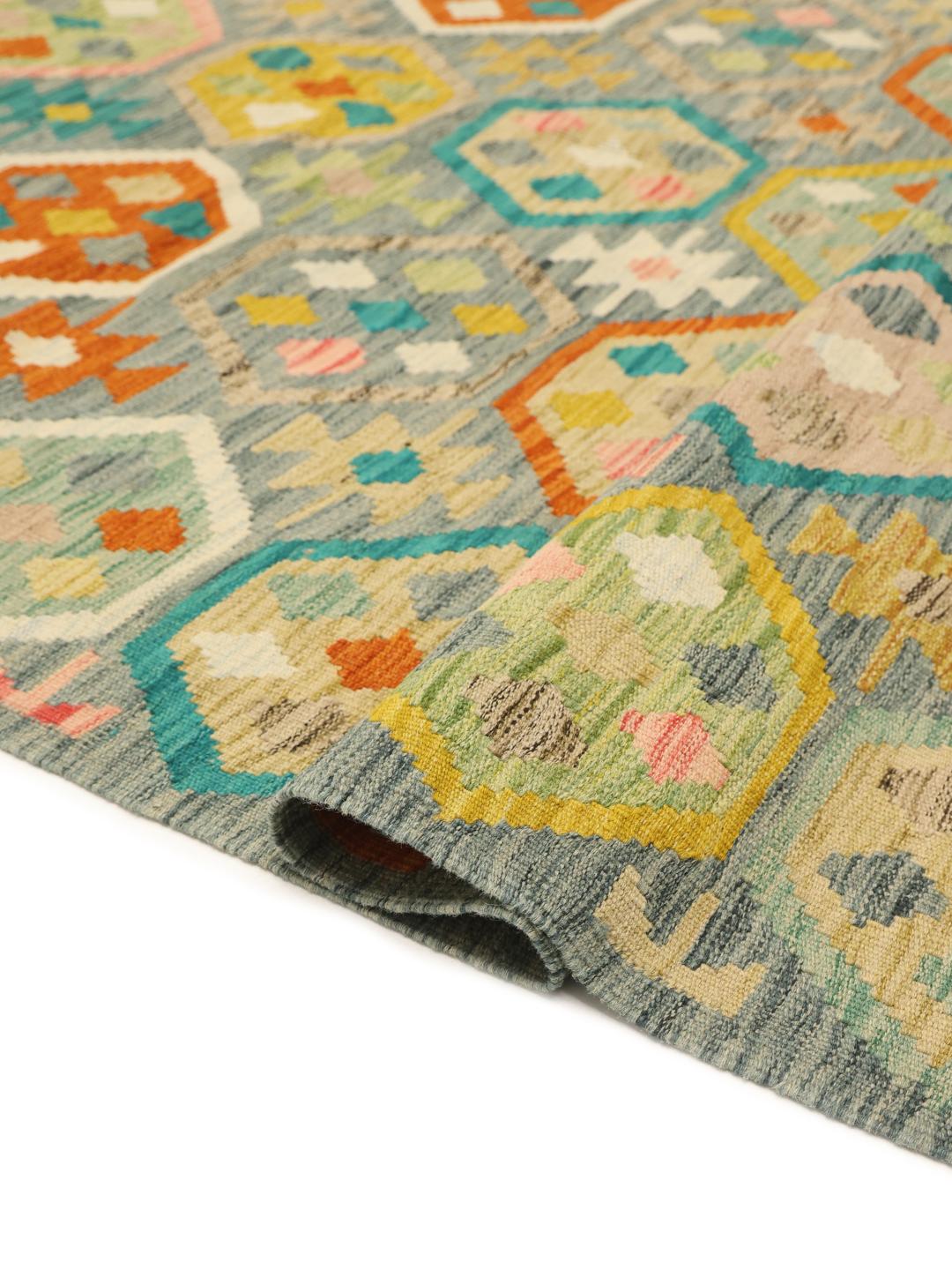
The term 'Kelim' refers to a specific flat-weaving technique where the weft threads are passed through the warp threads to create the pattern, leaving no pile. This method is technically demanding because it requires the weaver to constantly manage colour changes to form intricate shapes. The result is a reversible, durable fabric that is much lighter than knotted rugs, yet structurally robust.
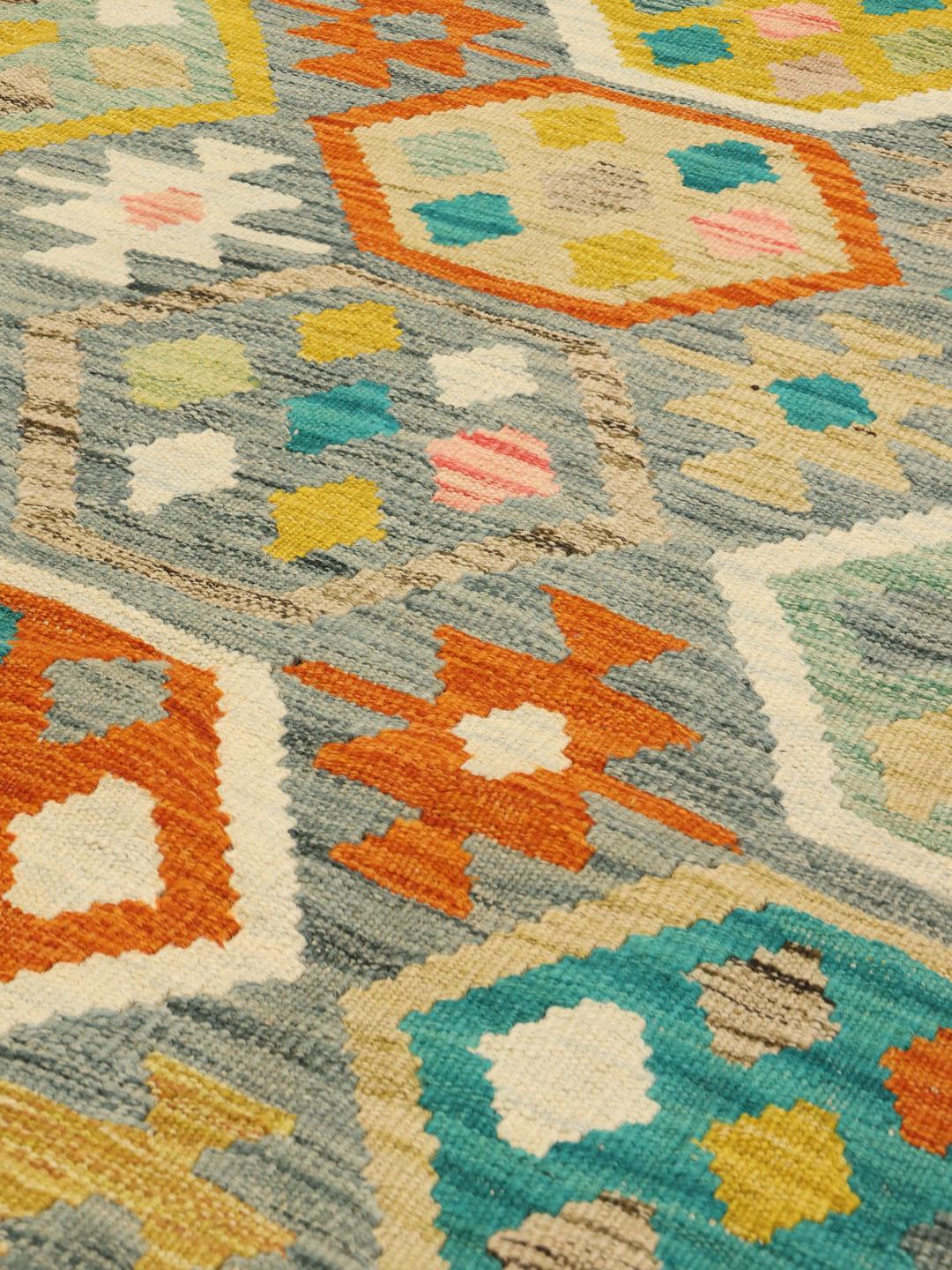
Visually, this rug tradition is defined by its bold geometric language. The use of octagons, diamonds, and stylized floral motifs is common, often arranged in a repeating grid that draws the eye across the surface. This particular piece showcases a sophisticated colour arrangement that highlights the contrast between the dark-grey foundation and the vibrant accents, demonstrating the artistic freedom often found in these traditional works.
Owning an Afghan Kelim is an investment in cultural heritage. Collectors value these pieces for their authenticity and the skill required to produce them without the aid of modern technology. Each rug tells a story of its maker and the region it comes from, offering a tangible connection to an ancient craft that remains highly relevant in contemporary interiors.