The Kelim tradition in Afghanistan is deeply rooted in the nomadic and semi-nomadic cultures that have traversed the region for centuries. These rugs are traditionally flat-woven, meaning they lack a pile, which made them highly practical for the mobile lifestyles of the tribes who created them. Over generations, the craft has evolved into a celebrated art form, with Afghan weavers becoming world-renowned for their ability to blend ancient techniques with bold, expressive design language.
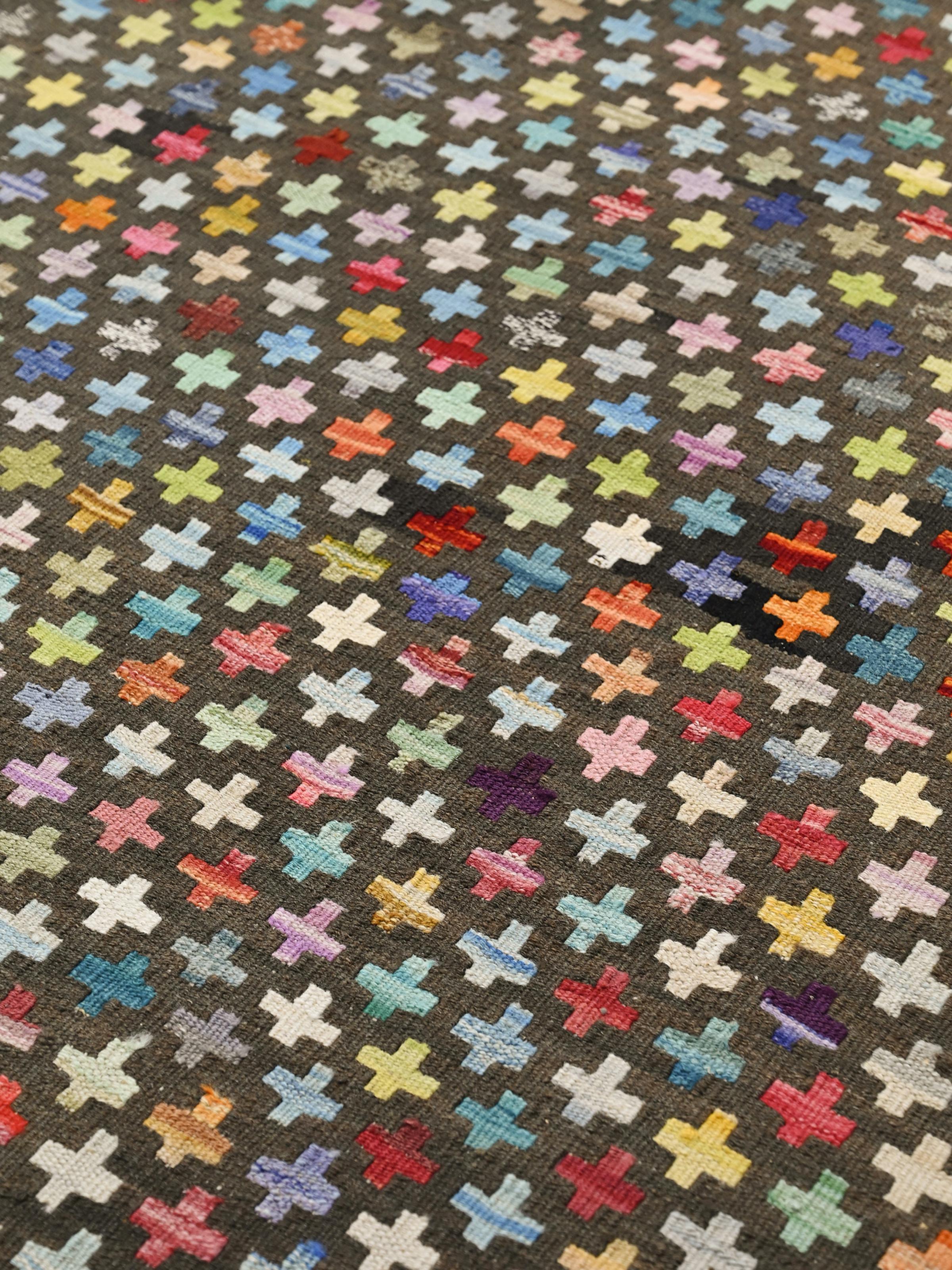
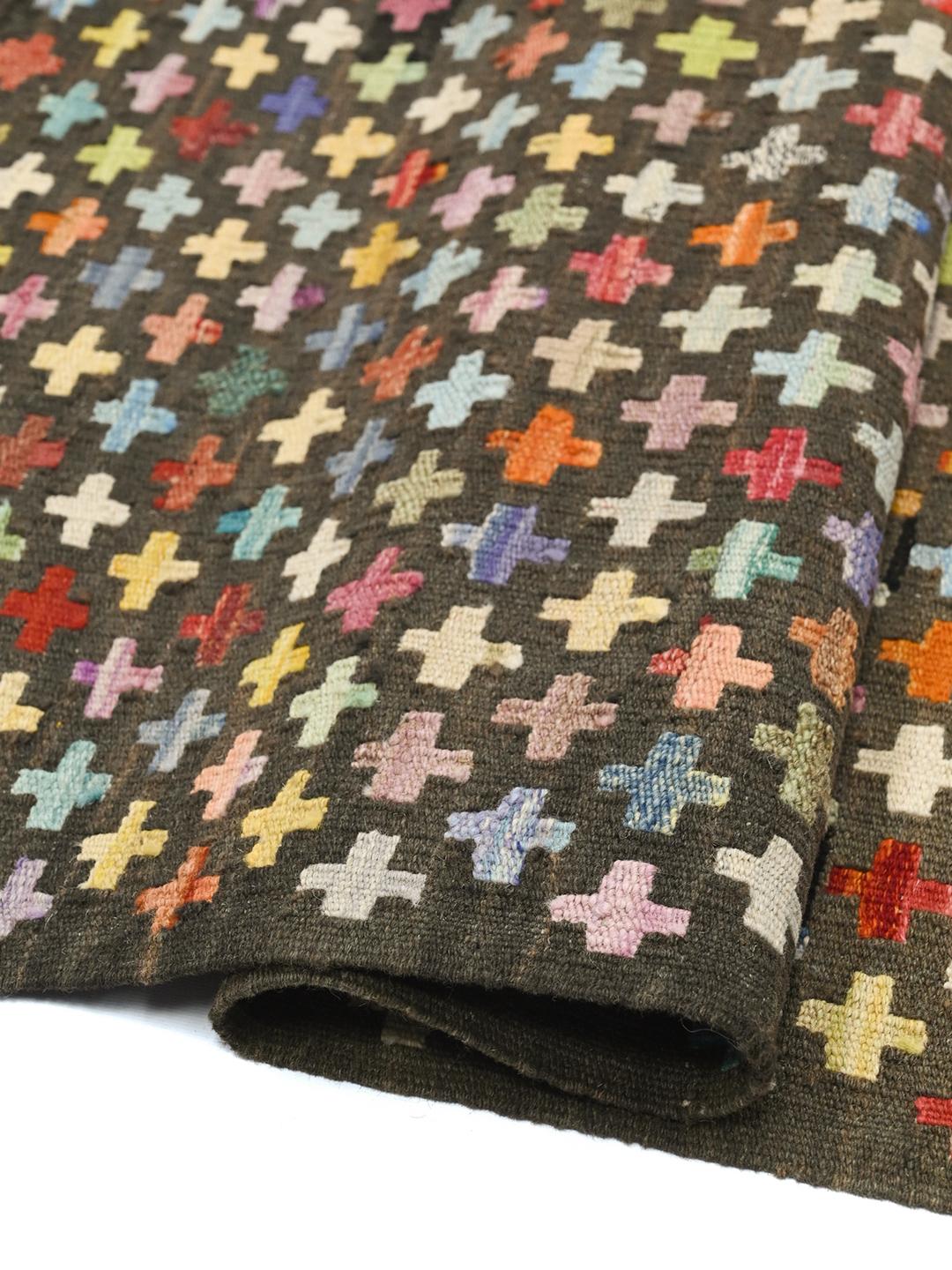
The term 'Kelim' refers to the specific flat-weaving technique where the warp and weft threads are interlaced to create the fabric. This method produces a lightweight yet incredibly strong rug that is reversible and durable. By omitting the pile, the weaver focuses entirely on the clarity of the pattern, allowing for the intricate, sharp geometric shapes that have become synonymous with this style of weaving.
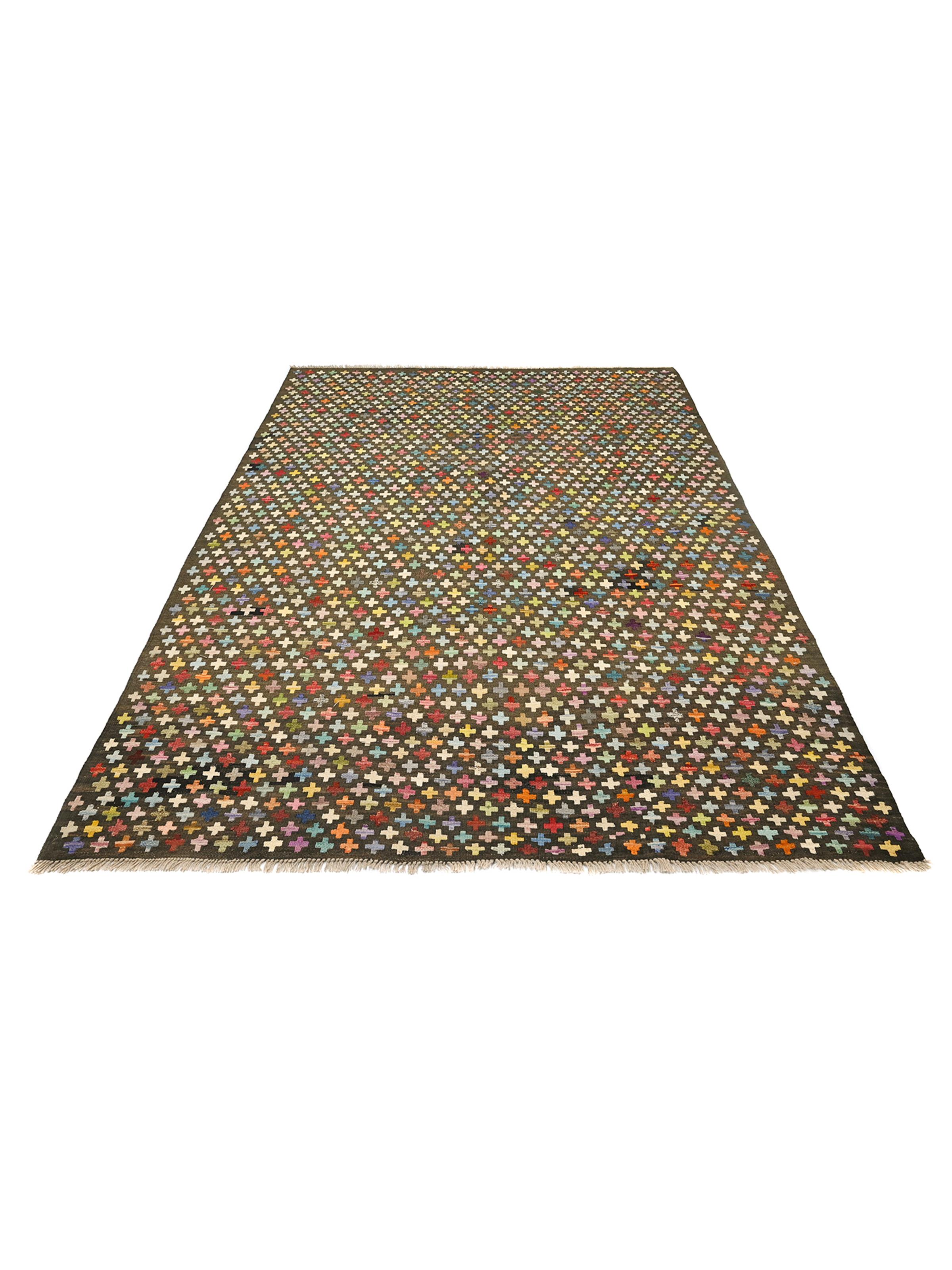
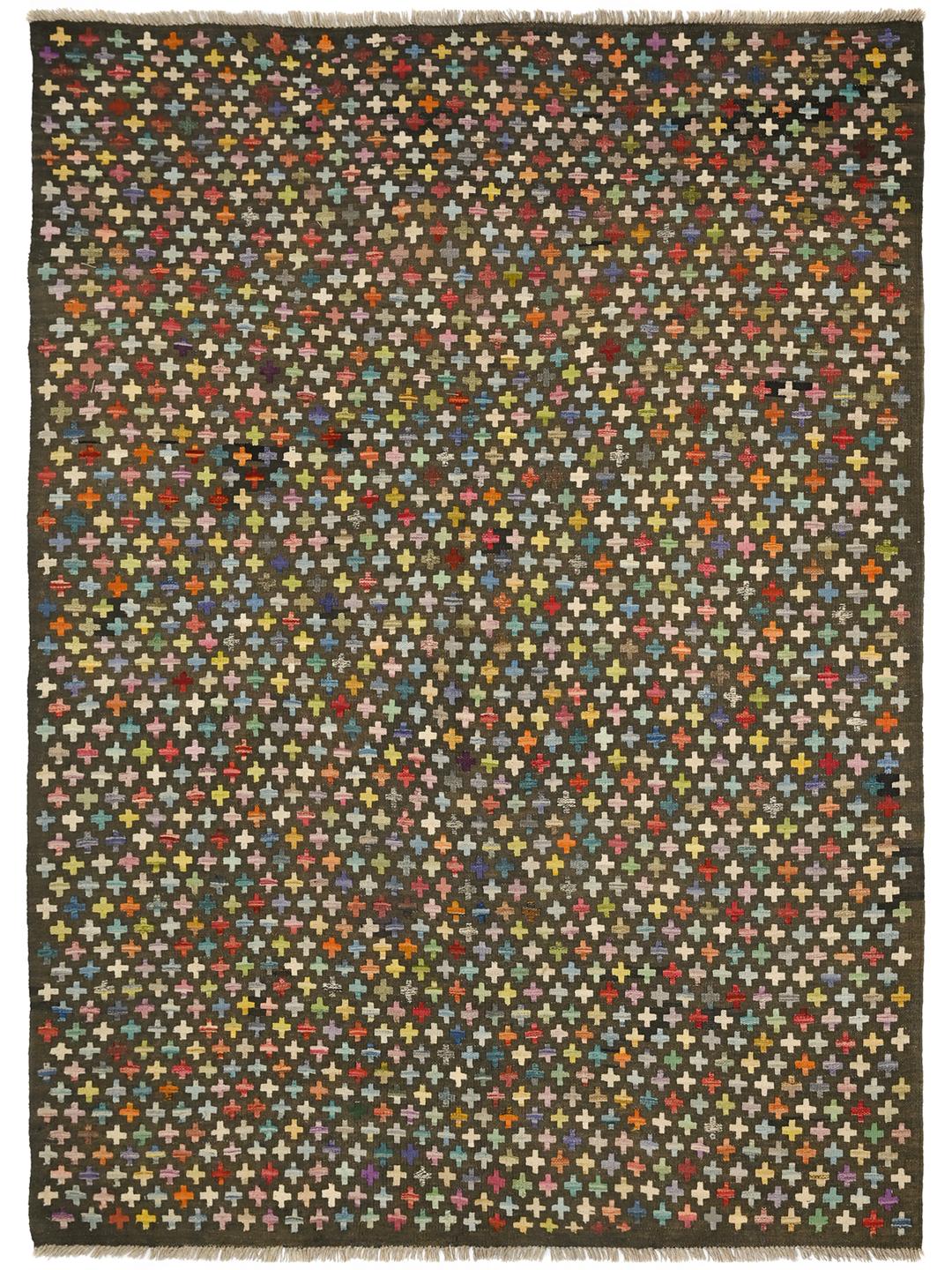
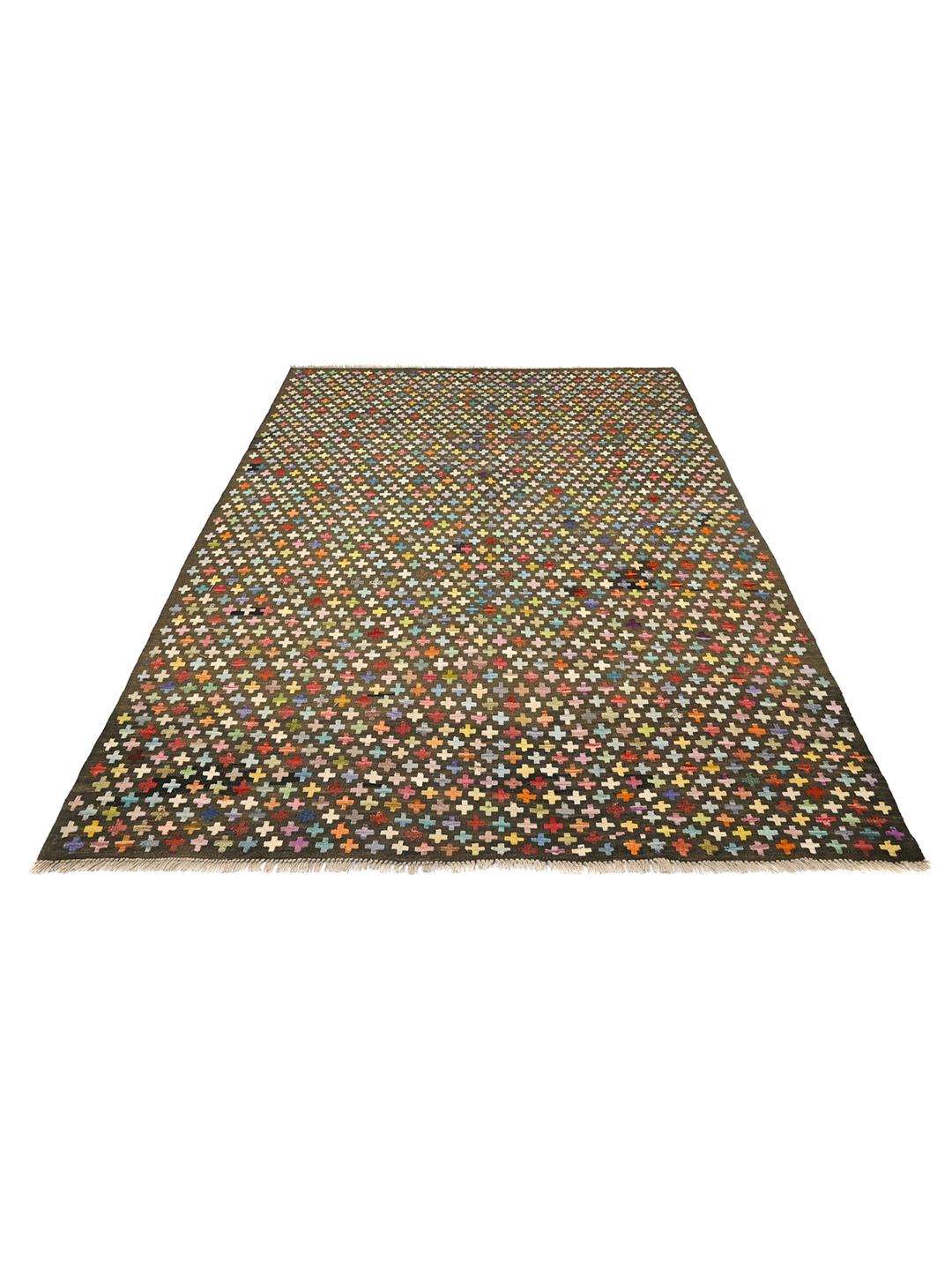
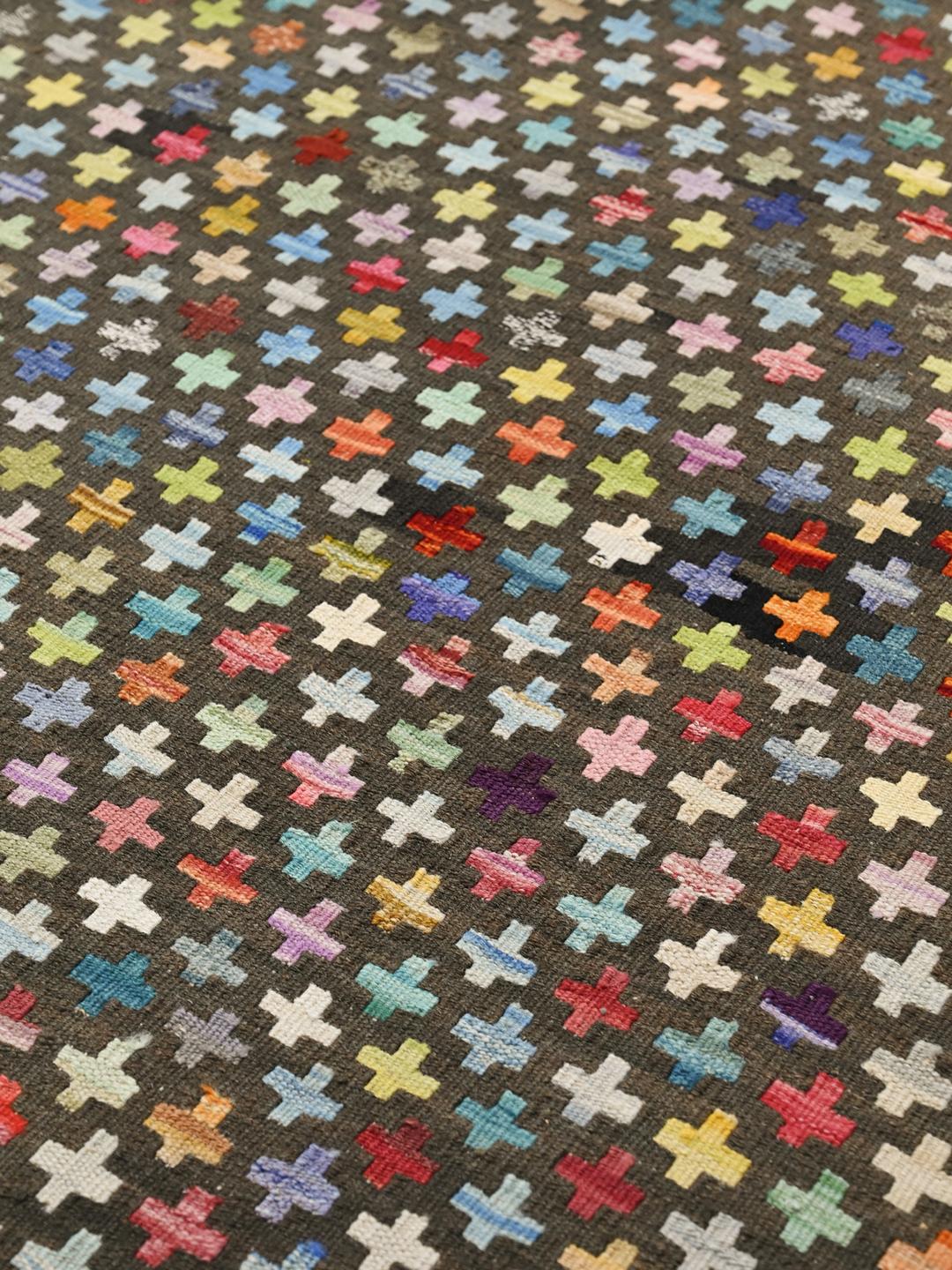
Signature design elements in Afghan Kelims often include geometric repetitions, such as the cross motifs found here, which serve as a visual shorthand for cultural symbols and stories passed down through families. The use of natural dyes and the variation in Wool sourcing have historically given these pieces their unique, slightly variegated appearance, which adds depth to the overall composition. These designs are not just decorative but are steeped in a heritage of storytelling.
Owning an Afghan Kelim is more than just acquiring a floor covering; it is an investment in a living tradition. These rugs are valued by collectors for their authenticity, the skill required to maintain perfect tension, and the way they age gracefully over time. By choosing a handmade piece, you are supporting a legacy of human craft that values slow, deliberate work over mass production, ensuring that this cultural heritage continues to thrive in modern homes.