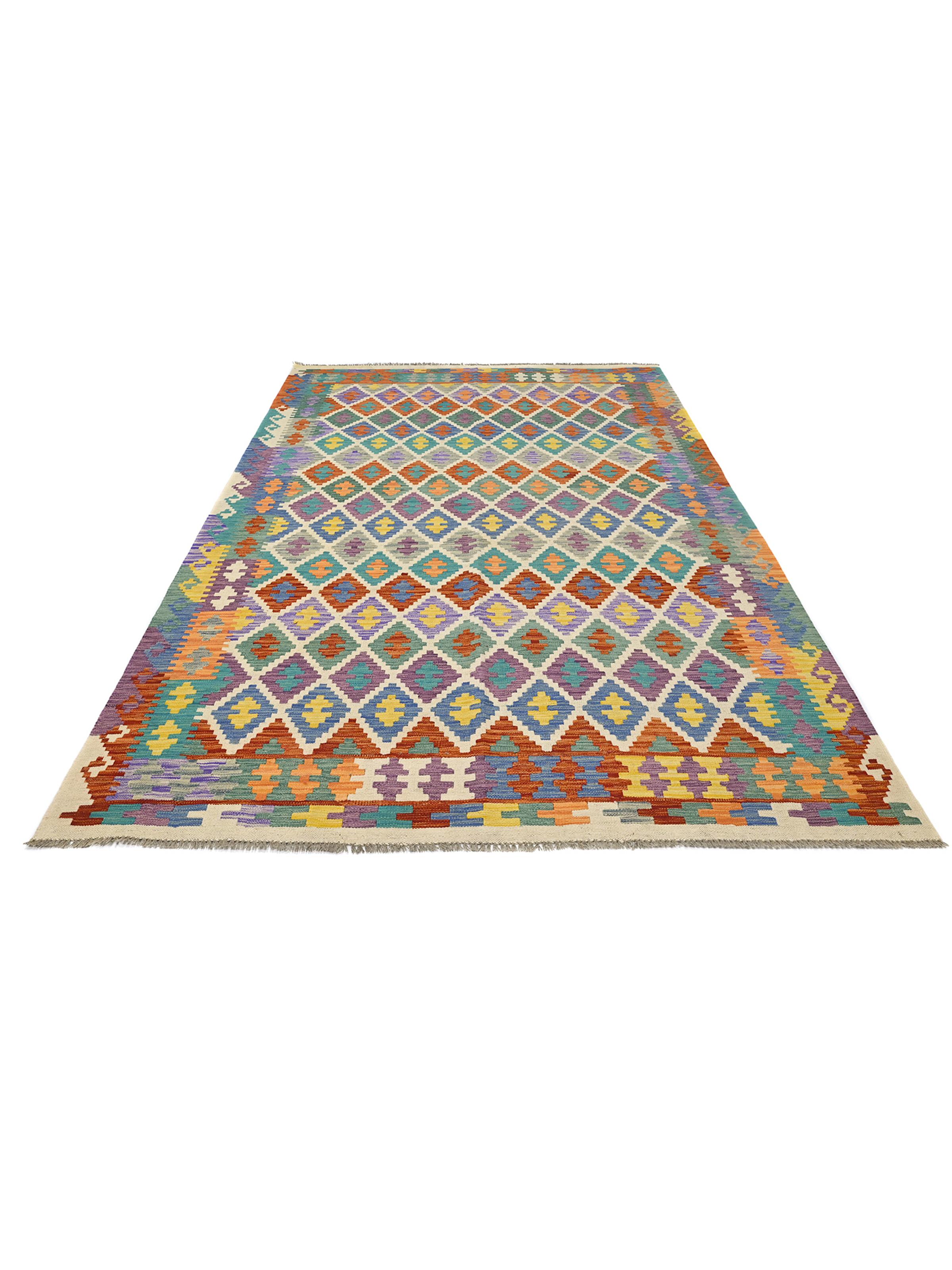
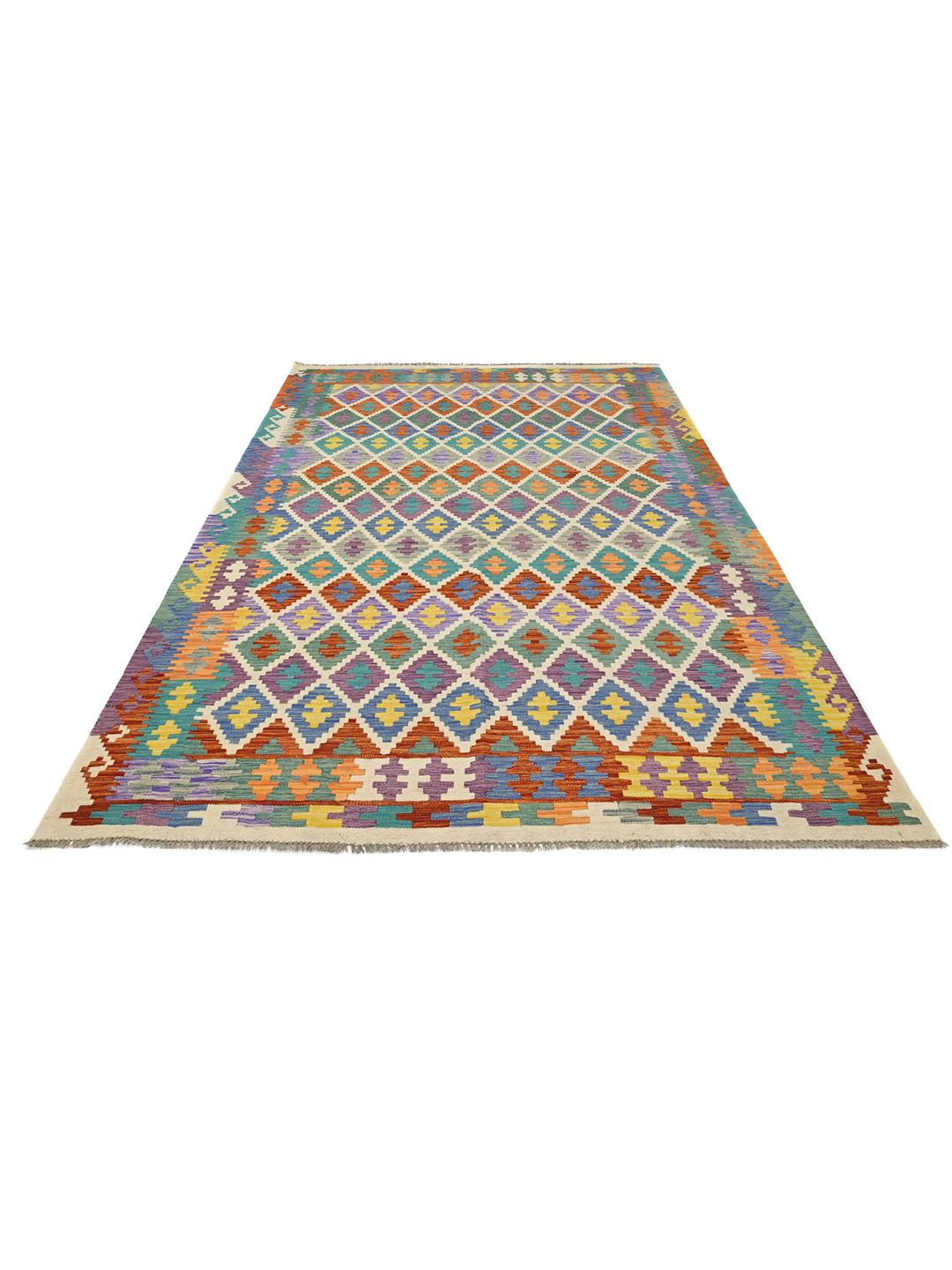
Kelim rugs have a long and storied history across Afghanistan and the wider region, where they were originally crafted by nomadic tribes for practical use as floor coverings, blankets, and storage bags. Unlike piled rugs, Kelims are flatwoven, a technique that makes them highly versatile and easy to transport across changing landscapes.
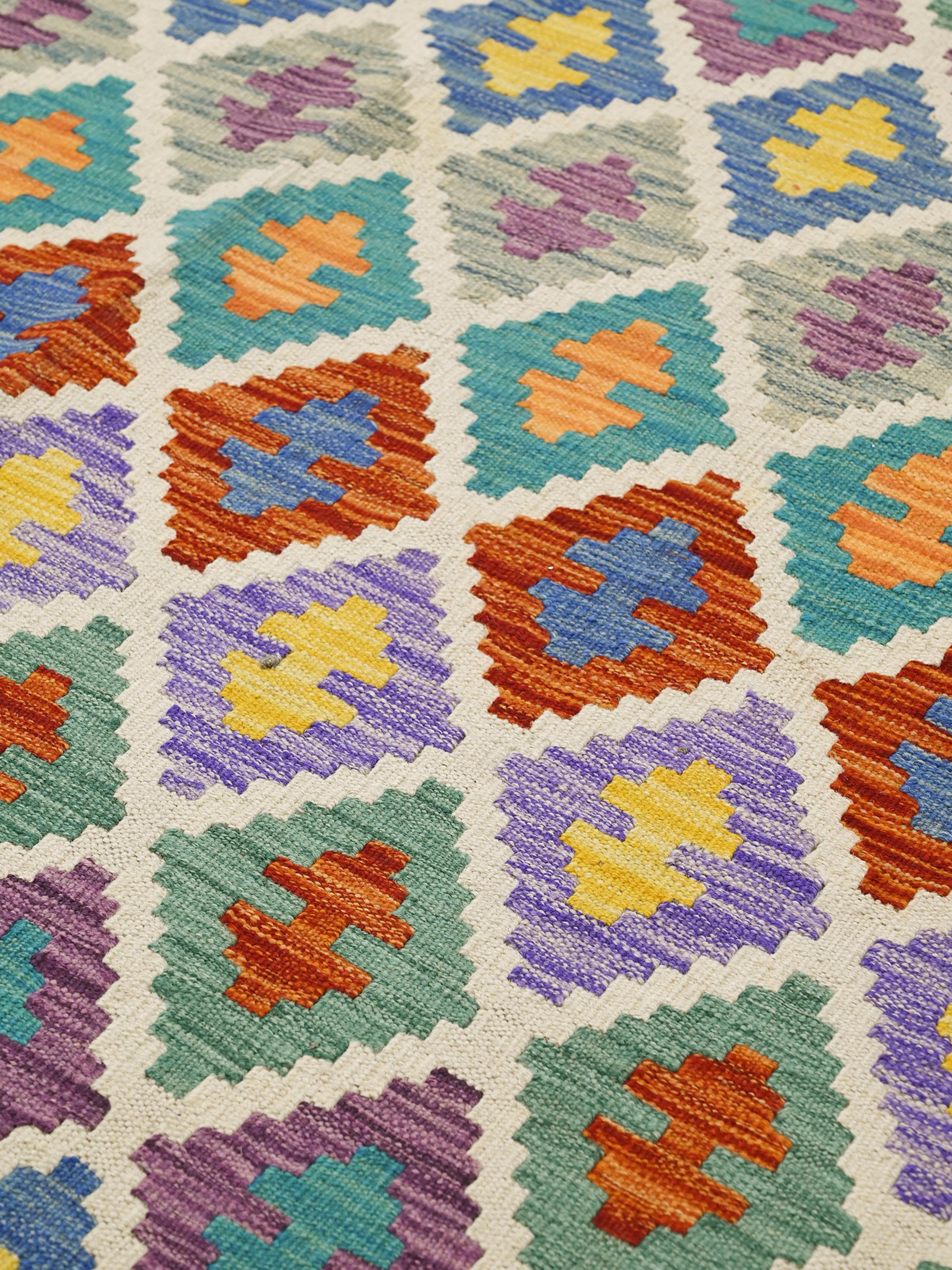
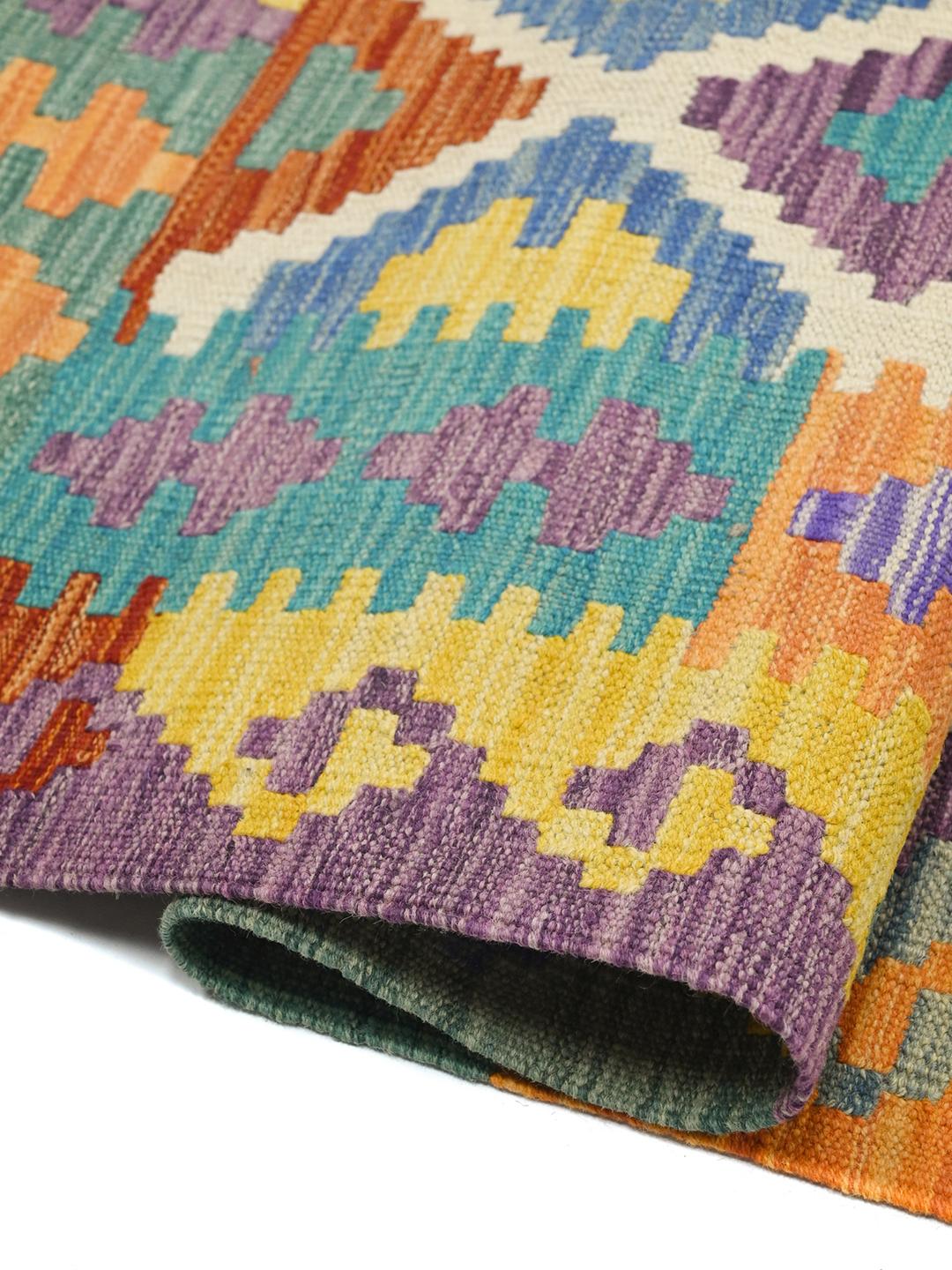
The term Kelim refers to the specific slit-weave technique used to create these flatwoven textiles. By tightly interweaving the warp and weft strands, weavers create a smooth, pile-free surface that is exceptionally durable. This traditional method allows for clean, sharp transitions between different coloured sections, resulting in the bold geometric designs that define the style.
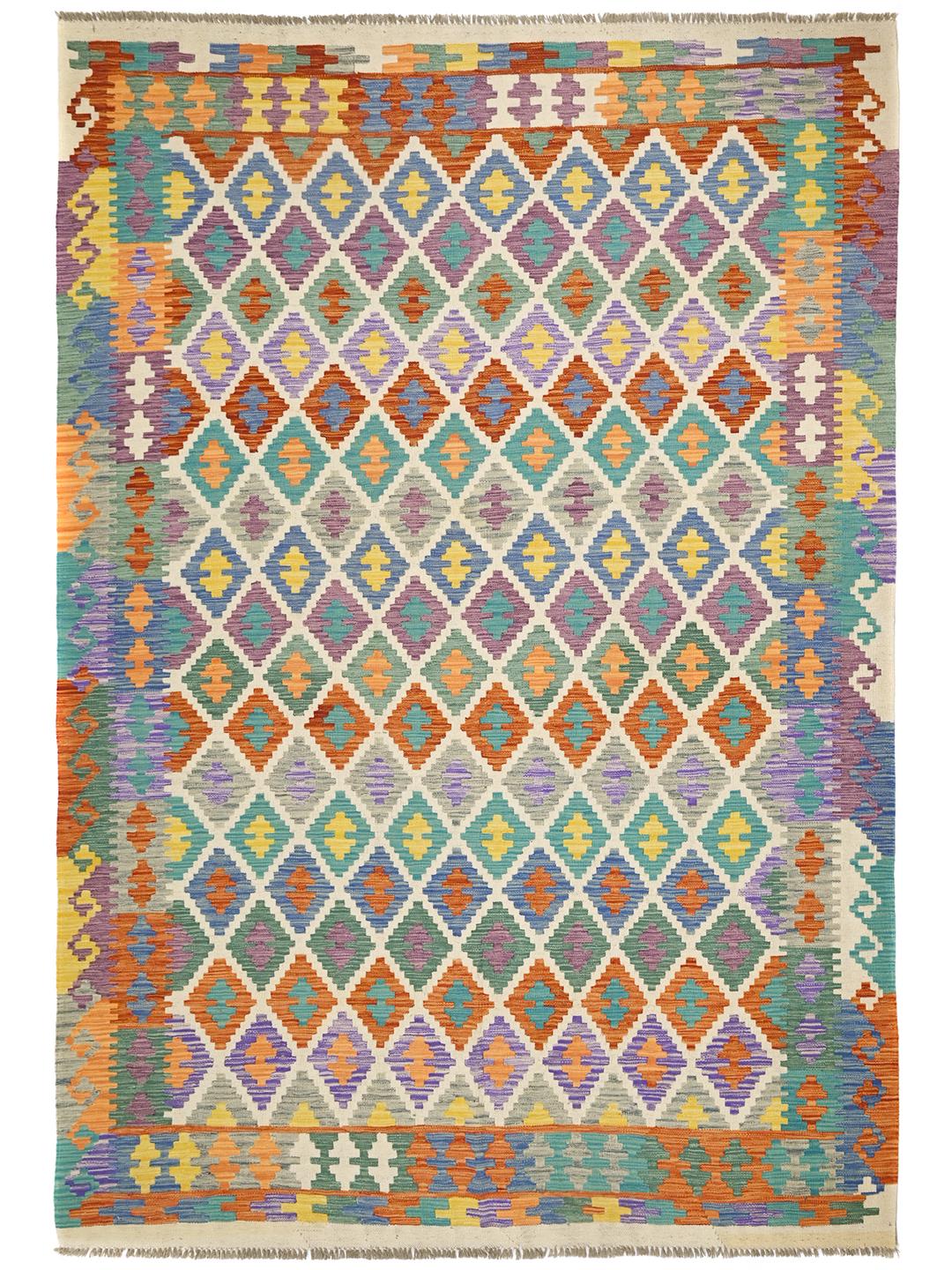
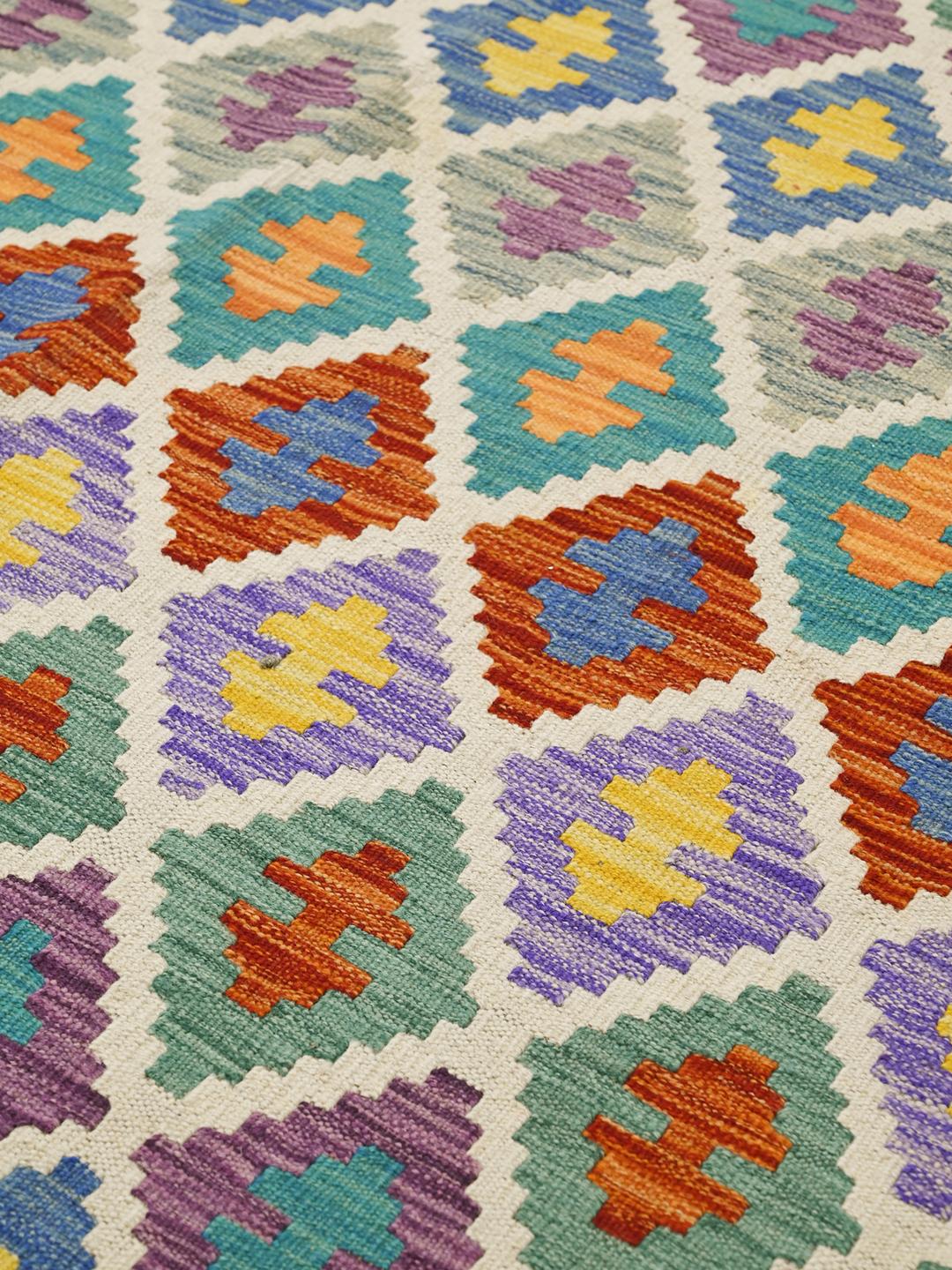
This particular piece features a classic diamond lattice pattern, a signature motif in Afghan weaving that symbolises protection and prosperity. The nested lozenges in shades of blue, orange, green, and yellow are framed by decorative borders, showcasing the weaver's ability to balance complex geometric symmetry with a lively, expressive colour palette.
Owning an Afghan Kelim is a way to connect with a rich cultural heritage. Each rug represents generations of shared knowledge, where weaving techniques and design motifs are passed down through families, making every completed piece a valuable slice of living history.