Afghan kilims have a long and storied history, rooted in the nomadic and semi-nomadic weaving traditions of Central Asia and Afghanistan. Historically woven for practical home use, these flatwoven rugs served as floor coverings, blankets, and storage bags, designed to withstand the demands of travel and daily life.
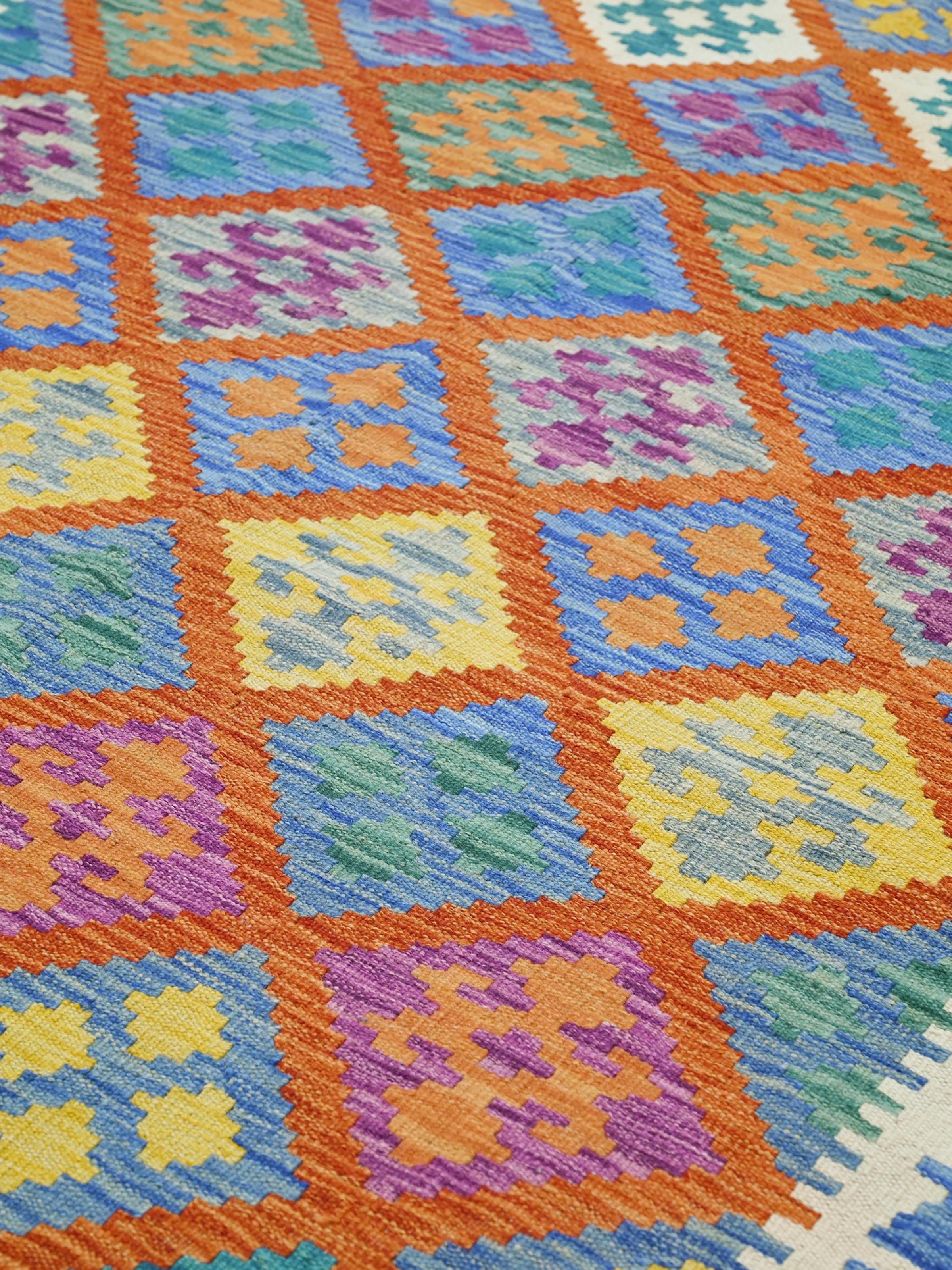
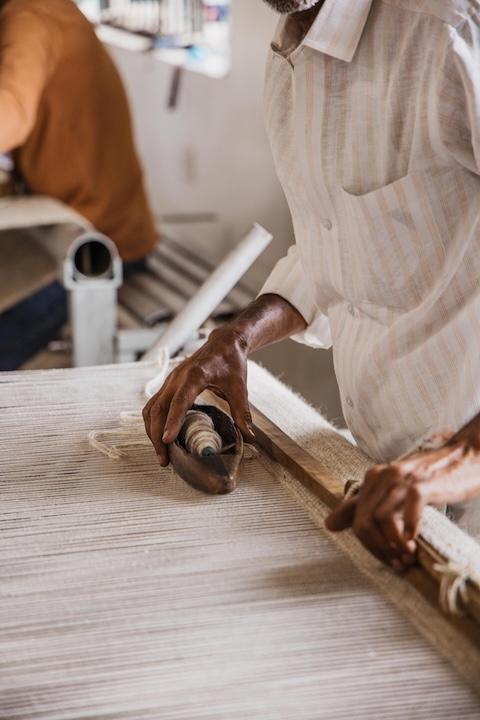
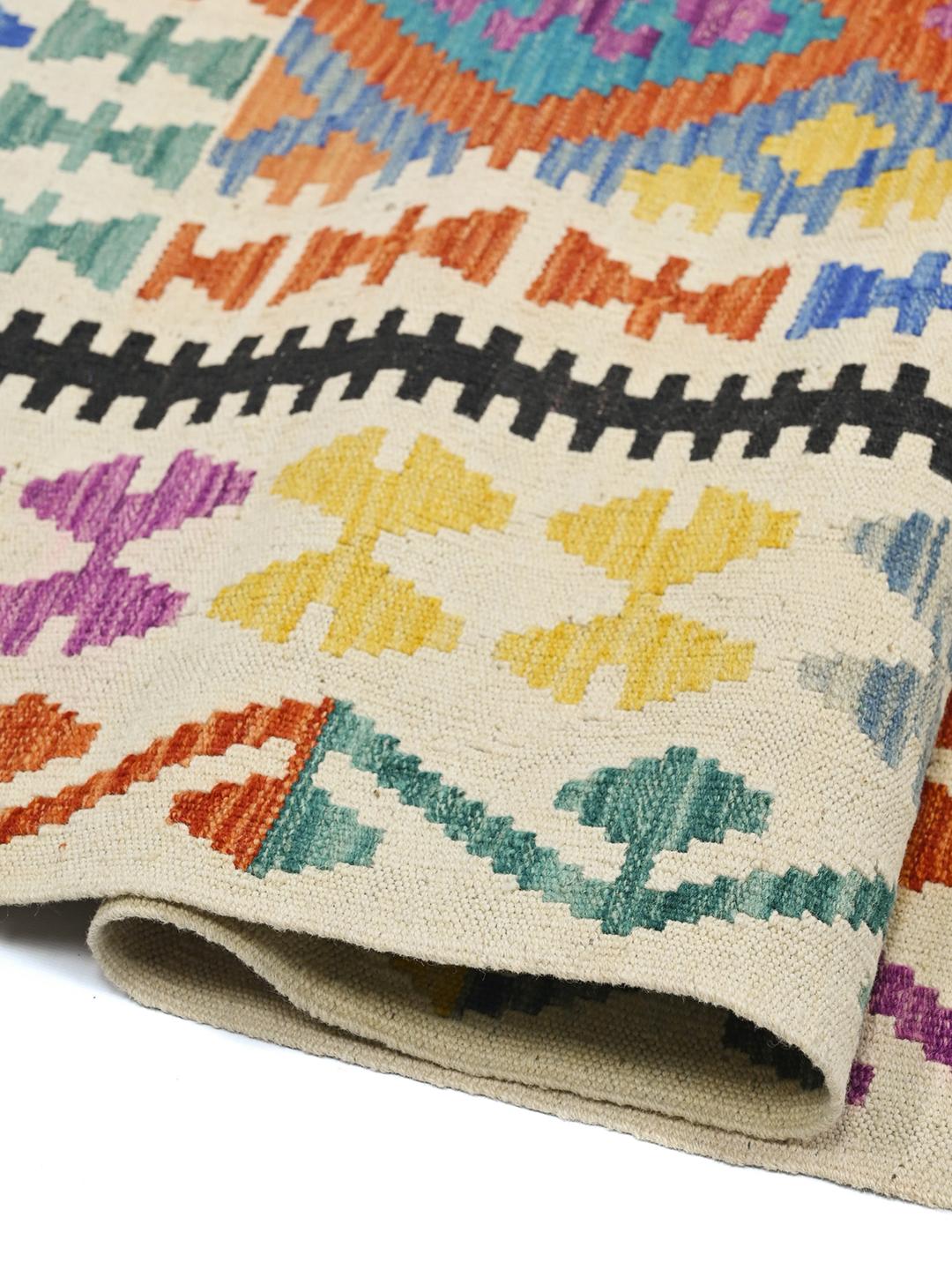
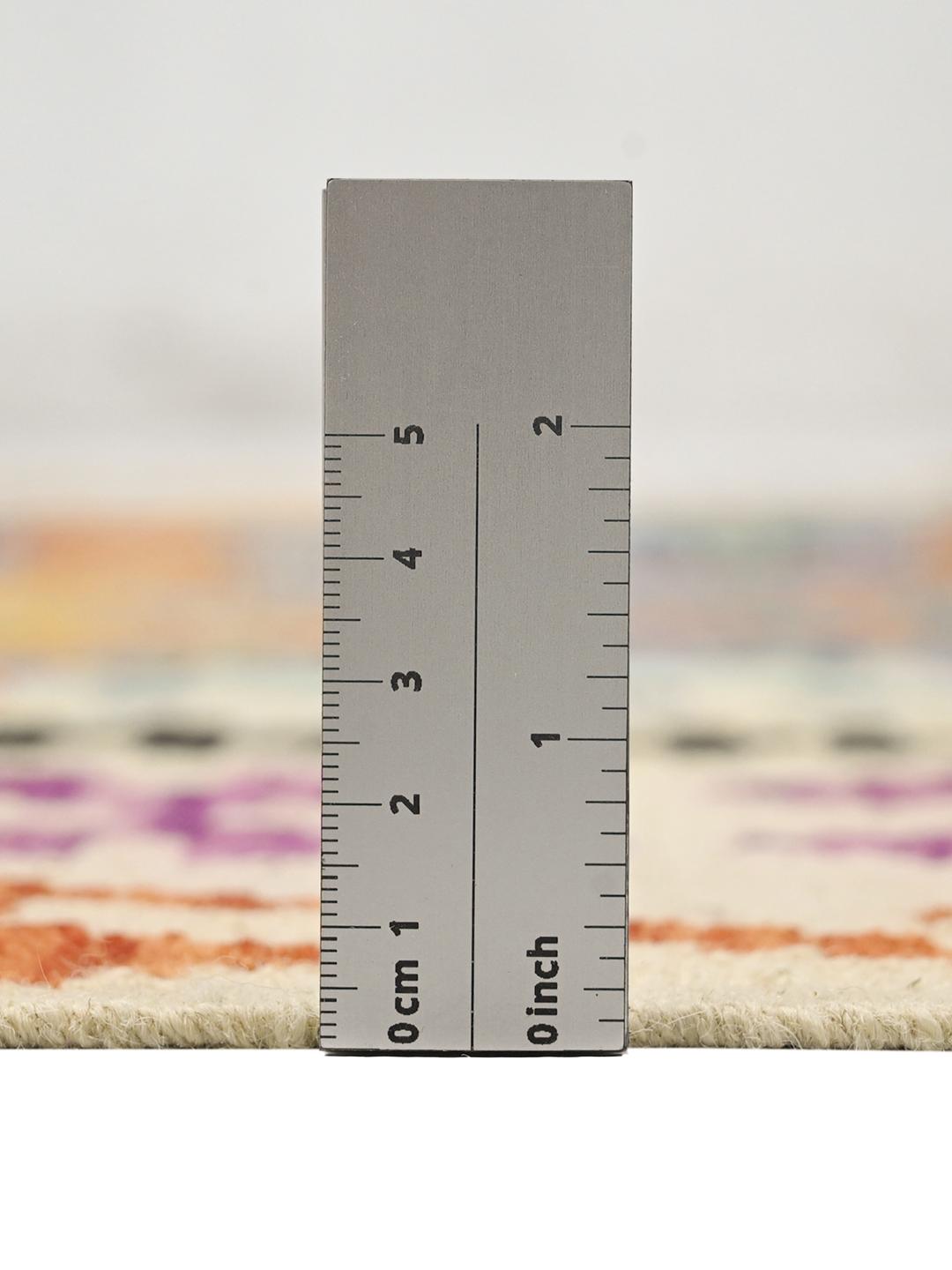
The term Kelim refers to a flatwoven rug without a pile, created by tightly weaving the horizontal and vertical threads together. This ancient technique produces a lightweight yet exceptionally durable textile, celebrated for its geometric clarity and clean, modern appeal that fits easily into contemporary homes.
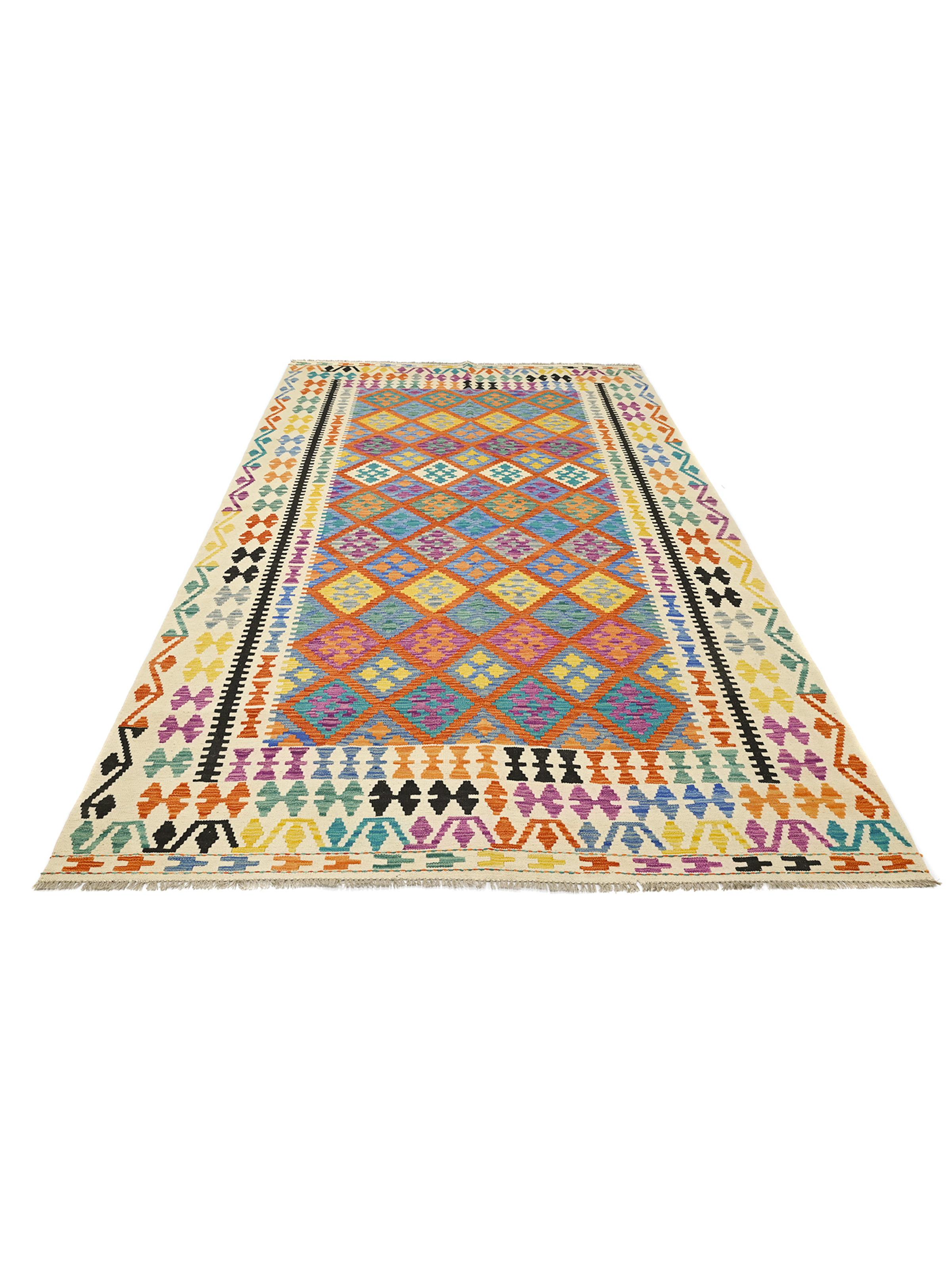
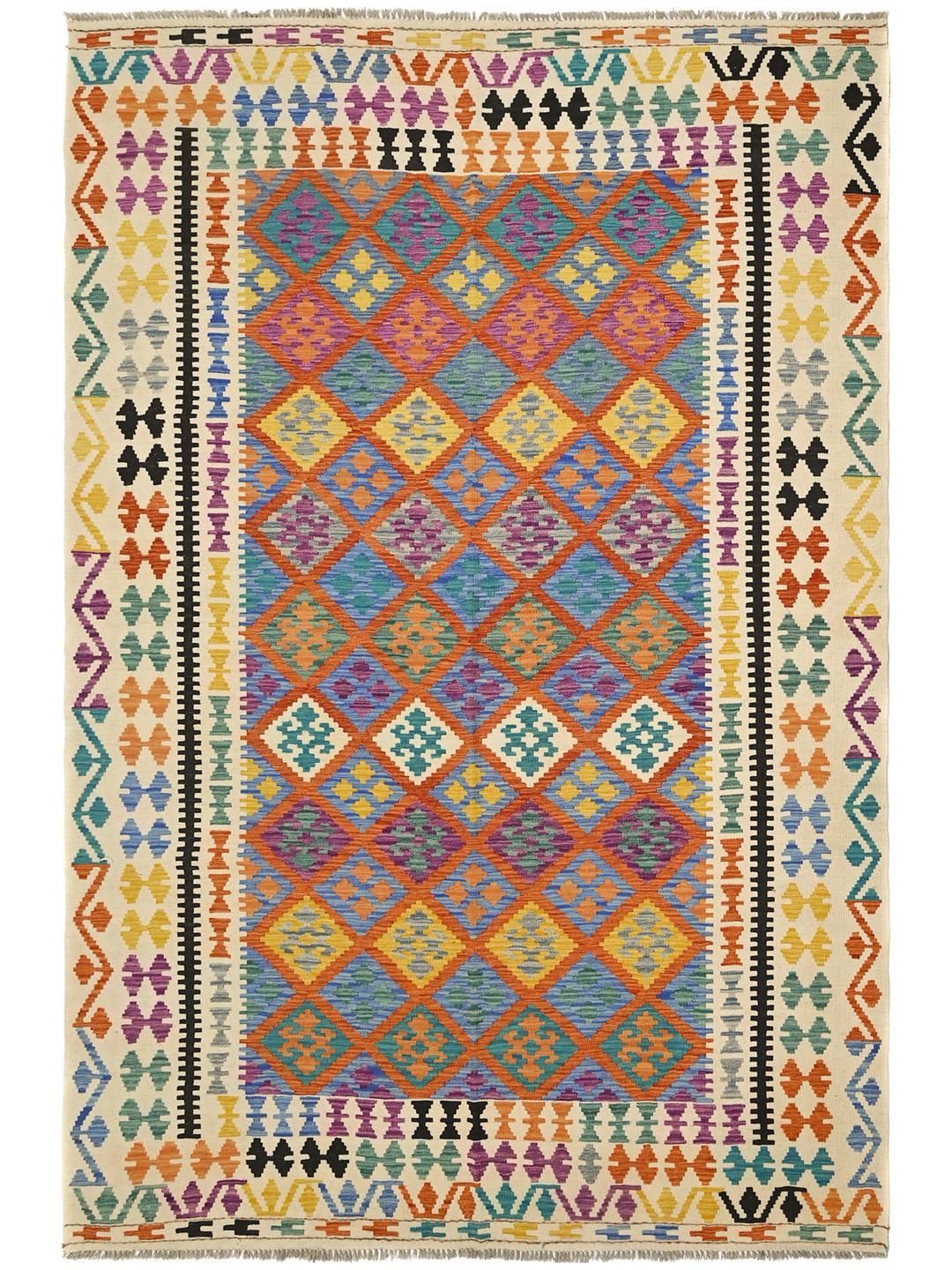
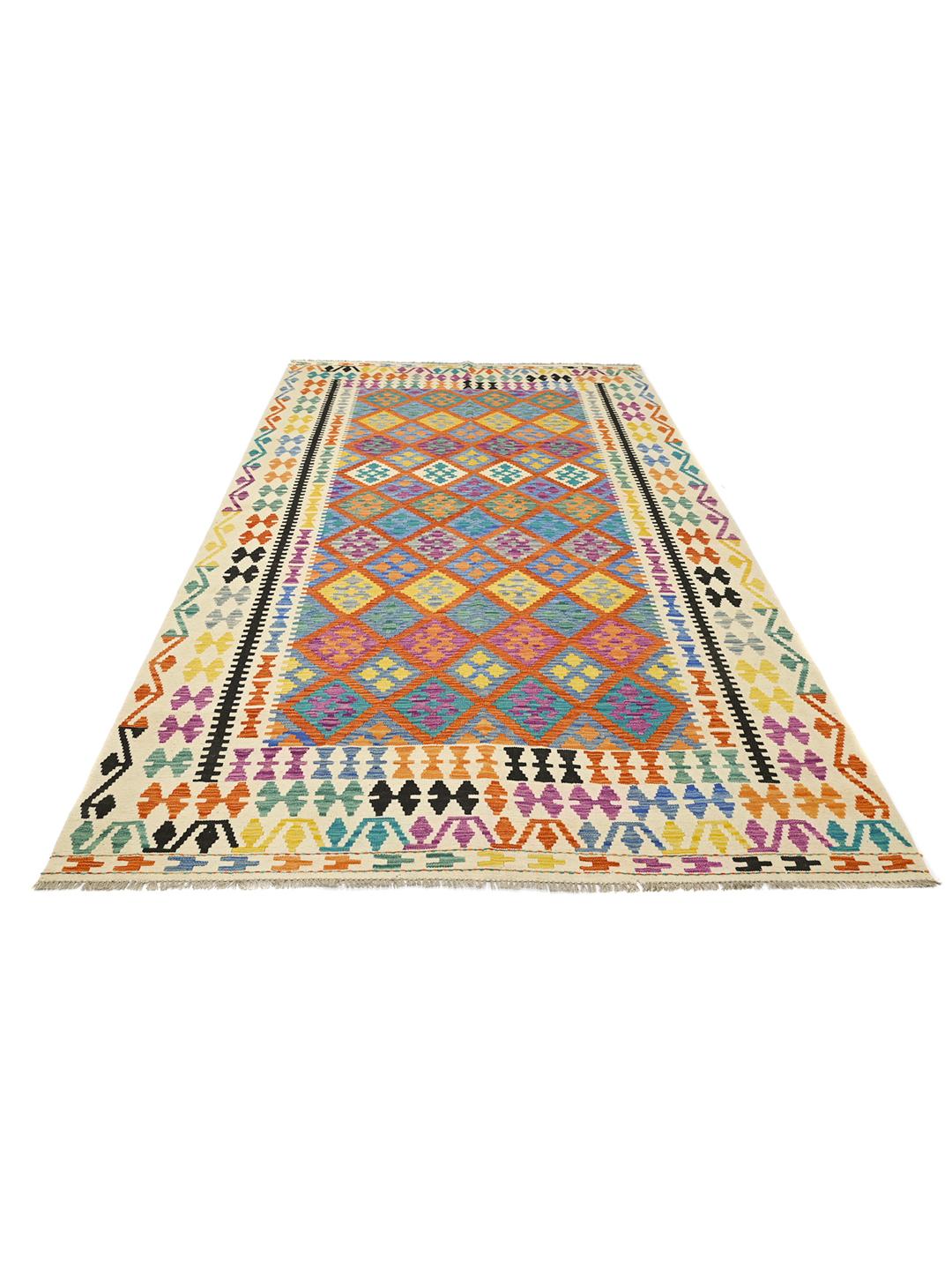
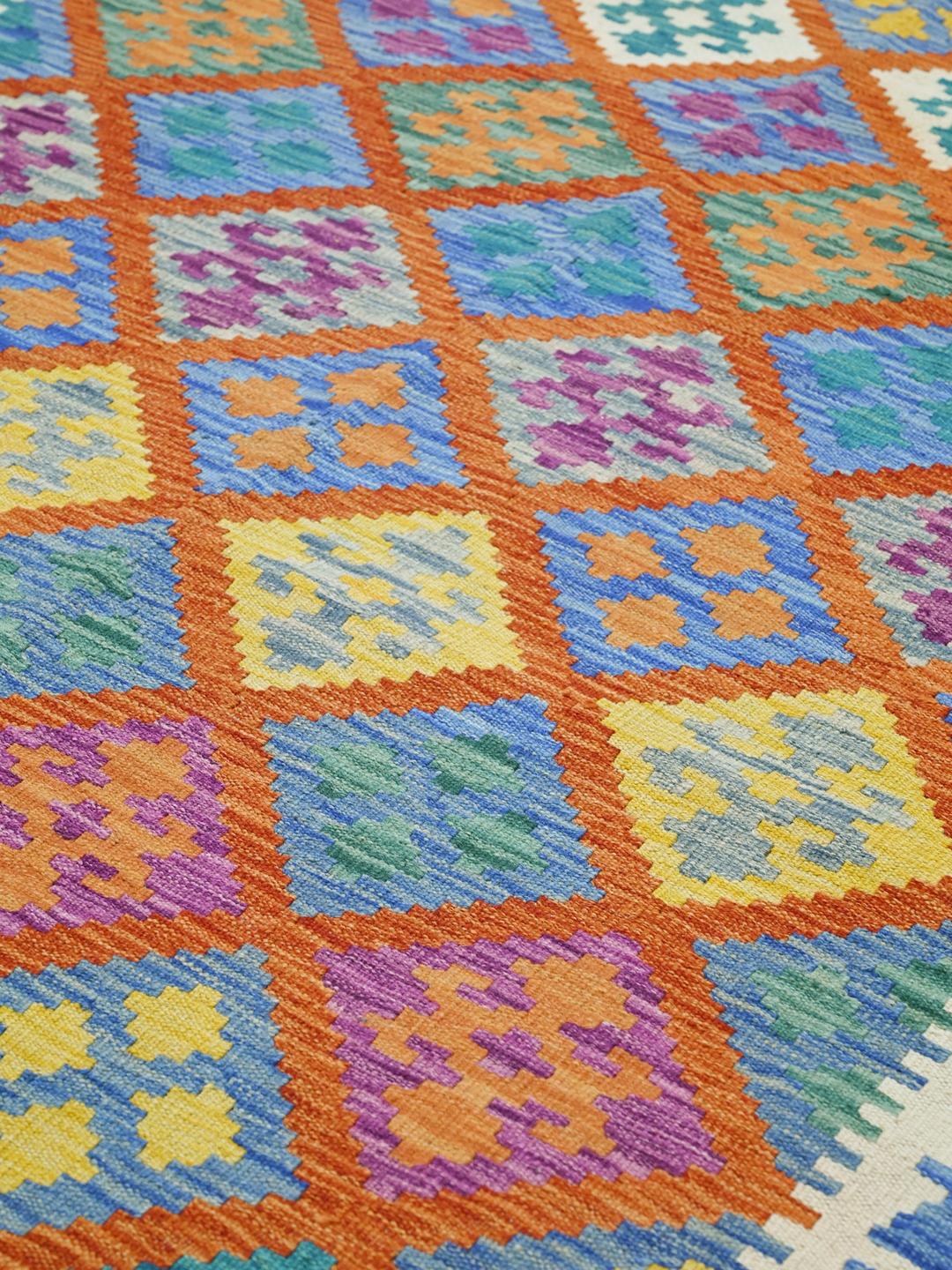
The visual language of this rug is defined by repeating diamond patterns and intricate tribal borders, which are traditional symbols of protection, fertility, and family identity. While traditional Afghan kilims often feature deep reds and dark tones, this contemporary variation uses a lighter beige ground to give the ancient motifs a fresh, updated feel.
Owning an Afghan kilim is an appreciation of a living heritage. Each piece represents a connection to generations of weavers who have passed down their skills, colour choices, and symbolic languages, making these rugs highly valued by collectors and design enthusiasts worldwide.