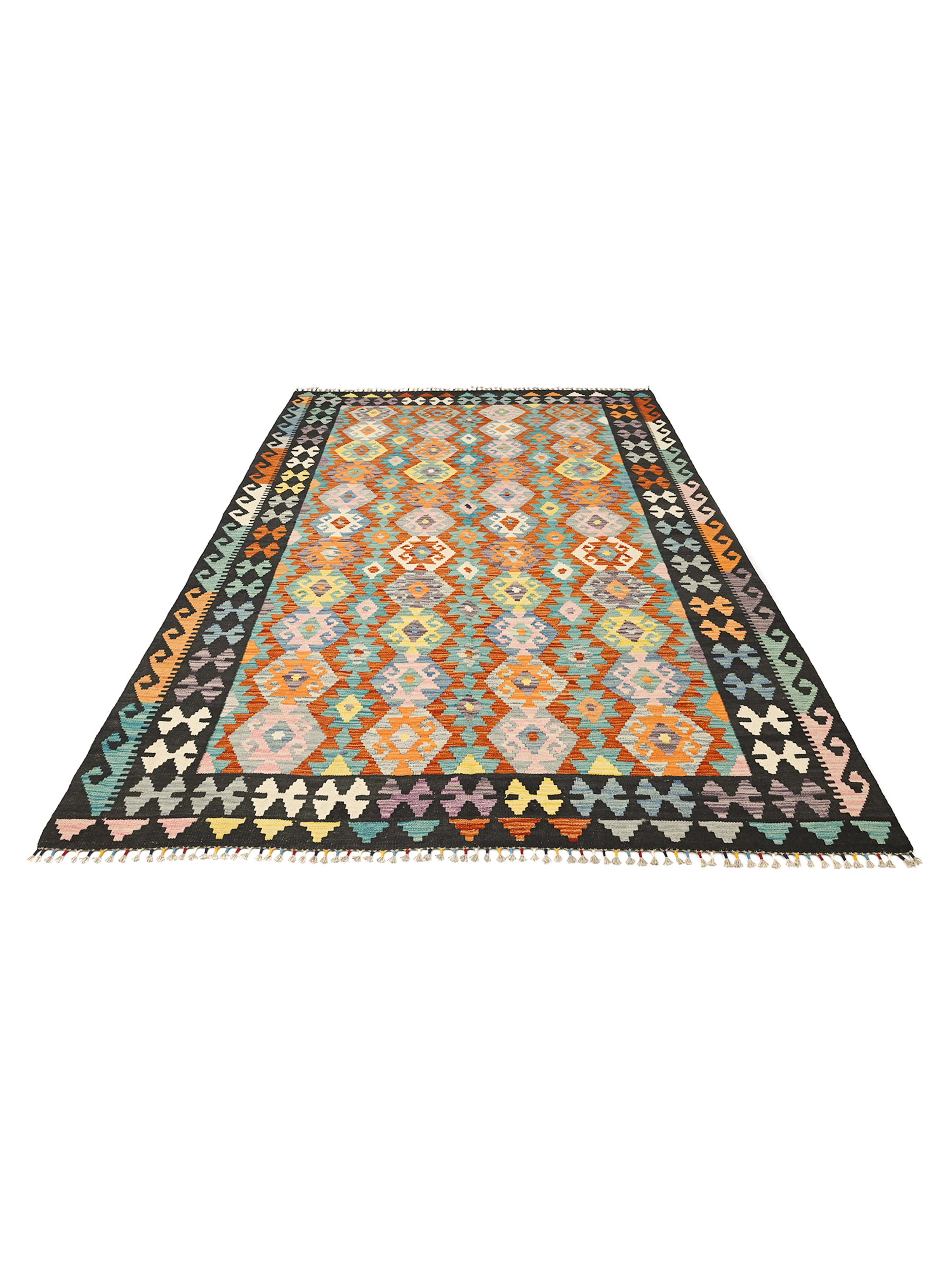
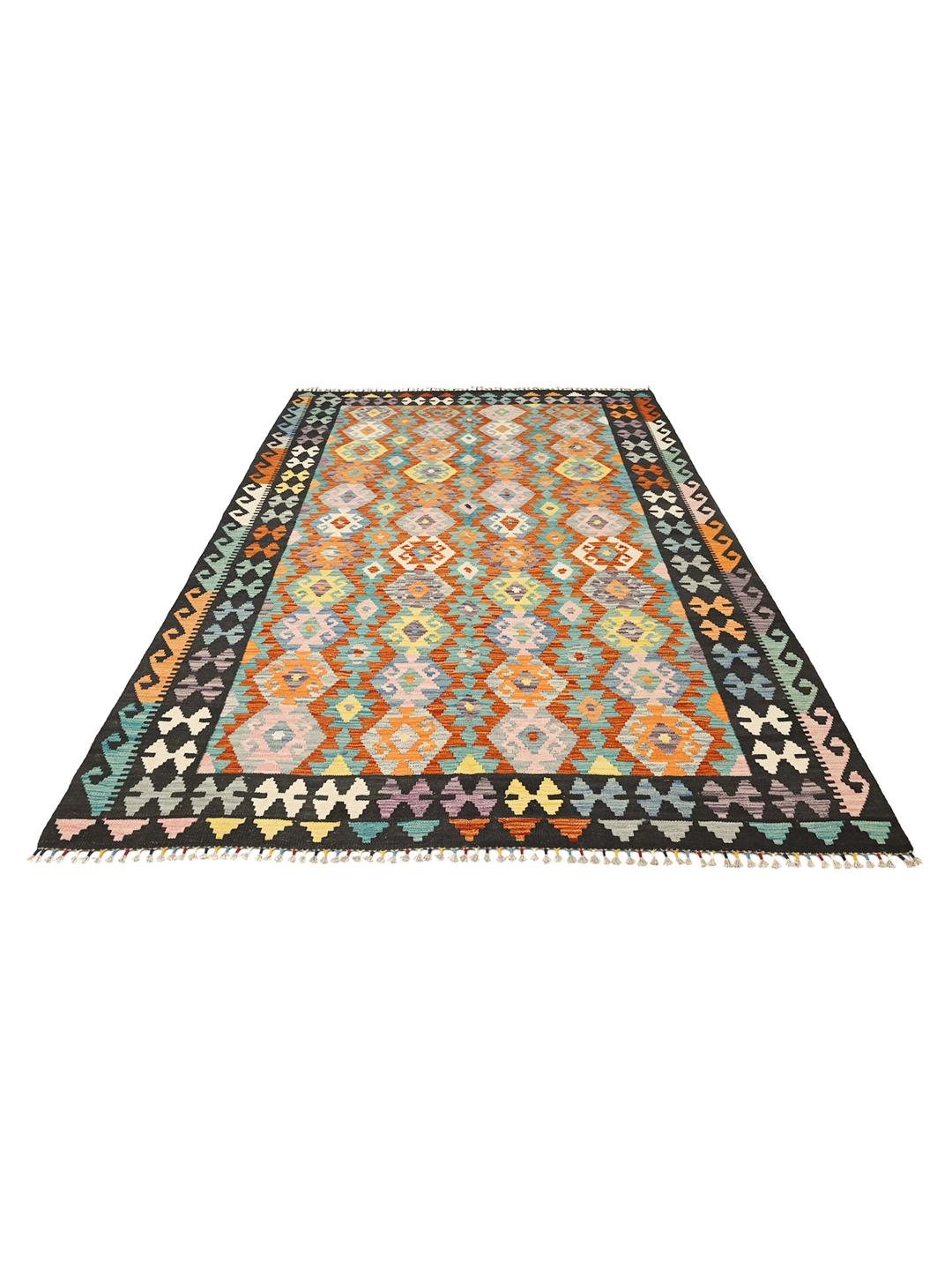
The Kelim tradition in Afghanistan is deeply rooted in the nomadic and semi-nomadic cultures of the region. For centuries, these flat-woven textiles have served as essential, multi-functional items in the daily lives of tribal communities. They were traditionally used as floor coverings, wall hangings, and even as storage bags, with each region and tribe developing its own distinct visual language and weaving techniques that have been passed down through generations.
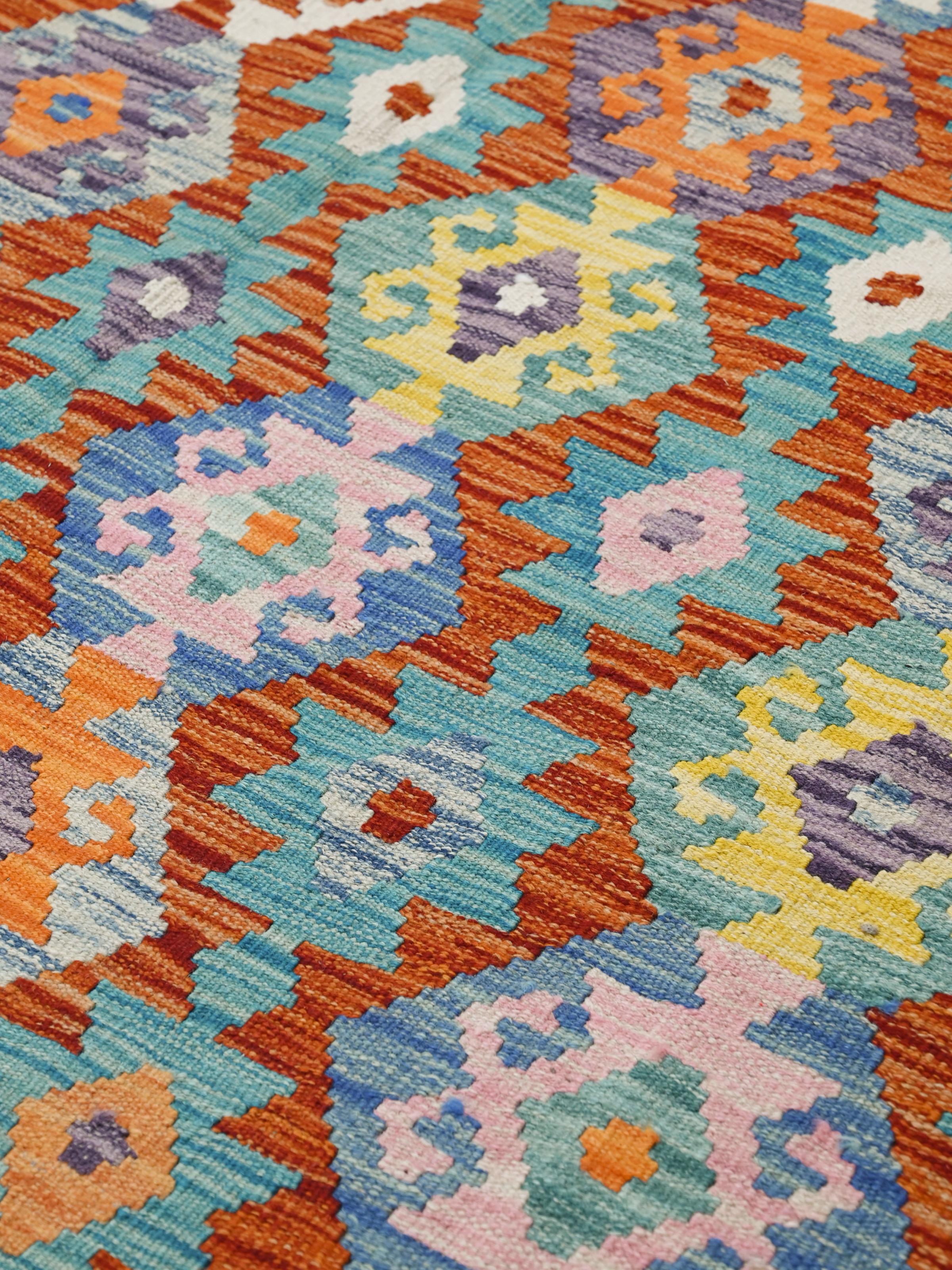
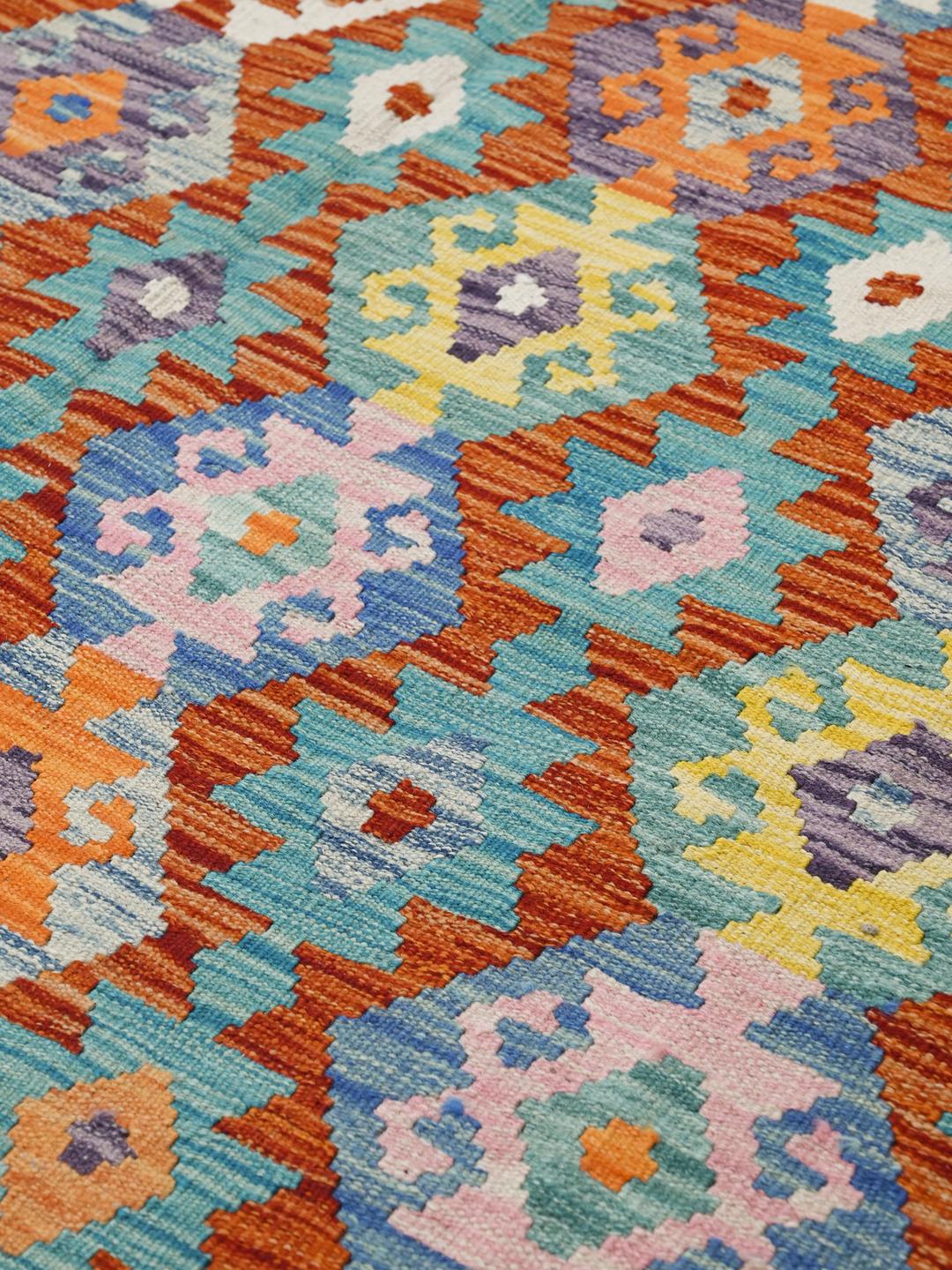
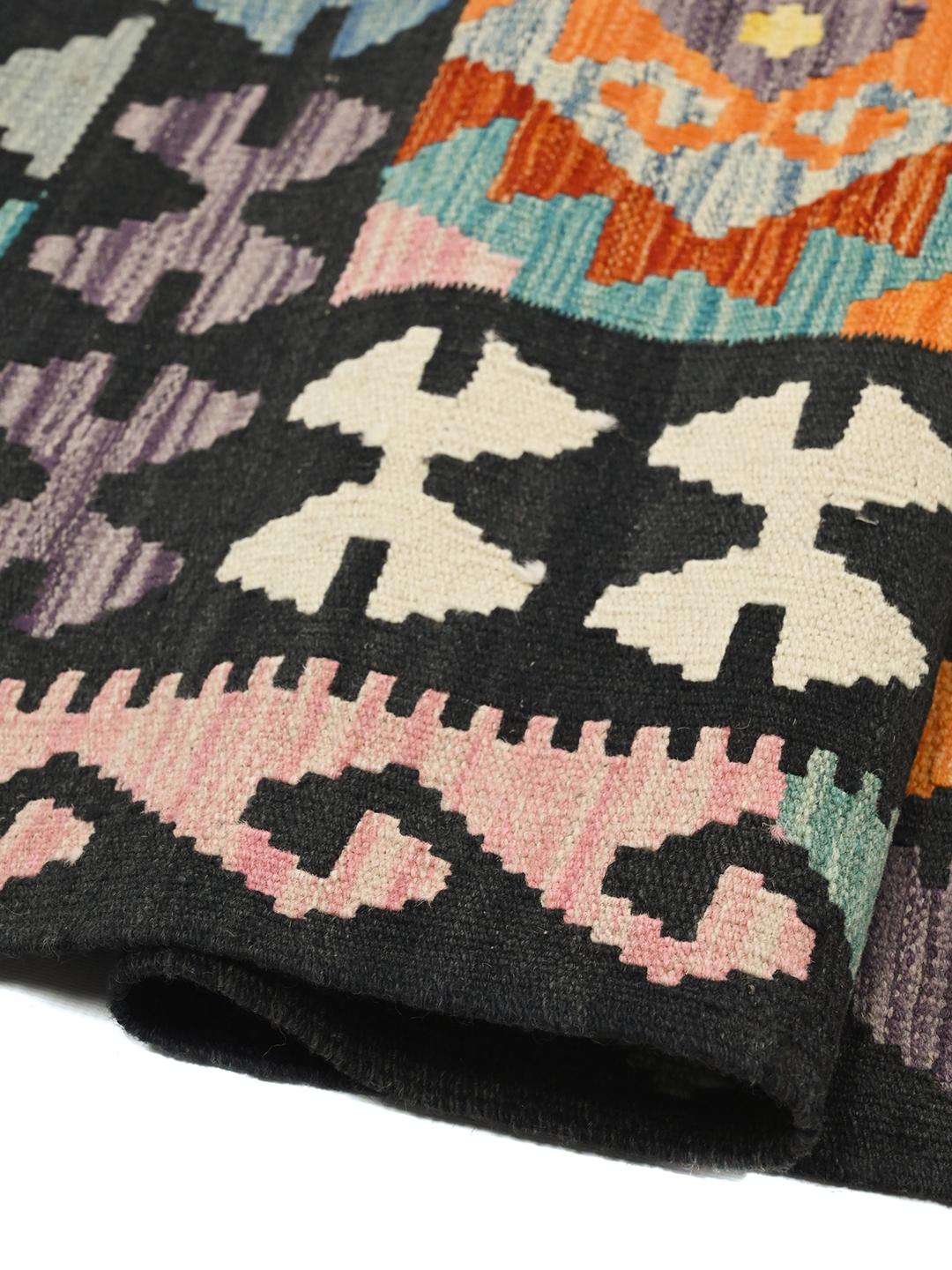
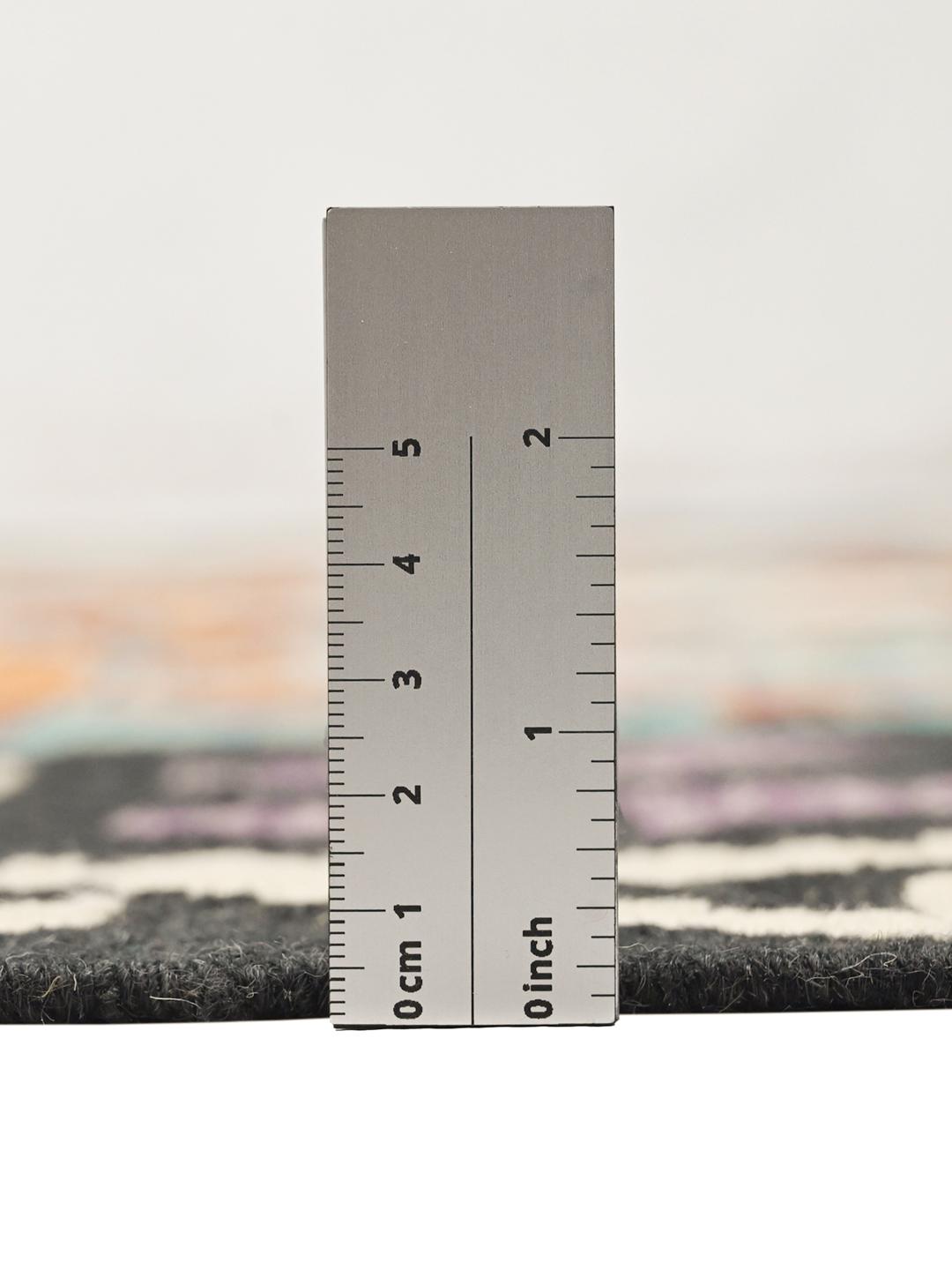
A Kelim is defined by its flat-weave construction, which distinguishes it from pile rugs. This technique involves the weft threads being passed over and under the warp threads to create the design, resulting in a thin, lightweight, and reversible textile. The absence of a pile means the clarity of the geometric patterns is sharp and well-defined, showcasing the weaver's ability to maintain tension and precision across the entire surface of the rug.
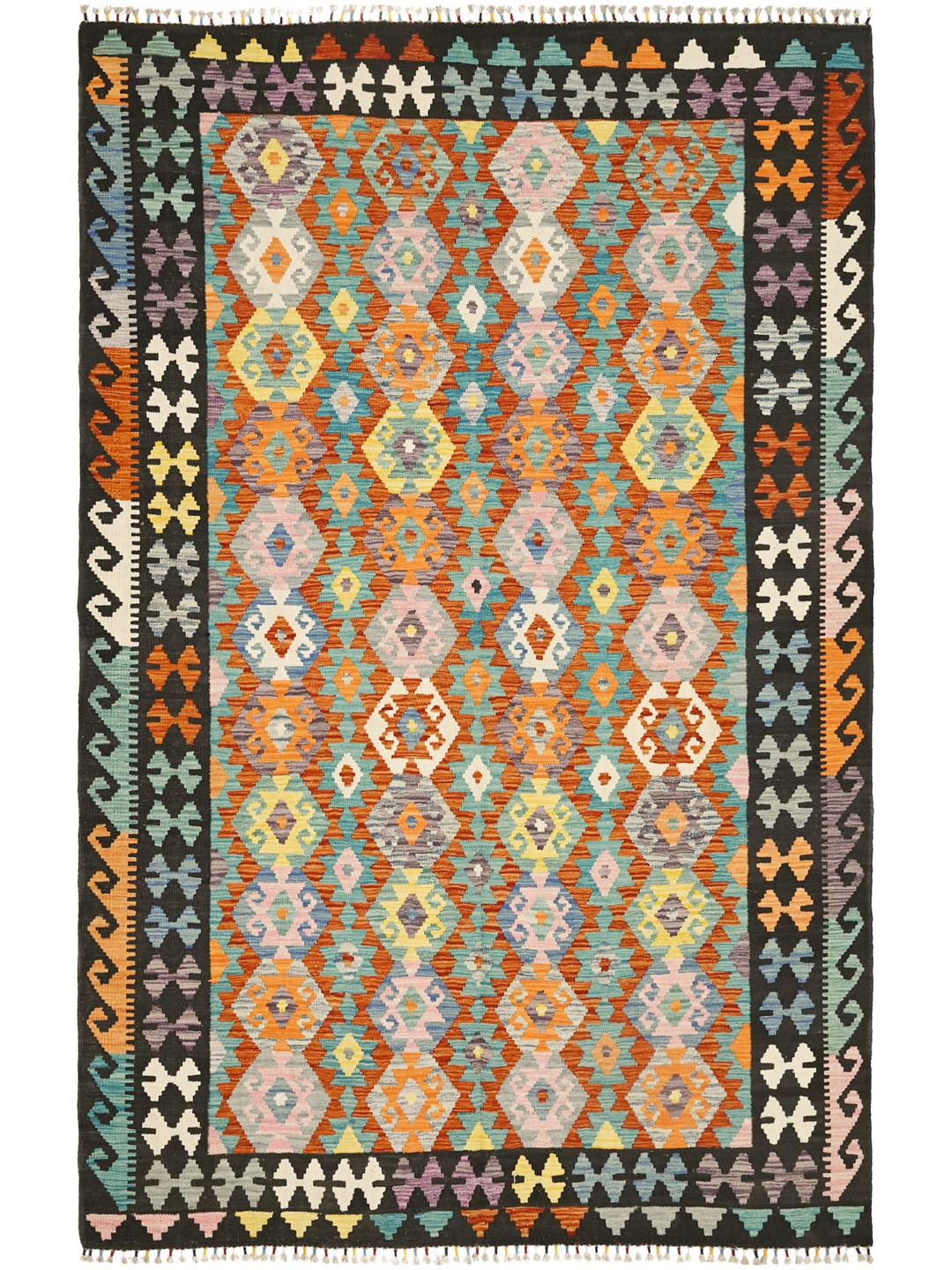
The design of this piece is characterised by bold, repeated geometric motifs that often carry symbolic meaning within the weaving community. These patterns are typically framed by elaborate, decorative borders that act as a visual boundary for the field. The use of vibrant, contrasting colours is a hallmark of this tradition, reflecting the natural dyes historically derived from local plants, minerals, and insects that were once readily available to the artisans in the region.
Collecting a Kelim is an investment in cultural heritage and human skill. These rugs are highly valued for their authenticity and the story they tell of the people who created them. By bringing a piece like this into your home, you are preserving a legacy of craft that has endured for centuries, ensuring that these traditional methods continue to be appreciated for their beauty, utility, and the remarkable patience required to produce them.