Afghan Kelims have a long and revered history rooted in the nomadic and semi-nomadic traditions of Central and South Asia. Historically created for daily household use, tent insulation, and trade, these flatweaves reflect the environment and cultural heritage of the tribes that crafted them. Over generations, Afghan weaving styles evolved into globally recognized textile traditions.
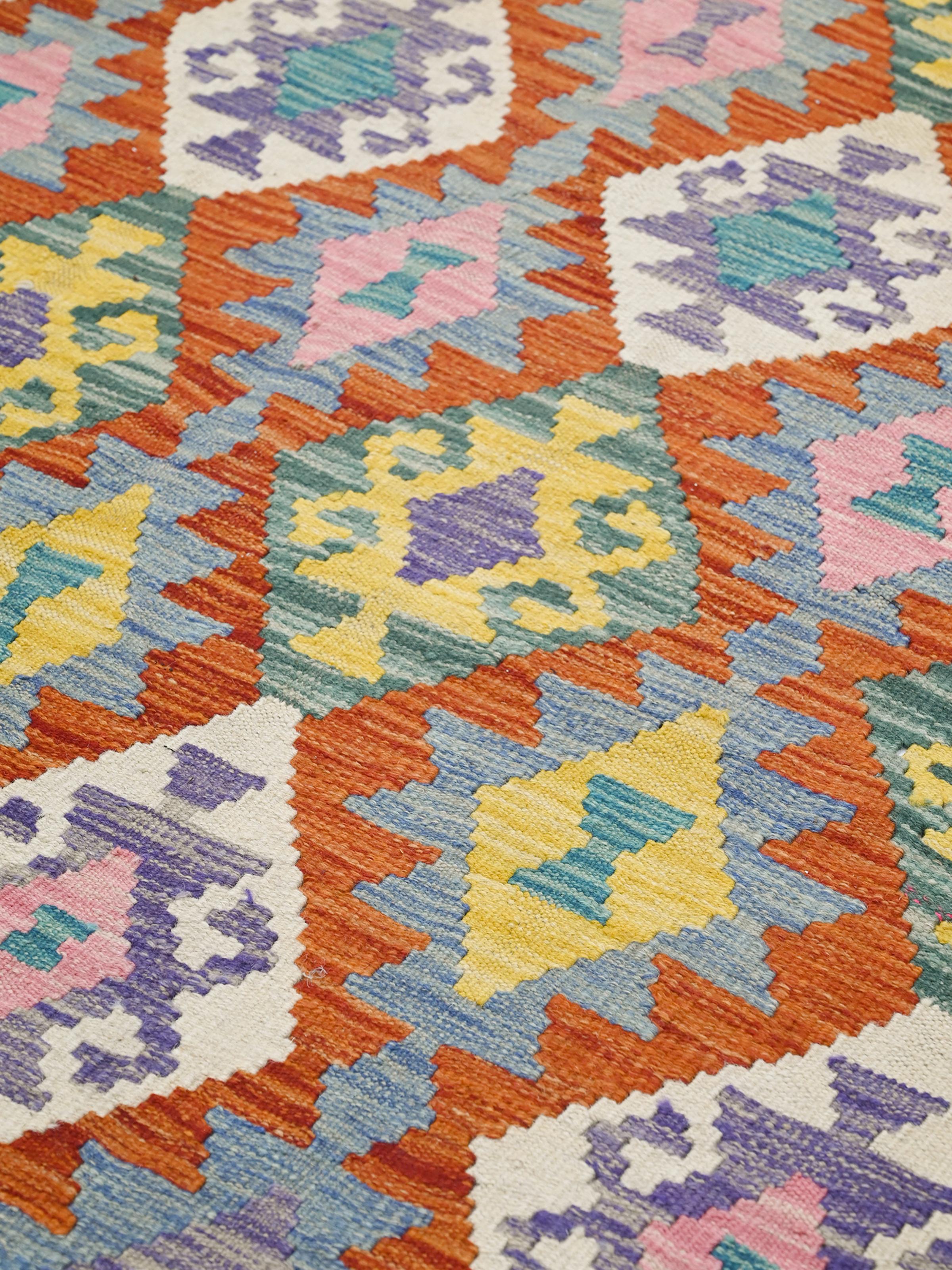
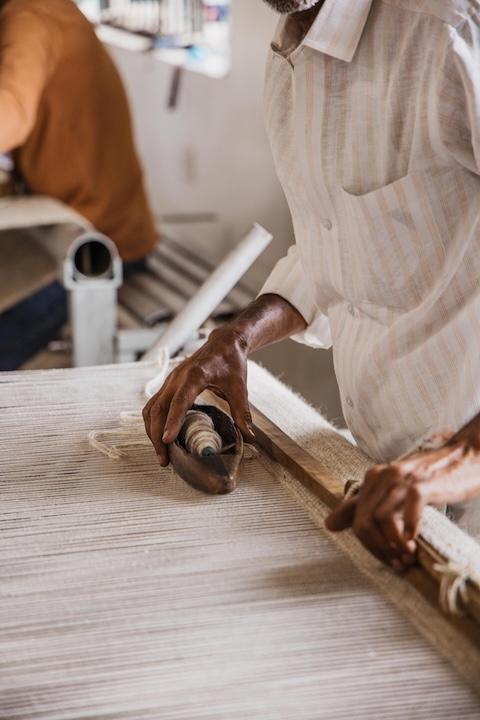
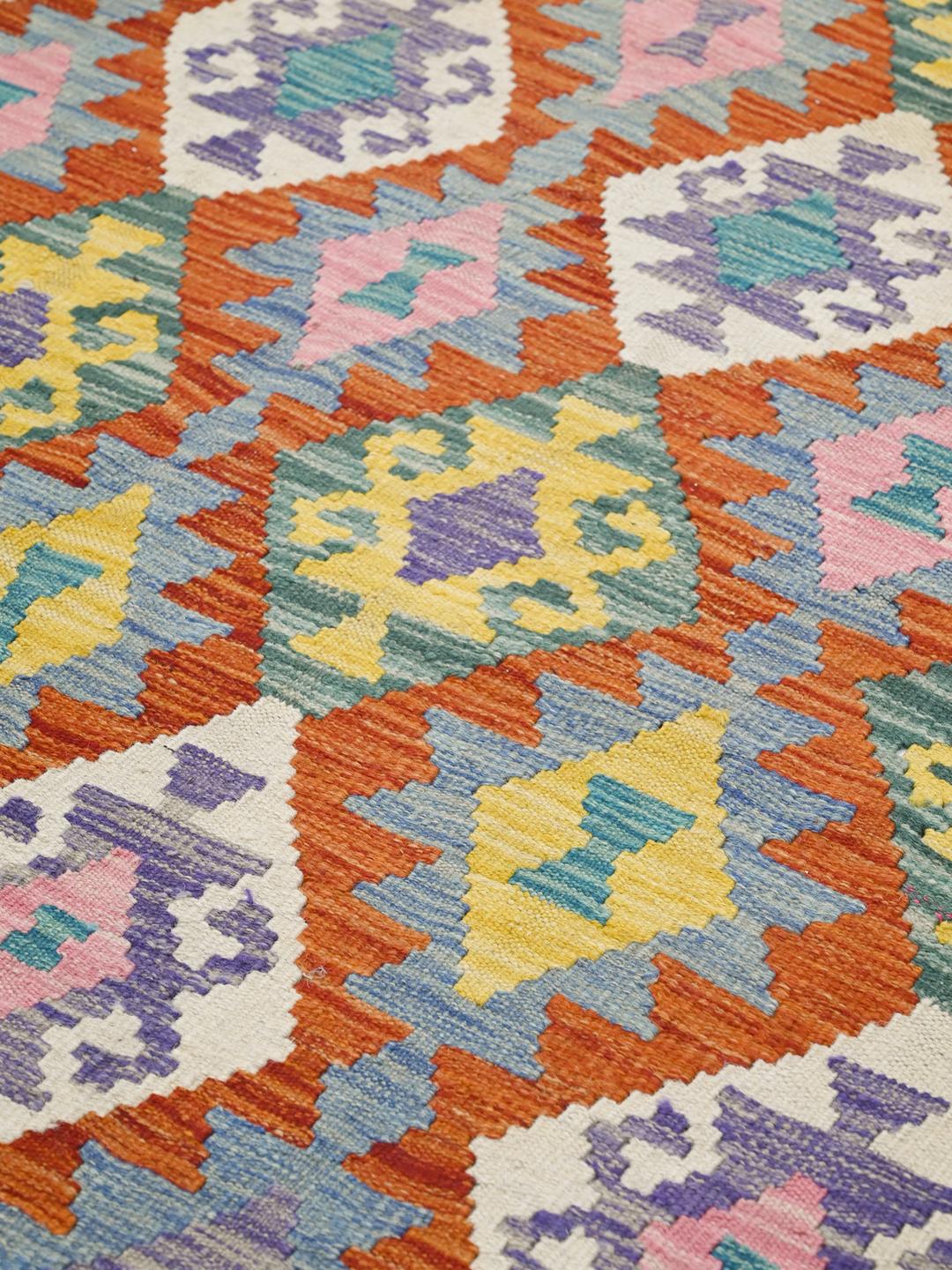
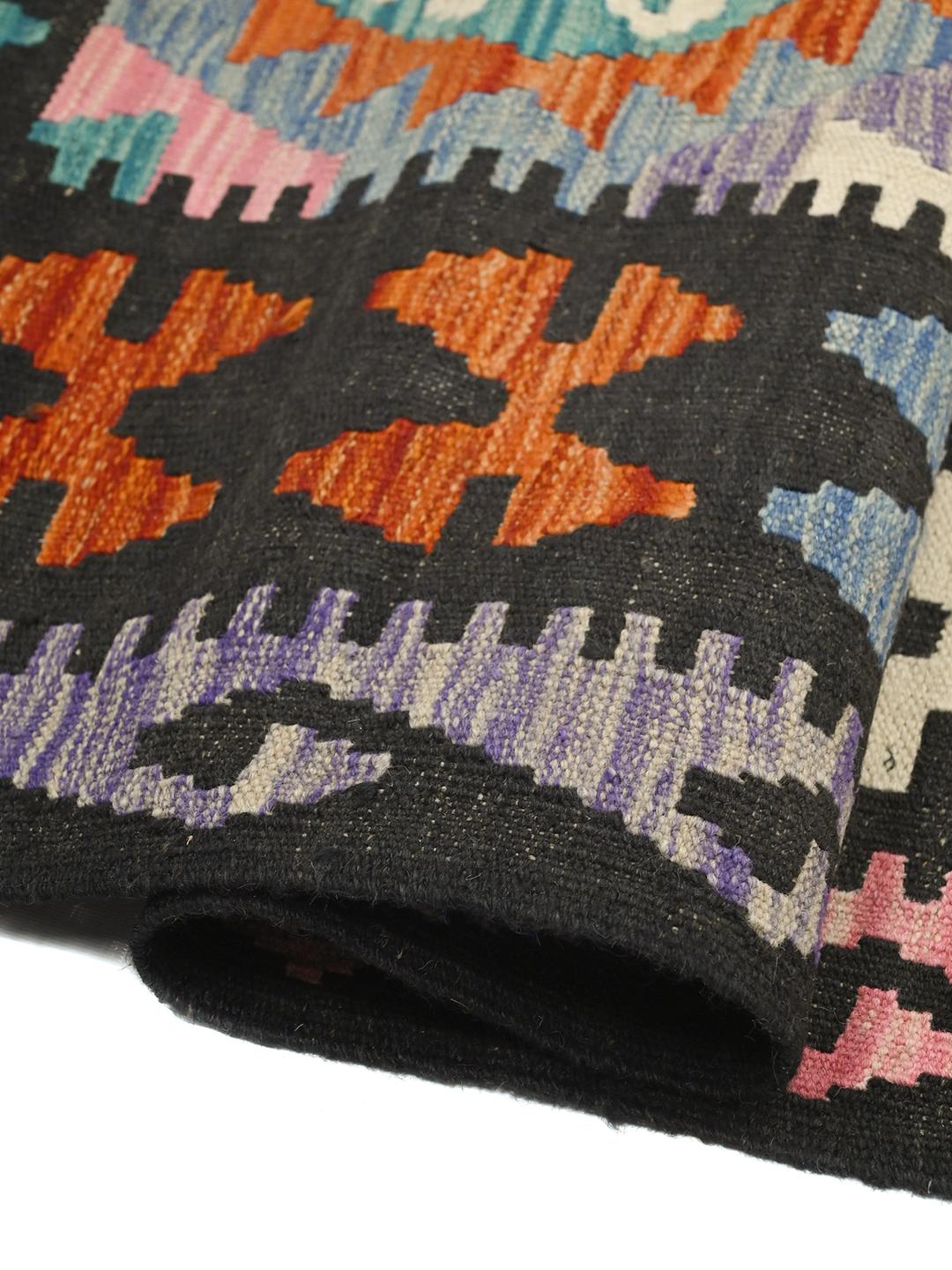
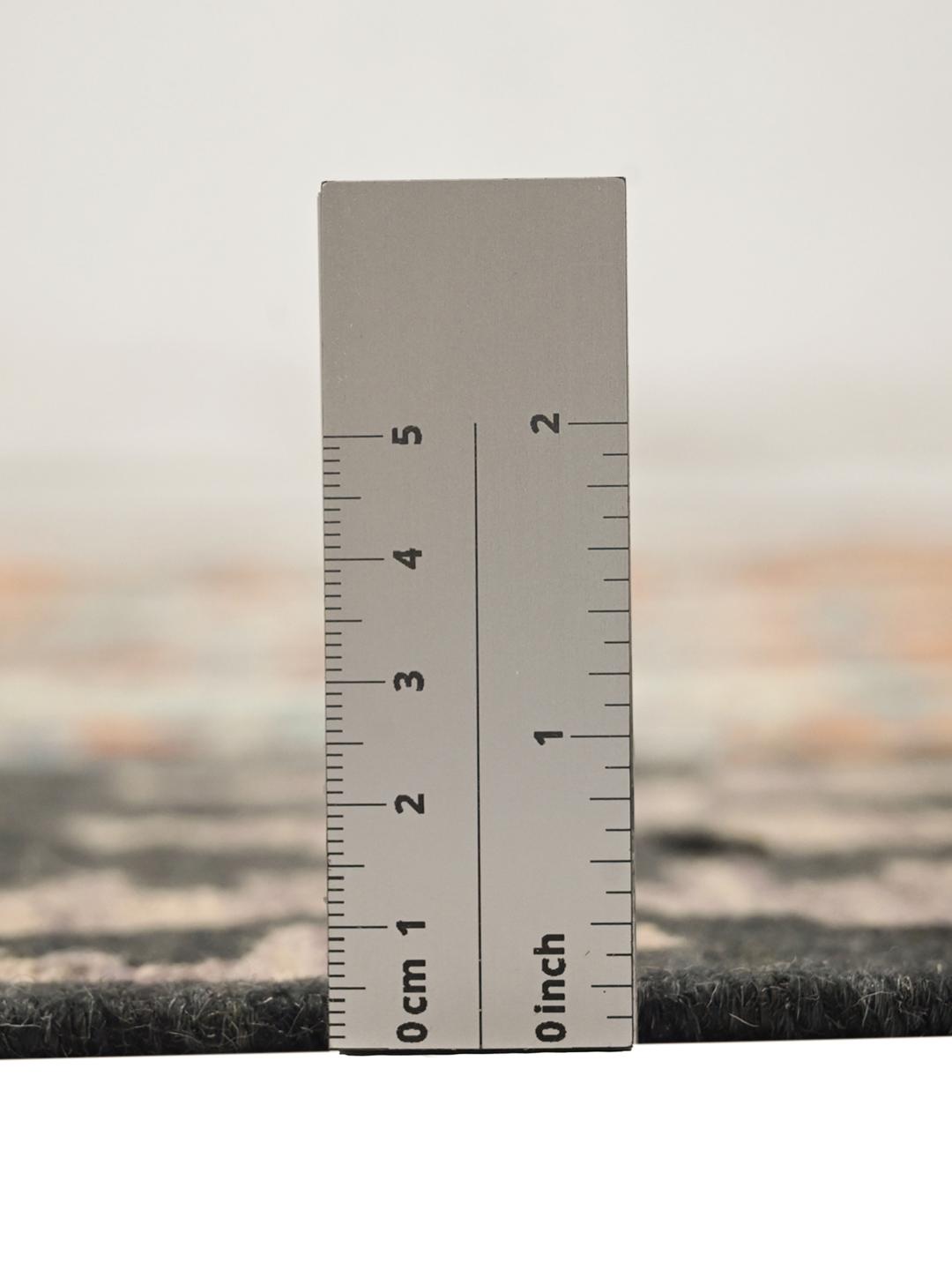
The term flatweave or Kelim describes a rug produced by tightly interlocking the warp and weft strands rather than knotting individual fibers onto a foundation. This technique creates a pileless, lightweight textile that is pliable, durable, and frequently reversible, making it as practical as it is visually striking.
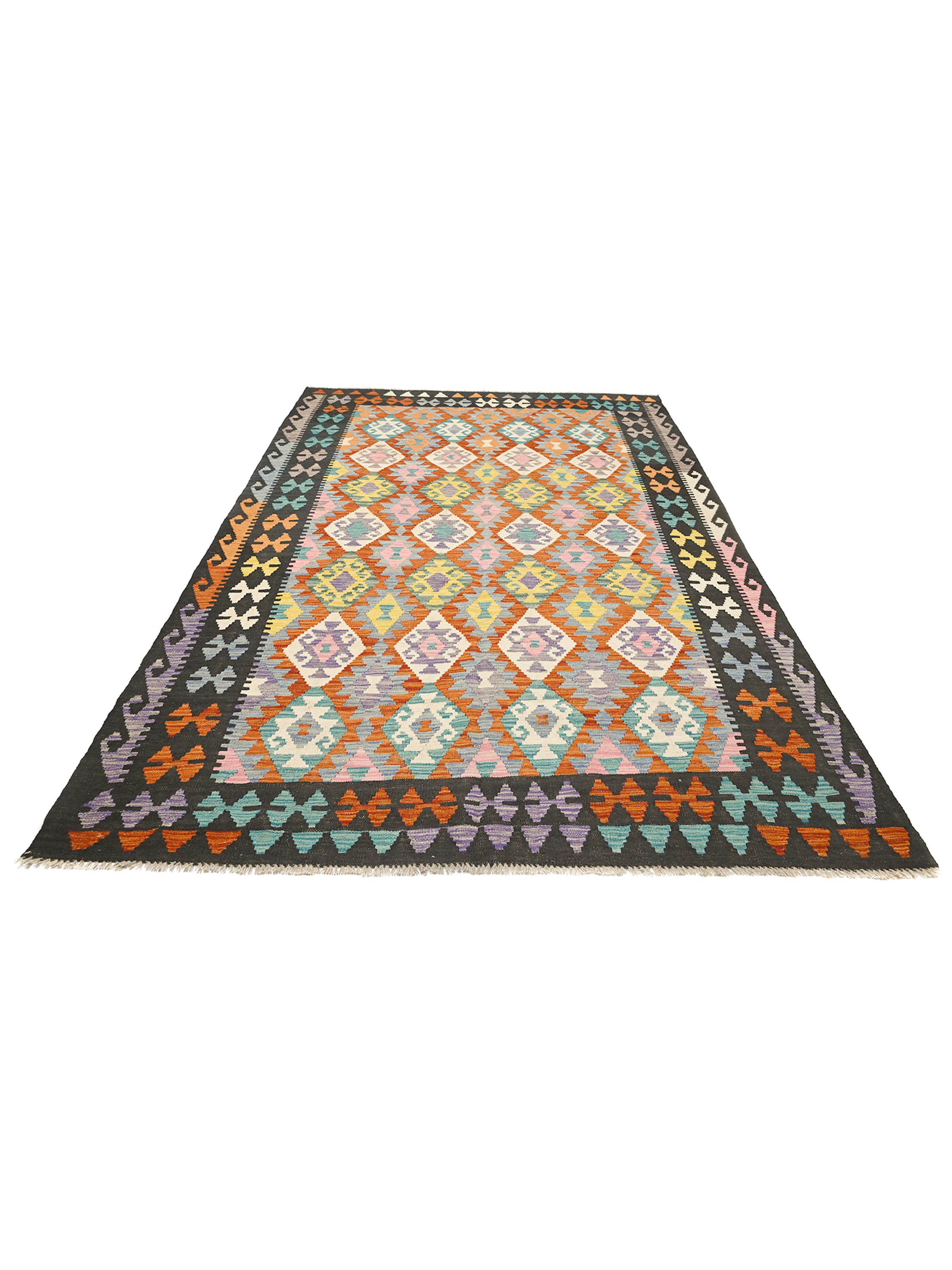
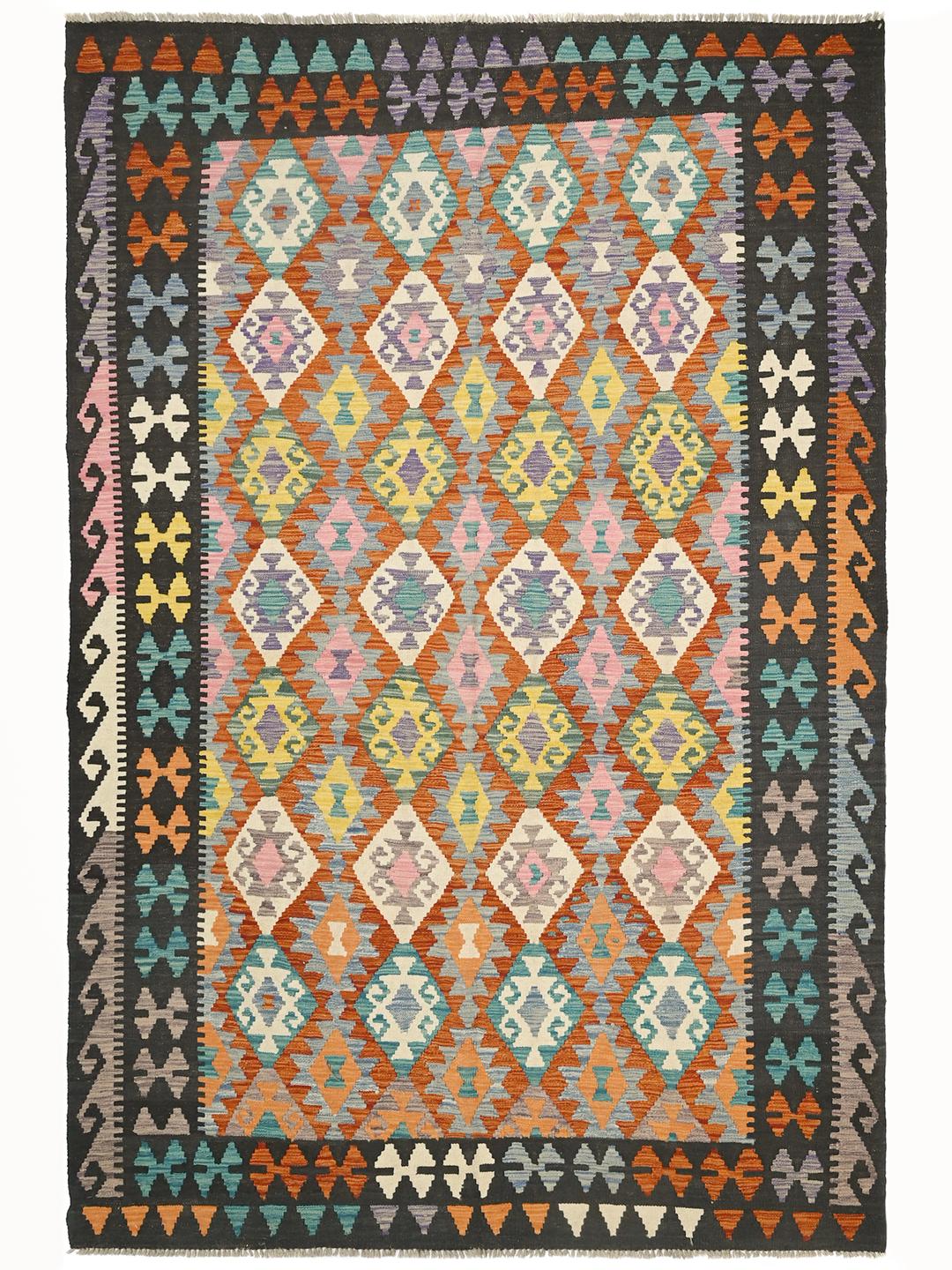
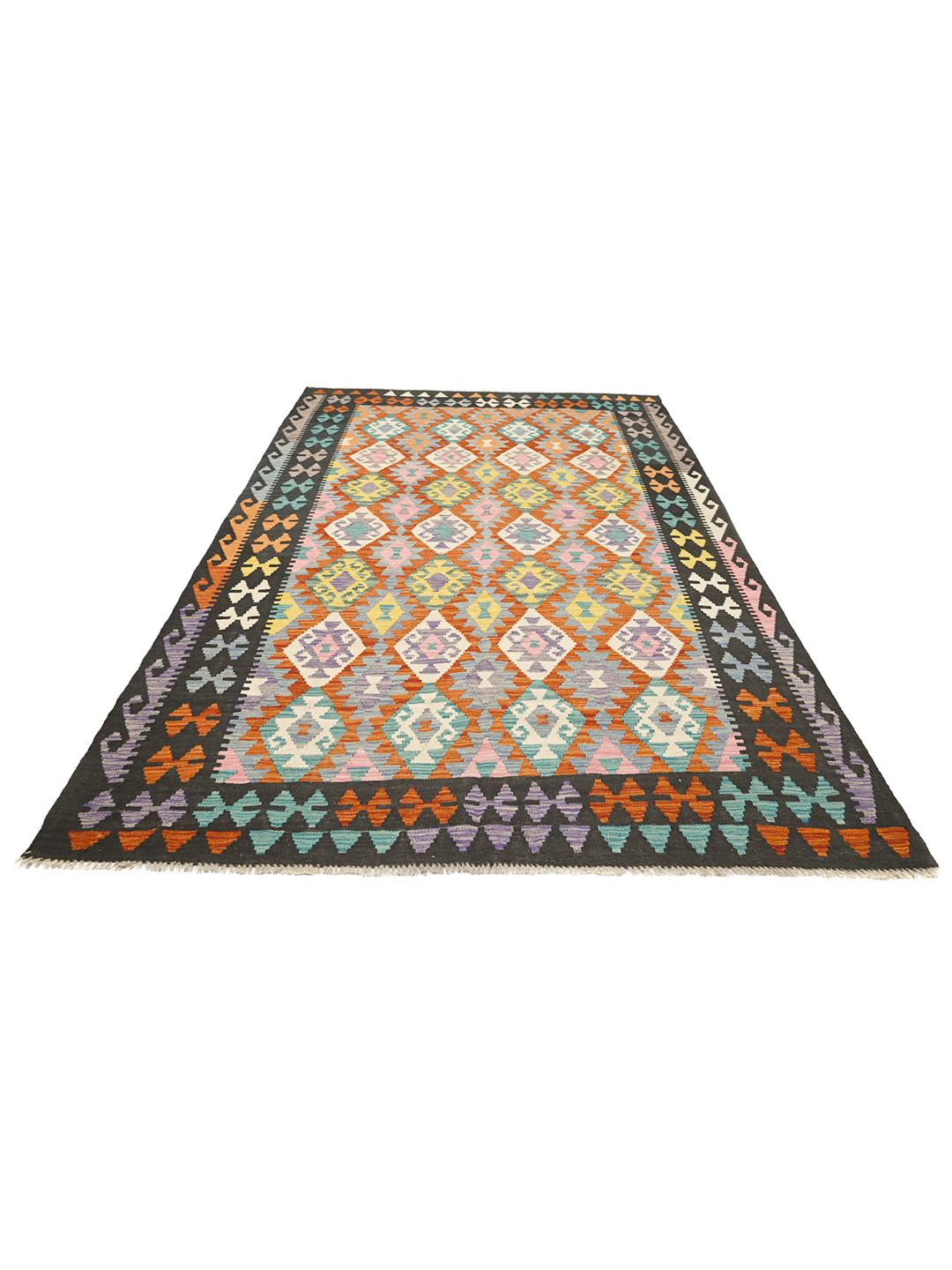
Design elements in Afghan Kelims rely heavily on repeating geometric forms, stepped diamonds, and decorative borders. Tribal weavers historically used these motifs to convey family stories, local symbolism, and regional identity. The use of dark grey foundations paired with multi-colored geometric fields reflects classic weaving customs while maintaining a crisp, balanced appearance.
Today, traditional Afghan flatweaves are prized by textile enthusiasts for their authenticity and connection to ancient craft practices. Acquiring an original hand-woven Kelim offers a meaningful connection to regional craftsmanship and adds a piece with genuine cultural narrative to your home.