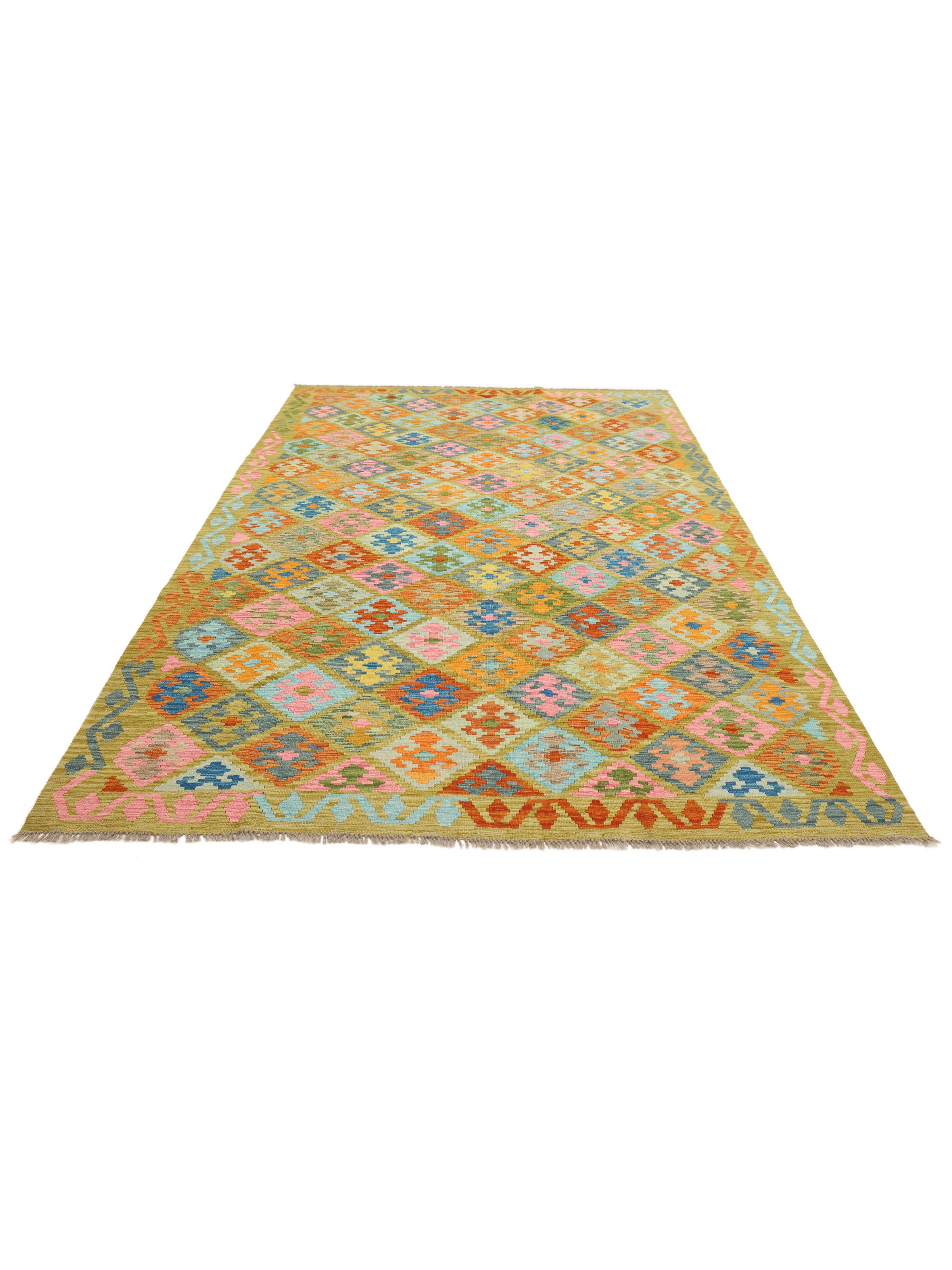
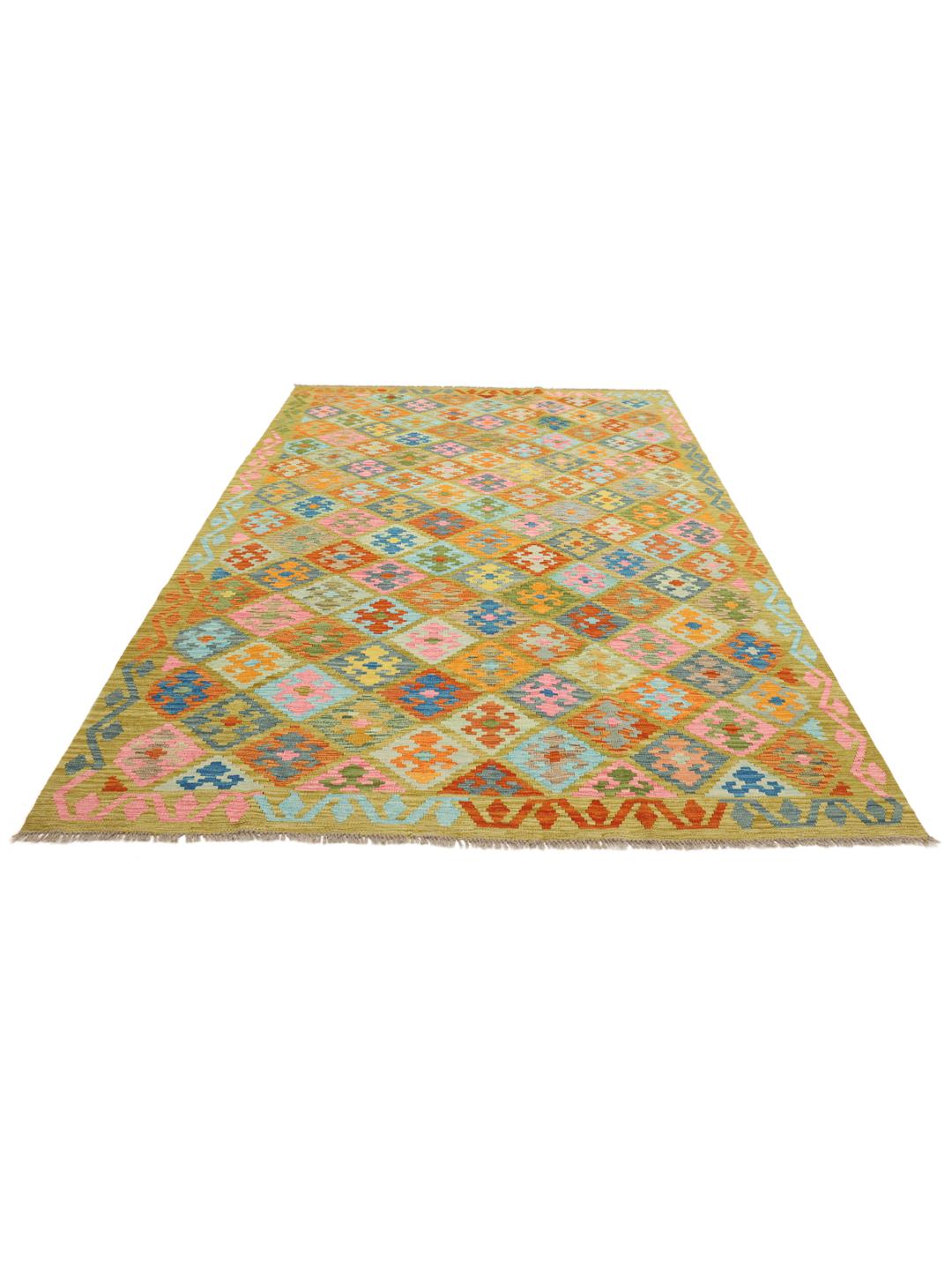
The Kelim tradition traces its roots deep into the heart of the Middle East and Central Asia, where nomadic tribes historically created these flat-woven textiles as versatile, portable household items. These rugs were essential to nomadic life, serving as floor coverings, blankets, and storage bags, and were prized for their ability to be easily moved across the rugged landscapes of the Silk Road.
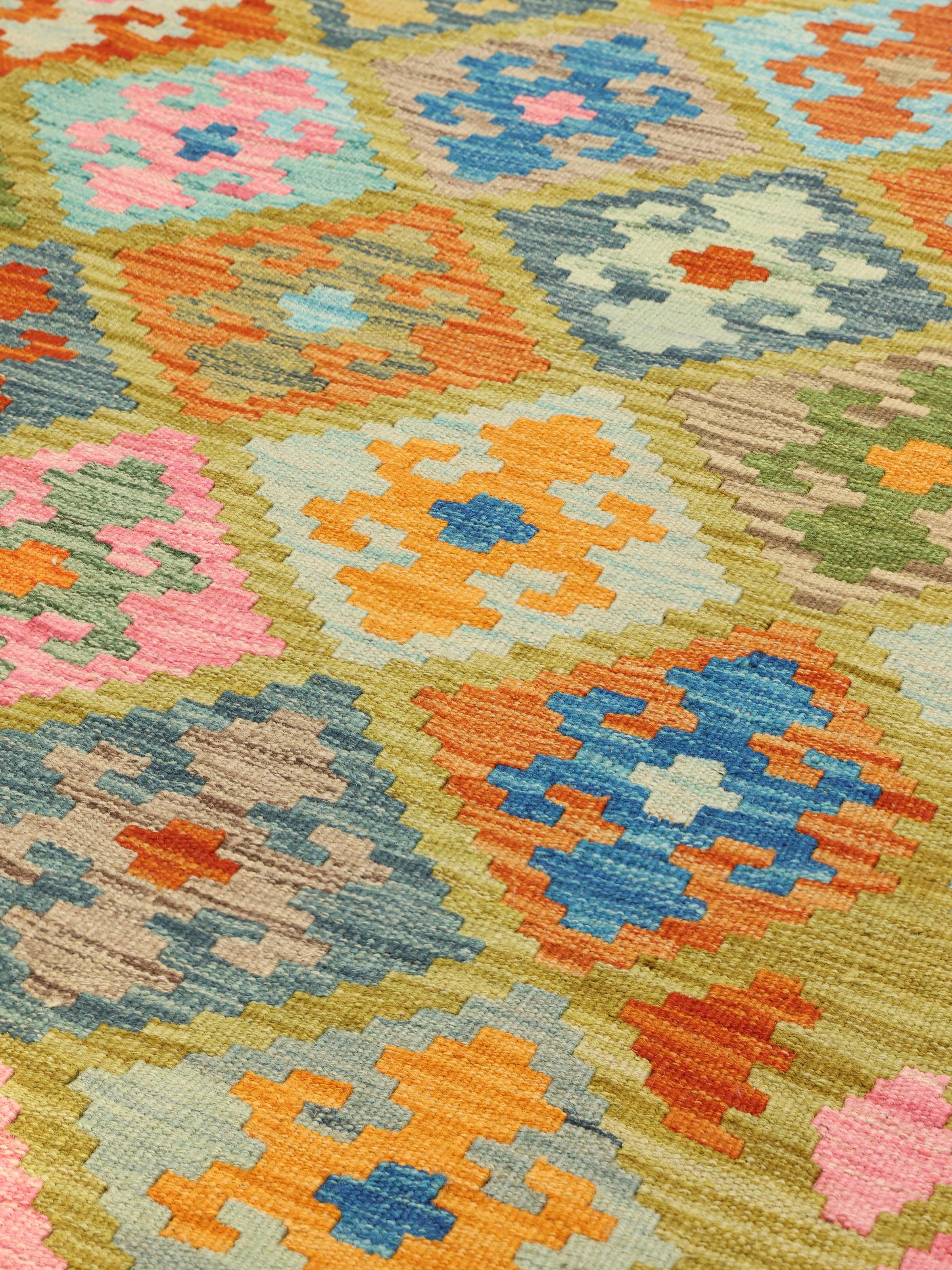
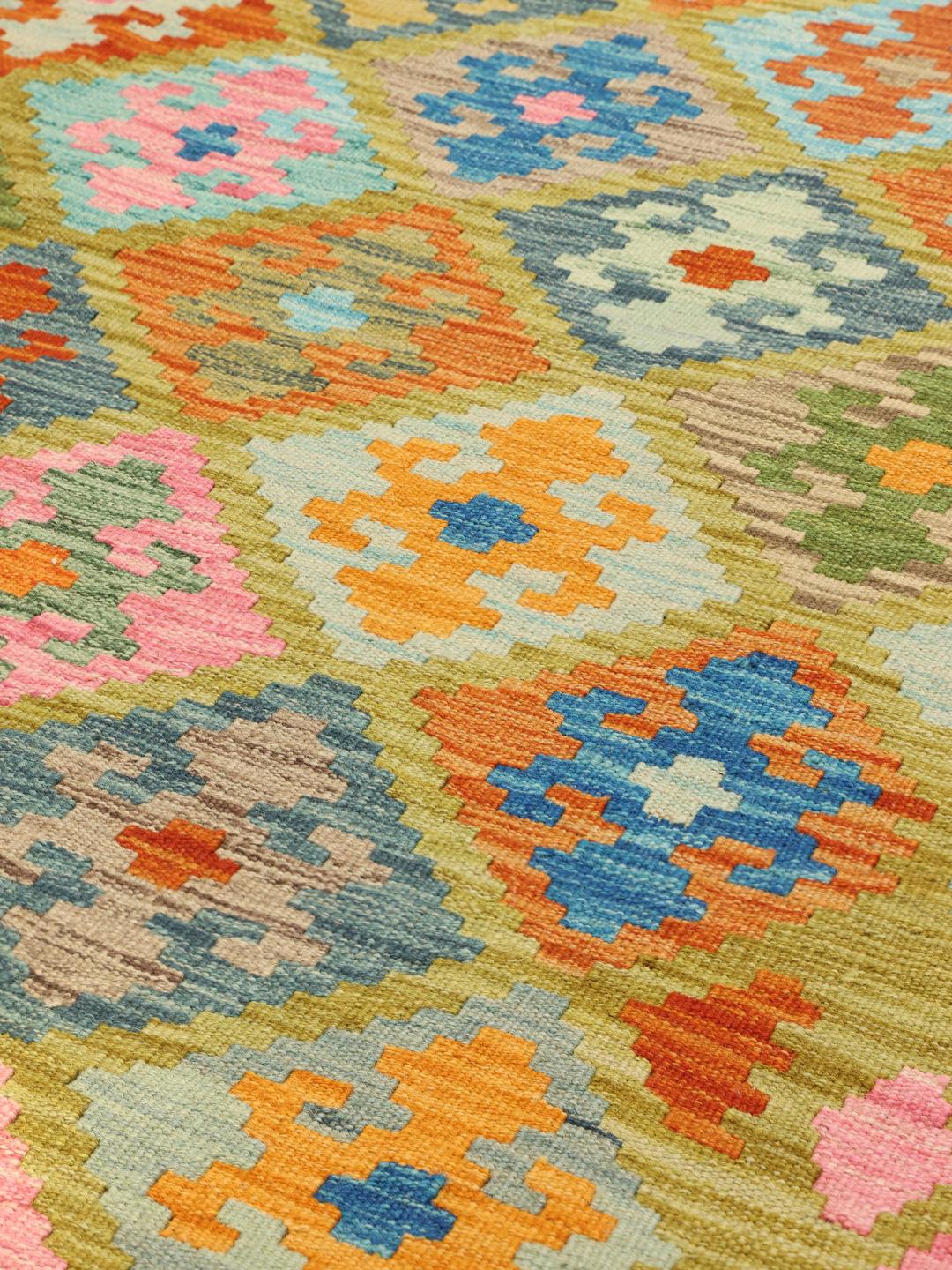
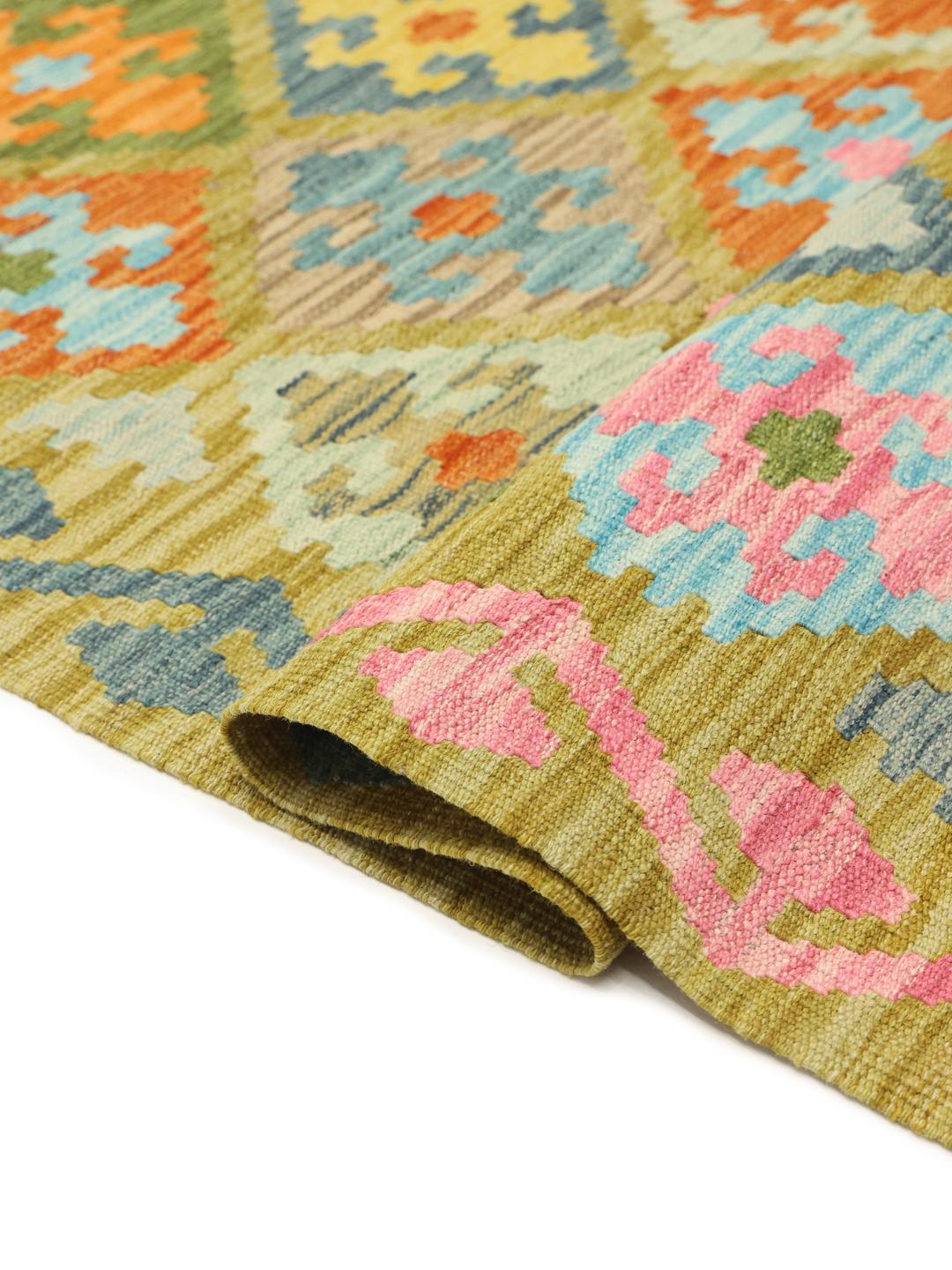
Technical mastery in Kelim production is found in the slit-weave technique, which creates the crisp, clean edges between different coloured motifs. This method is what allows for the sharp geometric patterns that are characteristic of the style. The use of high-quality Wool is central to this craft, as it provides both the durability needed for nomadic life and the ability to absorb rich, natural dyes that have been passed down through generations of weavers.
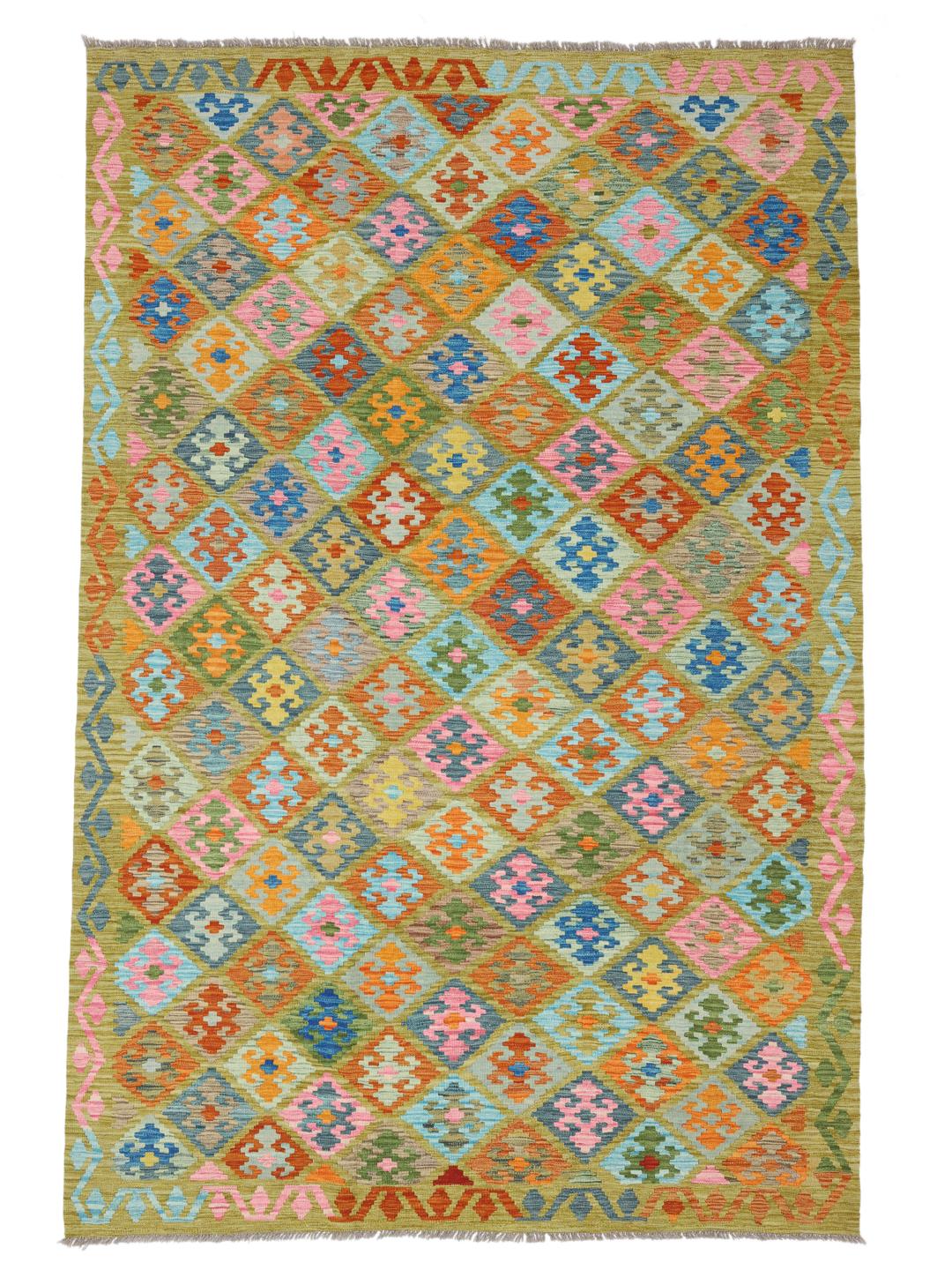
Signature design elements of the Afghan Kelim often include bold, repeating geometric shapes like the diamond, which serves as a protective symbol in many regional traditions. The vibrant colour palette seen here is a hallmark of the craft, utilising a range of hues to create a lively, balanced field. While traditional patterns are followed, the weaver often introduces subtle variations, making each rug a personal expression of the artist's environment and heritage.
Collectors value Kelim rugs for their authenticity and the profound human effort embedded in every thread. They are considered a bridge between ancient nomadic utility and modern interior design, representing a cultural legacy that is both functional and decorative. By acquiring a piece like this, you are preserving a craft tradition that values patience, skill, and the beauty of natural, hand-worked materials.