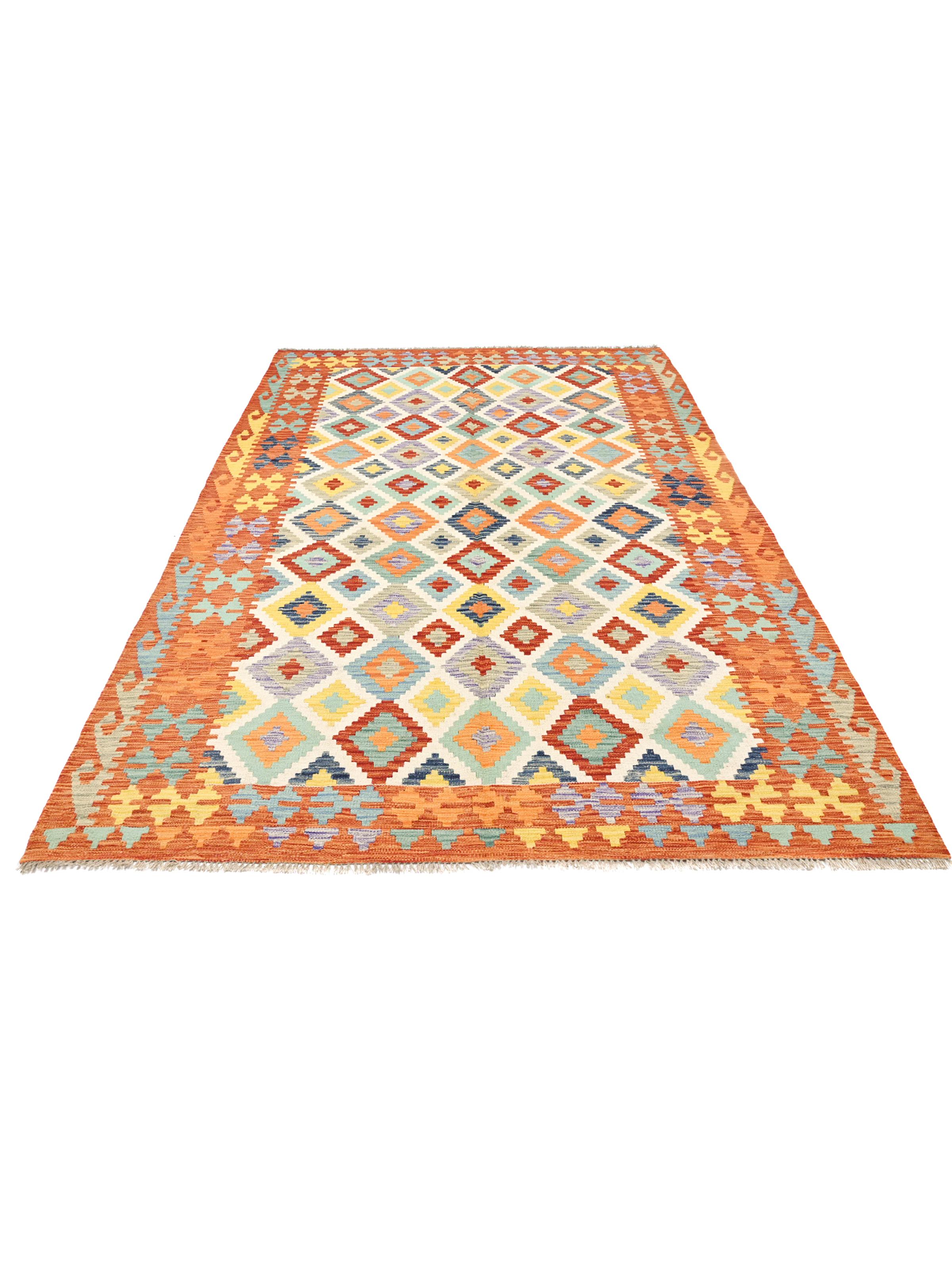
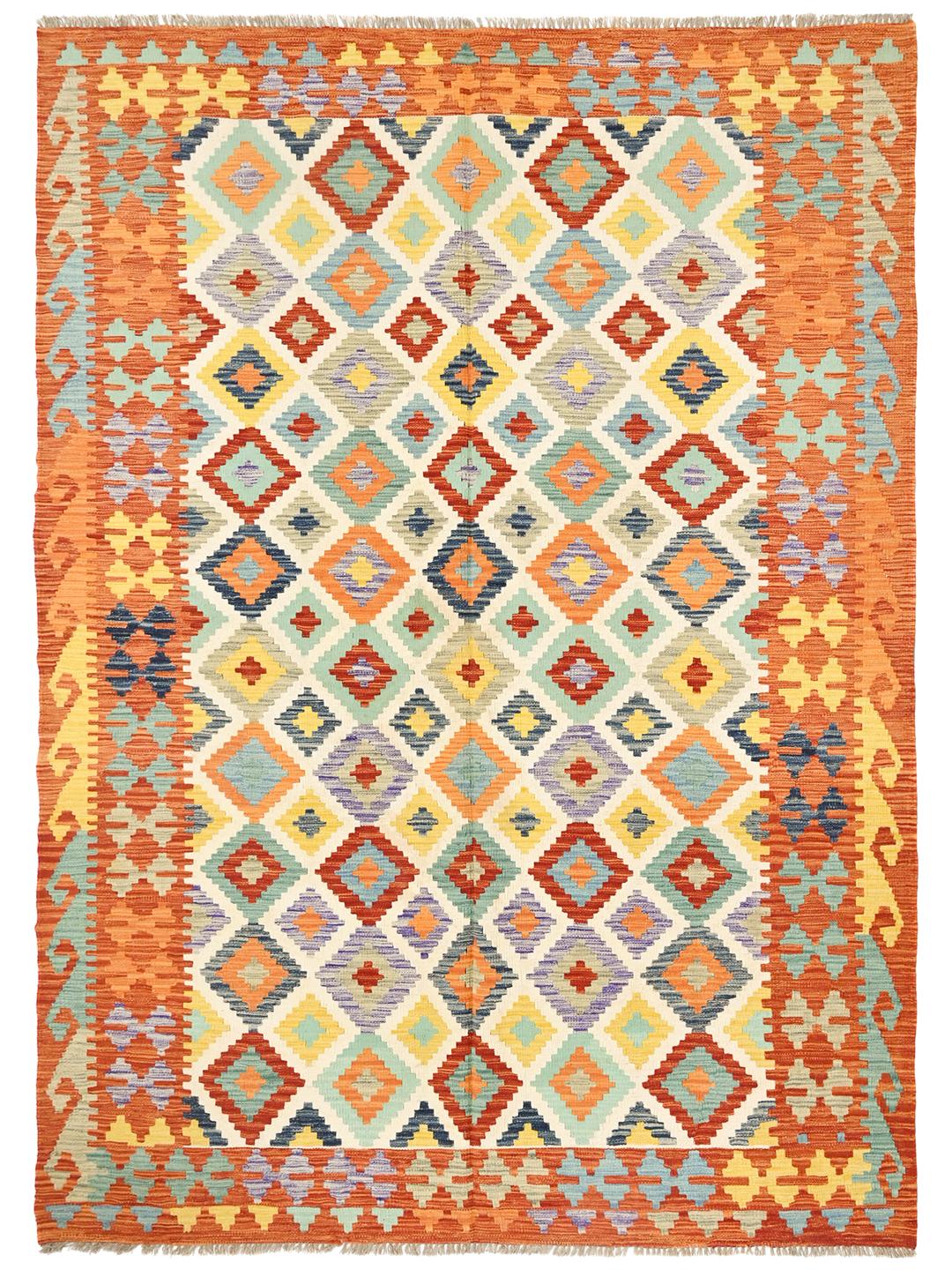
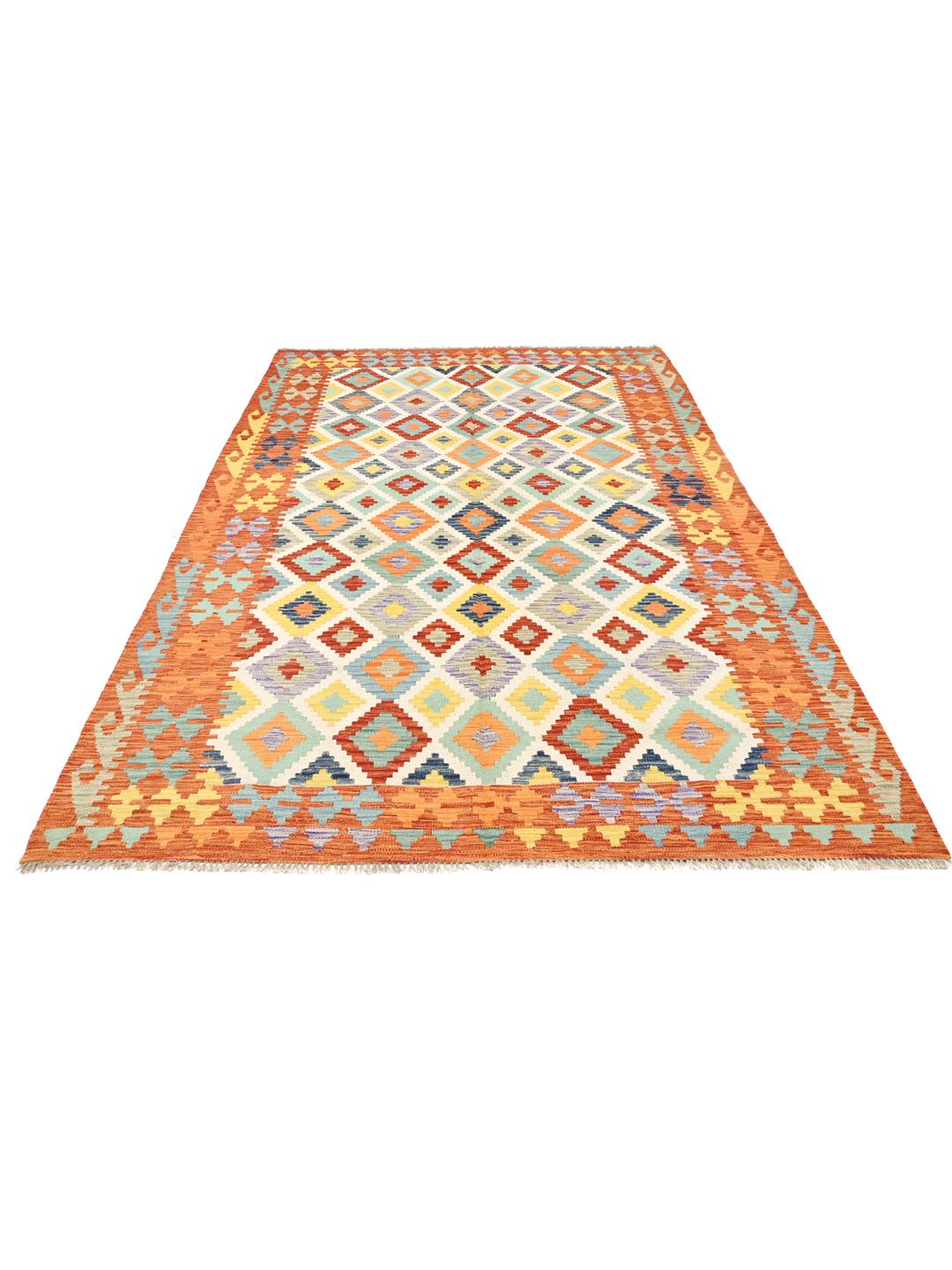
Afghan kilim weaving is rooted in nomadic and village traditions across Central Asia. Traditionally created by women weavers for household use, floor coverings, and trade, these flat-weaves were designed to be lightweight, durable, and easily transportable across regional trade routes.
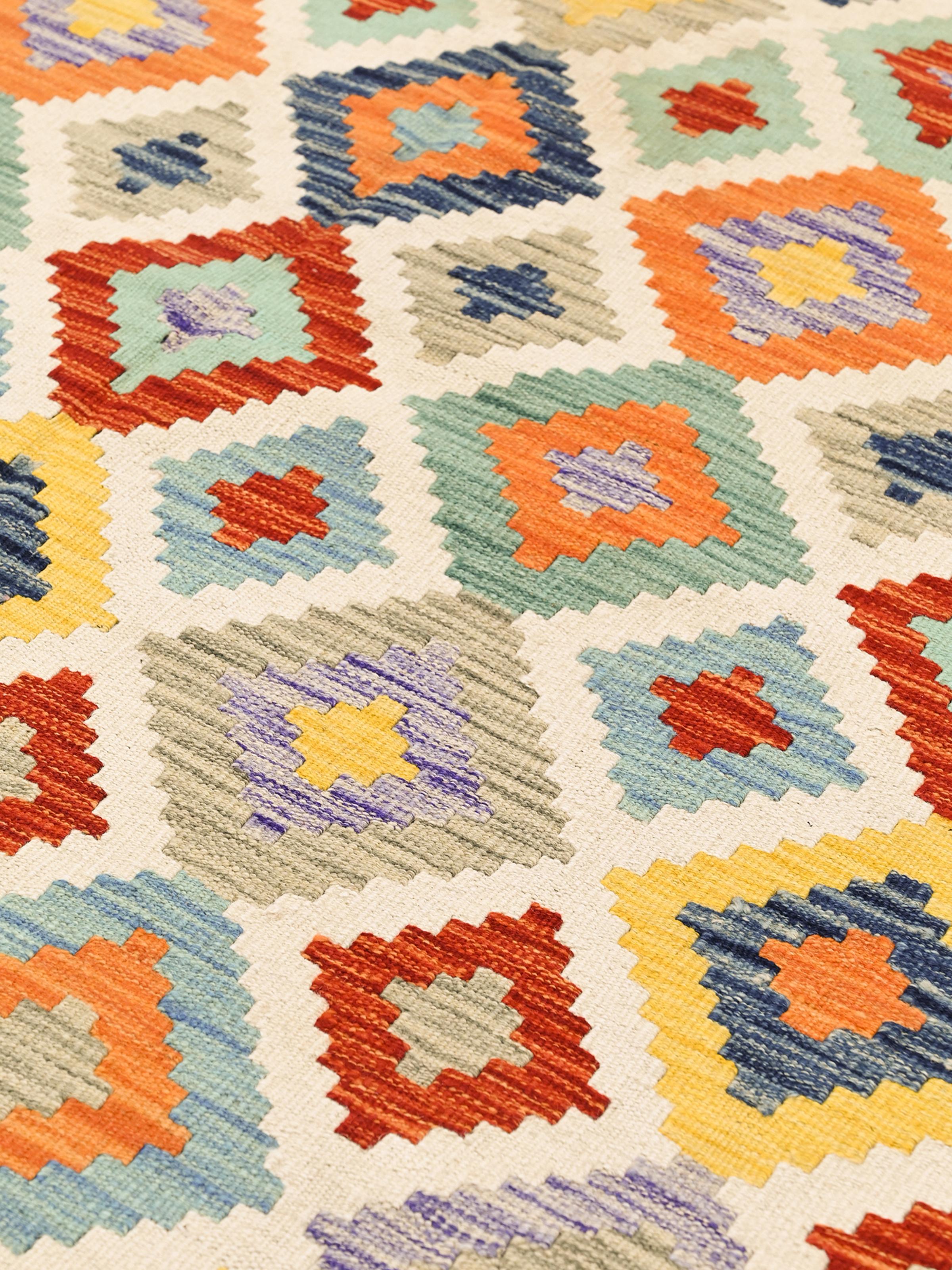
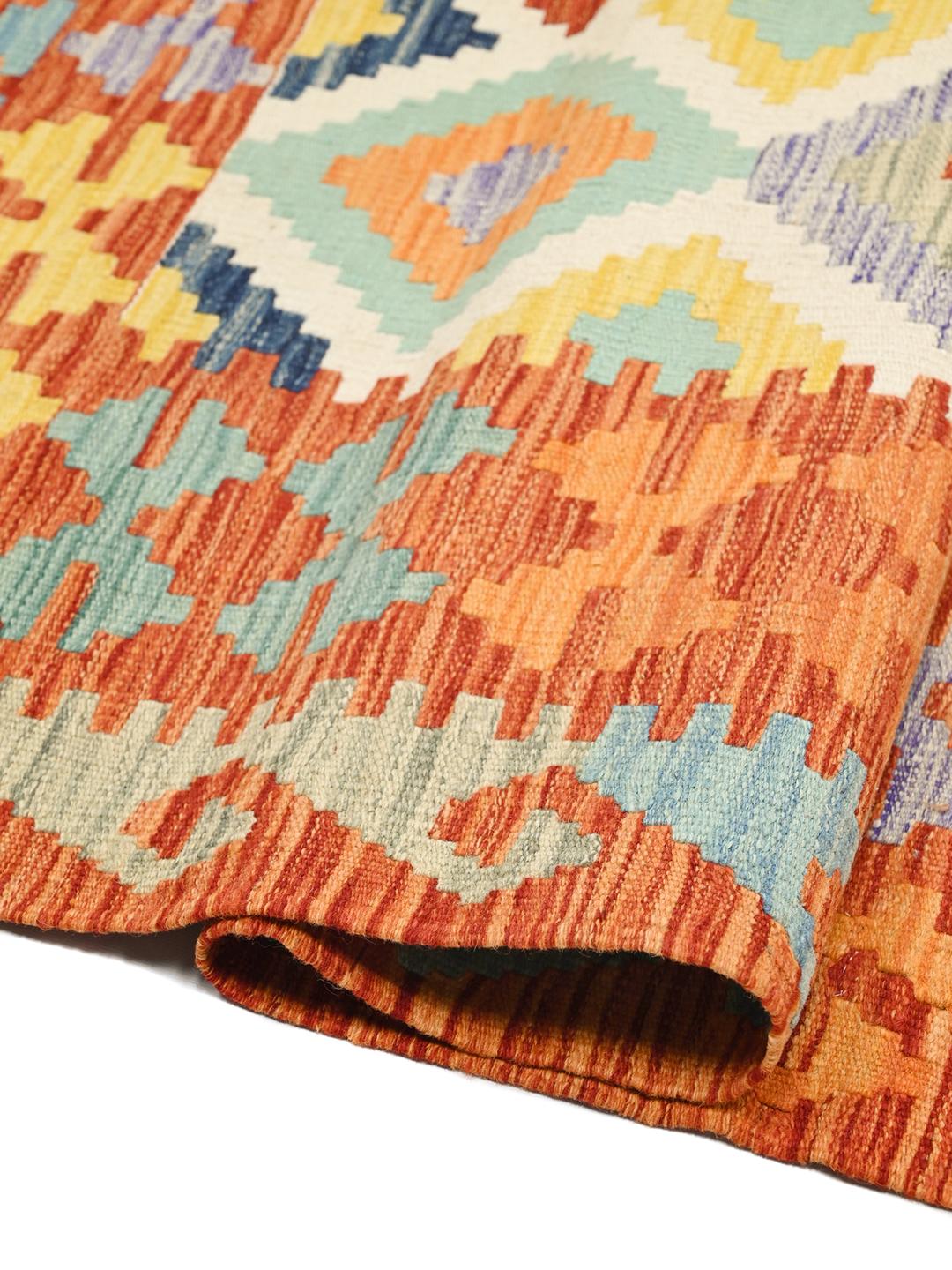
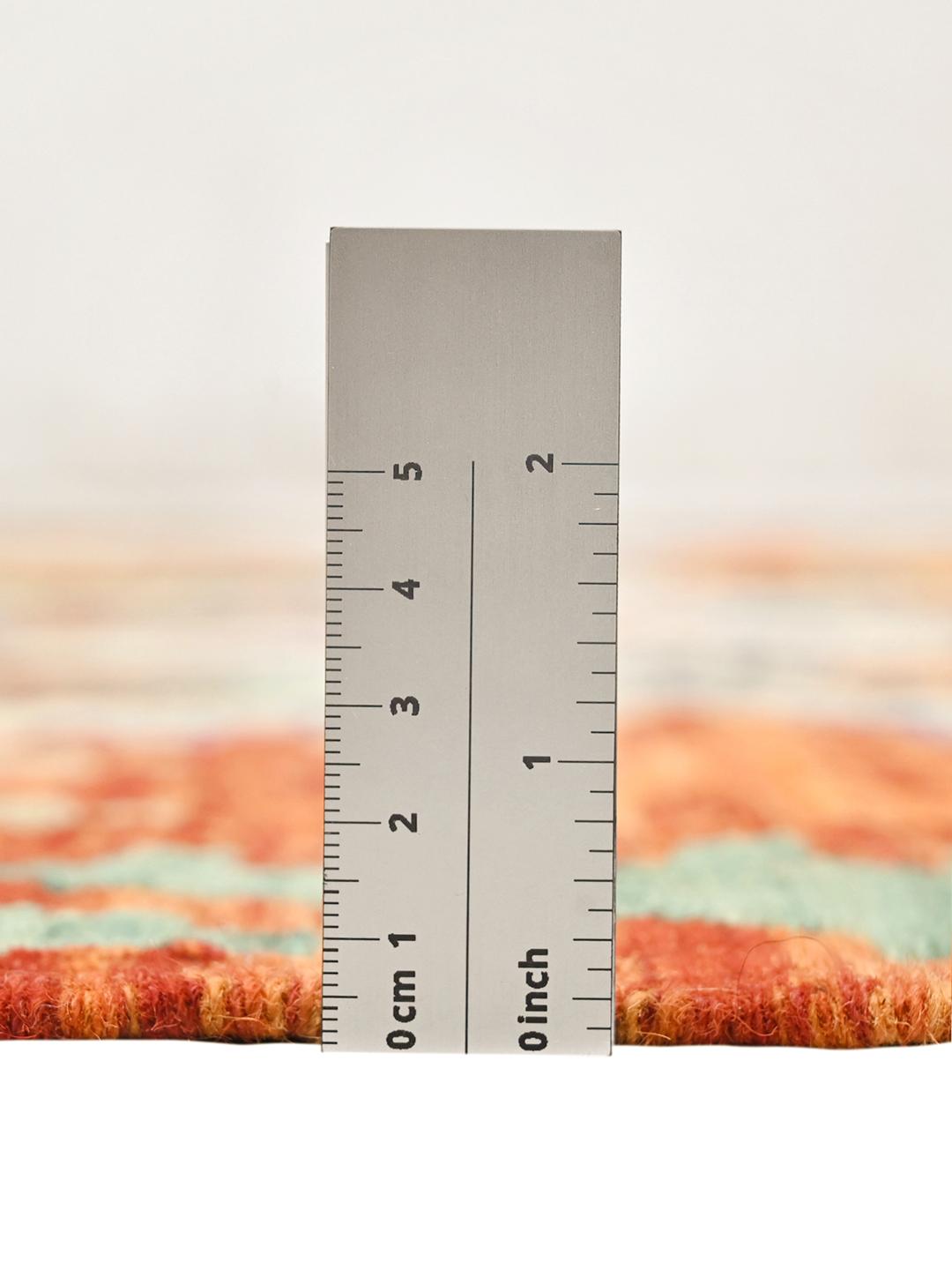
The term flat-weave or kilim refers to a textile produced by tightly interweaving the warp and weft strands rather than knotting individual pile tufts. This technique creates a smooth, pileless surface where the structural threads themselves form the pattern, resulting in a flexible yet strong textile.
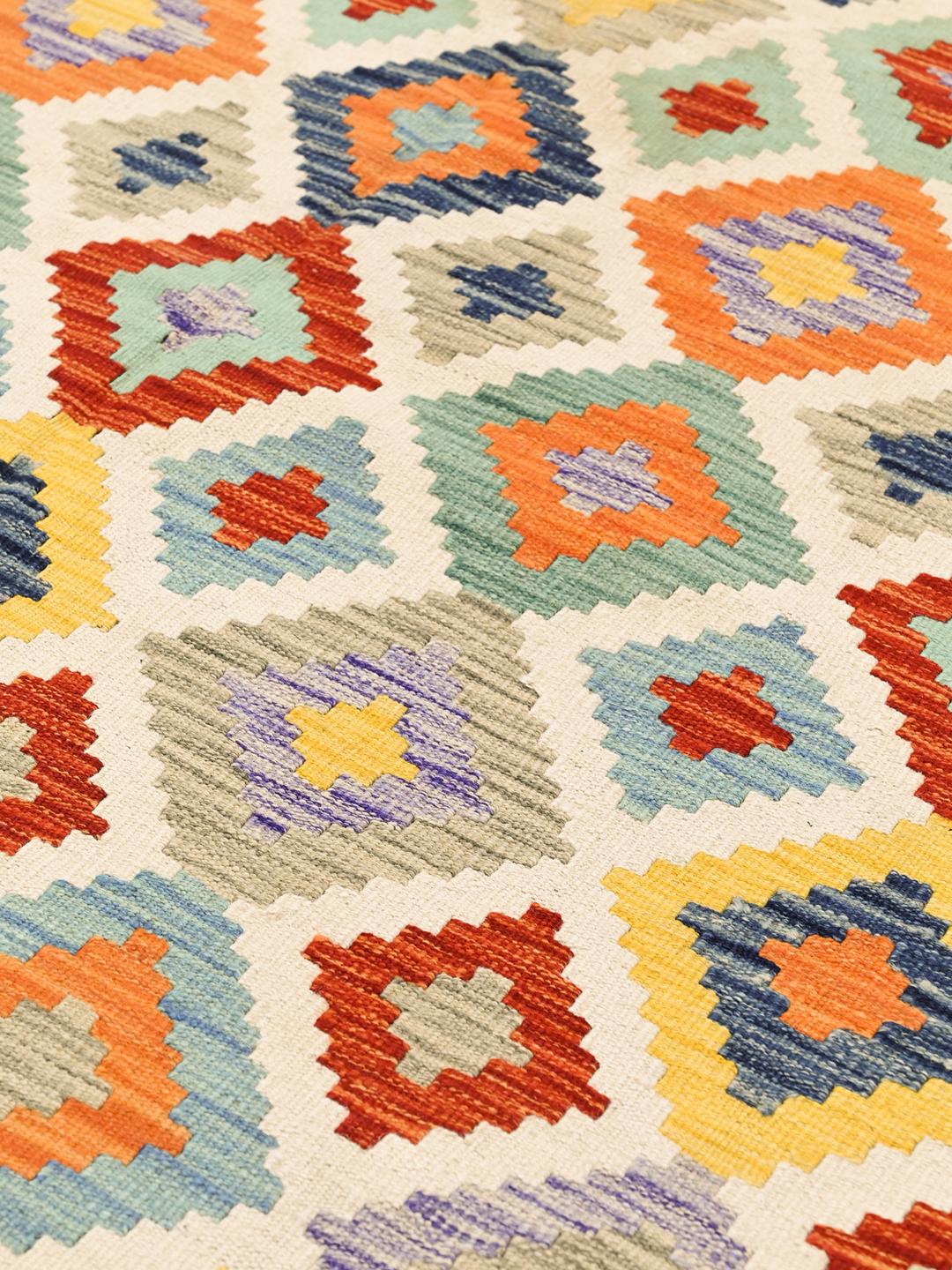
Visually, Old Style Afghan Kelims are defined by bold geometric forms, including stepped diamonds, protective tribal symbols, and repeating borders. These motifs often act as personal or tribal signatures, using regional color combinations to create vibrant visual rhythms across the woven field.
Valued by collectors and interior enthusiasts alike, vintage Afghan kilims represent a direct link to regional heritage. Their enduring popularity rests on the combination of natural materials, historical patterning, and the gentle patina that authentic hand-woven wool acquires over time.