Afghan kilim weaving is one of the world's most enduring textile traditions, deeply rooted in the nomadic and village cultures of Central and South Asia. Historically, these flatwoven textiles served practical purposes as floor coverings, warm blankets, and storage bags, designed to be resilient and easily transported across changing landscapes.
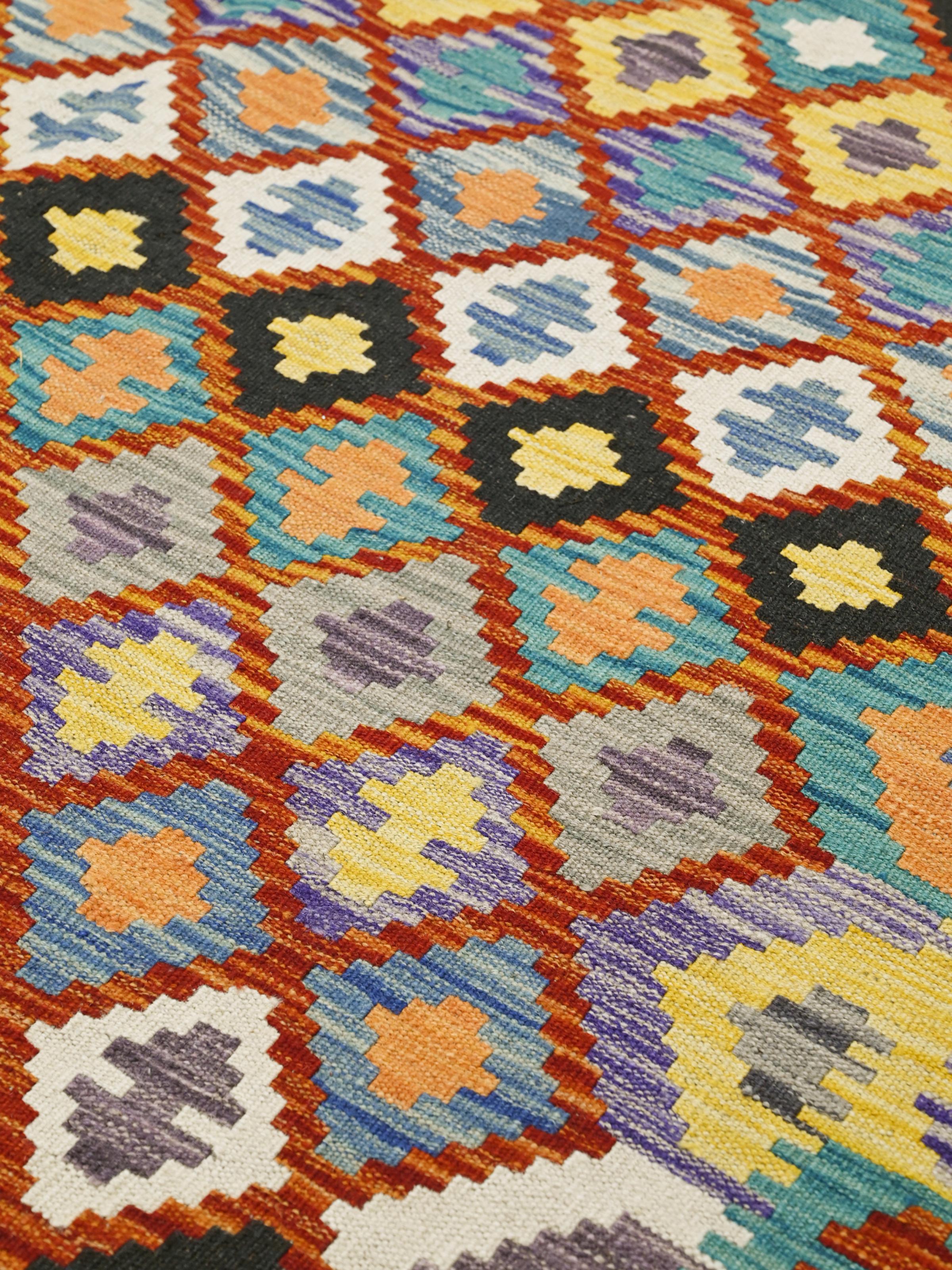
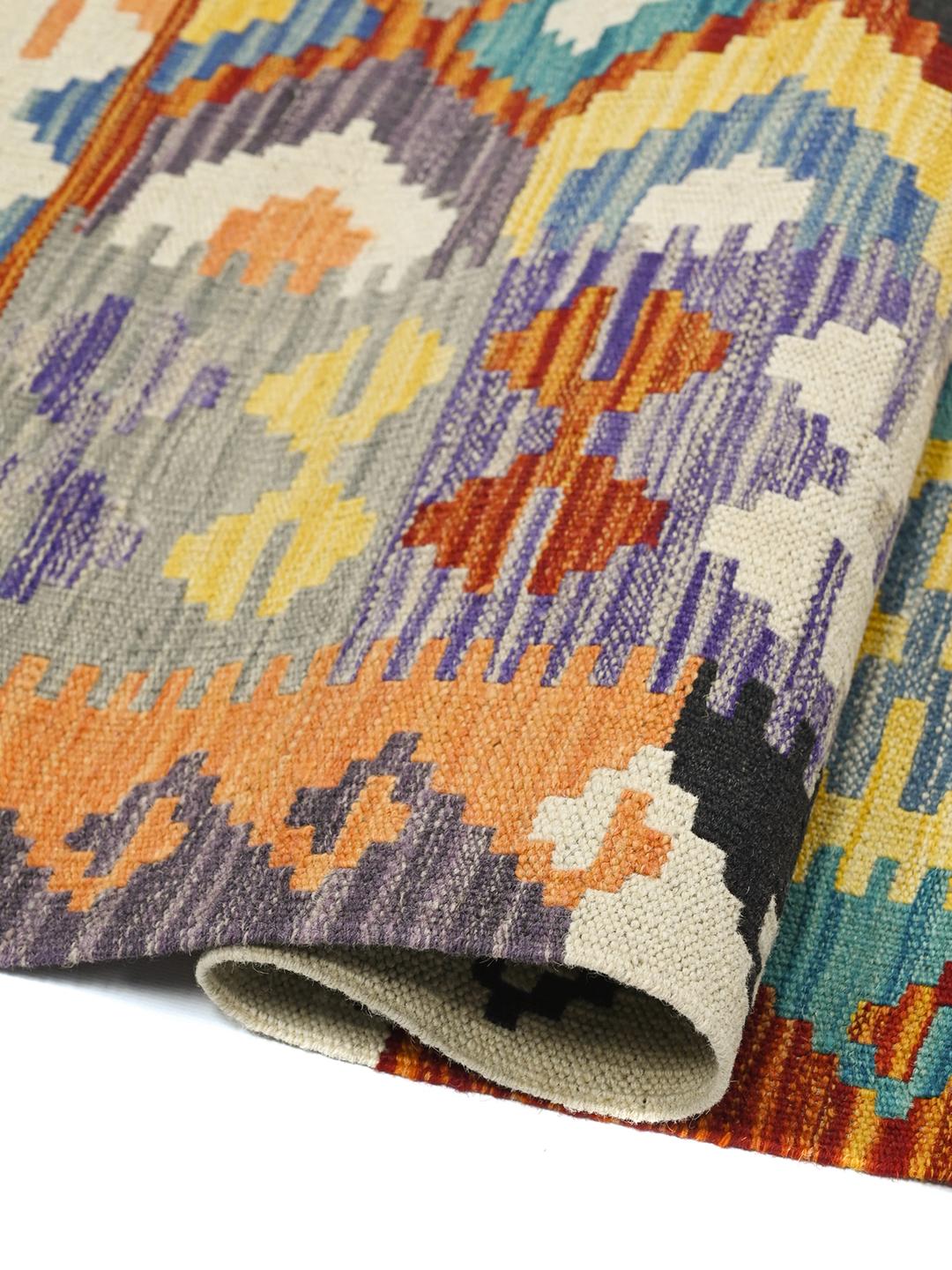
The term flatweave or kilim refers to a specific weaving method where the colored weft threads are tightly woven through the structural warp threads, creating a pileless fabric with a clean, smooth surface. Using pure wool for both warp and pile gives the rug exceptional structural strength, natural fire resistance, and an ability to absorb dyes deeply, yielding rich visual tones.
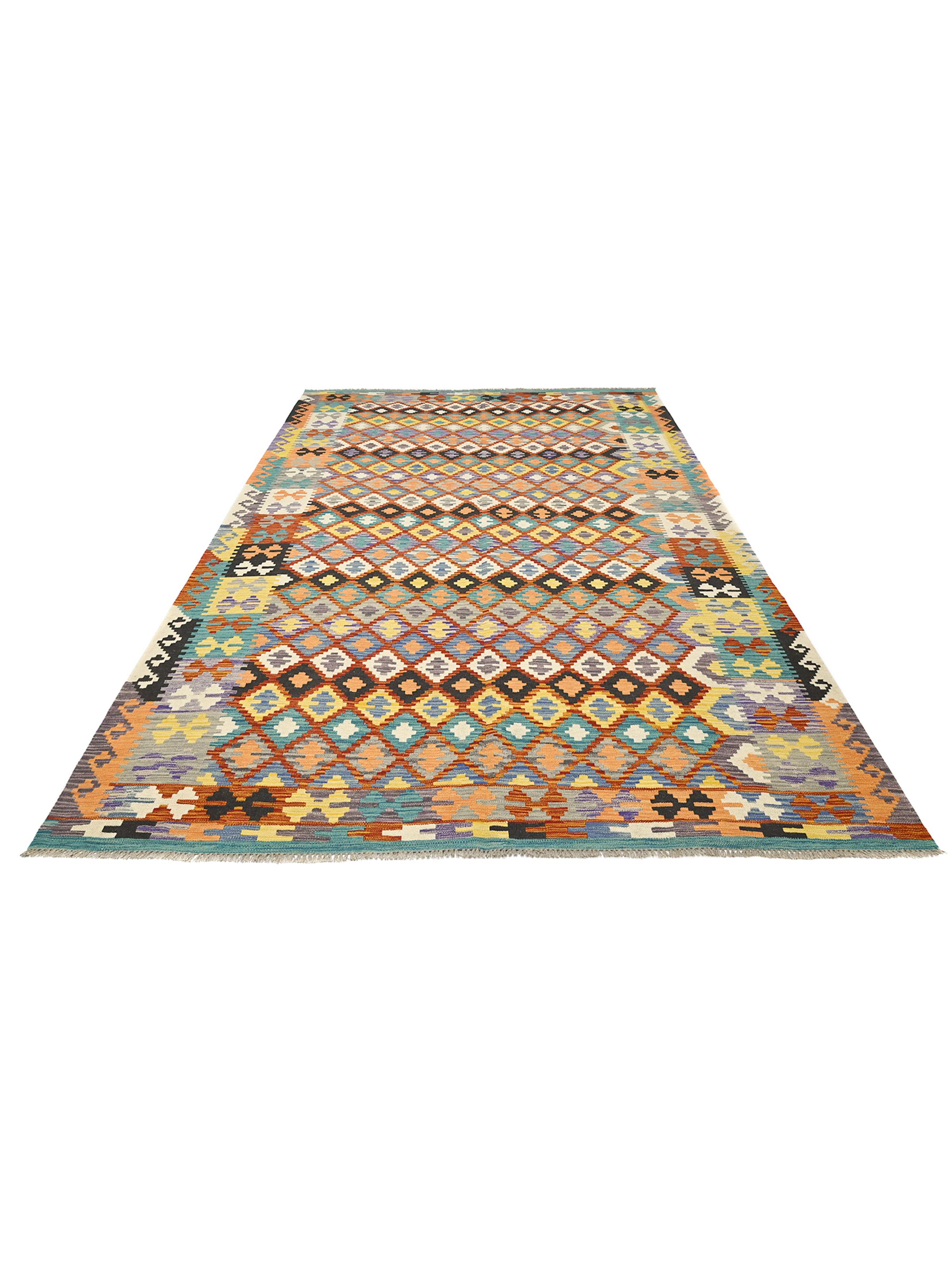
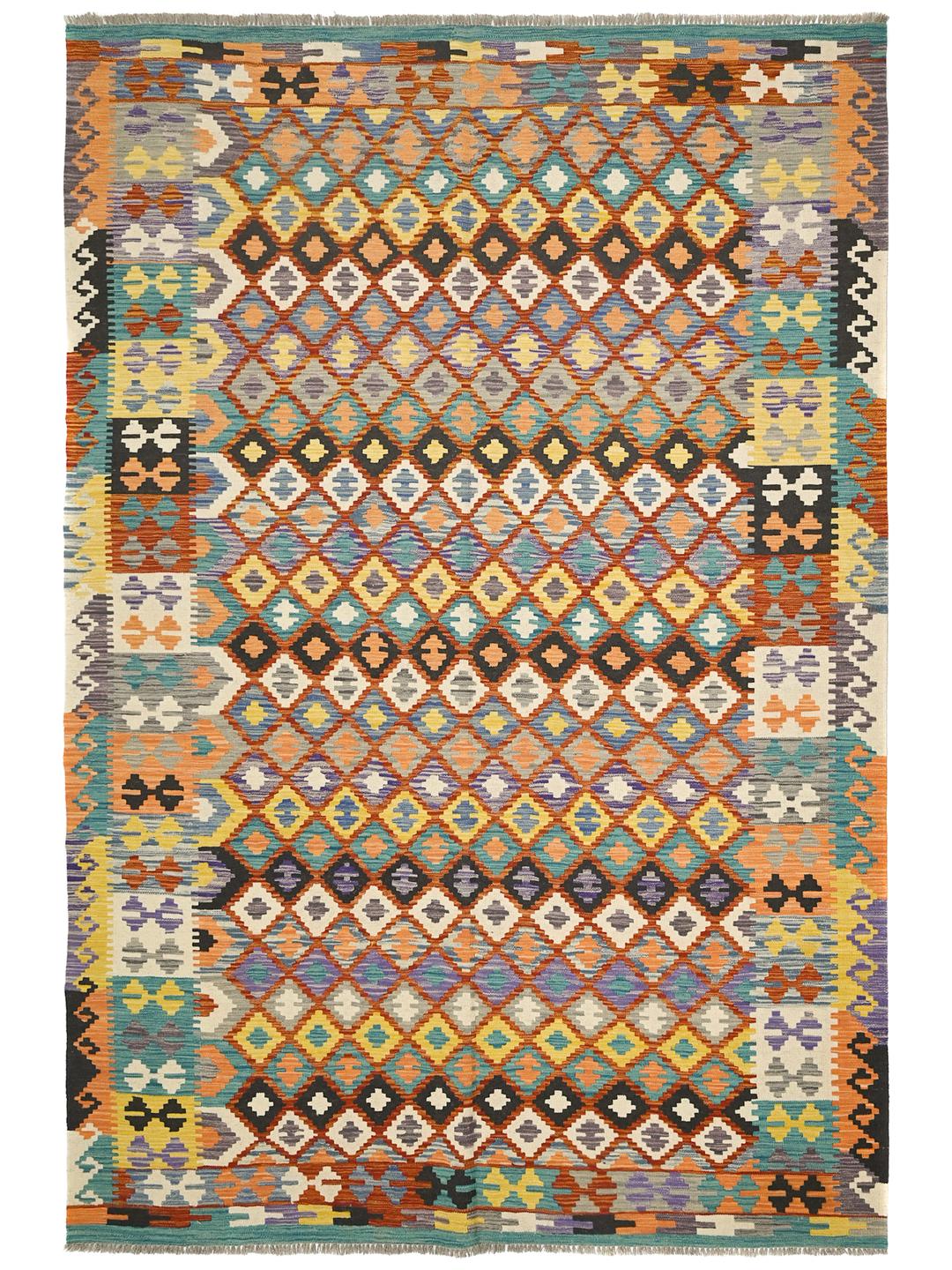
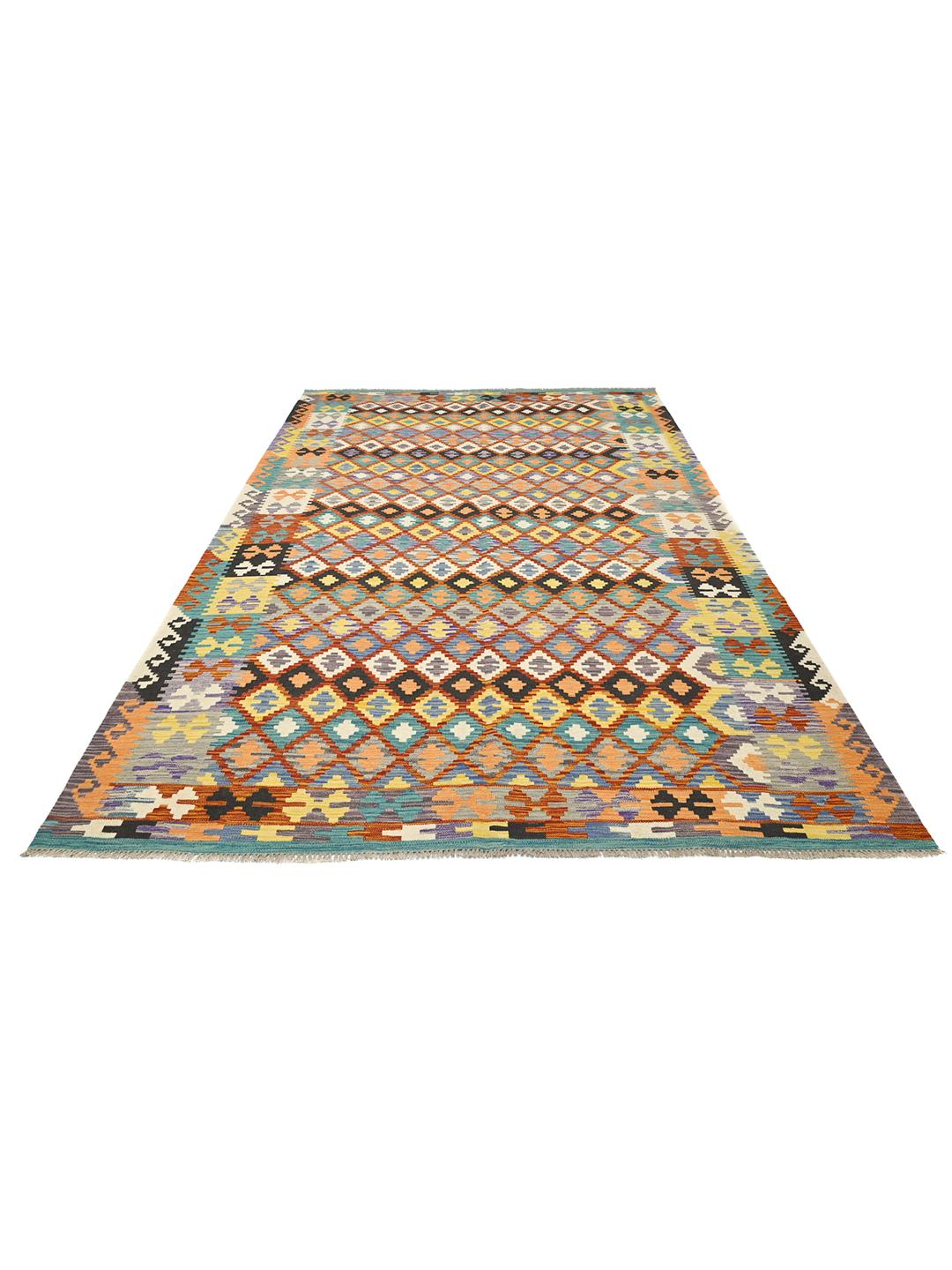
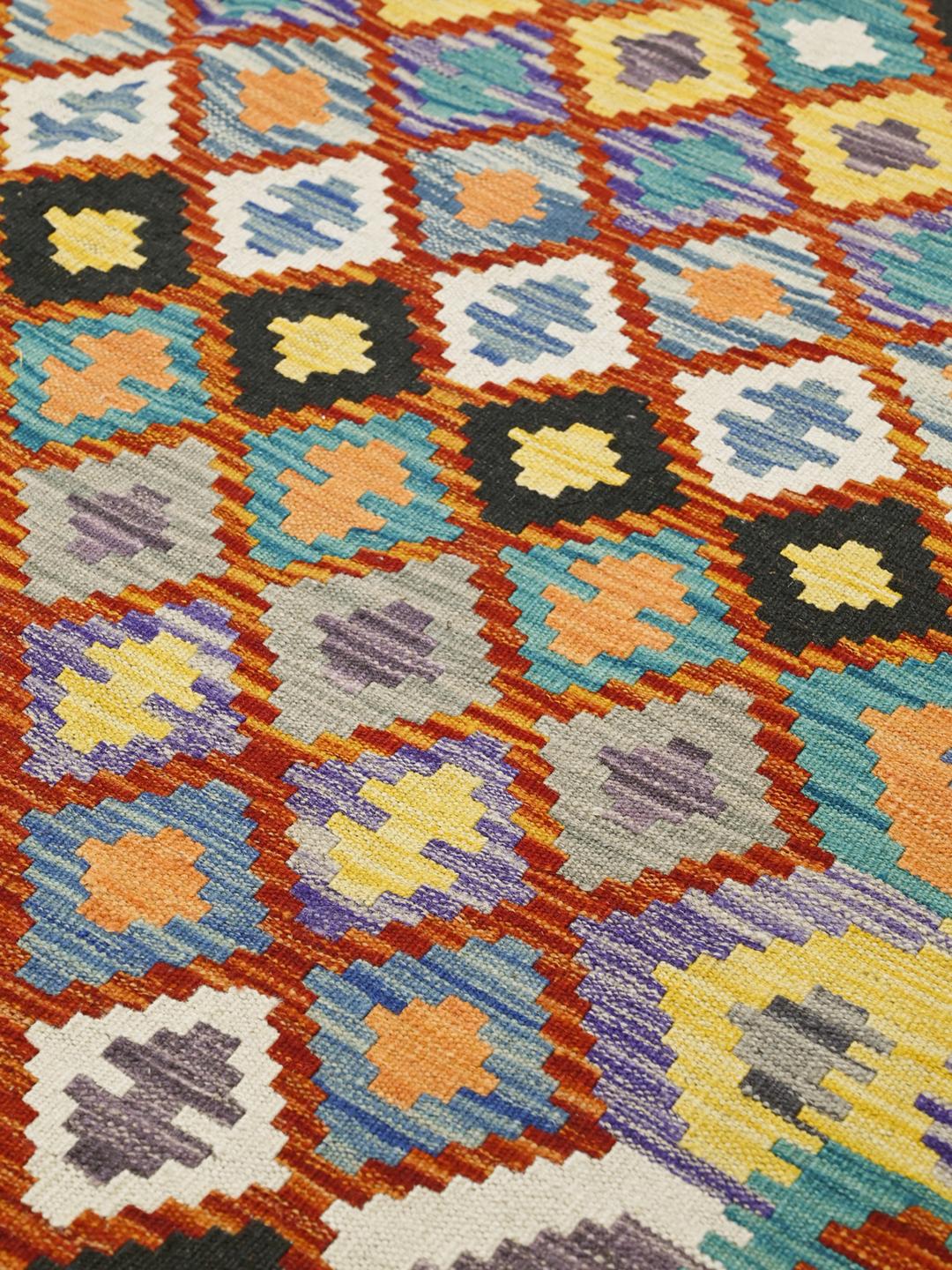
Visual storytelling defines the Old Style Afghan Kelim tradition. Repeating geometric diamonds, stepped motifs, and protective border symbols carry ancestral meanings, originally woven as expressions of family identity, nature, and good fortune. The interplay of bold diamond grids with contrasting end borders creates a harmonious rhythm across the field.
Today, vintage and aged Afghan kilims are prized by collectors and interior designers for their artistic authenticity. Owning a piece crafted within this tradition means preserving a tactile link to centuries of weaving knowledge, where every variation in tension and dye tells a story of human artistry.