Kelim rugs have long been a cornerstone of the weaving traditions found across the Middle East and Central Asia. Originally created by nomadic and semi-nomadic tribes, these flat-woven textiles were designed to be versatile and portable, serving as floor coverings, wall hangings, and storage bags. The Afghan variants are particularly celebrated for their bold use of colour and their ability to adapt ancient tribal aesthetics for modern living spaces.
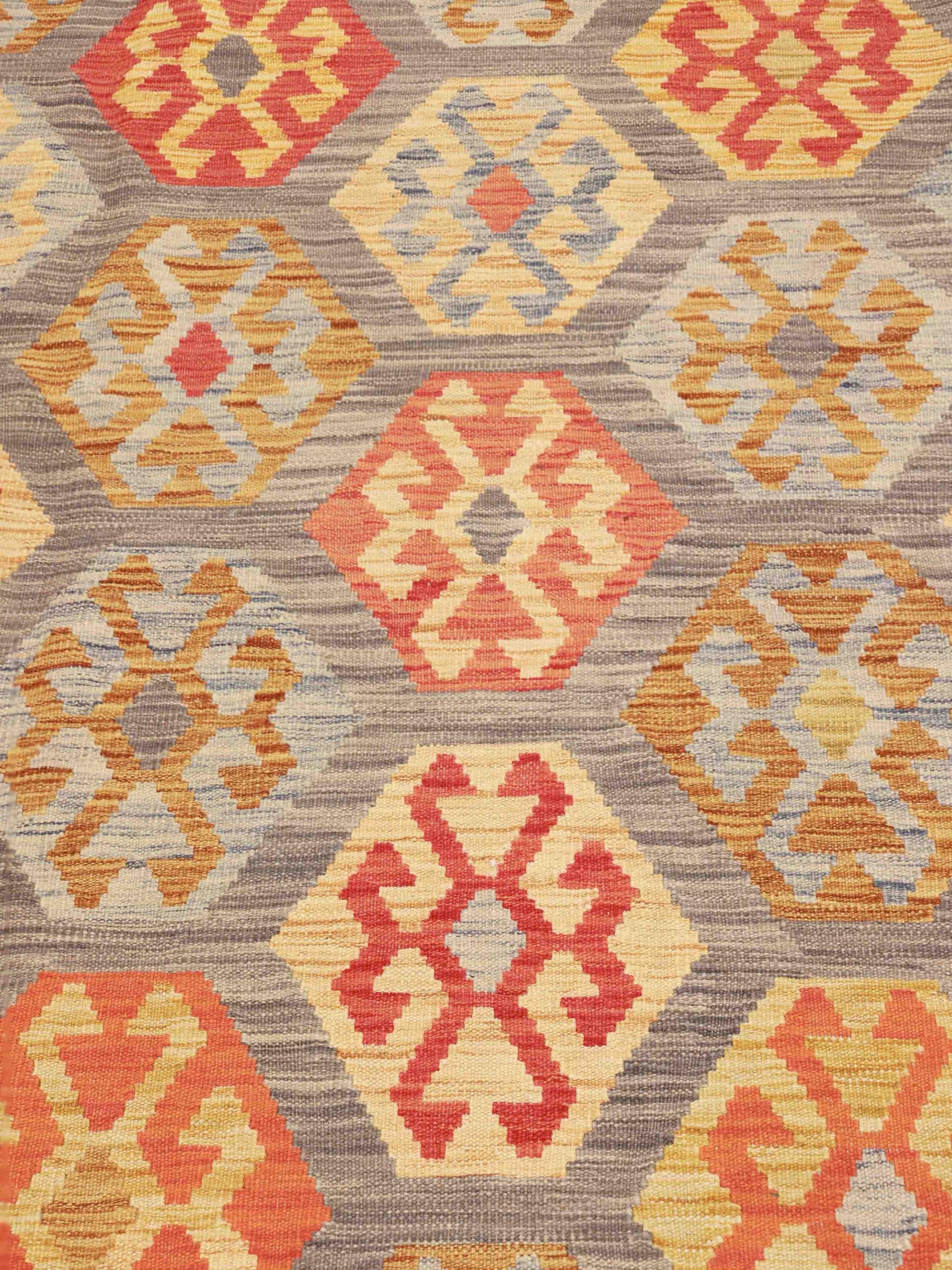
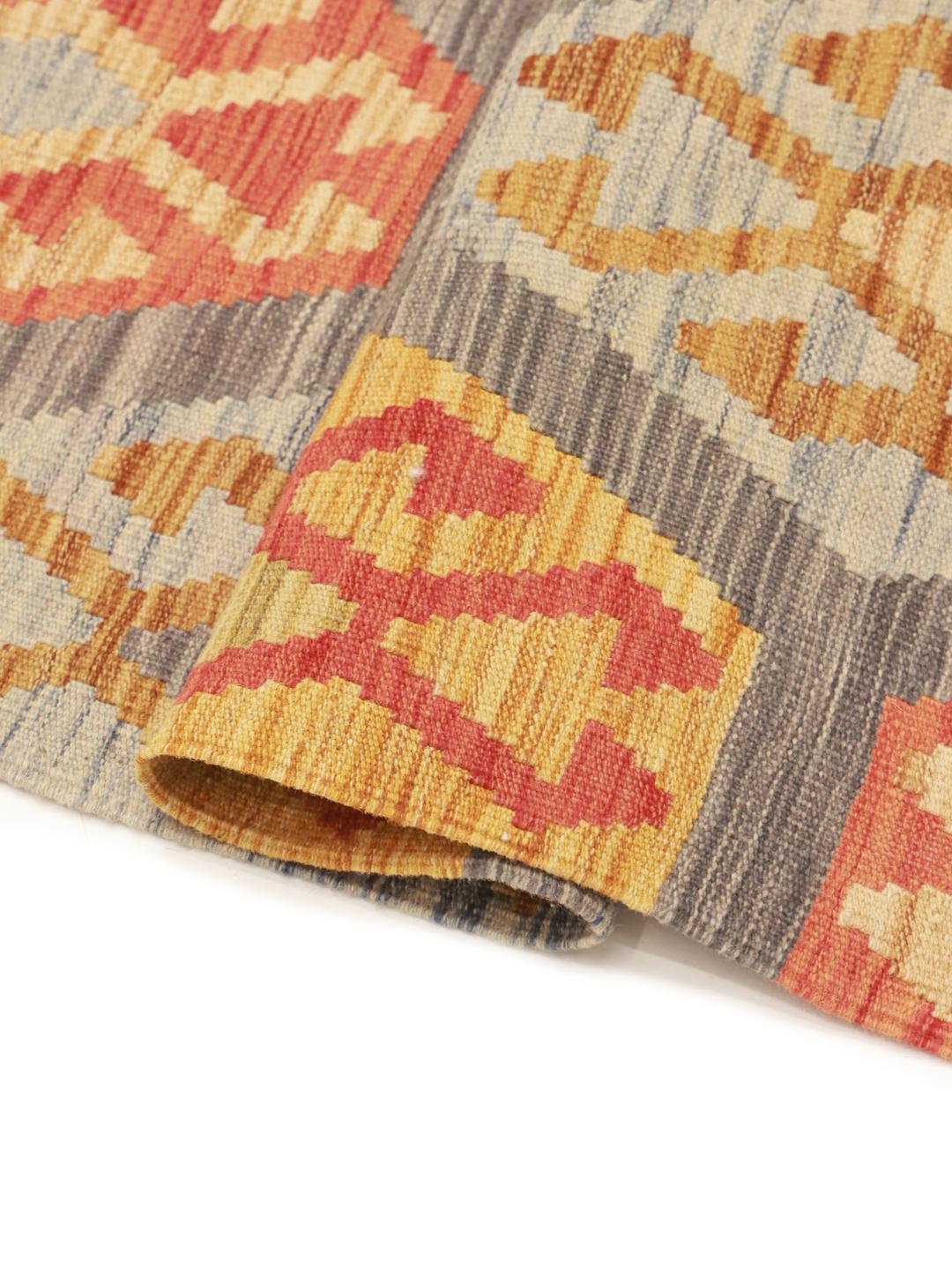
The term 'Kelim' refers to the specific flat-weaving technique used, where the weft strands are pulled tightly down to cover the warp strands entirely. This creates a rug without a pile, resulting in a lightweight yet incredibly durable surface. This construction method allows for very sharp, clean geometric lines, which is why you see such precise, interlocking shapes in this tradition.
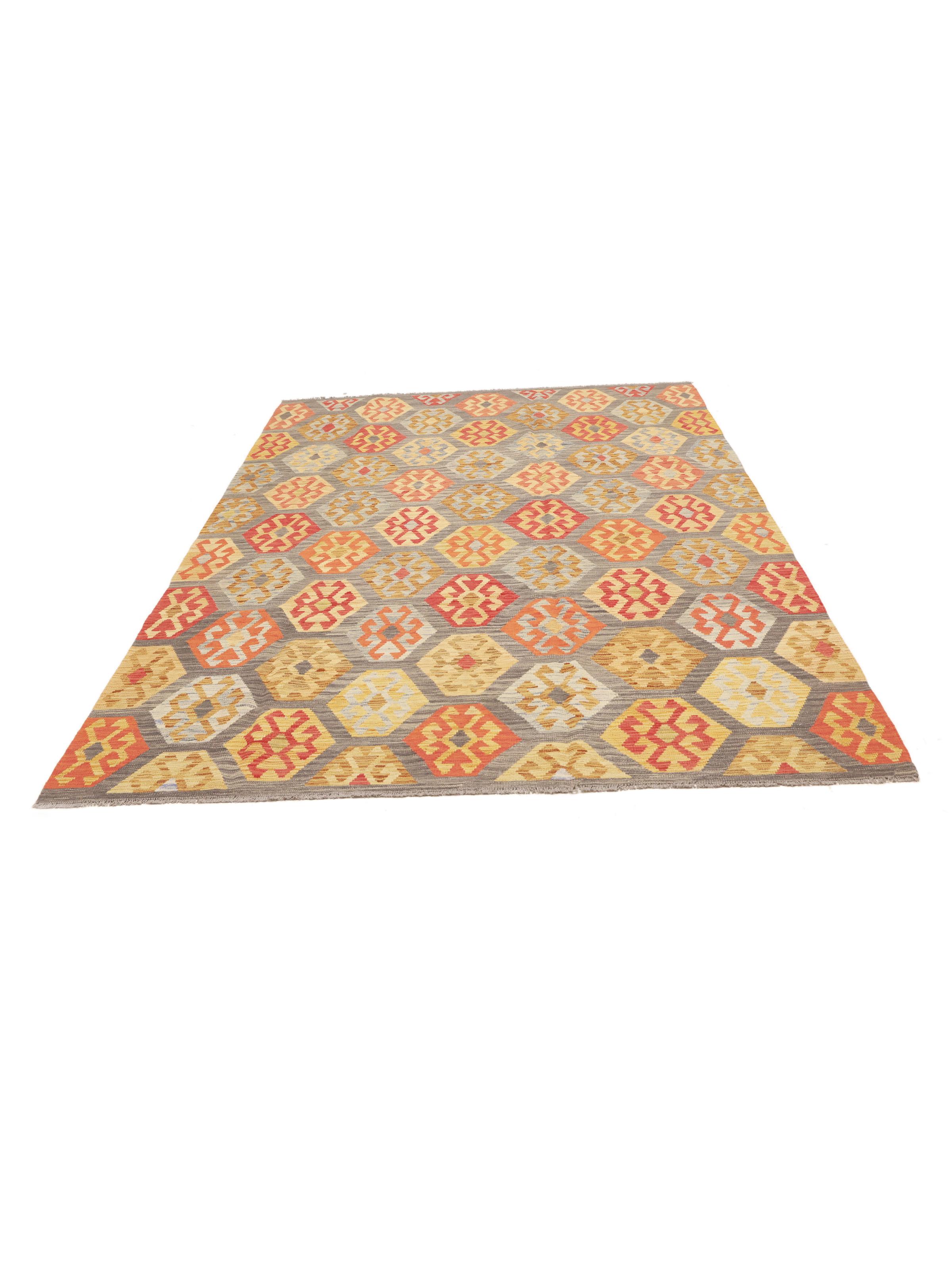
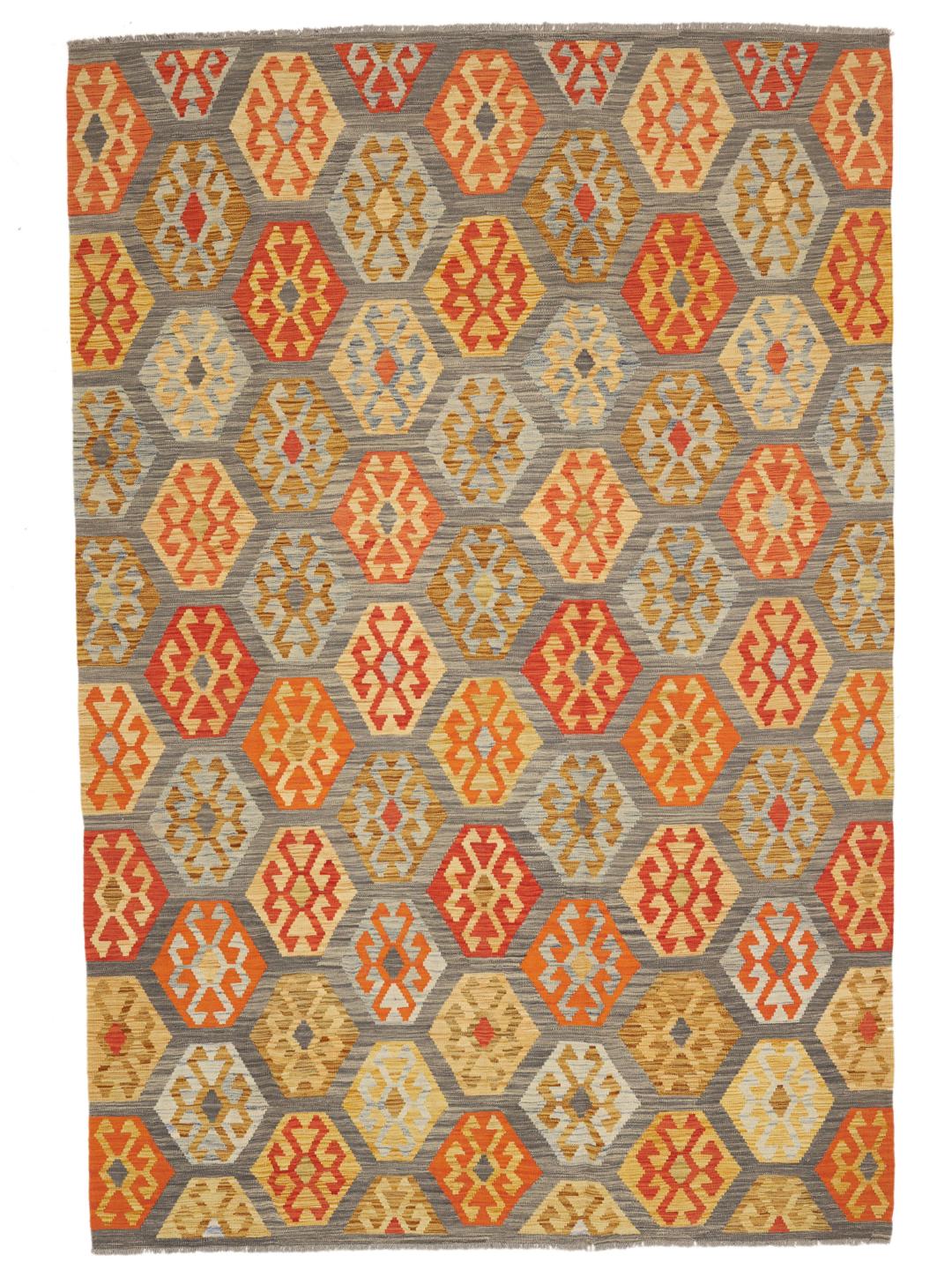
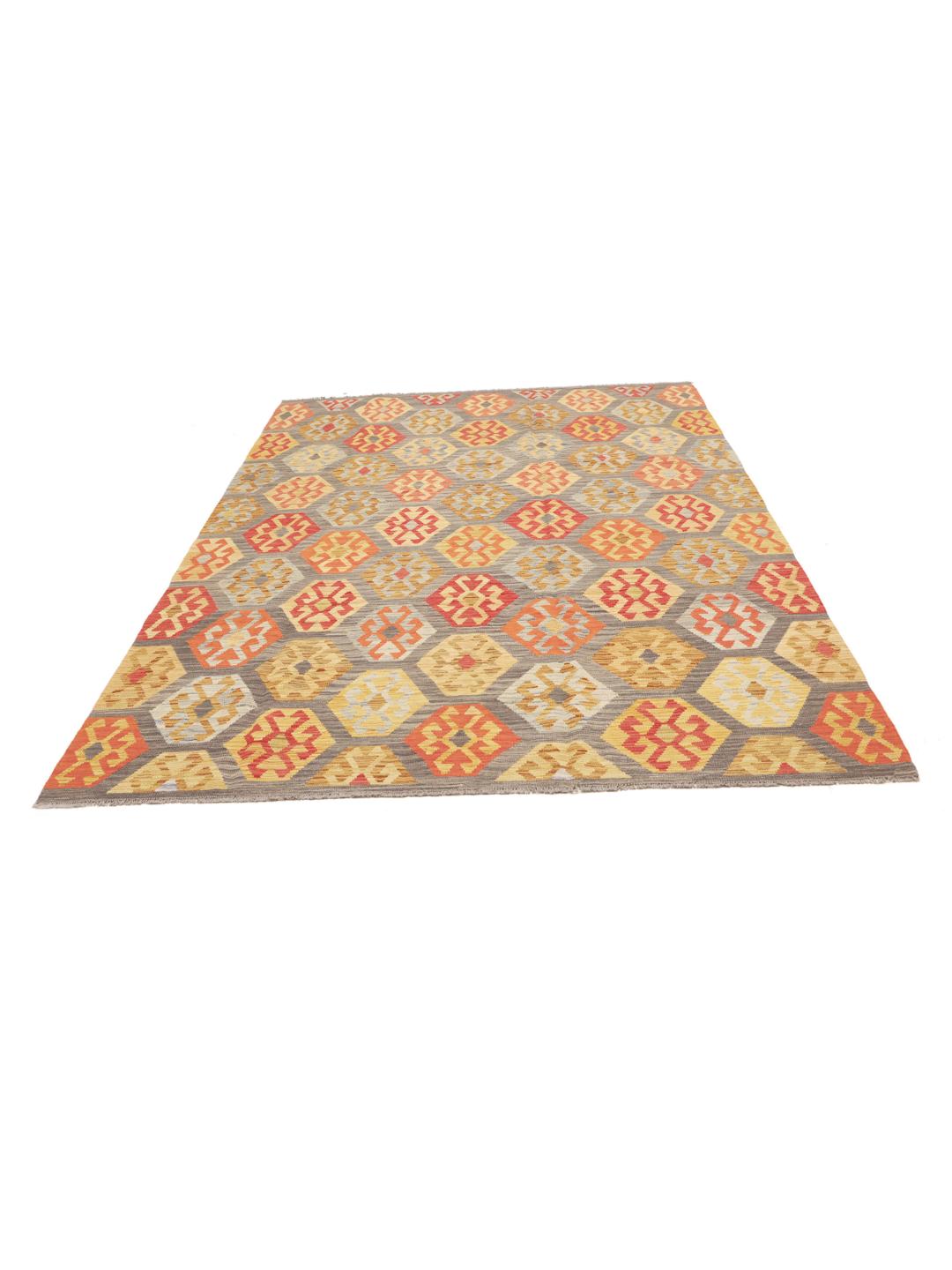
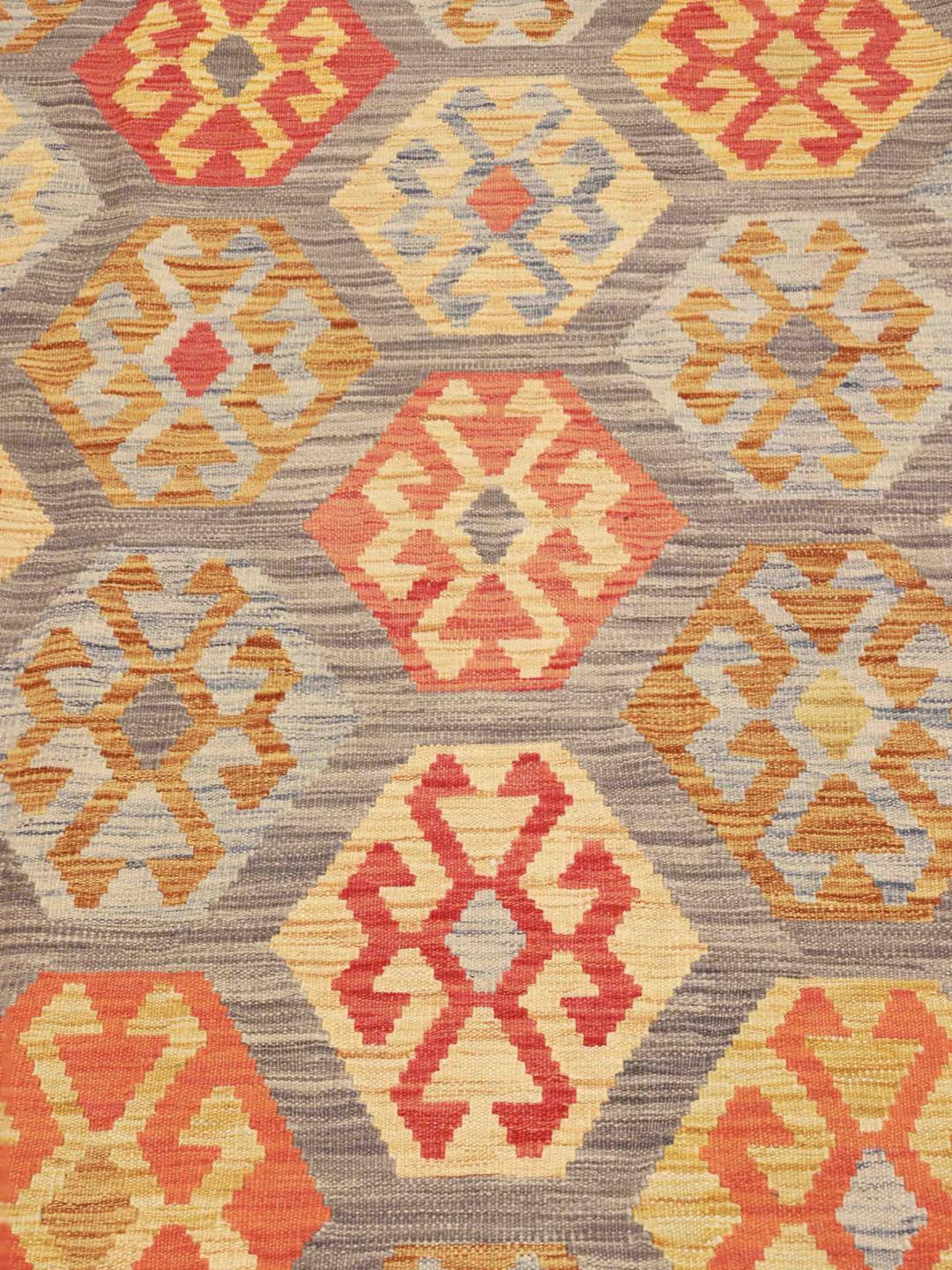
Design-wise, these rugs are often defined by their geometric motifs, such as the repeated diamonds or medallions seen here. These shapes are not merely decorative; they often represent symbols of protection, fertility, or tribal identity passed down through generations. The use of vibrant, contrasting colours like orange and yellow against a neutral grey field is a hallmark of the Afghan style, designed to bring warmth and energy into the home.
Owning a Kelim is more than just purchasing a floor covering; it is an investment in a living tradition. These rugs are collected for their ability to withstand the test of time and their deep cultural resonance. By bringing an authentic, hand-woven piece into your home, you are participating in a craft that has been refined over centuries, preserving the skill and artistic vision of generations of weavers.