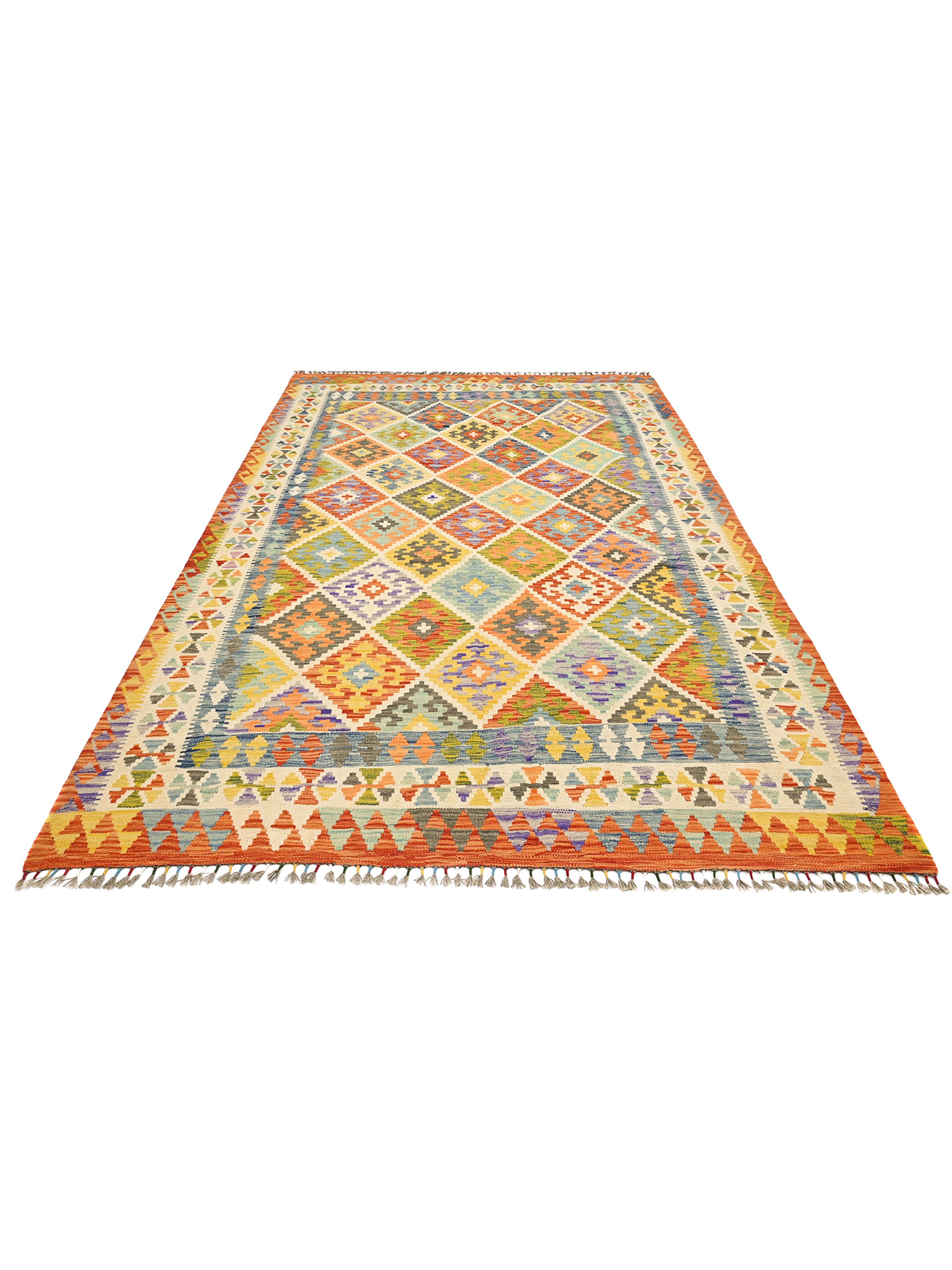
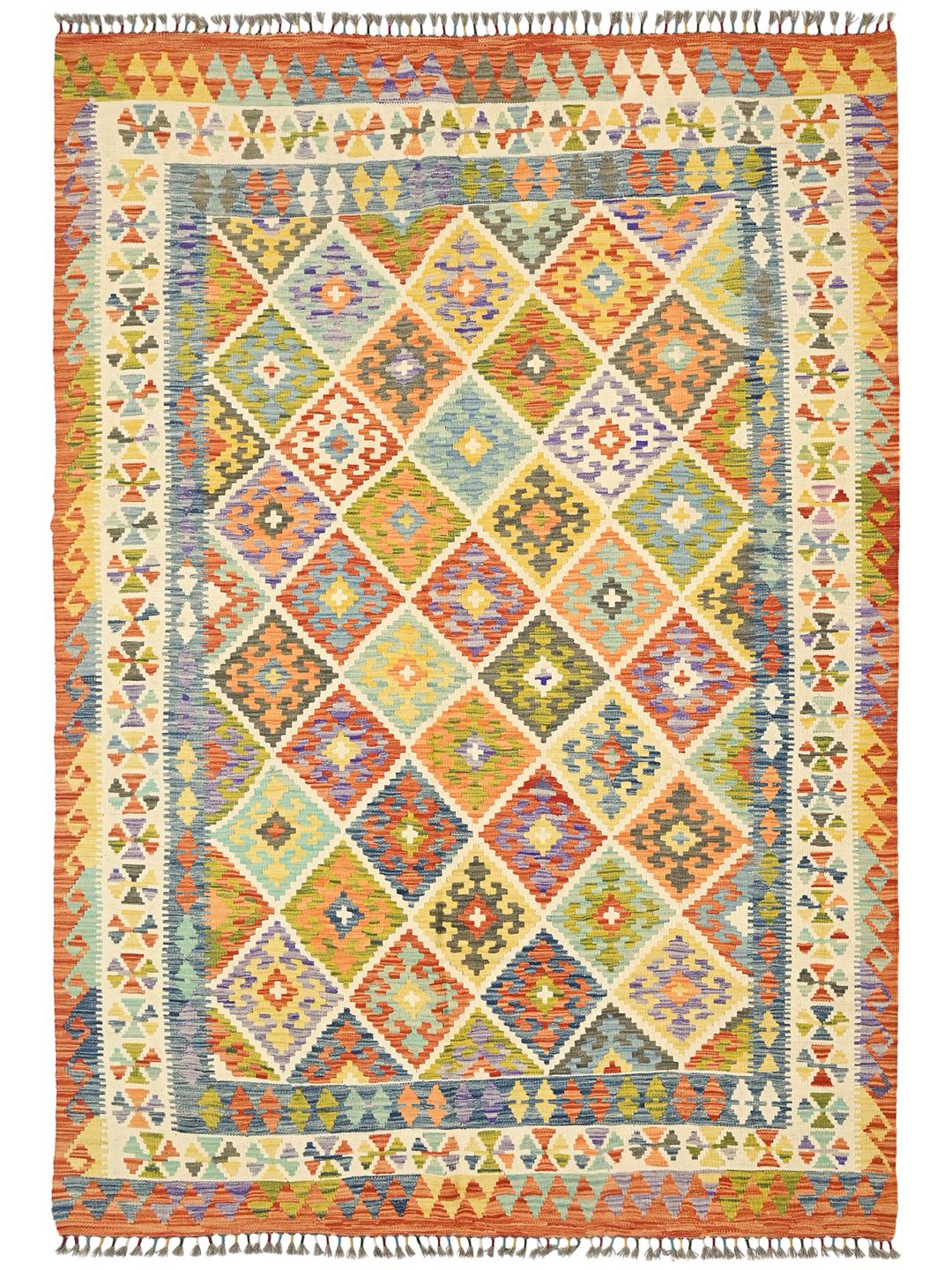
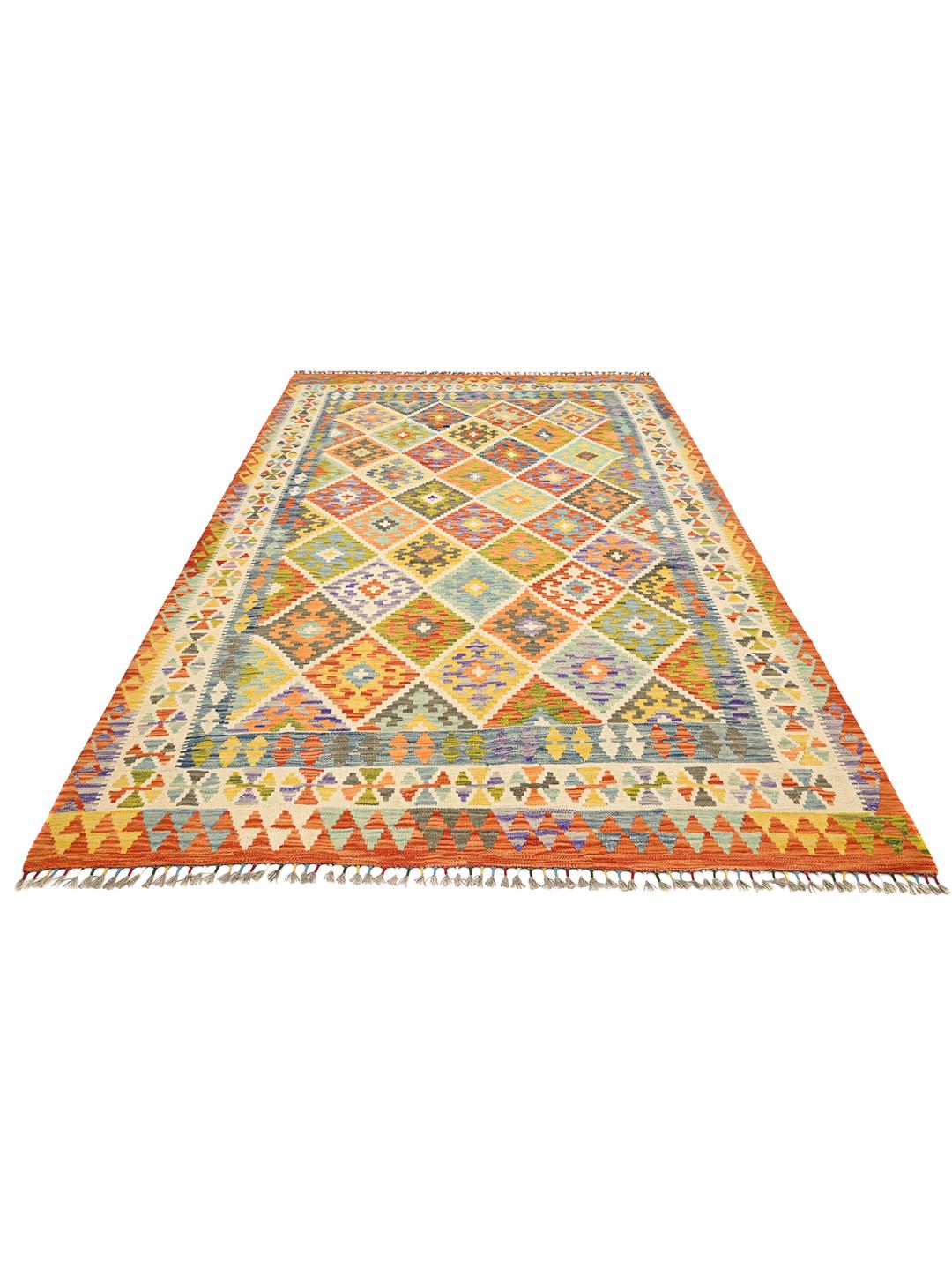
Kilims from Afghanistan hold a central place in the history of Central Asian nomadic weaving. Traditionally crafted by semi-nomadic tribes across northern and western regions, these flatwoven textiles served both functional and decorative roles within daily life, functioning as floor coverings, wall hangings, and protective covers.
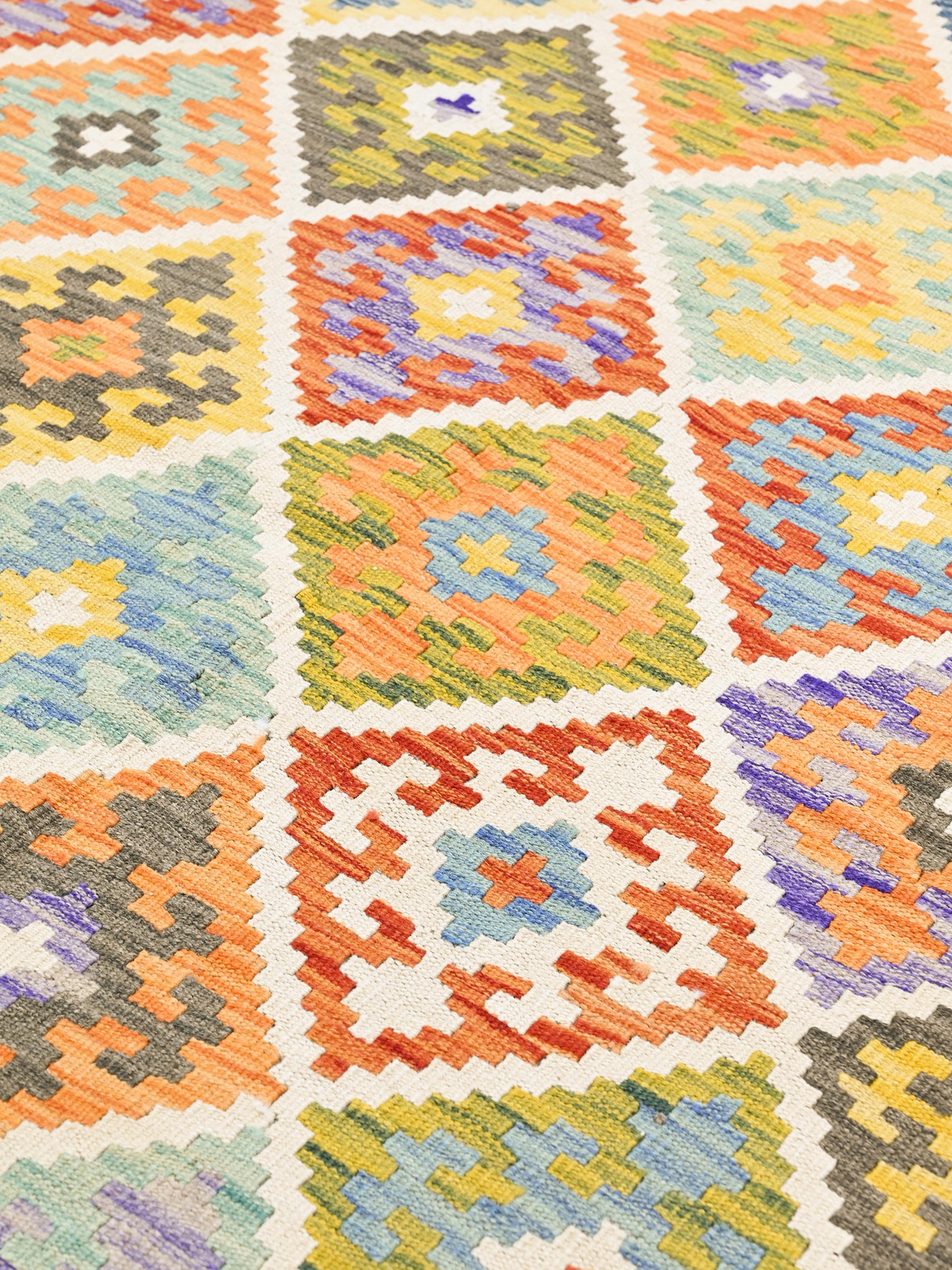
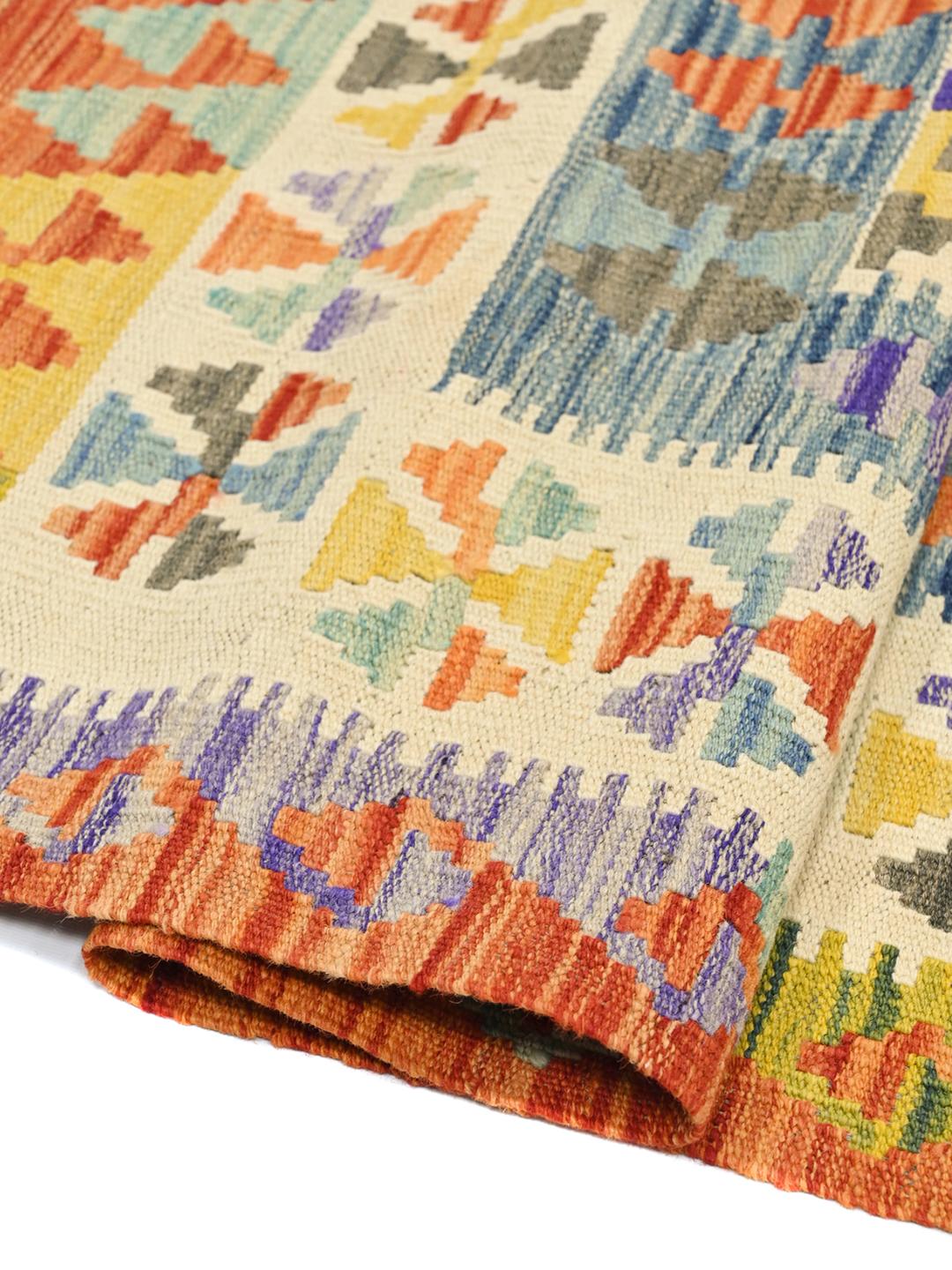
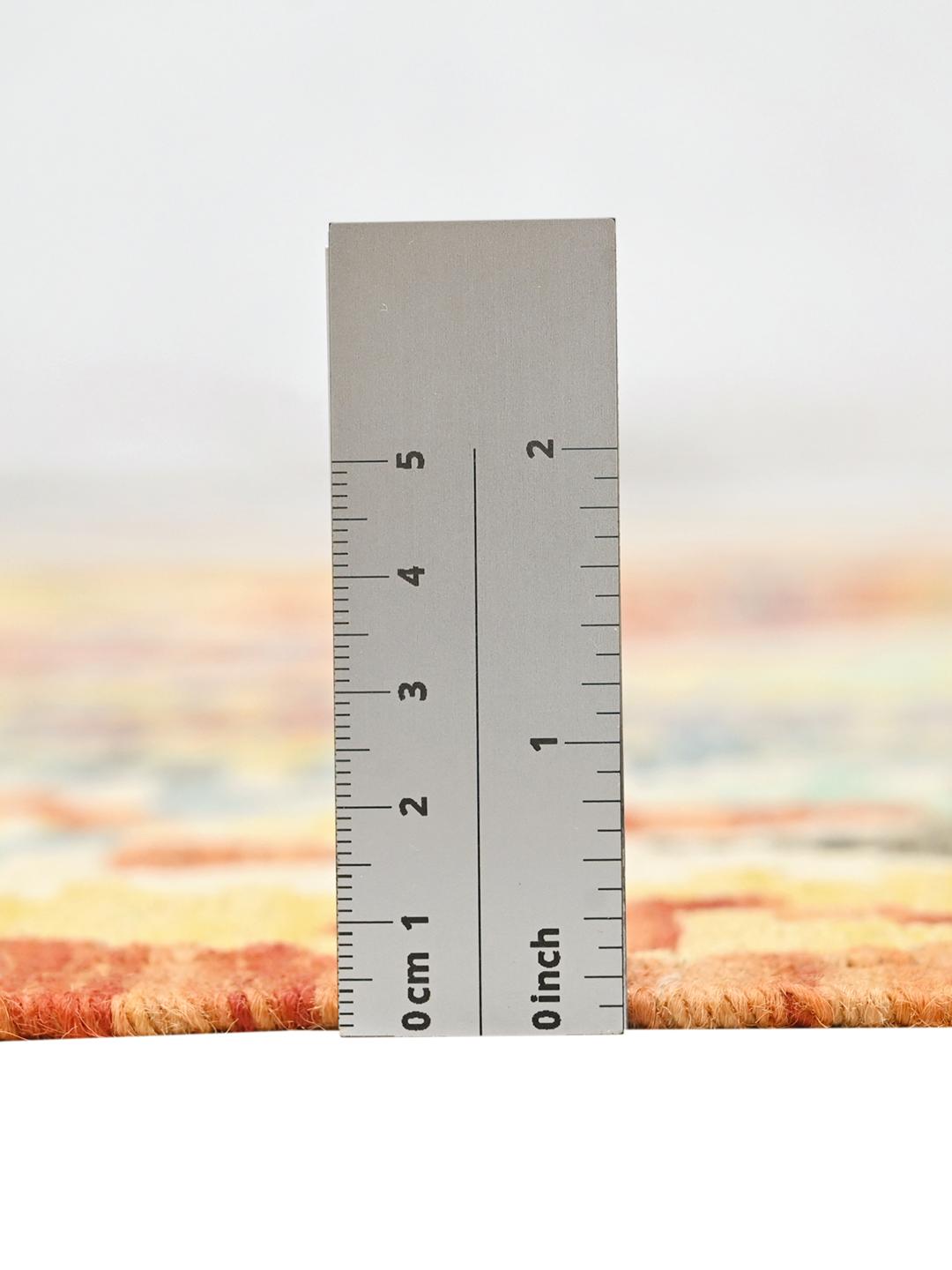
The term flatweave or kilim refers to a technique where the weft threads are tightly woven through the warp without creating a knotted pile. This method produces a thin, lightweight, and durable rug with crisp, sharp geometric definition, as the design is created directly by the structural threads of the weave itself.
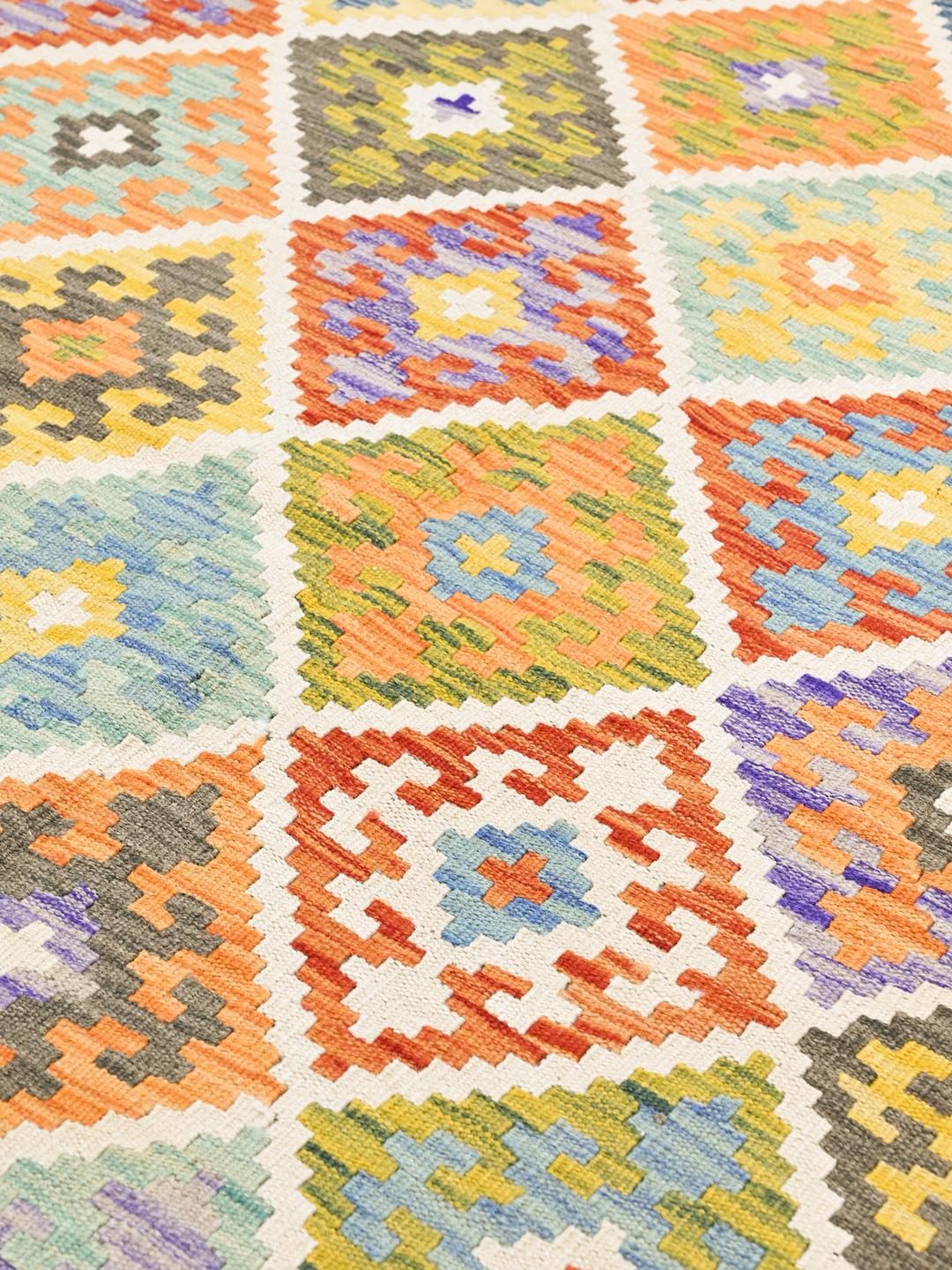
Visual language in Afghan kilims relies heavily on inherited tribal symbols, geometric diamonds, and decorative borders. Color palettes often lean on warm earthy tones mixed with striking primary accents, using motifs passed down through generations to record tribal identity and regional stories.
prized by collectors for their strong graphic quality and historic integrity, old style Afghan kilims bring real substance to contemporary interiors. Owning a unique hand-woven kilim connects your home to an ancient artisan tradition that continues to be celebrated worldwide.