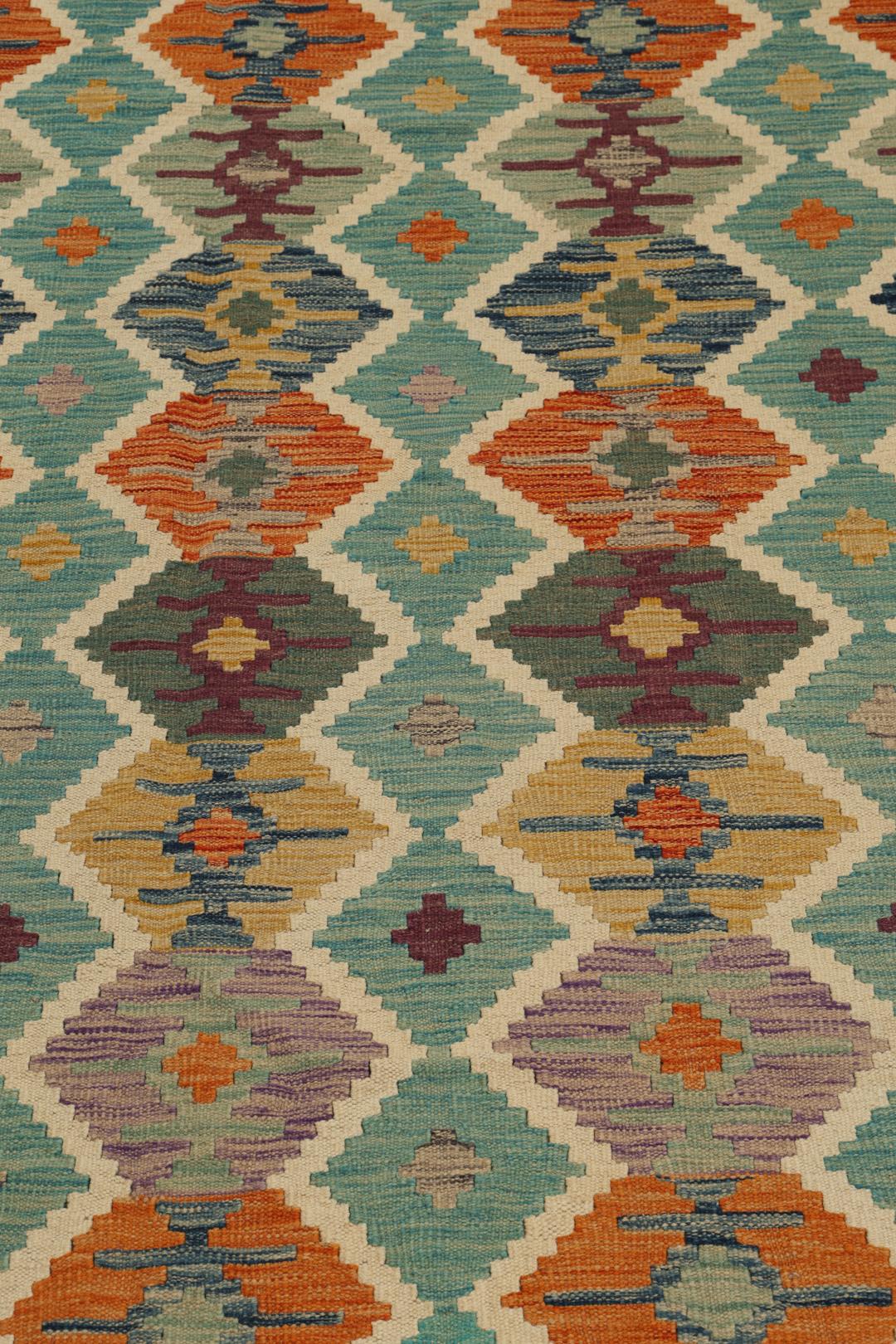
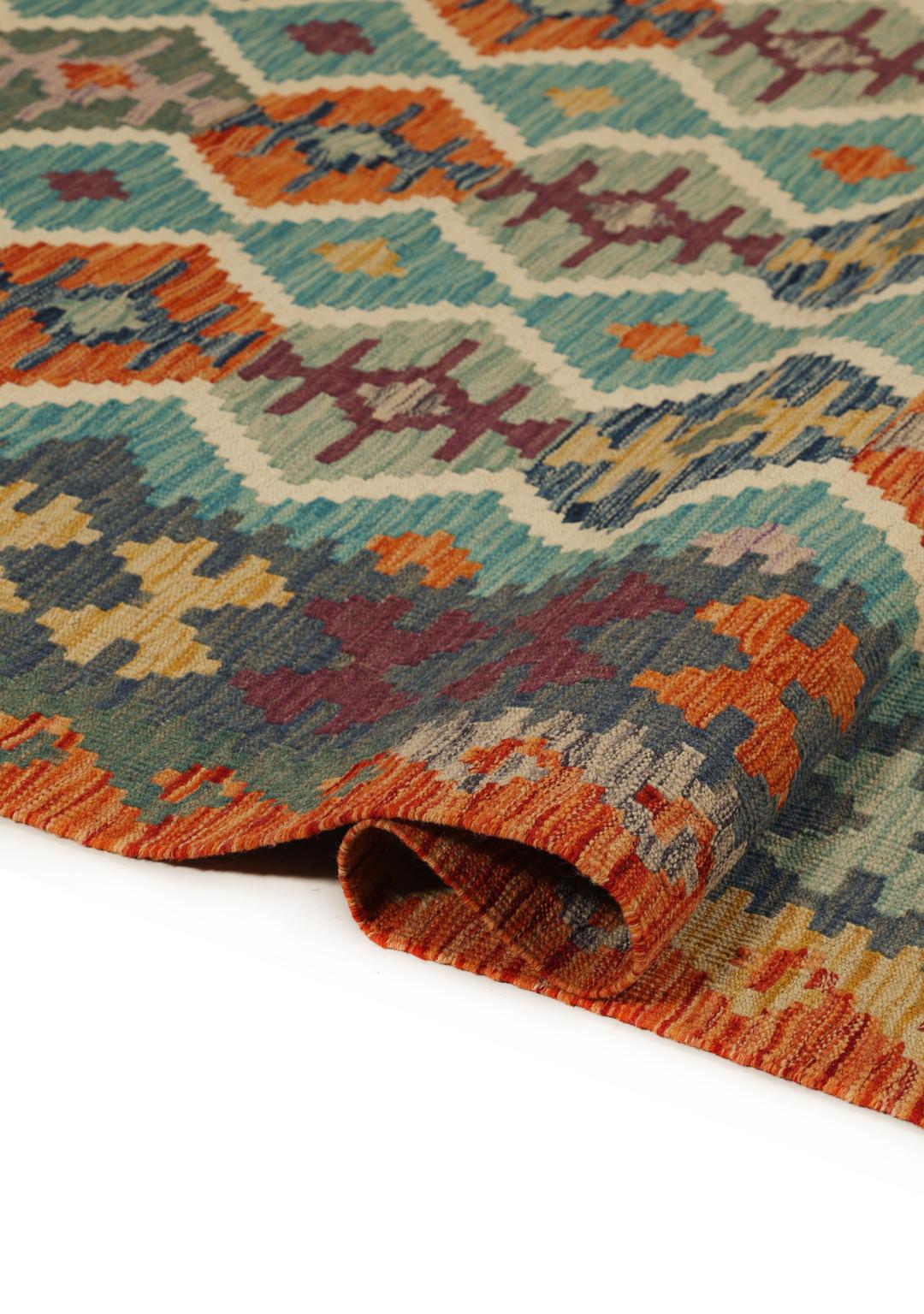
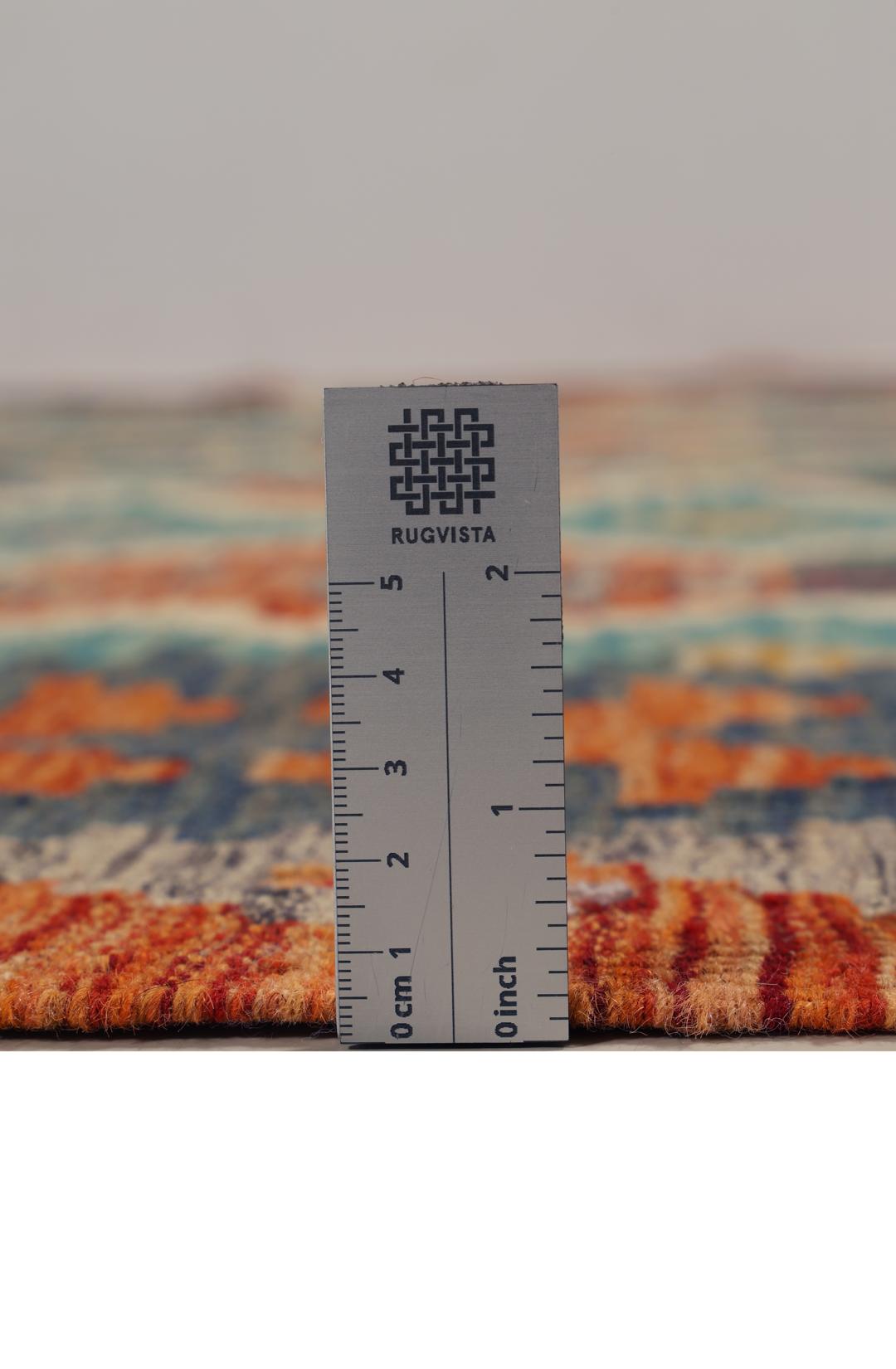
Kelim rugs have a long and storied history across the Middle East and Central Asia. They are traditionally flat-woven, meaning they lack a pile, which distinguishes them from knotted rugs. Historically, these textiles were essential for nomadic tribes, serving as floor coverings, tent dividers, and storage bags due to their portability and durability.
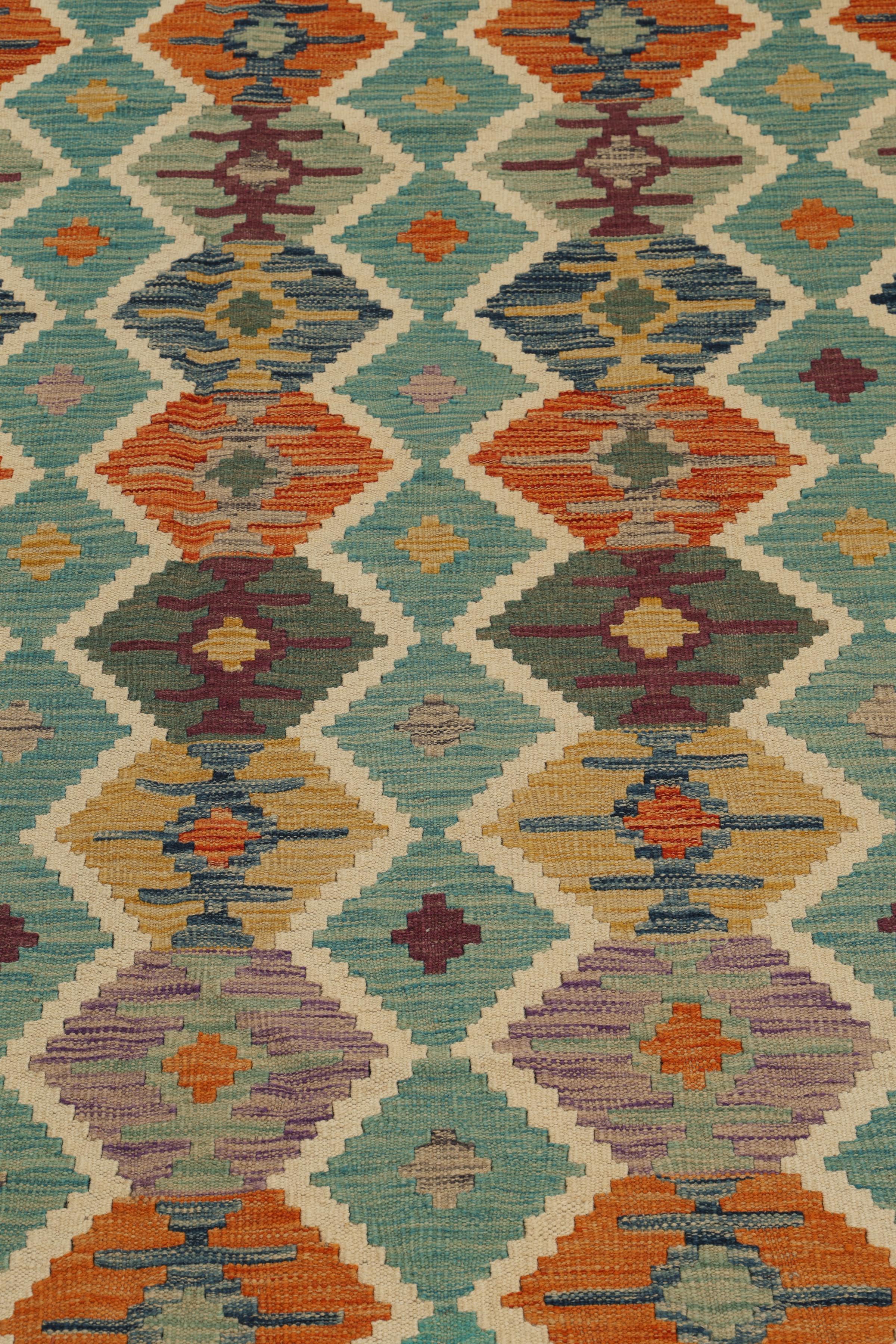
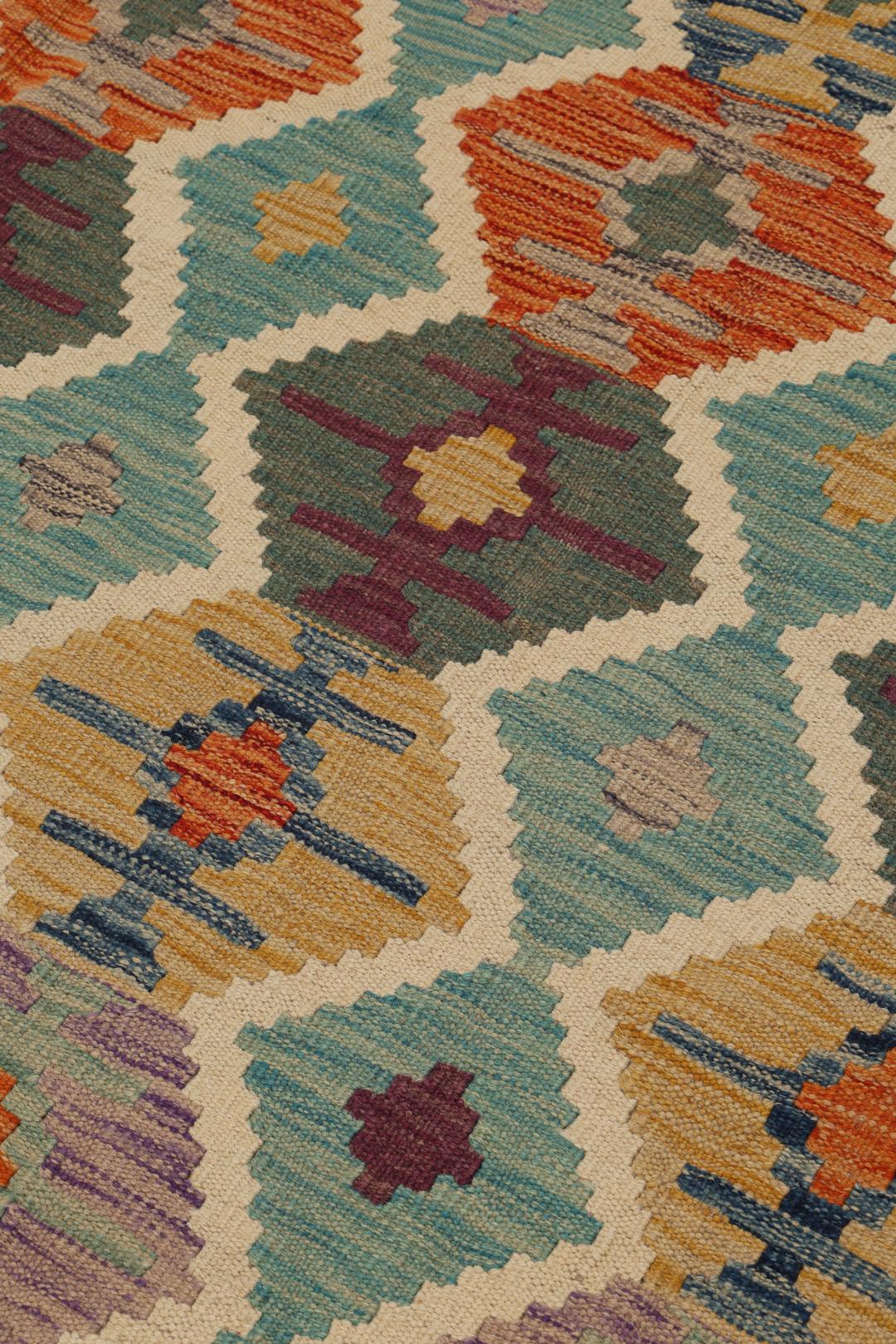
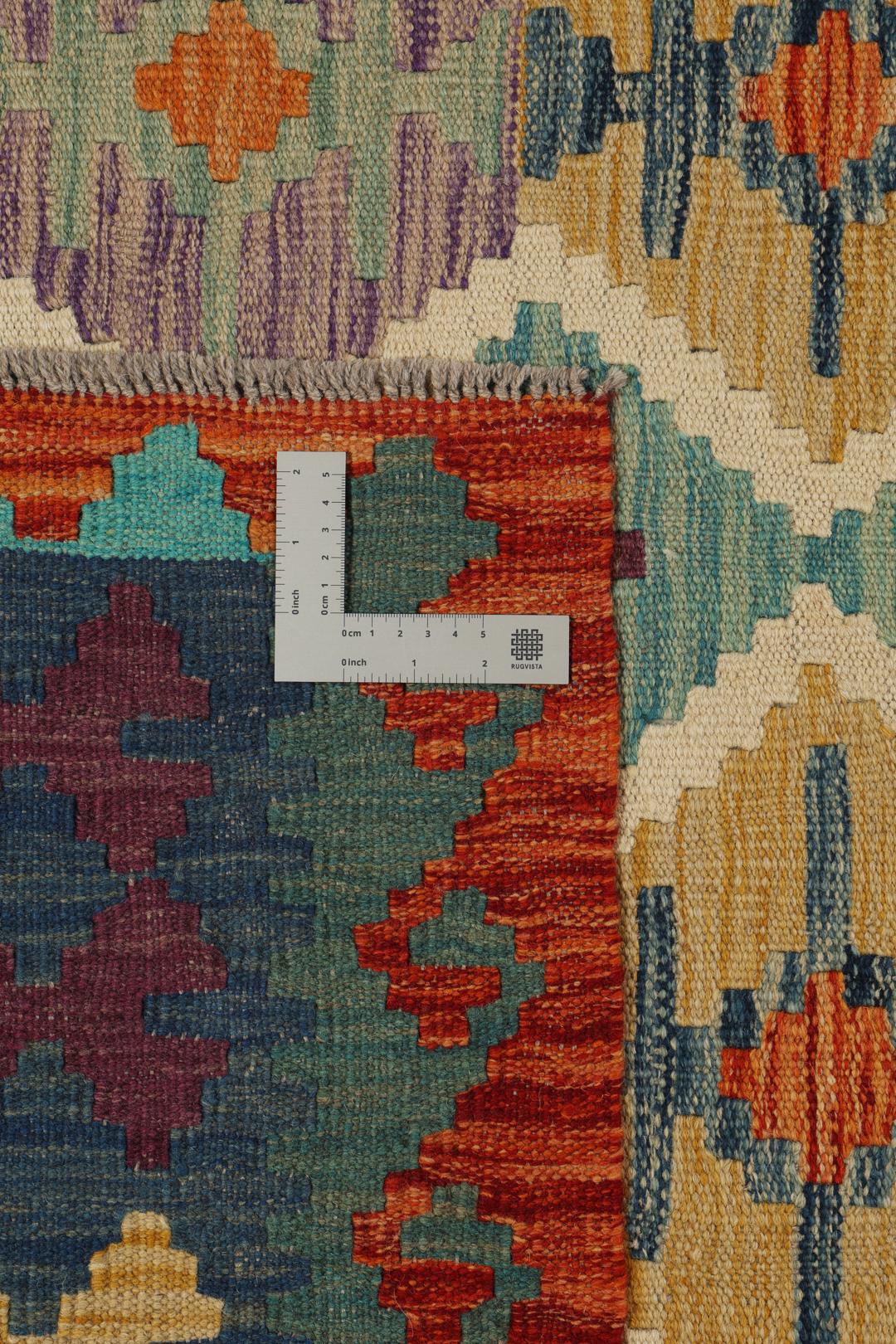
The term Kelim refers to the specific slit-weave technique used to create the patterns. By wrapping the Wool weft threads around the warp threads in distinct colour blocks, the weaver creates sharp, geometric motifs. This technique is what gives these rugs their characteristic reversible nature and clean, graphic appearance.
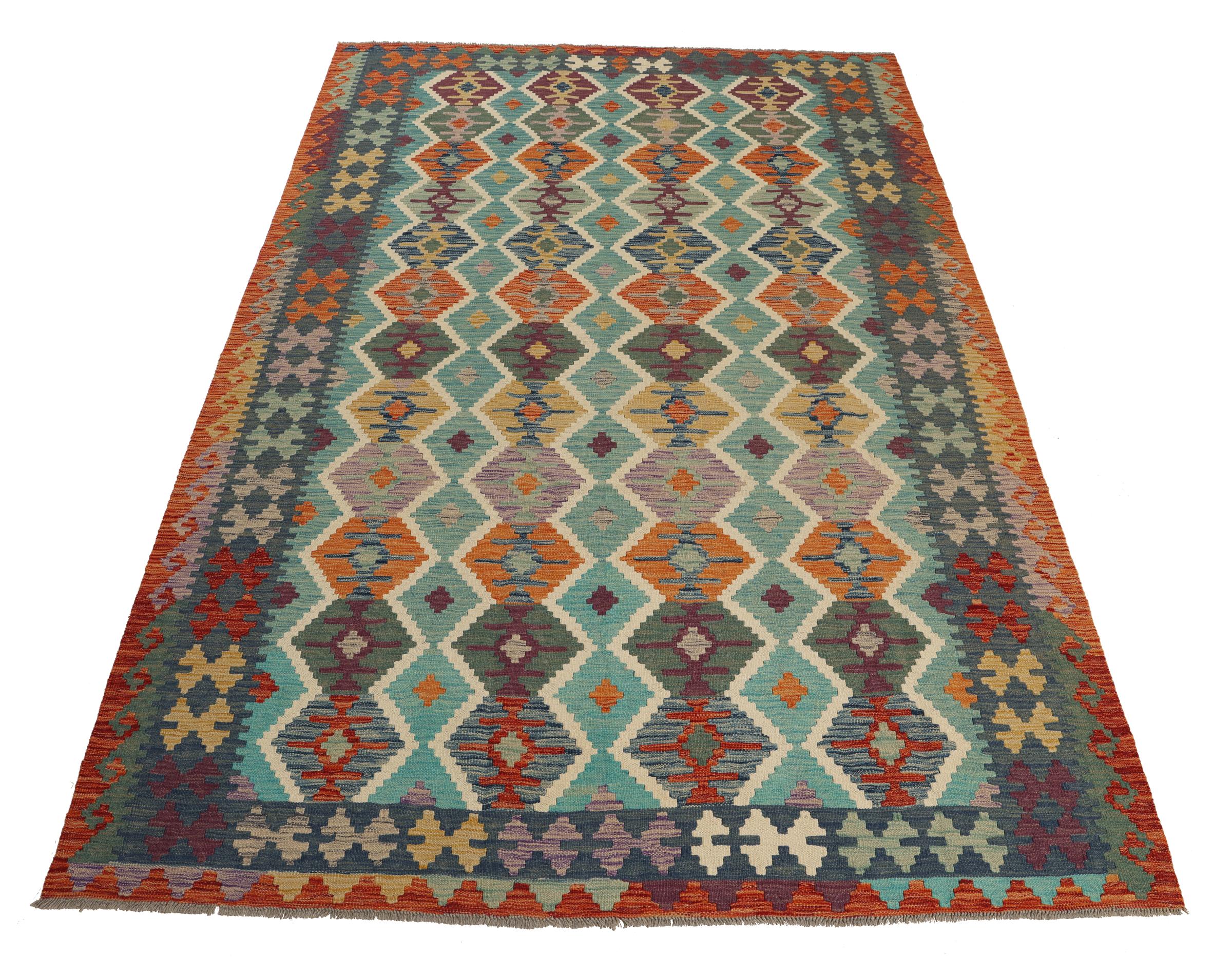
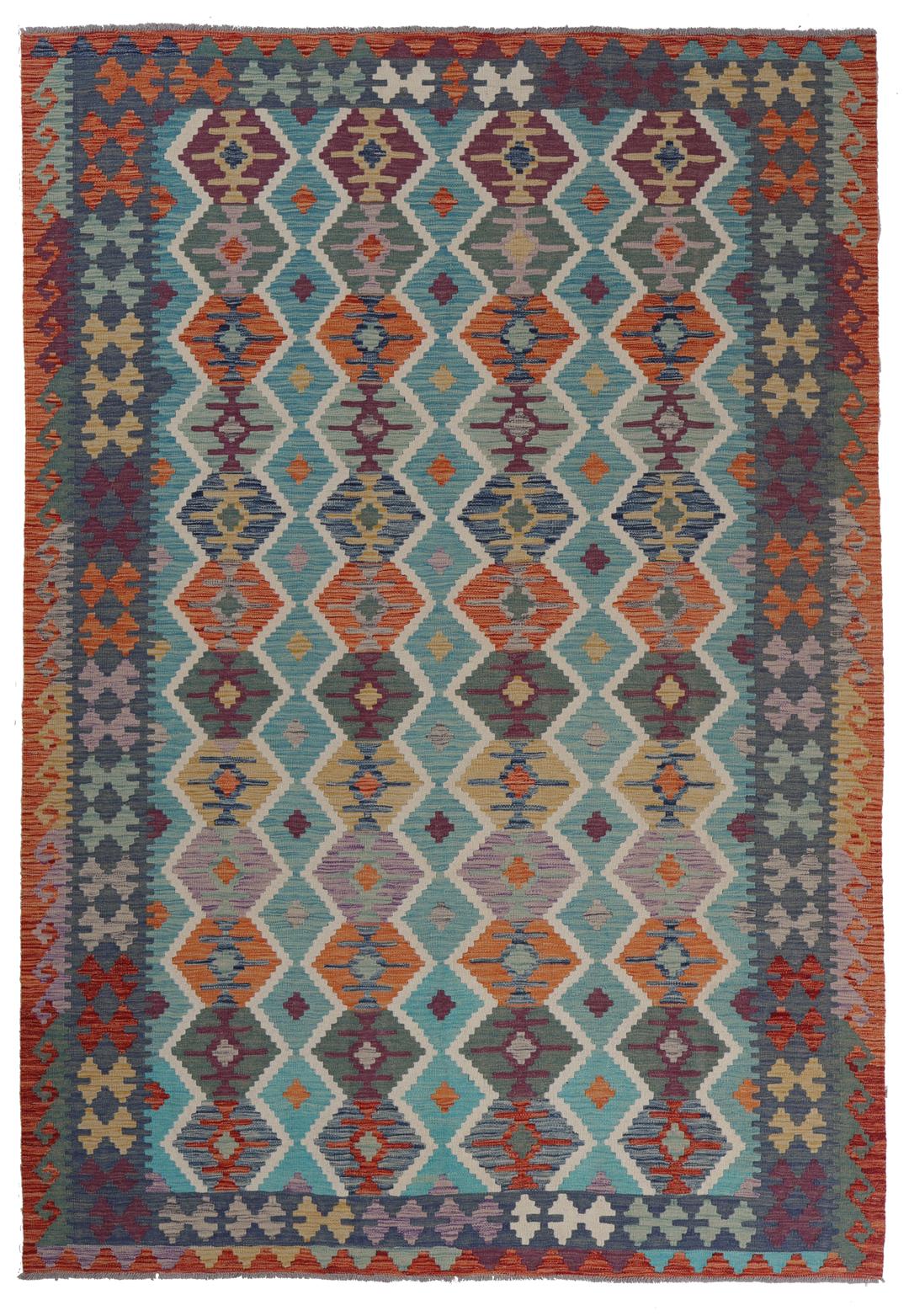
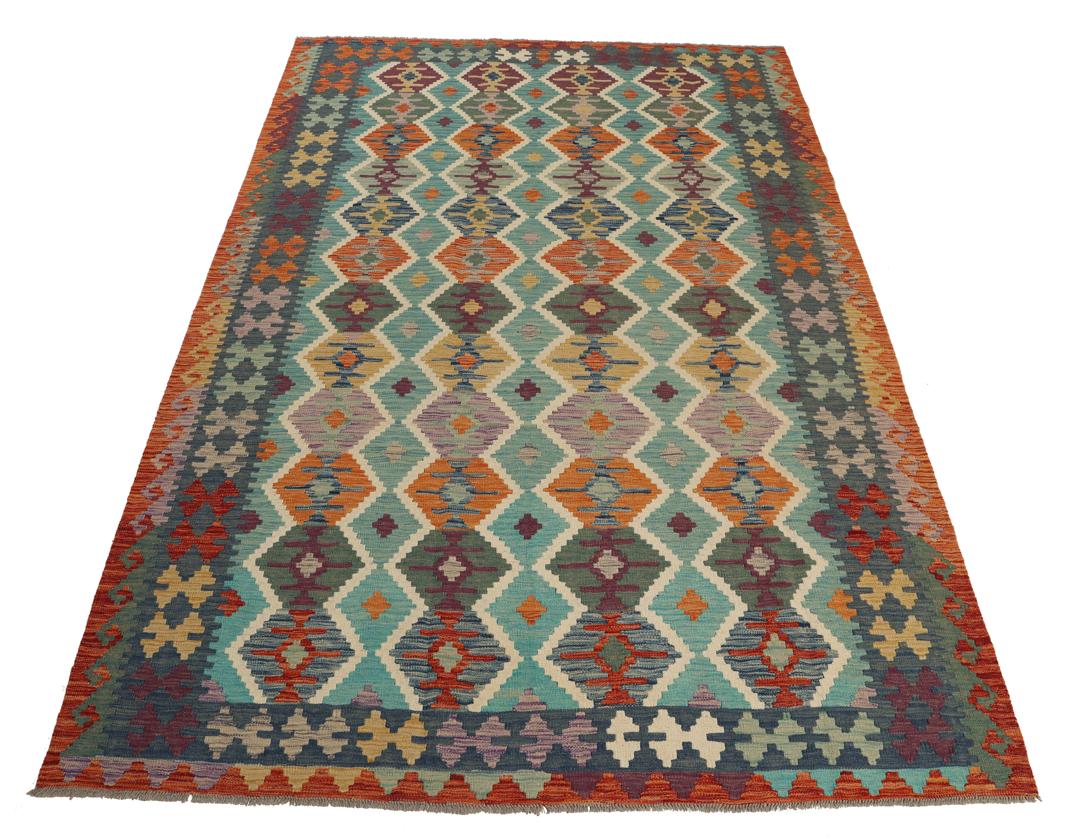
The design of this particular rug is deeply rooted in Afghan traditions, featuring bold diamonds and decorative borders that have been used for centuries to tell stories or denote tribal identity. The geometric motifs are not merely decorative but are part of a visual language that has evolved over generations, blending cultural storytelling with functional textile art.
Owning a hand-woven Kelim is an opportunity to preserve a piece of living history. These rugs are highly valued by collectors for their authenticity and the skill required to produce them. By choosing this piece, you are supporting a craft tradition that prioritises manual precision and cultural heritage over mass-produced convenience.