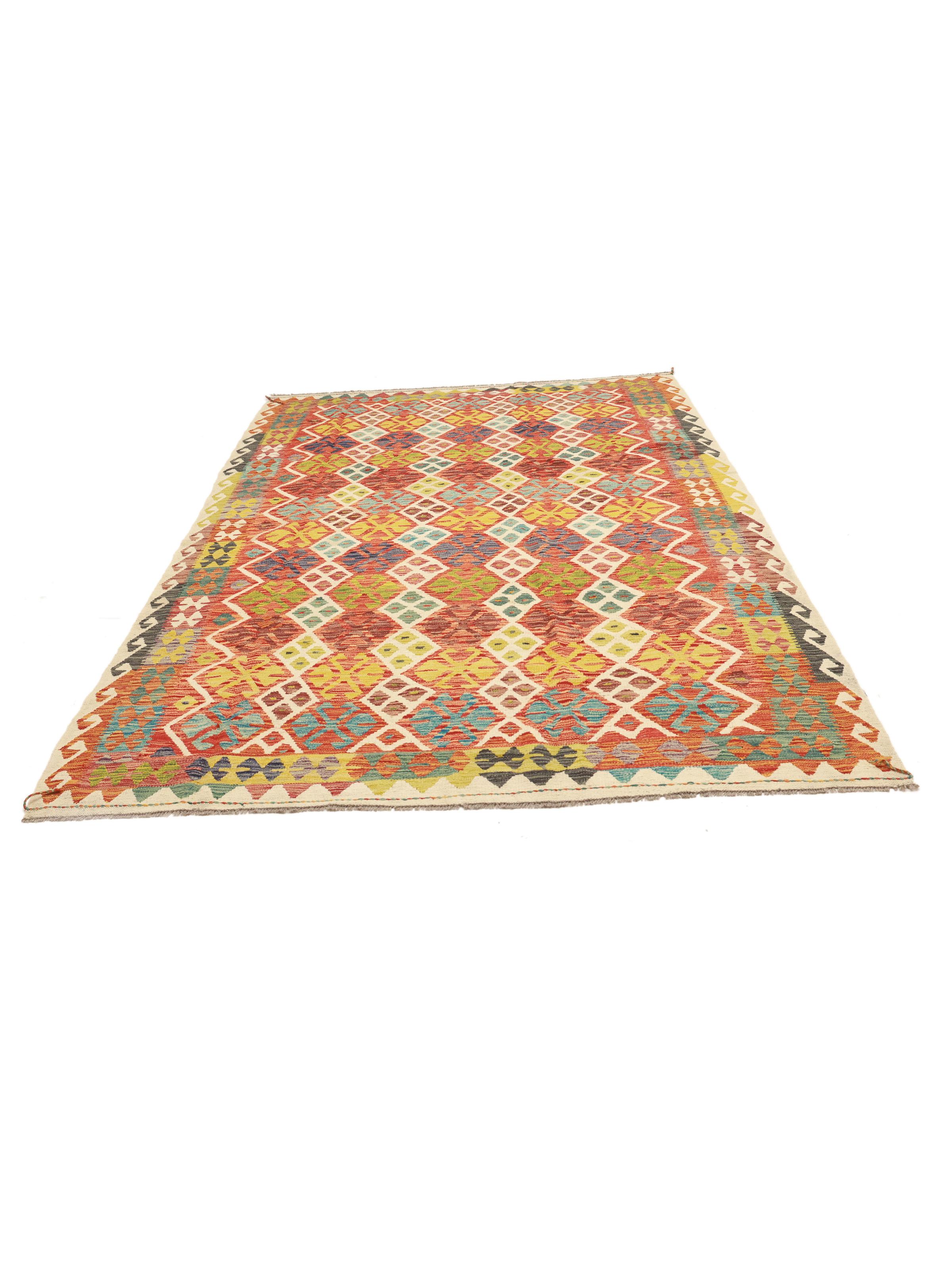
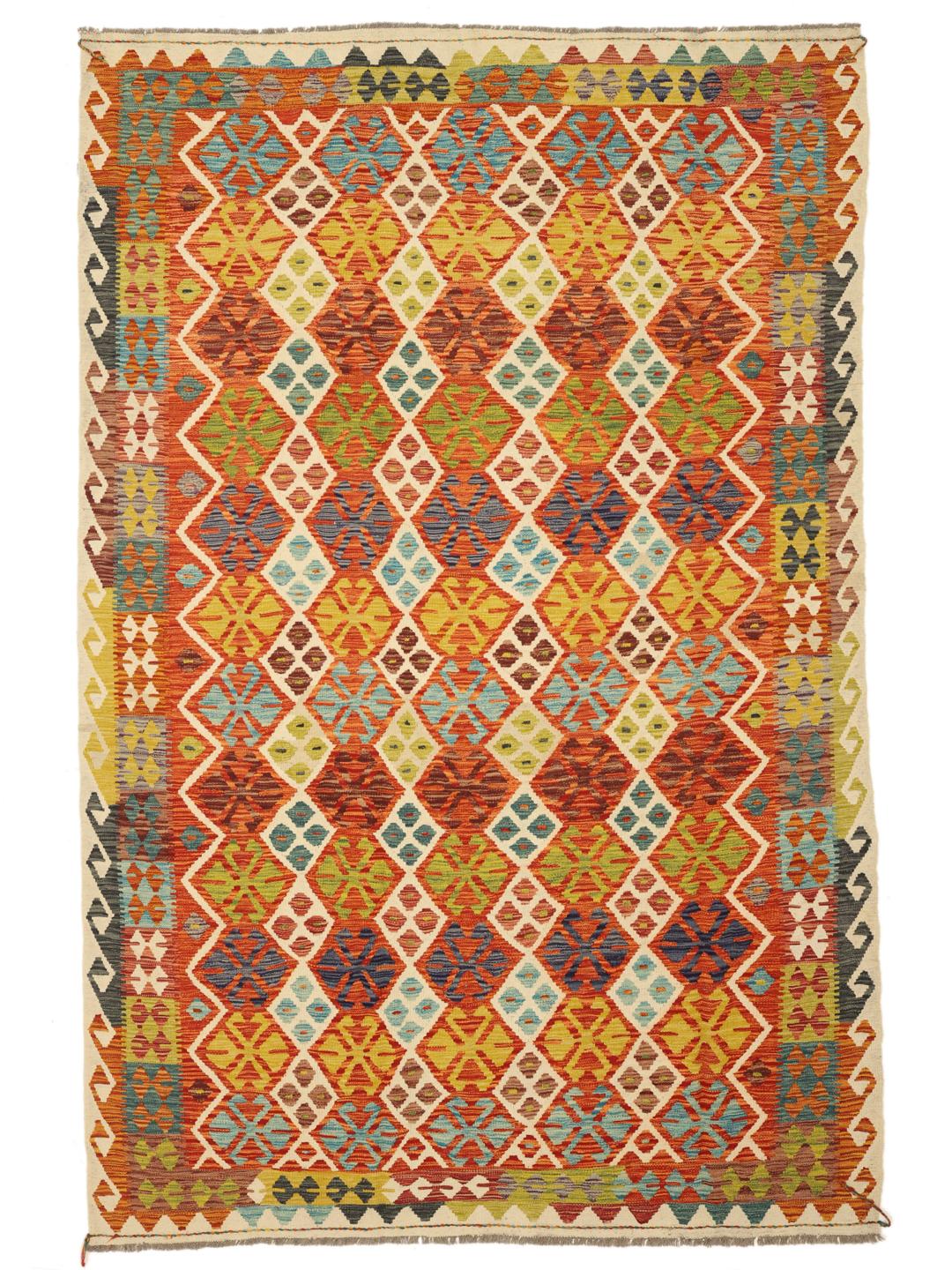
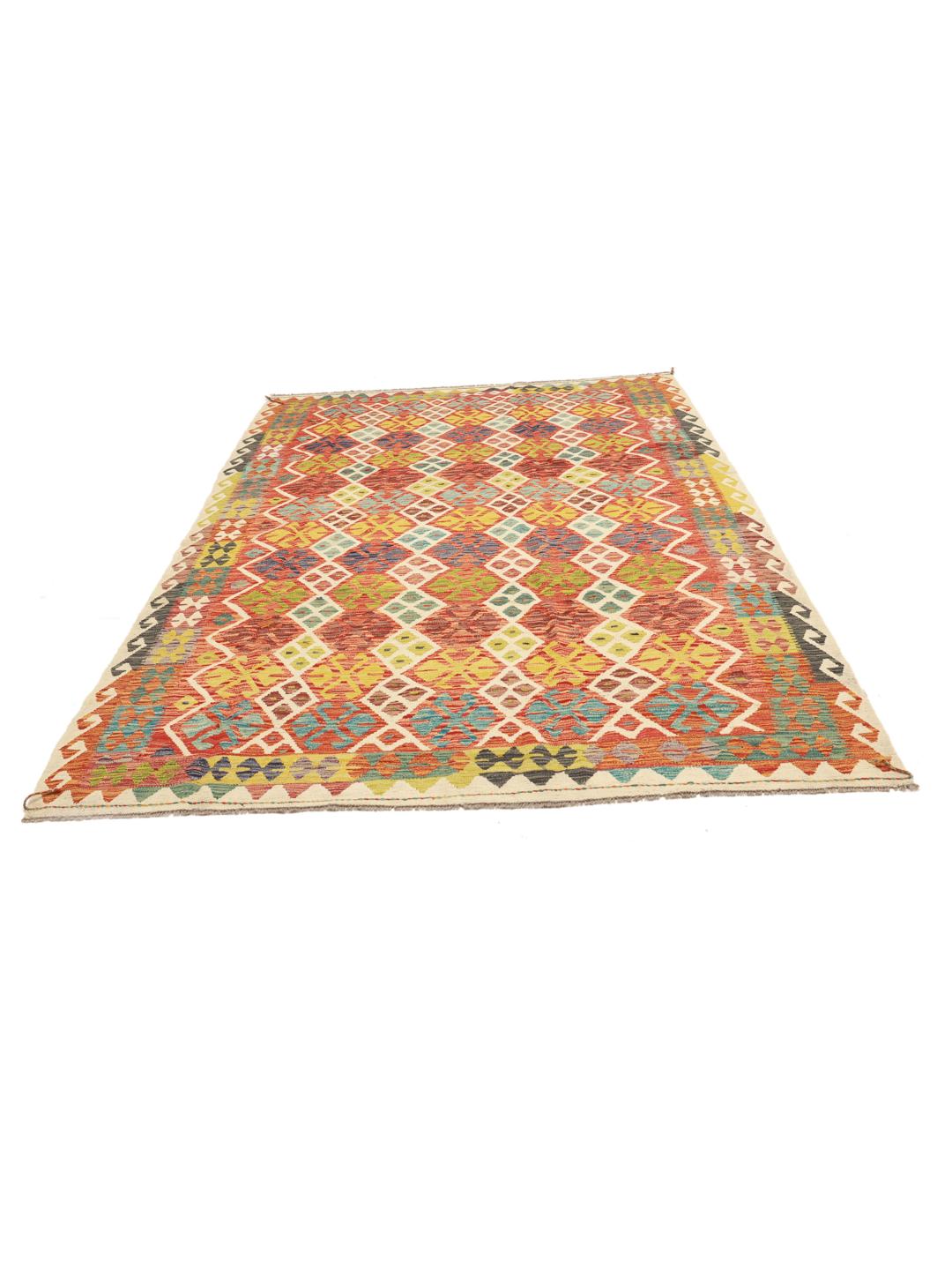
Kelim rugs from Afghanistan are deeply rooted in the nomadic and village traditions of the Middle East. These flatweave textiles were originally created for practical purposes, serving as floor coverings, wall hangings, or saddlebags for travelling tribes, which necessitated a construction that was both lightweight and incredibly durable.
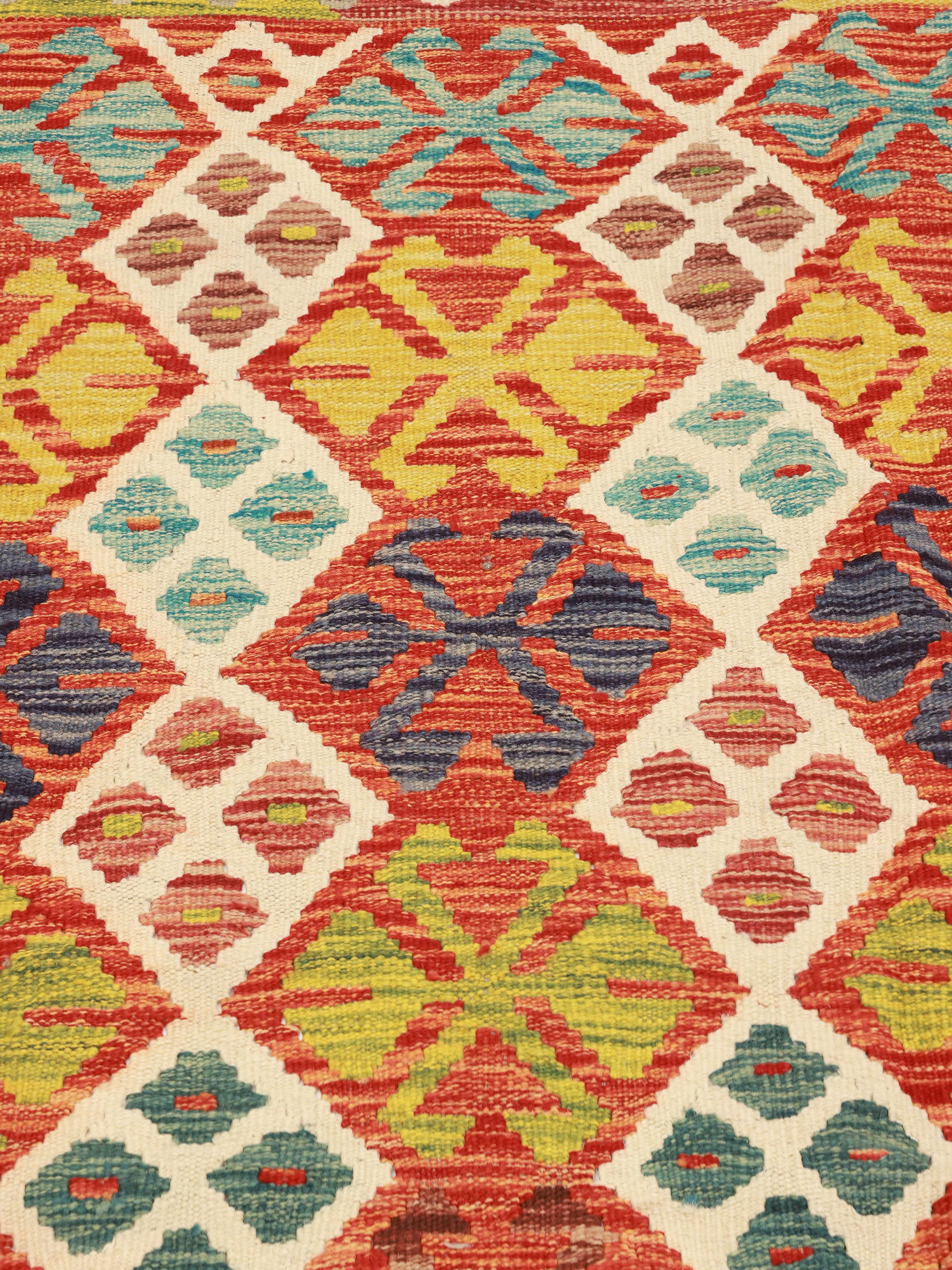
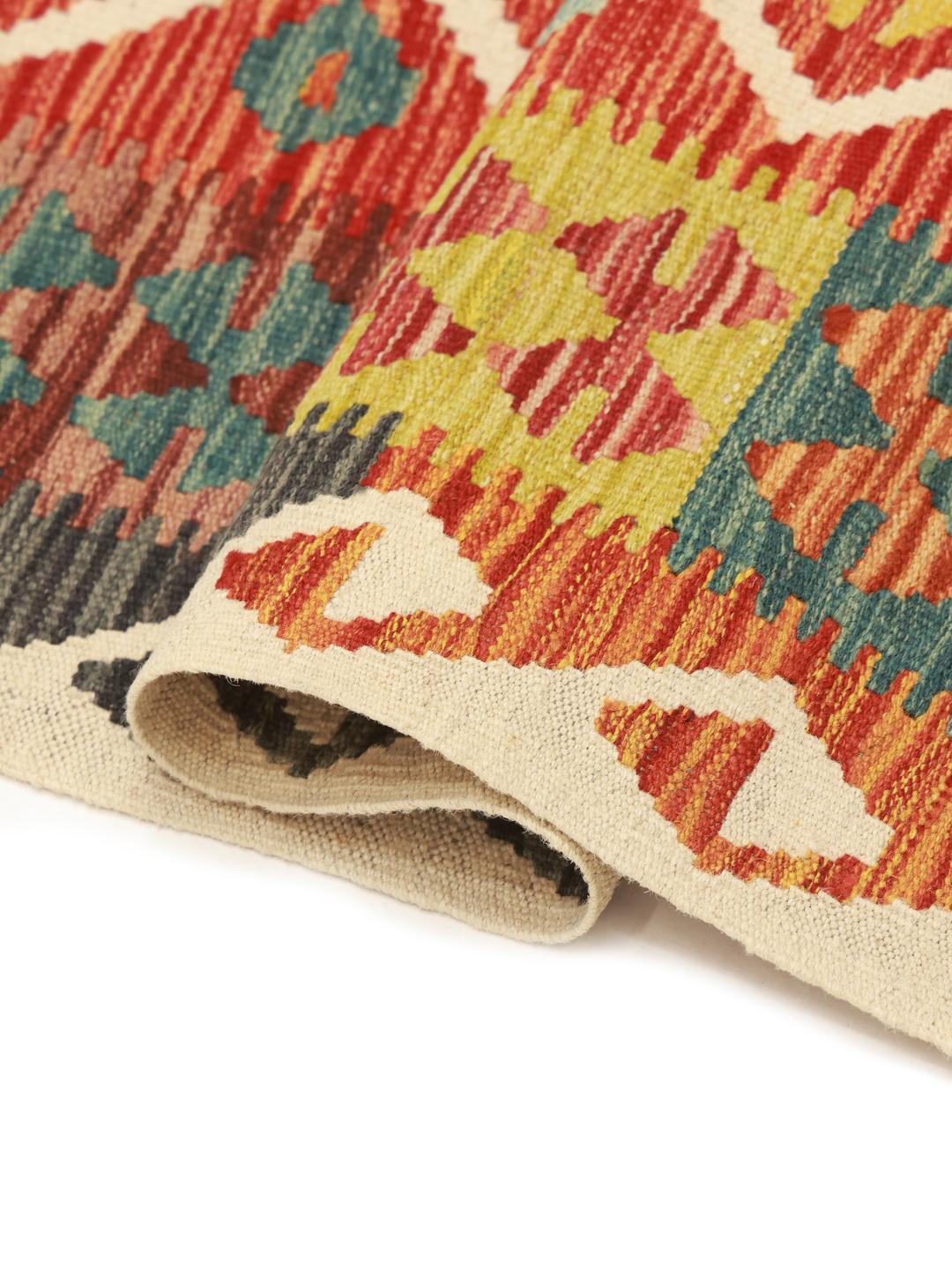
The term 'Kelim' refers to the specific slit-weave technique used to create these rugs. Unlike knotted rugs, the design is created by interweaving the coloured weft strands through the warp, which results in a reversible rug with a smooth, flat surface. This method requires a skilled weaver to manage the tension across the loom to ensure the geometric motifs remain crisp and symmetrical.
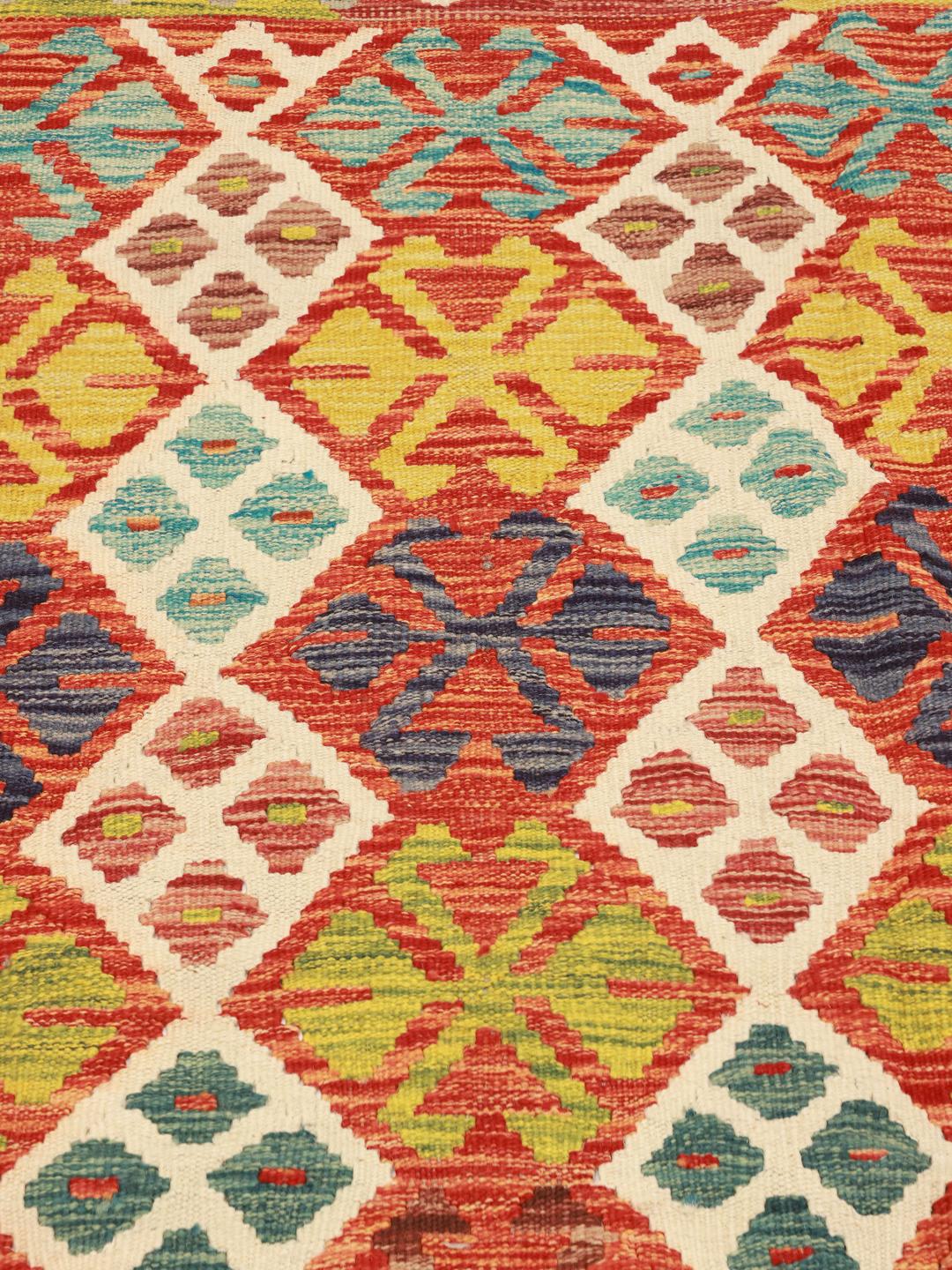
Signature design elements of these Afghan pieces often include bold, geometric shapes such as diamonds and triangles, reflecting the cultural heritage of the weavers. The use of vibrant, contrasting colours is a hallmark of the style, often achieved through natural dyes that soften beautifully over time, giving the rug a unique depth and character.
Owning an Afghan Kelim is an investment in cultural heritage and human skill. These pieces are highly valued by collectors for their authenticity and the way they reflect the individual narrative of the weaver. By bringing one into your home, you are not just acquiring a floor covering, but a piece of history that celebrates the enduring beauty of traditional craftsmanship.