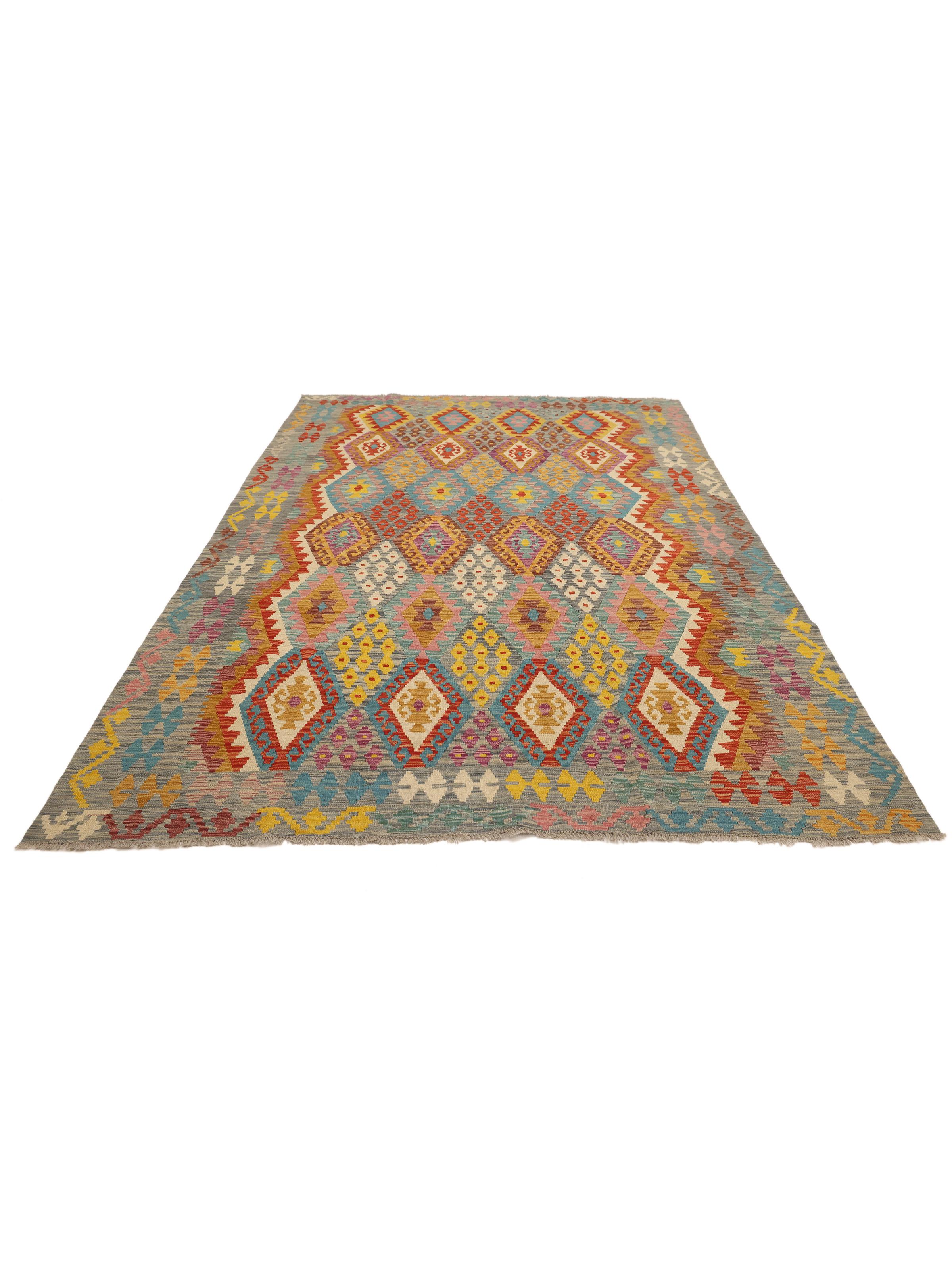
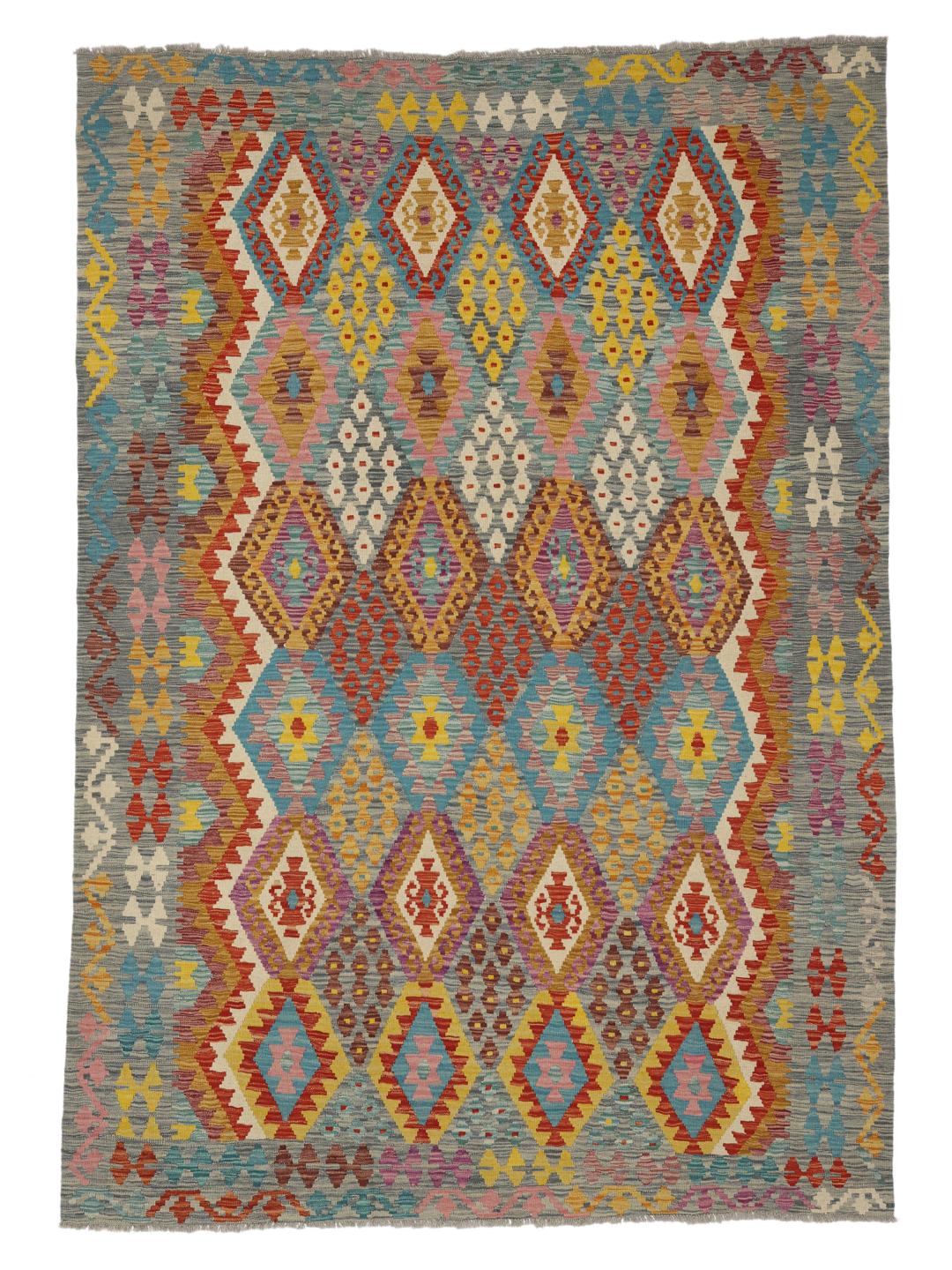
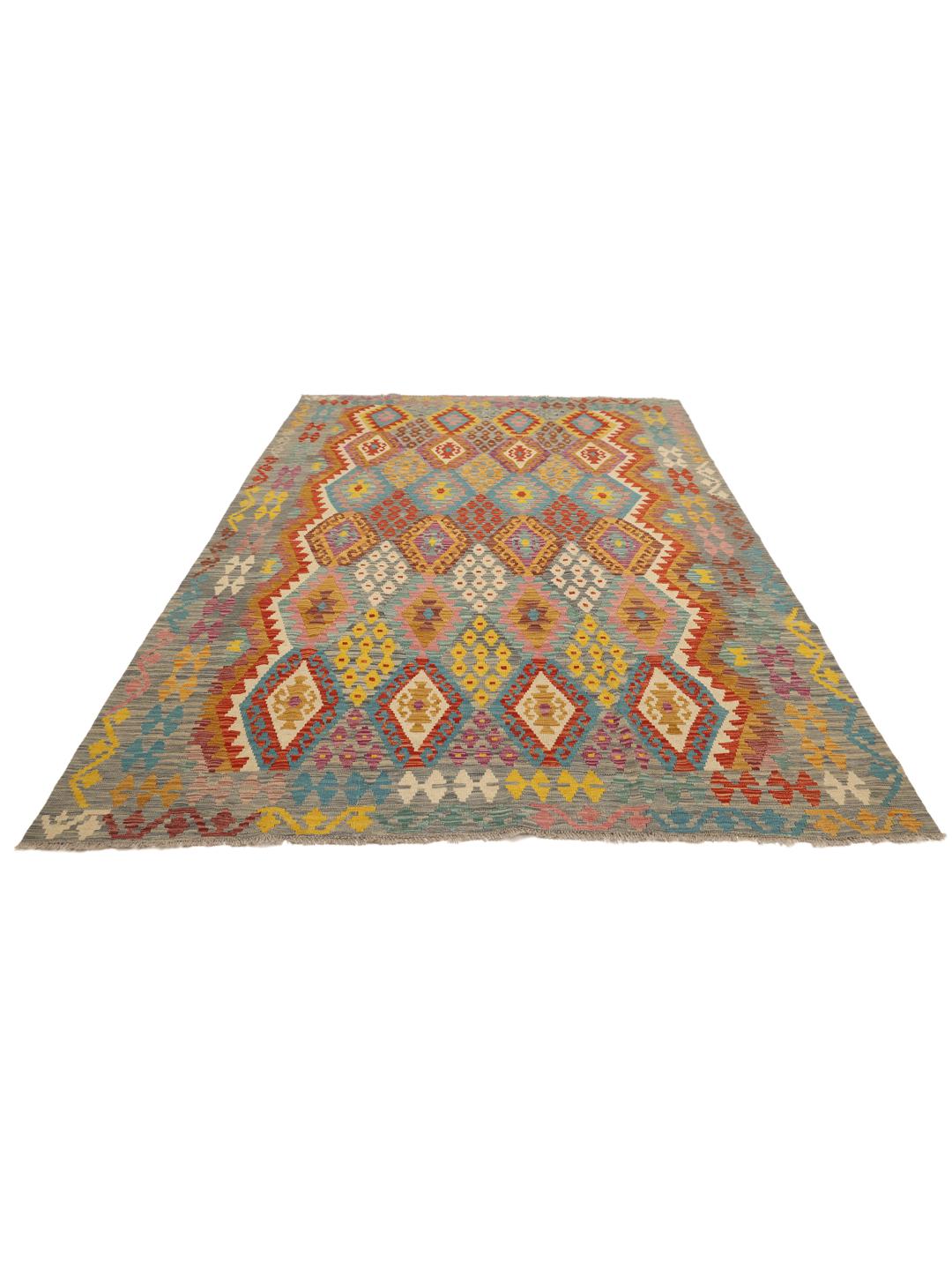
Kelim rugs from Afghanistan represent a centuries-old tradition of flat-woven textiles that have played a central role in the domestic lives of the region's nomadic and semi-nomadic tribes. These rugs were traditionally made for functional purposes, serving as floor coverings, tent partitions, and saddlebags. The art form has evolved over generations, blending ancient regional techniques with a distinct visual language that has become highly sought after by collectors worldwide.
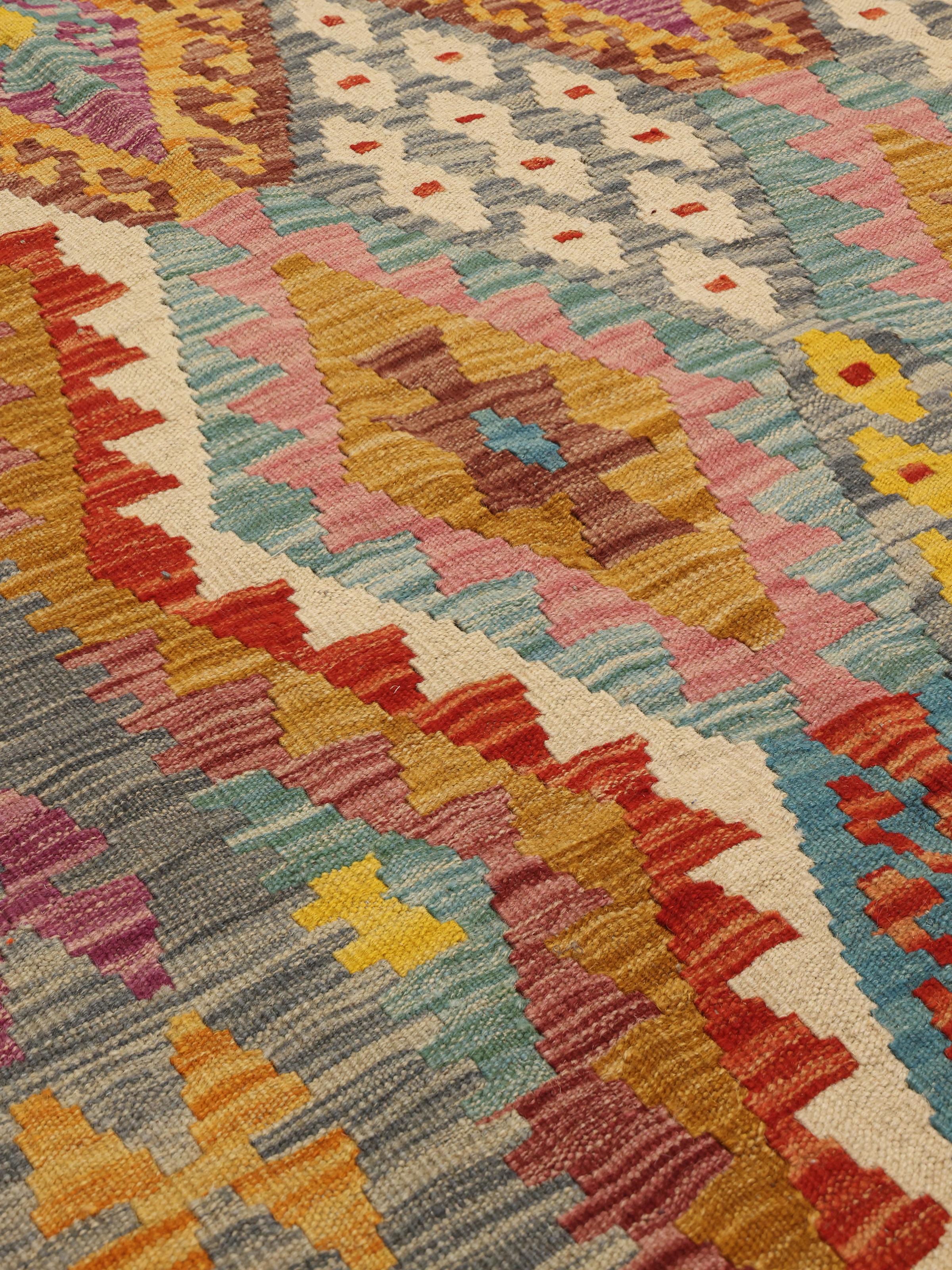
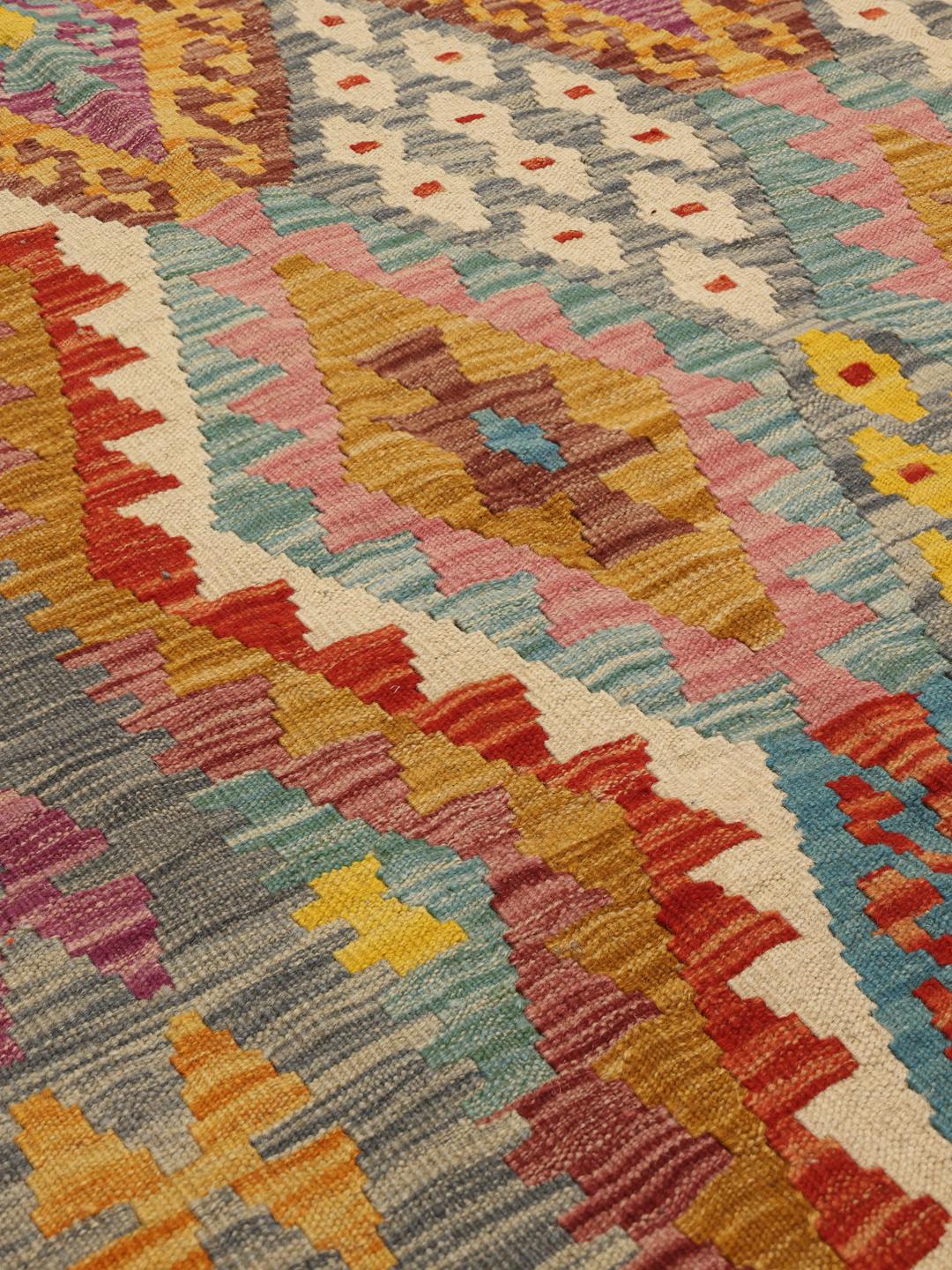
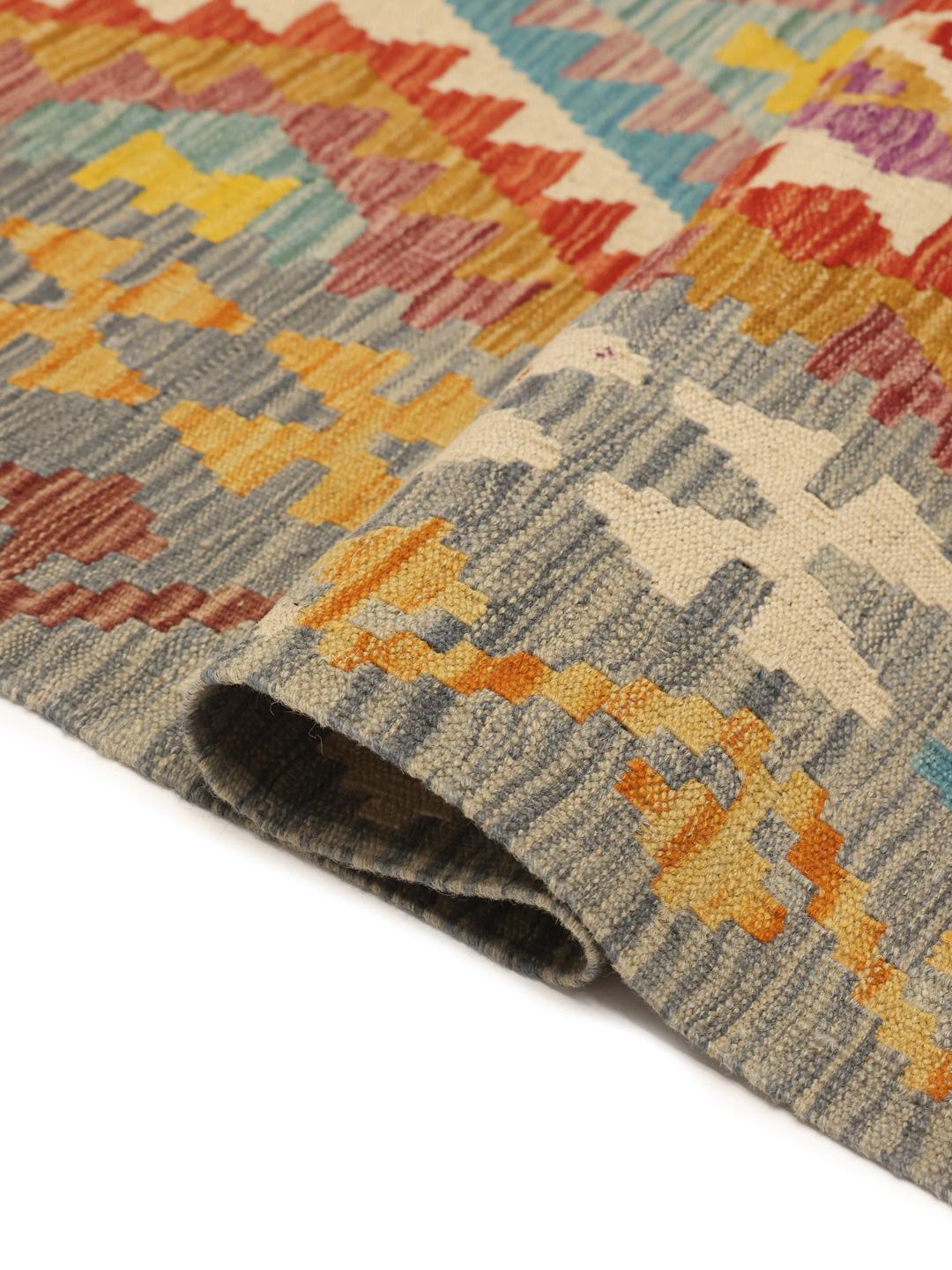
The term 'Kelim' refers to the specific flat-weaving technique used, where the weft strands are tightly packed to cover the warp completely. This construction style results in a rug with no pile, which gives it a clean, smooth surface that is remarkably durable. This technique is prized for its ability to produce sharp, crisp geometric designs, as the weaver is essentially drawing with coloured wool as they build the foundation of the rug.
Signature design elements of the Afghan Kelim include bold, repeating geometric motifs such as the diamond, triangle, and latch-hook symbols. These patterns are often arranged in complex, interlocking grids that reflect the cultural heritage and storytelling traditions of the weavers. The use of vibrant, natural-inspired dyes—often sourced from local plants and minerals—gives these rugs their characteristic depth and warmth, creating a visual rhythm that is both orderly and dynamic.
Today, these rugs are valued not just for their utility but as significant cultural artefacts. Collectors cherish them for the skill required to maintain complex patterns without a printed guide, relying instead on memory and regional tradition. Owning an Afghan Kelim is a way to celebrate this heritage, providing your home with a piece that carries the weight of history and the undeniable quality of human-made artistry.