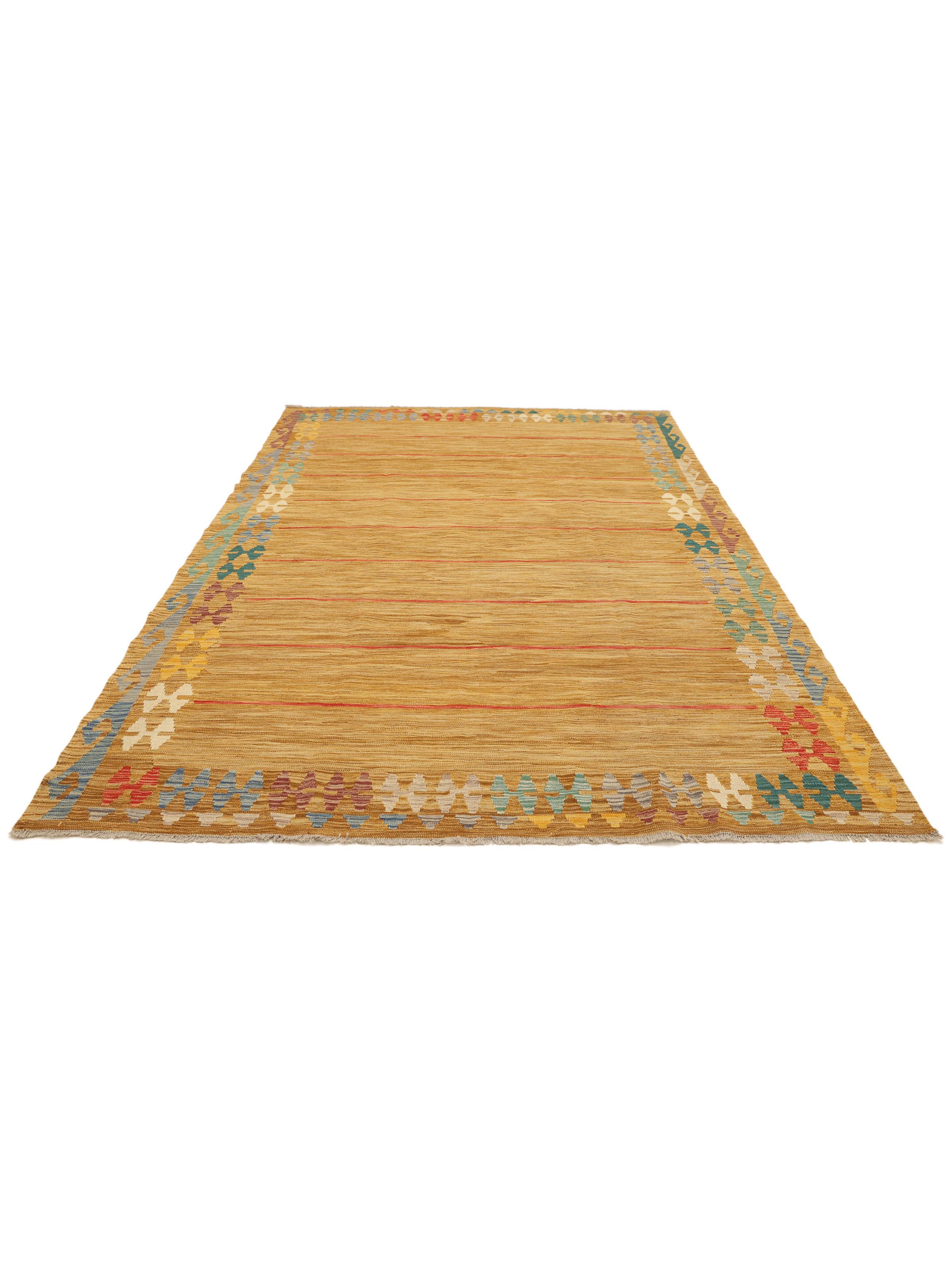
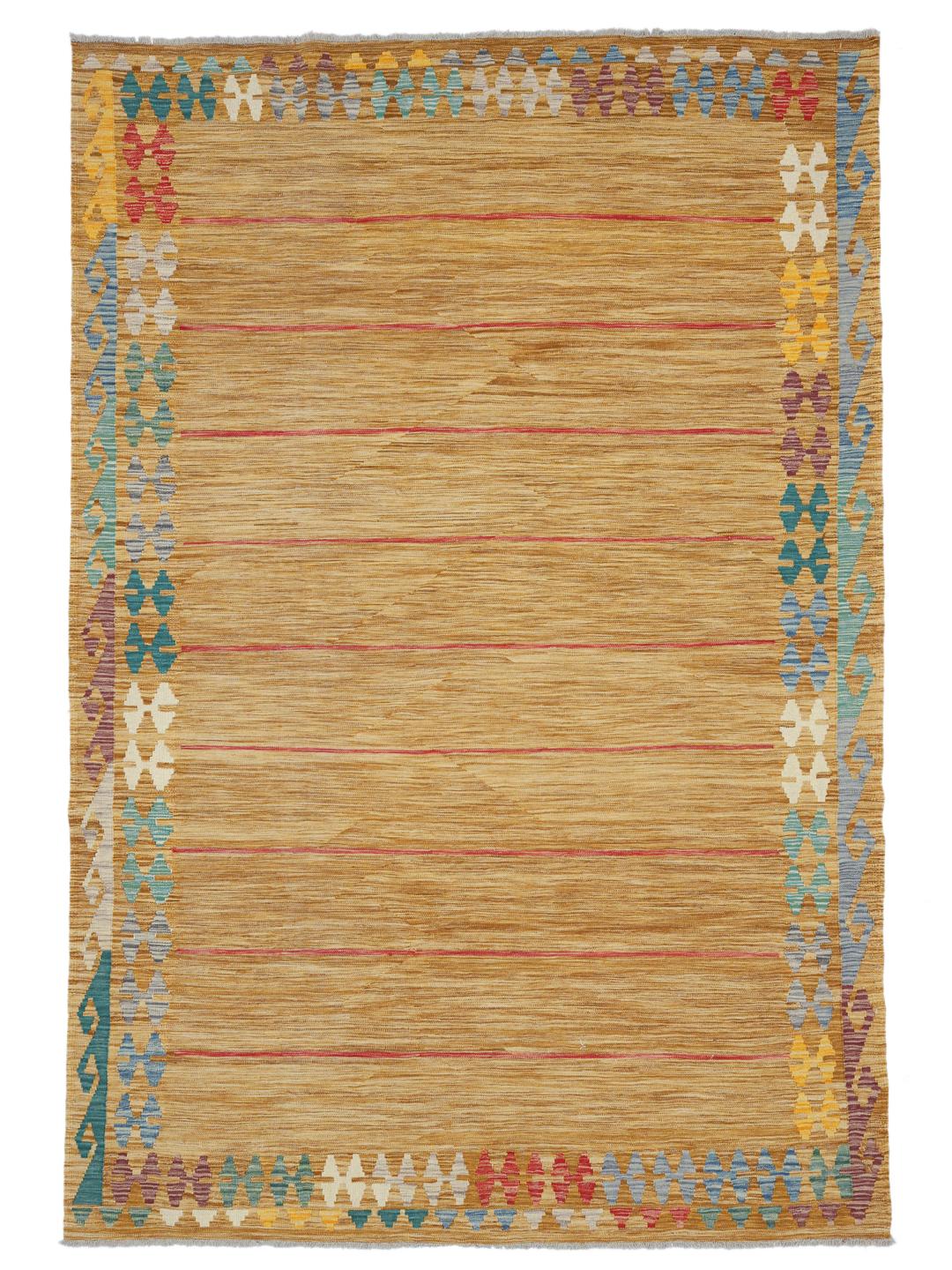
Kelim rugs from Afghanistan are deeply rooted in the nomadic traditions of the region, where flat-woven textiles were essential for both utility and beauty. These rugs were historically created by tribal groups to serve as floor coverings, wall hangings, and storage bags, reflecting the lifestyle of people who were constantly on the move. The evolution of the Afghan Kelim has seen these functional items transition into highly sought-after decorative pieces that preserve the artistic heritage of Central Asia.
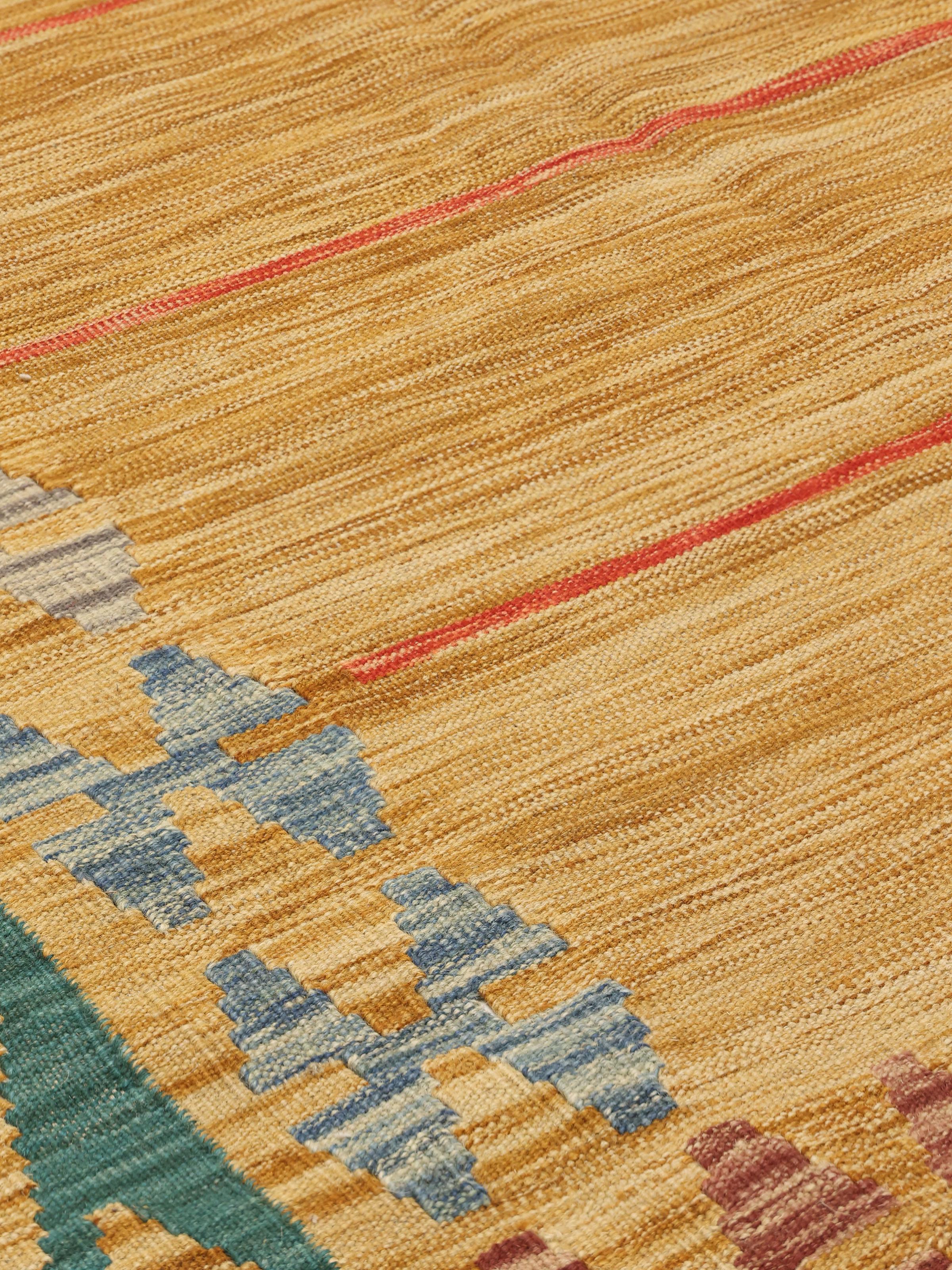
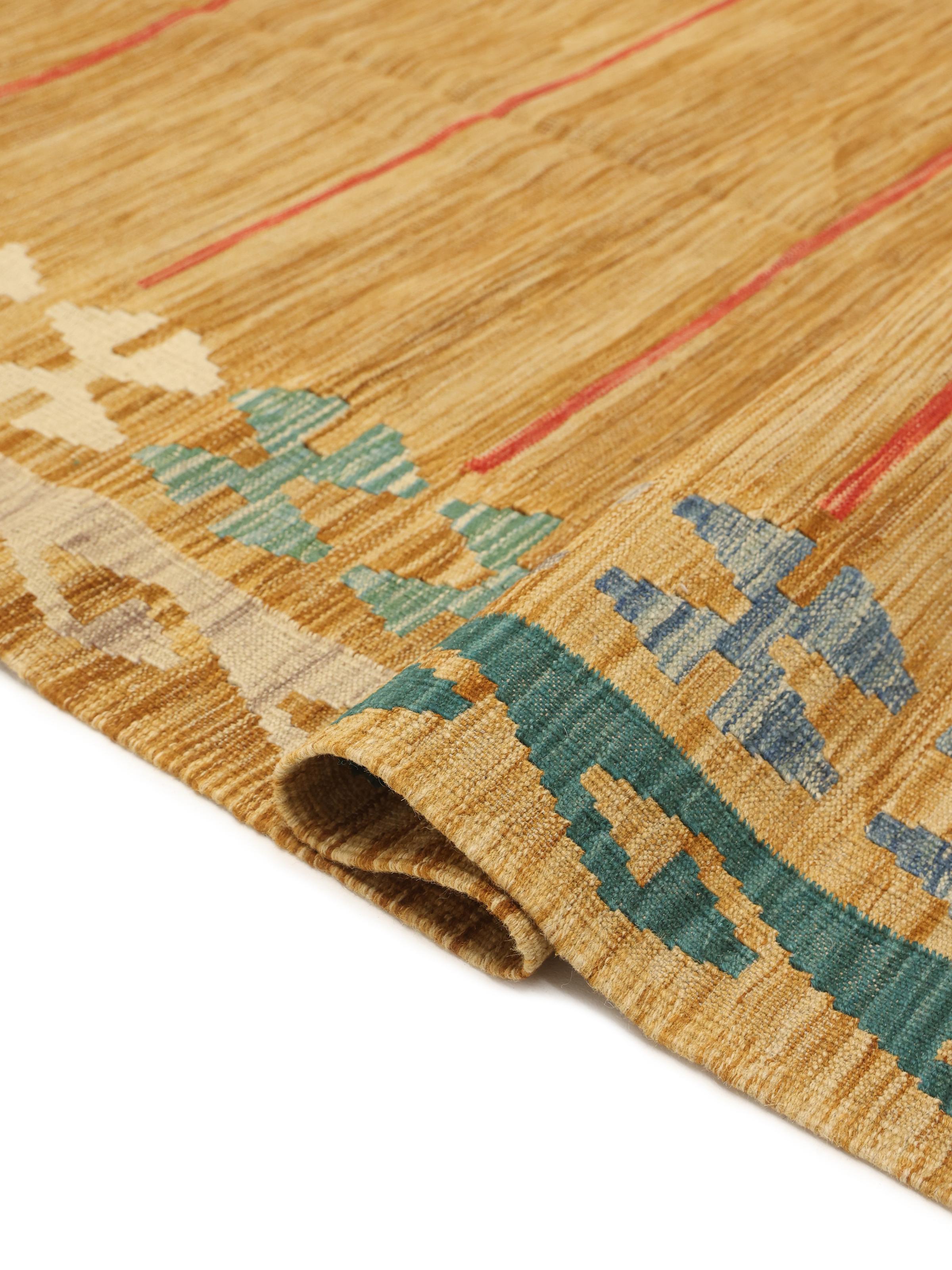
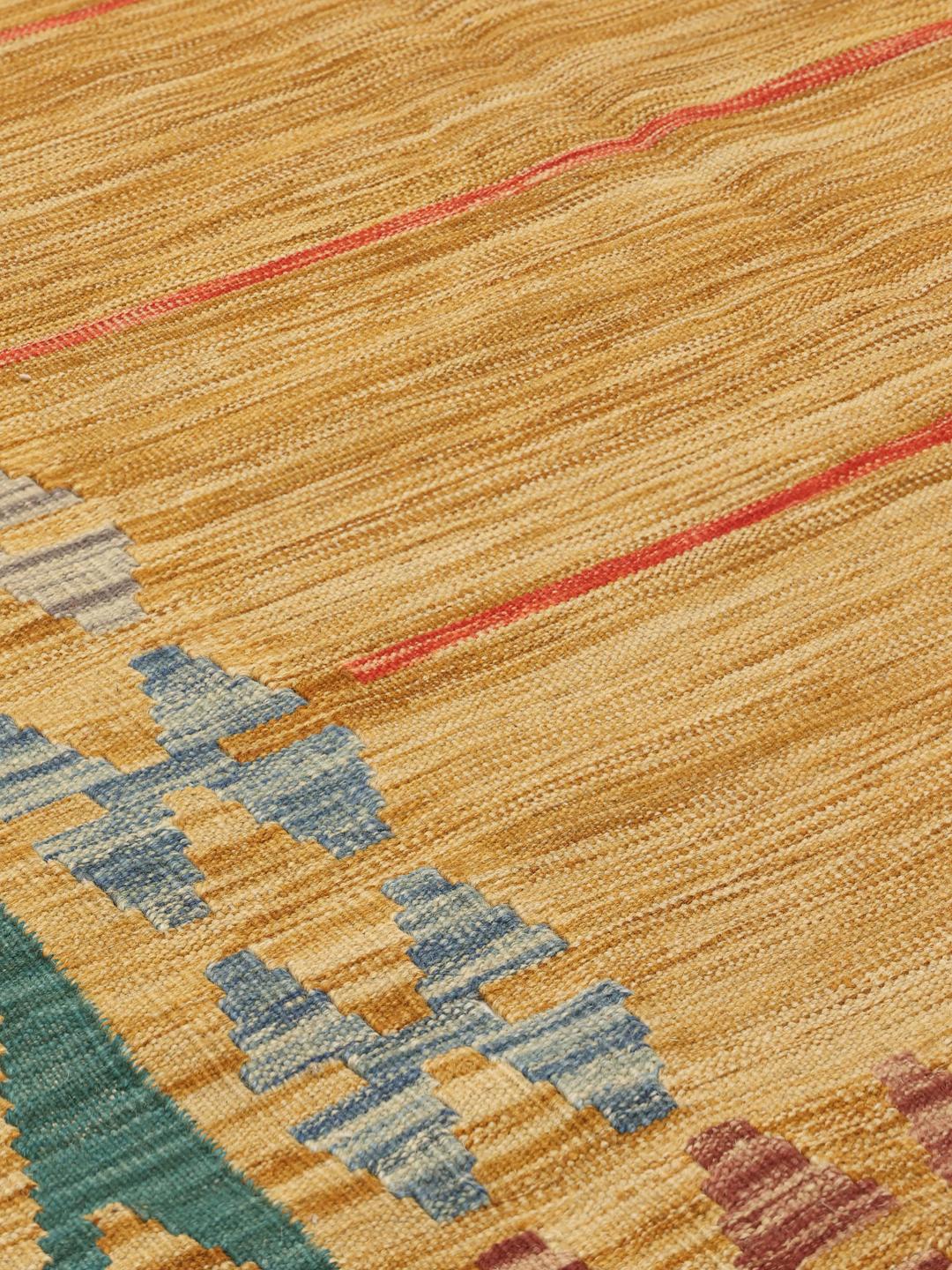
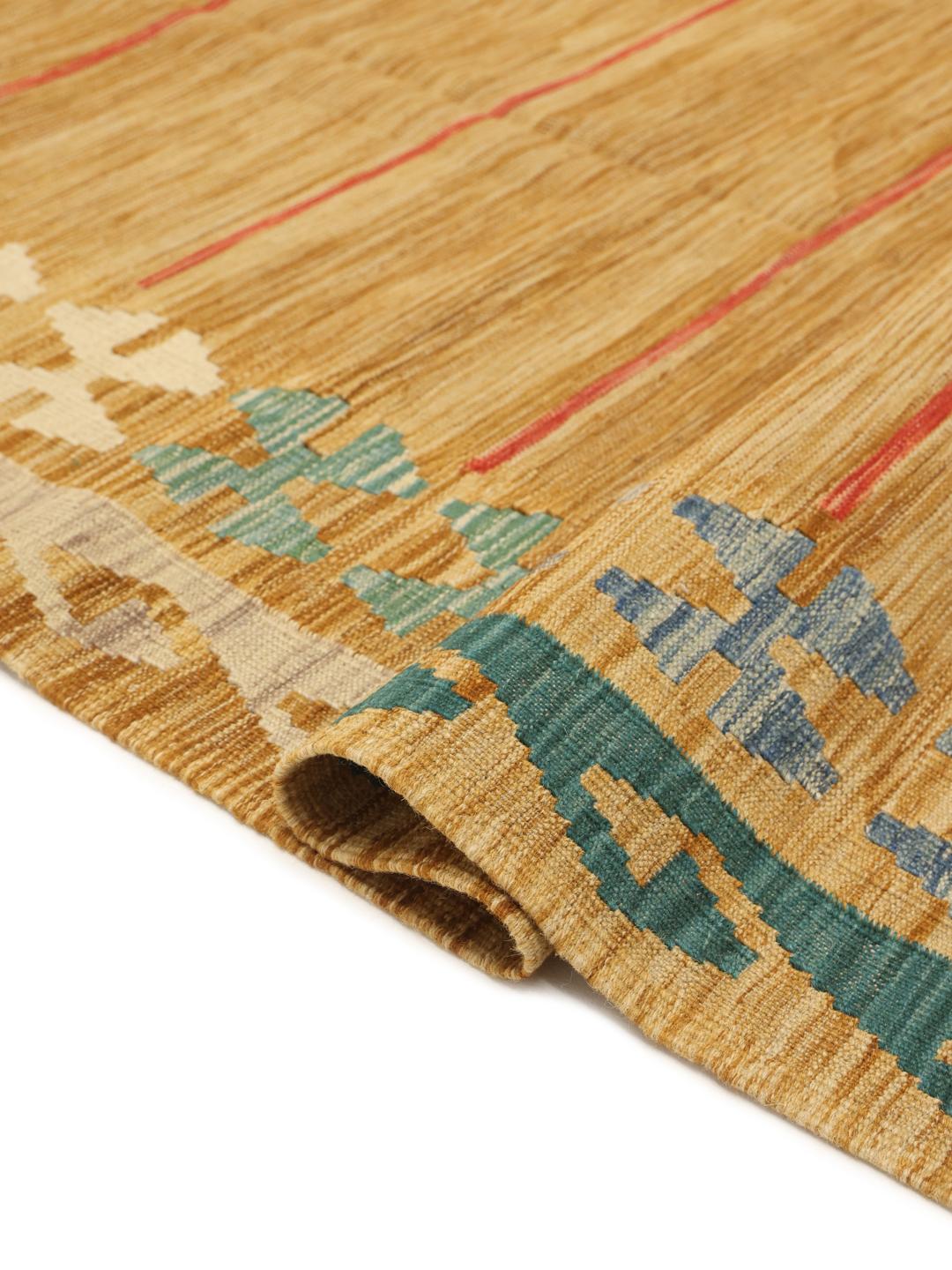
The term 'Kelim' refers to the specific flat-weaving technique where the warp and weft threads are interlaced to create a smooth, pileless surface. Unlike knotted rugs, the design in a Kelim is achieved through the use of coloured weft threads, which requires a high level of precision to ensure the patterns are sharp and consistent. This construction method results in a rug that is reversible and remarkably durable, making it a practical choice for long-term use.
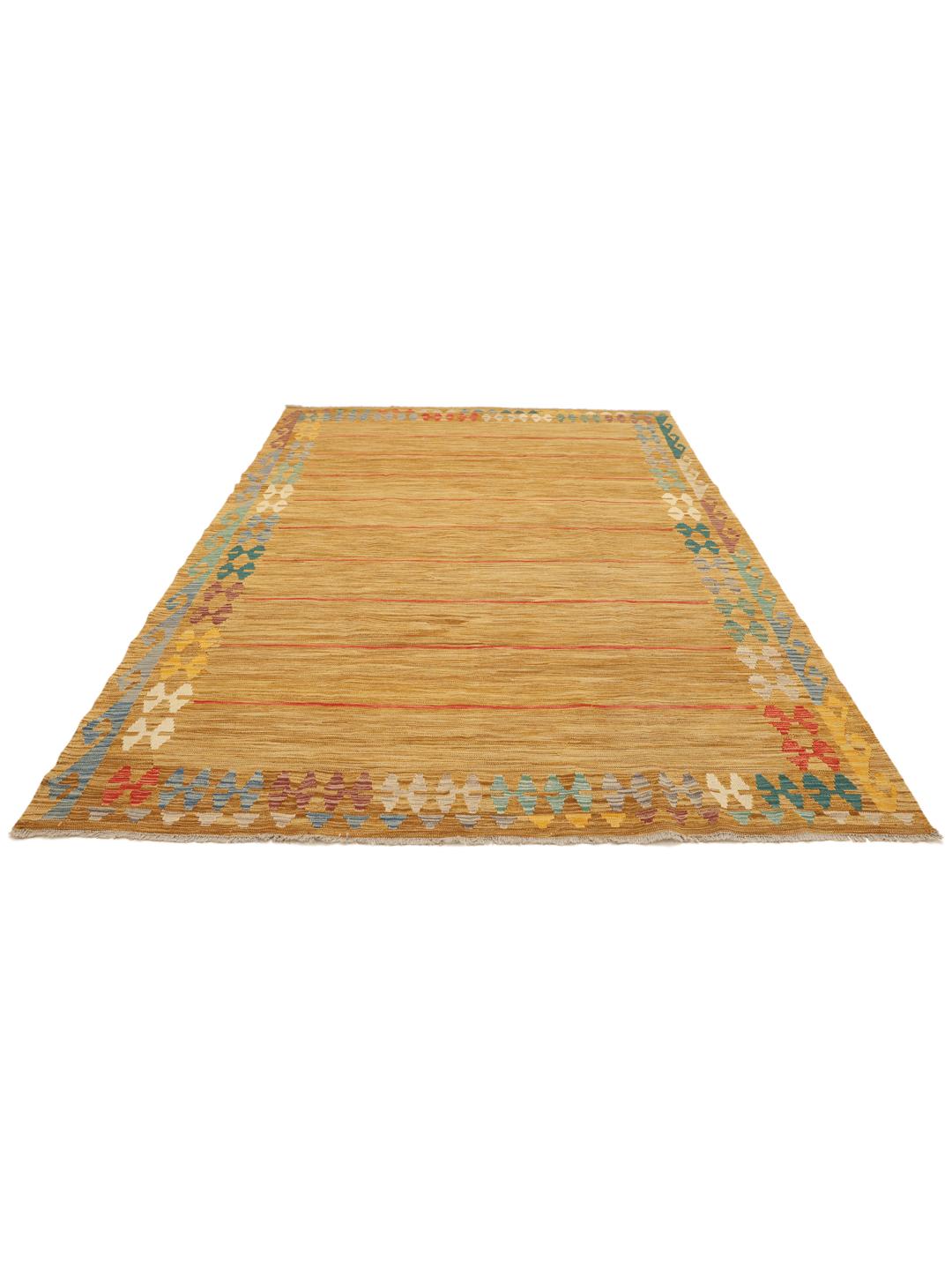
Signature design elements of these rugs often include geometric motifs, stripes, and stylized symbols that carry cultural significance. The borders are frequently decorated with intricate, rhythmic patterns that frame the field, providing a sense of balance and order. In this particular piece, the earthy, golden-yellow tones are accented by small, vibrant details in the borders, a colour palette that is both traditional and timeless within the Afghan weaving canon.
Collecting a Kelim Afghan Old Style is an opportunity to own a piece of cultural history. These rugs are valued not just for their aesthetic appeal, but for the skill and heritage they represent. As handmade items, they carry the spirit of the weaver and the traditions of their origin, offering a level of authenticity that mass-produced items simply cannot match. Owning one is a commitment to preserving an ancient craft and bringing a piece of meaningful artistry into your modern home.