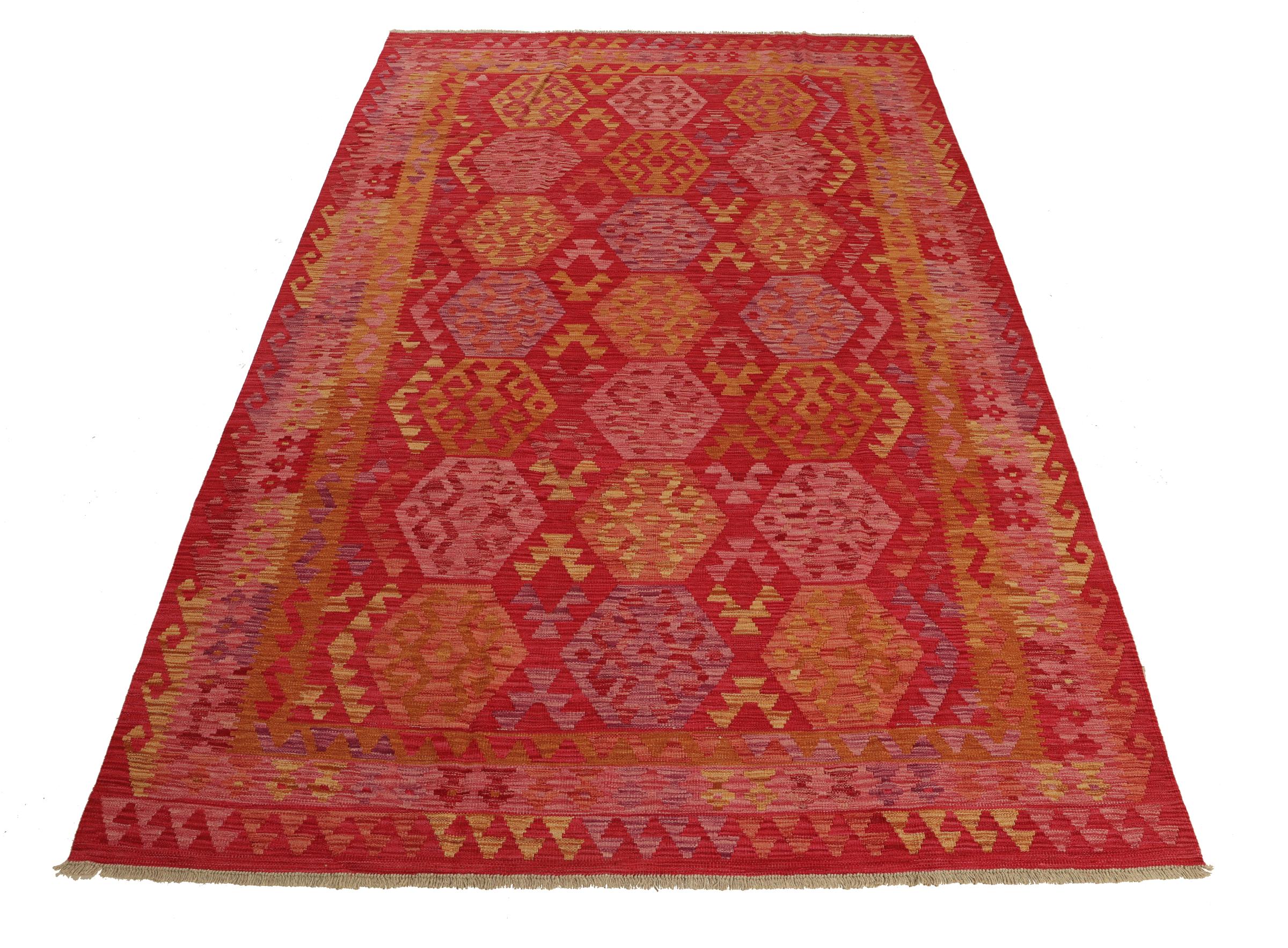
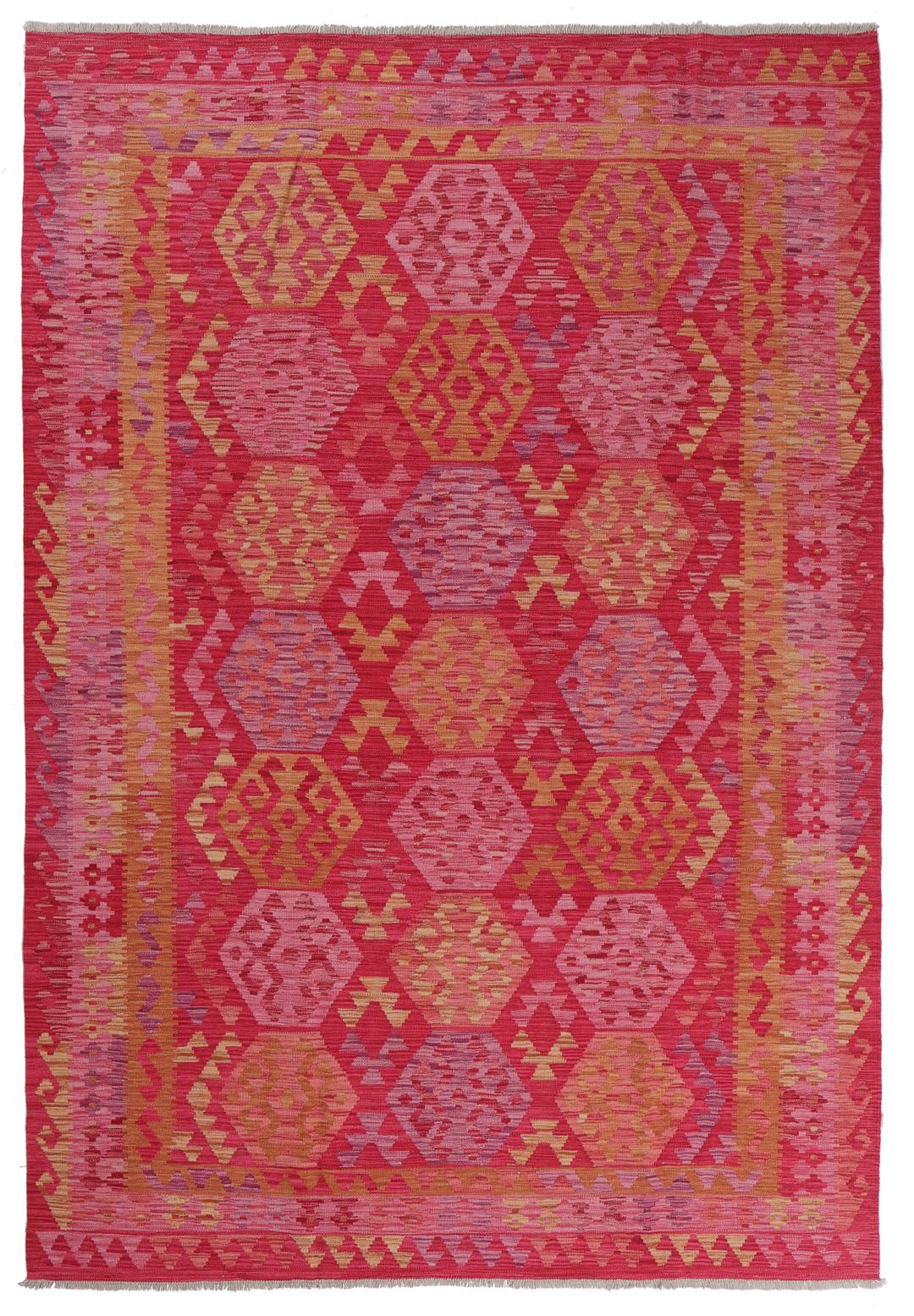
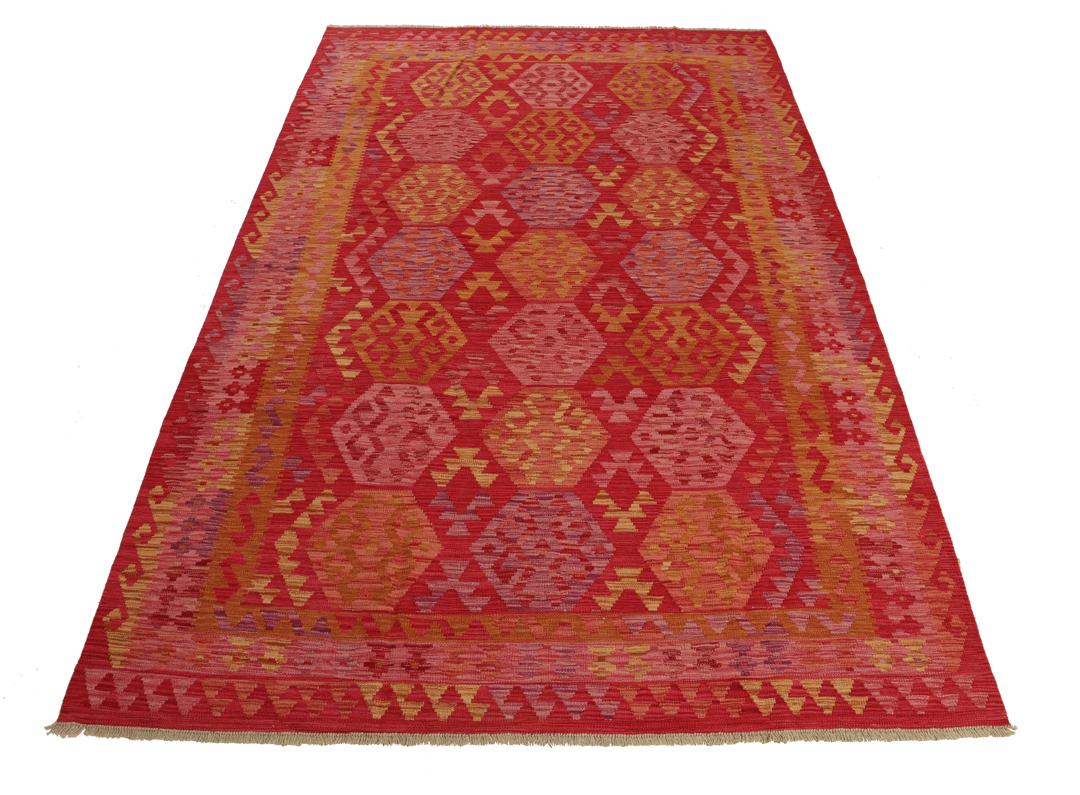
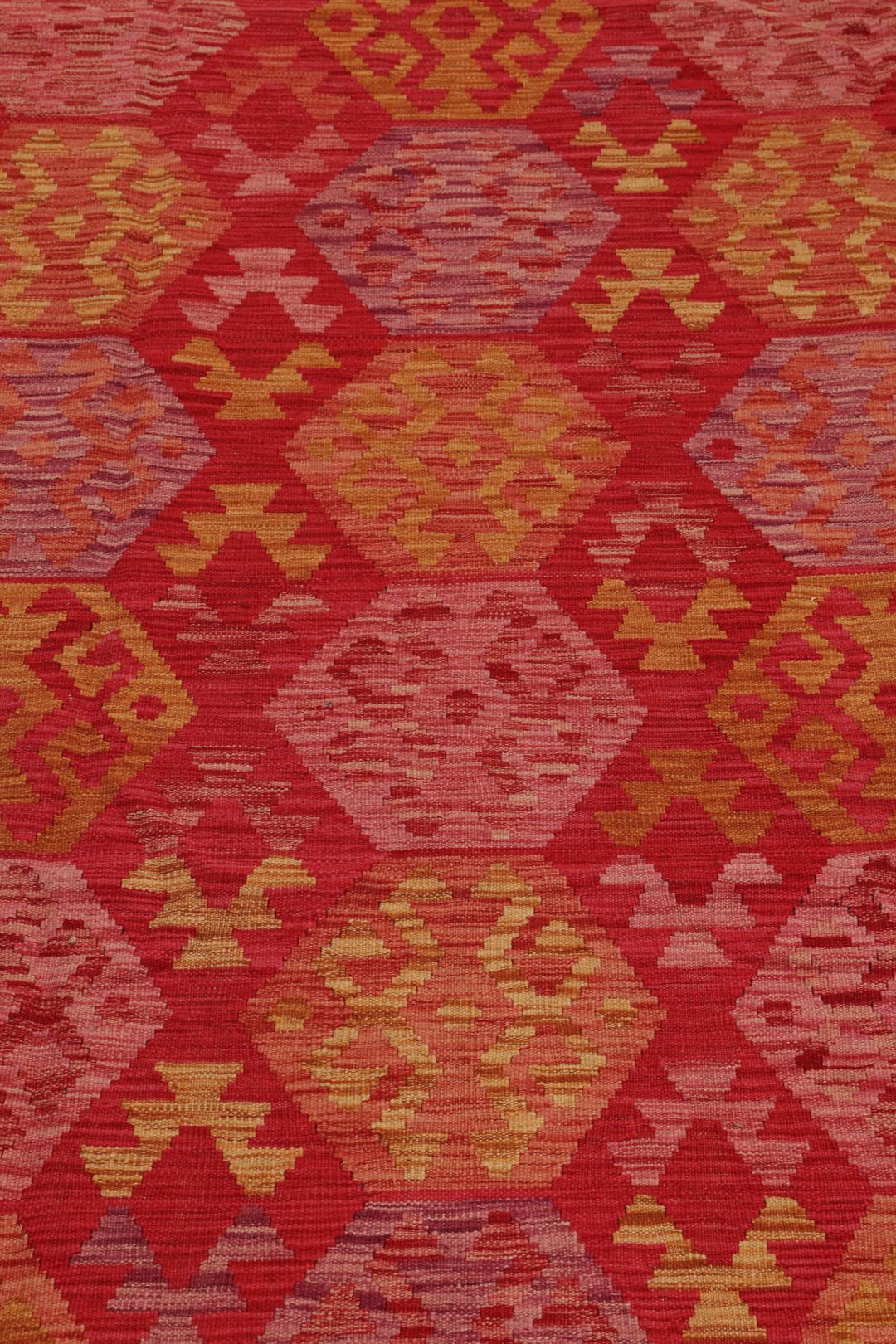
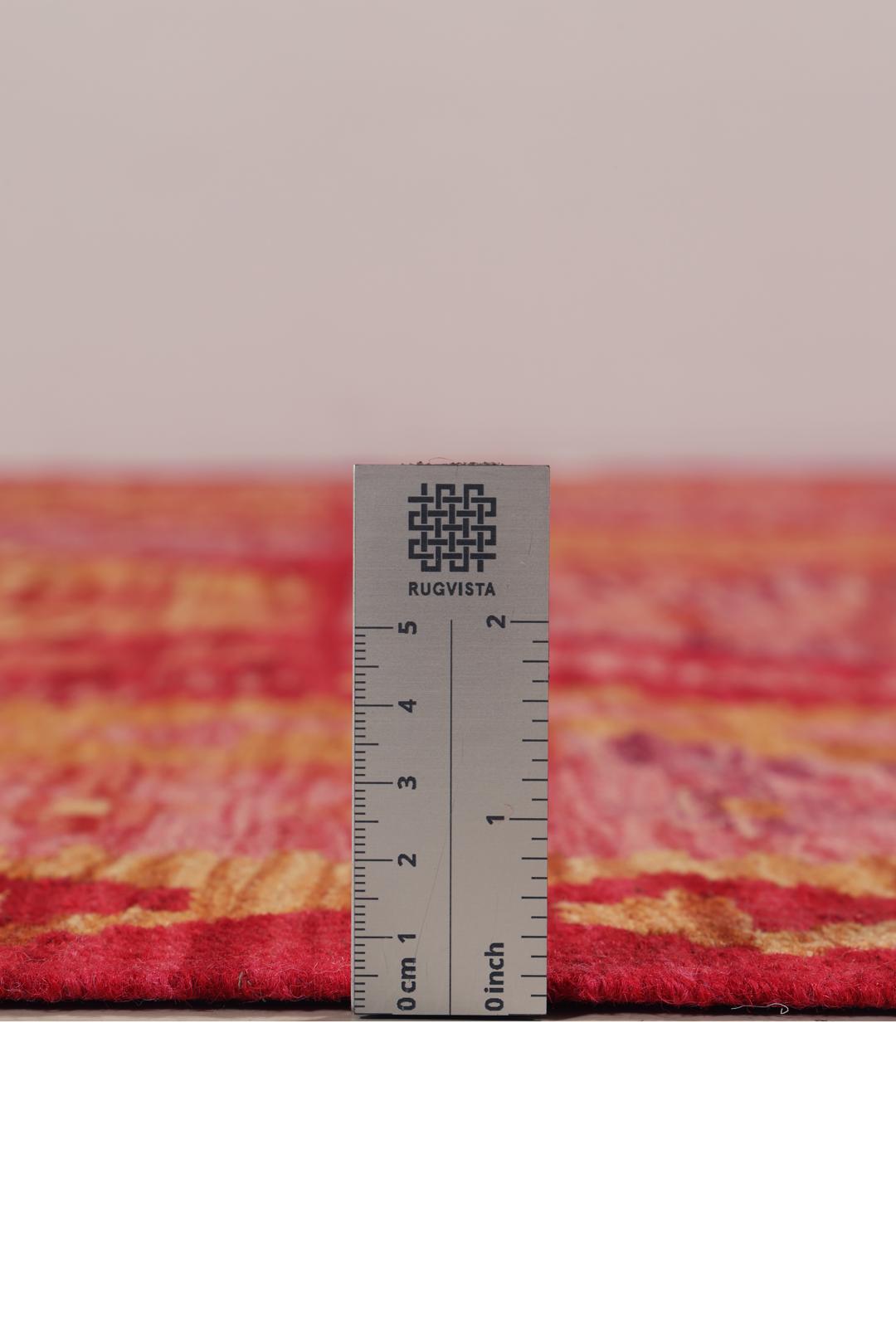
The Kelim tradition in Afghanistan is a testament to the enduring legacy of nomadic weaving cultures. These flat-woven rugs have been a staple of Middle Eastern households for centuries, serving as functional floor coverings, wall hangings, and even transport bags for migrating groups. They represent a bridge between ancient utility and modern artistic expression.
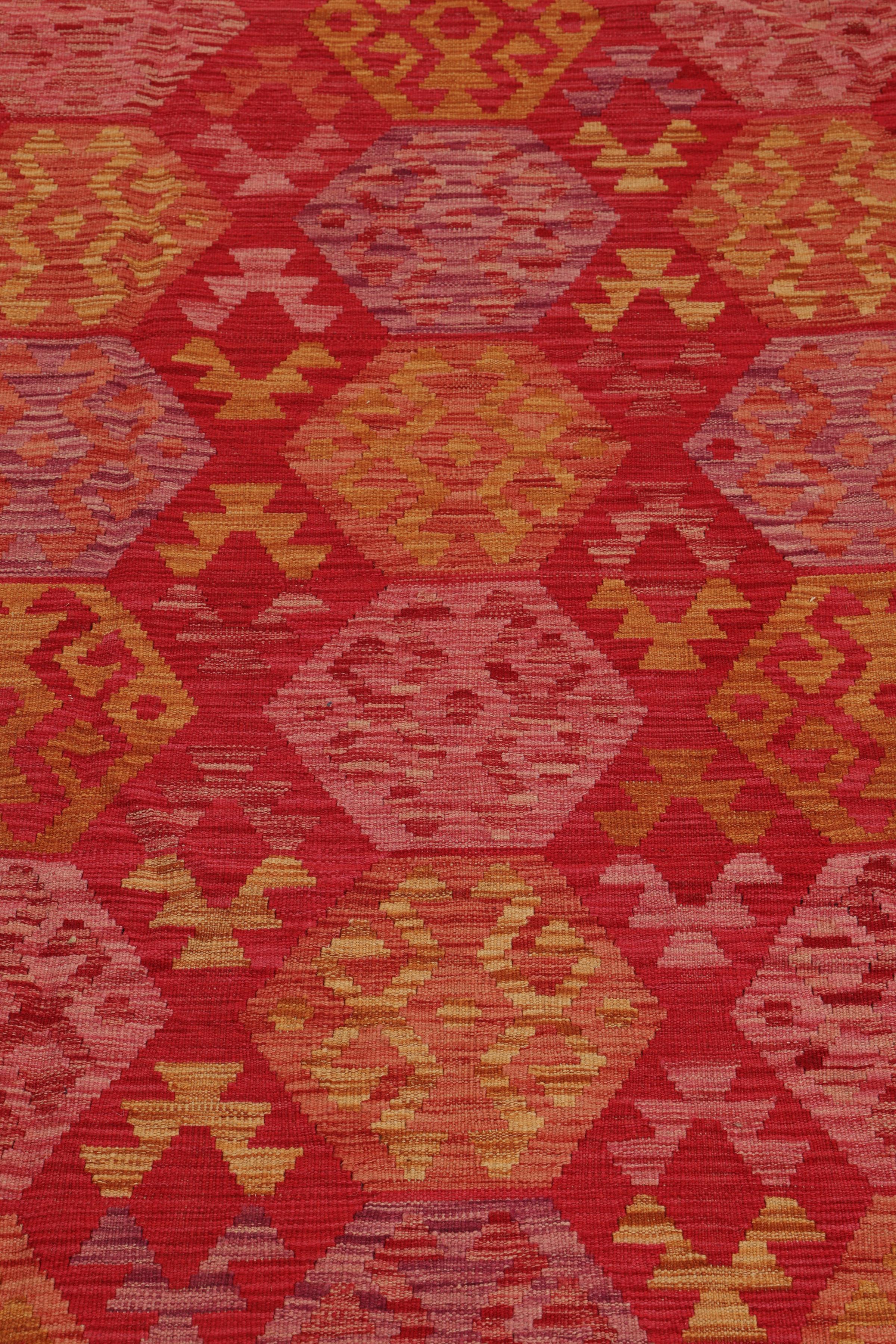
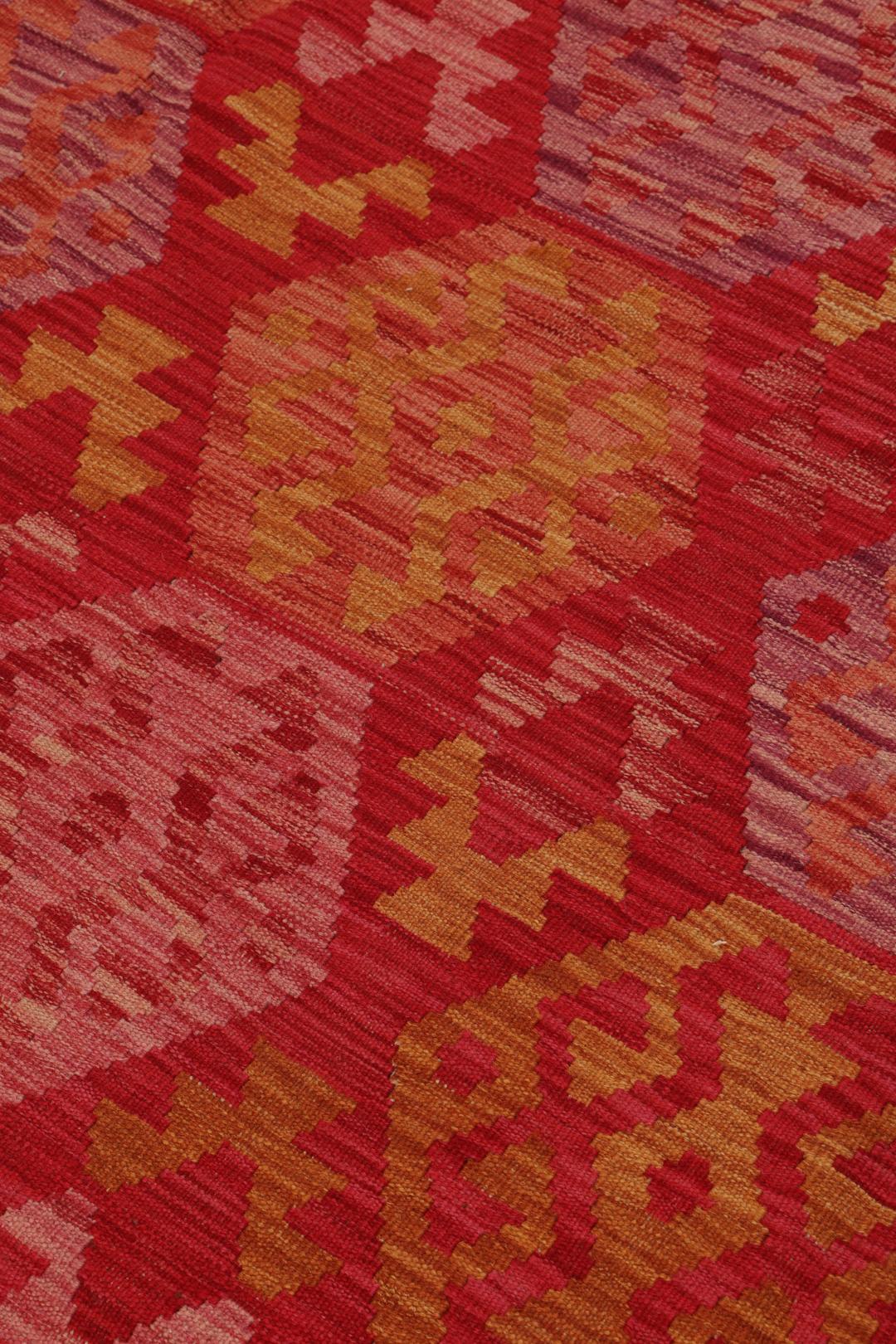
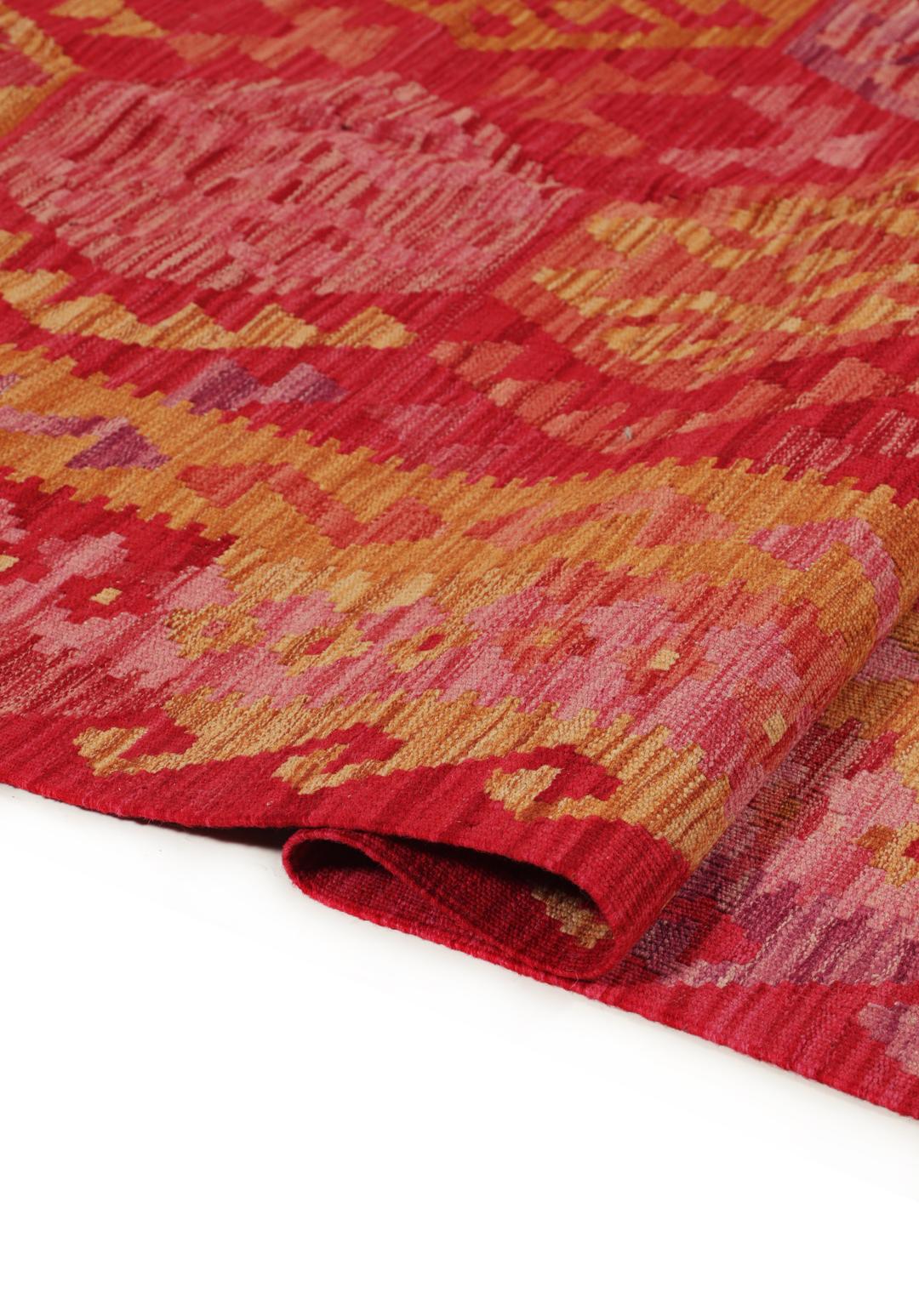
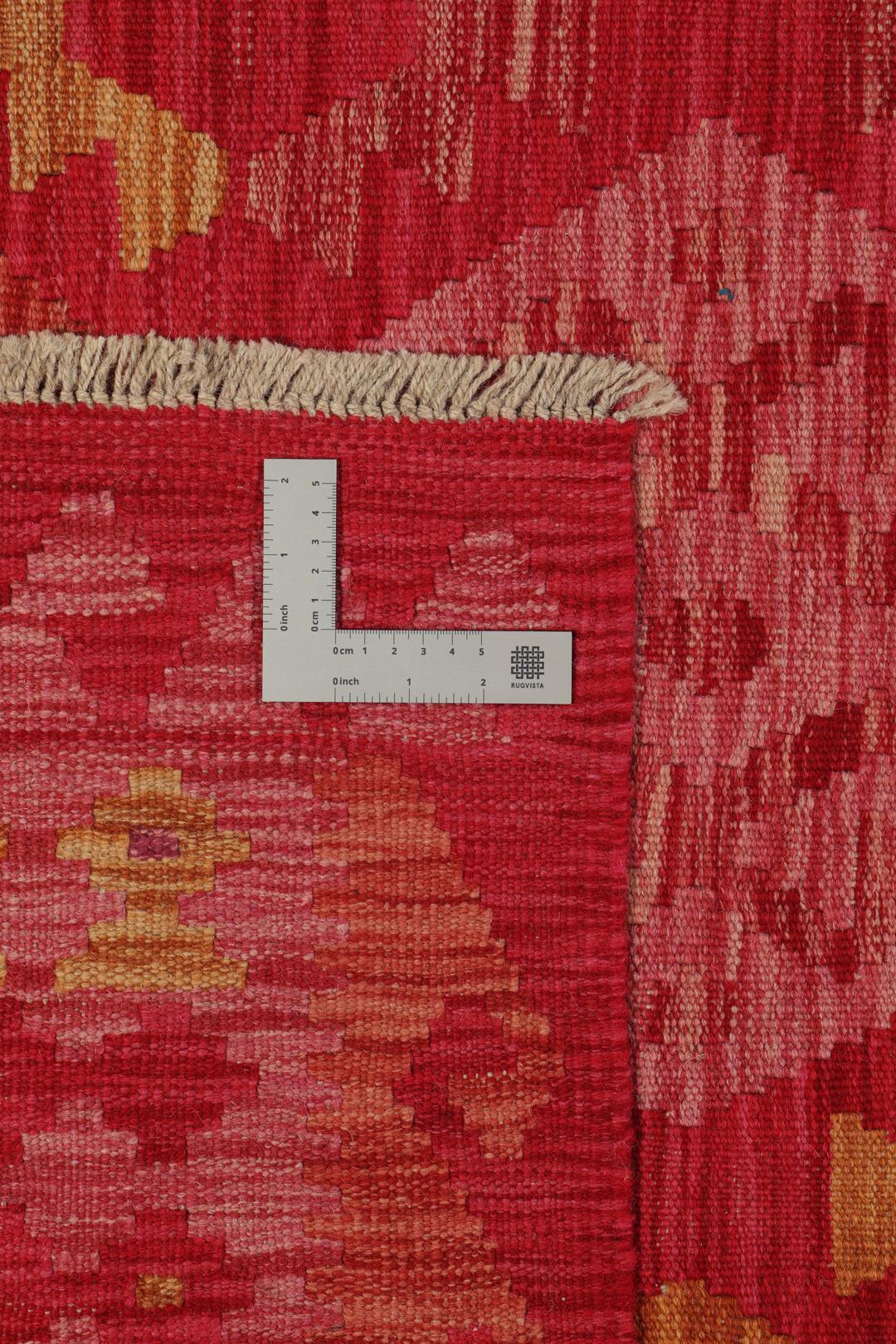
The term 'Kelim' refers to the specific technique of weaving without a pile, where the pattern is created by interlocking the coloured threads of the foundation. This method results in a reversible, lightweight, yet remarkably strong textile. The lack of pile allows for sharper, more graphic designs that are less prone to wear over time compared to traditional knotted rugs.
Signature elements of these rugs often include stylized geometric motifs such as diamonds, triangles, and the repeating medallions seen here. These symbols are not merely decorative but are deeply rooted in the cultural identity of the region, often telling stories of the weaver's environment and heritage. The bold use of red, complemented by contrasting earth tones, is a classic hallmark of the Afghan style.
Collecting a hand-woven Kelim is an investment in cultural heritage. Because each weaver brings their own interpretation to the traditional patterns, every piece possesses a unique soul. Owning one is a way to honour the patience and skill of the artisans who continue to practice this ancient craft, ensuring these beautiful traditions remain a vibrant part of our modern homes.