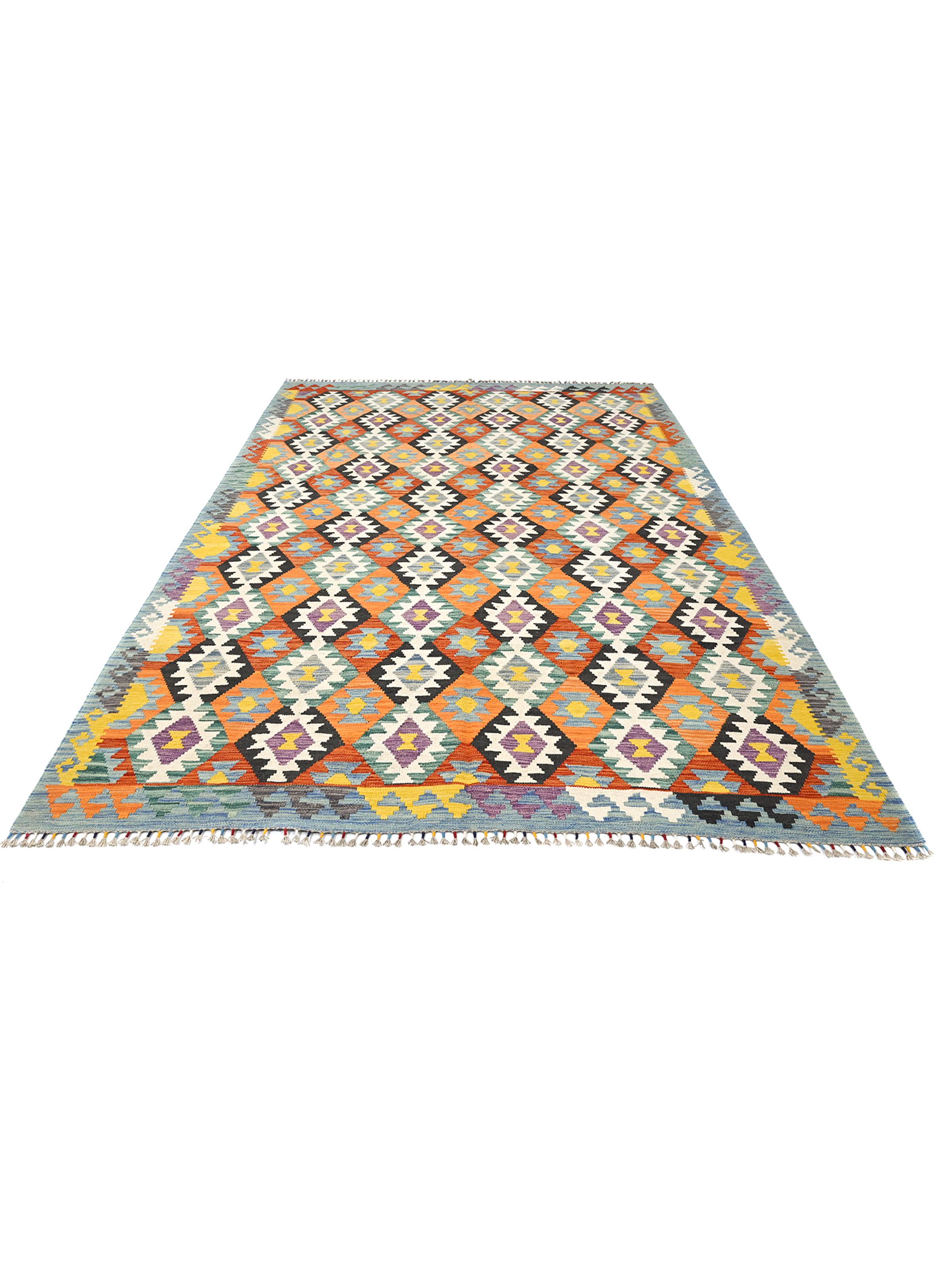
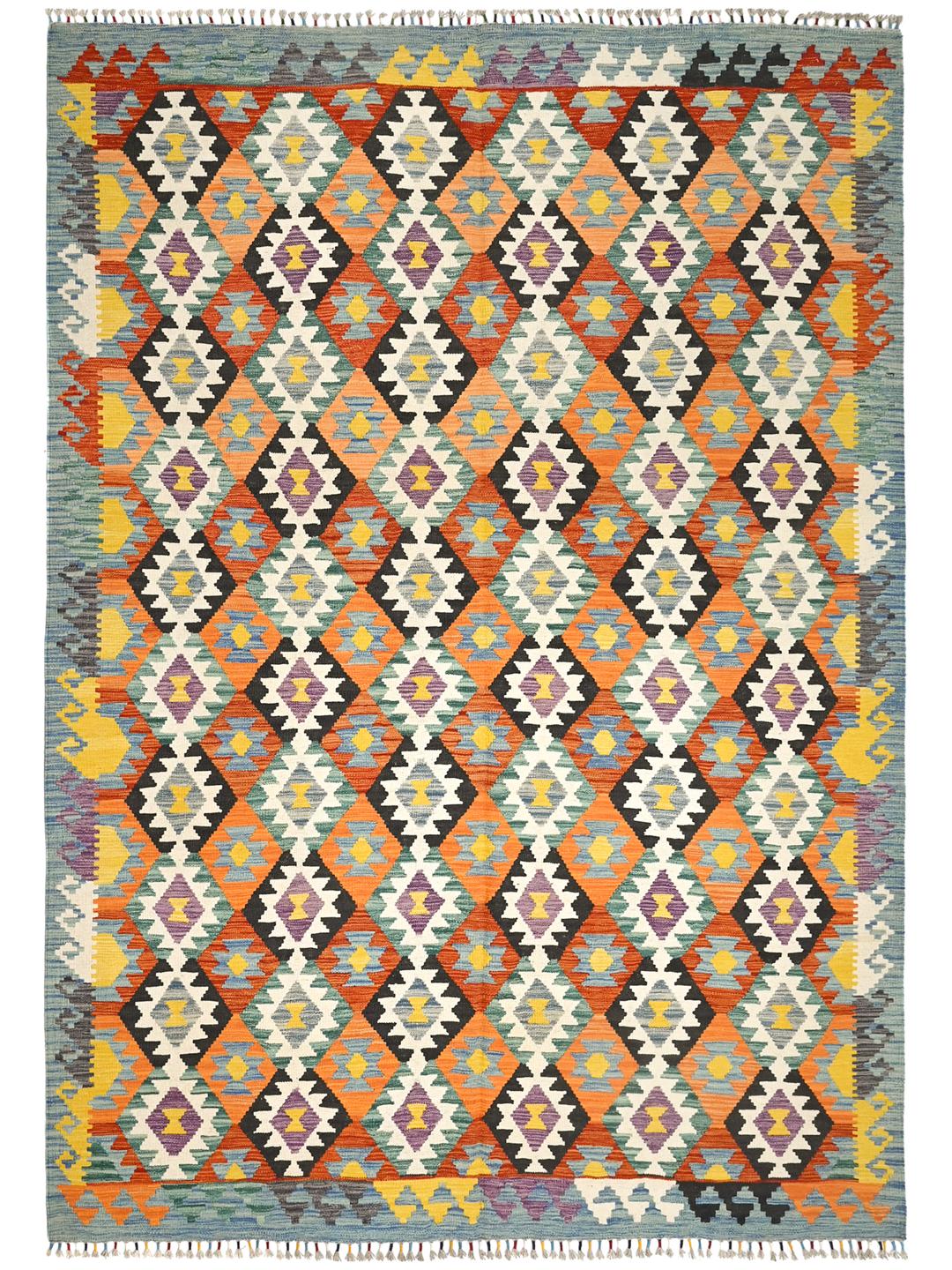
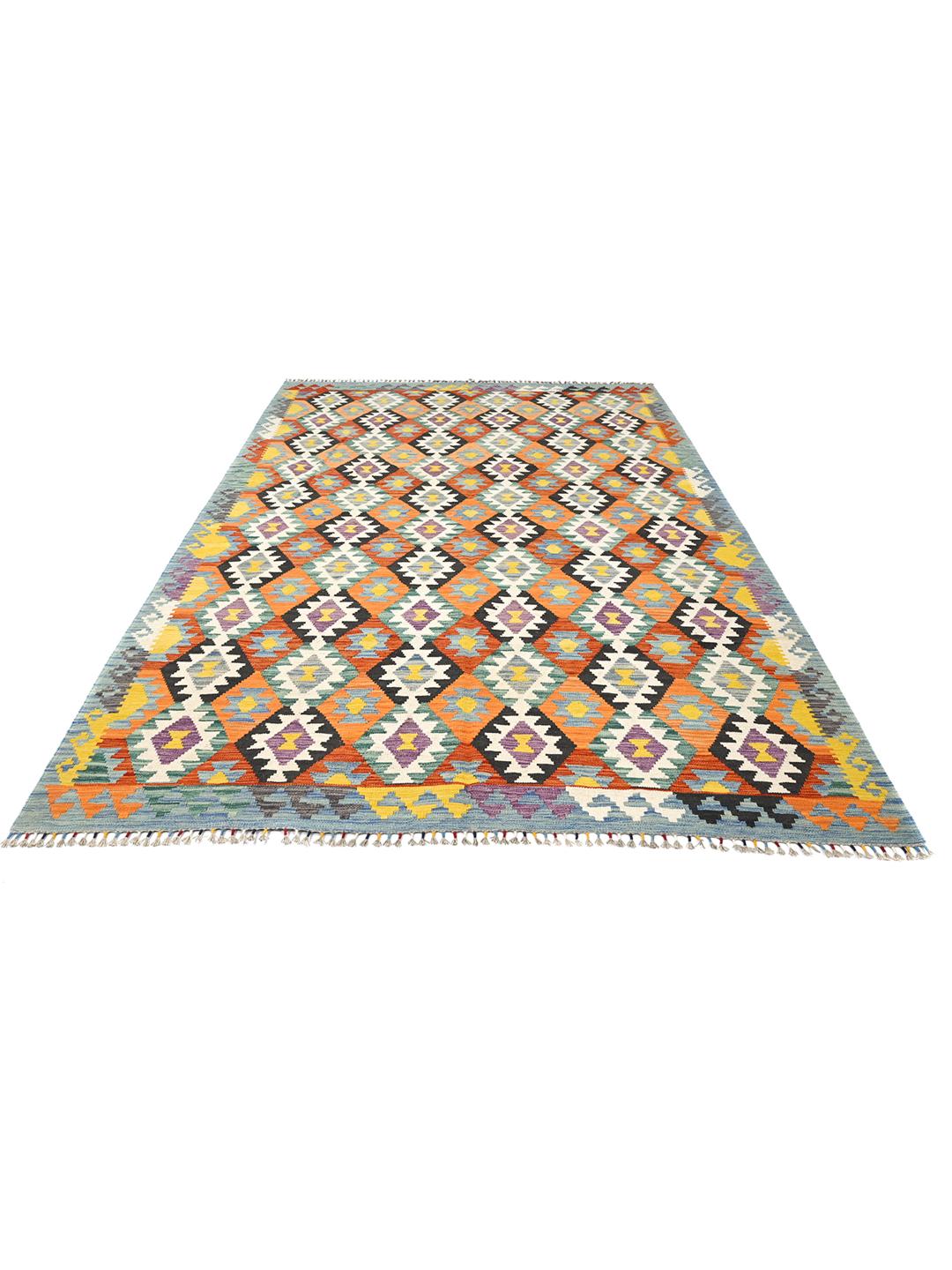
The Kelim tradition in Afghanistan is deeply rooted in the nomadic lifestyle of the region, where these flat-woven rugs were historically used for everything from floor coverings to storage bags and tent decorations. These pieces are not just floor coverings, but cultural artifacts that tell the story of the families and tribes who created them, often reflecting the landscape and environment of the Afghan highlands.
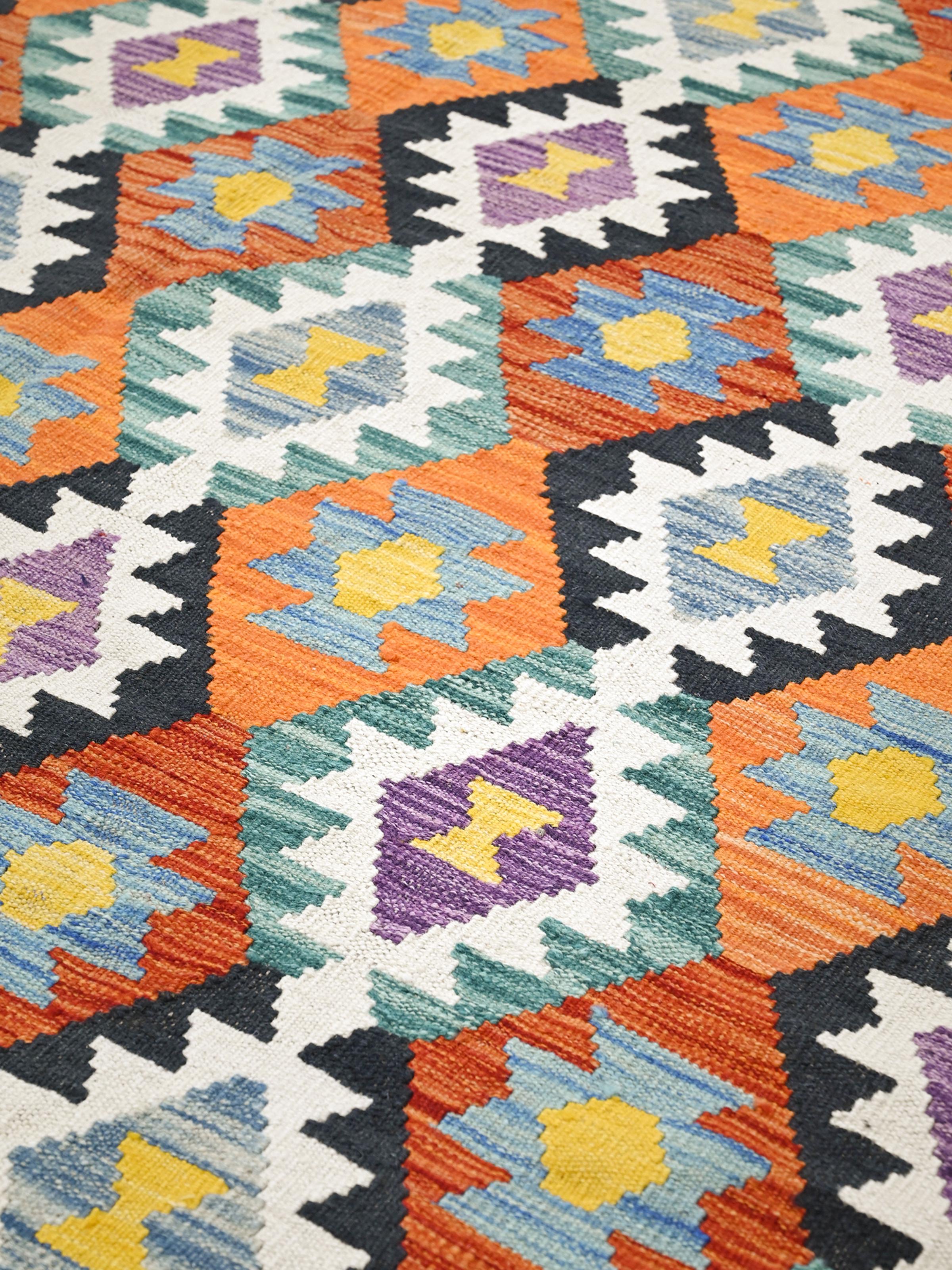
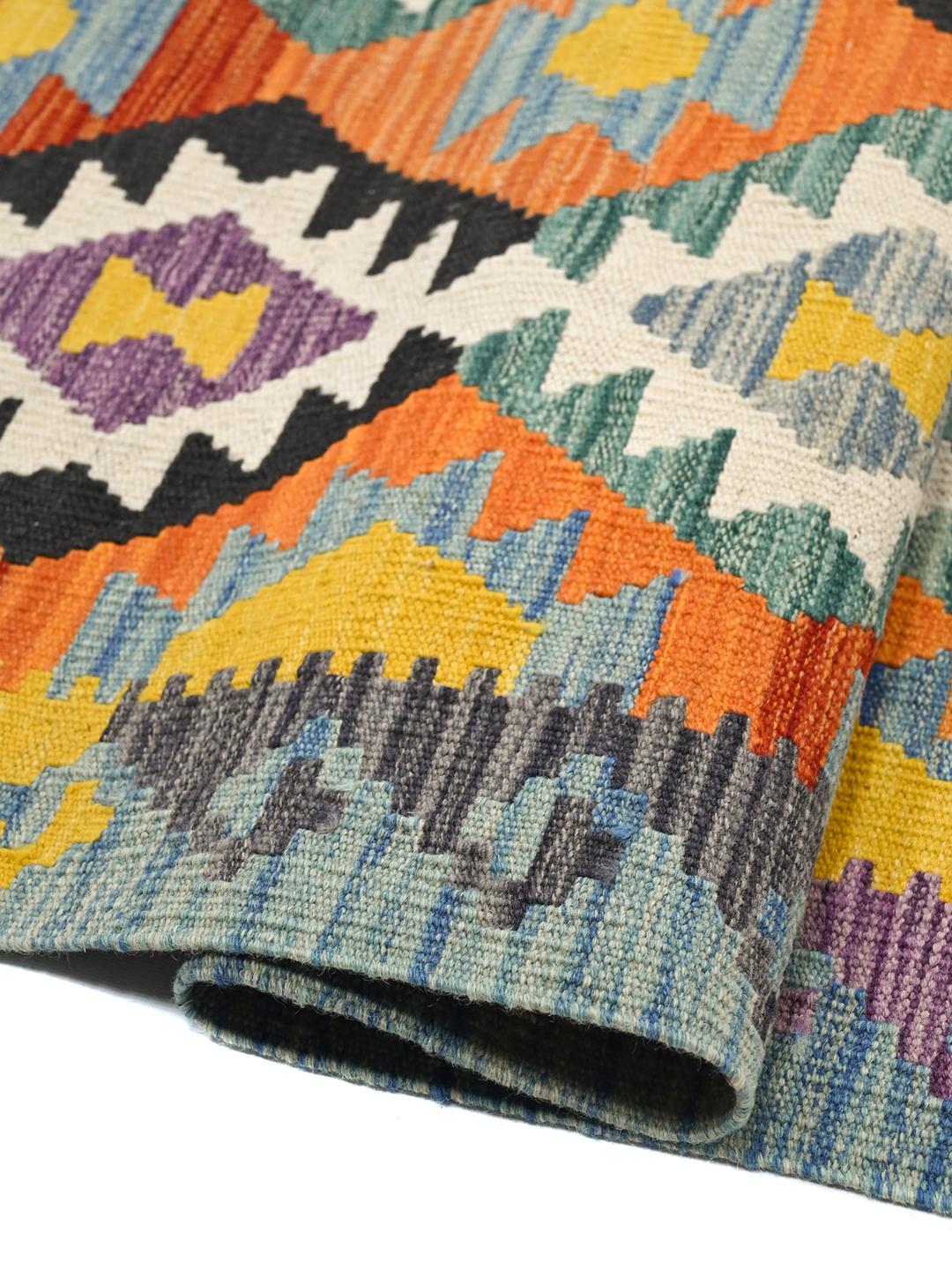
The term 'Kelim' refers to a specific tapestry-weave technique where the weft threads are passed over and under the warp threads to create the design. Because there is no pile to hide the structure, the weaving must be incredibly precise. This technical clarity is what gives these rugs their sharp, clean geometric lines and makes the quality of the Wool and the tension of the weave so critical to the rug's overall strength.
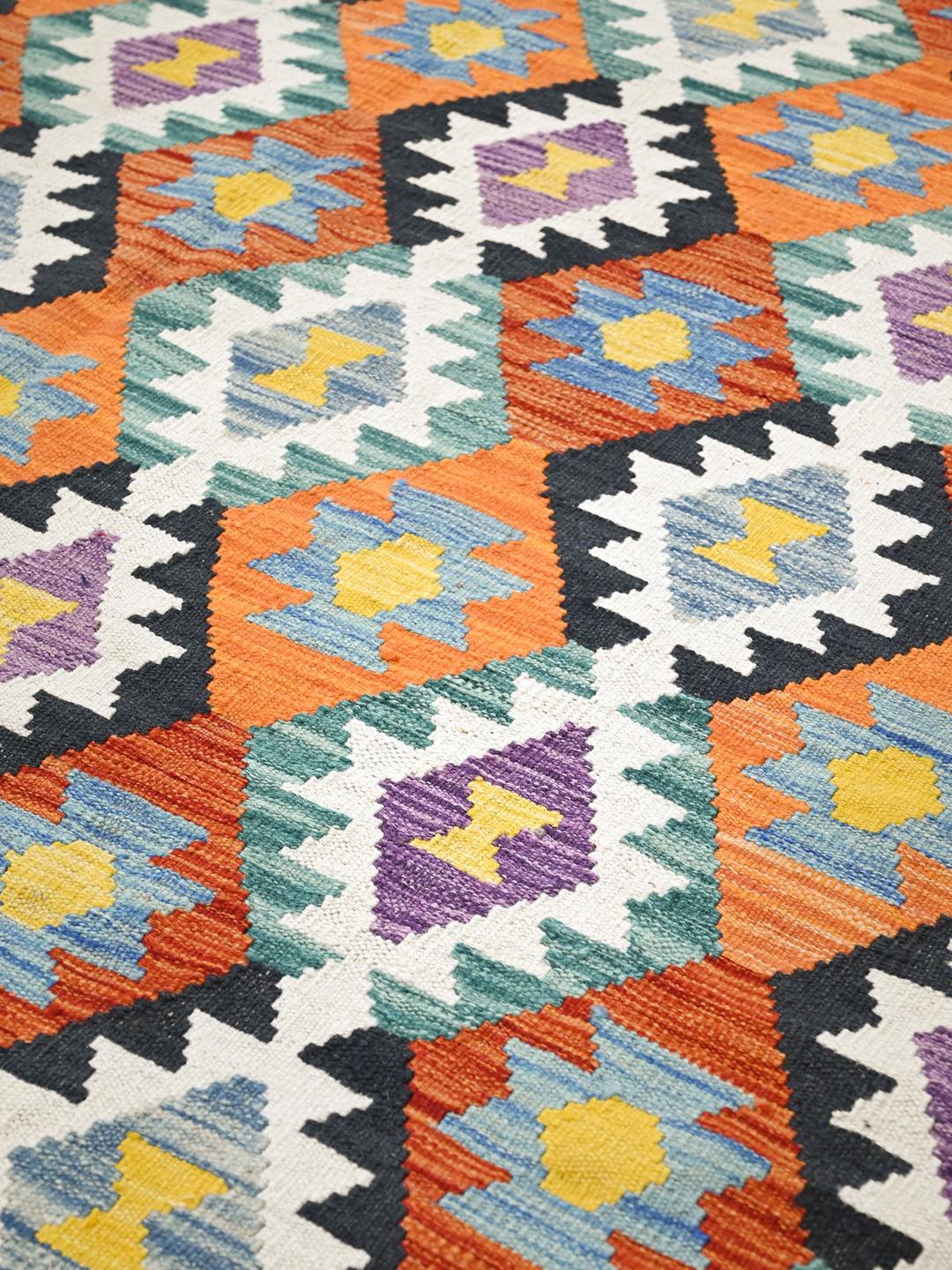
Signature design elements of these Afghan rugs typically include bold, repeating geometric shapes, with the diamond being a primary motif. The borders often feature intricate, decorative patterns that frame the central field, and the palette is traditionally derived from natural dyes, which provide the earthy, resonant colours that are so highly prized by collectors today.
Owning an Afghan Kelim is an investment in human skill and regional heritage. Collectors value these pieces for their authenticity and the way they bridge the gap between ancient nomadic utility and modern interior design. By bringing a piece like this into your home, you are preserving a craft that has been passed down through generations, ensuring that these artistic traditions continue to thrive.