Kilim weaving in Afghanistan is one of the oldest textile traditions in Central Asia. Historically woven by nomadic and village communities, these flat-woven textiles were created for practical use within the home as floor coverings, wall hangings, and storage bags, designed to be durable yet easy to transport.
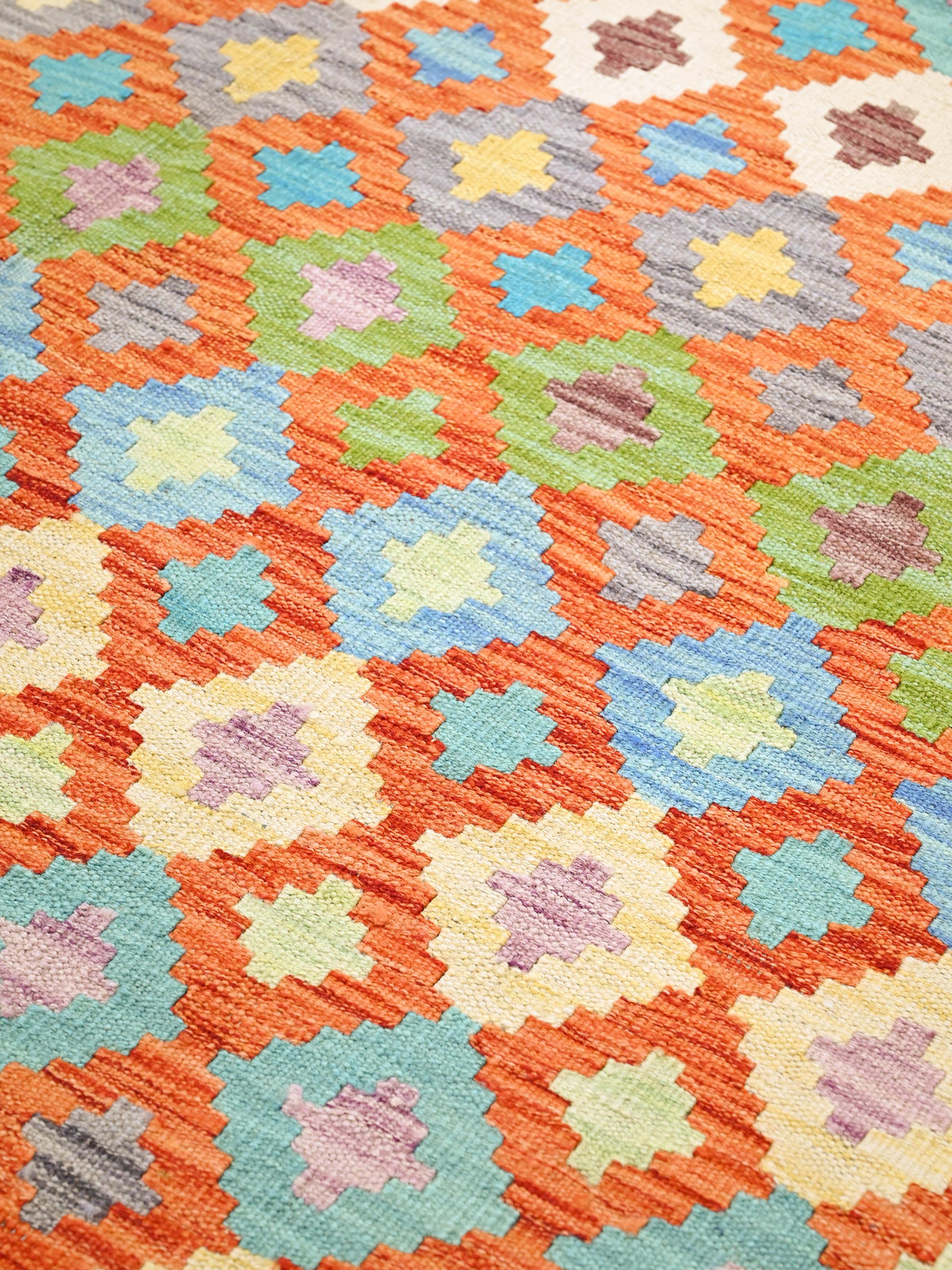
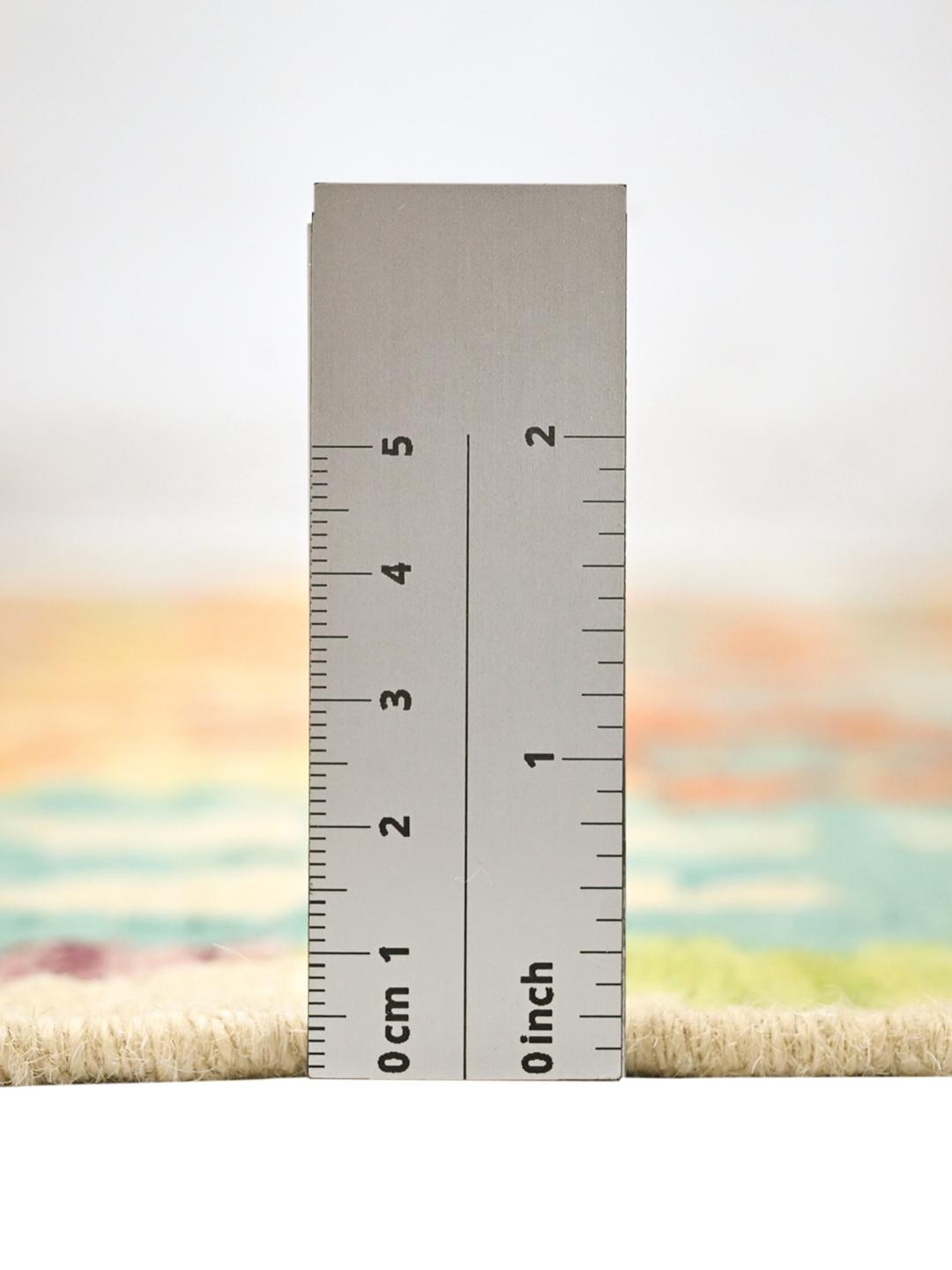
The Old Style designation refers to the traditional motifs, natural dye palettes, and classical flatweave methods that have defined Afghan weaving for centuries. Unlike pile rugs created with individual knots, a kilim is formed by tightly intertwining the warp and weft strands, producing a smooth, pile-free surface that highlights the geometric precision of the weave.
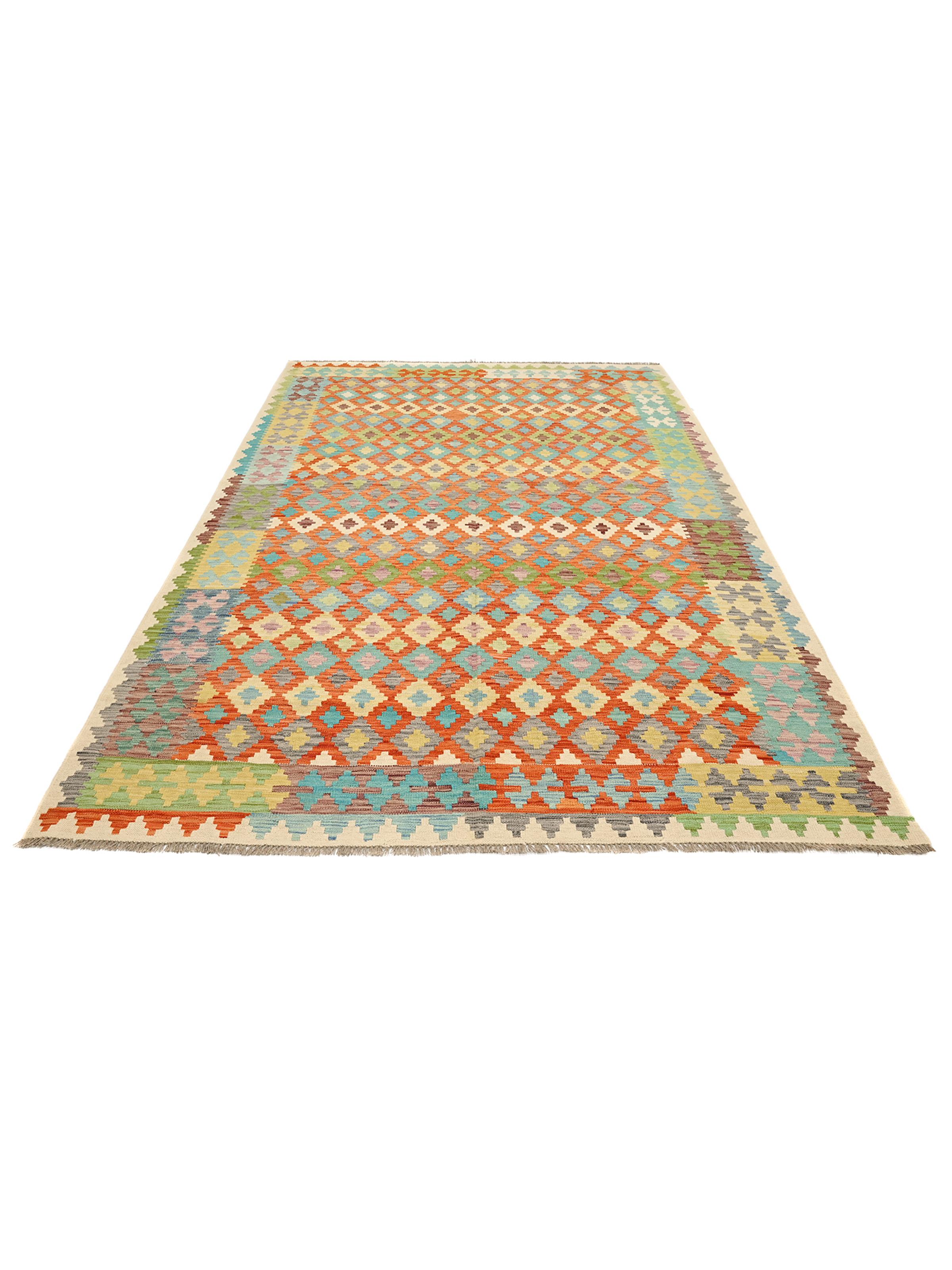
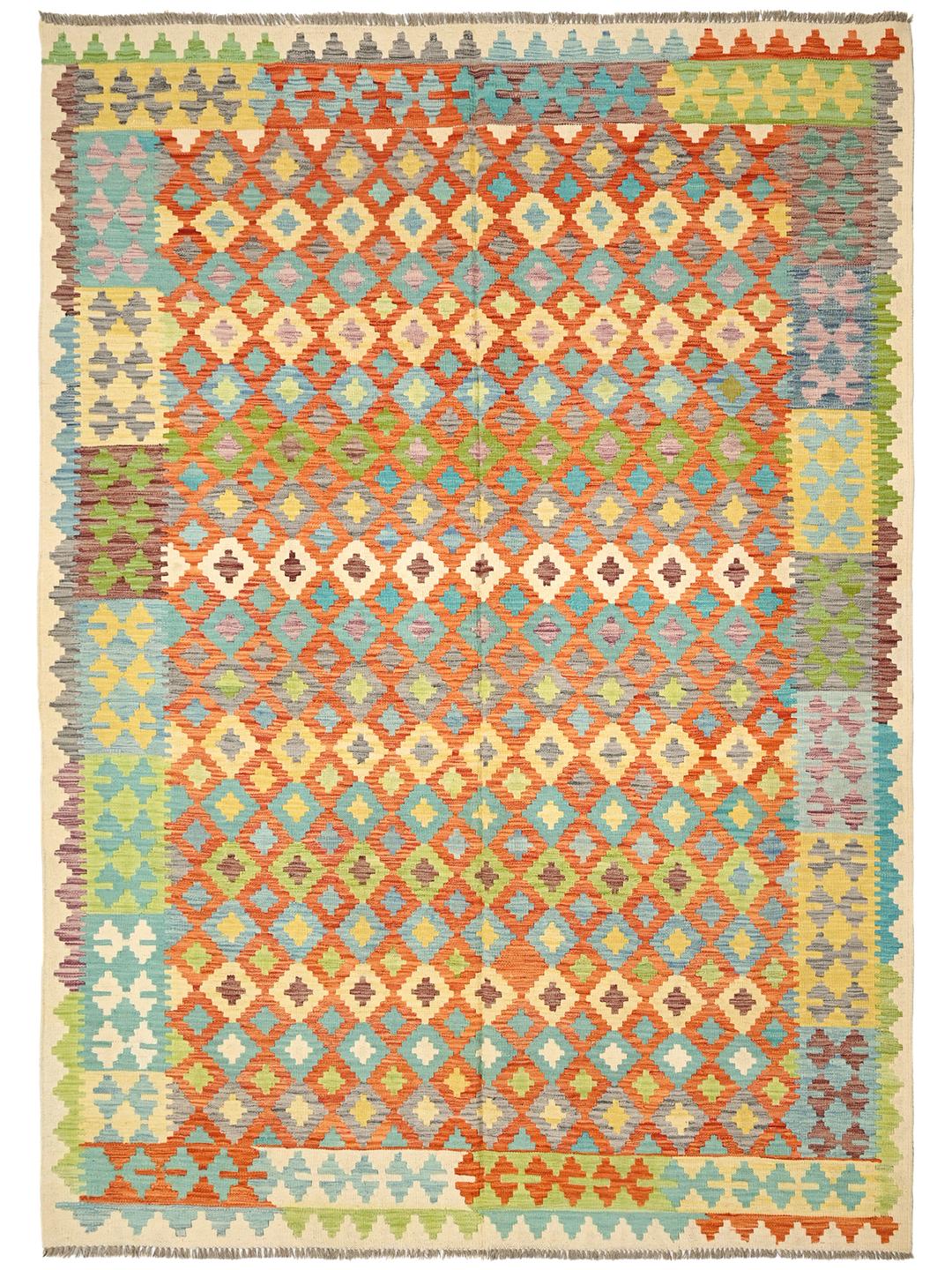
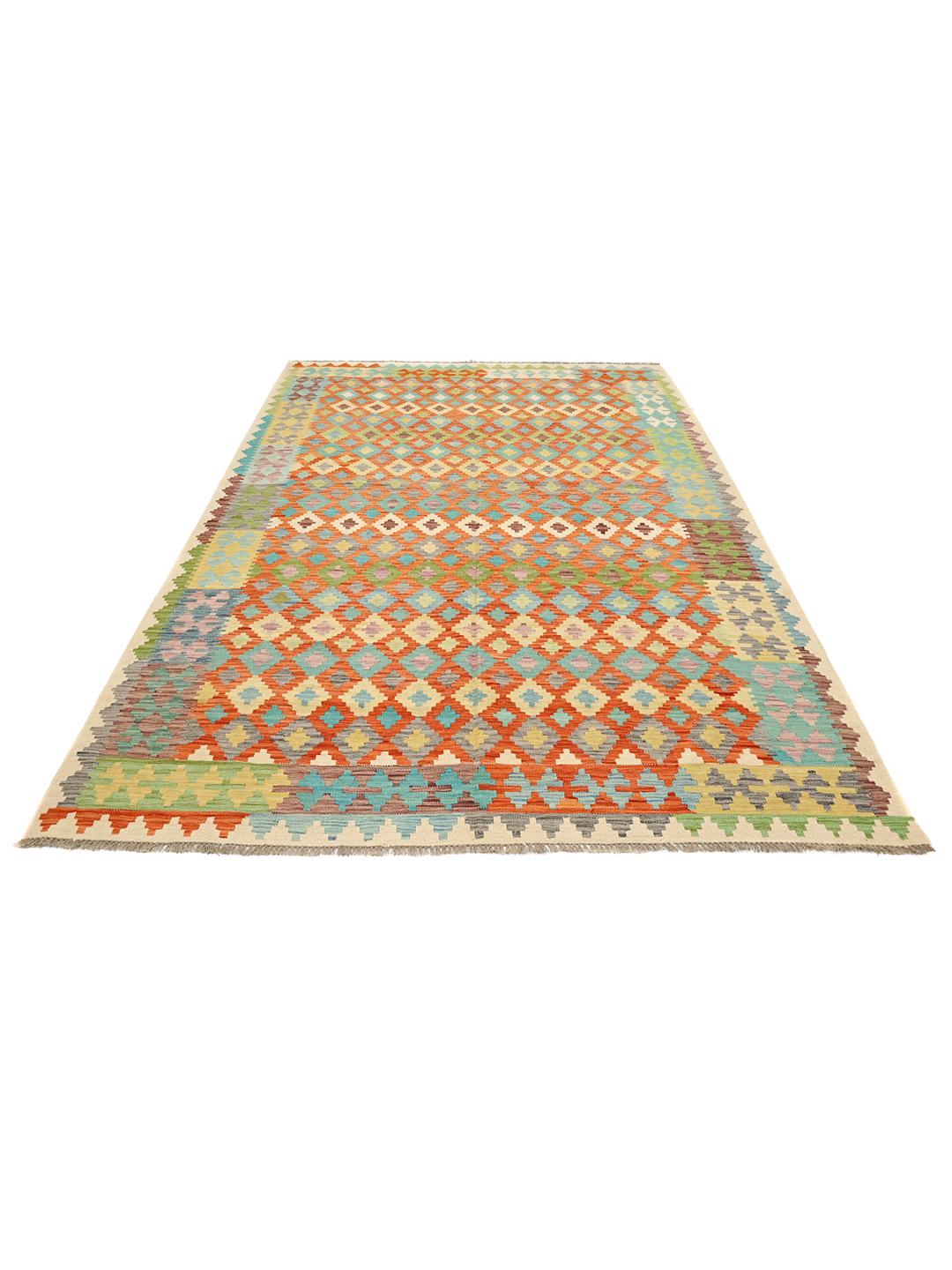
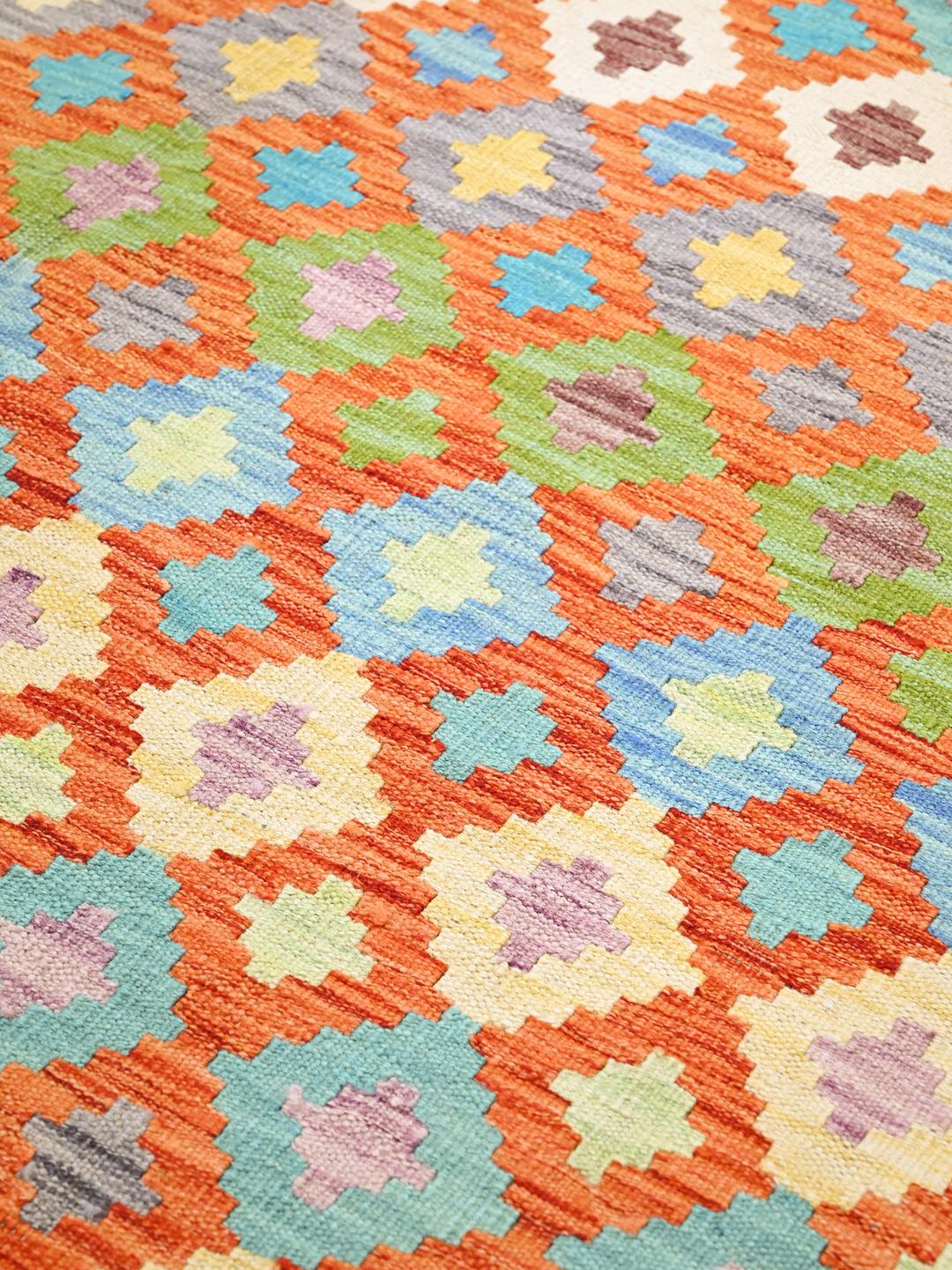
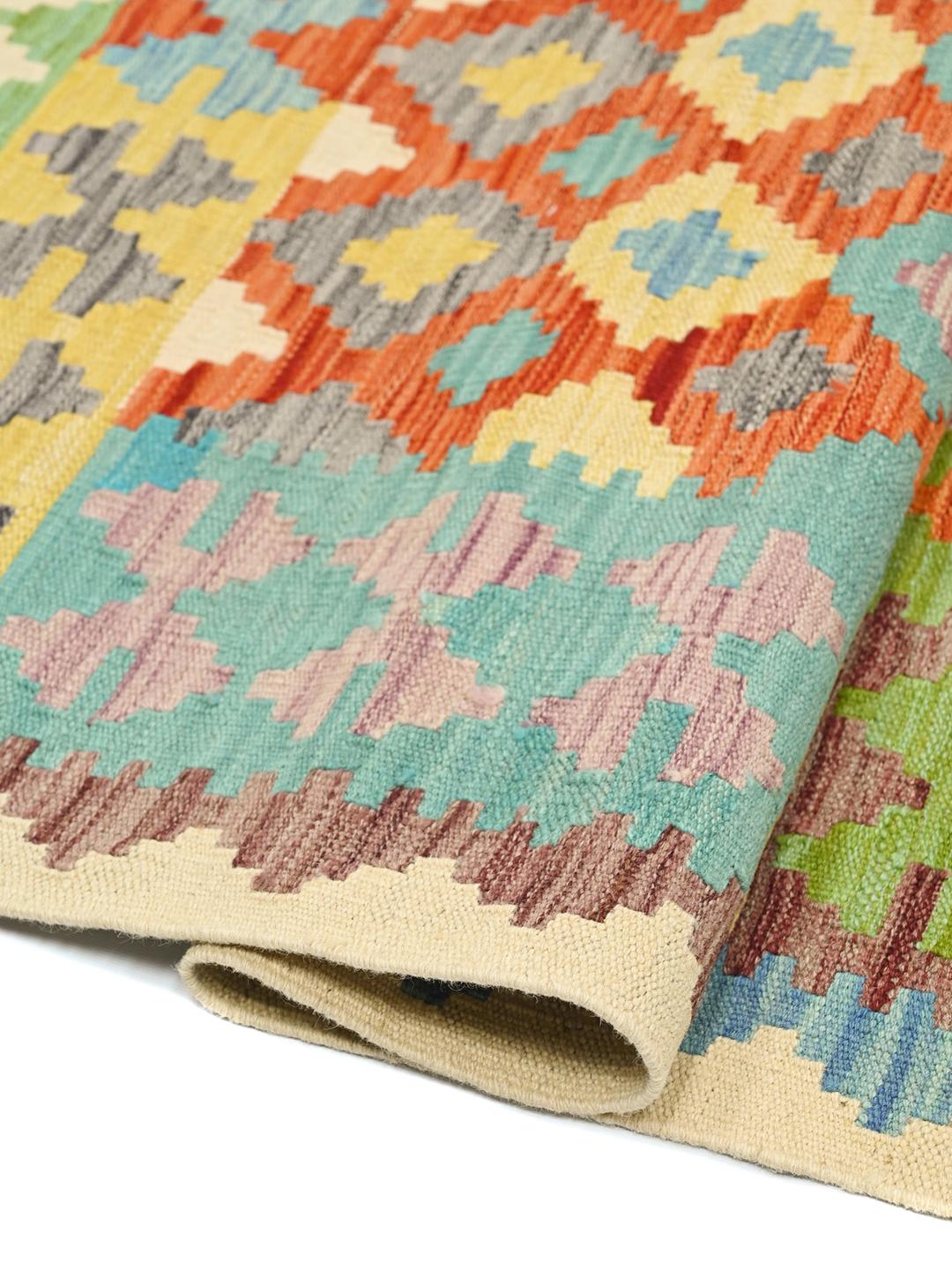
Signature design elements of Afghan kilims include interlocking diamond grids, geometric borders, and bold color contrasts. The field of this piece is filled with traditional stepped diamond patterns, framed by layered geometric borders that act as a visual boundary, ground the central field, and showcase the weaver's creative choices.
Afghan kilims are celebrated globally by collectors and interior enthusiasts alike for their expressive geometric language and enduring quality. Acquiring an authentic hand-woven kilim connects your home to a living tradition of craftsmanship that has survived virtually unchanged across generations.