Kelim rugs have a long and storied history across the Middle East and Central Asia, serving as both functional floor coverings and artistic expressions for nomadic and settled communities alike. These rugs are traditionally made without a pile, using a flat-weaving technique that has been passed down through generations. The Afghan tradition, in particular, is celebrated for its deep-rooted connection to local culture and the use of high-quality, locally sourced wool.
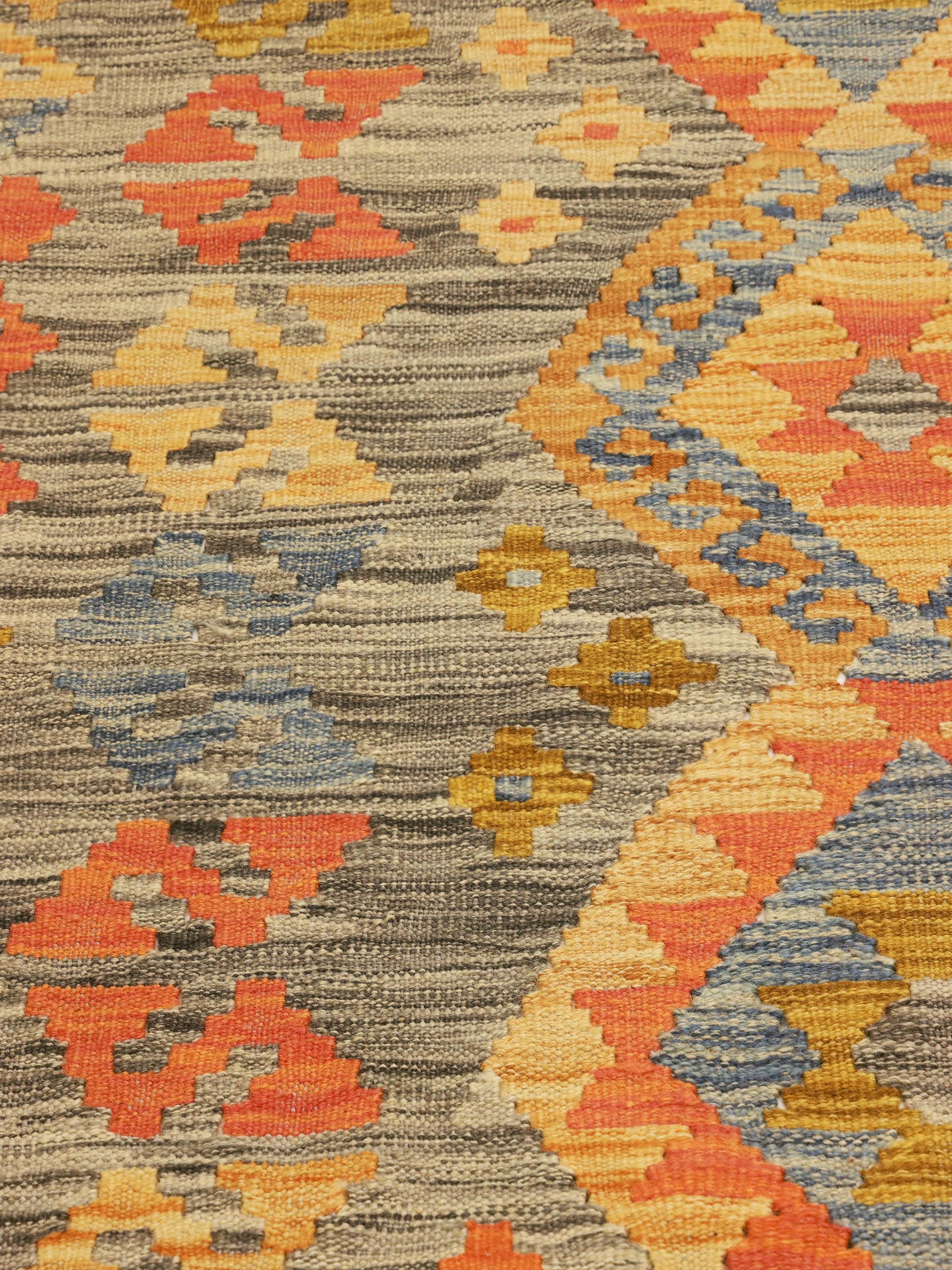
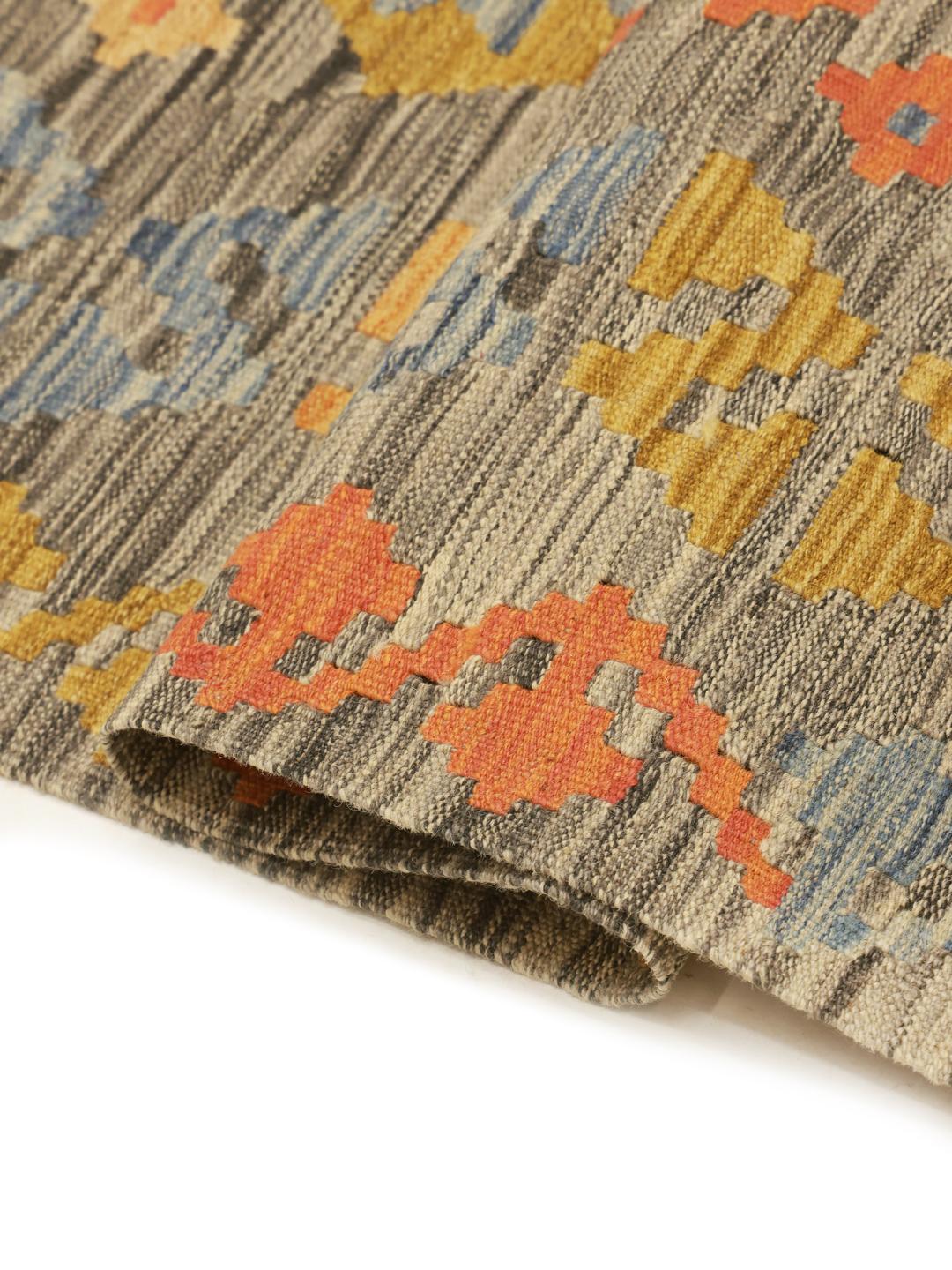
The term 'Kelim' refers specifically to this flat-weave construction, where the weft threads are woven tightly through the warp to create a smooth, durable, and reversible rug. This method requires a high level of skill, as the weaver must manage the tension of the threads to ensure the pattern remains sharp and the edges stay straight. This technique is highly valued because it results in a rug that is incredibly sturdy while remaining lightweight and portable.
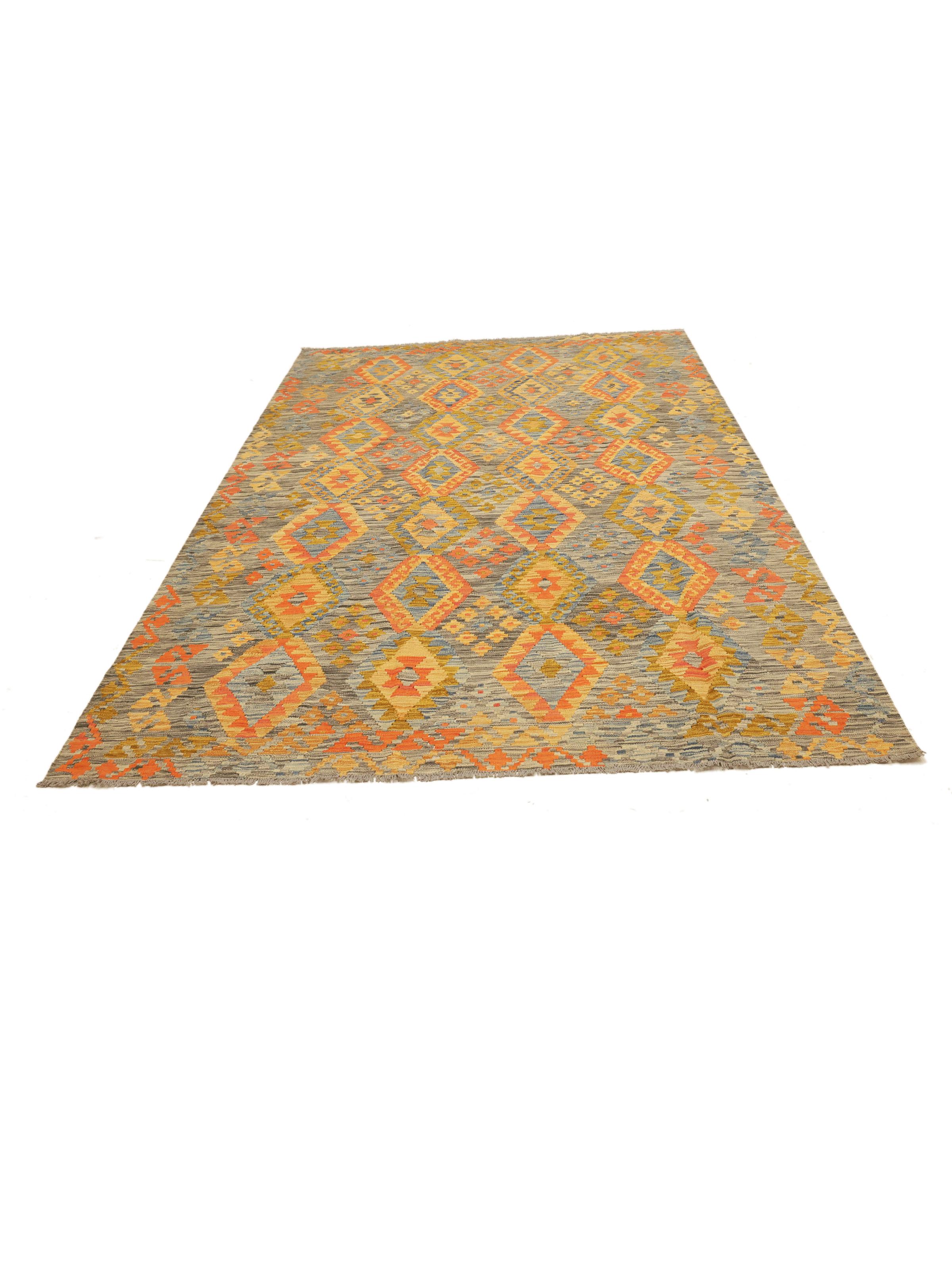
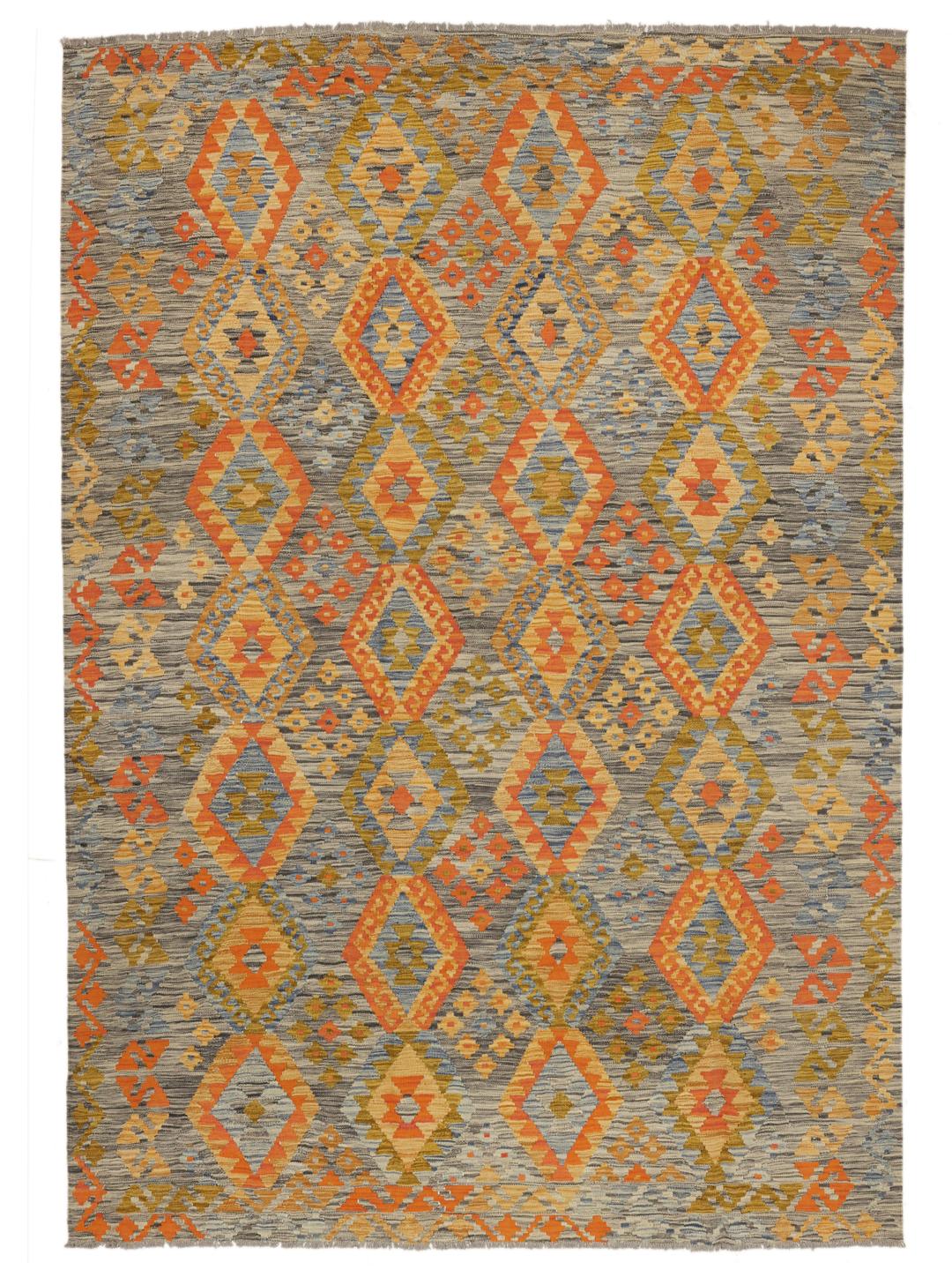
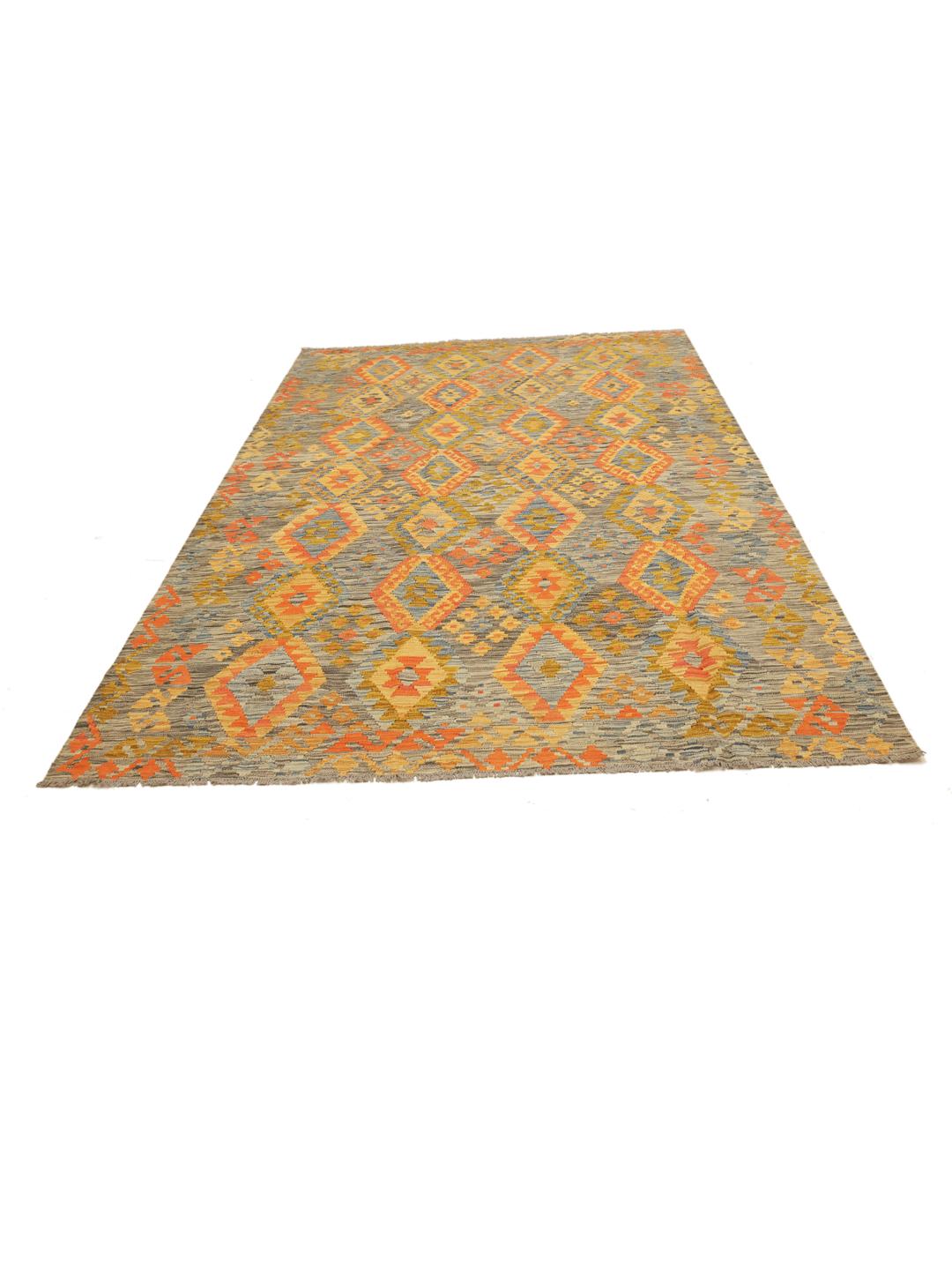
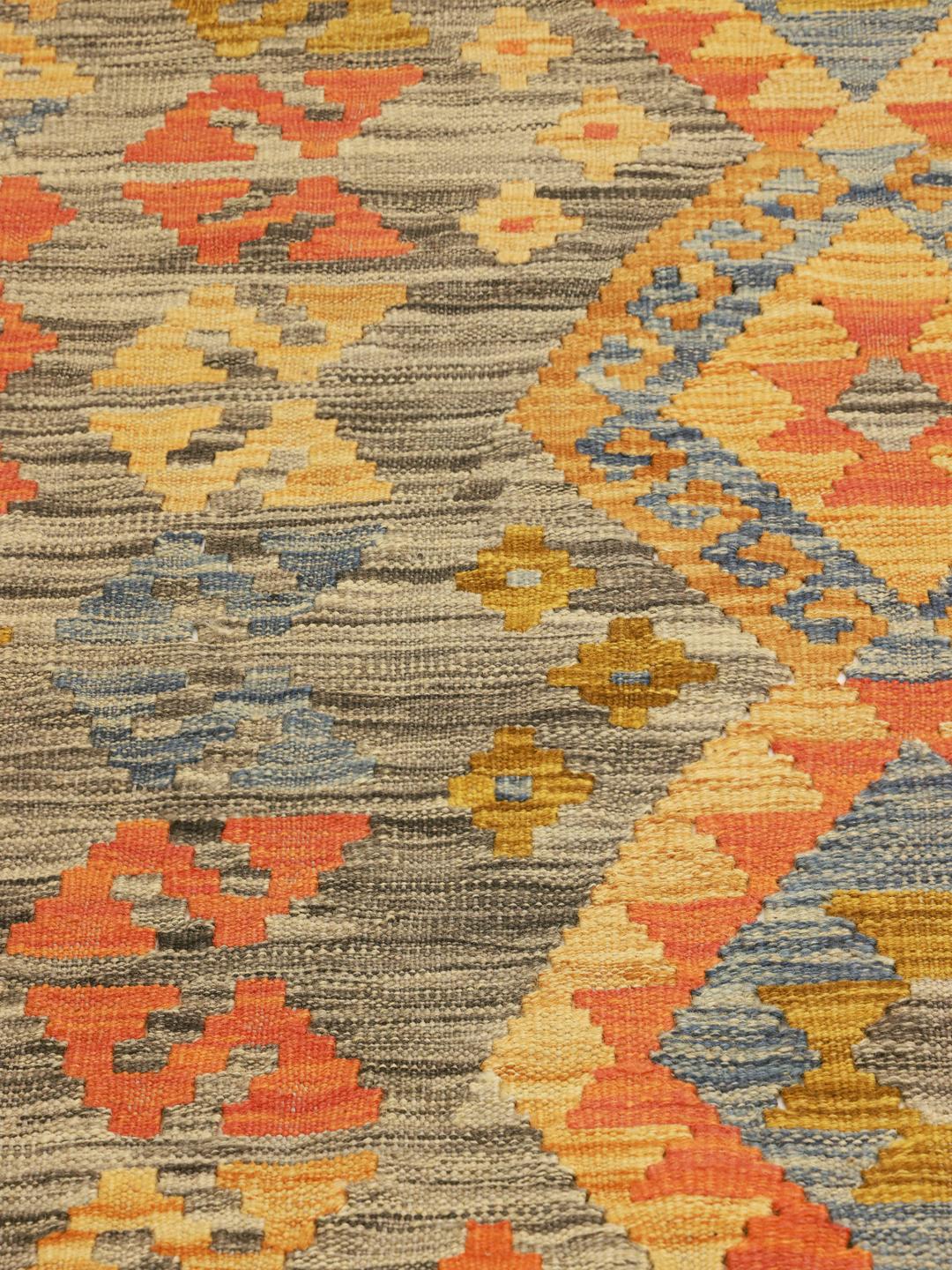
Signature design elements in Afghan Kelims often feature geometric motifs, with diamonds, triangles, and stripes being common occurrences. These patterns are not merely decorative but often carry symbolic meanings related to protection, fertility, or the natural landscape. In this specific piece, the diamond motifs are arranged in a rhythmic, repeating pattern that highlights the balanced colour palette and the precision of the weaver’s work.
Today, these rugs are highly sought after by collectors and homeowners who value the authenticity and cultural weight they bring to a space. Owning a traditional Afghan Kelim is an investment in human skill and a celebration of a craft tradition that has survived for centuries. It represents a connection to the past, offering a level of character and depth that mass-produced items simply cannot match.