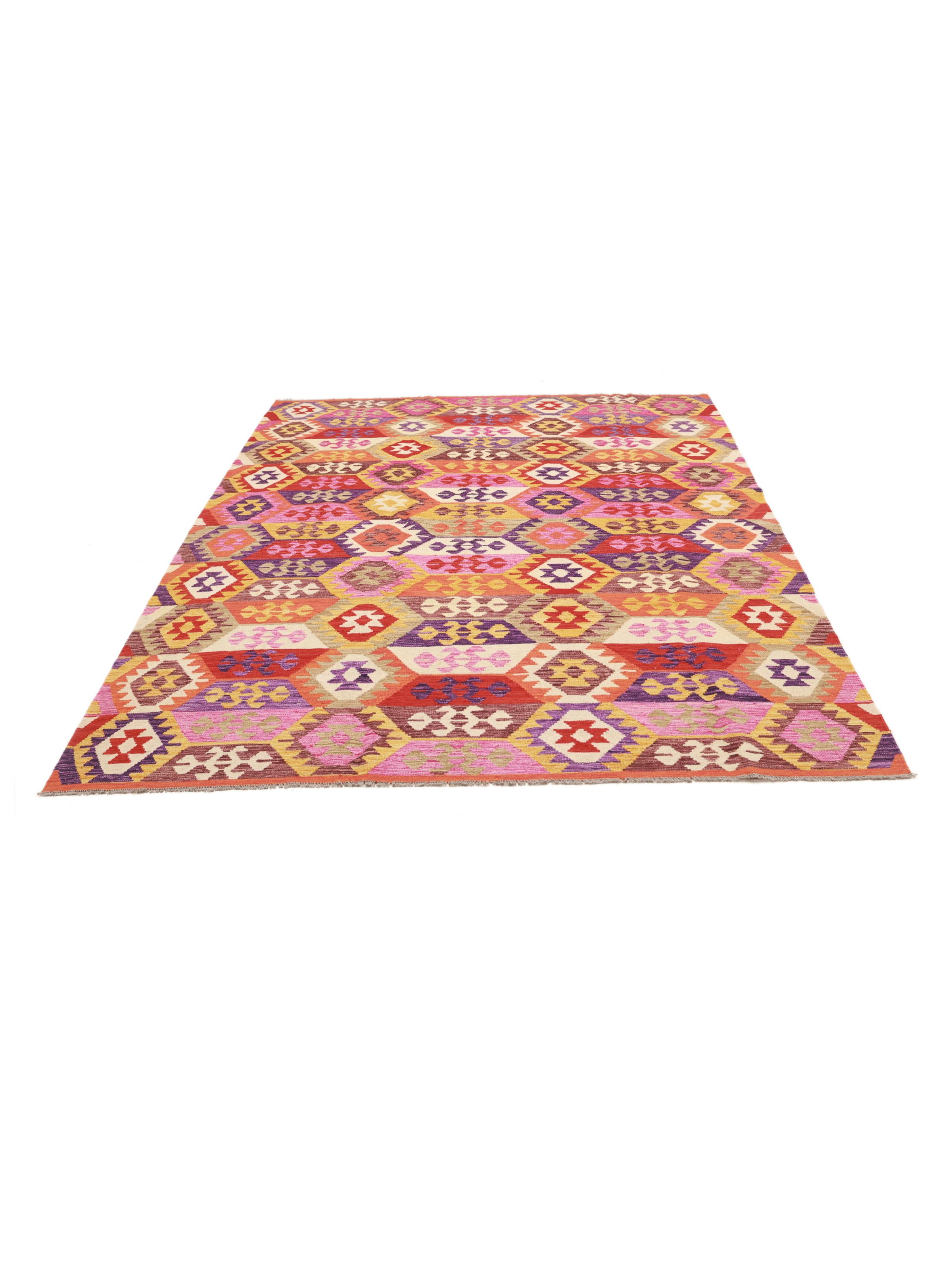
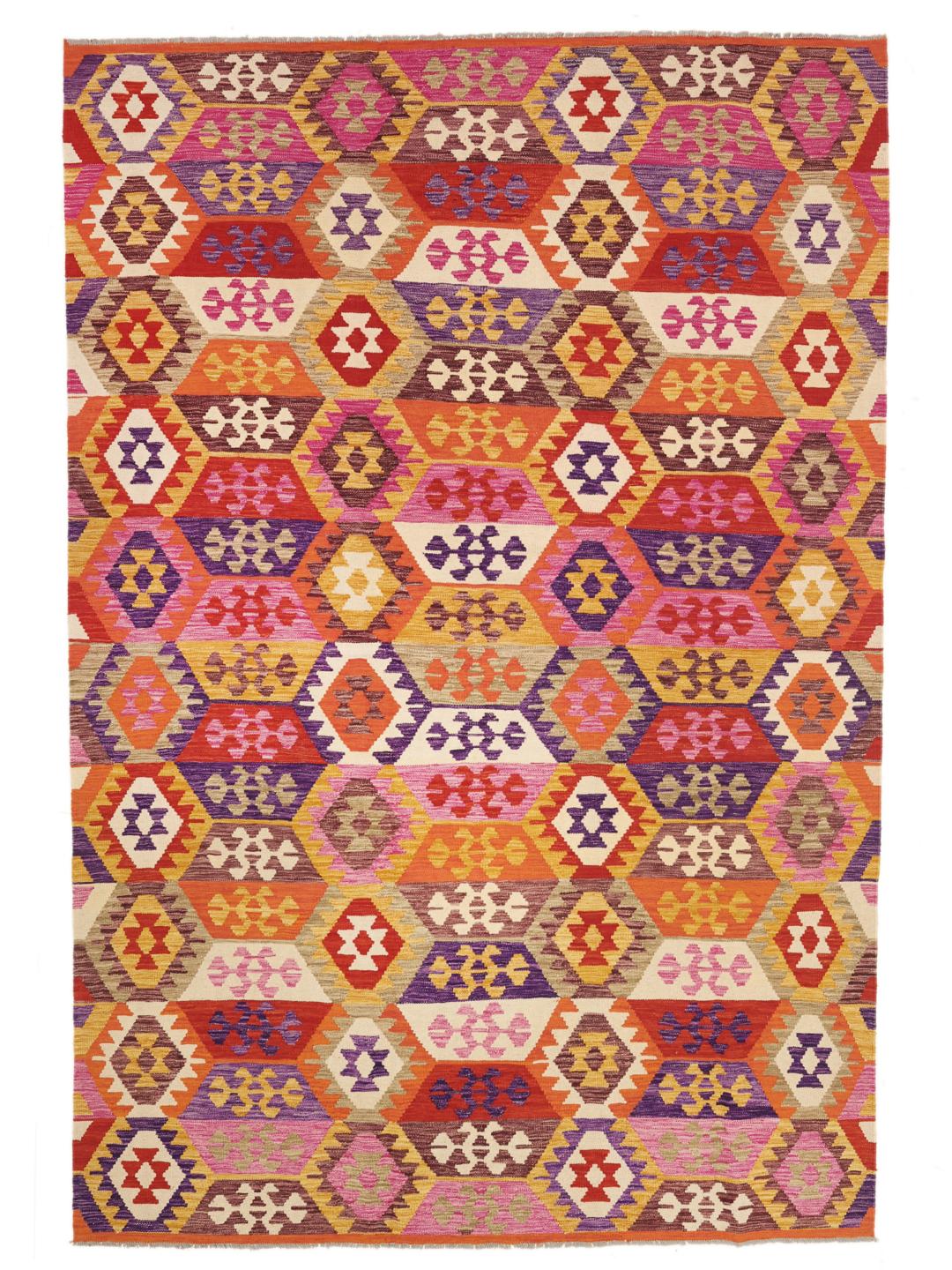
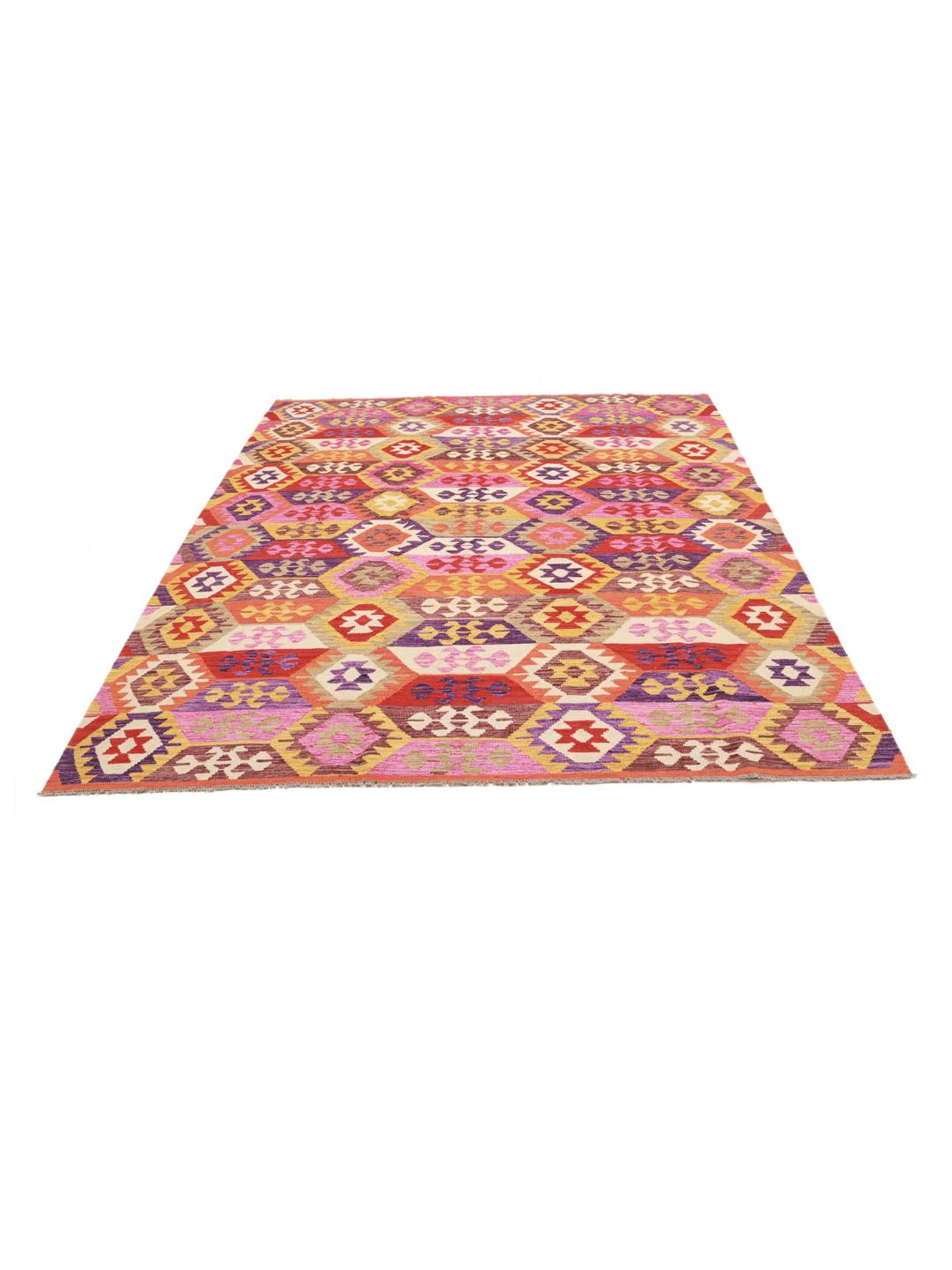
Kelim rugs have a long and storied history across the Middle East and Central Asia, serving as essential household items for nomadic and village populations for centuries. The term Kelim refers to a specific flatweave technique that results in a lightweight, durable fabric without a pile. These rugs were traditionally used as floor coverings, wall hangings, and even as functional saddlebags or storage sacks, reflecting the practical needs of the people who created them.
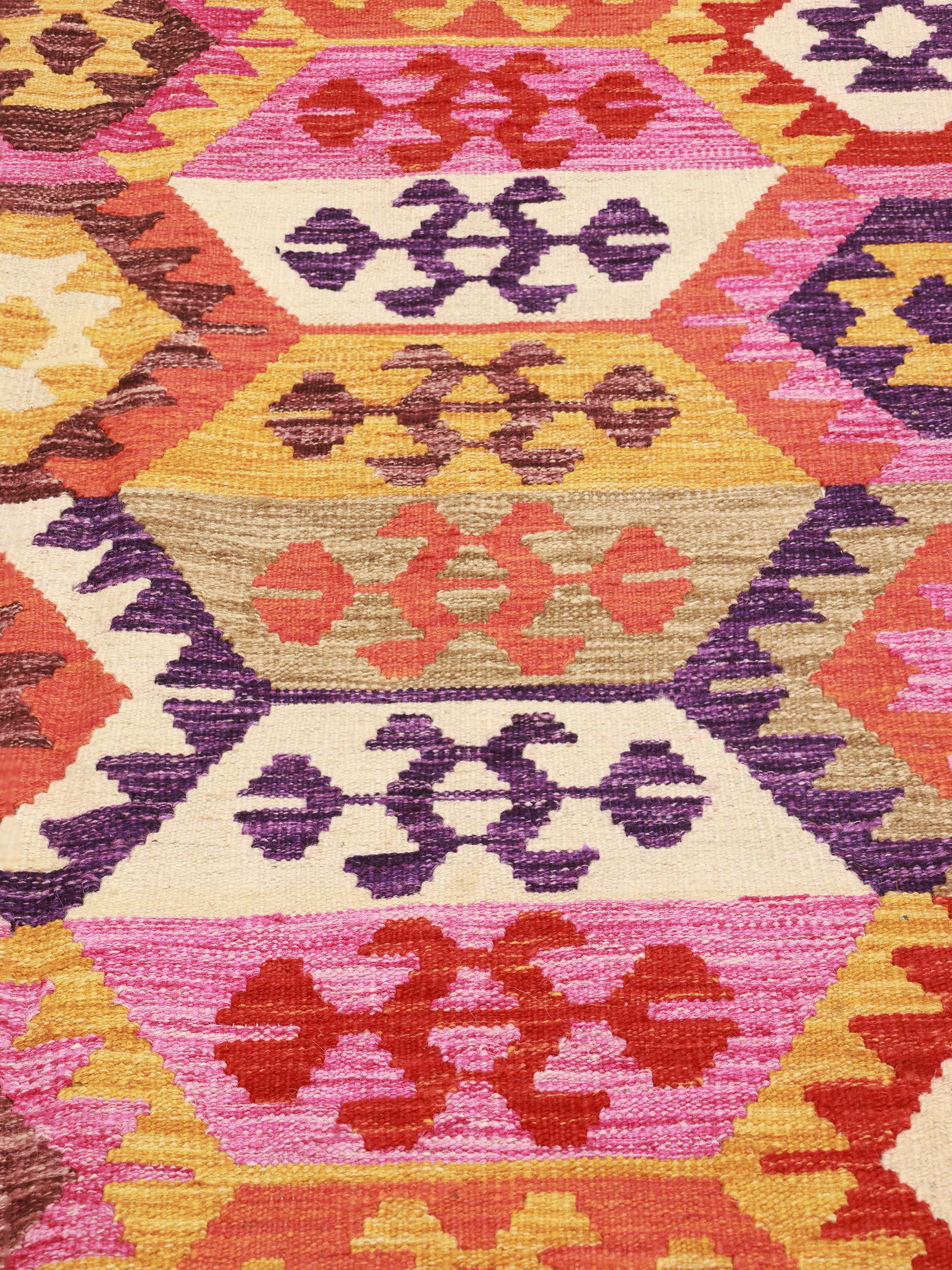
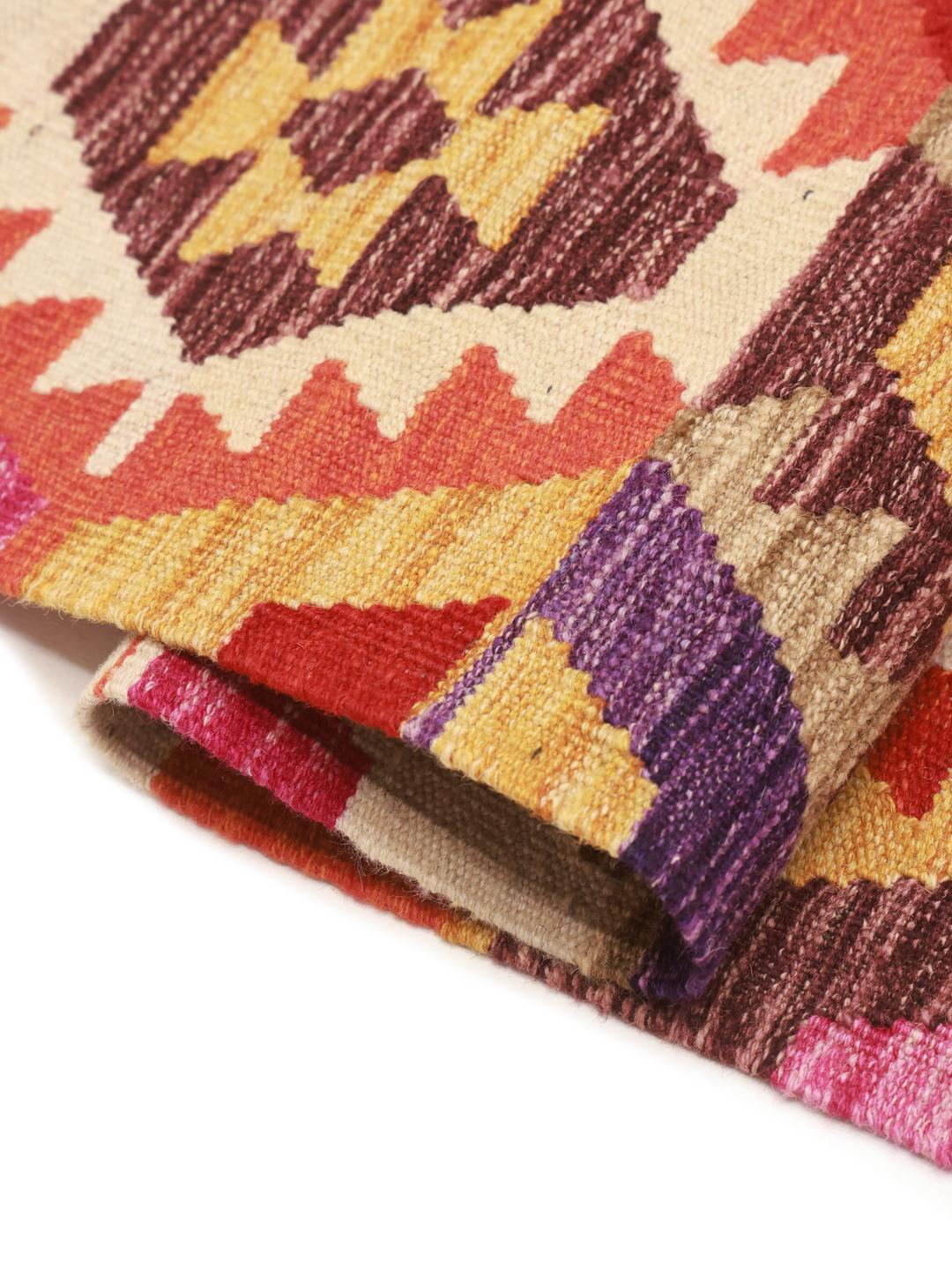
The Afghan tradition of Kelim weaving is particularly celebrated for its use of local wool and natural dyes, which give the pieces their distinct, earthy, and warm aesthetic. The technique involves interweaving the coloured weft threads through the warp to create patterns, meaning the design is essentially the same on both sides. This creates a robust, reversible fabric that has been prized for its longevity and utility throughout generations.
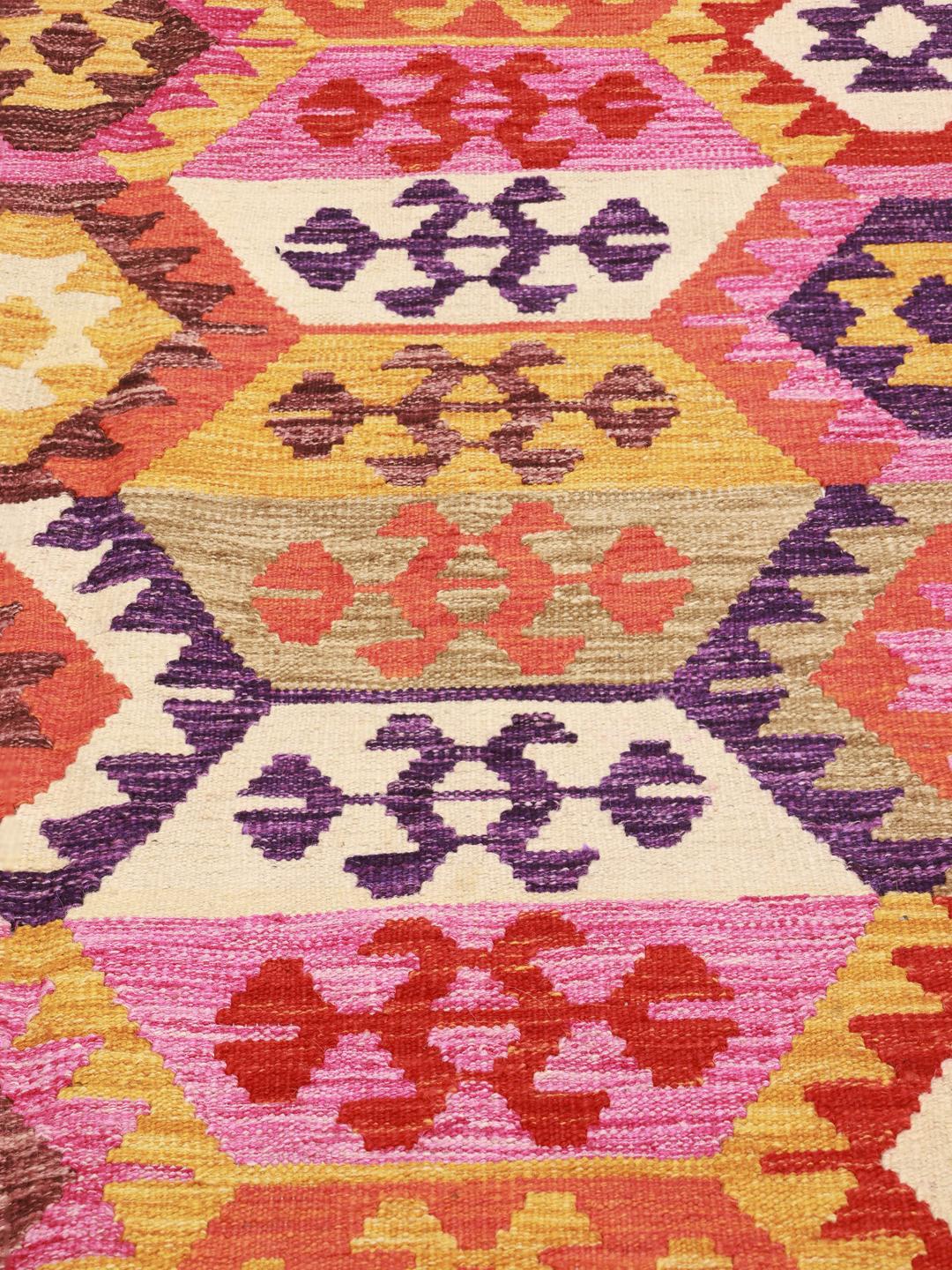
The signature design elements of these rugs include bold geometric shapes, diamonds, and repetitive motifs that carry deep cultural symbolism. Often, these patterns are inspired by the surrounding landscape, tribal identity, and the weaver's own personal expression. The use of vibrant, contrasting colours is a hallmark of the Old Style tradition, designed to stand out against the backdrop of traditional homes.
Collecting an Afghan Kelim is an opportunity to own a piece of cultural heritage. These rugs are not merely decorative; they are documents of a craft that has been passed down through families. By choosing this piece, you are supporting a legacy of skill and preserving a tradition that values human touch and natural materials over mass production.