Kelim rugs have a long and storied history within the nomadic and village cultures of the Middle East and Central Asia. Originally created as utilitarian items—used as floor coverings, tent dividers, or saddlebags—these flat-woven textiles were essential for daily life, designed to be durable, lightweight, and easily transportable across rugged landscapes.
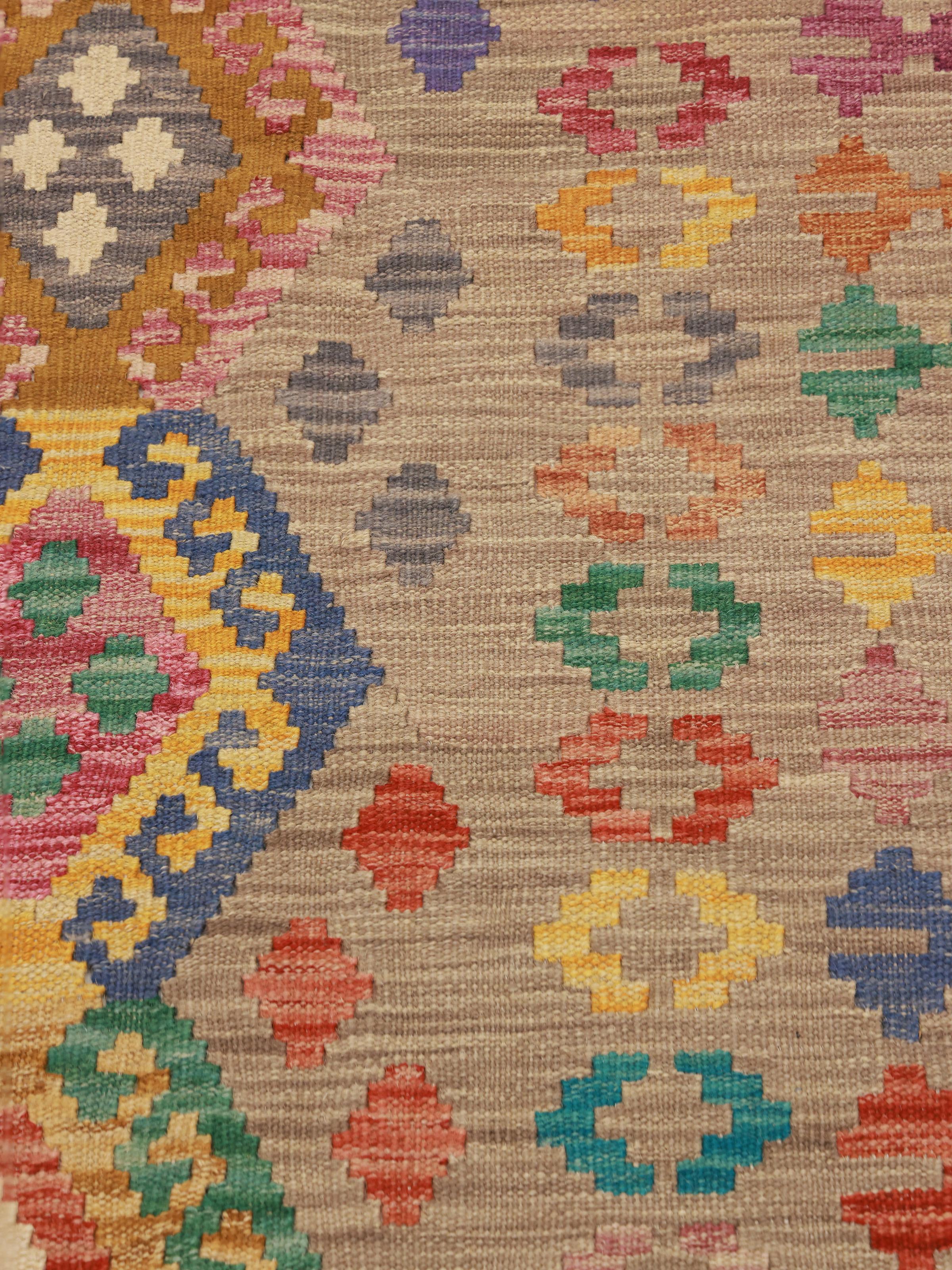
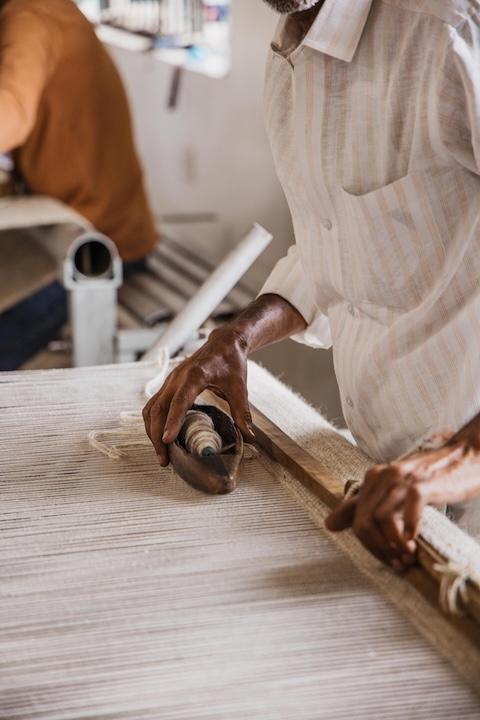
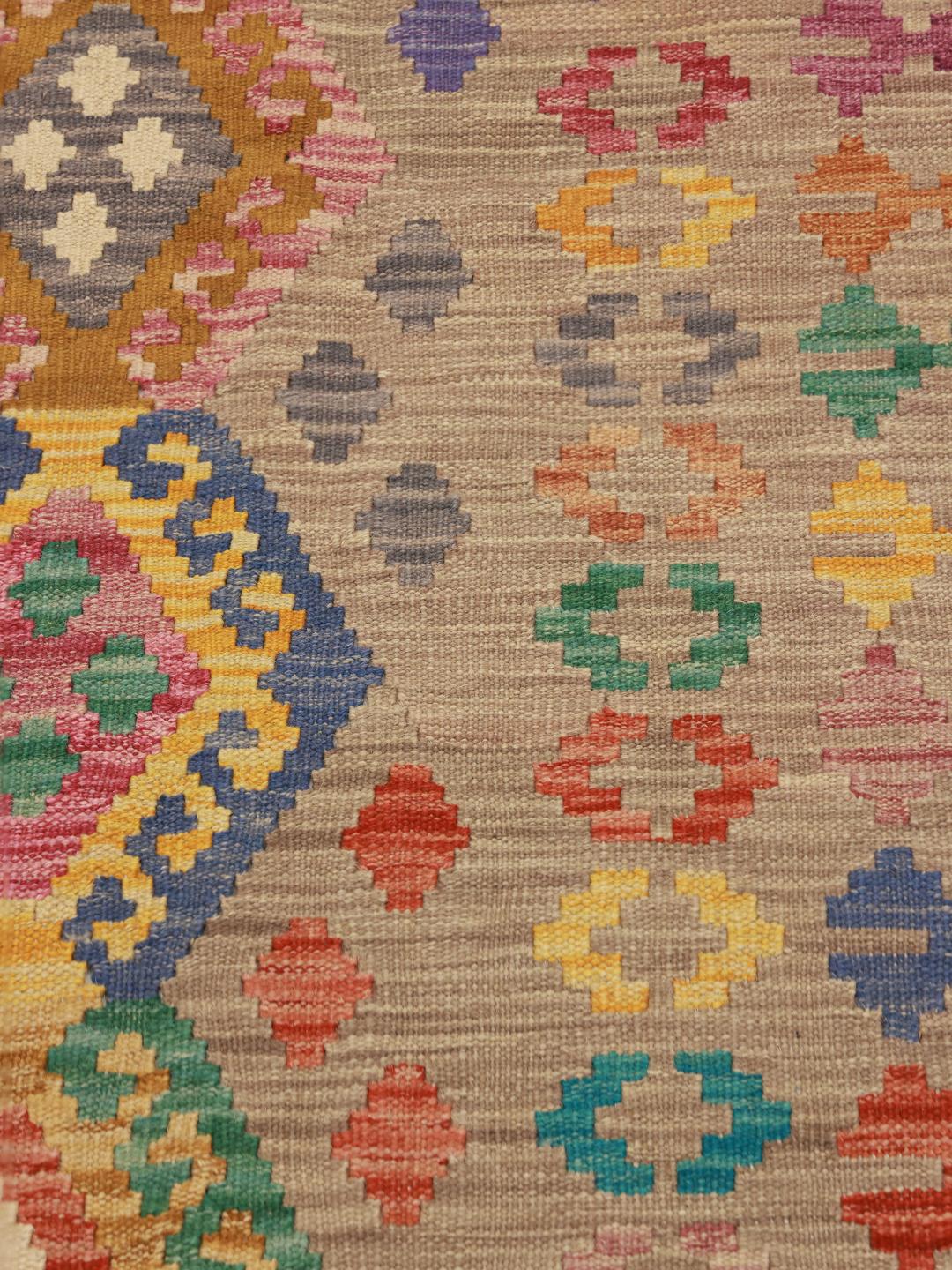
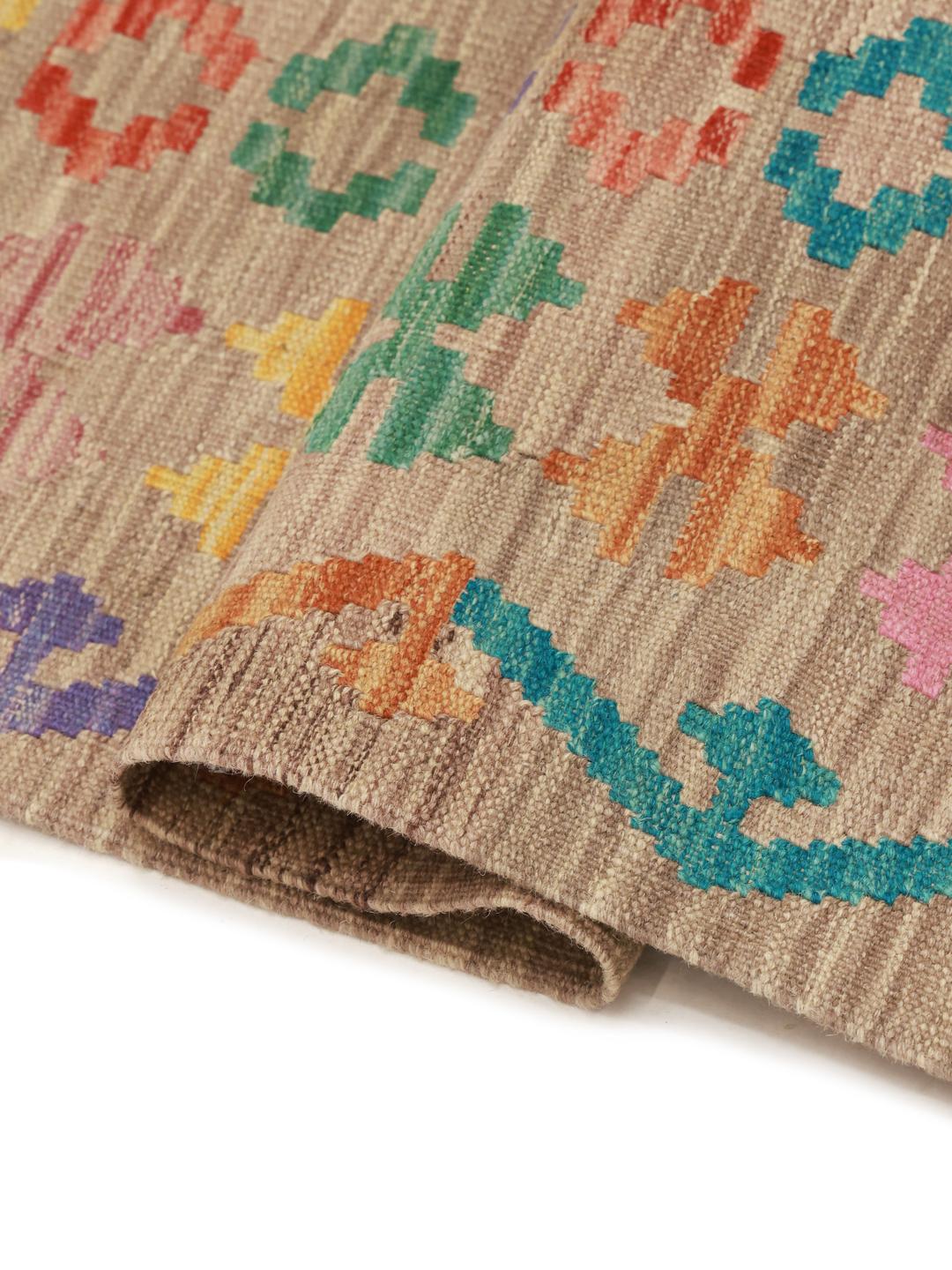
The term 'Kelim' refers to the specific slit-weave technique, where the weaver passes the weft threads back and forth through the warp threads. This method creates a tapestry-like surface without a raised pile, allowing for crisp, sharp edges in geometric designs. This technique is a hallmark of regional expertise, where the ability to manage tension and colour transitions is passed down through generations.
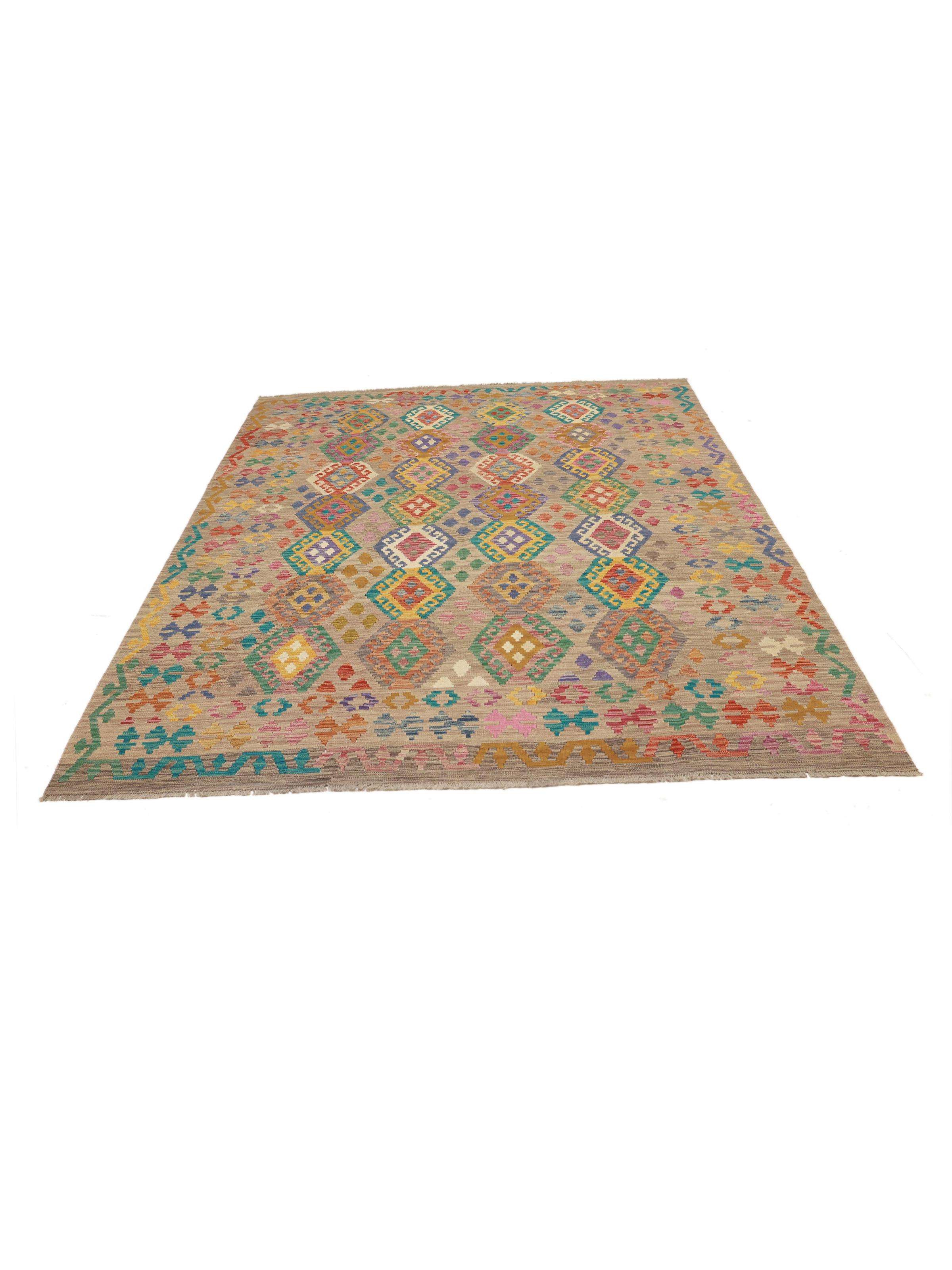
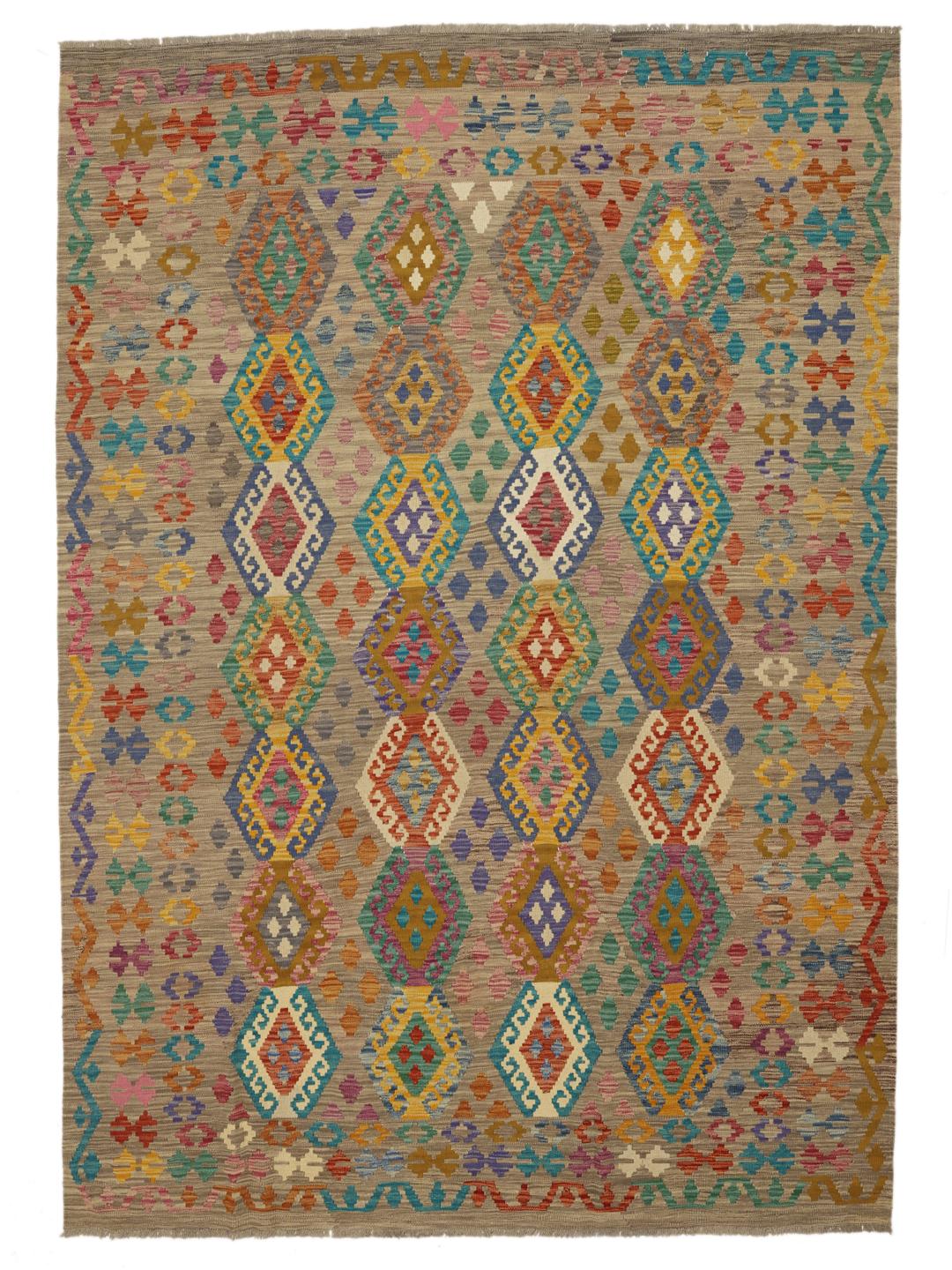
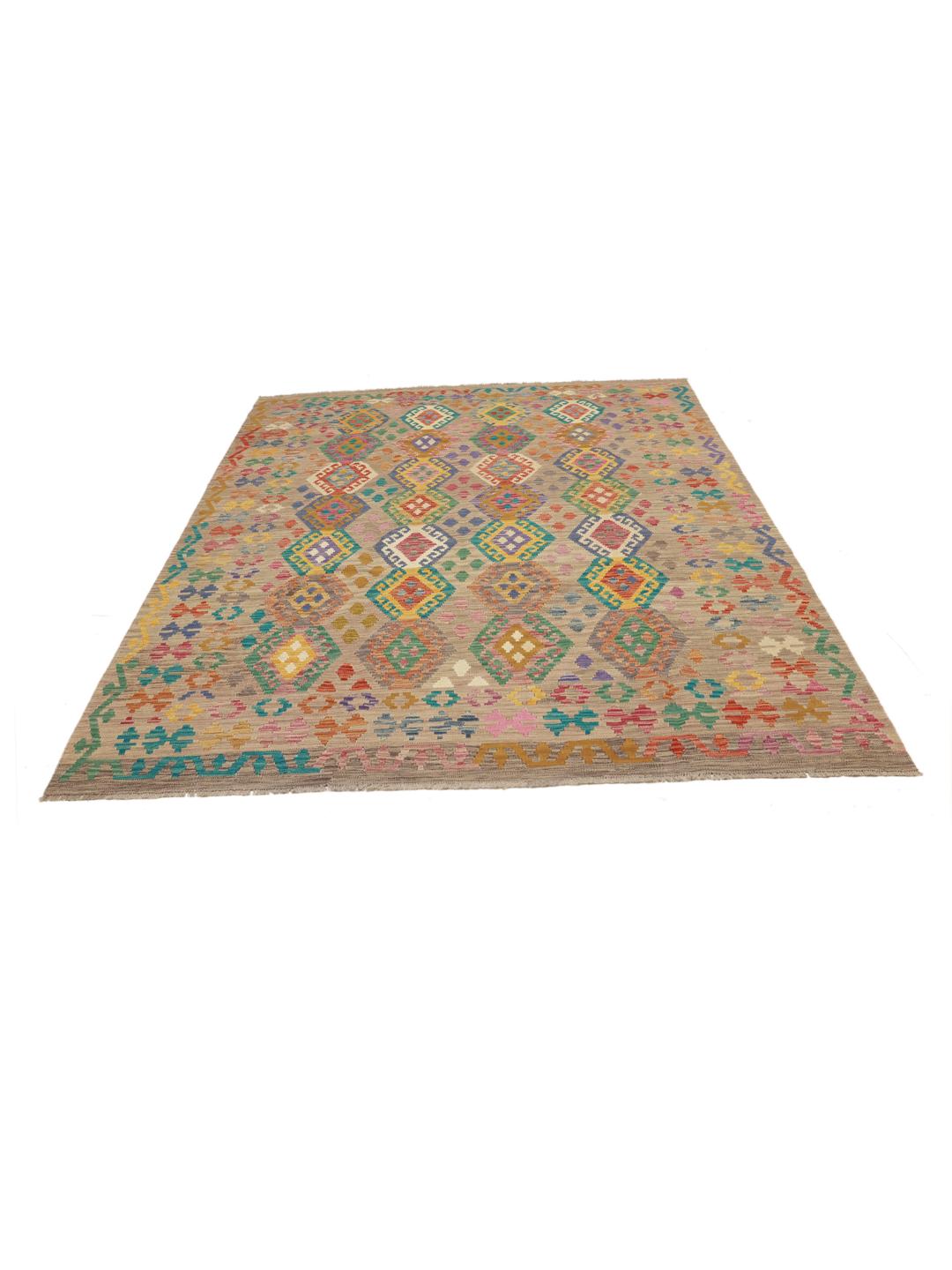
The visual language of the Afghan Kelim is defined by its bold, symbolic geometry. Diamond shapes, triangles, and intricate borders are common motifs, often imbued with local meaning or protective significance. The use of a vibrant, multi-coloured palette against a natural, undyed wool base is a signature tradition that highlights the natural materials while showcasing the weaver's artistic flair.
Owning a Kelim from this tradition is an opportunity to connect with a rich cultural legacy. These rugs are highly prized by collectors for their authenticity and the sheer skill required to produce them without the aid of modern technology. They represent a tangible piece of history, where the identity of the maker and the heritage of the region are woven into every thread.